Tag: Geraldine James

Gandhi (1982)

Ben Kingsley excels as Gandhi in Richard Attenborough’s Oscar winning epic

Director: Richard Attenborough

Cast: Ben Kingsley (Mahatma Gandhi), Rohini Hattaggadi (Kasturba Gandhi), Roshan Seth (Jawaharlal Nehru), Pradeep Kumar (VK Krishna Menon), Saeed Jaffrey (Vallabhbhai Patel), Alyque Padamsee (Muhammad Ali Jinnah), Virendra Razdan (Maulana Azad), Candice Bergen (Margaret Bourke-White), Edward Fox (Brigadier General Reginald Dyer), John Gielgud (Lord Irwin), Trevor Howard (Judge Broomfield), John Mills (Lord Chelmsford), Martin Sheen (Vince Walker), Ian Charleson (Reverend Charles Andrews), Arthul Fugard (General Jan Smuts), Geraldine James (Mirabehn), Amrish Puri (Khan), Ian Bannan (Senior Officer Fields), Richard Griffiths (Collins), Nigel Hawthorne (Kinnoch), Michael Hordern (Sir George Hodge), Om Puri (Nahari)

In 1962, Richard Attenborough was approached by Motilal Kothari, an Indian civil servant, who believed Attenborough was the man to bring the life of Mahatma Gandhi to film. All this despite Attenborough having never directed a film. But the life of one of history’s greatest men, and passionate advocate of peace and non-violence, spoke deeply to the socially-engaged Attenborough who dedicated 20 years of his life to bringing the film to the screen, immersing himself in Indian culture along the way and winning the support of Nehru (until his death delayed the project again) and Gandhi’s family. The eventual film was a huge success, cementing the public perception of Gandhi and beautifully capturing both the importance of the story, and its emotional heart.

Opening with Gandhi’s assassination in 1948, the film covers in flashback his life from combatting anti-Indian prejudice in South Africa as a young, British-trained, lawyer to his return to India and long involvement in the campaign to win India its independence from the British Empire, stressing non-co-operation, his eventual success but also his failure to hold the Hindu and Muslim parts of the country together and his attempt as “father of the nation” to put an end to religious violence, a failure that will eventually lead to his assassination. 

Attenborough’s grand, epic film marshals thousands of extras to bring to life pages of history. At times events fly by with speed, but Attenborough never loses sight of the emotional heart of the story – both Gandhi and the status of Indians as not being masters in their own home. Attenborough directs scenes of real power, most strikingly a heart-rending peaceful march on a salt works (the tax on salt use being a major burden on many poor Indians) that culminates in line after line of peaceful Indian protestors walking calmly forward to be beaten down by soldiers. Despite being the grandest and largest of films, it allows questions of pure morality and decency to lie at its heart and, supported by a parade of British acting greats, keeps the Indians at the heart of their own story and the masters of their own destinies.
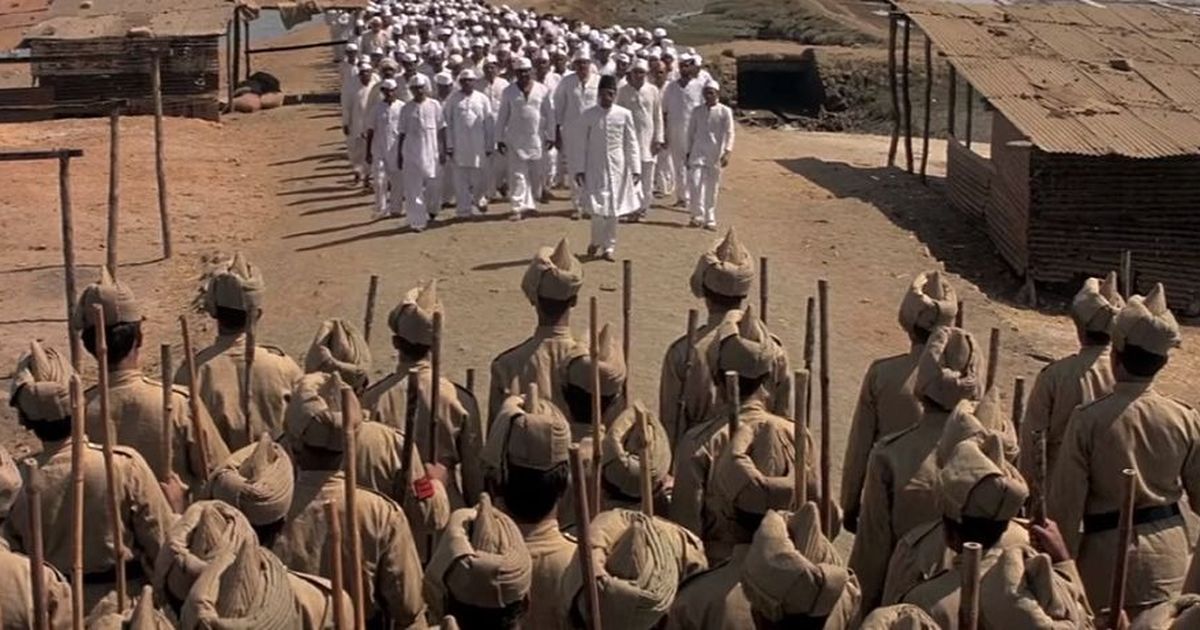
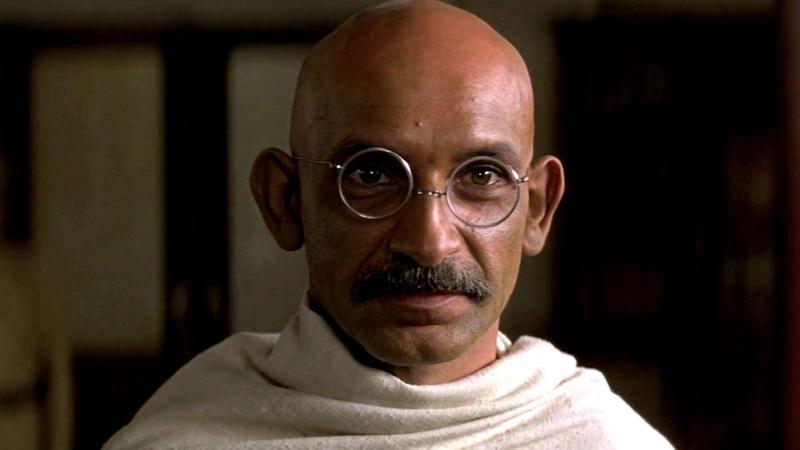
The film’s impact though may be directly connected to the gloriously transcendent performance of Ben Kingsley in the title role. For years it was believed the film could only work with a British actor in the title role – imagine how it would be received today if Gandhi had been played by (as it nearly was) a browned-up Anthony Hopkins or John Hurt (who famously told Attenborough he looked absurd). Instead half-Indian unknown RSC actor Ben Kingsley took the role. Kingsley so completely and utterly immersed himself in Gandhi – everything, the physicality, the morality, the voice, the intellectualism – that not only has he become so completely associated with the role but it’s hard to imagine anyone else playing it.

Ageing almost 50 years over the course of the film, Kingsley’s Gandhi is above-all moral, softly-spoken, observant and considerate – the very spirit of the original man seems to be up on the screen. Far from the sort of histrionics you might expect from a subject of an epic movie, Kingsley is not afraid to be quiet, gentle even underplayed. He completely understands that the charisma and power in Gandhi laid in his moral authority, not his speech-making, but his careful example-setting of even-handedness, patience and desire for peace. 

But Kingsley is also willing to show Gandhi as shrewd and stubborn, even while mixing it with both a deep pain at the loss of life. Kingsley is superbly good at the smaller quieter moments – he wrings heart-rending force from the loss of his wife (a similarly impressive and quietly authoritative performance from Rohini Hattaggadi), which partly works because the film quietly centres the truth and faith in their marriage. This is extraordinary work from Ben Kingsley, that seems to carry not just the entire film but the sense of a nation.

Attenborough though was a director who was at his best when working with actors, and his ability to coax truthful and heartfelt moments from quiet scenes are what gives the other sequences the emotional force to make them work. Attenborough seemingly called in every favour to assemble the supporting cast that backs up Kingsley, many of them juggling only a few scenes. Among the stand-outs we have a martially certain Edward Fox as General Dyer, an archly arrogant John Gielgud and a frustrated John Mills as viceroys, Trevor Howard representing decent British rule as an honest Judge and Martin Sheen as a reformist minded journalist. That’s to overlook dozens of others in small roles, all of them clearly committed to the intention of the project.

The film though allows the Indians themselves to take centre stage, even if it is easy to criticise some of the simplifications of many of the issues that would eventually culminate in partition. The film has a clear hostility towards the idea of religion, seeing it as the root of much of the violence that erupted in India in the last years of Gandhi’s life. While Roshan Seth is excellent as Nehru, the character is portrayed more as the faithful follower of Gandhi than the shrewd politician in his own right (it’s a role most of the other leading members of congress are also placed in). Alyque Padamsee carries a high level of charisma as Jinnah, founder of Pakistan – but the film can’t quite resist painting him into the corner as a semi-villain, ignoring Gandhi’s desperation to get Jinnah to invest in a united India.
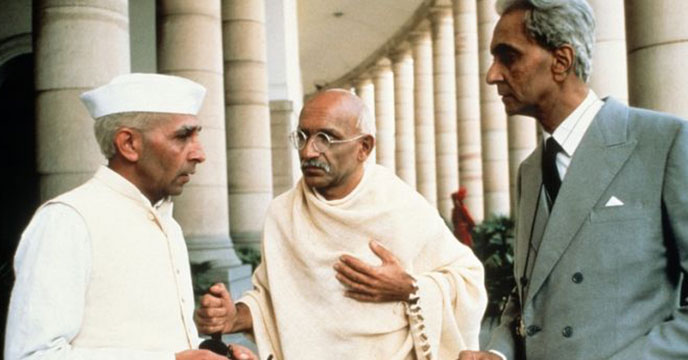
It’s part of what has been seen since as the film’s more hagiographic stance towards Gandhi. Certainly later historiography has outlined a few shades of grey in Gandhi – although I would argue that seeing him as a man and not a saint only heightens (similar to Mandela) the awe at what he went on to achieve. The film’s whistle stop tour of Indian history – taking in every major event and personality, some in a matter of moments – looks particularly old-fashioned now with our current trend being biographical films that focus only on crucial moments, not the whole life. It adds a slight air of schoolboy history to the project, an unfortunate side-effect of the passionate earnestness with which the story is told.

But then even in 1982 – when it lifted 8 Oscars including Best Picture, Director and Actor and most of the technicals – it was seen as slightly old-fashioned. Attenborough has generously repeatedly said that he believed Steven Spielberg was more deserving of Best Director for ET. And it’s true that Attenborough was in many ways a producer at heart with these epics than an inspired director like Lean. His marshalling of crowds, finances and simply forcing the will together to make the picture – and to allow it to focus on Indians rather than Westerners – is a tribute to his organisational skills. His strengths as a director were more in performances, and as with many of his epic films the most memorable moments are smaller, intimate ones. The larger moments are shot with an assured professionalism rather than inspiration, but Attenborough understands how to wring emotion from moments and how to let character drive action.

Gandhi works above all because even today you can see it is a passionate labour of love, that everyone involved in clearly believed in passionately. It may well be that at times it is workmanlike or simplistic – and covers the sweep of history with an earnest completeness, even while it is unafraid to be critical certainly of the British – but it still invests it crucial moments with humanity, life and deep emotion. You can’t help but be moved by it – and you are instantly stunned by the sheer brilliance of Kingsley as Gandhi, one of those performances like George C Scott as Patton which seems more like the man than the real thing. Gandhi may be old fashioned, but that’s not a crime when the quality is still there.
Made in Dagenham (2010)

Up the Women! British comedy wallows in nostalgia but tells a still relevant tale of sexual equality

Director: Nigel Cole

Cast: Sally Hawkins (Rita O’Grady), Bob Hoskins (Albert), Miranda Richardson (Barbara Castle), Geraldine James (Connie), Rosamund Pike (Lisa Hopkins), Andrea Riseborough (Brenda), Jamie Winstone (Sandra), Daniel Mays (Eddie O’Grady), Richard Schiff (Robert Tooley), Rupert Graves (Peter Hopkins), Kenneth Cranham (Monty Taylor), Nicola Duffett (Eileen), Lorraine Stanley (Monica), Roger Lloyd-Pack (George), Andrew Lincoln (Mr Clarke)

You’d like to think a film made ten years ago about a strike for equal pay in the 1960s would be more of a history piece than something that still carries real relevance today. But this is still a world where women are often paid less than a man, and where their work is often devalued or held as less “important” than their male counterparts. Made in Dagenham looks at all these issues with a rose-tinted, feel-good stance that aims to entertain first and make you think second. Nothing wrong with that, but it means the film is largely just a crowd-pleaser, when you feel it could be more.

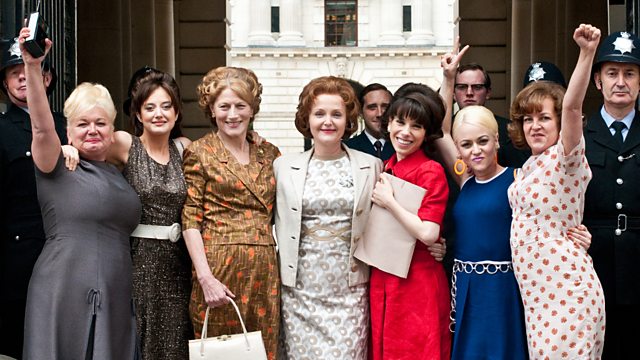
At the Ford factory in Dagenham, the female sewing machinists are not paid as skilled workers, and are forced to accept less work. Frustrated at the patronising attitude from their all-male union reps, and encouraged by foreman Albert (Bob Hoskins, lovely in one of his cuddliest performances), the women decide to go on strike for equal play, led by Rita O’Grady (Sally Hawkins). As public attention builds, the Ford owners in America mobilise for a battle and the strike attracts the interest of Secretary for Employment Barbara Castle (Miranda Richardson), someone who knows the struggles a woman faces in a man’s world.

It’s no great surprise based on the fluffy, charming tone of this film that Nigel Cole’s previous credit was Calendar Girls. (Also no surprise that, like that film, this has been turned into a crowd-pleasing stage musical.) William Ivory’s script deftly sketches out some familiar movie-dynamics for its characters, establishes clear heroes and villains, gives us a good sprinkling of information and “things to think about”, mixes in at least one tragic sub-plot and provides a steady stream of high points, heart-string tugging moments and punch the air moments. As a piece of writing playing to the masses, it’s pretty flawless.

It’s in love with the 1960s details, with nostalgia dialled up to 11, with a love of the look, feel and styles of the era and plenty of sound cues mixed in that will have you tapping your toes. It’s all designed for you to have fun, and if that means some of the deeper questions get a bit lost at points, that doesn’t really matter. 

And there is more than enough enjoyable material to be seen in setting up a series of bigoted or patronising men (gamely played principally by Kenneth Cranham and Rupert Graves) and seeing them knocked down. You could argue that a slightly braver film would touch at the implications of what Richard Schiff’s corporate big-hitter says about equal pay: make it more expensive to make cars here and we will make our cars somewhere else. (In fact it was pretty hard to forget that, watching the film today, as Brexit has already caused at least three major car factory closures in the UK. In fact the film is very happy to talk all about equal pay for women in the Western World but never even raises the question of how we are quite content to have people in the third world slave away in conditions far worse than this for a few pennies an hour.) But that’s not the film’s point, and instead it’s all about those male-female relationships. 

Sally Hawkins does a good job as a woman slowly growing a social and political awareness and then turning that new-found enlightenment on her own domestic life with well-meaning but of-his-time husband Eddie (a sweet but cluelessly sexist Daniel Mays). It’s all conventional stuff, but Hawkins and Mays play it very well.

The real meat actually comes from plotlines elsewhere. Rosamund Pike is excellent as a woman with a first in history from Oxford, reduced to wheeling out nibbles for her patronising husband and keeping her ideas to herself. Geraldine James and Roger Lloyd-Pack get the tragic plotline of a couple struggling with his post-war undiagnosed PTSD, which gets most of the heart-string tugging. 

Eventually all is made well by Miranda Richardson’s Barbara Castle, floating into the picture to wave a magic wand and save the women’s bacon. Richardson thoroughly enjoys herself in a rather cardboard role, at least two scenes of which are solid exposition, in which Castle’s lecturing of two uppity civil servants is used to introduce the political context. By the end you won’t be surprised that good triumphs. But it’s a film which largely only looks to put a smile on your face, and doesn’t really look at the wider implications or injustices of unequal pay. To the film’s credit it has a final montage of the real Ford women talking about their lives and the battles they had to be respected, which gives it a bit of extra depth. A truly brave film would have found a few minutes – and that’s all it really needs – to look at the wider issues (then and today) economically and socially, and to make us think a little. As it is this just entertains, which is what you want, but it could be more.

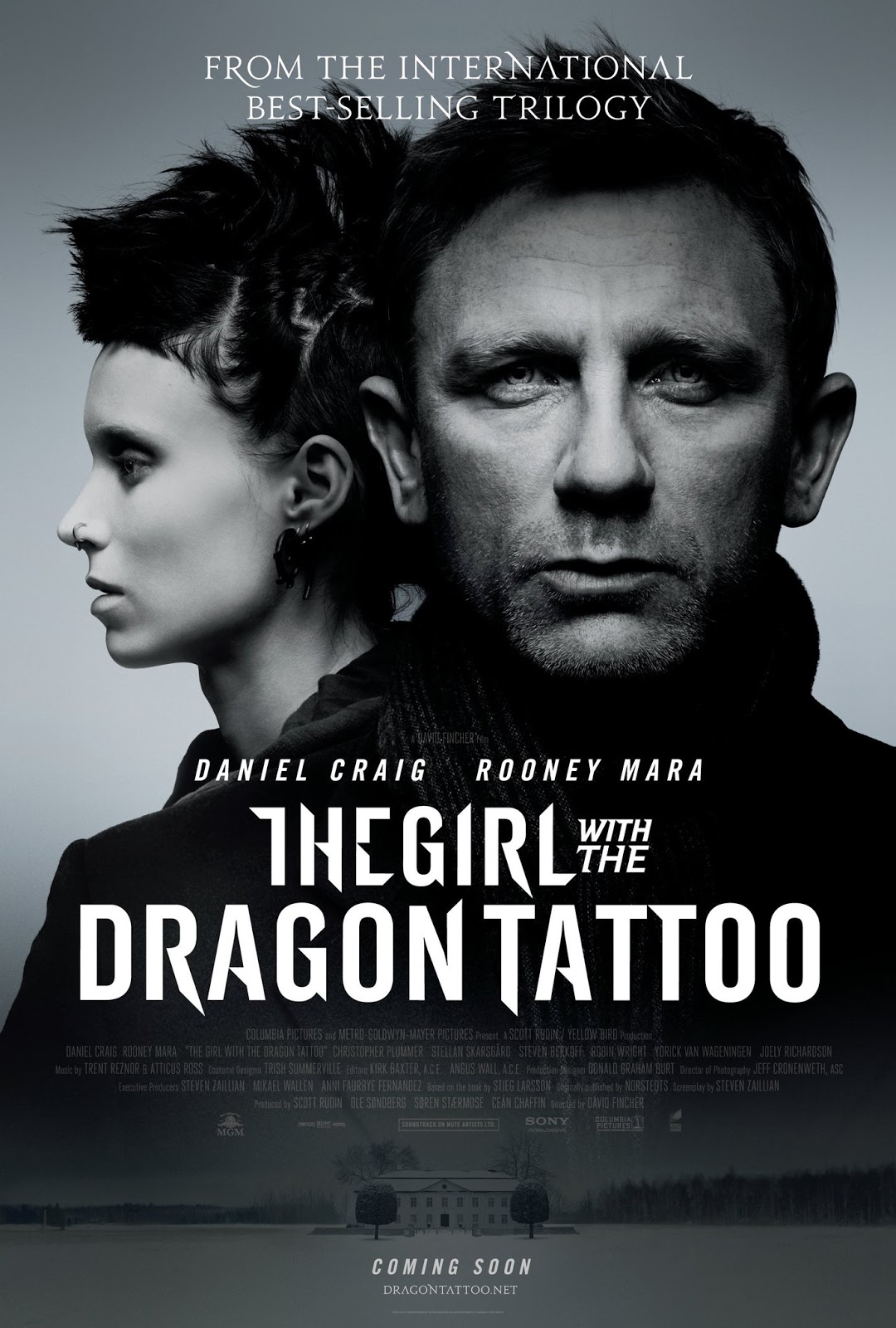
The Girl with the Dragon Tattoo (2011)

Rooney Mara and Daniel Craig investigate unspeakable evil in David Fincher’s superb The Girl with the Dragon Tattoo adaptation

Director: David Fincher

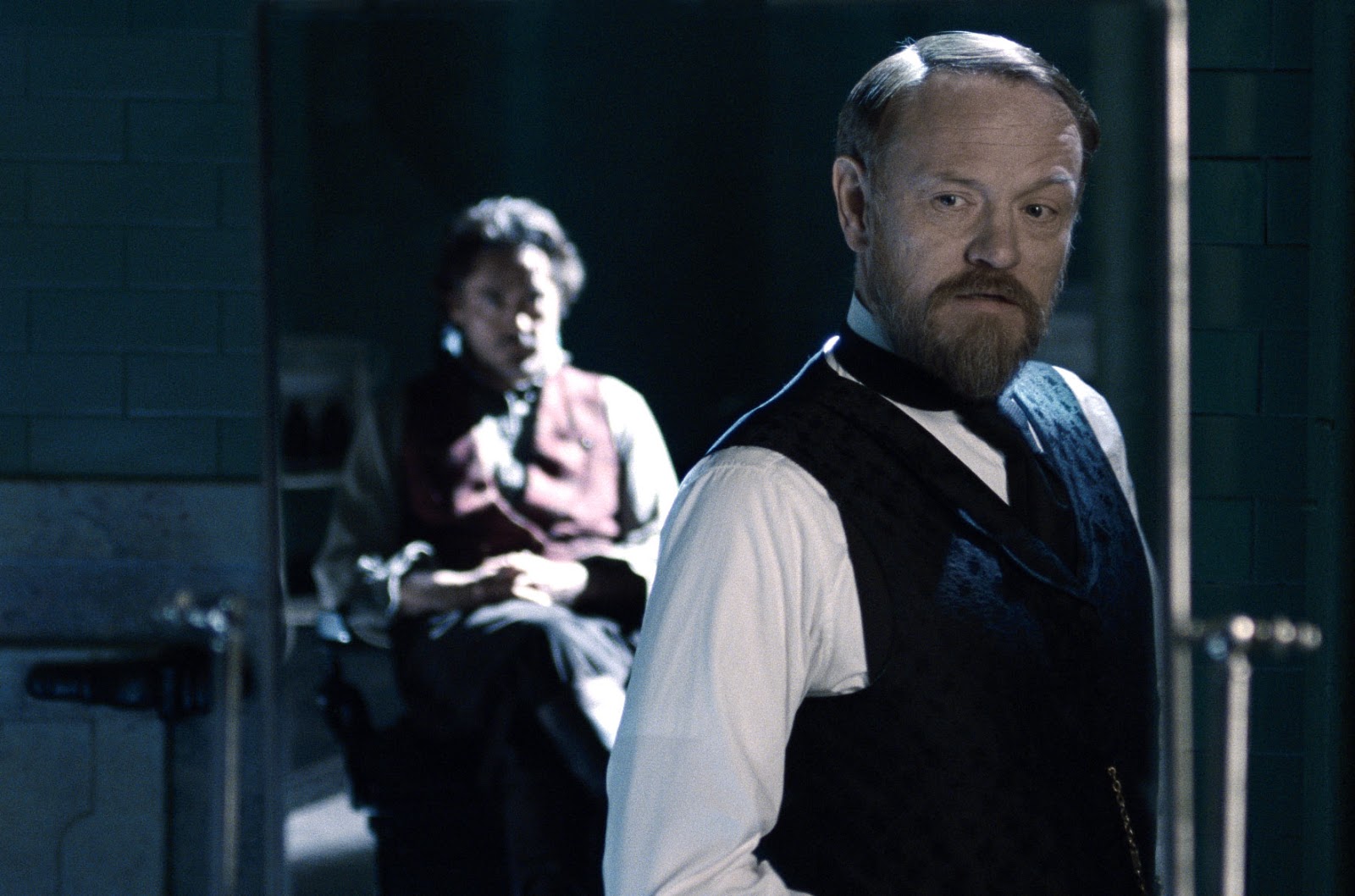
Cast: Daniel Craig (Mikael Blomkvist), Rooney Mara (Lisbeth Slander), Christopher Plummer (Henrik Vanger), Stellan Skarsgård (Martin Vanger), Steven Berkoff (Dirch Frode), Robin Wright (Erika Berger), Yorick van Wageningen (Nils Bjurman), Joely Richardson (Anita Vanger), Goran Višnjić (Dragan Armansky), Donald Sumpter (Detective Morell), Ulf Friberg (Hans-Erik Wennerström), Geraldine James (Cecilia Vanger), Embeth Davidtz (Annik Giannini), Julian Sands (Young Henrik Vanger), David Dencik (Young Morell), Tony Way (Plague), Alan Dale (Detective Isaksson)

At the time of its release, there was a slightly cool reaction to David Fincher’s The Girl with the Dragon Tattoo. Most reviewers were already familiar with the story twice over, firstly as the best-selling thriller then as the Swedish film starring Noomi Rapace. Perhaps fans were similarly slightly indifferent, while newbies had already declined the first two options, as the film struggled to crawl its way to breakeven. However, rewatching it, I feel this intriguingly well-made film deserves to be mentioned in the same discussion as another adaptation of a pulp thriller made 20 years earlier: The Silence of the Lambs.

Mikael Blomqvist (Daniel Craig) is a crusading financial journalist and co-owner of Millenniummagazine, whose career is in ruins after his article about the CEO of a major company leads to him losing a costly legal battle for libel. He is approached by retired businessman Henrik Vanger (Christopher Plummer), who asks him to investigate the 40-year-old disappearance of his niece Harriet Vanger, who vanished on their privately owned island estate. Blomqvist is hired after an exhaustive investigation into his personal life by emotionally challenged hacker and private investigator Lisbeth Slander (Rooney Mara), who is facing her own problems of gaining her independence from her position as a ward of the state, represented by her vile guardian Nils Bjurman (Yorick van Wageningen). As Blomqvist investigates, eventually with the help of Lisbeth, the trail takes a very dark turn suggesting a sinister hand behind the disappearance not only of Harriet but also of a number of other women around Sweden.

Fincher’s crisply made, icily cold movie embraces the coldness not only of wintery Sweden, but also the film’s chilling subject matter. There are very rarely – if ever – flashes of colour or light, with the world taking on an oppressive blackness and grey or windswept bleakness. It’s a perfect metaphor for the horror of what people do to each other. It’s brilliantly assembled, as you would expect from Fincher, and made with such consummate skill and excellence that its professional chill becomes almost oppressively unsettling, much like the plot itself.

Re-watching it I was put very much in mind of The Silence of the Lambs. That too was a masterfully made adaptation of a pulp novel that found a poetry and depth in the book, framing it around a series of unconventional relationships, with a female lead pushed into a role that sharply defies expectations. Both have at their centre a dangerous figure whose interests align with the other characters. Brilliantly, here the role of dangerously unpredictable genius and unexpected female role are both taken by Lisbeth Slander. (In fact Lisbeth is like a fusing of Clarice and Lector into one character). 

Like Lambs, which tapped into the 1990s obsession with the power of psychiatry and self-analysis and used it as the key to uncovering and defeating criminals, this takes our fascination with computers and the internet and uses that as silver bullet for finding criminals. Just as in the 1990s psychiatrists seemed to have access to some sort of mystical alchemy no one else could understand, so the film shows Lisbeth’s hacker skills as some sort of super power that can blow down secrets and accomplish things no one else can do. 

The film also echoes Lambs in its fascinating look at the place of women in the world. The film revolves around historical violence against women – when we finally have the killer unveiled he confirms women have only ever been his targets – and the film is heavy (in often wordlessly narrated flashbacks) with ominous feelings of danger from a domineering male culture. The world clearly hasn’t changed that much either. The killer continues to operate, everyone in a position of influence we see is an ageing man, Lisbeth’s ward is a vile sexual abuser. But, in this milieu of threat to women, Lisbeth becomes a sort of icon of a woman living life on her terms and taking control of her own life.

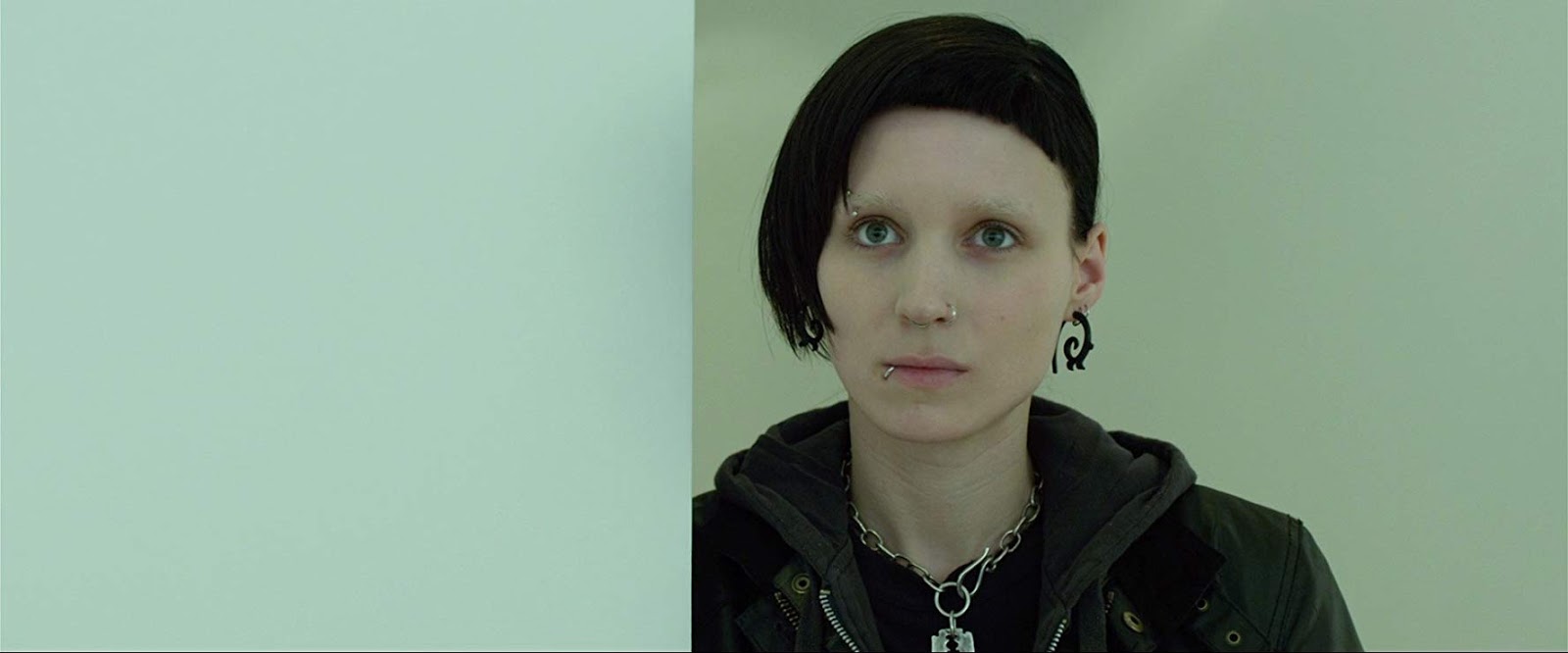
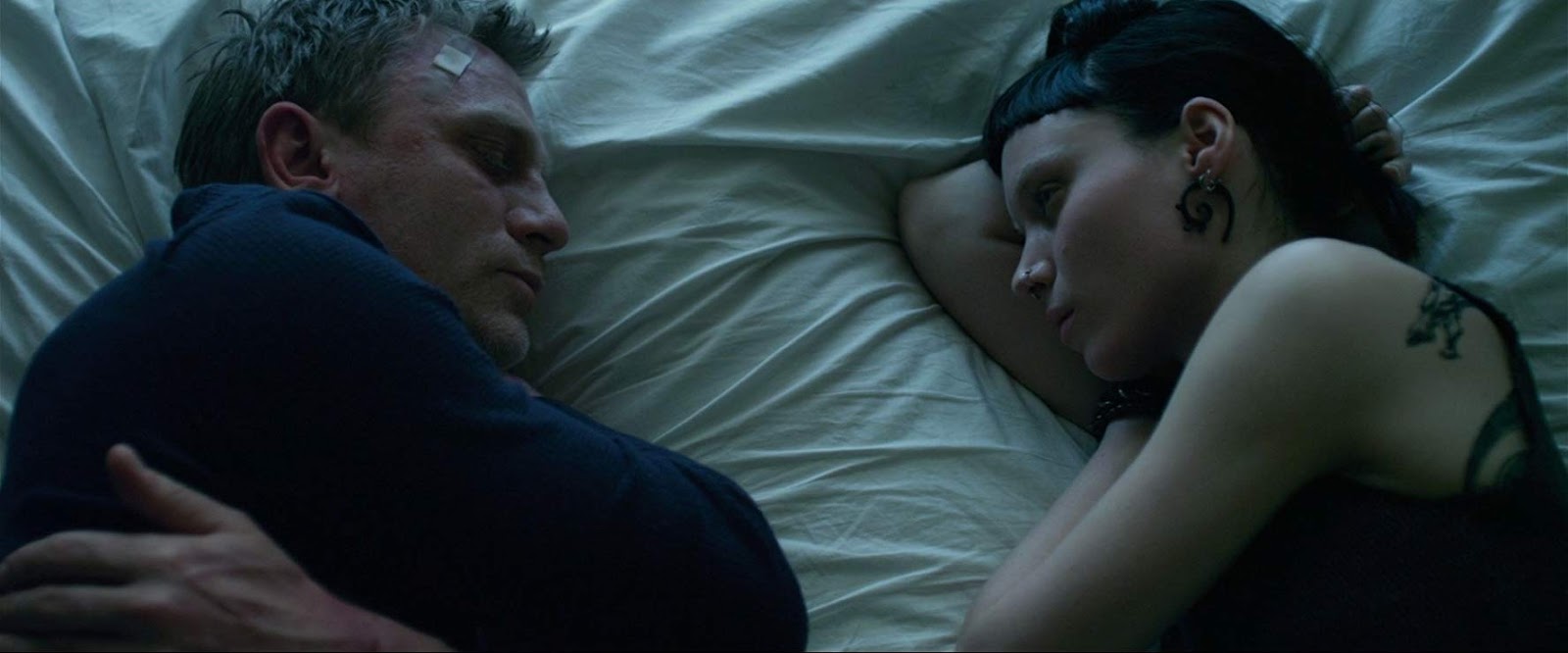
Impressively embodied by an Oscar-nominated Rooney Mara, Lisbeth is the sort of character you would normally expect to be a man: surly, anti-social, difficult, prone to violence, sexually indiscriminate, determined to always be in control and decisive in her relationships. She quickly takes the lead in her relationship with Mikael, professionally and later sexually (right down to her telling him where to put his hands during their passionate but also functional sex scenes). Mikael meanwhile takes far more the traditional “female” role: dedicated, hard-working, maternal, competent but better placed as the assistant to a true genius. Daniel Craig gives him a slightly rumpled middle-age quality, combined with a feckless recklessness that lands him in trouble.

The film is Lisbeth’s though, and Fincher brilliantly uses early scenes to establish her defiant, independent character. From snatching her bag back (brutally) from a would-be mugger on the underground, to a surly, blunt lack of respect she shows to a client, she’s painted clearly as a person who will respond how she wants, regardless of any “rules”. But Fincher also makes time to show her vulnerability. Lonely and insecure, she has worked hard to kill any vulnerability in her and protect herself from emotional pain. To see the small notes of tenderness she allows out – from her reaction to a former guardian suffering a stroke to her increasing emotional investment in Mikael – is strikingly engaging.

And we definitely see her suffering. If we had any doubts about one of the themes of this film being about how powerful men abuse and control women, the sub-plot of Lisbeth’s abusive warden (played with the pathetic, creepy relish of the small man enjoying what control he has by Yorick van Wageningen) hammers it home. The four key scenes between these characters cover a mini-arc in themselves from abuse of power, assault, revenge and power shift. Lisbeth may suffer terribly – more than she expects, much to her shock – but the sequence not only shows her ability to survive but also to turn the tables to her advantage. You could argue that this sort of rape-revenge fantasy might trivialise the impact rape has on real people – but it’s crucial for the theme of the film that there is hope that the sort of scum that abuse their positions can be stopped and that victims can survive and thrive. 

And you’ll need this as the film expands both into the past and the present day into a series of increasingly grim cases of historical abuse and murder. Fincher presents all this with the same brilliant, non-exploitative control that Jonathan Demme managed in Lambs. Despite the horrors of the themes, there is no lingering on anything graphic. Instead Fincher uses the tension of slowness, of steady camera work, of careful pacing to let tension and unease build up as we feel something is horribly wrong but never can be quite sure what. The final confrontation with the killer is not only deeply unsettling for it being one of the most brightly lit sequences of the film, but also for the middle-class banality of the villain’s taste (you’ll never listen to Orinoco Flow in the same way again) and the fascinatingly business-like approach he brings to his deeds of slaughter. 

The Girl with the Dragan Tattoo is such a well-made film that perhaps that’s its greatest weakness. It’s a little too easy to see a lack of personality in it, a professionalism, a clean perfection, a master craftsman quality, that you feel you are watching a studio picture made by a great director. And maybe you are: but then you could say the same about many of Hitchcock’s film, a director Fincher consciously echoes here. Superbly acted not just by the leads but by the whole cast (Plummer, Skarsgård and Wright are excellent while even Berkoff gives a restrained performance) The Girl with the Dragon Tattoo is the sort of film that will surely only be considered in a warmer and warmer light as time goes by.

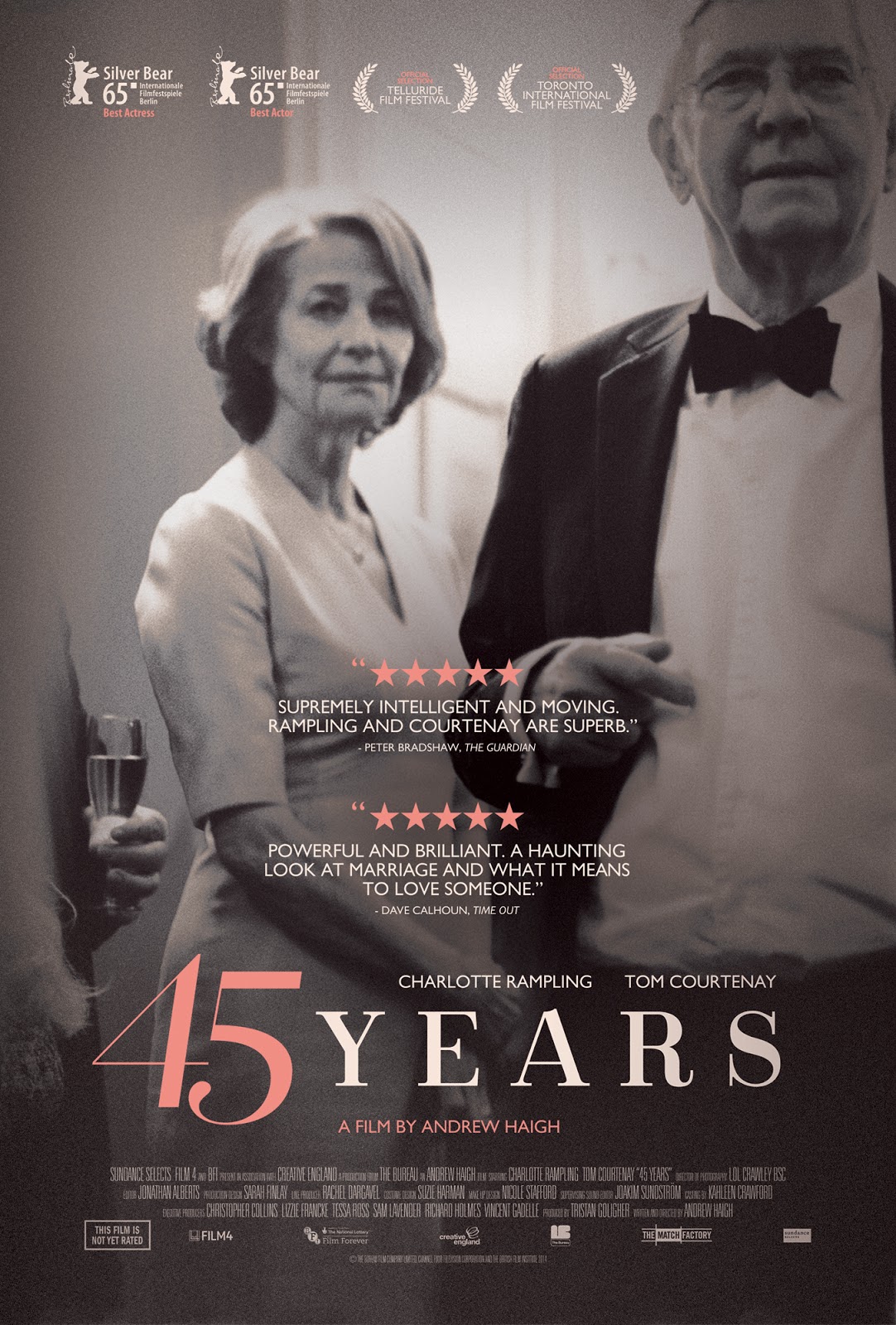
45 Years (2015)

Tom Courtenay and Charlotte Rampling excel in a successful marriage suddenly going wrong after 45 Years

Director: Andrew Haigh

Cast: Charlotte Rampling (Kate Mercer), Tom Courtenay (Geoff Mercer), Geraldine James (Lena), David Sibley (George), Dolly Wells (Charlotte)

What would you do if you found out, after 45 years, that there were huge things you never, ever, knew about the partner you had shared your life with? That the very basis of your marriage is completely different than you believed? How would that change everything you remembered before that? How could that change where your marriage may go in the future?

That’s the situation Kate Mercer (Charlotte Rampling) a retired teacher in a quiet country house outside Norwich finds herself in. Five days before their 45th wedding anniversary party, her husband Geoff (Tom Courtenay) receives a letter from the German police notifying them the body of a girl who died 50 years ago, Katya, has been found. Katya had been lost falling into a crevasse on a climbing holiday with Geoff. Geoff is profoundly shaken and distracted by the news – and over the next week, it emerges his relationship with Katya was far more profound and important to him than he has ever mentioned to Kate (and in fact he has never mentioned Katya to her before).

Counter as it runs to spoiler territory, I’ll say off the bat that Geoff did not murder Katya (the obvious, knee-jerk, twist we expect from years of films). Instead this is a far more complex and engaging story about the impact profound, emotional revelations can have on relationships that seem as strong and long-lasting as between Geoff and Kate. The film follows a single week as long since buried feelings, emotions and resentments begin to simmer and burst out – and as Kate begins to question everything she has ever understood about her Geoff and her life.

And how shocking would that be if you learned things about the person you loved that suddenly made them feel like a completely different person? And how could you ever begin to compete the with the romantic image your partner has in their head of someone who died 50 years ago, before they ever met you, but whom you start to feel everything you have ever done or said has been quietly, maybe even subconsciously, judged against?

45 Years is a hugely intelligent, acute and engrossing film. Virtually a two hander, it relies on the actors – shot by Haigh with an intimacy that immediately establishes their own long running and secure relationship – the film is a series of carefully structured conversations, many of which have the surface appearance of normality that hides far deeper emotional currents of angry, loss, grief, doubt and resentment. The film brilliantly taps into our own fears of having secrets kept from us, of being betrayed in some way – even if the betrayal is far more complex than expected.

And it understands completely that time here is not a healer. Instead, like some sort of monolithic ghost, Katya invades Kate and Geoff’s life. For Geoff it brings back a flood of feelings that he had long since repressed and pushed to one side. For Kate, these age old events have all the pang of newly discovered revelations. For them both Katya’s death may as well have been a few days not fifty years ago. Suddenly, her memory begins to permeate every inch of their home and every second of their (previously) happy marriage.

All this is played with expert compassion and humanity by Tom Courtenay and a possibly career-best Charlotte Rampling. Rampling (famously cheated of a BAFTA nomination like Courtenay but honoured with an Oscar nomination) mines untold depths of vulnerability, emotional doubt and insecurity that solidifies into barely acknowledged feelings of anger, pain and resentment. The final sequence of the film – set at that celebration party we were waiting for – rests on her brilliance at wordlessly reacting as she slowly processes the things that she has discovered in the last few days, and how they have changed her perception of both her, her husband and the decisions she and he have made in their lives.

Tom Courtenay is equally good as Geoff, becoming increasingly distant, withdrawn and anger, but (in that very British way) trying to pretend nothing has changed. He throws in flashes of carefree fun and moments of trying to jolly on, but it’s never really real. The two actors are also brilliant at suggesting the lived in comfortableness of a long term relationship, every scene of theirs having a careful short hand of intimacy. Two sublime performances.

The whole thing is brilliantly packaged by Andrew Haigh’s subtle and careful direction into something that haunts the imagination long after it finishes. It’s the sort of film you’ll be desperate to discuss with people as soon as it finishes, to try and understand and interpret what you’ve seen in it. That final sequence is a perfect pay off for everything you’ve seen before, a brilliant sequence of uncertainty and hesitation. Fabulous film making and a very good film.

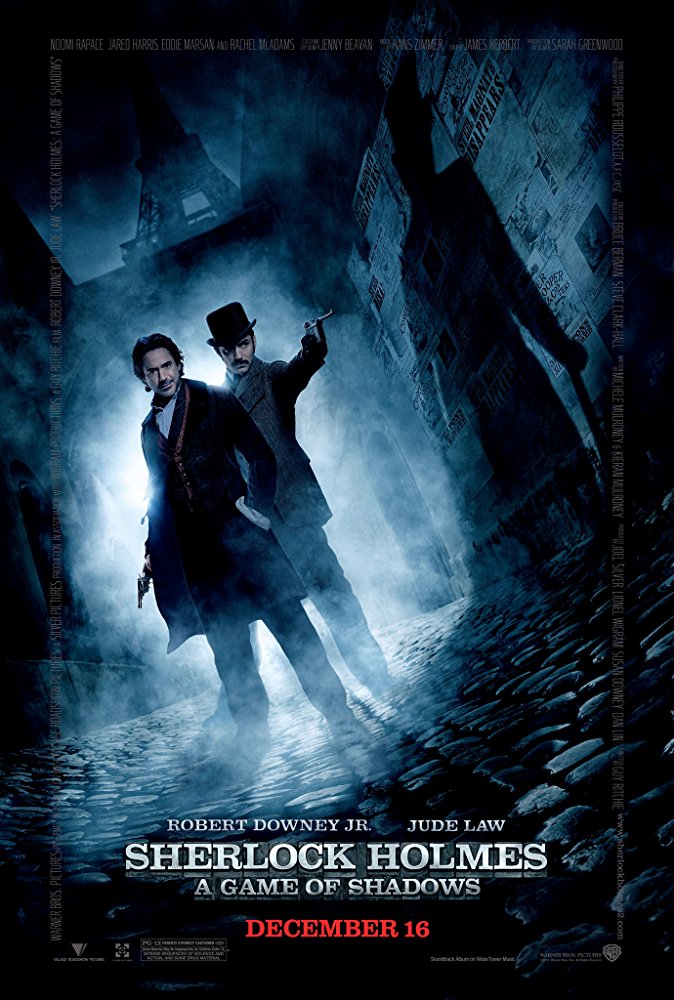
Sherlock Holmes: A Game of Shadows (2011)

Our heroes are on the run in Sherlock Holmes: A Game of Shadows

Director: Guy Richie

Cast: Robert Downey Jnr (Sherlock Holmes), Jude Law (Dr John Watson), Jared Harris (Professor James Moriarty), Noomi Rapace (Madame Simza Heron), Stephen Fry (Mycroft Holmes), Kelly Reilly (Mary Morstan), Rachel McAdams (Irene Adler), Eddie Marsan (Inspector Lestrade), Paul Anderson (Sebastian Moran), Geraldine James (Mrs Hudson), Thierry Neuvic (Claude Ravache)

Sequels are tricky beasts. You need to work out what people liked about the first film and double down on it, while also expanding the story in new and exciting ways. When I first saw Sherlock Holmes: A Game of Shadows in the cinema, I was very sceptical about whether this film managed that. But actually, viewing it a second time around (and almost seven years later), I enjoyed it a lot more than I remembered.

As Watson (Jude Law) prepares for his wedding to Mary Morstan (Kelly Reilly), Sherlock Holmes (Robert Downey Jnr) is consumed into an investigation targeting the “Napoleon of Crime” Professor James Moriarty (Jared Harris). A series of bombings across Europe is being blamed on anarchists – but is it in fact a scheme launched by Moriarty’s military-industrial complex to instigate a world war (from which he can make a profit)? Well what do you think?

Sherlock Holmes: A Game of Shadows doubles down most strongly on the relationship between Holmes and Watson. Recognising that the things from the first film everyone loved was the brotherly banter between these two, the sequel places it front and centre. While the first film felt the need to introduce a traditional love interest for Holmes, this film kills off Irene Adler in the first few minutes (despite this, poor Rachel McAdams has better material here than most of the first film). Instead the true “romantic” relationship of the film is Holmes and Watson, as they banter, bicker and make huge sacrifices to protect each other. 

It’s helped again by Downey Jnr and Law’s excellent performances and their strong chemistry. Saying this, the first half hour of the film thinks it’s funnier than it is, with its intermixing of Watson’s stag night with a series of Downey fights. There is a little too much brashness to it early on, without sufficient grounding in the warmth between the two characters. But once we hit the real action 40 minutes into the film, the balance between comedy, affection and peril is pretty effectively met.

And Ritchie directs some very fine action sequences here. There is an extraordinary sequence of a chase through the forest, which uses an exquisite mixture of hand held cameras, Steadicam, slow motion and half a dozen other tricks to deliver a series of striking and immersive shots. Yes it’s overblown and in-your-face but it works perfectly. The film is crammed with brash, powerful action scenes like this that really strike you between the eyes. 

It also still keeps in touch with the original novels in a nice way. Some of the best dialogue scenes are those between Holmes and Jared Harris’ muscular but serpentine Moriarty (Harris is very good, a far stronger villain than the first film). These scenes use dialogue from the original stories extremely effectively. Meanwhile, its build towards its version of the Reichenbach fall is actually very clever, one that twists on the movie’s “calling card” of Holmes predicting every move of a fight before it begins by having Moriarty pull the same trick (which is in itself a neat scene).

Where the film does fall short amidst all this action and explosions and jokes (some good, some bad) is that we don’t get much in the way of investigation or deduction. There is a bit of sleight-of-hand and a touch of pocket picking, but most of the “deductions” are based on highlighting with the camera or dialogue objects that might as well be labelled “Important Plot Device”. Holmes doesn’t so much as investigate here as charge head first from one combat sequence or dangerous situation to another. There isn’t a lot of patience in his method here – and not a lot of patience in the film itself. But then this film is largely based on The Final Problem, probably one of the least “detective” of the stories in the cannon.

But Game of Shadows is very good fun, has some neat action sequences, is well shot and is more or less entertaining, even if some of the comedy suggests it’s a little too pleased with itself. Sure it loses some of the smaller-scale delights of both the books and original film in its rush to make sure you are wowed. But I enjoyed it a lot more the second time round, since I’d watched the original film more recently and was tuned up into what it was trying to do.

Sherlock Holmes (2009)

Robert Downey Jnr and Jude Law made a great odd couple in Sherlock Holmes

Director: Guy Richie

Cast: Robert Downey Jnr (Sherlock Holmes), Jude Law (Dr John Watson), Rachel McAdams (Irene Adler), Mark Strong (Lord Henry Blackwood), Kelly Reilly (Mary Morstan), Eddie Marsan (Inspector Lestrade), Hans Matherson (Lord Coward), James Fox (Sir Thomas Rotheram), Geraldine James (Mrs Hudson), William Houston (Constable Clark), William Hope (Ambassador Standish)

I don’t think there has been a single character brought to the screen more often than Sherlock Holmes. Sure there are certain tent-pole performances (Rathbone, Brett, Cumberbatch) that people automatically think of when you say “Sherlock Holmes”, but there are hundreds of others. It’s a character that survives constant re-imagination. In fact, you could argue it’s pretty much vital to bring something of your own to the table when putting together a Sherlock Holmes dramatisation. It’s what made Sherlock so successful. And it’s something that works very well here.

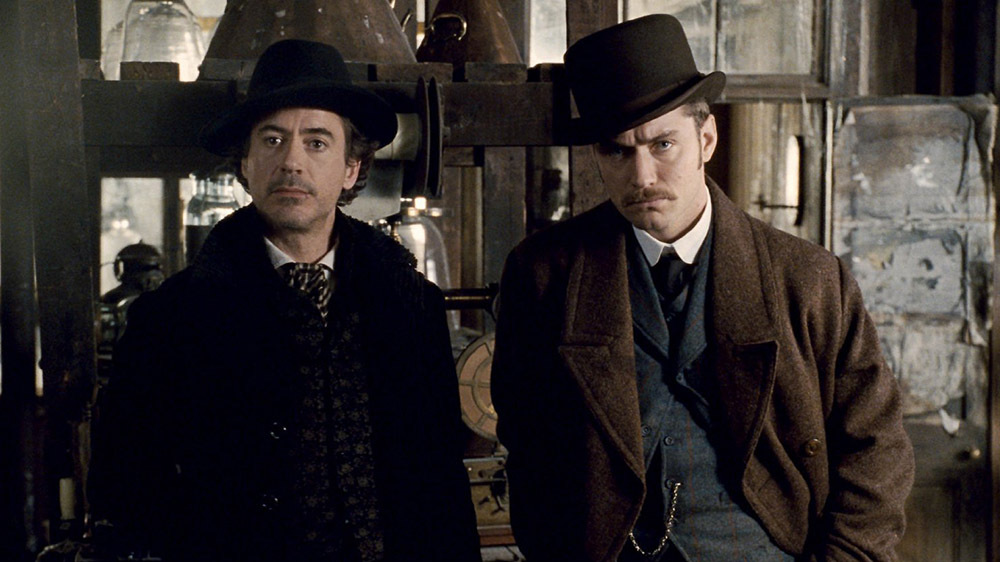
Sherlock Holmes (Robert Downey Jnr) is part Bohemian artist, part mad scientist, part kickboxer. The sort of guy who can think so far ahead he can plan out an entire fight in his mind before it even begins. He’s partnered up with determined, smart, handy-with-a-sword Dr Watson (Jude Law). With Watson preparing to move out of 221B to marry Mary Morstan (Kelly Reilly), they take on their last case: defeating creepy Dracula-lite Lord Blackwood (Mark Strong), who claims to have returned from the dead and wants to take over the British Empire. Along the way they are helped (or hindered) by the mysterious Irene Adler (Rachel McAdams) an old flame of Holmes’.

Guy Ritchie’s rollicking adventure is actually a huge amount of fun that, underneath the crashes and bangs, actually has a really strong respect for the original stories (the film is littered with references and quotes from the originals, none of which feel shoe-horned in except maybe Rachel McAdams’ Irene Adler, perhaps because the producers felt Holmes needed a love interest to stop any worries that he might be a bit too much in love with Watson). Ritchie has crafted a Holmes-Watson relationship that repositions them as a sort of odd-couple surrogate brothers, a marriage of equals (and make no mistake, a marriage is basically what this Holmes and Watson have). It’s big and silly, but then so were the original stories (The Creeping Man anyone?). 

Ritchie is a film-maker it’s easy to find faintly annoying, with his faux-geezer attitudes, his bizarre philosophical views and his love of the poor-taste gag. But on this film he’s basically a director-for-hire rather than putting his own story together and, you know what, putting this director into a studio strait-jacket is actually pretty good. It smacks some disciple on him, makes him drop his indulgent and poor-taste jokes and instead brings his strengths as a director – his sense of pace, his eye for a witty image, his rollicking sense of fun – to the fore. That’s probably why this is his most enjoyable and best film. 

It’s a film that mainly works because Downey Jnr and Law make a terrific pairing as Holmes and Watson. They have great chemistry, they spark off each other extremely well as performers and they really give the sense of two life-long devoted friends. Both actors are very good here. The film hits these notes of male friendship extremely well – a mixture of mocking and abuse, mixed with devotion and loyalty. The film gets the balance of these things exactly right: from debates to fights, you really get a sense that these two are honorary brothers, almost a bickering old married couple. 

In fact, the whole film revolves quietly around this relationship coming under threat (as Holmes sees it) of Watson leaving Holmes to get married – although, nicely, the film makes clear his fears of Mary are completely unfounded. Part of the dual engine of the film is Holmes continuing to tempt Watson into getting more and more involved with his cases, because he doesn’t want to lose his friend. It’s actually quite sweet. As are the protective feelings both have for the other: Watson knows Holmes puts himself at ridiculous risks, in turn Holmes shows a gentle worry for Watson’s gambling addiction (a popular Sherlockian society interpolation from references in the story).

All this warm, brotherly stuff from two excellent performers is built into a dramatic, thrillingly shot, series of action and detection scenes. The film’s big gimmick is Holmes’ ability to use his analytical abilities to accurately predict the outcome of fights (which the film communicates with slow motion and forensic narration by Downey Jnr, before staging the entire fight again at real time). It’s actually a fairly neat way of turning his deductive abilities into a visual language. Alongside this, plenty of this great fun – exciting or, as in Holmes’ battle with a 7ft giant, funny. All hugely entertaining.

Placing the focus on this relationship and the action does mean that the mystery elements of the plot get a bit short-changed. The story is a rather silly series of near-Dracula style high-Gothic mysteries that may or may not be real (all these occult references more than echo The Young Sherlock Holmes!). There isn’t much in the way of the small intricate puzzles of the early stories here – but then plenty of the later ones became increasingly hyper-real Gothic stories, so I guess that is fine. Mark Strong does a decent job as the villainous Blackwood, using his sinister looks and imperious voice extremely well. 

It also looks wonderful – the photography and set design is marvellous – and the score by Hans Zimmer must be one of his best ever, a sprightly mix of Irish music, Westerns and Music Hall. Ritchie directs it with a wonderfully, tongue-in-cheek, entertaining sprightliness, like Sherlock Holmes meets Indiana Jones. Holmes more than survives his re-imagination as an action superhero – and in fact he brings across a lot of the tone and character of the original book along with him. A terrific entertainment and a more than worthy entry to the Holmes movie cannon.