
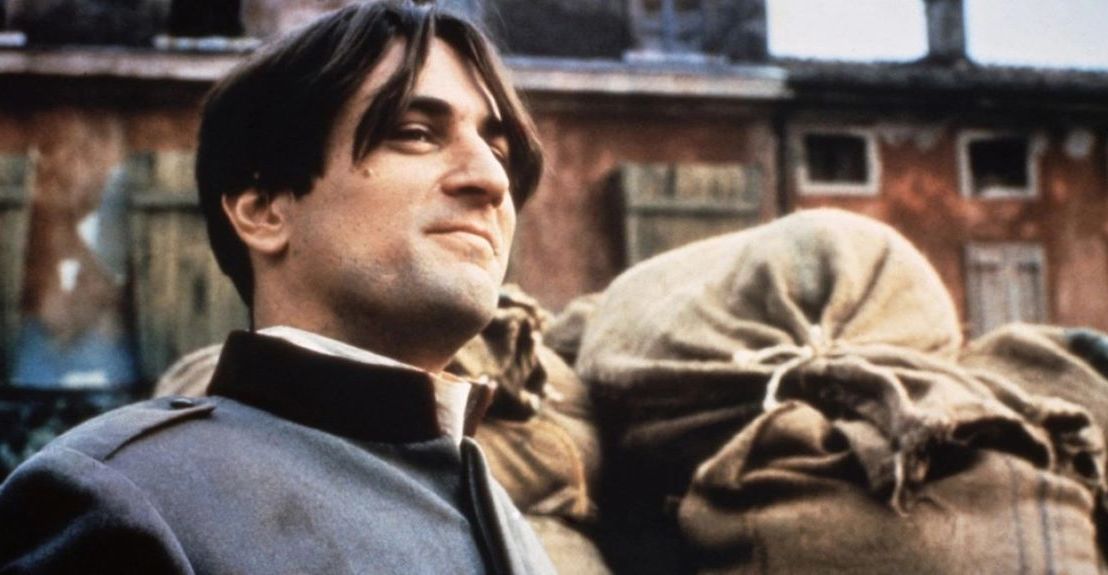
Tag: Gérard Depardieu

1900 (1976)

1900 (1976)

Bertolucci’s bloated, self-indulgent and simplistic film is a complete mess

Director: Bernardo Bertolucci

Cast: Robert De Niro (Alfredo Berlinghieri), Gerard Depardieu (Olmo Dalco), Dominique Sanda (Ada Fiastri Paulhan), Donald Sutherland (Attila Mellanchini), Laura Betti (Regina), Burt Lancaster (Alfredo Berlinghieri the Elder), Stefania Sandrelli (Anita Foschi), Werner Bruhns (Ottavio Berlinghieri), Stefania Casini (Neve), Sterling Hayden (Leo Dalco), Francesca Bertini (Sister Desolato), Anna Henkel (Anita the Younger), Ellen Schwiers (Amelia), Alida Valli (Signora Pappi)
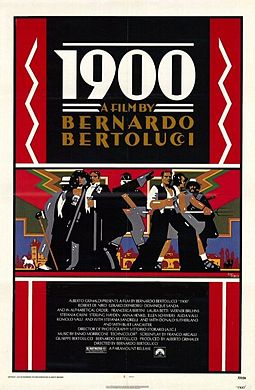
After The Conformist and Last Tango in Paradise, Bertolucci could do anything he wanted. Unfortunately, he did. Perhaps the saddest thing about 1900 is that you could watch The Conformist twice with a decent break in-between during the time it would take you to watch it– and get a much richer handle on everything 1900 tries to do. Bertolucci went through a struggle to get his 315-minute cut released: perhaps the best thing that could have happened would have been if he had lost. Not only would the film be shorter, but it would be remembered as a lost masterpiece ruined by producers, rather than the interminable, self-indulgent mess we ended up with.

1900 – or Twentieth Century to literally translate its title Novecento – follows the lives of two very different men. Born minutes apart in 1901, Alfredo (Robert De Niro) is the grandson of the lord of the manor (Burt Lancaster), while Olmo (Gerard Depardieu) is the grandson of Leo (Sterling Hayden), scion of a sprawling dynasty of peasants. They grow up as friends, Olmo becomes a socialist and Alfredo an indolent landlord and absent-minded collaborator with the fascists, embodied by his psychopathic land agent Attila (Donald Sutherland). Their small community becomes a symbol of the wider battle between left and right in Italy.

In many ways 1900 is an epic only because it is extremely long and beautifully shot in the Bologna countryside by Vittorio Storaro. In almost every sense it fails. It offers nominal scale in its timeline, but its attempt to become a sweeping metaphor for Italy in the twentieth century falls flat and it focuses on a small community of simple characters, many of whom are ciphers rather than people. All of Bertolocci’s communist sympathies come rushing to the fore in a film striking for its political simplicity. It never convinces in its attempt to capture in microcosm the forces that divided Italy between the two world wars, nor invests any of its characters with an epic sense of universality.

Instead Bertolucci presents a world of obvious questions and easy answers. Every worker is an honest, noble salt-of-the-earth type, working together in perfect harmony to fight for rights. Every single upper-class character is an arrogant, selfish layabout, caring only about their back-pockets and the easy life. Bertolucci suggests fascism only arose in Italy as a means for the rich to control the poor, and never allows for one moment the possibility that any working-class person was ever tempted to take their side. It never rings true. (Bertolucci skips a huge chunk of the fascist 30s and 40s, possibly because this fantasy would be impossible to sustain if he actually focused on the history of that era.)

Bertolucci uses his two protagonists to make painfully on-the-nose comparisons between working class and rich with De Niro’s weak-willed Alfredo always found wanting compared to Depardieu’s Olmo. Even as children, Olmo is braver, stronger and smarter. Olmo has the guts to lie under the moving trains (Alfredo runs), Olmo stands up for what he believes in (Alfredo looks away), Olmo puts others first Alfredo whines about his own needs. Hell, Olmo even has a bigger cock than Alfredo (something they discover comparing penises as children and re-enforced when as young men they share an epileptic prostitute and she ‘tests’ them both).

The upper classes hold all the power but can do nothing without the working class. During the 1910s, a strike by the workers on the Berlinghieri leaves the clueless rich unable to even milk their moaning cows (they buy milk instead). Sterling Hayden’s peasant patriarch is a manly inspiration to all, while Lancaster’s increasingly shambling noble is literally and metaphorically impotent (Lancaster’s role is like a crude commentary on his subtle work in The Leopard). At one point he even pads around barefoot in horseshit to hammer home his corruption. (Incidentally this is the only film where you’ll ever see a horse’s anus being massaged on camera to produce fresh shit to be thrown at a fascist.)

For the rich, fascism is the answer. Continuing to shoot fish in a barrel, Bertolucci scores more easy hits by presenting our prominent fascist as an out-and-out psychopath. Played with a scary relish by Sutherland – in the film’s most compelling performance – no act of degradation is too far for Attila. Along with his demonic partner-in-crime Regina (a terrifyingly loathsome Laura Betti), he routinely carries out acts of violence, horrific murder and child-abuse, even literally headbutting a cat to death while ranting about the evils of socialism.

The poor meanwhile are all good socialists. Olmo, decently played by Depardieu, and his wife Anita (an affecting Stefania Sandrelli) rally the workers to stand against charging cavalry and protect their rights. Bertolucci even has Depardieu flat-out break the fourth wall for a closing speech, spouting simplistic platitudes direct to camera about the inherent wickedness of the landowner. Depardieu at least seems more comfortable than De Niro among this Euro-pudding (every actor comes from a different country and the soundtrack is a mismatch of accents and dubbing, not least Depardieu himself). Rarely has De Niro looked more uncomfortable than as the empty Alfredo, a role he fails to find any interest in, like the rest of the actors never making him feel like more than a device.

Bertolucci, stretching the run-time out, also embraces numerous tiresome excesses. Rarely does more than 20 minutes go by without a sex scene or a sight of someone’s breasts or sexual organs. From children comparing penises, to Depardieu performing oral sex on Sandrelli (just outside a socialist meeting), to De Niro and Depardieu getting hand-jobs from a prostitute, to Sanda dancing naked and high on cocaine or the revolting exploits of Attila and Regina, nothing is left to the imagination. As each goes on and on Bertolucci ends up feeling more like a naughty boy than an artist, so praised for his sexual licence in Last Tango that he feels more is always more. The excess doesn’t stop with sex either: at one point a worker silently cuts his ear off in front of a landowner to make a point about his stoic nobility.

1900 eventually feels like you’ve stumbled into a student debating club, where a privileged student drones on at great length about the evils of the rich, while quaffing another glass of champagne. It has moments of cinematic skill – some of its time jump transitions, in particular a train passing through a tunnel in one time and emerging at another, are masterful – but it’s all crushed under its self-indulgence. From its length to its sexual and violence excess, to its crude and simplistic politics delivered like a tedious lecture, everything is crushed by its never-ending self-importance.

Jean de Florette & Manon des Sources (1986)

Jean de Florette & Manon des Sources (1986)

Luscious scenery and combines with fine acting to produce a sort of French Merchant Ivory

Director: Claude Berri

Cast: Yves Montard (César Soubeyrnan), Daniel Auteuil (Ugolin), Gérard Depardieu (Jean Cadoret), Emmanuelle Béart (Manon Cadoret), Elizabeth Depardieu (Aimée Cadoret), Ernestine Mazurowana (Young Manon), Hippolyte Girardot (Bernard Olivier), Margarita Lozano (Baptistine), Yvonne Gamy (Delphine)

At the time this double bill (which I’ll refer to as Jean de Florette unless specifically referring to the sequel only) were the most successful foreign language films ever released. Shot over seven months, they were also the most expensive French films ever made and garlanded with awards, including a BAFTA for best film. Jean de Florette turned Verdi into the soundtrack for France, while its photography transformed the rural idyll of Provence into a major tourist destination and the dream location for holiday homeowners. The films themselves remain rich, rural tragedies, gorgeous French heritage films, a sort of French Gone with the Wind replayed as Greek tragedy.

Told in two parts – although designed as one complete movie – they tell a story of how greed destroys lives in 1920s rural Provence. César (Yves Montard) is the childless landowner whose only hope of a legacy is his hard-working but dense nephew Ugolin (Daniel Auteuil). Ugolin dreams of growing carnations but the perfect land is frustratingly not for sale. When an argument with the owner leads to his accidental death, the land falls to Jean Cadoret (Gérard Depardieu) hunch-backed former tax collector from the city and son of Florette, the girl who broke César’s heart decades ago when she left the village while he impulsively served in the foreign legion.

César and Ugolin resent Jean – Jean of Florette as they call him – and hatch a plan to see his dream of a rabbit farm fail. They secretly block up the spring on Jean’s land and keep his connection to Florette a secret from the rest of the village, encouraging them to see him as an outsider and hunchbacked bad-luck charm. Ugolin befriends the decent, optimistic and hard-working Jean and watches the farm disintegrate. A decade later, in Manon des Sources, Jean’s daughter Manon (Emmanuele Béart) plots revenge for her father on Ugolin and César.

Jean de Florette and Manon des Sources were adapted from Marcel Pagnol’s novel – written, ironically, after Pagnol’s film Manon des Sources was butchered down by the studio in 1952 from four hours into an abbreviated two. It’s a richly filmed, luscious picture crammed with gorgeous locations, sweeping camerawork and marvellous score that riffs on Verdi. It’s an entertaining story of injustice and comeuppances. It’s first half (Jean de Florette) is an, at-times painful, unfolding of Jean’s inevitable failure. The second (Manon des Sources) sees all those chickens come home to roost as Manon’s suspicions about César and Ugolin’s duplicitousness are confirmed.

But what perhaps made Jean de Florette as successful as it was, is its mix of Merchant Ivory and BBC costume-drama. Many outside of France essentially took it as art because the characters spoke French. But Jean de Florette is a tasteful, classy, very well-made prestige package designed to be easily digestible. Claude Berri marshals events with the skill of a natural producer – he’s effectively a sort of French Richard Attenborough with a great deal of natural talent with actors, but without the true inspiration of the greats. You couldn’t mistake Jean de Florette as something made by Carné let alone Godard or Truffaut. It’s decidedly too carefully, tastefully made for that.

Which is not to say it isn’t in many ways a very fine film. Its construction is well-executed across its two parts. Berri makes clear that – for all the film showed a picture post-card view of France, encouraged to promote tourism and ‘traditional values’ by the government – the village our film is centred around is rife with prejudice and underlying hostility. It’s all too easy to for them to take against Jean: not only he is an outsider, he’s a tax-collector and a hunchback to boot. Prejudice naturally sets them against him (the villagers gleefully watch this “city man” destroy himself vainly trying to turn his dry land fertile). Manon des Sources makes clear the whole village at the very least suspected the spring had been deliberately dammed but effectively couldn’t be bothered to help.

It’s not a surprise as Jean’s techniques are totally alien to the traditionalists. Played by Depardieu with a wide-eyed enthusiasm, guileless honesty and trust, Jean takes on farming as if its another mathematical problem. He has books full of calculations and productivity rates he expects to hit, covering everything from rabbit breeding to the daily amount of soil and water needed for crops. He is prepared for anything except the cruelty of humans and the weather (Berri makes clear that, even with one arm tied around his back by the spring being blocked, he nearly manages to pull it off).

Instead, his super-human efforts come to naught. Forced to walk miles a day to carry gallons of water back to his farm to irrigate his land, he starts to resemble the weighted down donkey he drags with him. Rubicons are crossed one by one: even his wife’s necklace is eventually called on to be pawned, for all his promises that it would never come to that (fitting the Zolaish tragedy here, the necklace turns out to be worth sod all). Ugolin does everything he can to befriend and support Jean without helping him, even ploughing the land for him when Jean comes close to finding the hidden water supply. The events beat down Depardieu, here in one of his finest “man of the soil” peasant roles, until he is literally left shouting at the heavens, imploring God to give him a break.

This makes is all the easier to despise César and Ugolin, especially as Berri cuts frequently to these hypocrites giggling at their own deviousness and Jean’s suffering. It makes Manon des Sources – arguably the even more rewarding part – all the more satisfying as we watch the two of them slowly destroyed, events replaying themselves from the other direction. Manon des Sources features a performance of Artemis-like grace from Emmanuelle Béart as the older version of Jean’s daughter (the younger noticeably never trusted Ugolin), whose beauty enraptures Ugolin and who in turn dams the source of the village’s water to expose the crimes against her father.

It leads to a series of shattering reveals that break César and Ugolin from their satisfaction and complacency. These two villains are portrayed in masterful performances by Yves Montard and Daniel Auteuil. Under buck teeth and a foolish grin, Auteuil is sublime as a man who has it in him to be decent but is all too easily led by his forceful uncle. He regrets his actions, while never making an effort to reform and reverts all too easily into a love-struck Gollum, spying on Manon and literally sewing her lost ribbon into his skin. He’s a pathetic figure.

Montard has the juiciest part, which flowers into one of true tragic force in Manon des Sources. César is a man whose life of regret and loneliness has turned him into a bitter old man, grasping, greedy and hungry for a legacy. He treasures the few possessions he has of Florette – faded letters and a single hair comb – like relics and subconsciously can’t bring himself to actually meet her son. Suppressed sadness makes him every more tyrannical and foreboding. But Manon explodes this exterior, as events and revelations strip away all he holds dear. It culminates in a breath-taking sequence of raw grief from Montard – which depends on the magnetic power of his eyes – as his last delusions are stripped away and the true horror of his actions exposed to him.

It’s this emotional power that gives the two parts of Jean de Florette its force and impact and lift it the higher plain of its costume drama roots. It may be a very self-consciously prestige picture, designed to appeal to the masses, but Berri’s conservative style is matched with a great skill of drawing powerful performances from the actors. He does this in spades with his four leads and events eventually gain, through their performances, some of the force of a Provence Greek Tragedy. Jean de Florette manages to avoid melodrama and provides real dramatic meat and, while it is not high art, it’s certainly very high drama.

The Last Metro (1980)

The Last Metro (1980)

Passion, privacy, tension and terror all come to head in Truffaut’s stately theatrical occupation epic

Director: François Truffaut

Cast: Catherine Deneuve (Marion Steiner), Gérard Depardieu (Bernard Granger), Jean Poiret (Jean-Loup Cottins), Heinz Bennent (Lucas Steiner), Andréa Ferréol (Arlette Guillaume), Paulette Dubost (Germaine Fabre), Sabine Haudepin (Nadine Marsac), Jean-Louis Richard (Daxiat), Maurice Risch (Raymond Boursier)

The curtain parts and we are introduced to a magic world of imagination and drama play out before us on stage. But how can the actors immerse themselves in this, while such huge drama plays out in the real world? It’s the dilemma of the Montmatre theatrical troupe in Paris during the Occupation. With war raging with all its complex moral choices and dangers, how can you focus on the art within – or for the matter process the complex emotional entanglements in an already claustrophobic profession only made worse by the perils of Nazi occupied Paris and their pet collaborators.

Truffaut’s film is called The Last Metro as it recalls a period during the occupation when hundreds of thousands of people crowded into Parisian theatres to stay warm at night before rushing to catch the final train home before the curfew. The Montmatre Theatre is run by Marion Steiner (Catherine Deneuve), a film star turned stage actor struggling to keep the theatre going in the absence of her Jewish theatre-director husband Lucas (Heinz Bennett) – who, unknown to anyone else, is hiding in the theatre basement. Bernard Granger (Gérard Depardieu) is her new lead actor for their latest Ibsenesque production: but his presence will stir powerful feelings in the embattled Marion.

Truffaut’s film steers away from his other more famous work – the sort of vibrancy and romance of earlier films like Jules et Jim or The Four Hundred Blows or the inventive playfulness of Day for Night. Instead, The Last Metro is a more formal, classically shot, interior piece that revels in small moments and touches of emotional investment so subtle and glancing some viewers might not even notice them. It’s also – surprisingly for cinema’s leading cineaste – a film deeply in love with the mechanics and backstage drama of theatre, subtly contrasting the claustrophobia and intensity of such spaces with the oppressive world-shrinking and glance-over-your-shoulder anxiety of occupation.

It’s also a superb character study, with a quite brilliantly complex and compelling performance from Catherine Deneuve. A starlet with a double burden – not only keeping the theatre alive, but also her husband – Marion is a woman pulled so hard and so overwhelmingly in so many competing directions, it’s taking every ounce of her control to hold herself together. Facing financial pressures, censorship pressures and the constant fear that a single wrong word could see her theatre ripped away from her and her husband discovered and killed, she maintains a cold and professional veneer that rarely, if ever, slips.

So little does it, that Bernard – played with an effortlessly underplayed grace and charm by Gérard Depardieu that belies his Rugby-player bellicosity – is, for the most part, blissfully unaware of Marion’s growing, unspoken, attraction to him. A love she seems hardly able to acknowledge herself, not least because it feels like an even deeper betrayal now of her husband, hiding out in the basement and utterly dependent on her, than it would in peacetime.

Lucas – a wonderful Heinz Bennent – is himself teetering on the edge of falling apart from the sustained effects of acute cabin pressure. Never leaving the damp theatre basement – apart from surreptitious trips to the stage late at night – Lucas’ attitude to his enforced imprisonment moves from a larkish boys-own adventure into an increasingly bitter resentment. Directing the show from afar – a drain has been hooked up so he can listen in on rehearsals – he provides late night feedback to Marion to accompany the detailed handwritten notes he ‘left behind’. Mapping out future productions on his cell walls, Lucas avoids the suspicion that the constant pressure of concealing him has tipped their relationship from romance to one of anxiety-ridden responsibility.

It contrasts with the play the company is performing: where, in typical Ibsen style, the lead is a tragedy tinged woman, suffering memory loss, who falls into a deep but mutually painful love with her son’s tutor. Even from the rehearsals, Marion begins to feel some bleed of this dramatic relationship into her real world: she asks Bernard to not touch her during rehearsals, as if worried that this moment of physicality could lead to consequences she cannot control.

Touch is a key sensation in The Last Metro – as if moments of physical contact and intimacy carry even more weight in a world where no one can be trusted and every word must be carefully watched. Bernard uses a repeated routine of palm reading to try and seduce (with mixed results) a series of women (most notably lesbian production designer Arlette – strikingly played by Andréa Ferréol – who, in a lovely flourish, he describes as longing for “like a warm croissant”). Physical contact – the light caress of a face and hands – is crucial to the film. Truffaut’s camera zooms in on moments where hands take each other, either in longing, understanding or – in a sequence where Marion journeys to Gestapo headquarters – with the threat of imminent violence.

Closing distance is particularly important in a period where all contact must be carefully judged and measured. Collaborators, like powerful press chief Daxiat, will use the smallest slight or word out of place to justify pulling your world down. Played with a hissable vileness by Jean-Louis Richard, Daxiat is a pompous, self-important, two-faced and vindictive man parroting Nazi slogans and revelling in his power to destroy careers. But, small man though he is, the Occupation gives him power – when Bernard angrily confronts him for his rudeness about Marion in his review, its Bernard who Marion is furious at for his recklessness.

It’s because hanging over every moment – and constantly playing in Deneuve’s expressive eyes – is the dread of what will be found if her theatre is searched or how doomed her husband will be if it is closed. Finding a play that passes muster with the censors and pleases the masses is literally a matter of life and death.

Truffaut echoes the claustrophobia of occupied France in his shooting of the cramped backstage world – and he and Suzanne Schiffman in their screenplay add to this with their look at backstage politics and affections between actors, stagehands and crew. Even the outside is shot like an interior – and Truffaut never bothers to make the locations feel like anything other than sets, as if the whole world is a claustrophobic theatre – with extensive use of mid and close-up shots and subtle tracking shots that maintain the theatrical effect.

It does make for a film that can feel stately and a little too heritage – and its undeniable you miss some of the energy of Truffaut’s other films (you can’t imagine his idol Hitchcock ever shooting a frame of The Last Metro­ – or what he would have made of its luxurious pace). Its subtle energy is sometimes so easy-to-miss that it can be easy for parts of the film to pass you by. Plotlines – such as Bernard’s support of the resistance – sit awkwardly at times within the framework, and the film’s boiling down of Vichy France to (essentially) one bad apple told a story about Occupation that was very pleasing to the French self-image (no wonder if was a massive hit).

The Last Metro is at times a little too in-love with its cultural heritage and the quiet professional skill of its making. But, it counter-balances this with some involving and subtle work from all its principles and director: and in Denevue (especially) and Depardieu it had two of the greatest actors in French cinema at the top of their game. Multi-layered and demanding, it’s a film that makes you work from its newsreel opening to its fourth-wall, metatextual ending, riffing on romantic entanglements, art, burdens and the oppression of occupation. Perhaps too knowingly prestige to be great, but still an essential watch.