

Superb gangster film, that sums up a whole era of film-making with a fast-paced grit
Director: Raoul Walsh
Cast: James Cagney (Eddie Bartlett), Priscilla Lane (Jean Sherman), Humphrey Bogart (George Hally), Gladys George (Panama Smith), Jeffrey Lynn (Lloyd Hart), Frank McHugh (Danny Green), George Meeker (Harold Masters), Paul Kelly (Nick Brown), Elizabeth Risdon (Mrs Sherman), Joseph Sawyer (Sgt Pete Jones)

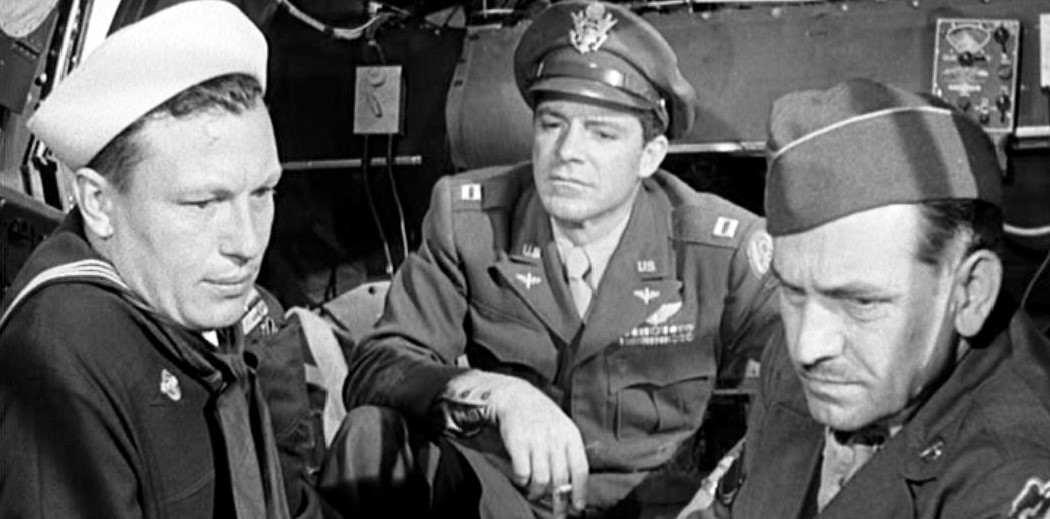
Three guys fall in a foxhole, might sound like the beginning of an odd wartime joke but it’s the encounter that begins The Roaring Twenties. Framed as both a period piece, looking back to a time already a decade away from the contemporary audience, and a sort of memorial piece to a whole cycle of bootlegger gangster films. It’s also a film far too regularly overlooked when discussing that cycle: in my opinion it’s one of the finest and possibly Cagney’s most complex gangster role (with apologies to White Heat). It’s a fast-paced, hugely entertaining slice of crime drama, with fascinating, multi-faceted characters and an intriguing level of social depth.
Those three foxhole guys are Eddie Bennett (James Cagney), destined to run a bootlegging empire in Chicago; George Hally (Humphrey Bogart), destined to become his sociopathic ruthless partner; and Lloyd Hart (Jeffrey Lynn), destined to become a lawyer walking an awkward line. Returning from World War One, Eddie finds little welcome for returning servicemen, but his pluck and sense of personal loyalty eventually see him stumble into, and then embrace, the bootlegging business with glamourous hostess Panama Smith (Gladys George). Problem is danger abounds in the crime-ridden city and its impossible to work in this business without getting your hands dirty. Throw-in Eddie’s candle-holding love for the quietly uninterested Jean Sherman (Priscilla Lane) and you have a recipe for long-term disaster.
The Roaring Twenties is a punchy, well-cut, overlooked gem. From its opening montage that rolls back over newsreel from 1940 to the trenches of World War One to its closing tracking shot that culminates in Eddie’s fatal tumble on the steps of a church (as always in the gangster film, no-one escape death’s moral judgement no matter how psychologically complex they are) it’s a feast of fast-moving entertainment. Along the way Walsh throws in everything, from gun battles to musical numbers, by way of comedy, obsessive love and social commentary. The Roaring Twenties is arguably a nostalgic cocktail with a dim view of its decade: one of crime, hedonism and hypocrisy.
And it’s corrupted Eddie. This is Cagney firing on all cylinders: and it’s remarkable how skilfully he creates a complex, sympathetic character out of similar material to his despicable hood in Public Enemy or the flat-out psychopath he forged in White Heat. Eddie is in many ways a decent man who finds all the dreams he’s been clinging too are fantasies. He can’t land the mechanic job he dreamed of, his uniform is the subject of mockery, the woman he’s been corresponding with turns out to be a teenager (Cagney’s disappointment, discomfort and faint attraction when he first meets Jean Sherman’s skipping late-teens Priscilla is beautifully done). Eddie is left bumming around town desperate for any opportunity.
Cagney’s performance really works, because Eddie – even with an angry streak that means he can knock out two chucking goons with one punch – is fundamentally a decent bloke, corrupted by circumstances. He sees the liquor-brewing game as a short-term fast buck, which he stumbles into because he’s too chivalrous to allow Panama to take the wrap for a bootlegging delivery he’s made. He’s loyal to his friends and tries to solve problems amicably. He’s got a charming, barrow-boy entrepreneurship to him, brewing booze in his bath and selling it as a high-quality import. Cagney shows how desperately Eddie clings to his self-image that crime isn’t a lifestyle choice, but a short-term necessity he’ll jack in one day for the peace and quiet of running a taxi company.

But Cagney never stops letting us see the corruption soaking in: Eddie is learning to heartlessly take what he can get, to forget the consequences of his actions and when violence comes he’ll shrug off deaths as ‘not his fault’ or respond with an increasing ease viciousness (in a nice call back, he even shoves a cigar into a goons face, an echo of his famous grapefruit scene from Public Enemy). When he faces news, he doesn’t like, or is denied the things he wants, lashing out is his first option – and once he starts necking his own product, his downfall is only a matter of time as he falls prey to the sort of ‘World is Yours!’ attitude that doomed Scarface.
From grasping ever more business opportunities to grooming (in more ways that one) the now adult Priscilla into his ideal girl (he can’t watch her perform without grasping the pained hand of Panama, his eyes locked in monomania desire that he’s clearly convincing himself is a sort of pure, brotherly concern). Eddie clearly sees her as his ‘reward’ for his hardwork, a fantasy that doesn’t have any place for her liking him but not loving him. But there is a neat touch throughout The Roaring Twenties – a momentum packed film that races through years in minutes – that Eddie fundamentally isn’t ruthless enough for this game.
Certainly not compared to Humphrey Bogart’s study in shallow, selfish cruelty. Shown early on grinningly shooting a fifteen-year old German soldier in the dying minutes of the war (“He won’t be 16!”), George Hally is the monster Eddie can’t be. A guy who doesn’t care for anyone, who betrays and kills at the drop of a hat, who doesn’t stop for any sense of form and decency. For all Eddie tells George that time has moved on and people like them don’t have a place in the Thirties, Bogart’s cold-eyed George feels like the sort of man who would flourish in the era to come.
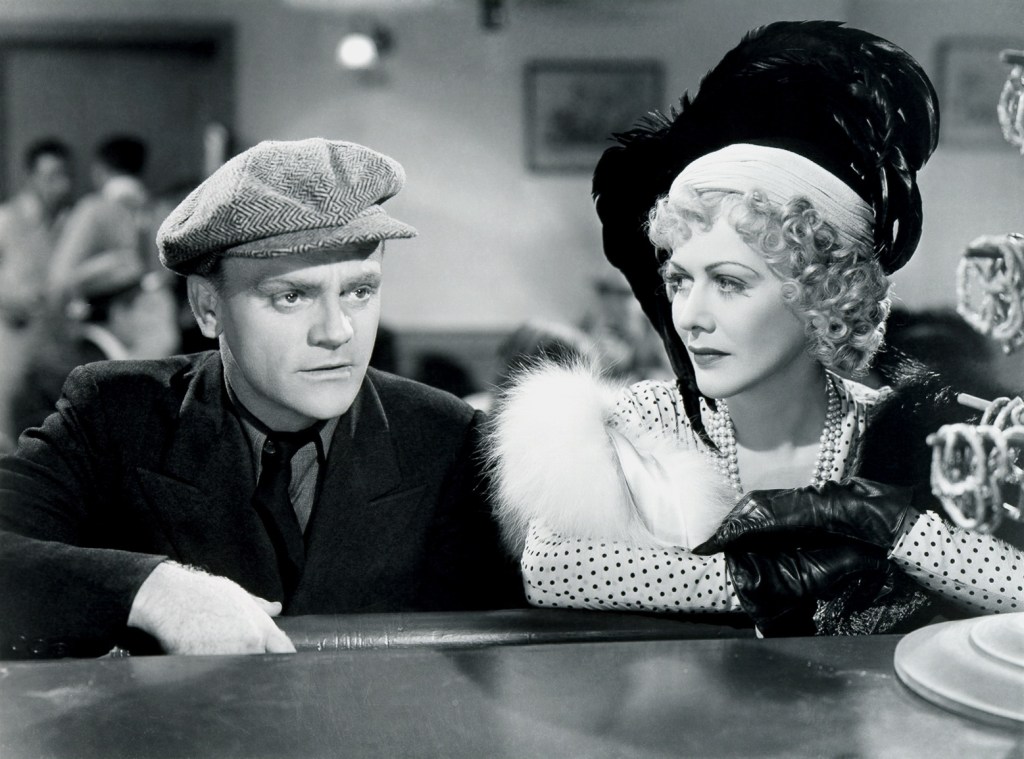
Compared to him, Eddie and Panama are romantics. Gladys George gives a fascinating performance as Panama, one of the most complex gangster dames of all. George brilliantly walks a narrow line, clearly loving Eddie but accepting he doesn’t feel the same way – and (reading between the censor lines) entering a relationship with him anyway. Panama is half-partner, half-mother to Eddie giving him a sort of matronly support and tenderness and, when his fortunes drop off a cliff in the thirties, looking after the slubby, drunken figure Eddie becomes (Cagney looks more bashed up, scruffy and pathetic in the final act than almost any other star would dare).
Fascinating character relationships like this underpin a film that feels like a summation of years of Warner Bros gangster films. Walsh’s direction is pin-point sharp, from his montage construction (including a surprisingly surreal Wall Street Crash sequence with melting buildings), through the shoot-outs. The Roaring Twenties script – by Robert Rossen and Jerry Wald among others – offers characters who are complex, flawed and don’t quite seem to realise at times how terrible their world is.
When the end comes, and Eddie’s body slumps on the steps – after an inspired, sustained tracking shot that follows his teetering bullet-ridden body, the sort of athleticism Cagney was a natural at – it seems fitting the famous closing words are “He used to be a big shot”. That sums up not only the character, but an entire era of film-making being confined (temporarily) to the dustbin of history. It’s a melancholic note to end an extraordinarily good film, one of the great gangster films, in which Cagney, Bogart and George bring life to fascinatingly complex characters.


 Movie Musings