Tag: Glenn Close

Reversal of Fortune (1990)

Reversal of Fortune (1990)

Irons Oscar-winning turn is the stand-out of an otherwise dry picture lacking in energy

Director: Barbet Schroeder

Cast: Glenn Close (Sunny von Bülow), Jeremy Irons (Claus von Bülow), Ron Silver (Alan Dershowitz), Annabella Sciorra (Sarah), Fisher Stevens (David Marriott), Uta Hagen (Maria), Jack Gilpin (Peter MacIntosh), Christine Baranski (Andrea Reynolds), Stephen Mailer (Elon Dershowitz), Felicity Huffman (Minnie)

It was a trial that engrossed America in the early 80s. Did Claus von Bülow (Jeremy Irons), second husband of millionaire Sunny von Bülow (Glenn Close), pump her full of insulin and leave her on the floor of their ensuite to die? Sunny von Bülow, in a permanent vegetative state, narrates this tale Joe-Gillis-style from her coma as Claus is convicted of her attempted murder and hires law professor Alan Dershowitz (Ron Silver) to appeal. But did Claus do it, or is he the victim of public perception?

Of course, no one can know (Sunny even tells us in voiceover, if we want the answer, we’re going to have to wait until we see her wherever she happens to be now). Answers are not on the cards for Reversal of Fortune, which struggles to find something engaging enough to take their place. With some decent lines and striking moments, it focuses on a long breakdown of the might-have-beens, disputed facts and point-of-views of those involved, leaving it up to you to decide if Claus is just a European eccentric with an unfortunate manner and sense of humour or a cold-hearted killer who twice attempted to murder his wife for her money.

Your interest in this will be roughly proportional with how engaging you would find a true crime podcasts without any expert debate. As a rundown of the core facts, it often settles for a series of rather dry scenes of Dershowitz’s legal team reading to each other the various ins-and-outs of the prosecution case, poking holes where needed. There is a singular lack of energy about this, despite the film’s, in many ways admirable, decision to focus on the nitty gritty of cases being built instead of showpiece court confrontations. What Reversal of Fortune fails to do is make this collection of facts and arguments compelling. There are very few scenes of questioning witnesses, consulting experts or uncovering evidence – no investigative energy so crucial to making this sort of film work.

On top of this, it’s hard not to take the film with a pinch of salt, since it takes its entire perspective from Dershowitz, a lawyer who (for all his work for those on Death Row) has shown himself more-and-more as being at least as interested in self-promotion as he is in justice, taking on any case if it brings media prominence. After all, he rolled from von Bülow to representing OJ Simpson, Harvey Weinstein and Jeffrey Epstein. The biggest argument against Bülow’s innocence today might be to say “take a look at that client list”.

Reversal of Fortune walks a fine line between acknowledging Dershowitz’s ambition, while stressing his moral unease. Ron Silver is very good at Dershowitz’s showmanship, self-conscious scruffiness and room-controlling charisma. He has slightly less scope to explore Dershowitz’s moral flexibility: Reversal of Fortune argues it’s important to protect the civil rights of rich people, to prevent precedents hurting the rights of those who can’t afford a houseful of lawyers to pick holes in their cases. Reversal of Fortune further weights the deck to make us see Dershowitz heroically by fictionalising an actual a Death Row case he’s worked on alongside the investigation, representing two young men who broke their criminal father out of prison (who later went on to kill someone). In the film several facts about this case are changed from reality to make them more noble and sympathetic, most crucially changing the race of those involved from white to Black and radically reducing the number of murders involved (as well as not mentioning they also broke another convicted murderer out of prison).

The real strength of Reversal of Fortune is the Oscar-winning performance of Jeremy Irons as Bülow. This was a perfectly fitting, gift of a part for Irons – did they tell him to be as Jeremy Irons as possible? His performance is sly and darkly witty. Bülow is forever making poor taste puns about his possible crimes that Irons’ savours like mouthfuls of the richest caviar. It’s a performance of arch strangeness, Irons playing Bülow as a man so unreadable, taking such a naughty delight in the side benefits of being accused of a crime (he jubilantly states at one point he never before got such good tables in restaurants), so full of elegant European-gentility, he just looks naturally guilty to the parade of straight-shooting American citizens with the power of life and death over him.

Irons’ is also masterful at suggesting this unflappable, dark humour and quirk is actually a desperate front for a man deeply scared but used to hiding his real feelings. Irons suggests Bulow is genuinely using this facade to control his fears and keep him in fighting. The key to the character is nerve: it’s what he describes backgammon as being about, poo-poohing the idea that it’s down to luck, saying winners hold their guts in place. It’s the key to his whole character, the same gambling guts what he’s banking on to get him through this (someone actually guilty would never behave like this right?), and Irons simultaneously plays this front and keeps the frightened man underneath constantly present.

It’s a fascinating, funny, hugely enjoyable performance that lifts the entire film which struggles and slackens the second Irons leaves the screen. Aside from him – and Glenn Close’s arch narration (her agent did fine work nailing her top billing for this) – Reversal of Fortune is a surprisingly dry, rather slowly paced film which, while it is mercifully light on speculation, is also unfortunately light on drama.
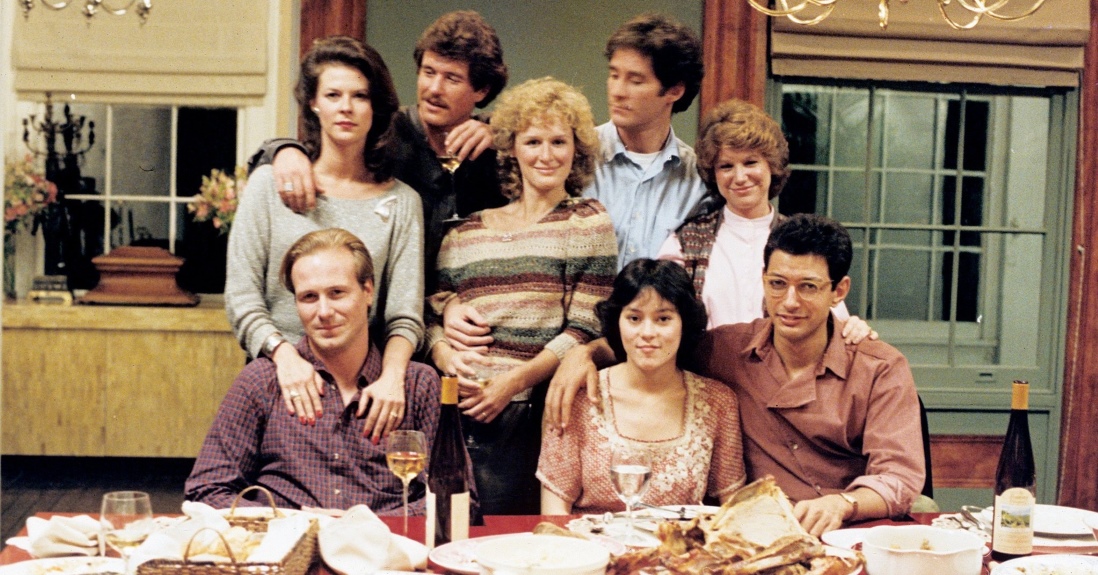
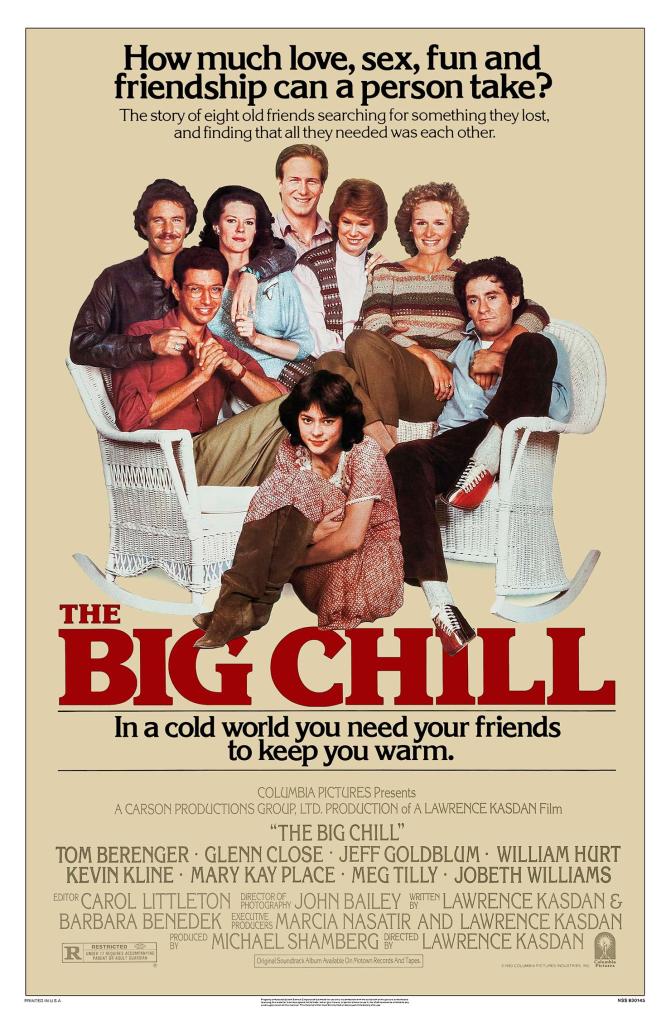
The Big Chill (1983)

The Big Chill (1983)

Heart-warming, engaging and moving ensemble drama, low-key and all the better for it

Director: Lawrence Kasdan

Cast: Tom Berenger (Sam Weber), Glenn Close (Sarah Cooper), Jeff Goldblum (Michael Gould), William Hurt (Nick Carlton), Kevin Kline (Harold Cooper), Mary Kay Place (Meg Jones), Meg Tilly (Chloe), JoBeth Williams (Karen Bowens), Don Galloway (Richard Bowens)

Growing up is hard, isn’t it? The older you get, the harder it is to cling on to the idealism of your younger days. The past can wind up feeling both very familiar and a very different country indeed. It’s something a group of thirtysomething college friends start thinking about when they gather for the funeral of their friend Alex (the famously cut-from-the-film Kevin Costner, seen only via close-ups of his hands and chest while being prepped by an undertaker). Spending a weekend together they reminisce, argue and remind each of why (and if they are still are) friends.

Kasdan’s sharp script, full of sparkling dialogue and rich (if at times familiar) character arcs attracted a smorgasbord of the cream of 80s American film acting, all of whom give fabulously relaxed, extremely genuine performances, largely devoid of grandstanding. The disparate range of career and life-choices the friends have made influenced an armada of ‘college-reunion’ stories, but it’s a trope that works because Kasdan knew it offered such a rich potential for drama.

The Big Chill is the definitive ensemble piece, delightful because it’s structured not around heavy-handed, overtly dramatic clashes, but everyday conversations full of observational humour and low-key emotional truths. There isn’t really a plot as such in The Big Chill: the pleasure comes from Kasdan pulling off the near-impossible trick of making us feel we have been invited to share the fun rather than watching, with our noses pressed up against the window, a film where the actors are having more fun than us. The Big Chill feels truthful, universal and eventually moving because it is so down-to-earth. We’ve all had social groups where we feel absolute loyalty and love for its members, while still being capable of finding them earth-shatteringly infuriating.

Most of them have traded their youthful idealism to change the world for a Reaganite cash-grasping. Sam (Tom Berenger) stars in a hit Magnum PI style TV drama. His former partner in left-wing politics Harold (Kevin Kline) owns a successful running shoes business (named Running Dog in a subtle pop at his own selling out) while his wife Sarah (Glenn Close) is a successful doctor. Michael (Jeff Goldblum) writes shallow celebrity pieces for glossy magazines, Meg (Mary Kay Place) has traded being a public defender for real-estate law. Karen (JoBeth Williams) wanted to be a writer, but instead married an ad executive Richard (Don Galloway).

All of them feel their late friend Alex represents the path they could have taken: a genius scientist who turned down all academic promotions to focus on social work and his old principles. Not that this seems to have made Alex happy. The most like Alex’s seems to be Nick (William Hurt). A former radio-psychiatrist, left impotent after Vietnam, who jacked in his career and is now a drifting drug addict. It’s never quite said, but you can feel the concern of the rest of the group that Nick feels destined to be the next funeral they gathering for.

Much of the tension comes from Nick – largely because he feels more willing to touch nerves the rest are happy to leave unprodded. This is a group that works hard to maintain harmony – after all, Sarah’s affair with Alex hasn’t dented Harold’s genuine grief or his love for his wife, and no one else wants to address it. But there are clear tensions and resentments under the surface: small grudges or irritations many perhaps coming from that uncomfortable feeling of the group seeing their own self-recriminations reflected back at them in their friends faces.

Nick is the only one who raises the scary spectre that decade-old events hold this group together, not their lives today. If they all met for the first time now, would they even be friends? Nick is also willing to take pot-shots at their tendency to self-pitying regret and to provoke the romantic and sexual tensions the others are happy to keep unremarked or compromise on. (Even Jeff Goldblum’s seemingly provocative Michael, avoids trouble by scrupulously taking nothing seriously.)

What makes The Big Chill such a lovable film, despite this, is this doesn’t fracture the group but are islands of tension within a sea of genuine friendship and warmth. Kasdan’s insistence that the company spend a longer time than usual in rehearsal – famously the cast cemented their chemistry via an almost five-hour, Mike Leigh-style, in-character improvisation, involving cooking and eating a dinner together – paid off in spades. They genuinely feel like life-long friends, sharing in-jokes, teasing each other, looking out for each other and making generous offers of help.

There is a lot to laugh at because it feels so universal. We’ve all mucked around with friends while cooking and cleaning. When the group gather to teasingly cheer along with the opening credits of Sam’s cheesy TV show (to his good-natured embarrassment) it makes us laugh because we recognise the affection. The hilarious absurdity of Harold, Nick and Sam chasing a bat out of the attic feels real. Just as the emotions hammer home – Harold’s grief in his eulogy for Alex, Sarah’s tears at a meal, Nick’s tragic middle-distance gloom or Karen’s private ennui among her friends.

It’s all helped by superb performances. JoBeth Williams is excellent in, arguably, the film’s most challenging role, deeply unhappy with where her life has gone, wanting to pretend she can seize the day but not having the conviction to see it through. Goldblum is drily witty but distant as the group’s closest thing to an outsider, Berenger affectingly modest at his sell-out success, Place quietly desperate as a woman whose body clock is ticking down. Kline is very funny and sweet as a man desperate to help those around him, while Close in the flashier (and Oscar-nominated) part as the group’s nominal ‘mother figure’, far more deeply affected by Alex’s death than she is willing to let on.

Perhaps best of all is Hurt, vulnerable, gentle and quietly lost as Nick, his pain manifesting itself in occasional bear-prodding outbursts, but who will quietly apologise the next morning with a gentle, unremarked hug. He also forms a warm and genuine bond with Alex’s younger girlfriend Chloe, played with a sparky energy by Meg Tilly, who (not surprisingly) sees a lot of Alex in him.

Kasdan’s film gently explores the tensions of a group of adults unsure about where their life has taken them, but it does so in a warm and charming structure that makes us really care for the characters all of whom are expertly and humanly drawn. It’s lack of explosive melodrama is a large part of its success, helping ground the film as something relatable that we can feel a real bond with.

Heart of Stone (2023)

Heart of Stone (2023)

Dull franchise-starter shamelessly rips off every other successful action franchise it can think of

Director: Tom Harper

Cast: Gal Gadot (Rachel Stone “Nine of Hearts”), Jamie Dornan (Parker), Sophie Okonedo (Nomad “King of Hearts”), Matthias Schweighofer (Jack of Hearts), Paul Ready (Bailey), Jing Lusi (Yang), BD Wong (King of Clubs), Alia Bhatt (Keya Dhawan), Archie Madekwe (Ivo), Enzo Cilenti (Mulvaney), Jon Kortajarena (The Blond), Glenn Close (King of Diamonds), Mark Ivanir (King of Spades)

Heart of Stone is the first in a planned Mission: Impossible/James Bond style super-franchise for Netflix. You can’t miss this, as the entire film plays out like it’s been assembled from scenes salvaged from the cutting room floor of those series. Pretty much every single idea in Heart of Stone has been played out before (often more than once) and every single action scene has been performed, shot and edited elsewhere and better. Heart of Stone is really prime Netflix filler, the sort of brainless eye-candy that can play in the corner of a room while you scroll through your phone. Worryingly, one day, all films might be like this.

Gadot plays Rachel Stone. She’s a strictly “stay-in-the-van” tech expert for a MI6 team. Apparently set in a world where the security services aren’t predominantly made up of bland white guys from the same universities, the team consists of Parker (Jamie Dornan), Bailey (Paul Ready) and Yang (Jing Lisu). But she’s also “Nine of Hearts”, a super-agent of The Charter, a group of secret agents who use a super-computer (the Heart) to predict all outcomes and prevent disaster. When the Heart is under threat, Rachel has no choice but to reveal her identity – via a kick-ass fight scene naturally – to try and protect this super-computer which could destroy the world from falling into the wrong hands.

I’ll say one thing for Heart of Stone – it does a neat reveal of a surprise (but guessable) villain. Other than that? You’ve seen it all before. Many, many, many times – usually done better. When a battle atop a zeppelin makes you think “Hey, didn’t The Rocketeer do this a lot better almost 30 years ago?” you know your film is in trouble. Heart of Stone is like a gruesome Frankenstein’s monster, where every single stitch can be clearly seen. A Bondish opening credits sequence is stitched to a series of M:I risky stunts, with fights and car chases from Bourne and more than a dash of better TV shows like Alias and Person of Interest. It’s put together with a perfunctory box-ticking which only reminds you how many years of care goes into the franchises it’s ripping off.

Everything unfolds in Heart of Stone pretty much as you would expect it. When a character pulls out a photo of the doll’s house he’s planning to buy for his niece’s birthday, you know he’s doomed. When the Charter sends agents to infiltrate a base, but leave Gadot behind, you know you’re about to watch a “wrong door” routine. Inevitably we get a “you’re off the case” dressing down for Stone from her boss. A secondary villain is clearly an ally in waiting. Characters are defined with thinly sketched traits. Glenn Close ticks the box of “inexplicable big-name cameo”, popping up to lean on a fireplace.  It’s all drearily, depressingly unimaginative and predictable.

I ended up letting my mind wander aimlessly around the nonsense of this world. How does the Charter fund itself? How secret is it – everyone seems to know about it and after the early distress about Gadot blowing her cover it then charges about with barely a token effort at subterfuge. Why would an organisation called the Charter name some (but not all) of its agents after cards? Are there four separate branches in different places for the four “decks”? Are the numbers randomly assigned – since “Jack” seems to work for “Nine”. Why choose a codename system that takes three words to spit out (it even slows Stone down at a vital point trying to explain who she is)? Are Aces all low?

The fact I spent so much time thinking about this sort of thing kind of says it all. I would feel sorry for Gal Gadot at the centre of this except, as a producer, she must have had a say in how this derivative mess was put together. She’s woefully miscast in a role that exposes all her limitations rather than playing to her strengths. Gadot simply hasn’t got the charisma and comic timing to play a wise-cracking maverick: she’s at her best as earnest and well-meaning (see Wonder Woman where she plays a sweet innocent), but here as a sort of would-be Ethan Hunt she’s a washout. Every second she’s on screen only reminds you how good Tom Cruise is at this sort of thing.

She can do a stunt or two, to be fair. It’s unfair perhaps to say that all the big, risky stunts are all too clearly performed in front of a greenscreen or by a double, but Gadot can throw a punch. But Stone is a bland, aimless, patchwork character, whose every reaction seems like it’s guided more by what the script needs at that moment rather than any consistent logic. The entire cast more-or-less falls into the same uninspired bucket, either going through the motions (Sophie Okonedo) or not given enough to do (Paul Ready is probably best-in-show here, making a lot of a some fairly duff lines and predictable plot arcs). Perhaps, since the audience has a decent chance of finishing every line before the characters do, the actors were as disheartened as we are watching it.

The most depressing thing about Heart of Stone is it looks like a grim look into the future. As Hollywood writers strike against the threat of AI, is it possible that all films will one day be put together with the robotic predictability of Heart of Stone? Even the title sounds like a ChatBot came up with it.

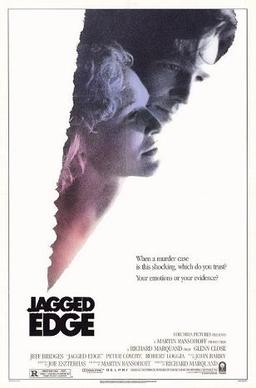
Jagged Edge (1985)

Jagged Edge (1985)

Exploitation and barmy courtroom and steamy romantic couplings abound in this silly but fun mystery

Director: Richard Marquand

Cast: Glenn Close (Teddy Barnes), Jeff Bridges (Jack Forrester), Peter Coyote (DA Thomas Krasny), Robert Loggia (Sam Ransom), John Dehner (Judge Carrigan), Karen Austin (Julie Jenson), Guy Byd (Matthew Barnes), Marshall Colt (Bobby Slade), Louis Giambalvo (Fabrizi), Lance Henricksen (Frank Martin), Leigh Taylor Young (Virginia Howell)

Teddy Barnes (Glenn Close) is done with criminal law after her time at the DA’s office, working under ambitious, unscrupulous Thomas Krasny (Peter Coyote). But she’s dragged back in to defend handsome newspaper editor Jack Forrester (Jeff Bridges), accused of brutally murdering his wife and her maid (for the money naturally). Teddy takes the case and soon crosses that line marked “personally involved” as she and Jack swiftly move from riding horses to riding each other. But what if Jack is really guilty after all?

Jagged Edge is a big, silly courtroom drama, a sort of erotic thriller B-movie that got some serious notice because two critically-acclaimed, three-time Oscar nominated actors fleshed out the cast. Written by Joe Eszterhase (for whom this was the springboard for a career of sex-filled, murder-and-legal dramas that would culminate, via Basic Instinct, with Striptease), Jagged Edge is full of pulpy, super-tough dialogue that its cast loves to chew around their mouths and spit out. It’s got the sort of courtroom dynamics that would see a case thrown out in minutes and would make its lead character unemployable in seconds. It’s daft, dodgy and strangely good fun for all that.

What it is not, really, is either any good or in any way surprising. One look at rugged, casually handsome Jeff Bridges and sharp-suited, charming-but-whipper-smart Glenn Close and you just know its only a matter of time before they end up in bed together. This leads to all sorts of unprofessional sex-capades and legal decisions, not to mention the sort of pathetically readable poker-faces in courtrooms that I would definitely not want from my lawyer.

Jagged Edge makes no secret of its hard-boiled, pulp roots. It opens with a POV home invasion as the killer breaks into his victim’s house that is only barely the right side of exploitative. Marquand doesn’t shirk any opportunities to chuck crime scene photos up on the wall. Peter Coyote’s uber-macho DA loves to say lines like “he has a rap sheet longer than my dick”. Best-in-show Robert Loggia (Oscar-nominated) is the sort of grimy flatfoot investigator who has a fridge full of booze and can’t go more than five words without cussing (when asked if his mother ever washed his mouth out with soap he simply responds “Yeah. Didn’t do no fuckin’ good”).

It’s similarly open about its sexy energy. Close and Bridges have a blue-filtered, late-night roll in the sheets, made even more exciting (perhaps) by the fact she spends half the film suspecting he did the deed. That’s the question the film challenges us with. On the one hand, Bridges seems far too boyish and aw-shucks to have slaughtered two women with a jagged knife. He sure looks upset when he visits the crime scene. Problem is there doesn’t seem to be any other possible suspect, and all that circumstantial evidence just keeps stacking up around him.

Close plays all this with a great deal of force and emotional intelligence, far more than the part (or the film) really deserves. She’s amicably separated from her husband (a very decent guy) and the film even finds a little ahead-of-its time space to make clear that Kransky’s animosity for her (and her loathing of him) is based on his sexual harassment of her as much as his flexibility with courtoom rules. Close balances the whole B-movie set-up with a real dedication – it’s effectively a warm-up (in a way) for the nonsense she’d play in Fatal Attraction.

Bridges is also pretty good, always keeping you guessing from scene-by-scene. How bothered is he when he spreads his wife’s ashes off his yacht? But then how affronted and hurt he looks when he is accused of the crime? It’s a tricky part, but he does a great job of constantly shifting the audience viewpoint and his relationship with Close’s Teddy is just smooth enough to have you guessing how genuine it is.

Wisely – perhaps – he doesn’t hit the stand during the trial. It would probably lead to drama meltdown. The courtroom is full of unbelievable curveballs, witnesses crumbling in a way they never do in real life. Every single disaster for each case is signposted by the fixed horror on the faces of the lawyers. Revelations fly-in and a new suspect effectively incriminates himself mid-trial to the delight of all (this suspect even enforces his caddishness by threatening Teddy in a car park in another moment where the film tries too hard).

The film culminates in the inevitably silly reveal, with plot twists abounding, where we are asked to believe that a killer who has ingeniously considered every single angle of his crime casually leaves incriminating evidence hanging around waiting to be discovered. Its final scene, where the killer is revealed, is either tense or unbearably, ridiculously stupid, depending on your viewpoint (everyone behaves ludicrously out-of-character and takes stupid, unnecessary risks). But for the bulk of its runtime, Jagged Edge is dirty, cheap fun.

Fatal Attraction (1987)

Glenn Close and Michael Douglas embark on a disastrous affair in Fatal Attraction

Director: Adrian Lyne

Cast: Michael Douglas (Dan Gallagher), Glenn Close (Alex Forrest), Anne Archer (Beth Gallagher), Ellen Hamilton Layzen (Ellen Gallagher), Stuart Pankin (Jimmy), Ellen Foley (Hildy), Fred Gwynne (Arthur), Mug Mundy (Joan Rogerson), Tom Brennan (Howard Rogerson), Lois Smith (Martha)

It was one of the biggest hits of the 1980s and was said to bring to life every man’s worst nightmare – which as David Thomson rather astutely put it, probably meant “too many men in the 1980s were worrying about the wrong thing”. Dan Gallagher (Michael Douglas) is a successful, middle-ranking lawyer representing a publishing company. He flirts with editor Alex Forrest (Glenn Close). Then one weekend, when his wife Beth (Anne Archer) is away with their daughter, he spends his time sleeping with her. Problem is, Alex won’t accept it was just a brief fling. Soon she’s calling his office, visiting his wife, claiming to be pregnant as part of a swift descent into furious obsession, demanding Dan leave his family for her. It won’t end well.

Fatal Attraction is a film that is going to struggle the more we move into the #metoo era. While in the 1980s audiences could be expected to be reasonably sympathetic to a man who just wants a bit on the side – and then feels oppressed by the moral consequences that follow – today it’s a bit tricky to feel the same. Put bluntly, Dan is a selfish man who is desperate to be seen to be doing the right thing. And while he realises he’s probably made a mistake after his first one-night stand, he still throws himself into a second day of flirting and sex with Alex (out of a sense of social obligation).

But then Fatal Attraction is a deeply conservative film that plays into feelings of fear and anxiety at the idea of the perfect domestic life being assaulted by an outsider. It portrays the damaging impact on Dan and his family as entirely the responsibility of Alex, instead of admitting that clearly both Dan and Alex are to blame for what happens. Sure, Alex becomes a (literal) bunny-boiler (this film is the origin of the phrase) and later a knife-wielding psychopath. But all this spins out of Dan’s selfishness and his fundamental lack of regard for the feelings of either his wife or Alex (both of whom he wants to think of him as being a good guy – which he probably isn’t).

Dan’s “have his cake and eat it” attitude is the real villain here – and while he is, of course, unlucky to hook up with someone as unbalanced as Alex, any perfectly rounded person would be expected to at least match some of Alex’s reactions. She’s right to say that he is shirking his responsibility, right to say that its wrong for him to use her for a bit of fun and discard her, and she’s right to be disgusted at his automatic offer to pay for the abortion he assumes she will agree to.

A more modern version of Fatal Attraction would probably play out a bit more like the TV multi-perspective drama The Affair (where Dominic West and Ruth Wilson’s characters split the narrative between their very different perspectives on a life-shattering love-affair). It would show more sympathy for Alex’s desperation, loneliness and sadness – and really explore what it is that happened in her past that made her react as extremely to rejection and betrayal as this. And it would have greater criticism for Dan’s cavalier attitude to other people’s feelings.

But then a film like that wouldn’t have been a hit. Glenn Close may not have liked the reshot ending – which came out of test screenings that showed audiences really wanted Douglas to kill that bitch – with Alex entering the Gallagher country home with murder in mind. But the final desperate battle between Dan/Ruth and Alex – and the nuclear family being re-cemented in the shedding of Alex’s blood – was what made the film such a hit. Because who wants the complexity of shared responsibility when “The Other Woman” can literally rise from the dead to strike one final blow before being gunned down?

The film also worked of course due to Glenn Close’s fabulous performance in the lead role. Close worked hard to not position Alex – for all the film aims to do this – as a creepy stalker. Instead she invests her with a righteous fury of a woman who feels she has been terribly wronged, whose every attempt at peace-making has been slapped away and responds with justified anger. There is a real fragility in Close – who consulted psychiatrists to understand Alex’s fragile mindset – and she never lets us forget the pain motivating her actions, even as the film becomes ever more melodramatic and turns her character into more and more of a horror film staple.

Opposite her, Michael Douglas is equally good. This was Douglas’ first in a run of roles where he seemed to embody something in the everyday American-man that lived in terror of female independence and sexuality (he would be terrified on screen by Sharon Stone, Kathleen Turner and Demi Moore over the next seven years). Douglas is great though because while he looks the American dream, he conveys this sense of weakness and compromise. He convinces completely as a rather weak-willed man, terrified of being made to face the consequences of his actions. Archer is also first-rate in a surprisingly low-key role as the wronged wife.

Fatal Attraction starts out as a fascinating look at morality and morals in modern America and ends as a slasher film. A more complex film might have lasted better – even if it wasn’t such a hit – but it throws just about enough depth in there, before the madness descends.

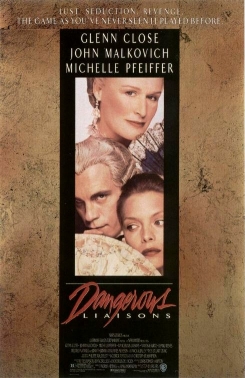
Dangerous Liaisons (1988)

Glenn Close and John Malkovich play games of lust and sex in Dangerous Liaisons

Director: Stephen Frears

Cast: Glenn Close (Marquise Isabelle du Merteuil), John Malkovich (Vicomte Sébastian de Valmont), Michelle Pfeiffer (Madame Marie du Tourvel), Uma Thurman (Cécile de Volanges), Swoosie Kurtz (Madame de Volanges), Keanu Reeves (Raphael Danceny), Mildred Natwick (Madame du Rosemonde), Peter Capaldi (Azolan), Valerie Gogan (Julie)

Christopher Hampton’s adaptation of Pierre Choderlos de Laclos Les liaisons Dangereuses had been a stunning success in the West End and on Broadway – so a film adaptation of this lusciously set story of sex was inevitable. Stephen Frears’ film keeps the story grounded in its setting of pre-Revolutionary France, but deliberately encourages a modern looseness, even archness, from its actors that makes it feel grounded and modern.

The Marquise du Merteuil (Glenn Close) and Vicomte de Valmont (John Malkovich) are two French aristocrats who fill their time with seductions and sexual manipulation of other people, while conducting a dance of attraction around each other. Du Mertuil wants revenge against her ex-lover by getting Valmont to seduce the lover’s innocent intended bride Cécile de Volanges (Uma Thurman). But Valmont is more interested in setting himself the challenge of seducing the unimpeachable Madame du Tourvel (Michelle Pfeiffer) – du Merteuil so convinced the task will be impossible that she bets him if he seduces du Tourvel, she will sleep with him as well. These games of sexual manipulation develop with disastrous consequences for all involved, as unexpectedly real emotions of love and affection intrude on the heartlessness and contempt.

Frears’ film won three Oscars for its most striking elements: production design, costumes and Hampton’s script. Hampton’s script provides a series of striking scenes and tongue-lashing dialogue for its stars. Meanwhile the film looks marvellous, it’s use of French locations superb in creating the world of decadence that these characters move in, while the costumes are so strikingly, elaborately intricate they practically become characters themselves. The film opens and closes with scenes of dressing and de-dressing: the opening sequence shows Merteuil and Valmont being dressed in their elaborate finery, a sequence uncannily reminiscent of knights being dressed for war, ending with shots of their defiantly cold faces starring down the lens. The film bookends this with the film’s key survivor, brokenly wiping away from their made-up “public face” probably forever. It’s a film that uses the intricacy of the period, to strongly suggest modern, dynamic tones and emotions. 

The film is shot with a series of tight shots, intermixed with the odd long shot, that is designed to bring us in close with the film’s serial seductions and envy-powered clashes. This brings us straight into the middle of the events, giving them an immediacy and suddenness that makes this feel like anything but a traditional costume drama. Seductions have a steamy immediacy, while the growing moments of tension in the relationship between Mertuil and Valmont is similarly bought in close to us, to allow us to see the mix of emotions these two have for each other – both a deeply, unexpressed, love and a strange sense of loathing linked together with a possessive jealousy.

Frears makes marvellous use of mirrors in the film. These reflective surfaces appear in multiple shots and frequently expand the world, mirrors reflecting characters as others discuss them, or forcing into shot (usually between two other characters) the subject of conversations. They reveal (to the viewers) eavesdroppers hiding and, in one striking shot, as Valmont and Mertuil’s latest lover argue she is framed in reflection hanging above them on the wall mirror. There’s a reason why one of the film’s final sequences revolves around the smashing of a mirror in grief. 

The film’s modernism also stems from its use of very modern American actors – apeing the success of Milos Forman’s Amadeus – with everyone using their own accents. Glenn Close is superb as Mertueil, a woman projecting a cold, manipulative authority but does so to suppress and hide her own emotional vulnerability. Mertueil has convinced herself that she is a champion of her sex, but her every action seems to be motivated by finding indiscriminate revenge on all those who have found the sort of happiness she has been denied (or denied herself). Close lets little moments – wonderfully captured by the intimacy of Frears’ camerawork – where moments of micro-emotions and pain flash briefly across her face, only to be wiped away.

Malkovich is an unusual choice as Valmont – and his serpentine swagger and arch mannered style at first feels quite a disconnect with a character renowned as the most successful lover in France. But Malkovich’s eccentricity, his very oddity, in a way makes him believable as a man women would find intriguingly irresistible. Malkovich, while naturally perfect for the coldness of the character, is also highly skilled at expressing the slow, non-continuous growth of conscience and feeling in Valmont, as his feelings for Tourvel dance an uncertain line between manipulation and genuine feeling – and while his confused feelings for Mertuil alternate from possessive devotion to revulsion.

The whole cast respond well to Frears guidance, and his ability to draw relaxed performances from an odd selection of actors. Michelle Pfeiffer is particularly fine in a role that on paper could be very dull – the perfect, kind woman – but which she invest with such a seam of emotional truth and longing for deeper connections, combined with naked emotional honesty that she becomes the most compelling character in the film. Uma Thuman is very good as a naïve young girl, Kurtz and Natwick suitably arch as society bigwigs, Peter Capaldi creepily willing as a manipulative servant and even Keanu Reeves has a certain sweetness about him, even if he is at the height of his “Woah” dudeness.

The film’s principle problem is perhaps the very archness and coldness that makes it affecting. While it’s intriguing and intelligent, it is never perhaps as engaging as it should be and its characters are so jet-black, deceitful and cruel that it becomes hard at points to really invest in this chilling story of unpleasant people using other unpleasant people and manipulating innocent ones. It becomes a film easier to admire, perhaps carrying too much of the freezing chill of imperial French greed and selfishness. Come the denoument for all the skill it is played with the actors, it is hard to feel your emotions invested or your heart moved by any of the fates of the characters. Perhaps, in presenting a heartless world of selfishness and lies, it does its job too well.

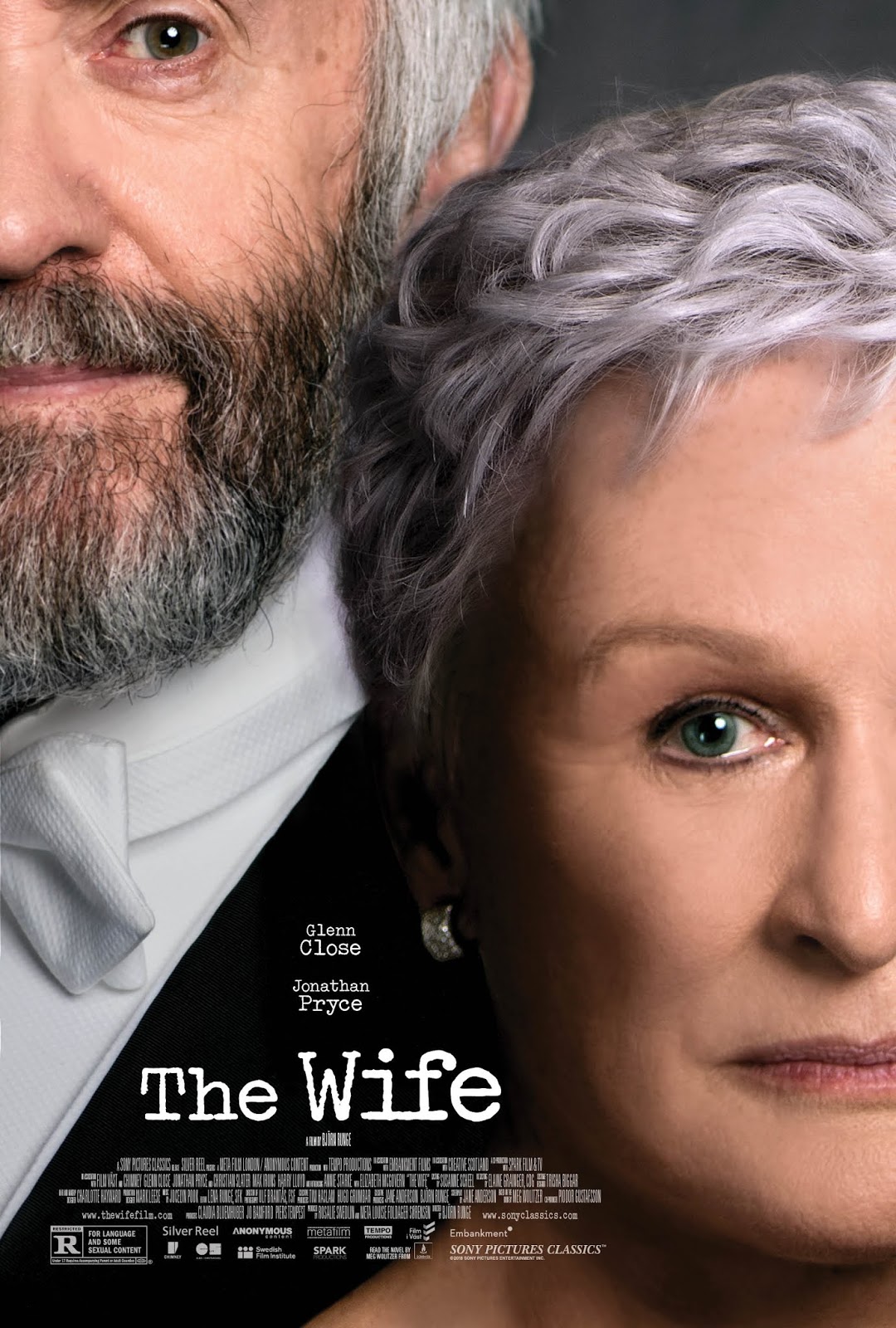
The Wife (2018)

Glenn Close is the supportive but perhaps secretly resentful Wife of novelist Jonathan Pryce

Director: Björn Runge

Cast: Glenn Close (Joan Castleman), Jonathan Pryce (Joseph Castleman), Christian Slater (Nathaniel Bone), Max Irons (David Castleman), Annie Starke (Young Joan Castleman), Harry Lloyd (Young Joseph Castleman), Elizabeth McGovern (Elaine Mozell)

The old cliché used to be: behind every successful man, there’s a woman. The Wife explores just such a woman – and uses this story for a brilliantly structured, tightly written exploration of the tensions and sacrifices that underpin a partnership (and relationship) where the man is the sole public figure. In 1992, Joe Castleman (Jonathan Pryce) is a hugely successful novelist, being honoured with the Nobel Prize for Literature. Standing beside him at all times is his wife Joan (Glenn Close), silent, supportive, taking care of all her husband’s needs. But as her husband is surrounded by praise and flattery, has her patience finally begun to snap?

Much of the attention for The Wife has focused on Glenn Close’s performance as Joan. And while her performance is superb, there is much more to this film than that. This is a well written, brilliantly acted, carefully shot relationship drama that manages to explore interesting details about how sexism, gender expectations and the patriarchy turn some brilliant, intelligent and gifted women into ciphers who must hide their skills under a bushel. The Wife is an engrossing, small scale drama that leaves you with a lot to think about.

Runge’s camera is slow and subtle, carefully zooming into parts of the scene that don’t seem at first to be central, but are revealed to be so. Many of these moments centre around Joan, a woman quietly at the edge of scenes, ignored by people, responding only when required. She calmly follows her husband’s lead, while quietly tending his needs (reminding him of appointments, making sure he takes his medicine, apologising for his abruptness). 

This sort of framing requires a lot of quiet, “reaction” acting from Close – and she excels at this. Close’s performance is a masterclass in subtlety, her face a mask of micro-reactions that leave the viewer guessing at all times exactly what she is feeling about all of the events she witnesses. No scene covers this better than when she listens in on the line as her husband is informed of his Nobel prize – her face slowly, carefully, unreadably changes from delight and pride to something far more equivocal, her face frozen in a look of – well is it anger, horror, frustration? It’s impossible to tell. After that, the entire film is a study in interpreting the exact feelings this woman has for the behaviour of, and praise for, her husband. What does she feel about this? What does she really think? How far does loyalty to her husband stretch?

Muck-raking, sensationalist would-be Castleman biographer Nathaniel Bone (a wonderfully sleazy Christian Slater) has a good idea that there is a lot of anger there – and gambles in a series of offers and interjections that Joan’s loyalty only stretches so far. How far is she responsible for the literary success of her husband? Flashbacks carefully woven into the film show in the early sixties the young Joan (played very well by Close’s real life daughter Annie Starke) as a promising literary writer who falls under the influence of her charismatic professor, young Joe (Harry Lloyd a slightly awkward fit as the arrogant bohemian writer). In the boorish, Mad Men-ish 60s, Joan feels her chance of being recognised as a writer in her own right is close to zero – indeed she’s told to forget it altogether by a bitter former alumna of her Ivy League college, played archly by Elizabeth McGovern – so decides hitching her star to Joe, a promising potential author, seems the best option.

But how much of that promise can Joe actively achieve? And how much of a literary as well as a personal partnership is this marriage? And has Joe lost all track of this? It’s easy to overlook how essential Jonathan Pryce is to the success of this film, but his Joe is a wonderful creation, a bombastic, larger-than-life, selfish even slightly childish figure, everyone’s idea of the great artist, living the cliché of constant praise and a series of seductions. Pryce’s Joe is a domineeringly unattractive figure who slowly reveals his own emotional fragility wrapped in dependency – and the scenes with him and Close (that take up much of the movie) first hum with unspoken tensions and then later throb with the cathartic release of these feelings. 

Those scenes when they come – and you can tell they’re coming from the start – are fantastic. Close is on the top of her game here, utterly believable as a woman who over the course of a few days slowly begins to question every decision she has ever made in her life. What Close does so brilliantly though is to show the balance, the lack of certainty, the mixed feelings she has – that people who in some way infuriate her, also provoke great love in her. Pryce is just as fabulous as her equally aggrieved husband. There are moments in these late scenes that tip into melodrama and cliché – but the general thrust of the scenes is so strong, you feel it gets away with it.

Runge has directed a marvellous low-key piece of work that feels like it would make an excellent play. It raises questions on the place of women in the 20th century – and the film’s setting is crucial, as a Joan growing up 10 years later might well have had a very different life – and the film has a brilliant eye for the everyday sexism and patronising assumptions made by people about the wives of ‘great men’. Powered with two brilliant central performances, this film deserves to be seen as something much more than just Close’s vehicle to possible (but sadly not to be) Oscar glory.

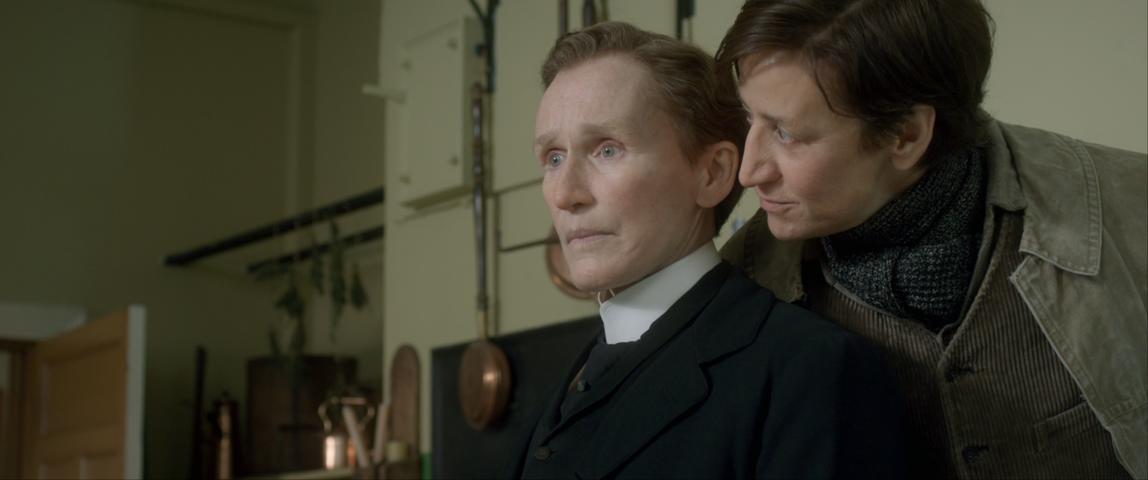
Albert Nobbs (2011)

Glenn Close plays a woman pretending to be a man in the curiously empty Albert Nobbs

Director: Rodrigo Garcia

Cast: Glenn Close (Albert Nobbs), Mia Wasikowska (Helen Dawes), Aaron Taylor-Johnson (Joe Mackins), Janet McTeer (Hubert Page), Pauline Collins (Mrs Baker), Brenda Fricker (Polly), Jonathan Rhys Meyers (Viscount Yarrell), Brendan Gleeson (Dr Holloran), Maria Doyle Kennedy (Mary), Mark Williams (Sean), Bronagh Gallagher (Cathleen Page)

Passion projects are funny things. Everyone has them. And sometimes, when you put them together, other people struggle to see what all the fuss was about. Few films fit that bill more readily than Albert Nobbs. This cross-dressing, Victorian gender curio was something Glenn Close spent decades trying to bring to the screen, after starring in the original play off-Broadway.

Albert Nobbs (Glenn Close) works as a butler at a middling hotel in late 19th-century Dublin. Nobbs keeps himself to himself and saves his tips and wages with the dream of buying his own tobacco shop. Nobbs also has another reason to cling to privacy: Nobbs is actually a woman, masquerading as a man in order to find work. Everyone at the hotel is totally fooled – but his world slowly begins to shift when he meets decorator Hubert Page (Janet McTeer), who similarly is a woman living as man, but who has her own business and a wife and family home. Page’s experiences make Nobbs begin to question this life of isolation – with disastrous consequences.

Albert Nobbs is a carefully filmed, respectful, dry and dull film. It’s nominally a film you might expect to have something to say about gender and sexuality – but its shyness around such matters, its lack of insight, its bashful awkwardness means it already looks like a museum piece. On top of which, most of the characters and situations it covers are frankly not particularly inspiring, dynamic or engaging. There isn’t actually much there to spark your attention.

Which it makes it even more surprising that Close was so drawn to this material. Why? It’s hard to say, as even her performance seems as buttoned up, oblique and distanced as the character she is playing (it doesn’t help that Nobbs is neither an interesting or engaging character, coming across like a person with an ill-formed personality, whom the viewer struggles to understand). You would expect her to have some sort of deep emotional bond with this character – but I’m not sure that really comes across.

The film fundamentally lacks the courage it needs to tackle issues of gender complexity. Nobbs has a troubled background of abuse and rape – but the story never really tackles this, instead using it as a lazy attempt to explain a confused sexuality. The film never really engages with the issue of whether Nobbs likes being a man or feels forced to do to make ends meet. It throws in a curveball scene where Nobbs relaxes on a beach walk wearing women’s clothes. But it never takes any step – even the most tentative ones – of Nobbs laying claim to relating more to being one gender or another. 

Nobbs doesn’t seem to identify as a trans man, a cis-gender woman disguising herself as a man for practical reasons in a patriarchal world, or as someone trying to live outside traditional gender constructs all together. It feels pretty uncomfortable with virtually any formulation along these lines, so avoids exploring any of them. It wants Nobbs to feel comfortable in women’s clothes, but also wants to admire Nobbs for living as a man, while also suggesting Nobbs is trapped by society. It’s a confused film.

In any case, the more time you spend with Nobbs the creepier Nobbs seems. It’s unfortunate that a large chunk of the film is given over to Nobbs’ confusingly motivated courtship of Mia Wasikowska’s maid. Throughout, Nobbs is strangely incapable of understanding any sort of emotional link between two people, and here seems unable to comprehend that Helen may have her own emotions and desires that don’t marry with Nobbs’ functional desire for a wife. This pursuit (seemingly to complete the picture of a desired future) creates an image of a stalker rather than someone really seeking a romantic connection. The fact that Helen and her rakish beau plan to swindle Nobbs hardly helps to make these characters likeable either.

Close’s performance doesn’t help with its locked in reverence. So it’s just as well that Janet McTeer bursts into the film with energy, (literally) baring all in seconds and bringing more vibrancy, dynamism and engagement in her scenes than the rest of the film put together. While Nobbs is a rather dull, empty vessel of a person, Page is a lesbian in a loving relationship, escaping marriage by pretending to be a man. That is a story I can get interested in, that can have relevance today: Nobbs’ isn’t. McTeer is excellent, and I wish the film her been about her.

Albert Nobbs is a worthy, but flat film shot with a slow reverence and delivering a story that promises much but completely fails to deliver. Aside from Janet McTeer’s wonderful performance there is very little reason to visit this film. In fact today its avoidance of even engaging with questions of gender and identity actually make it look rather gutless and pointless. A passion project that really makes no real sense.