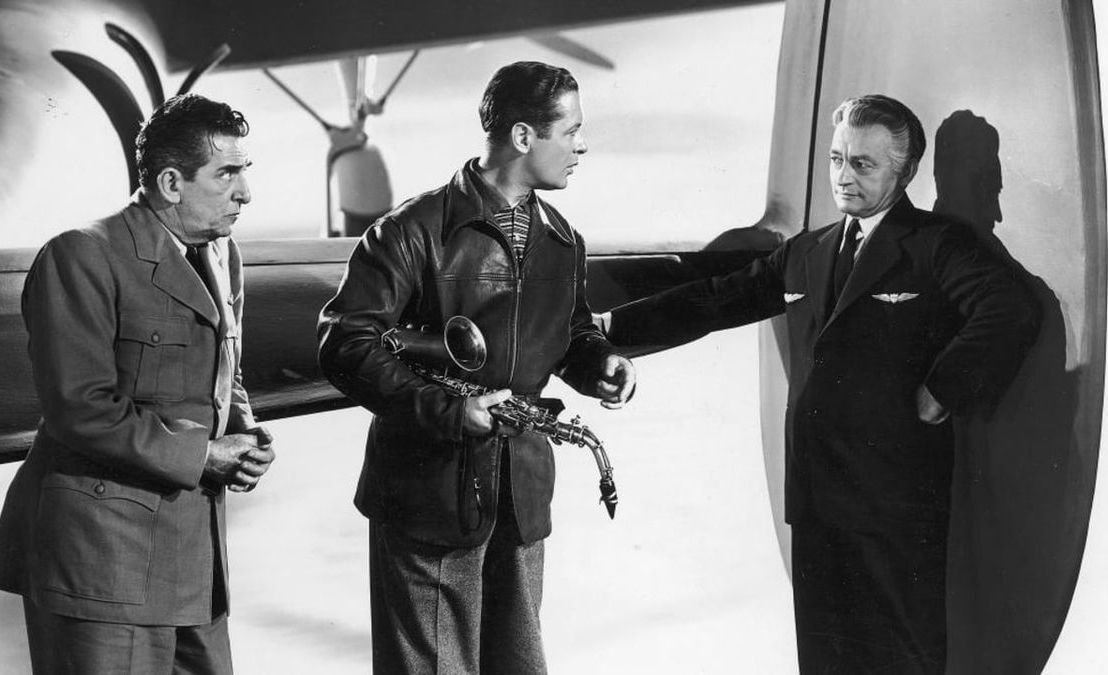
Tag: Halliwell Hobbes

The Story of Louis Pasteur (1936)

The Story of Louis Pasteur (1936)

A visionary struggles against the blind in this genre-defining slightly cosy biopic

Director: William Dieterle

Cast: Paul Muni (Louis Pasteur), Josephine Hutchinson (Marie Pasteur), Anita Louise (Annette Pasteur), Donald Woods (Dr. Jean Martel), Fritz Leiber (Dr. Charbonnet), Henry O’Neill (Dr. Emile Roux), Porter Hall (Dr. Rossignol), Raymond Brown (Dr. Radisse), Akim Tamiroff (Dr. Zaranoff), Halliwell Hobbes (Dr. Joseph Lister), Frank Reicher (Dr. Pfeiffer)

Jack Warner was convinced no one would want to watch the life story of some crusty old scientist. But Paul Muni insisted they would – and he was a star – so with a threadbare budget and host of re-used costumes (many not from the correct period) and sets The Story of Louis Pasteur came to the screen – and much to Warner’s surprise was a hit. It can look like an oddly cliché-ridden affair today: until you realise many biopic tropes we’re used to were virtually coined here.

The Story of Louis Pasteur remixes huge portions of Pasteur’s life to make it more dramatic: the man who was the leading scientist in France for almost thirty years is repackaged as an outsider and laughing stock, constantly scorned by the medical establishment until (but of course!) he is triumphantly hailed as a genius by the same doctors who mocked him for years. Sound familiar? The film charts Pasteur’s efforts to discover vaccines, first for anthrax in sheep (leading to a famous test where 25 sheep were vaccinated and 25 were not, then all of them exposed to the disease, killing all the unvaccinated sheep) then rabies in dogs and treating those bitten by rabid dogs. Pasteur uses his unparalleled knowledge of microbes which (but of course!) every other doctor says cannot possibly have anything to do with infection.

There is a lot to enjoy in The Story of Louis Pasteur, an undeniably old-fashioned “Great Men” view of history that manages to turn bacteriology into effective entertainment. It recasts history into an easily digestible tale of visionaries and scoffers – but, crucially, no real baddies – crafting a series of small steps towards scientific discoveries into flashes of inspiration and triumphant revelations. Science is made simple, plain and understandable with Pasteur to talk us through a few shots of microbes under microscopes. At its centre we have a stubborn maverick determined that it is his way or the high-way and who won’t listen for a second to anyone questioning his theories.

There is something rather touching about the film’s admiration for science and celebration of an altruistic quest to make the world a better place. It carefully outlines the dangers of surgery and poor hygiene in medical practice – it opens with a doctor murdered for failing to save his killer’s wife, the reason for his failure pretty clear from the haphazard way he chucks medical equipment into a bag (dropping some of it on the floor en route). This lack of hygiene affects rich and poor (even Duchesses are not safe), in particular women in childbirth. Its truly the enemy of mankind, as a caption explaining the 1870 war stresses (European squabbles being a distant second). This is a problem that is truly noble to take on.

And it motivates Pasteur. Paul Muni is on Oscar-winning form as Pasteur, brilliantly precise and superbly conveying great intelligence mixed with an arrogant self-assurance. But Pasteur’s egotism comes not from vanity but from simply knowing more of which he speaks than anyone else. He’s also a man consumed by a sense of duty to the world: when his work can literally save lives (be they either animal or human) he will not let scorn stand in his way. Muni captures all this wonderfully, creating a prickly man with a playful streak determined to do the right thing the right way (Pasteur may disagree with his critics, but woe-betide their assistants disrespectfully doing the same).

Dieterle’s film crafts a series of excellent set-pieces to present Pasteur as a visionary ahead of his time. To make this really land, he’s therefore completely altered into being seen as a crank and pariah by everyone around him, rather than the influential scientific leader he actually was. This might be poor history, but it’s much better drama. From a furious encounter with Napoleon III (who won’t wear the idea his hand-picked doctors might be wrong about sterilization) to the Medical Academy publicly poo-poohing Pasteur’s outlandish ideas that vaccines might prevent anthrax. To give a face to this mocking of Pasteur (from an establishment we are told is totally wrong on every count) the film invents Dr Charbonnet (well played by Fritz Leiber), an honest but pig-headed critic who exists to be wrong (for noble reasons) on almost every single issue.

Noble as important: this film want to stress everyone acts for decent reasons, so that its final celebration of Pasteur is unblemished by deeply personal rivalry. Charbonnet and Pasteur are both framed as decent men and their relationship allows for plenty of fun melodrama, such as Charbonnet injecting himself with Pasteur’s (fortunately for him) weak rabies sample to ‘expose’ his ideas. When Pasteur’s daughter falls ill in childbirth, but of course Charbonnet is the only doctor available: he humours Pasteur’s sterilisation rules in exchange for a signed letter from Pasteur rubbishing his own theories (Muni’s shuffling flash of conflict that flows across his face at this moment is very well done). But of course, Charbonnet and Pasteur eventually reconcile in honour and decency.

This forms a fun thread throughout the movie, that’s never less than well-staged by Dieterle, with pace and energy. The anthrax test is very dynamic – all celebrating crowds and circus side-shows – and the dramatic appearance of a host of Russian peasants (led by Akim Tamiroff’s bombastic doctor) desperate for a cure for rabies-induced sickness is well-executed. Some beats work less well than others. Donald Woods gets dealt a rotten hand as the dull son-in-law of Pasteur. The women in Pasteur’s family get even worse, with most of Josephine Hutchinson’s lines being of the “stop trying to cure anthrax and come to bed Louis” variety. The costumes are bizarrely all-over-the-place (the women look more like Southern Belles) and there is a reassuring cosiness about everything.

But that’s also one of its most successful features. The Story of Louis Pasteur is a little twee – but it’s also effective. It’s why it laid down a template that worked for countless films that follow (A Beautiful Mind pretty much follows its model and won an Oscar for it 65 years later). That’s because there is also a feel-good factor to see someone who is, without doubt, in the right triumphing over the stubborn. With a great performance by Muni, it’s a rewardingly entertaining biopic.
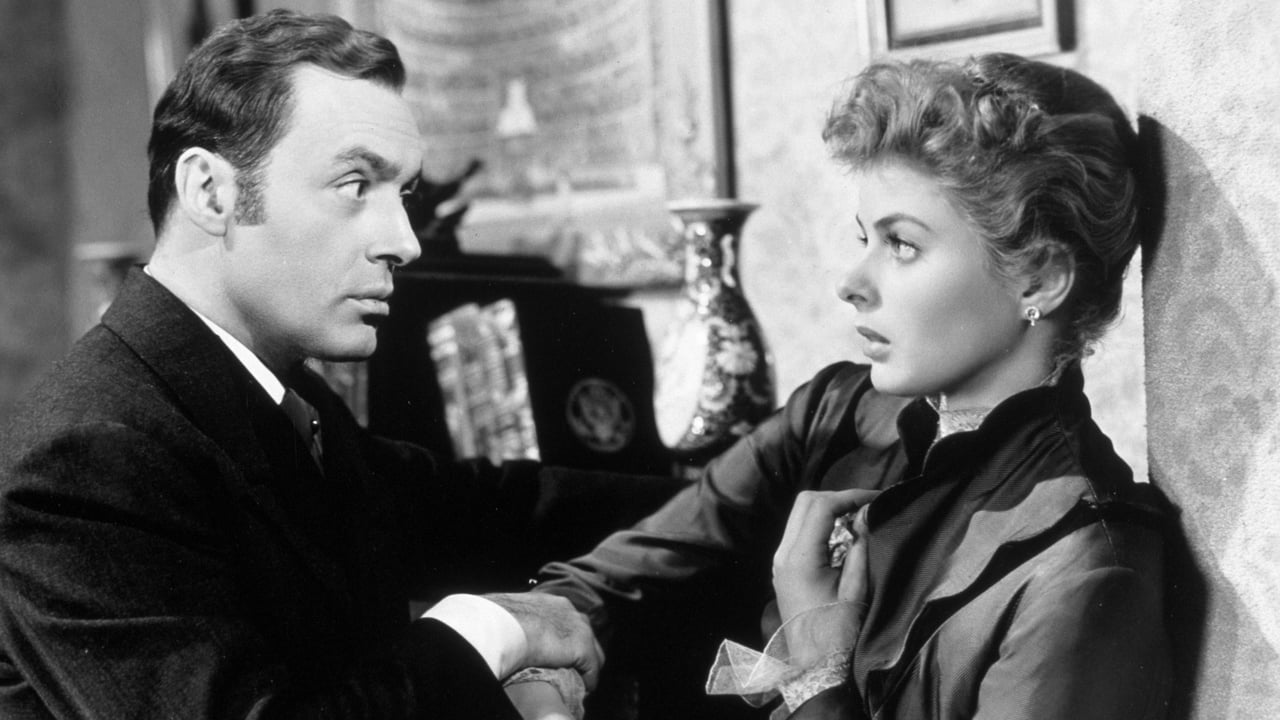
Gaslight (1944)

Charles Boyer and Ingrid Bergman excel in Cukor’s cinematic staging of Gaslight

Director: George Cukor

Cast: Charles Boyer (Gregory Anton), Ingrid Bergman (Paula Alquist Anton), Joseph Cotton (Brian Cameron), May Whitty (Miss Bessie Thwaites), Angela Lansbury (Nancy Oliver), Barbara Everest (Elizabeth Tompkins), Emil Rameau (Maestro Guardi), Edmund Breon (General Huddleston), Halliwell Hobbes (Mr Mufflin), Heather Thatcher (Lady Mildred Dalroy), Lawrence Grossmith (Lord Freddie Dalroy)

Spoilers: Spoilers here in for Gaslight both film and play

Paula Alquist (Ingrid Bergman) has terrible memories of finding her aunt, a world-famous opera singer, murdered in their home on Thornton Square when Paula was just fourteen. Years later she falls in love with, and marries, the charming Gregory Anton (Charles Boyer) who suggests she returns to London and her old home. To save his wife’s nerves, Gregory has all her aunt’s property moved into the attic. But then Alice starts to lose items, Gregory tells her she moves things and has no memory of it and at night she sees the gaslight dim and hears strange creaks in the attic. Is she slowly going mad as her husband insists? Or is she – and this is where the word comes from – being gaslit into thinking so by a husband who isn’t as nice as he seems?

Adapted from Patrick Hamilton’s play, George Cukor’s bring a sumptuous version of the iconic story of a decent wife manipulated by a bad husband to the screen (MGM allegedly tried to destroy all copies of a British version from 1940 so this could be the ‘only’ adaptation). While the original play is a claustrophobic one-set affair, using minimal characters and taking part in a narrow window of time, the film expands and deepens the stories timeframe and uses a host of locations to build-up Paula’s isolation and mounting insecurity. It’s a subtle and extremely well-handled costume-noir thriller, that holds it cards close to the chest and is powered by excellent performances.

It also makes several genuine improvements to the original play. There, the villainous husband is trying to drive the wife mad so he is no longer constrained by her presence while he searches the house he has purchased for missing jewels. It’s not clear why the villain has saddled himself with a wife (when his life would be much easier if he was a single man). The film improves this immeasurably by making marriage to the wife an essential prerequisite to the villain gaining entry to the house. This one change unknots many problems with the original play and also raises the stakes considerably, by increasing the personal connection to events from the wife.

Giving a traumatic backstory to the re-named Paula (all the names are changed from the play), also gives Ingrid Bergman far richer material in her Oscar-winning role. Bergman’s Paula is already nervous and vulnerable from the start, and her desperate need for love and security draws her inevitably towards a man who, even before we work out he’s a wrong ‘un, offers her a sort of fatherly reassurance. Bergman’s heartfelt performance also contains a streak of independence and determination: she struggles painfully with knowing she isn’t insane, even while being told she might be. The film also gives her a greater sense of agency, and Paula’s final act payback works as well as it does, because Bergman has made her gentleness so under-stated earlier, that her sudden iron and fury are even more striking.

Opposite her is an equally fine performance from Charles Boyer. Boyer inverts his charm and suaveness into a ruthless opportunist, devoid of morals, who takes a sociopathic delight in his own cleverness, even as he semi-regretfully mentally tortures and manipulates his wife. He’s never less than charming – making it all the more unsurprising that Paula places as much faith in him as he does – but the little marks of danger and control are there throughout. Cukor uses a wonderful shot early on of Paula disembarking from a train, at which point a hand enters frame and grasps her arm – it’s revealed as Anton, but a brilliant indicator of his threat and controlling nature. Truth is, Gregory is insane, and Boyer subtly suggests this throughout: there is another lovely shot from Cukor late on where studio lights are reflected in Boyer’s eyes giving him an insanely intense gaze.

It all revolves around finding those diamonds. If there is one area that film is slightly weaker is that it doesn’t actually dedicate much time to that dimming gaslight or those creaking floorboards at night. It feels like a beat that should be hit more regularly (a montage would have helped no end), a more constant presence would have helped make it a more convincing continual dread for Paula.

But its counter-balanced by the expansion of the film to multiple locations where Gregory manipulates Paula to disgrace herself in public. From a lost broach in the Tower of London to an evening soiree where she is made to appear as if she has stolen a watch, it all helps to tip Paula more and more into believing she is losing her mind. Again, Cukor keeps the focus within all this finery very much on our two leads, reproducing for us as much as possible the growing claustrophobic fear that is consuming Paula that was as at the heart of the stage production.

The moments away from this are slightly less strong. Joseph Cotton has a thankless role (with an awkward mid-Atlantic accent) as a police inspector, who smells a rat or two. The ‘investigation’ moments around this are often heavy handed, and labour under the sort of exposition that the scenes between Gregory and Paula skilfully avoid. Basically, Inspector Cameron barely has a personality, meaning he never really develops beyond being just a plot device.

Conversely, a character who takes on a great deal more presence is Angela Lansbury’s star-making turn as a sultry, defiantly sexual maid, parachuted into the house for goodness-only-knows what reason (!) by Gregory, who takes every opportunity to undermine her mistress. It’s a brilliantly pointed little performance from Lansbury, full of sass and smirk (it got her an Oscar nomination in her first movie) that adds even more to the feeling of Paula being a stranger in her home.

Gaslight is all smartly directed with Cukor, brilliant as always with actors, adding more visual flair than he often does with his fog-filled London and noir-tinged Edwardian home. With strong performances and many changes that materially improve the original material, it’s a fine adaptation.

Here Comes Mr Jordan (1941)

Edward Everett Horton, Robert Montgomery and Claude Rains deal with death, admin and body swops in Here Comes Mr. Jordan

Director: Alexander Hall

Cast: Robert Montgomery (Joe Pendleton), Evelyn Keyes (Bette Logan), Claude Rains (Mr Jordan), Rita Johnson (Julia Farnsworth), Edward Everett Horton (Messenger 7013), James Gleason (Max “Pop” Corkle), John Emery (Tony Abbott), Donald MacBride (Inspector Williams), Don Costello (Lefty), Halliwell Hobbes (Sisk)

One of the best things about the Hollywood Studio system is that created an environment where middle-brow talents could suddenly lift themselves up to create something very special. That’s certainly the case with Here Comes Mr Jordan, the career high spot for its director and its main stars. It’s the sort of product of Classic Hollywood where everything comes together perfectly and delightfully.

Joe Pendleton (Robert Montgomery) is a boxer with a shot at the title. An amateur pilot, Joe flies his own one-man flight to New York for the match. On the way, his plane crashes. An officious Angel, Messenger 7013 (Edward Everett Horton), collects his soul – only to find on arrival in heaven that Joe was meant to survive the crash and live for another 50 years. Unfortunately, by the time the mistake is found out, Joe’s body has been cremated. Head Angel Mr Jordan (Claude Rains) has no choice other than to find Joe another body on Earth. So Joe winds up in the body of millionaire Bruce Farnsworth, recently murdered by his wife Julia (Rita Johnson) and secretary Tony Abbott (John Emery). In his new body, Joe decides to correct Farnsworth’s wrongs, returning his embezzled money to investors and helping to free the father of Bette Logan (Evelyn Keyes), who took the blame. Joe also wants to retrain for a boxer – recruiting, much to his confusion, his old coach Max Corkle (James Gleason) – and he and Bette begin to fall in love. But Joe’s destiny, it turns out, is to be the champ – and he can’t do that in Farnsworth’s body. How will Mr Jordan clean this mess up?

Here Comes Mr Jordan is a delight, a hilarious musing on reincarnation and afterlife, in which the next world is as weighted down by bureaucracy and red tape as much as this one. With neat, unobtrusive direction from Alexander Hall (who never hit the jackpot like this again), the film keeps its comic balls up in the air beautifully, while throwing in some neat observations around life, death and fate. The script bubbles with lovely bits of invention, from the Afterlife to a bureaucratic organisation to Joe’s inhabiting of Farnsworth’s body (after trying a few other bodies on first), while still appearing to himself (and we the viewers – a neat idea that the film invites us not to think about too much as Joe’s mannerisms and physicality must be completely different from Farnsworth) unchanged from his original body.

Around this the film gets some neat pot shots at big business corruption. In some ways this is a little like A Matter of Life and Death mixed with Capra. As in Capra, the humble, kind-but-not-super-smart regular Joe is the one who takes a long-hard look at the corruption and greed of Big Business and Corporate America and decides “there has to be a better way”. The kind of guy who solves major business problems simply by doing the right thing and listening to his heart. Counterbalancing that is Joe’s ongoing obsession with continuing his boxing career, from his determination to get a body that’s “in the pink” (a phrase that drives Mr Jordan up the wall) to roping in his ageing butler into a series of vigorous workouts.

A large part of the charm of Joe Pendleton lies in the brilliantly dry, witty, sweet but still a little selfish qualities that Robert Montgomery (Oscar nominated) brings to the part. Playing the part with a homespun Brooklyn honesty and simplicity, Montgomery also has a childish delight in finding he can pass unobserved as this new man (particularly funny after his initial terror that he will be “found out” any second), while his boxing obsession has an endearing genuineness to it. Montgomery, as well as getting the light comedic tone spot on (no surprise that Cary Grant was the first choice for the role – although he could never have played the working class Joe as well as Montgomery does he) he also builds a very sweet and charming romance with Evelyn Keyes (also in a career best role), who is ill-treated but defiantly assured of the importance of doing the right thing as Bette.

The whole cast is quite superbly assembled, seasoned pros, doing their thing with aplomb. James Gleason was Oscar-nominated as Joe’s befuddled manager, trying to wrap his head around incarnation. Gleason also gets some of the finest gags, as Corkle tries to interact with Mr Jordan, who remains invisible to the living – but also brings a genuine warmth and tenderness to his feelings for Joe, who he clearly sees as a son. As Mr Jordan, Claude Rains is smoothness personified, playing the entire film with a relaxed grin on his face, gleefully mixing in an obsession with ensuring the “rules” are followed, while offering a dry reaction to events such as murder. As his underling Edward Everett Horton brings his patented A-game of flustered middle-man.

Mr Jordan grins so much through the film it’s easy to forget that he’s basically the Angel of Death. Reasonable and supportive, Jordan is also blithely unaffected by death and murder. The film, among the jokes and the general air of a fairy tale, has a little vein of darkness. In his introduction Jordan is overseeing the collection of souls from some of the battlefields of World War II. Later he calmly informs Joe of Farnsworth’s murder taking place even as they speak. The film doesn’t hesitate to shy away from the details of Farnsworth’s killing – or from two further murders. It’s a little nugget of darkness in amongst the charm, and a reminder that this comedy on death and the afterlife took place while the world was tearing itself apart. No wonder death can sometimes not be as big as a deal to everyone as it is today (especially to the Angel of Death).

Because the film has a more Capraesque belief that what matters is not who we are but what’s inside. Joe will appear as Farnsworth to everyone, but eventually what people will respond to (he is told by Jordan) is the person inside not the outward appearance. The potential that Joe may have to move to a new body to fulfil his destiny of becoming the champ, doesn’t meant that he and Bette need to necessarily be apart if his heart remains the same. While the film does suggest (I feel darkly!) at one point that Joe may forget who he was originally the longer he is in a new body, the more it stresses the point that the basic qualities of his decency won’t be lost.

Its ideas like this – combined with expert telling and superb Classic Hollywood grace and skill in its shooting, directing and acting – that give Here Comes Mr Jordan a little bite, along with its comic impact. Nominated for seven Oscars it won two – and it stands to be remembered in what was a glory year for Hollywood. You might expect something rather slight – but this delightful comedy is as thought provoking as it is playful.