Tag: Helen Mirren

2010: The Year We Make Contact (1984)

2010: The Year We Make Contact (1984)

Solid film stuck forever in the shadow of a landmark, all answers and no mystery

Director: Peter Hyams

Cast: Roy Scheider (Heywood Floyd), John Lithgow (Walter Curnow), Helen Mirren (Tanya Kirbuk), Bob Balaban (R. Chandra), Keir Dullea (Dave Bowman), Douglas Rain (HAL 9000), Madolyn Smith (Caroline Floyd), Elya Baskin (Maxim Brailovsky), Dana Elcar (Dimitri Moisevitch), James McEachin (Victor Milson), Natasha Shneider (Irina Yakunina), Vladimir Skomarovsky (Yuri Svetlanov), Mary Jo Deschanel (Betty Fernandez)

2010 is the film 2001 could have been. That’s not really a good thing. Where 2001 was invested with such Kubrickian mystique that is has engrossed and bewitched audiences for decades with its elliptical structure, haunting experience and complete lack of definitive answers or interpretations, 2010 is nothing but answers. Don’t get me wrong: 2001 is a tough act to follow, but 2010 is rather like rolling from looking at a Picasso to checking out a talented local artist. One produces art that you would happily hang on your wall – the other produces a priceless, timeless masterpiece that will define its medium for decades to come.

That’s the thankless position for Peter Hyam’s solid and basically perfectly fine science-fiction. In many ways, without the existence of 2001, it’s sensitive exploration of the deep-space thawing of Cold War relations, exploration of how more unites mankind than divides us, musing on questions of what makes us human would have felt quite hefty. 2010 however, forever in comparison to 2001, feels more like a well-made info dump, dedicated to answering any questions left over. As Heywood Floyd (Roy Schieder) takes part in a joint US-USSR mission to find the Discovery we are painstakingly told what the monoliths are, what they were for, what happened to Dave, why HAL went loco, where mankind goes next… all wrapped around a world teetering on nuclear war and the creation of a new star raced through in under two hours so swiftly that barely a scene goes by without breathless exposition.

It’s fine. Although anyone who sat through 2001 and wanted to know the exact science of the monoliths and the exact reasons for HAL’s psychosis may well have missed the point. Hyams film is a solid, decent, noble attempt to follow-up on a landmark that manages to pay a respect to the original (despite cringe worthy touches like a magazine cover in which Clarke and Kubrick cameo as the faces of the superpowers leaders – one of two wonky Kubrick references alongside Mirren’s character’s barely discussed anagram name) without wrecking its legacy. Dutifully the film replicates a few shots and throws in some already iconic sound cues. But it’s done in a way that manages to lift 2010 with some of the haunting poetry of the original, rather than dragging it down.

There is some decent stuff in 2010 a film swimming in Cold War tensions. The US and USSR crews start with an abrasive suspicion of each other, which refreshingly thaws out in a shared sense of team and there being no borders in space (despite the best efforts of their governments). A big part of this is the warmly-drawn relationship (with more than a touch of the romantic) between John Lithgow’s nervous engineer, on his first mission in space, and Elya Baskin’s deeply endearing experienced cosmonaut who takes him under his wing. More time is allowed to let this grow as a human relationship than any other pairing in the film, and it pays off in capturing on a personal level the film’s hopeful sense that tensions between two nations intent on MAD could thaw.

But the film mostly riffs on the original. The haunting presence of Kier Dullea’s Dave Bowman – now something beyond human – is effectively used at several points (a series of appearances to Roy Scheider’s Floyd inevitably sees Dullea rattle from shot-to-shot through every make-up stage he went through in Kubrick’s haunting conclusion to 2001, as 2010 continues to tug its forelock at its progenitor). The Discovery – now a dust covered relic in space – is fairly well re-created (even if the scale of the model is ludicrously off-beam in several shots featuring space-walking astronauts). Bob Balaban – bizarrely playing an Indian scientist, though thankfully without dubious make-up – has several scenes recreating Dullea’s floating in HAL’s innards, slightly undermined by the fact Balaban looks like he’s uncomfortably hanging upside down.

Tension is drawn from whether HAL himself – once again voiced with brilliantly subtle emotion just under his monotone earnestness by Douglas Rain – will once again flip out, but 2010’s generally hopeful alignment along with its ‘no answer left unturned’ attitude does rather undermine this tension. Just as we are never really left in doubt that Helen Mirren’s no-nonsense commander and Roy Scheider’s guilt-laden Floyd (who has had a character transplant from the coldly inhumane bureaucrat of 2001) will find a way to both respect each other and work together. You can however agree that 2010 does find more room for human feeling and interaction than 2001. Nowhere in that film could you imagine the hero sharing his anxiety about a risky space manoeuvre, huddled with an equally fearful Russian cosmonaut. Or 2001s version of Dave visiting his wife, or any of the characters entering into any sort of discussion on the morality or not of sacrificing HAL.

2010 also has some striking imagery among its cascade of answers and facts, But finally it’s only really a sort of epilogue or footnote to something truly ground-breaking. A curiosity of complete competence, which never really does anything wrong but also never really does anything astounding either. You’ve got to respect Hyams guts in even attempting it (I’m sure plenty of other directors flinched at the idea of recreating Kubrick) but you’ve also got to acknowledge that it falls into the traps of conventionality that 2001 avoided doing. 2010 is, at heart, really like a dozen other films rather than something particularly unique. Unfortunately for it, that was never going to be enough.

Golda (2023)

Golda (2023)

Undramatic saga of Middle East history that fails to bring seismic events to life

Director: Guy Nattiv

Cast: Helen Mirren (Golda Meir), Camille Cottin (Lou Kaddar), Liev Schreiber (Henry Kissinger), Rami Heuberger (Moshe Dayan), Rotem Keinan (Zvi Zamir), Lior Ashkenazi (Lt General David Elazar), Dvir Benedek (Major General Eli Zeira), Ed Stoppard (Major General Benny Peled), Dominic Mafham (Lt General Haim Bar-Lev), Emma Davies (Miss Epstein), Ohad Knoller (Major General Ariel Sharon)

I’m sure you couldn’t have picked a worse time to release a film celebrating Israel’s fight against the Arab nations than November 2023. As the world looks on in horror at the latest cycle of violence engulfing Gaza, it hardly feels like the right time to kick back and cheer as Israeli forces fight for their country in the 1973 Yom Kippur War. But, even without that, Golda is fatally undermined by being a turgid, dull biopic where despite the volume of events little is made either engaging or interesting.

Golda Meir (Helen Mirren) is Prime Minister of Israel, managing the country’s military response after the combined forces of Egypt and Syria launch a surprise attack on the Golan Heights and Sinai. After intelligence failures leave Israel on the back foot, Meir must plan Israel’s counter-offensive, deal with the moral complexities of sacrificing soldiers, and work diplomatically to ensure the continued support of the US via Secretary of State Henry Kissinger (Liev Schreiber), all while dealing with cancer. All of this is told through the intermittent use of a framing device, where Meir is being interviewed by a 1974 committee investigating those intelligence failures.

Golda is obviously apeing Cuban Missile Crisis political thriller Thirteen Days, with its focus on a tight timeline, generals in cigarette-smoke-filled rooms making tough calls, and the dilemmas faced by an elected leader trying to ensure their country’s survival. Unfortunately, where Thirteen Days mixed history lesson with genuine drama, Golda just feels like it takes thirteen days to watch. How did they manage to make such a seismic conflict as dull as this?

There was a bit of controversy initially on casting the non-Jewish Helen Mirren. That can be largely forgotten, not least because Mirren is by some way the best thing in the film, gravelly and conveying the unbearable pressure on Meir. She even gets to show her human side, with sweet scenes with her loyal assistant (well played by Camille Cottin) and a plate of borsch and an offer for Henry Kissinger (a decent Liev Schreiber). Mirren is caked under various prosthetics but does a good job.

But the rest of the film is a dull mess with its flat, lifeless script singularly failing to add tension or drama. The film feels like a box-ticking exercise, from flat conversations on various troop movements to the casualty figures Meir dutifully records in her notebook. Only rarely does the film bring any of this viscerally to life (such as the increasingly crowded morgue Meir walks through to receive her cancer treatments). Events at the front are given no human face to draw us into the crackly reports coming in over radios, and there is little sense of characters having to debate and choose between different courses of action under huge pressure. Keeping the action contained within just a few indoor locations serves to make the film feel cheap rather than claustrophobic.

Our only glimpse of the front is to see Dayan fly over the Golan Heights (and promptly vomit in guilt). Discussions in briefing rooms get bogged down in establishing who someone is and what they are in charge of, rather than communicating the stakes. So, we get various uniform-clad actors spouting reams of geographical locations, division numbers and military statistics, accompanied by maps where the odd cigarette lighter stands in for various armies. Somehow, despite the volume of talking, its nearly impossible to understand any of this, so poorly is it communicated visually.

That’s before we get started on the film’s one-sided lack of historical context. A brief series of captions that opens the film runs down an Israeli-only perspective of the country’s history. The crucial background of the 1967 war – a pre-emptive strike by Israel that seized the land now being attacked in 1973 – is completely ignored. It’s never made clear that the Arab nations argued they had launched their attack in response to 1967, and no wider context is given.

This feels particularly awkward considering recent events (in late 2023) threw the conflicting narratives in the region even more into the limelight. Both Arabs and Israelis have legitimate cases. But a film that focuses on one side only and whose only Arab voice is a radio intercept of a Syrian gleefully celebrating the “death of the Zionists” hardly feels like it is making a mature and sensitive statement about the Middle East conflict.

It means the film’s final celebration that the war led to the peace agreement between Egypt and Israel – including the recognition of Israel by Egyptian Premier Sadat – rings hollow. Peace, as a topic, is never raised in the course of the film (so hardly feels like a thematically correct ending) and its celebration at the end feels like a fig leaf to suggest an “upbeat” ending, when 1973 was effectively just another round in a war that was to continue (with increasingly horrific impact on civilians on both side) for the rest of all our lifetimes so far.

Golda fails as drama, fails as history and fails as a film. It’s a mess.

Barbie (2023)

Barbie (2023)

Fabulously pink comedy with serious – and very earnest – things to say on sexism and gender

Director: Greta Gerwig

Cast: Margot Robbie (Barbie), Ryan Gosling (Ken), America Ferrera (Gloria), Will Ferrell (Mattel CEO), Ariana Greenblatt (Sasha), Kate McKinnon (Weird Barbie), Issa Rae (President Barbie), Alexandria Shipp (Writer Barbie), Emma Mackey (Physicist Barbie), Hari Nef (Dr Barbie), Sharon Rooney (Lawyer Barbie), Kingsley Ben-Adir (Basketball Ken), Simu Liu (Tourist Ken), Ncuti Gatwa (Artist Ken), Michael Cera (Alan), Rhea Pearlman (Ruth Handler), Helen Mirren (Narrator)

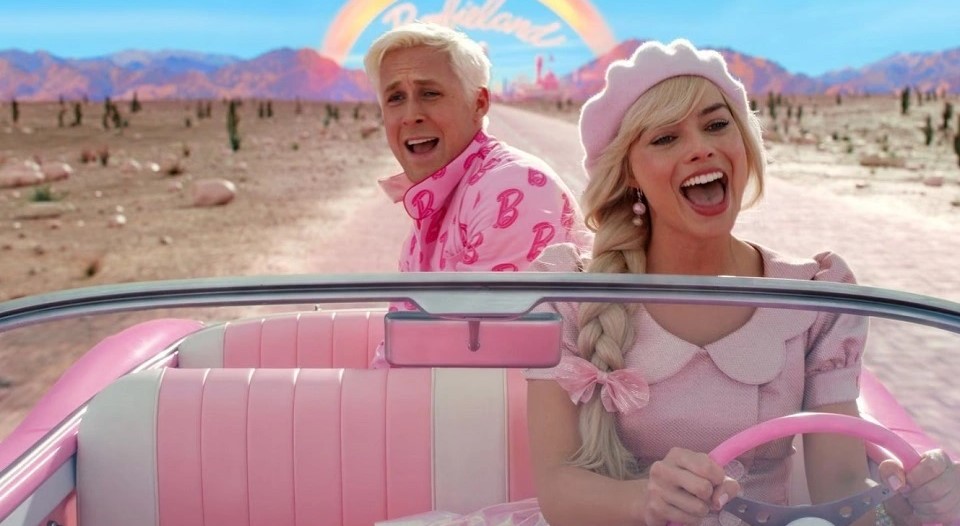
Who knew that the film which sparked the most conversation in 2023 about the roles of men and women would be one launched by a toy company, with the goal of selling toys? Barbie feels a little like a project happily hijacked. In another world this could have been a straight-forward, Adventures of Barbie flick, designed only to get kids crying out for that Margot Robbie Barbie to be appearing under the Christmas tree. Instead, thanks to the team of Gerwig and Robbie, this is a self-reverential, witty, smart and highly engaging look at gender politics which also manages to be a fun, gag-filled evening out at the cinema.

Stereotypical Barbie (Margot Robbie) leads a blissful life in Barbie-Land, where every day is the best day ever. Every Barbie knows they’ve inspired change for the better for women in the Real World. Everything is perfect until one day Barbie starts thinking about Death. Before she knows it, she has flat feet, cellulite and a crisis of confidence. The only way to fix this? A journey to that Real World to meet with the child who’s playing with her. But Barbie and Ken (Ryan Gosling) find the Real World very different from what they expected: all women’s problems are not solved and Ken discovers The Patriarchy, a wonder he is determined to bring back with him to Barbie-Land. Can Barbie save Barbie-Land and help rebuild a relationship between moody teenager Sasha (Ariana Greenblatt) and her mother Gloria (America Ferrera) in the real world?

Barbie’s sharp playfulness mixes heartfelt messages on gender politics with the sort of joyful fish-out-of-water stuff beloved of family films where a naïve figure from our childhoods finds the real world a much harsher, more cynical place than they expected. Barbie’s expects our world to reflect of the female-dominated  Barbie-Land is immediately exploded. Arriving in California, the reaction to an attractive woman roller-skating along a beach is remarkably different to what she’s used to. Wolf whistles, a parade of sexualised comments from construction workers (not a woman among them, to her shock) and a world where nearly all the top jobs are held by men.

Barbie addresses head-on whether a doll can really be an aspirational figure. In a surprisingly complex manner, Gerwig’s film looks at the pros and cons. Teenage Sasha doesn’t think Barbie has shown her world of possibilities, but instead sees her as a puppet of corporate America presenting a veneer of opportunity to women, while pushing them back into a box marked “pretty woman”. (This deadpan tirade provokes one the film’s many laugh-out loud lines as Barbie bemoans she can’t be a fascist as “I don’t control the railways!”.) Barbie may be able to do any job under the sun but this encourages attainment and also piles expectations on young women. If you can be almost anything at all, doesn’t that make it even the obligation to be something even more of a burden?

The real world is also a revelation – in a different way – to Ken. In our world, Ken discovers men (and possibly horses, Ken isn’t sure) rule though a marvellous thing called “the patriarchy”. Watching the Kens become infected by toxic masculinity, becoming high-fiveing bros who down beers, mansplain and call all the shots, is both funny and also a continuation of the film’s earnest exploration of gender politics. You can see, unpleasant as he becomes, that Ken might well want a piece of that action, coming from a world where men are so marginal they don’t even have homes (after all Mattel never made “Ken’s Dream House”). It’s also a neat gag that the other Barbies are easily brain-washed into accepting demeaning Stepfordish roles (dressed almost uniformly as French maids or in bikinis) because the confidence with which the Kens express their rightful place as masters-of-the-universe is literally mesmerising.

It’s also a neat part of Gerwig’s commentary here that the crucial factor to breaking out of this state is all about embracing the pressures of being expected to do it all: of being clever but not a know-it-all, ambitious but not a monster, raising a family but also having a career etc. If Barbie-Land in its beginning is a sort of vision of utopian feminism, then its salvation lies in accepting and embracing the struggle of marrying together a raft of contradictions and expectations. Sure, this isn’t exactly reimagining the wheel and its fairly easily digestible stuff – but it also rings true and you can’t argue with the connection its made with people.

All of which might make you think ­Barbie might be a po-faced political lecture. Fortunately, not the case when every point is filled with laugh-out-loud, irreverent humour expertly delivered by a cast clearly having the time of their lives. They are led by Margot Robbie, sensational in bringing to life a character who begins the film feeling like a doll made flesh and ends it as a three-dimensional character who embraces the contradictions of life. Robbie, who produced and set out much of the film’s agenda, is fabulous – funny, endearing, heartbreakingly vulnerable and extraordinarily sweet, mixing light comedy with genuine moments of pathos.

Equally good is Gosling playing the almost preternaturally stupid Ken with a winning sense of self-mockery, walking a brilliant line presenting a character who is (at times) the nominal villain but also a lost soul. Barbie also employs him and Robbie in some outstanding song-and-dance routines, deliciously performed and exquisitely funny. The other Barbies and Kens are uniformly excellent in their winning mix of initial shallowness and growing emotional depth while America Ferrera and Ariana Greenblatt are immensely winning as a mother and daughter overcoming a divide.

Barbie is also an explosion of delightful design and superb eye-for-detail, in its pitch-perfect recreation of a host of Barbie toys and props in real-life size, all thrown together with the perfect level of pink presentationalism. Drily narrated by an unseen Helen Mirren, every scene has a winning gag or laugh-inducing piece of business, especially when poking fun at the naïve optimism and artificiality of the Barbie world. Saying that, the film stumbles when it blurs the lines in the real world, which is half presented straight, half as a weirdly Wes-Andersonish oddity, particularly in the Mattel building and its corporate board, who are played as even more cartoonish than the actual toys populating Barbie-Land.

Barbie though generally works because it successfully mixes a heartfelt, earnest look at gender politics and the pressures on women with great gags, winning performances and a bouncy sense of off-the-wall fun that ensures nothing gets too serious. From its 2001 style opening, through its pink-led-primary colour settings, to its song-and-dance and larger-than-life-but-grounded performances, it’s a treat and in particular a triumph for its originator, producer and star Margot Robbie.

The Duke (2022)

The Duke (2022)

An eccentric Brit pinches a priceless painting in this cozy tea-time drama

Director: Roger Michell

Cast: Jim Broadbent (Kempton Bunton), Helen Mirren (Dorothy Bunton), Fionn Whitehead (Jackie Bunton), Matthew Goode (Jeremy Hutchinson), Anna Maxwell Martin (Mrs Gowling), Aimée Kelly (Iree), Joshua McGuire (Eric Crowther), Charlotte Spencer (Pammy), John Heffernan (Nedie Cussen QC), Charles Edwards (Sir Joseph Simpson), Sian Clifford (Dr Unsworth)

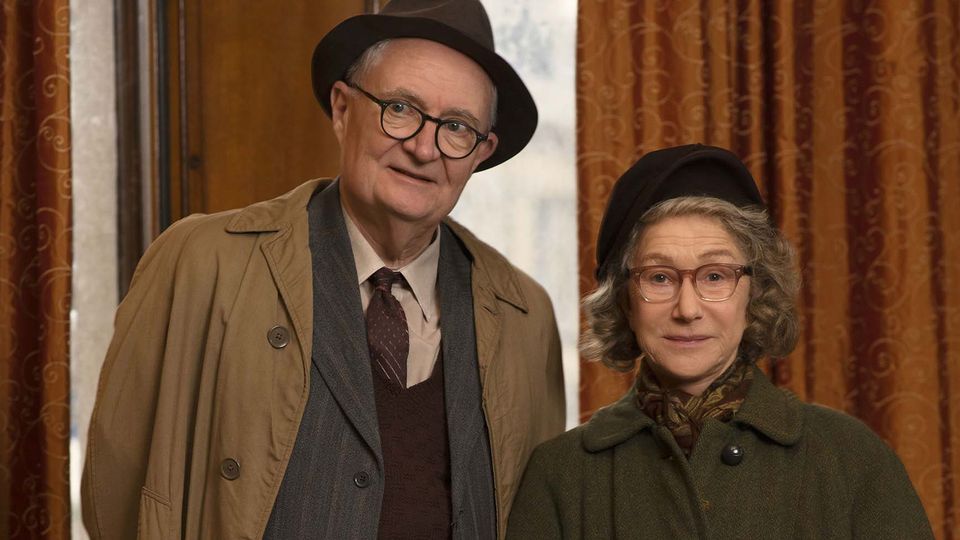
In 1961, a 60-year old working-class Geordie and social campaigner (in the “tilting at windmills” sense) Kempton Bunton (Jim Broadbent) made headlines. He went on trial, accused of stealing Francisco Goya’s Portrait of the Duke of Wellington from the National Gallery. Bunton was outraged that the British Government had spent £140k (about £3.3 million today) on preserving the painting for the public. Bunton believed the money would have been better spent paying for TV licences for veterans. When Bunton returned the painting, his trial became a media sensation.

Michell’s film (his final one, as he passed away before its Covid-delayed release) is an inoffensive, gentle, Sunday-afternoon cuddle fest, that never quite decides what it really wants to be. The tone frequently bubbles with a faint “caper”-like atmosphere, with its jazzy 60s score, split screen shooting and pops at the foolishness of the establishment, who never consider the painting could have been nabbed by a British eccentric from oop North (two sexist police officers rubbish a female handwriting expert who correctly identifies Bunton’s background). But it’s a slow, rather unfocused character study that has a melancholic grief at its heart. These elements never really fuse together.

Bunton is the quintessential plucky-British eccentric, railing against the system, that this country loves to love. He has a fixation on the injustice of the BBC licence fee (he even “fixes” his TV by removing the part of the cathode that receives the BBC signal, so that he can legitimately refuse to pay the licence), he’s a convinced class warrior. He’s fired as a taxi driver for (a) giving veterans and others free rides and (b) banging on endlessly about his political fixations to his passengers (even one of his charity rides begs him to shut up). He’s fired from a bakery for standing up for a Pakistani fellow worker in the face of racial discrimination. He sits in the rain vainly trying to get people to sign his anti-licence fee petition.

But he’s got no real idea how to use the painting to achieve his aims. While this lack of a plan fits his character, it does mean the central section of the film tends to drift, mostly taking some cheap shots at the British authorities‘ self-satisfied complacency, while Bunton tucks the painting in a cupboard and does nothing with it other than write the odd letter to the press, trying to leverage its return for support for his causes

The film has an odd, inverted snobbery about art throughout. It sees paintings as solely a preserve of the rich. A female journalist early in the film (who we are clearly meant to sympathise with) questions the money spent because of its small size (as if surface area was the best judge of Artistic value!) – and the director of the National Gallery is only allowed a vague defence of its quality in return (which we are clearly meant to sneer at). Bunton calls the painting “not very good” and disparages Goya as a “drunk Spaniard” (which feels rather like calling Turner a “blind idiot”), with the film offering no counter view. It never mentions that the picture was (a) placed in the National Gallery for all to see for free; or (b) that the government actually only put up £40k with the rest donated by a millionaire.

Instead, the film takes an odd angle that painting is the “wrong sort of art” to be spending so much money on – the writers and directors never mention that in the same year the Government spent £1 million on the National Theatre (25 times what they spent on the Goya). I’m pretty sure Bunton would have hated that as much, if not more (especially since no one could see a National Theatre show for free, unlike the Goya) but you can’t expect writers Richard Bean and Chris Coleman and director Michell to bite the theatre teat that fed them. The film ends with an odd caption stating the licence fee was made free for over-75s forty years later – but doesn’t explain that it was done in a way designed to hobble an institution loathed by the Conservative Government (and I doubt Bunton would have supported the action either!).

On top of this, there is a way more interesting film to be made here about grief. The loss of their daughter, aged 18, to a cycling accident hangs over everything the Buntons do. It’s the source of unspoken tension between Kempton and Dorothy. He visits the grave frequently and can’t understand why she won’t, and they can hardly bring themselves to talk about the loss or display her picture. While centring this would make for a more melancholic film, it feels like its heart.

But that would be a less crowd-pleasing film, and that’s what this film is trying to be. The final act is dedicated to the courtroom, and its mostly about watching Kenton and his lawyer (a lovely turn from Matthew Goode) running rings around the system. Of course every character in the film puts their differences aside to cheer on Bunton on the stand. It’s when the film gets a bit of the fizz back from the opening. Not enough for it to be anything more than passable entertainment – but it helps.

The lead performances are of course excellent, much better than the film deserves. Broadbent is absolutely perfect casting, playing this dedicated social-warrior to charming perfection. Mirren gives a performance way better than the thinly-written exasperated wife deserves. But they’re the main selling points of an otherwise fairly average movie. The film telescopes the events of four years into six months, but only rarely gives itself the sort of energy and fun it needs to be anything more than a something you can let pass before your eyes on a Bank Holiday.

The Queen (2006)

Helen Mirren reigns supreme as her Majesty in The Queen

Director: Stephen Frears

Cast: Helen Mirren (Queen Elizabeth II), Michael Sheen (Tony Blair), James Cromwell (Prince Philip), Helen McCrory (Cherie Blair), Alex Jennings (Prince Charles), Roger Allam (Robin Janvin), Sylvia Syms (Queen Elizabeth, the Queen Mother), Tim McMullan (Stephen Lamport), Mark Bazeley (Alistair Campbell), Julian Firth (Jonathan Powell)

It’s easy to assume The Queen is a cozy piece of film-making, not least because writer Peter Morgan’s exploration of the Royal Family has become every one’s favourite costume drama viewing thanks to his series The Crown on Netflix. But that’s to forget the acute sense of the personal and the public Morgan has, and his ability to write himself into the minds of his participants. And he’s perfectly matched here with the wry eye of Stephen Frears. Together they create a film that uses a single moment of history to explore the nature of our institutions and the particular characters of the people that fill them.

The film follows the death and aftermath of Princess Diana, and especially the dramatic public reaction to the death that expressed itself both in unparalleled scenes of national public mourning and hostility to the Royal family. Both are things a lifetime of duty and service have failed to prepare Queen Elizabeth II (Helen Mirren) for – but are also things intrinsically understood by her new Prime Minister Tony Blair (Michael Sheen). As the public clamour for the Royals to join the public in an exhibition of public grief rises, it’s mixed with a furious demand for a royal ‘mea culpa’ for ruining the life of the “People’s Princess”. Could the Royal Family be finished?

Well of course it wasn’t, and perhaps it’s hard to understand for those who didn’t live through those crazy days of 1997. But there was never anything like it before – people wept in the streets as if they had lost a family member of their own. Princess Diana – a tireless campaigner for charities, who did a great deal to change public perceptions on AIDS among many other issues – was also a brilliant master of public opinion, far more attuned to the countries drift away from stiff-upper-lip reticence towards celebrity-worship sentimentality than the family she married into. As skilful a manipulator of the press, as she was a victim of their hounding, she’d made herself into someone larger than life. It’s the sort of modern cult of celebrity, that few others mastered – and certainly not in the Royal Family.

Diana hangs over the family in the film like a ghost, an embodiment of their sense that the country is drifting away from them. It’s a film where pace and speed are vital, Frears and Morgan brilliantly contrasting the rushing onslaught of events from the car crash to distraught, increasingly angry, crowds gathering outside Buckingham Palace with the relatively sedate official response, which was effectively a private retreat to Scotland and say and do very little. The film has a brilliant sense of the momentum of those crazy days, and of the clash between an institution straitjacketed by tradition and a world where the public exhibition of emotion is de rigour.

What the film finds however is the value in both, and in doing so perhaps becomes one of the greatest adverts for the monarchy – or at the very least for Elizabeth II – you will ever see. A lot of this comes from Helen Mirren superb performance as the Queen. It’s a role Mirren performs with a combination of Sphinx-like genius and a genuine fragility under a veneer of exactitude. Mirren’s Elizabeth is a woman whose sense of duty has led to a lifetime of living as a symbol, a profession that has demanded the avoidance of any sort of personal opinion what-so-ever (something Morgan leans on with his Alan Bennettish early scene, where the Queen chats with a maid about the recent General Election and regrets she never had the chance to tick a box for something). She’s a woman certain that she has performed her duty in the finest tradition of her family.

Her tragedy in the film is the bewildered sense of suddenly finding the country she thought she knew being completely different. Put simply, the destructive Diana, a difficult person privately but loved publically, is a woman she can’t understand – and a country that embraces her is one she struggles to understand as well. Mirren’s Queen has a sharply defined sense of her place and person, but finds herself questioning all that. While sharply refusing to be treated as fool, she has a distressed sense of suddenly being adrift in the world.

Morgan captures all this in a series of engaging “behind the scenes” moments, but his real trick is his sure touch with symbology. A magnificent stag on the grounds, being hunted by all and sundry, could easily have been a clumsy parallel with the Queen, but it’s delivered with real grace and serves as a true emotional catalyst for the Queen (twice!) as she finally begins to understand both her own situation, and the necessity for her to bend her own firm principles and tradition to meet the requirements of this new age.

It’s the main theme of the film, this conflict between tradition and modernism, but the film sees merit in both. Many of the formalities of court life are humoursly spoofed in their intricate pomposity, but the overblown sentimentalism and knee-jerk judgamentalism of the modern world are hardly much better. As Blair himself, the arch modernist, observes there will always be a place for a head of state who gives us a symbol to aspire to. Not least, because the burden of standing for things and being driven to play to the masses will eventually lead to the destruction of most political careers (the film mines a fair bit of material between the implicit comparison of Blair’s saint-like popularity in 1997 to the wreckage of his “Bliar” reputation in 2006).

Frear’s film is a gentle critique but also a sharp defence of the institution of the monarchy, as practiced by the Queen. It may pain her, but she will get on with it. Morgan’s script also suggests her quiet wisdom – the film’s coda has her suggesting that Diana, like all things popular today, will pass. 

The film is less sure footed elsewhere. It’s portrayal of New Labour at times leans a bit too heavily into public perception – Campbell (played by a bullying Mark Bazaely) as a brash blow-hard, Labour as being obsessed with spin and image, Cherie Blair as a judgemental Shrew. Other members of the Royal family sometimes bend into parody – by the time of the Crown, Peter Morgan was to find Prince Philip as a far more fascinating and richer character than he is here. But the performances are strong across the board, as if following their head of state in Mirren. Sheen’s re-creation of Blair is pitch perfect, and he also aptly understands the difficult balance in Blair between genuine decency and ambition. Roger Allam also provides a wonderfully dry cameo as the Queen’s old fashioned secretary, while Alex Jennings does a neat impersonation of a Charles desperate to be seen to be doing the right thing.

The Queen’s main interest though is showing that tradition and modernism can sit side-by-side – and that a leaning too far in either direction is harmful for all involved. It sprinkles in intriguing levels of criticism for Diana, but matches that with a respect for the Queen, that makes her real while keeping her a symbol. Helen Mirren’s performance deserved every price going, and the film itself rewards with each new viewing.

The Good Liar (2019)

McKellen and Mirren excel in this enjoyable confidence trick caper The Good Liar

Director: Bill Condon

Cast: Ian McKellen (Roy Courtnay), Helen Mirren (Betty McLeish), Russell Tovey (Steven), Jim Carter (Vincent), Lucian Msamati (Beni), Mark Lewis Jones (Bryn), Jóhannes Haukur Jóhannesson (Vlad)

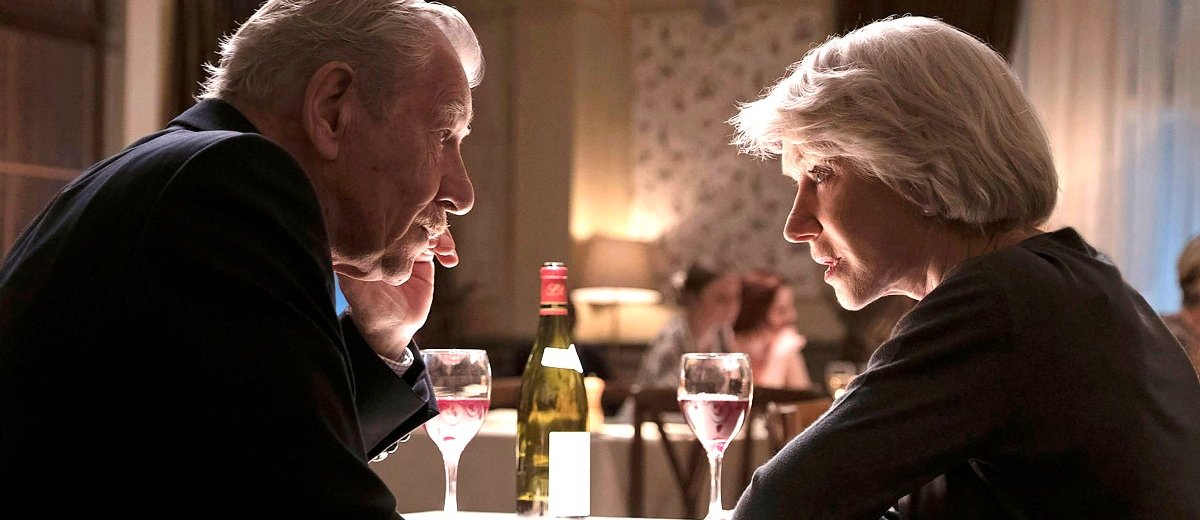
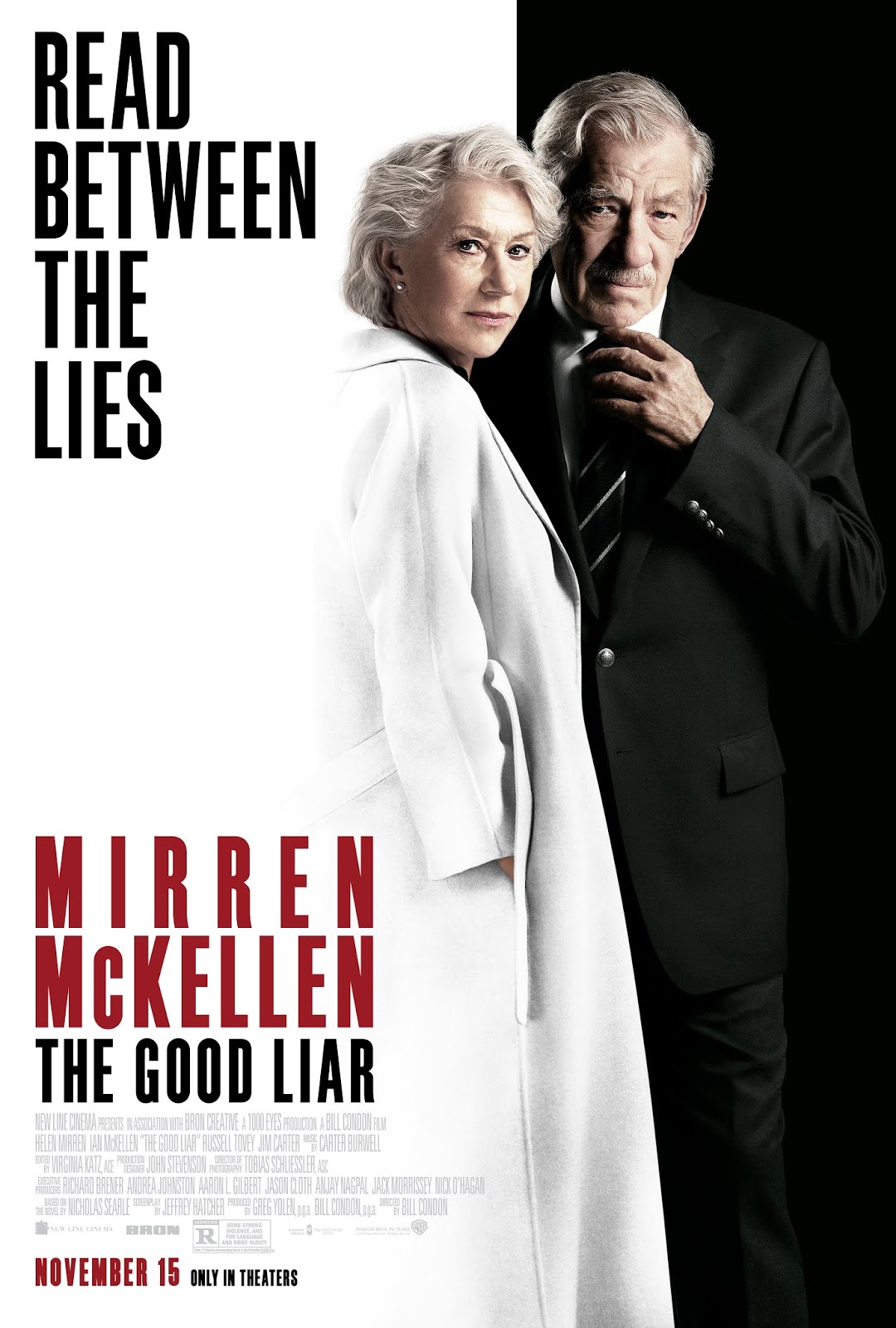
The truth can be a difficult thing to grasp. Particularly when so many people are skilled at twisting and turning it for their own purposes. Roy Courtnay (Ian McKellen) is one of the best in the business, a selfish and greedy con man who preys on the vulnerable and the arrogant unlike, ruthless in is business dealings and with anyone who tries to muscle in on his business. His latest mark is Betty McLeish (Helen Mirren), a lonely widow who has inherited a huge fortune from her late husband. Meeting Betty through a “lonely hearts” online dating agency, Roy skilfully inveigles his way into her life and her home. But is all as it seems to Roy?

The Good Liar is an entertaining and enjoyable con trick of a film, that sets up its stall very much like a number of other films in this genre. We are presented with a picture of the conman at work, and shown many of the tricks and hoodwinks that the film will practice on us, being worked out in practice by the conman early in the film. It’s possible to see how the joins work – and do find your expectations being carefully prepped – but the film is entertaining enough that you are happy for it to let you try and lead you down the deceptive garden path even as it points out a few trips along the way.

A large part of the success is down to the brilliance of the two leading performances. Ian McKellen is at possibly his very best as the genial, amusing, waspish Roy who we only slowly begin to realise is a thoroughly nasty piece of work, with a line in casual cruelty and violence. It takes a great actor like McKellen, to play so successfully a consummate actor (and liar) as Roy, and never seem either too forced or overplaying the hand. His Roy has several excellent lines, and also a brilliant ability to look and sound genuine and heartfelt at one moment and shift gears to ruthless coldness the next. It’s a superb performance, wonderfully entertaining in its delight in its own villainy. You almost want to forgive Roy his essential vileness, such is his surface charm and McKellen’s waspish delight in playing such an unrepentantly horrible man. McKellen has done his best film work working with Condon and this film might be his best yet.

Mirren matches him well as the mark, a considerate, intelligent and decent woman. Mirren has a difficult job here, for reasons that would perhaps be spoilers, although I think it is safe to say that most viewers going into a film like this would expect that it would have a few cards up its sleeves. Needless to say Mirren is perhaps not all she seems, but she handles the difficult balancing act of seeming one thing and suggesting enough of another, that the final reveals never come as a surprise or seem inconsistent with her characterisation throughout the film. 

Instead the film takes us on a delightful dance where we know that something is going on that we don’t know about or can’t see – and playfully the film effectively shows us the mechanisms of the con very early on as Roy and his business partner Vincent (an excellent Jim Carter) carry out another confidence game on some other victims. But Condon’s playful film lets us know enough that something is happening that Roy can’t even begin to guess at, while also allowing us to enjoy his confidence, arrogance and fast-thinking willingness to dance from lie to lie depending on the mood. 

The one problem the film might have is that the final reveal of what is going on is based on information that is not delivered early in the film, but instead dropped on us at the end in an info-dump. While it makes sense that the film wishes to play its cards close to its chest, it perhaps would have been more satisfying to have little bit more of the information sprinkled throughout the film, enough for us to have a bit of a chance of piecing together they why before we are told. On reflection the film gives us moments that point towards the big picture, even if never enough information is given.

But the film still works because it has a devilish charm and waspish wit, and a delightful performance of gleeful devilry from McKellen, in one of his best roles yet. Making a superb pairing with Mirren, Condon’s enjoyable film hinges on the success of its actors and its enjoyment of the tricky narrative sleight-of-hand that con films can do so well.

Gosford Park (2001)

Cruelty, snobbery and viciousness – just another night at Gosford Park

Director: Robert Altman

Cast: Eileen Atkins (Mrs Croft), Bob Balaban (Morris Weissman), Alan Bates (Mr Jennings), Charles Dance (Lord Stockbridge), Stephen Fry (Inspector Thompson), Michael Gambon (Sir William McCordle), Richard E. Grant (George), Derek Jacobi (Probert), Kelly Macdonald (Mary Maceachran), Helen Mirren (Mrs Wilson), Jeremy Northam (Ivor Novello), Clive Owen (Robert Parks), Ryan Phillippe (Henry Denton), Kristin Scott-Thomas (Lady Sylvia McCordle), Maggie Smith (Constance, Countess of Trentham), Emily Watson (Elsie), Claudie Blakely (Mabel Nesbitt), Tom Hollander (Lt Commander Anthony Meredith), Geraldine Somerville (Lady Stockbridge), Jeremy Swift (Arthur), Sophie Thompson (Dorothy), James Wilby (Freddie Nesbitt)

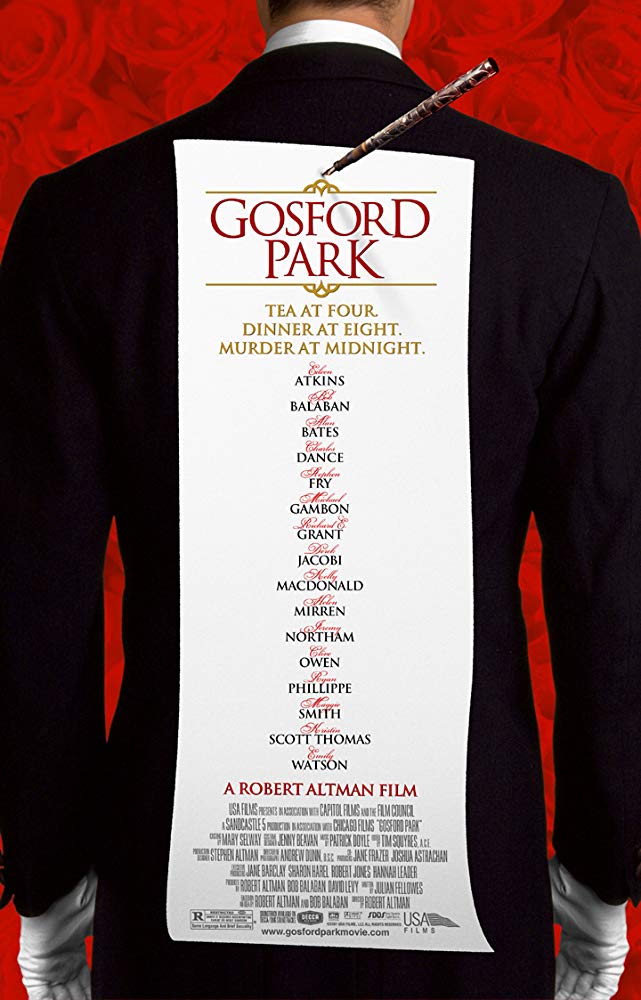
We’ve always fancied ourselves that when Brits make films in America – think John Schlesinger’s brilliant analysis of New York hustlers in Midnight Cowboy – they turn the sharp analytical eye of the outsider on American society. But do we like it when America turns the same critical eye on us? Gosford Park is a film surely no Brit could have made, so acutely vicious and condemning of the class system of this country, without the hectoring that left-wing British filmmakers so often bring to the same material, it’s just about perfect in exposing the hypocrisy and cruelty that undermines our class system. You’ll never look at an episode of Downton Abbey the same way again.

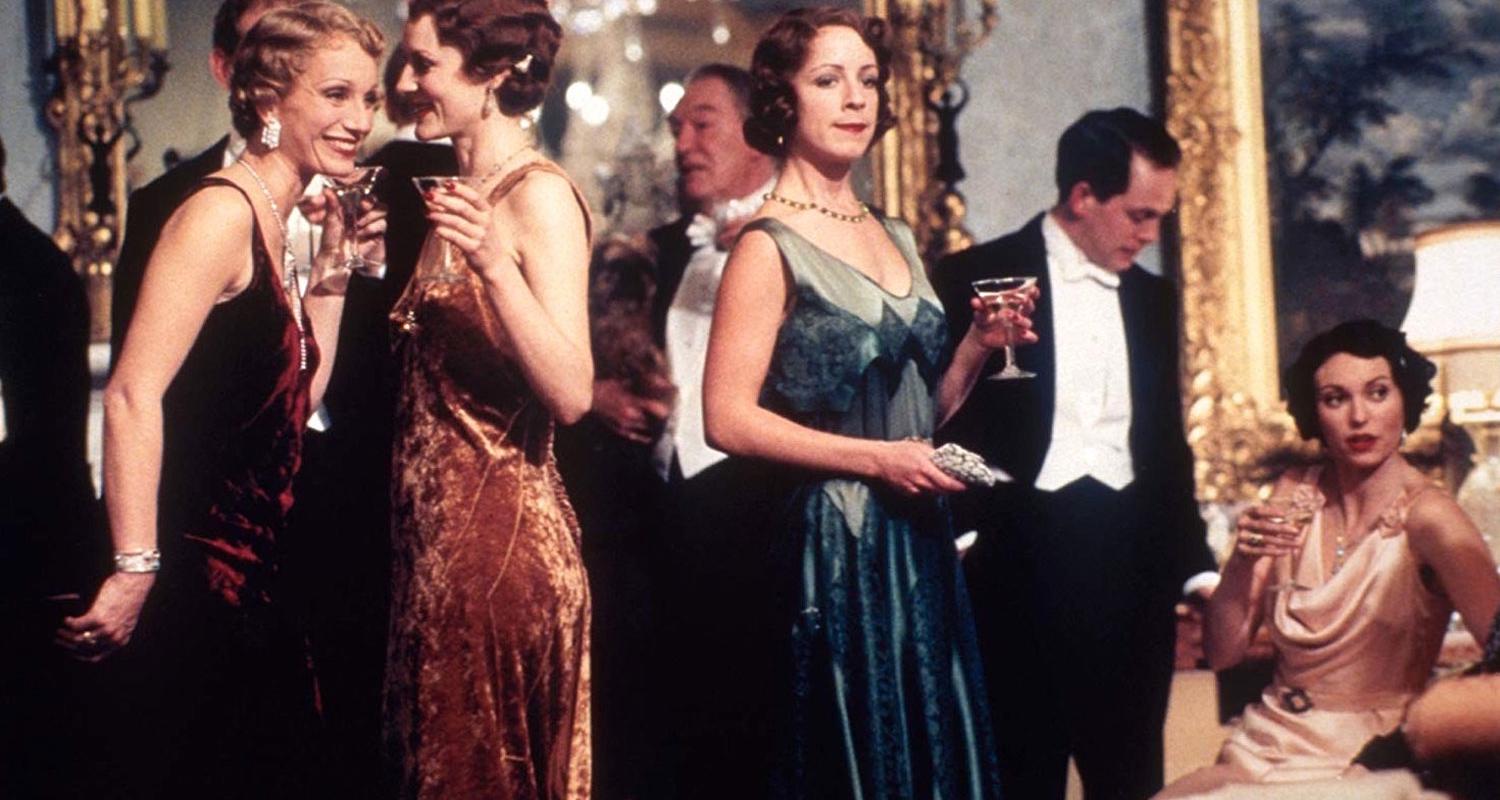
In November 1932, Sir William McCordle (Michael Gambon) hosts a shooting party at his country house. McCordle is almost universally despised by his relatives and peers – most especially his wife Lady Sylvia (Kristin Scott-Thomas) – but tolerated as his vast fortune from his factories basically funds the lives of nearly everyone at the house party. While the upper classes gather upstairs, downstairs the servants of the house led by butler Jennings (Alan Bates) and housekeeper Mrs Wilson (Helen Mirren) order the house to meet the often selfish and thoughtless demands of the rich. The house is rocked midway through the weekend, when a murder occurs overnight. With motives aplenty, perhaps the new maid Mary (Kelly Macdonald) of the imperious Countess Trentham (Maggie Smith) has the best chance of finding the truth.

First and foremost, it’s probably a good idea to say that this is in no way a murder-mystery. Robert Altman, I think, could barely care less about whodunit. While the film has elements that gently spoof elements of its Agatha Christie-ish settings, Altman’s interest has always been the personal relationships between people and the societies they move in. So this is a film really about the atmosphere of the house and most importantly how these people treat each other. Altman despised snobbery, and in a world that is fuelled by that very vice, he goes to town in showing just how awful and stifling so many elements of the class system really were.

“He thinks he’s God Almighty. They all do.” So speaks Clive Owen’s Robert Parks, valet, of his employer the patrician Lord Stockbridge (Charles Dance, excellent). You’ve got the attitude right there: the rich see themselves as a different species to those pushing plates around and cleaning clothes below stairs. The idea of there being anything in common is laughable. Slight moments of casual conversation between servant and master in the film are governed by strict laws and carry a quiet tension. 

It’s so acute in its analysis of the selfishness, snobbery, cruelty and arrogance of the British class system that each time I watch it I’m less and less convinced that Downton Abbey (the cuddliest version of this world you could imagine) creator Julian Fellowes had much to do with it. This film is so far from the “we are all in this together” Edwardian paternalism of that series, you can’t believe the same man wrote both. All the heritage charm of Downton is drained from Gosford, leaving only the cold reality of what a world is like where a small number of people employ the rest.

Upstairs the hierarchy is absurdly multi-layered. Everyone is aware of their position, with those at the top of the tree barely able to look those at the bottom in the eye, let alone talk to them. The rudeness is striking. Maggie Smith (who is brilliant, her character totally devoid of the essential kindness of her role in Downton Abbey has) is so imperiously offensive, such an arch-snob, she can only put the thinnest veil over her contempt when she deigns to speak to her inferiors. Her niece, played with an ice-cold distance by Kristin Scott-Thomas, embodies aloofness, selfishness and casual cruelty.

Ivor Novello (Jeremy Northam, superb) – the one real person in the film, and a film star – is treated like a jumped up minstrel player, with characters falling over themselves to make snide comments about his career. His guest Morris Weissman (an excellent Bob Balaban), a Hollywood film producer, is treated with similar contempt – when reluctant to divulge details of the film he is in England researching (a Charlie Chan film) for fears he will spoil his plot, the Countess bluntly informs him “oh, none of us will see it”. Later, as Novello plays the piano (essentially singing for his supper) only the servants are pleased – most of the upper classes endure it under sufferance (“Don’t encourage him” the Countess says when there is a smattering of applause). You can see why, after only a few hours in the house, Weissman whispers to Novello: “How do you put up with these people?”

The servants themselves are bits of furniture, or barely acknowledged at all. Altman doesn’t shoot a single scene without a servant present, but this often hammers home their irrelevance to the upper classes (it’s made even more effective by seeing actors like Bates, Jacobi, Grant, Macdonald, Owen and Watson essentially being treated as extras). There are no bonds between upstairs and downstairs at all. Any upset witnessed on either side is responded to with silence. When Emily Watson’s Elsie (a brilliant performance of arch awareness of her place) momentarily forgets herself and speaks out at the dinner table, it’s treated like she has crapped on the floor – needless to say her career is finished.

The servants however echo the pointless rituals and ingrained hierarchy of their masters below stairs. For ease (!) the house servants insist the visiting servants are only addressed by the names of their employers not their own names. At their dinner table, their seating reflects the hierarchy of their employers. Many of the servants are more grounded and “normal” than the upstairs types, but they are as complicit in this system continuing as anyone else. They simply can’t imagine a life without it, and accept without question their place at the bottom rung of the house. 

Ryan Phillippe, later revealed as an actor masquerading as a servant (for research), immediately shows how hard it is to move between the two social circles. The servants despise him as a traitor who may leak secrets about their views of the employers. The guests see him as a jumped up intruder, even more vulgar than Novello and Weissman. His later humiliation is one of the few moments that see both sides of the social divide united (it’s fitting that it is an act of cruelty that reinforces the social rules that brings people together). 

The focus is so overwhelmingly on the class system – with Altman’s brilliant camera work (the camera is never still) giving us the sense of being a fly-on-the-wall in this house – that you forget it’s a murder mystery. Here the film is also really clever, archly exposing the harsh realities of the attitudes held by your standard group of Christie characters. Dance’s Lord Stockbridge in a Christie story would be a “perfect brick” but here we’ve seen he’s a shrewd but judgemental old bastard. The film throws in a clumsy Christie-style incompetent police detective, played by Stephen Fry. This is possibly the film’s only real misstep as Fry’s performance touches on a farcical tone that seems completely out of step with the rest of the film. But the Christie parody is generally wonderful, exploding the cosy English world the public perception believes is behind Christie (even if the author herself was often darker than people remember!).

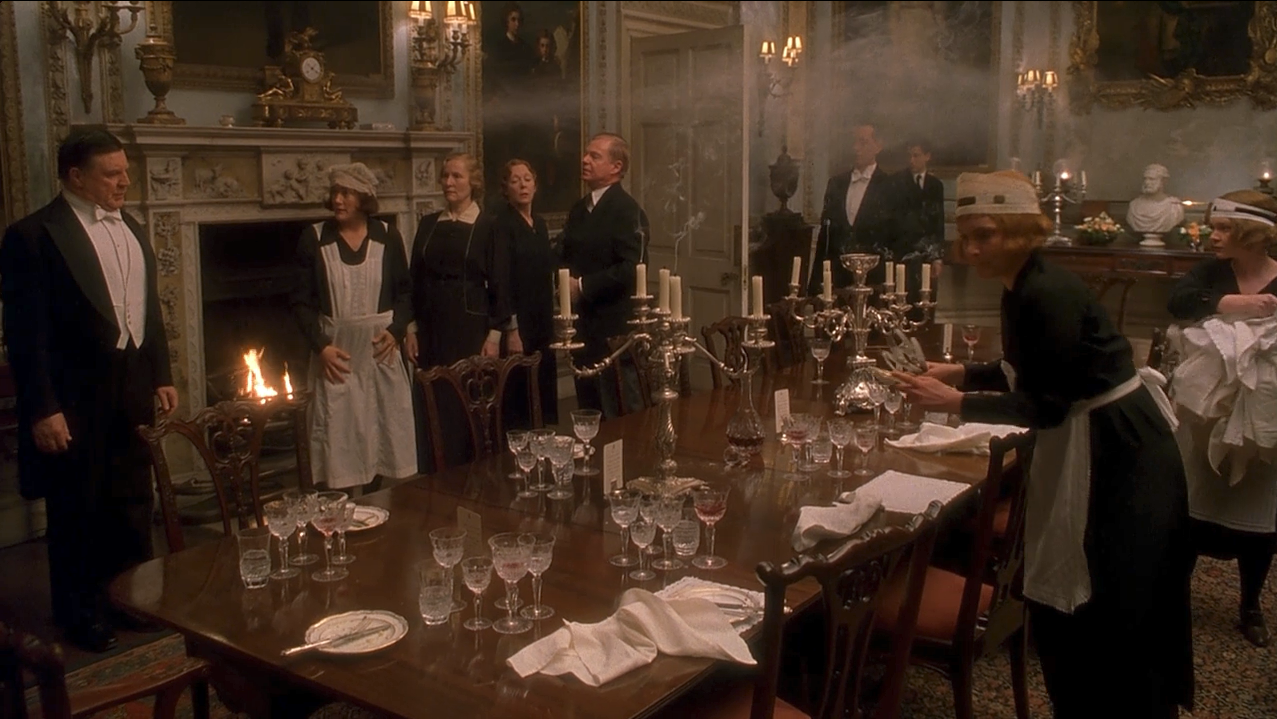
It’s a hilarious film – Maggie Smith in particular is memorable, from cutting down her fellow guests, to judgementally tutting at shop-bought (not homemade) marmalade – but it’s also a film that creeps up on you with real emotional impact. Kelly Macdonald is very good as the most “everyday” character, who takes on the role of detective and has superb chemistry with Clive Owen’s dashing valet. But the film builds towards a heart-rending conclusion – a conclusion that, with its reveal about the darker side of Gambon’s blustering Sir William, feels more relevant every day – that shows the secret tragedies and dark underbelly of these worlds, with a particularly affecting scene between Atkins and Mirren (Mirren in particular is such a peripheral figure for so much of the film, that her final act revelations and emotional response carries even more force).  It’s heart rending.

Gosford Park is a film continually misremembered as either a cosy costume drama or a murder mystery. It’s neither. It’s a brilliant analysis of the British class system and a superb indictment of the impact and damage it has had on people and the country. Hilarious, brilliantly directed by Altman with a superb cast – it’s a masterpiece, perhaps one of the finest films in Altman’s catalogue.

Trumbo (2015)

Bryan Cranston is the put-upon idealist Trumbo under the scornful eye of Helen Mirren

Director: Jay Roach

Cast: Bryan Cranston (Dalton Trumbo), Diane Lane (Cleo Trumbo), Helen Mirren (Hedda Hopper), Louis CK (Arlen Hird), Elle Fanning (Nikola Trumbo), John Goodman (Frank King), Michael Stuhlbarg (Edward G Robinson), Alan Tudyk (Ian McLellan Hunter), Adewale Akinnuoye-Agbaje (Virgil Brooks), Dean O’Gorman (Kirk Douglas), Stephen Root (Hymie King), Roger Bart (Buddy Ross), David James Elliott (John Wayne), Christian Berkel (Otto Preminger)

Hollywood loves to make movies about itself. It particularly loves to make movies where Hollywood is seen to be working on a higher moral plane. Trumbo is a film about the Hollywood Ten – the ten major screenwriters, directors and actors in Hollywood whom the industry blacklisted in the 1940s because of their sympathy for communism. Their leading light was Dalton Trumbo (Bryan Cranston), a rich screenwriter who finds himself imprisoned and unemployable. Trumbo encourages the writers to group together and write under pseudonyms for cheap film studios – although the right-wing in Hollywood continues to persecute them. Trumbo cannot reveal his identity as a writer – even after winning two Oscars – until 1960 when Kirk Douglas gives him a credit for Spartacus.

Trumbo is a very earnest, straightforward and rather bland re-tread of a key moment in Hollywood. It’s made with very little imagination, and remixes the world of 1940s politics into something that bears more resemblance to the political situation now than it does to the time. That’s not to defend the House Committee on Un American Activities (HUAC), the Congress Committee that led the campaign against communist subversion in Hollywood. Their persecution of communists flew in the face of American ideals of free speech, and their ruin of the lives of innumerable actors, writers and directors not found to be ideological pure is appalling.

But this is a film that simplifies its politics into a world of good and bad. It also works hard to try and whitewash Hollywood. Watch this film and you would believe it was Congress that had worked overtime in order to ban certain Hollywood creatives from working. Not so: the black list was put forward by the movie studios themselves and endorsed by the various guilds. Famous actors and directors, such as Humphrey Bogart and John Huston, furiously dropped their support for the Hollywood Ten after feeling they had been deceived by the Ten about their Communist associations. The film mentions none of this of course, running with a Hollywood-vs-Congress story line and crowbarring in people like McCarthy and Nixon who had very little to do with HUAC.

The main Hollywood figures campaigning against the Black List are either faceless Motion Picture Alliance for the Preservation of American Ideals types, or lip-smacking, practically mustachio-twirling gossip columnist Hedda Hopper (played with ludicrous OTT camp wickedness by Helen Mirren). John Wayne is the only recognisable Hollywood “legend” shown on the side of these guys – and, while he does get mocked for his non-war-record early on by Trumbo, he is quickly shown to be a moderate pushing for forgiveness for those who repent (and is noticeably absent from the villainy of the organisation later in the film) – Hollywood doesn’t want to be too harsh on one of its own.

Roach’s political simplicity also affects the actors who found themselves in an impossible position. As Michael Stuhlbarg’s Edward G Robinson points out, writers can work under a pseudonym, actors can’t. I was reminded of when Elia Kazan won an honorary Oscar and several famous Hollywood actors refused to applaud him, as Kazan had “named names” (or rather confirmed names HUAC already knew) when pulled before the committee. Robinson here is rammed into the same position, denounced as a snitch and a traitor for confirming the names of the Hollywood Ten when many of them are already in prison. As at the Oscars, I’m not sure it’s our place to judge. It’s cosy to assume “I would have told them no” but who can say if we would have or not? And can we really judge those who decided they didn’t want to go to the wall for a communist cause they didn’t believe in (as Kazan and Robinson didn’t, being more left-wing sympathisers than Stalinists like Trumbo)?

It’s another part of the film’s simplicity that Communism is not of course interrogated any further. Watch this film and the political views of Trumbo and his colleagues come across as nothing more than a more idealistic version of Obama-ism. In reality, Trumbo was a Stalinist who pushed for non-intervention in World War II until Russia was attacked by Hitler. This is not mentioned or explored in the film at all. In fact, the complexity of these idealists climbing into bed with a regime soaked red with blood that was suppressing freedom across large chunks of the globe isn’t even raised. Roach wants to tell a story about good-old-fashioned-Hollywood-democrats being persecuted by nasty right-wingers.

Away from the film’s simplicity it’s nothing special. Roach does competent work and there is the odd good scene. Trumbo himself is basically a rather selfish arsehole, who judges everyone around him and frequently ignores his put-upon family. Cranston does a decent job as Trumbo – but you can’t help but feel his generous Oscar nomination was in part a recognition for his work on Breaking Bad. Dean O’Gorman and Christian Berkel get some of the best scenes as Kirk Douglas and Otto Preminger working with Trumbo on Spartacus and Exodus. Bizarrely, the film totally avoids diving into the themes of Spartacus– or exploring what Trumbo was thinking about when he wrote “I’m Spartacus”, that paen to unity from the pen of a man abandoned by everyone, surely a hugely personal line not in the original source material – and instead skirts only on the surface, ticking off events. It kinda sums the film up: a solid enough to watch, but basically forgettable, that never engages with the inner lives of the men it claims to understand.

The Prince of Egypt (1998)

Animated DeMille epics in the rather brilliant The Prince of Egypt

Director: Brenda Chapman, Steve Hickner, Simon Wells

Cast: Val Kilmer (Moses), Ralph Fiennes (Ramesses II), Michelle Pfeiffer (Tzipporah), Sandra Bullock (Miriam), Jeff Goldblum (Aaron), Danny Glover (Jethro), Patrick Stewart (Pharaoh Seti), Helen Mirren (Queen Tuya), Steve Martin (Hotep), Martin Short (Huy), Ofra Haza (Yocheved)

When Dreamworks Studio was put together by three Hollywood mega hotshots (Katzenberg, Spielberg and David Geffen), Jeffrey Katzenberg, former head of Disney, finally got the chance to make his animated version of The Ten Commandments. The Prince of Egypt was the first project under the Dreamworks animation label – and it was intended to beat Disney at its own game. It succeeded – so well that many people think it actually is a Disney film. Is that a good thing?

Anyway, the story should be familiar. In Ancient Egypt, Moses (Val Kilmer), the child of Jewish slaves, is adopted by Pharaoh (Patrick Stewart) as a baby after being found in the bulrushes. Moses grows up as brother to Ramesses (Ralph Fiennes) the future Pharaoh – until the shock of finding out his heritage leads him to flee Egypt. But an encounter with the burning bush (voiced again by Kilmer) gives him a new mission – back to Egypt to demand of Ramesses “Let My People Go”. Will he succeed? Well: There Can Be Miracles (When You Believe).

It helps you to believe in miracles when a film looks as gorgeous as this one does. The animation is amazing, not just because of its quality and richness, but the imagination of its images. From the framing of Pharaoh and later Rameses around the Egyptian architecture around them, to an extraordinary dynamic shot of Moses throwing his sandals from the room when encountering the burning bush, to the haunting interpretation of the killing of the firstborn, it’s brilliant. 

It doesn’t stop there either, with the final parting of the Red Sea awe-inspiring in its scale. But the film does equally beautiful work with the smaller, more intimate moments: each character feels real and lived in, and the film perfectly captures smaller moments of affection, love and hurt with genuine emotional force. It’s a terrifically well-made film.

And of course it has a classic story – it’s literally stood the test of time. So imaginative are the visuals – and so impressive is its scope and scale – that it almost dwarfs the DeMille style it’s quietly apeing. In fact, I’d worry whether it is a film that will have greater appeal to movie-lovers and parents than perhaps it does to children. There isn’t much in the way of humour – even the film’s nominal comic characters, a pair of cynical Egyptian priests (and near con artists) voiced by Steve Martin and Martin Short, are on the side of the oppressive baddies. There are a few decent songs in there – I rather like the Les Miserables style oomph of “Deliver Us” – and the film makes great use of the beautiful voice of the late Israeli singer Ofra Haza. But there is no getting around that this is a serious piece of film-making, with nary a comic camel in sight.

But this is no bad thing at all, and I think it stands The Prince of Egypt in good stead as it’s a film you’ll like more the older and more mature you are watching it. Not least the wonderfully complex relationship it explores between Moses and Ramesses – these two wild young men start as carefree kids (the first thing we see them do is smash up a temple building site in the film’s most cartoonish sequence, a sort of Wacky Races chariot drag race), and each become dramatically changed by responsibilities. Moses ascends to a higher plane of responsibility and humanity – but Ramesses finds himself forced into defending to the death a system of government he seemed at best disinterested in as a young man.

The film actually carries a great deal of sympathy for Ramesses. It’s in many ways a tragedy of the brother relationship between these two princes of Egypt getting shattered by events. But Ramesses is a lonely, almost needy figure, who needs Moses’ affection and respect. Ralph Fiennes mines a lot of vulnerability for this man struggling to fill his father’s shoes, who just wants Moses to chuck this whole prophet business in and go back to being his only friend. Ramesses becomes a complex, vulnerable and rather sad man – unable to deal with the pressure of his role and desperate to revitalise a lost connection with Moses, the hatred he eventually feels for his former brother born almost exclusively from rejection. 

Moses isn’t quite as interesting a character – he’s more of a waster who becomes a stand-up guy – but the film successfully builds an aura about him. It struggles a bit more with those Old Testament morals: we are meant to condemn Pharaoh’s slaughter of the Jewish firstborn that opens the film, but God’s massacring of the the Egyptian firstborn (for all Moses’ discomfort with it) is presented as being primarily the fault of the Egyptians’ stubbornness.

But then that steers us into theological territory, which no animated epic for kids can really manage to set new ground with. Instead, let’s focus on the many things the film does right. First and foremost that striking visual imagery and beautiful animation, and the depth and shading it gives to the characters. The all-star cast do extremely well – even Jeff Goldblum is fairly restrained – and it’s got some great songs. It deserves to be shown as often as The Ten Commandments on the television.

The Long Good Friday (1980)

Bob Hoskins rules London – but for how long? – in classic Brit gangster masterpiece The Long Good Friday

Director: John Mackenzie

Cast: Bob Hoskins (Harold Shand), Helen Mirren (Victoria), Derek Thompson (Jeff), Bryan Marshall (Harris), PH Moriarty (Razors), Dave King (Parky), Eddie Constantine (Charlie), Paul Freeman (Colin), Stephen Davies (Tony), Paul Barber (Errol), Pierce Brosnan (Irishman)

The Long Good Friday nearly turned into a one-hour TV special starring a dubbed Bob Hoskins. The fact that it didn’t – and that today it can stand as one of the greatest British films ever made – is thanks to George Harrison’s Handmade Films, which bought the rights and saved the film. Thank God they did, as this is brilliant: thrilling, dangerous, intense but witty, strangely tender, satirical and smart. Fantastically made and wonderfully acted, it’s not just a great gangster film, it’s a great film.

Harold Shand (Bob Hoskins) is the undisputed gangland boss of London, desperate to turn legitimate. He has a plan for development of London’s dockside into a paradise of office blocks and apartments. All he needs is a big investor to support his “corporation” to make the final push. On an Easter weekend he prepares to greet an American investor from a similar “company” to his own. But as Shand prepares for this life-changing weekend, his business is hit by a wave of killings and bombings that seem targeted at shattering his organisation. What’s behind this? Who is “having a go”? And how does this link with a mysterious money shipment we witnessed at the start of the film? Shand’s going to find out – and has to do so without his investors getting cold feet.

The Long Good Friday is a well-written, brilliantly structured mystery mixed with some brutal gangland violence. Mackenzie’s film is lean and mean but laced with dry, biting humour. Everything in the film works perfectly, and it really understands the veneer of culture, class and decency that gangsters like Shand like to put over their crime dealings.

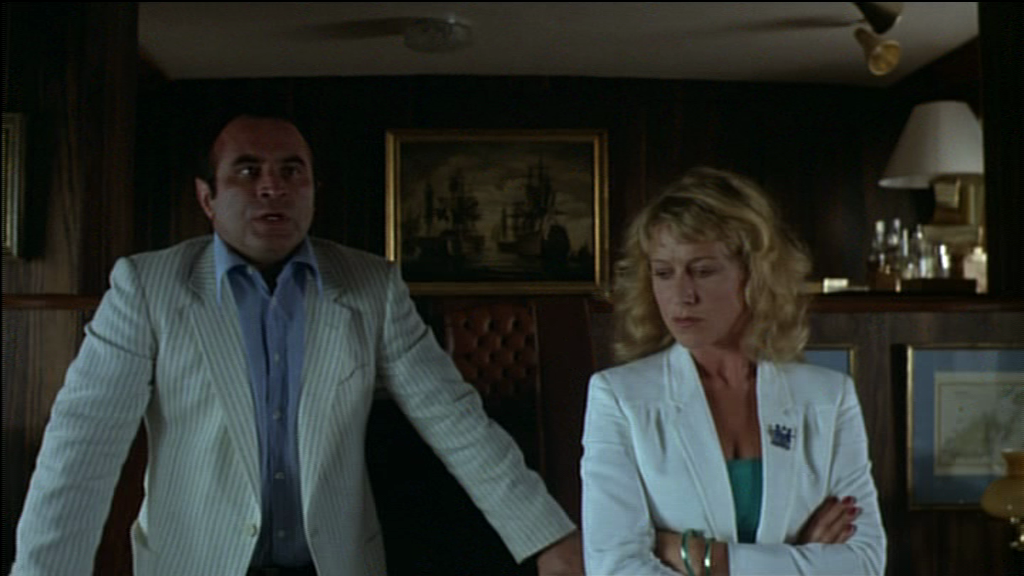
Not that Shand isn’t a decent bloke of course. Bob Hoskins is simply superb as Shand, a likeable, strangely decent guy at first, who seems to somehow shrink and twist as the film progresses and he is less and less able to control the anger he keeps bottled up. Shand clearly cares deeply for those around him, but he’s also clearly stubborn and convinced of his own superiority. Hoskins brings the part a humane gravitas, a force of nature fury that burns through the film. And when confronted with opponents he can’t understand, he still tries to use the rules of gangland to take them on.

Of course these rules are completely unsuited for his IRA opponents. Despite the advice of his pet policeman Parky, Shand is confident that he can deal with these bomb-toting fanatics. Even worse, he thinks that they are basically playing by the same rules that powered his own rise to the top of the gangster tree. Part of the tragedy of the part is seeing someone who essentially appears relatively likeable at the start of the film fall back on the violence and rage that powered his assent to the very top. Needless to say the IRA aren’t intimidated by cockney thugs, and have no intention of letting Shand get away with his attempts to strike back. 

Here is a film brave enough to not only show the IRA at its centre, but to make them as effective and ruthless as this. Not even our geezer gangsters can take them on, and the poor plods seem petrified as soon as they rear their head. Could there be a more cutting criticism of Britain’s policy in Ireland? Terrorism has hardly gone away since – you imagine Shand being equally outmatched by Al-Qaida.

As well as a gripping gangster film, The Long Good Friday is a prescient and intelligent criticism of Thatcherism. Shand is actually pretty much spot-on with his vision of London being redeveloped into a political and economic power-house, one of the major cities of Europe. Many of the locations the film uses would be unrecognisible today, as they are all sites of offices and apartments. Shand has a 1980s swagger to him, a barrow-boy made good who likes to think of himself as a visionary businessman. He’s desperate to grab for himself a bit of the new money he senses could be washing around Thatcher’s Britain. So the film makes a nice satire of the “loadsamoney” generation, as well as of the gangster world of the East End. Shand’s yacht and flat are the quintessential yuppie pads, and Shand’s motivation is raking the cash in.

British hubris actually seems to lie at the heart of the whole film. Shand’s swagger and super-confident, “Britain reborn” attitudes are all based in his firm belief that Britain has its own special destiny. Of course, as events begin to hit home, this sense of British pride (represented by Shand’s determination to reshape London into a city of glass and office complexes) begins to shrivel under the weight of events. Shand is reduced to angrily denouncing everyone from the Irish to his potential American partners to the other nations of Europe.

(In fact it’s interesting watching the film in the light of Brexit – Shand would on the surface seem to be the poster boy for a certain type of UKIPer, but he’s actually passionately excited about the opportunities the Union presents, and the centrality of London to that world. He’d almost certainly loath Farage.)

All this thematic content – and this is a hugely British film, instantly recognisable to anyone who has grown up here – gets swept up in this brilliant gangster flick. The acting is sublime. Helen Mirren is a stand-out as a woman who is a very equal partner in Shand’s business empire, just as smart and just as ruthless. Derek Thompson (him off Casualty!) is good as a slightly sleazy major-domo, as is PH Moriarty as a gangland heavy (he certainly looks the part!). Future stars like Kevin McNally, Paul Freeman, Dexter Fletcher (as a kid) and most notably Pierce Brosnan (in his first acting job as a handsome IRA hitman) fill out the cast.

Brilliantly acted, tightly directed and full of great cultural and political depth, with terrific pace, scintillating action, engrossing tension, a deceptively simple story and a great script: The Long Good Friday surely stands as a landmark British film. And it has one of the finest final sequences you’ll see, which considering it revolves solely around Hoskins sitting in a car is saying something.