Tag: High school drama

Lady Bird (2017)

Saoirse Ronan and Laurie Metcalfe are mother and daughter with more in common than they think in Lady Bird

Director: Greta Gerwig

Cast: Saoirse Ronan (Christine “Lady Bird” McPherson), Laurie Metcalfe (Marion McPherson), Tracy Letts (Larry McPherson), Lucas Hedges (Danny O’Neill), Timothée Chalamet (Kyle Scheible), Beanie Feldstein (Julie Steffans), Lois Smith (Sister Sarah Joan), Stephen McKinley Henderson (Father Leviatch)

In Sacramento, California, in 2002 Christine “Lady Bird” McPherson (Saoirse Ronan) is a self-consciously assured teenager, constantly pushing to define herself as new and original, down to giving herself a new name (“Lady Bird”) and playfully enjoys pushing against the limits of what is acceptable at her Catholic school. She however butts heads with her mother Marion (Laurie Metcalfe), a hard-working nurse, supporting the family as her husband Larry (Tracy Letts) is unemployed and out-of-step skills-wise with the jobs market. Mother and daughter though are strikingly similar people, independent minded but with a streak of loving kindness.

It’s the relationship between these two characters that is the heart of Gerwig’s gently made coming-of-age (of a sort) drama. The key scenes that power the film are both the clashes and moments of fun between these two. There are feuds and angry words – but they often sit-by-side with a loving regard and a shared world perspective. Gerwig gets superb performances from both actors, with Ronan every inch the difficult teenager, full of promise but overwhelming with arrogance and mistakes that constantly hurt those around her. Metcalf is equally good as a woman weighed down with cares, who constantly makes time for others – and therefore finds her daughter’s lapses into selfishness all the more infuriating as they fly in the face of everything she values in life.

The film opens with a fight between these two that just seems to capture the moment. After a long drive to a perspective college, they finish an audiobook of The Grapes of Wrath both overcome with emotion from the stories end. Seconds after it finishes, Lady Bird goes to turn the radio on, her mother asks for a moment of reflection – and we are off from a shared emotional experience into a mother-daughter row. Setting the tone of how many of these will go – and the characters they display in the film – Lady Bird impulsively throws herself out of the car when she feels she is unable to come up with a decent comeback to a point. It’s a plaster cast she will wear for a large part of the film – and an example of the impulsive addiction to terrible decisions that seems to be constantly on the edge of ruining her friendships and chances.

A lot of this material is, to be honest, pretty standard stuff for movies of this genre. And Lady Bird herself is at times a rather irritating and even annoying lead character, one who seems to be constantly hurting people around her with very little regard for their feelings and seems to be continually forgiven regardless. Her treatment of her best friend Julie (a fine performance of endearing sweetness by Beanie Feldstein) sees her drop her and then pick her back up again with a suddenness that feels like it has missed the hurt and pain she has caused.

But then other parts work so well because the script approaches them with a quirky eye for a good joke and a sharp line. There are some very fine jokes among the script, a high point being a PE teacher turned drama director who directs his plays in the exact way he would plan out a football game. Little moments of character observation and behavioural ticks often strike home and frequently raise a smile.

But it also carries across the same observational honesty to less savoury attitudes of being a teenager. The selfishness, the feuding. Lady Bird’s sexual awakening of course happens with a self-obsessed arrogant would-be-poet aiming at a higher plane of intelligence (played with an assured arrogance by Timothée Chalamet). Lady Bird’s striving to constantly to be more or have more than she has always feels very teenager – life can’t just be what she has, she must need or be destined for greater things, or to improve in some way, to make it to the college she wants, to find some deeper meaning, to live a life that expands beyond her horizons and make her stand out.

But, the film suggests, she actually seems destined to become someone more like her mother –decent, kind, gentle, perhaps with a greater artistic calling, but fundamentally a thoughtful person. One early boyfriend – very well played by Lucas Hedges – who is revealed as unsuitable in a way not-at-all surprising when you consider he is the lead actor of the school drama group – is someone she accepts and comforts with a complete emotional openness. Her father’s travails in the job market is something she feels great empathy for. When returning to the company of her friend Julie, she is warm, caring and full of energetic affection.

It makes for a gentle and engaging film – perhaps nothing you haven’t really seen before, but presented with a lot of assurance and freshness by Gerwig, who is a director with an eye for the moving moment (a scene where Tracy Lett’s father sees his son go-up for the same job as him – a job for which the son is more qualified – is unmatched in its sad mix of acceptance and pride) and more than a taste for the eccentric comedy that brings spark to the drama. Powered by two excellent performances by Ronan and Metcalfe, Lady Bird may, like many teenagers, be difficult to like sometimes but has lots of promise.

The Falling (2014)

Florence Pugh and Maisie Williams deal with tedious coming-of-age antics in The Falling

Director: Carol Morley

Cast: Maisie Williams (Lydia Lamont), Maxine Peake (Eileen Lamb), Monica Dolan (Miss Alvaro), Greta Scacchi (Miss Mantel), Mathew Baynton (Mr Hopkins), Florence Pugh (Abigail Mortimer), Joe Cole (Kenneth Lamont), Lauren McCrostie (Gwen)

Any film set in an all-girls school that succumbs to hysteria, with ominous goings-on that might be supernatural or might all be allegories for coming of age and emerging sexuality, is inevitably going to get compared with Picnic at Hanging Rock. But few films seem to be so desperate to be that film as The Falling does. 

Set in an all-girls school in 1969, at the cusp of the sexual revolution that will soon engulf the whole country, Lydia Lamont (Maisie Williams) and her elder brother Kenneth (Joe Cole) are both obsessed with Lydia’s charismatic classmate Abigail Mortimer (Florence Pugh) – feelings of emotional and sexual dependency that Abigail knowingly encourages and flirts with. After Abigail’s sudden death connected to her pregnancy, Lydia becomes increasingly disruptive at the school and finally becomes “patient zero” in an epidemic of fainting that afflicts the school.

Based on a true story, you can tell that this film is keen to conjure up some sort of deep-rooted mystery at the heart of the girls’ actions, questioning whether they were truly in control of their own actions at this time or under the influence of something else. Is this linked directly to the tragic fate of Abigail – is she in some way possessing the girls, driving them towards this fainting? Or is the fainting just a sort of acting out, as Lydia tries to get over her grief at the loss of her friend?

Frankly, who really cares? It’s pretty hard to get invested in a film that is working so hard to be meaningful that it overshoots the mark and just becomes tiresome. Yeah I get it, teenage relationships can have this unhealthy intensity to them. They can spin out into self-destructive elements. And maybe, if the film had focused more on that rather than trying to suggest some unsettling mystery it might have got further. But with every shot of the British countryside around the school, or the lingering shots on the girls writhing on the floor, or the unsettled terror of the teachers, you feel the film’s attempt to invest these events with meaning.

What you actually end up feeling, throughout this overlong and puffed up film, is impatience at the indulgence of these children. Far from a mystery, the fainting appears to be a tiresome, attention-seeking effort from young girls unable to express and process emotionally the things that have happened to them. There isn’t a single element of the film that makes you seriously consider some ghostly or psychical explanation for the events – they seem, clearly and throughout, to be manufactured by the girls involved. It’s hard to watch it without unsympathetically suspecting that if the adults around them stopped indulging all this nonsense, they’d miraculously recover soon enough. It’s possible to speculate over whether the girls are doing it deliberately or if this is the work of their overwrought subconscious – but while that could form a good premise for a film interested in group psychology, this film seems more interested in pretentious shots of trees. 

As if realising halfway through that it’s not come up with anything compelling yet, the film hastily throws in a poorly developed incest plotline, which is unsettling, illogical, and springs from nowhere. Not content with that, it then shoe-horns a rape into the backstory of a character late on, in a way that is clearly meant to be a dark reveal, but is in fact a really clumsy “obviously this caused all the problems” solution to the questions of the film. The character’s mental health problems and inability to bond with her closest family could have made for a complex and challenging character (and she’s certainly played by an actor who could’ve handled that material). Instead, rape is casually chucked in as a glib explanation for “oh and this is why she’s troubled – ta-da”. It’s cheap and lazy. But then that is on a par with all the sexual awakening content of the film, which is clumsy, clunky and often misguided. It wants to suggest an unsettling fascination with sex, and tie that in with dangerous, subversive ideas. Instead, it just ends up looking like standard teenage experimentation, filmed with a certain amount of style.

This is not to say the film is badly made as such. It looks good and it’s put together well. It’s just trying way too hard. The acting is very good. Maisie Williams is never anything less than watchable as Lydia, and creates a well-drawn character as a girl who goes from easily-led hero worshipper to the troubled centre point of disruption at the school. Florence Pugh is also a revelation as Abigail – a charismatic presence that you instantly believe would be obsessed over by everyone who knows her. Joe Cole is also very good as the creepy, sexually exploitative brother. There are some good performances from the adults, not least Maxine Peake as Lydia’s nervous, agoraphobic mother. 

But none of this cancels out the laboured pretension of the rest of the film, which always wants to let you know how clever it is, and how much it wants you to question the impact of all that dark sexual awakening. Instead, for all the sturm und drang,it ends up looking rather like a collection of silly girls who are acting out. The idea that obsession with Abigail draws rebellious and transgressive feelings from Lydia seems painfully obvious and unoriginal, and the flirtation with incest, rather than invested with meaning, instead feels like a film straining to shock.

The Falling wants to be a great cult classic. Neither of those words can be applied. It’s a well-made but empty spectacle, living in the shadow of other much better films. For all the skill of Maisie Williams and Florence Pugh, it misses the greater depth it is aiming for and settles for being a rather shrill would-be ghost story and a plodding attempt at social commentary.

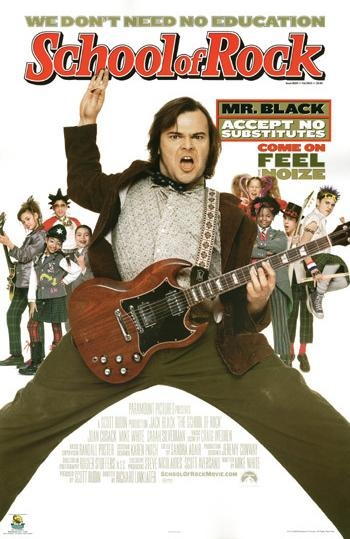
School of Rock (2003)

Jack Black triumphs in high-school comedy School of Rock

Director: Richard Linklater

Cast: Jack Black (Dewey Finn), Joan Cusack (Principle Roz Mullins), Mike White (Ned Schneebly), Sarah Silverman (Patty DiMarco), Miranda Cosgrove (Summer Hathaway), Joey Gados Jnr (Zack Mooneyham), Kevin Clark (Freddy Jones), Rebecca Brown (Katie), Robert Tsai (Lawrence), Maryam Hassan (Tomika), Caitlin Hale (Marta), Brian Falduto (Billy)

The early 2000s saw the rise of a new force in American comedy films: rotund, rock ‘n’ roll, John Belushi-light Jack Black. Following his breakout role as a music-obsessive with purist tastes in High Fidelity, School of Rock saw the legend of Jack Black hit its peak. And it deserves to, as School of Rock is the sort of perfectly-formed treat that achieves everything it sets out to do.

Dewey Finn (Jack Black) is the sort of slacker man-child beloved of indie filmmakers, who has never grown up from his dreams of being a rock star. The only thing really holding him back? Fate and his own selfishness. Dewey’s expelled from his own band, due to his penchant for extended guitar solos and distracting stage antics, and his old bandmate-turned-respectable-supply-teacher, Ned Schneebly (Mike White, also the film’s writer) is pressured into finally asking Dewey for his share of the rent by Ned’s domineering girlfriend Patty (Sarah Silverman). Desperate for money, Dewey impersonates Ned and takes a role as a supply teacher for a group of 12-year-olds at a prep school. At first Dewey just wants to leave the kids to their own devices and pick up his cheque – but when he hears his new students in their music classes, he suddenly has a brainwave: they could be his new band, and help him win The Battle of the Bands competition. 

School of Rock is an immensely heart-warming film that manages to never sell out to become sentimental or depend on its characters learning “lessons” that improve them. Sure lessons are learned, and the film is very sweet, but it manages to wear this all with a cool lightness. In fact the whole film becomes a rather touching paen to the transformative power of music, and the way it gives people confidence and a voice. 

Linklater directs with a breezy cool, drawing some fantastic performances from the whole cast (I can’t give enough praise to a director who gets such relaxed, natural and funny performances from children as Linklater does here) and totally embracing the clichés of the “inspirational teacher” genre, with a comedic bent. The kids are the expected combination – the precocious ambitious one, the shy ones who hide skill, the brash wannabe bully who finds the joy of being part of the group – but they are all portrayed with such freshness and energy that the clichés hum with joy.

Linklater’s real stroke of genius is letting Jack Black rip in the lead role. The part is so perfectly tailored to Black that it feels like almost an extension of his own personality. Black is a force of nature in the role, a perfect combination of showboating and carefully thought out character work – and he works brilliantly with the kids. He’s hilarious as well, first as a wannabe rock star layabout, later as a band leader for the kids who discovers in himself a work ethic and ability to inspire. 

The character works because, deep down, under the selfishness and laziness, Dewey is basically a pretty decent guy. He cares about people’s happiness and he has a romantic view of rock and roll as a source of self-expression and celebration of life. (Although fortunately for the film, he’s no fan of the whole drugs side of many of the musicians he worships – having no time for the “poseurs” who attempt to impress the kids with the smoking and gambling at one Battle of the Bands audition.) And he’s so passionate about this that he can actually turn himself, if not into a teacher, at least into the sort of inspiring mentor who can bring his students out of their shells.

And he does this without really changing fundamentally who he is. Sure he’s touched by the kids, just as he’s touched them (to slightly misquote the film’s cheeky paedophile misunderstanding gag, when Dewey is busted by his charges’ parents!), but the warmth under the bluster is there all the time. And Dewey doesn’t suddenly turn into a high achiever or perfect guy – he just learns to channel his enthusiasm into encouraging musical skills in others (and there is something really sweet in his genuine, warm enthusiasm for talent from the very start). The film even allows the headmistress of the school (very well played by Joan Cusack as an under-pressure uptight woman yearning to cut lose a little) to be a spiritual ally and well-meaning obstacle rather than an opponent.

It’s this good natured warmth that runs through the whole film, and which at the end finds every character contented and united. (Well nearly every character – the film can’t shake its love of wistful man-childishness sufficiently to resist turning Ned’s girlfriend into a humourless, nagging shrew, in the film’s only real misstep). Plus the film rocks really well, and seeing the band together and perform is both fun and really sweet. No one puts a foot wrong here, and a lot of its success is due to Linklater’s ease and Black’s dynamic, verging just the right side of cartooney, comic tour-de-force at the centre.

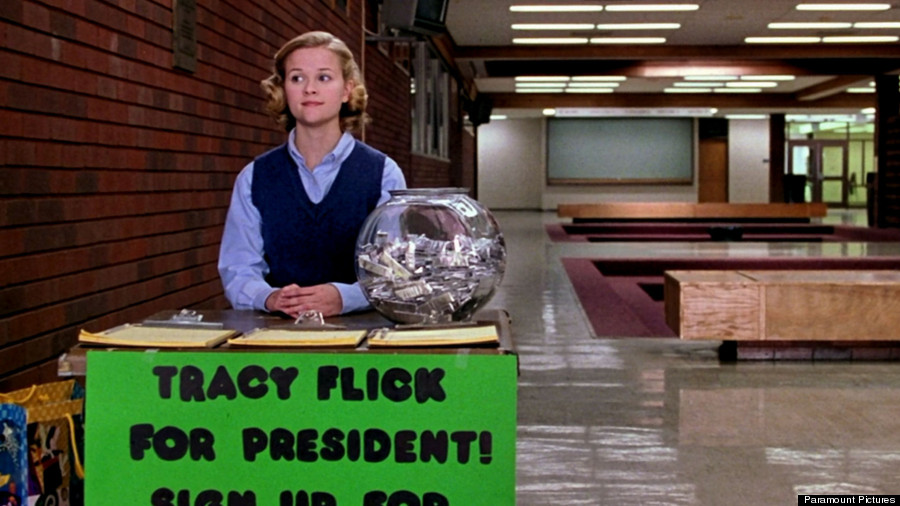
Election (1999)


Reese Witherspoon runs for office in high-school satire Election

Director: Alexander Payne

Cast: Matthew Broderick (Jim McAllister), Reese Witherspoon (Tracy Flick), Chris Klein (Paul Metzler), Jessica Campbell (Tammy Metzler), Phil Reeves (Principal Walt Hendricks), Molly Hagen (Diane McAllister), Colleen Camp (Judith Flick), Delaney Driscoll (Linda Novotny), Mark Harelik (Dave Novotny)

High school can be a great setting for films that want to comment on our adult world, because they are such exact microcosms for society. Few films get this idea as effectively as Alexander Payne’s simply superb Election.

In an Illinois high school, Jim McAllister (Matthew Broderick) is a civics teacher who loves his job but is increasingly annoyed by high-achieving student Tracy Flick (Reese Witherspoon), who he also unconsciously blames for the dismissal of his friend Dave for having an affair with her. Tracy is a ruthless careerist, the sort of girl whose hand is always first up in class, and she wants more than anything to win the election to school president. Feeling it his duty to stop Tracy, McAllister persuades football star Paul Metzler (Chris Klein) to run against her – and slowly unleashes a hurricane of ruthless campaigning and dirty tricks that leads to disaster.

This sharp and brilliant satirical comedy avoids jumping to any easy conclusions: instead it ruthlessly skewers everyone involved. Other films would make McAllister a crushed victim, broken down by events and Tracy’s unstoppable force of will. Instead, Payne turns him into an increasingly self-deluding whiner whose impending mid-life crisis becomes more and more evident. There is a particularly sly decision to cast Broderick as this weak-willed, selfish, self-proclaimed victim. Who cannot think about Ferris Bueller now all grown up into a klutzy loser, ineptly trying to initiate an affair with his wife’s best friend and mentally super-imposing Tracy’s head onto his wife’s body during a routine pregnancy-focused coupling?

In fact, watching the film it’s fascinating to see how much it charts McAllister’s disintegration into bitterness and self-justification. By any measureable standard, everything he does is fairly indefensible, while his annoyance with Tracy is rooted in his barely self-acknowledged sexual fascination with her. By the end of the film, as his cheery voiceover recounts his failures and personal and professional disasters with a self-deceiving optimism, you can’t help but begin to wonder how much this manic cheerfulness infected everything McAllister has told us from the start.

It’s things like this that make the film so much more than a straight political satire. Tracy Flick may be a ruthlessly ambitious young woman, who believes she has a nearly divine right to win – but she’s also the child of an equally ruthless woman (using Tracy to relive her own life), who has been sexually exploited by one of her teachers, whose smiles and enforced cheerfulness and drive hide a volcanic anger and insecurity. She could have been simply a smiling force of political ambition – but instead she feels like a real person diverting her own problems into a domineering careerism.

All of which adds a rich hinterland to the film and helps make it even funnier than it could have been. This might be the best political satire ever made. It’s certainly one of the funniest. There are zinger lines every few minutes. The satire is pin-sharp. Tracy is the qualified political hack that the normal people can’t relate to. Paul the Bush-like jock who can speak the language of the common man but manifestly lacks all qualifications. Tammy represents the anarchic frustration and alienation so many feel for the political process. The entire election is a shrewd, subtle skewering of every campaign in politics you’ve ever seen. Even the jobsworth geeks who run these things get it in the neck – “Larry, we’re not electing the fucking Pope” McAllister snaps (at the end of his tether) as he has the ludicrously elaborate election rules explained to him again.

But the film doesn’t forget the humanity: McAllister is a deluded man, but he feels real. He’s so inept at everything from seduction to deception it’s hard not to feel a little sorry for him. (As if to visualise his uselessness, he spends the last third of the film mostly with a massive swollen eye from a bee sting). Tracy has her own problems. Paul, far from being a heartless jock, is the most sensitive and caring person in the film (even if he is as dim as a failing lightbulb). Tammy’s a touching combination of good natured cynicism and obsessive, vengeful stalker.

Of course, it also helps that the acting is outstanding, the comic timing (both in acting and direction) perfect. Reese Witherspoon might never have been better than as the ruthless Tracy, a hurricane of hilarious repeated concepts from political biographies. Chris Klein is very sweet as Paul, a guy it’s impossible not to like. Jessica Campbell is perfect. Broderick holds the entire film together with a superb schleppy moral weakness. Payne’s direction brings all these elements together brilliantly – and has a way with the freeze frame and quick edit that provides a series of striking visual gags.

Election is a classic film – a brilliant satire on politics and elections, but also human nature itself. The characters have depth and reality that makes the jokes hit home with force. The use of voiceover narration from all the main players helps bring us even closer to them, and helps expose their inner personalities even more. I think this might be the best film Payne has made – Sideways and The Descendantsreceive the greater plaudits and attention, but this is his sharpest, wittiest film, and the one that is perhaps the most rewarding of repeat viewing. It’s simply a brilliant, small scale classic.

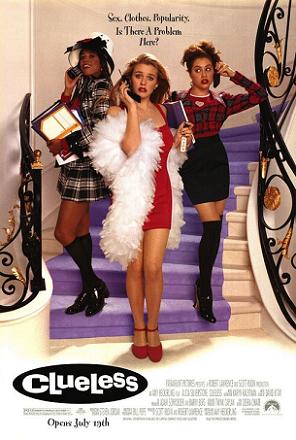
Clueless (1995)


Alicia Silverstone leads her in crowd troop in neat Jane Austen reimagining Clueless

Director: Amy Heckerling

Cast: Alicia Silverstone (Cher Horowitz), Stacey Dash (Dionne Davenport), Brittany Murphy (Tai Frasier), Paul Rudd (Josh Lucas), Dan Hedaya (Mel Horowitz), Elisa Donovan (Amber Mariens), Justin Walker (Christian Stovitz), Wallace Shawn (Mr Hall), Twink Caplan (Ms Geist), Breckin Mayer (Travis Birkenstock), Jeremy Sisto (Elton Tiscia)

The 90s saw a rash of films that reworked classics into US high-school settings, aimed squarely at the teenage market. One of the most successful of these was Clueless: a decent, just-smart-enough reimagining of the plot of Jane Austen’s Emma.

Austen’s wealthy, match-making heroine here becomes Cher Horotwitz (Alicia Silverstone) – queen bee of the in-crowd in her high school. Like Emma Wodehouse, Cher is smart, beautiful and taken to meddling in the lives of those around her, sure she knows best about how they should behave – and whom they should date. She can be selfish and self-obsessed, but beneath it is fundamentally good-natured. When new girl Tai (Brittany Murphy) arrives at the school, Cher sees the scope for a makeover project – but it’s Cher herself who undergoes the greatest transformation.

The obsessions with status that populate Austen’s world actually translate very well into the high school setting, with its in and out crowds. It also a very neat restructuring of the novel, hitting all the basic plot points of Austen’s story, with some smart translations into the modern world (Christian – the Frank Churchill role – is particularly well updated). The film is sprinkled with sharp lines and snappy dialogue exchanges, and the cast are certainly in on the joke, walking a fine line between parody and playing it straight. This all contributes to the film’s fizzing energy and its charming momentum – you can see why teenagers loved it, as Heckerling has a wry wink at the camera at the concerns of teenagers, but also celebrates their potential for fun and friendship.

Watching the film over 20 years on, it’s remarkable how successfully it used the limitations of Alicia Silverstone to such great effect. It’s a bit bizarre to think Silverstone was considered the next big star of Hollywood, considering how few of her films have made any impact since this. However, here her lack of depth and shading, her unmodulated voice and rather bland style somehow work perfectly with a character who is superficial and who believes she is far cleverer than she actually is.

Clueless is that strange thing – a star-making turn that didn’t make a star, but Silverstone clicks perfectly into this role, making Cher engaging and rather charming despite her self-obsession. She delivers what the film requires in spades, even if Cher’s late character blossoming seems something required for the film’s plot rather than growing truly organically over the course of the film.

This abrupt burst of “learning and growing” partly clunks because Heckerling shies away from Emma’s more negative characteristics – tellingly, Emma’s public shaming of another character is here given to a different character. Can’t have anyone not liking the heroine for a second can we? In fact this determination to make Cher constantly as likeable as possible does rather miss the point of the original novel. It also reduces the “tension” (we all know how stories like this end!) of whether the heroine has driven her love interest away through her mistakes and missteps – and with less for the heroine to learn about herself, and less damage to repair in the relationship with the object of her affections, there’s proportionally less emotional impact to the final happy ending.

Speaking of that romantic plotline, you also can’t talk about the film without also commenting on the fact that it makes a bit of a fudge around the attraction between Cher and Josh, who (the film is at very great pains to point out) are not actuallysiblings, but do share the same father/step-father. It’s actually quite a weird twist, but I suppose just as retrospectively unsettling as Mr. Knightley loving Emma from afar from a ludicrously young age. It’s funny though to watch the film fall over itself to hammer home the non-family relationship between the two characters early on, so we don’t start shrieking “incest” by its conclusion.

All in all, the film – like its heroine – is a sweet, but superficial, candyfloss concoction, without the depth that could have lifted it from pleasing popcorn fare to satisfying story.

WarGames (1983)


“Would you like to play a nice game of Chess” – if only he had said yes…

Director: John Badham

Cast: Matthew Broderick (David Lightman), Dabney Coleman (Dr John McKittrick), John Wood (Dr Stephen Falken), Ally Sheedy (Jennifer Mack), Barry Corbin (General Beringer)

If you worked in a nuclear launch centre and received orders to launch out of the blue, would you want to make a phone call to confirm? That’s the compelling idea that opens this tense but engagingly playful film on nuclear politics that successfully balances teen high-school drama with the possibility of Armageddon. For the record, the man who wants to make the call (played by Leo McGarry himself, John Spencer) outrages his subordinate so much with this breach in protocol that the subordinate pulls a gun on him and demands he follows the orders.

David (Matthew Broderick) is that staple of high-school drama, the geeky genius who coasts through school. He’s a computer genius and, attempting to impress cool girl Jennifer (Ally Sheedy), one-day he finds a back-door into NORAD’s weapons control system WOPR (aka JOSHUA). Thinking he’s found a computer games company, he accepts its invitation to play “Thermonuclear Global War”. Before he knows where he is, he’s in custody and bombs are fueling in their silos.

The opening of the film (a brilliantly self-contained mini-movie) perfectly encapsulates the swiftness of escalation in a nuclear war. At least three more times in the movie, we see how swiftly events can push on from DEFCON 5 to 1. This is a film that questions the very purpose of both the nuclear deterrent and nuclear war itself. There isn’t a single character who truly advocates the purpose of the weaponry, and none of them is anything but terrified at the prospect of pushing the button. But this questioning is handled lightly, and Badham’s direction never allows it to dominate proceedings. The film tackles such a big topic with such a sharp and fun script, and at such a rollicking, enjoyable pace with laughs and thrills, that it must count as a some sort of minor classic.

The film is also of course about computers and hacking. There is actually a lot of charm in watching, on my tablet, a film where a computer takes up the space of a room and an actual telephone is used to hack into an external network. This is probably one of the first films ever to demonstrate hacking and the potential influence of computers. Thrillingly, the film has both a warm acceptance of the advantages computers could bring, and a suitably sci-fi dread of what they may (unwittingly or not) unleash on the world if granted full power over us.

Because this film recognises, arguably ahead of its time, that the mechanisation and omnipresence of computers is terrifying. Like John Spencer in the film’s opening, most of us (I hope!) would want to speak to another human being before pressing the buttons. JOSHUA is scary because it is so benignly controlling – it believes that nuclear war is just another game, and has no understanding at all of the impact on the world its actions will have. JOSHUA isn’t a villain at all – it’s literally an ill-educated child that hasn’t learned its actions have consequences and can’t tell the difference between simulation and reality. It’s the nightmare scenario of having all the empathy and emotional intelligence removed from the world of decision-making.

This isn’t just a film about technology and nuclear politics though – far from it. It’s an engaging human story, told in a tight and streamlined way, and staffed by a very well written selection of characters who all feel tangible and real. Broderick and Sheedy are wonderfully engaging leads, with a great deal more depth than the cliché: David is far more assertive and determined than you might expect, while Jennifer has much more sense and humanity than a high-school Queen. This extends to our NORAD location: Dr McKittrick is far more empathetic and willing to listen than first impressions suggest, and General Beringer is a thoughtful, sensitive man at odds with his obstructive, gung-ho first impression. John Wood (a great stage actor who never quite got the film roles he deserved) plays Dr Falken with wit and a knowing wink, his disillusionment with the world sitting alongside a wry delight.

I was actually surprised how much I enjoyed this film and how well it stands up. It’s thought-provoking but it’s also a lot of fun and very well written, acted and directed. There is a very good mixture between “action” sequences – a wild drive and run to get into NORAD before it is locked down is particularly exciting – and conversation scenes that, due to their high stakes and impassioned acting, play like verbal action scenes. It’s superbly designed too, with the NORAD “war room” in particular setting the pattern for all such locations in future movies.

This is a perfect marriage between the blockbusting mindset of the 1980s and the cynicism of the 1970s. Because it’s a blockbuster and has kids in leading roles, it’s never got the credit it deserves – but this has as much merit as many political and conspiracy thrillers of the cynical 1970s.