Tag: Ian McKellen

The Hobbit: The Battle of the Five Armies (2014)


Gandalf prepares to take on many foes – not least the script and editing – in The Hobbit: The Battle of the Five Armies

Director: Peter Jackson

Cast: Martin Freeman (Bilbo Baggins), Ian McKellen (Gandalf), Richard Armitage (Thorin Oakenshield), Luke Evans (Bard), Evangeline Lilly (Tauriel), Orlando Bloom (Galadriel), Aiden Turner (Kili), Lee Pace (Thranduil), Ken Stott (Balin), Cate Blanchett (Galadriel), Ian Holm (Old Bilbo), Graham McTavish (Dwalin), Christopher Lee (Saruman), Hugo Weaving (Elrond)
I feel like I’m running out of things to say about this desperately flawed trilogy – but here we go… Peter Jackson finally finishes his great contractual obligation, serving up another film that expands out a slim couple of chapters of a children’s book into something that strains so heavily for the feel of something epic and world shattering, it feels like a constipated man struggling on the loo.

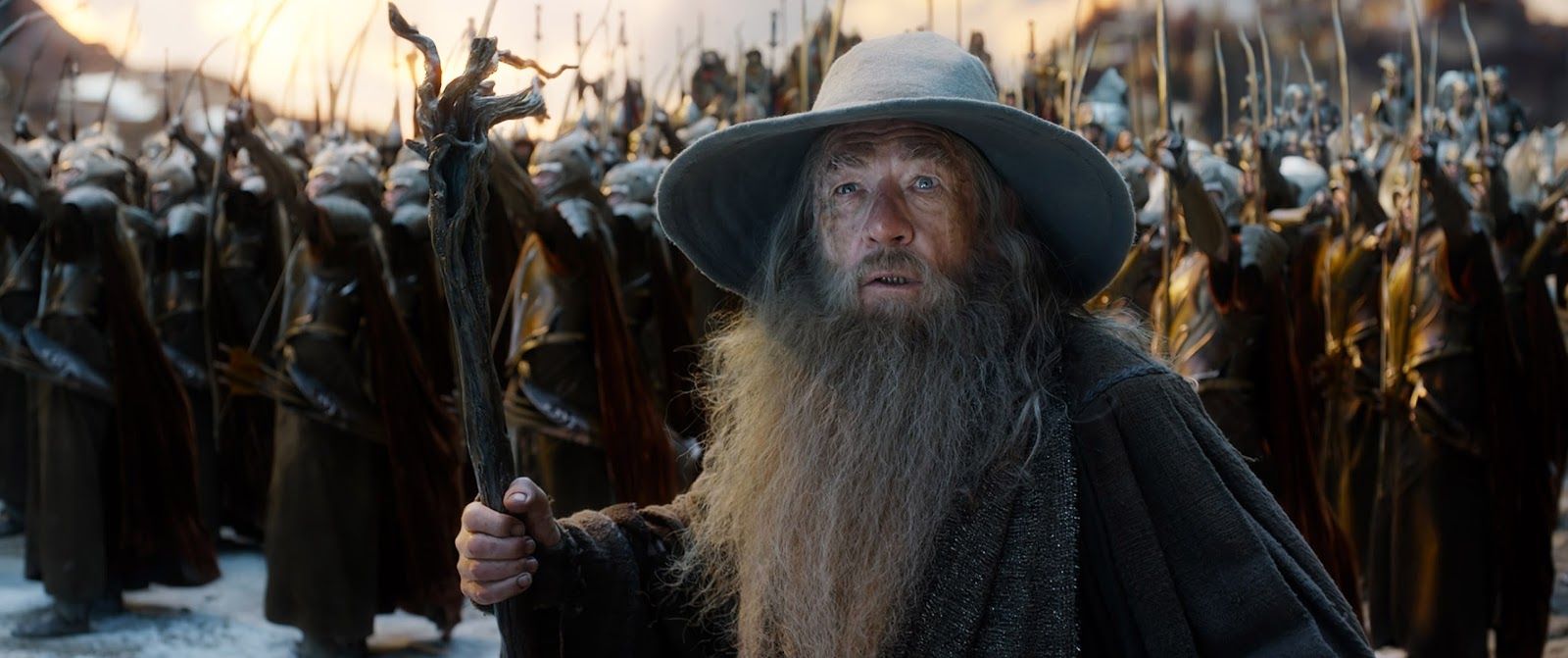
We’ve finally made it to the Lonely Mountain. Smaug is killed by Bard (Luke Evans) during his attack on Lake Town, while Thorin (Richard Armitage) seizes control of the fortune under the mountain. However, the mountain now becomes a struggle point between the dwarves and their allies: Bard and his people and Thranduil (Lee Pace) and his elves, who are all looking to gain control of its treasures. While Bilbo (Martin Freeman) attempts to make an increasingly maddened Thorin see sense, Gandalf (Ian McKellen) brings warning of an imminent attack by an army of Orcs – will this mutual enemy bring our heroes together at last?

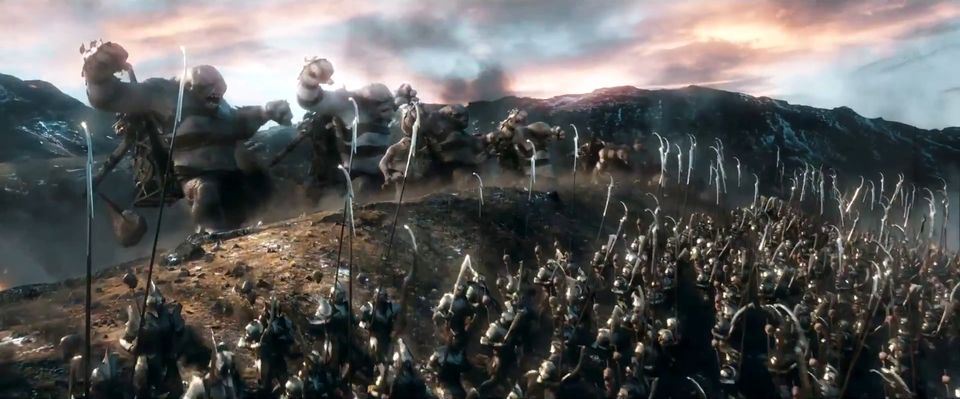
The Battle of the Five Armies is the moment where you knew this sprawling, sausage-fest of a trilogy had lost what soul it had. Almost the entire runtime is given over to battle sequence, seems to go on forever and ever with no respite. We see a host of clashes that carry none of the poetry of The Lord of the Rings, and a host of characters we don’t really know fighting with each other. Frankly, it’s hard to care. It looks great, but it’s just empty spectacle, sound and fury signifying absolutely nothing at all. In fact, it’s all so unclear that watching this movie for a third time I still have absolutely no fucking idea what this battle is even about! What are the Orcs doing? Why are they attacking? 
As always character moments are constantly sacrificed. The dwarf company are ruthlessly trimmed of screen time–even Ken Stott’s Balin doesn’t get much of a look, bizarre as he’s been established previously as Thorin’s confidant. Apparently James Nesbitt nearly wept when he saw this film – not surprising since he must barely be on screen for more than five minutes. Crucial moments that should make us care about these characters are constantly lost: Thorin’s descent into madness occurs completely off camera, Gandalf’s struggle to keep the peace gets glanced over, Bilbo nearly gets completely lost in the shuffle from special effect to special effect.

Tragically, far too much screen time is given to two characters Jackson has parachuted into the film. Weaselly Lake Town official Alfrid is given seemingly endless scenes of “comic relief” – a shame since he’s about as funny as being hit in the mouth by a hammer. I understand Jackson must find this character funny, and that he felt some comic relief was needed amongst all the fighting – but quite frankly he’s wrong. Alfrid is not funny – I think you’d go a long way to find anyone who liked him – and secondly if they needed comic relief characters, why not let one of the dwarves fill that function rather than introducing a new character 2/3rds of the way into the story? 

The second character who gets far too much to do is our old friend Legolas. The elf’s plot line is given never-ending minutes of screen time, his struggles and conflicts given (it feels) even more screentime than Bilbo’s. Do we really need to see Legolas searching for the orcs? Do we really need to see him doing ridiculously impossible feats in the middle of combat? Are we given any reason to care about him at all, other than the fact we remember him from Lord of the Rings?

Legolas’ inclusion demonstrates almost everything wrong in this series. Did Jackson include so much of him because he didn’t need to think quite so much about what to do with the character, being already so familiar with him? When Legolas (at best a secondary supporting character in the story) has his battle with some random Orc, intercut (and even prioritised in the edit) over Thorin’s climactic battle with Azog, the clash the entire trilogy has been building towards, you know something is seriously wrong.

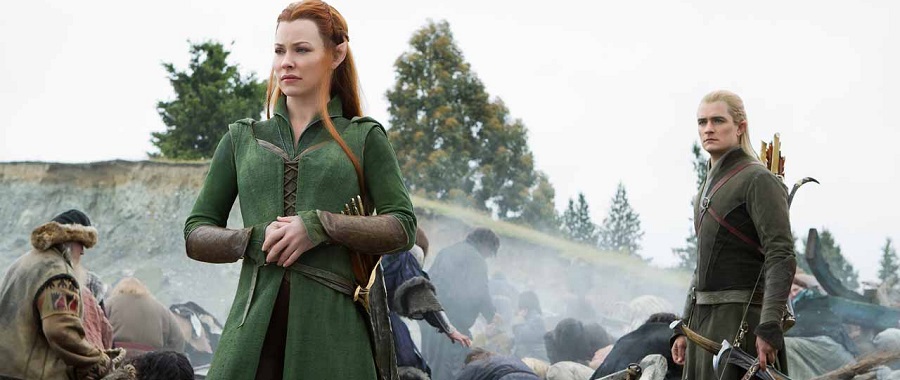
On top of which, Legolas’ inclusion undermines Jackson’s other big invention, the Legolas-Tauriel-Kili love triangle. Really this should be a Tauriel-has-to-marry-Legolas-but-wants-to-marry-Kili structure – that at least would work, right? We’d understand her struggle and division – and it would add a lot more weight to her feelings for Kili. Instead, Jackson is worried this might make Legolas look unsympathetic – so instead Tauriel is sorta in love with both with them, a confused, messy structure that makes no real sense. To add insult to injury, when Tauriel and Kili are threatened by random nasty Orc, who saves the day? Legolas. Who fights Tauriel’s battles for her? Legolas. Jackson introduces a love triangle, and then undermines it because he doesn’t want to criticise his beloved character. He introduces a female character, only to reduce her to a victim obsessed with lurve. It’s a disaster.
You feel Jackson threw in this plot because not a lot actually happens in this movie. Doubly annoying then that so many plots we do care about disappear so swiftly. The Arkenstone, the cause of so much struggle, is completely forgotten half-way through. The fate of Bard and the Lake Town survivors is glossed over. The dwarves get benched from the action for ages. The plotline around the Necromancer is wrapped up with embarrassing and confusing swiftness. Thorin’s plotline is rushed together at the edges, with the focus constantly on getting more fighting in shot.

It’s a real shame that the actors don’t get the time they deserve to really let their performances flourish. Armitage is, as always, superb as a Thorin who loses himself in greed and desire for gold, and becomes cruel and bitter before remembering his nobility. Martin Freeman is still great as Bilbo, honest, normal and delightful despite being given little to do. Ian McKellen still has all the Gandalf qualities of wisdom and grandfatherly authority. Among the rest of the cast, Luke Evans continues to be a stand-out as the noble Bard.
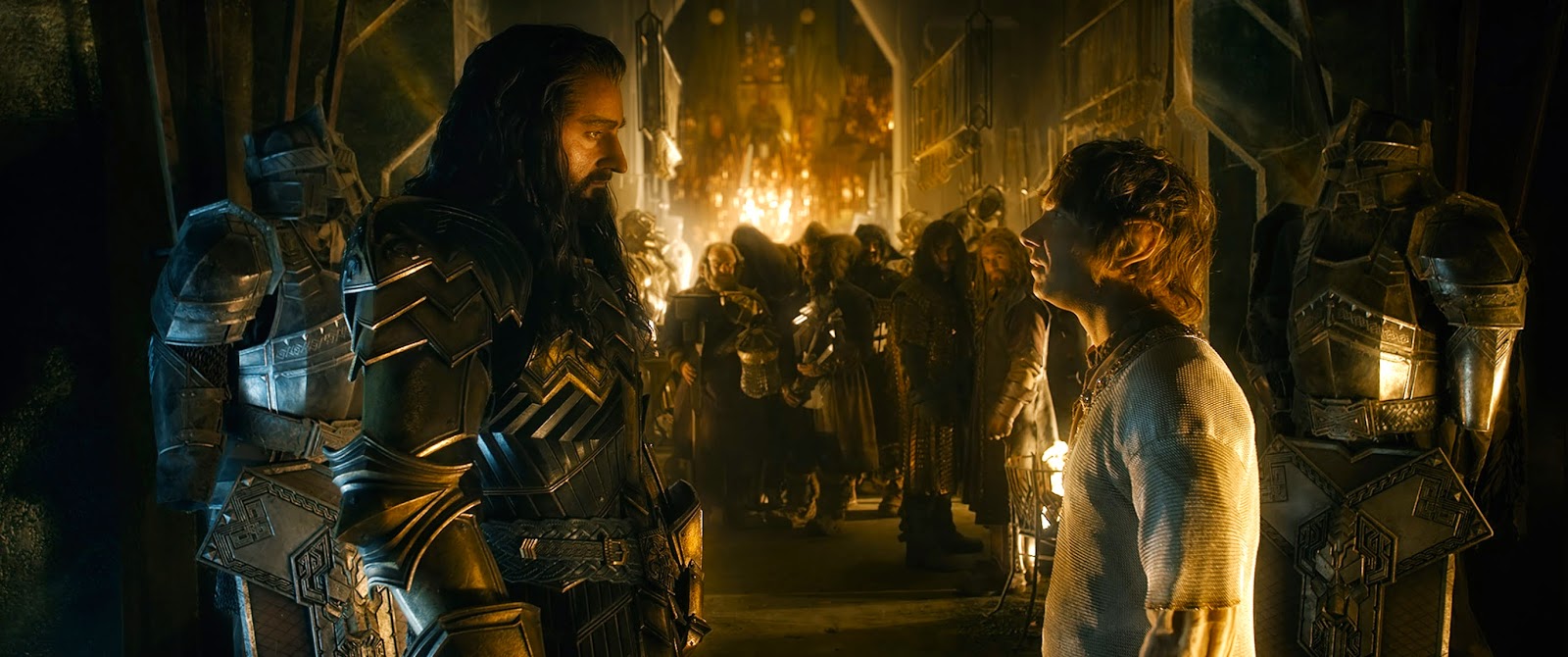
There are moments of action that really work. Smaug’s attack on Lake Town is the film’s dramatic highlight – shame its over in 12 minutes. But it’s brilliantly shot, has moments of heroics and looks great. Thorin and Azog’s battle really works because Thorin is just about the only character in the film we really care about. But much of the rest of the fighting is just silly – gravity-defying bashing (Legolas and Saruman are particularly guilty of this) or never-ending struggles in the battle itself – in which by the way, only men seem to be allowed to be seen doing anything brave.

The Battle of the Five Armies is in many ways a fitting conclusion to the series. Millions of dollars are spent on making a brilliantly designed and shot series of images. But no time is spent on making us care about anything. We invest almost nothing emotionally in the story at all. While we might be a bit sad at seeing people die, we know so little about many of them their deaths hardly stick with us. Why did Jackson not see this? Yes Lord of the Rings was a masterpiece and tough act to follow – but when you see the love and care dripping from every frame of that 12 hour trilogy, and then you move to this mess, you can’t help but think: where did it go wrong? It’s not a complete disaster – the films are always watchable – but they could have been so much more. Instead, they’re the bloated, incoherent footnotes to a great trilogy.
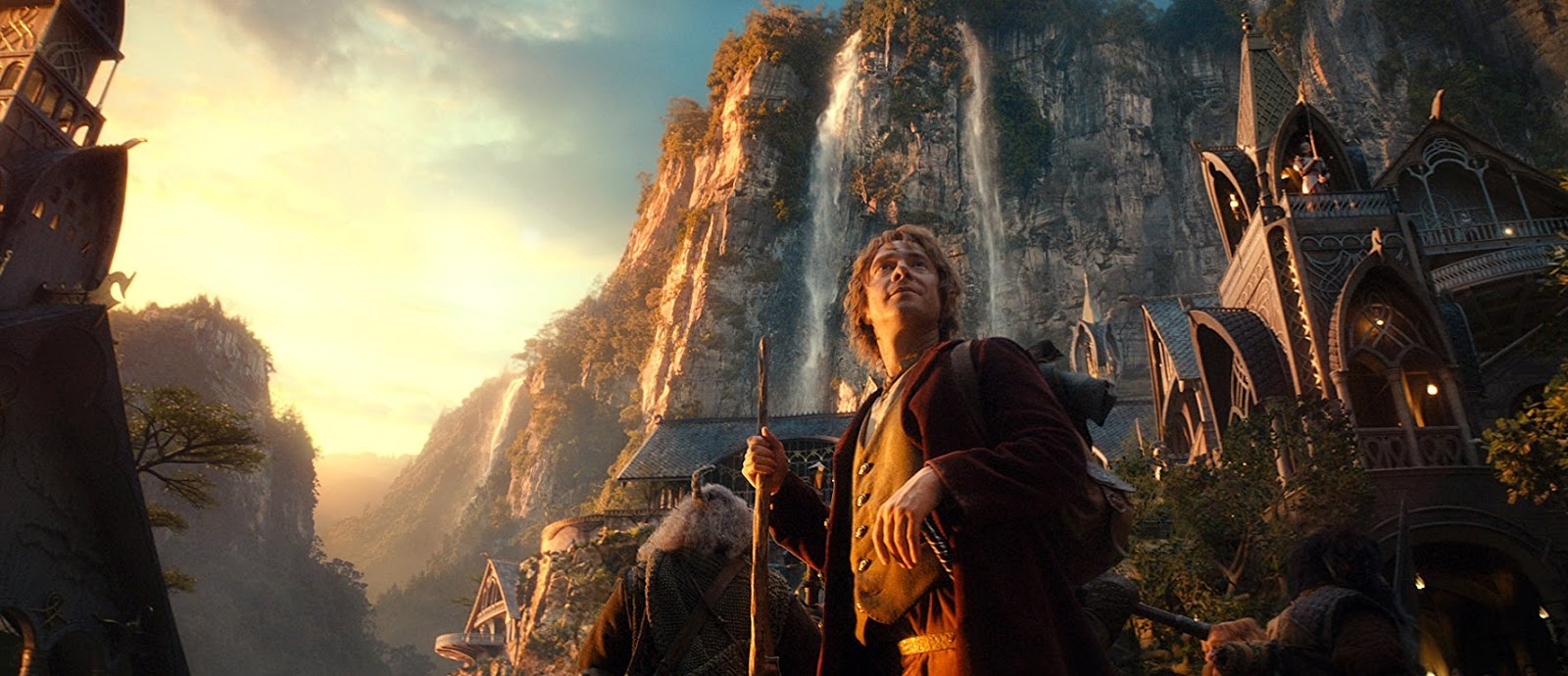
The Hobbit: An Unexpected Journey (2012)


Martin Freeman goes on An Unexpected Journey in the first of Peter Jackson’s deeply flawed trilogy

Director: Peter Jackson

Cast: Martin Freeman (Bilbo Baggins), Ian McKellen (Gandalf), Richard Armitage (Thorin Oakensheild), Ken Stott (Balin), Graham McTavish (Dwalin), Aidan Turner (Kili), Dean O’Gorman (Fili), James Nesbitt (Bofur), Cate Blanchett (Galadriel), Hugo Weaving (Elrond), Christopher Lee (Saruman), Ian Holm (Old Bilbo), Elijah Wood (Frodo Baggins), Sylvester McCoy (Radagast), Andy Serkis (Gollum), Manu Bennett (Azog the Defiler), Lee Pace (Thranduil), Benedict Cumberbatch (Necromancer)

The little-loved Hobbit films are finished now. This may be a controversial statement, but looking back at the three films now, An Unexpected Journey is clearly the best of an average bunch, the only one that feels like it has some sort of story arc, where the padding isn’t too overbearing and we get some character moments. Despite all that, it’s (bless) a bit of a mess. A tragic missed opportunity, which are like bloated windy farts that follow through.

So. It’s three films. We all know it shouldn’t be. We all know it’s a slight kids’ book. So let’s take it as read that even this, the best of the bunch, is an over-extended three hour expansion of six chapters (six bloody chapters!) of the original kids’ fable. Never, at any point, does this feel like it needs to be a long film. Where is the depth and passion in this film? It’s a slow, slow, quick, quick, slow paced splat, which takes ages and ages and ages to get going and then runs through as many set-piece action scenes as possible. 

Why did Peter Jackson make these films? Honestly, watching it you feel he had a gun to his head. He can’t bring any love or depth of feeling to huge chunks of the film. The action scenes feel put together by a choreographer and designed to be as loud and broad as possible, rather than because they are being put together by a storyteller. 

Thirteen dwarves? This is one of the main reasons Jackson was worried about making this film. How could he make these characters distinctive? How could he build plot arcs and storylines for each one? The answer was he couldn’t. So he didn’t even bother. Now I know the Tolkien fans would have hit the roof, but for goodness’ sake would it not have been better for the good of the film to cut the number of dwarves down? So we could get to know them a bit? Because large numbers of these dwarves are indistinguishable from the other. Throughout the course of this film, as a stand-alone viewing experience, only Thorin and Balin stand out in any way as immediately recognisable. They are the only two who you can always identify. The rest? They just all mash into one. They don’t even really have distinctive moments. They are just a mass.

So you watch the overblown, overextended and yawn-worthy action and chase scenes and you just can’t get wrapped up in them. Because all we are doing is watching huge, time-consuming sequences with a mass of characters we can’t tell about, and even when we do, we don’t have any emotional connection to them. The dwarves are all sort of refugees I guess, which gives us some sort of link to them, but it’s the same back story for each one. It’s indistinctive and unclear. If Jackson had gone with his gut and cut some of these out, then the extended running time could have been used to build establishing character moments, to give pay-offs and plot arcs for them. Instead, he kept them all – and never develops any of them.

Those action scenes do go on forever. I know they all come from the book, I get it, but there is no tension in any of them. Dwarves bounce, twirl and fly all over the place. Never at any point do they really feel like they are in danger. A run over the field from some wolves – yawn. The chase sequence through the Goblin kingdom in a mine – double yawn. The second is particularly bad as it brings back strong memories of the LOTR sequence in the Mines of Moria, which had a hundred times the excitement and thrills of this. 

In fact that reminiscence is a big problem for a large chunk of the film. The Hobbit is a kids’ book, but The Lord of the Rings is an adult fantasy novel. The attempt to tie these two different tones and genres of novel is a constant hiccup. So we get the dwarves pratting around and bouncing about, in moments that seem childish and cheap. And then we get doom-laden conversations, and dark over-blown musings about the stakes of the world – stakes that don’t tie in, in any way, with the content of the action, adventure story we are seeing in the film. Then there are blatant, clumsy references back to the original – did anyone else groan when Elijah Wood wandered onto the screen? Appearances from Blanchett, Weaving and Lee are all shoe-horned in. At least Ian Holm gets to do some lovely narration. But all these moments simply remind you that you could be watching a better film trilogy than this.

But despite all this, An Unexpected Journey isn’t all bad. Yes it hares about so quickly, with no depth at all, at great over blown length, but it has its moments and it is just about entertaining enough. Jackson can still do some of these moments well – the flashback that opens the film to Smaug’s attack on the mountain is very well done; in fact it has more inspired film-making and tension than nearly anything else that follows. Yes the arrival of the dwarves takes a lot longer to get going than the film needs – but at least it’s pretty charming, and Jackson’s whimsical love of Hobbiton is pretty clear. Shame I don’t think he brought any more invention or sense of charm to much of the rest.

It’s also helped by the fact there are some damn fine performances in there. Martin Freeman is just about perfect casting as Bilbo; he’s charming, vulnerable, slightly-out-of-his depth, brave, very English – he’s great. Ian McKellen practically is Gandalf by now, and he hasn’t lost his understanding of the character’s slightly grubby, grandfatherly charm. Richard Armitage as Thorin is brilliant, mixing a gruff, maverick quality alongside his pride and resolution – and his intense sense of loyalty. Of the rest of the cast, not many get a look-in, being either cameos or underdeveloped, but Ken Stott stands out as the kindly, wise Balin.

The film is also possibly the only one of the three that truly stands alone in some way. It has some form of plot arc behind it in the relationship between Thorin and Bilbo, and the lack of trust Thorin has for Bilbo, his unwillingness to accept him into the group. Similarly, Bilbo has to learn to embrace his role with the dwarves and his place in the company. This is actually a pretty touching and carefully done dynamic, that culminates not only in the film’s most involving (and tellingly low-key) action sequence, but also a tender moment of acceptance from the previously stand-offish Thorin (brilliantly sold by Armitage). 

This is a great plot arc. It also has a negative impact on the next two films – because this is the emotional climax in many ways of the trilogy – and it came in the first film of three! With this major emotional plot line between two of our core characters resolved by the end of the first third of the sequence, what is there to do with the rest of it? It’s a major loss for the rest of the trilogy. 

But for this stand-alone film it works well. Because it reminds you there is some heart in this film – heart missing from the next two films – because it is founded on an understandable emotional bond. The rest of the company may be indistinguishable, but at least Thorin and Bilbo move us. The best moments in these films are founded on feeling and character investment. Andy Serkis makes a great return as Gollum in an entertaining exchange with Freeman. The clash between Thorin and Azog is the most engrossing in the film because it has a genuine history to it established in the film, that a zillion clashes with the Goblin King, or a pack of wolves or faceless goblins never do. 

The Hobbit: An Unexpected Journey is a decent movie. It has flashes of excellence in it. It’s got some good performances. Peter Jackson is still able to shoot a decent scene, even if you don’t really feel his heart is completely in it. The performances are uniformly good, and some are excellent. But the whole thing feels like an overblown missed opportunity. There was a chance to do something magic here with this Hobbit series. But this wasn’t it. You can’t cast the same trick twice.

The Golden Compass (2007)


How did it all go wrong? The disastrous production of Philip Pullman’s The Golden Compass

Director: Chris Weitz

Cast: Dakota Blue Richards (Lyra Belacqua), Nicole Kidman (Mrs Coulter), Daniel Craig (Lord Asriel), Sam Elliott (Lee Scoresby), Eva Green (Serafina Pekkala), Jim Carter (John Faa), Clare Higgins (Ma Costa), Tom Courtenay (Farder Coram), Derek Jacobi (Magisterial Emissary), Simon McBurney (Fra Pavel), Jack Shepherd (Master of Jordan College), Ian McKellen (Iorek Byrnison), Freddie Highmore (Pantalaimon), Ian McShane (Ragnar Sturlusson), Kathy Bates (Hester), Kristin Scott Thomas (Stelmaria)

After the success of The Lord of the Rings, bookshops were stripped of all epic fantasy novels with a cross-generational appeal by film producers, their mouths watering at the prospect of having another billion-dollar licence to print money. Nearly all of these projects bombed, but I’m not sure any of them bombed harder than this, an attempt to kick-start a trilogy of films based on Philip Pullman’s both loved and controversial His Dark Materials books. What went so completely wrong?

Pullman’s trilogy is set in an alternative-Oxford, where people all have Dæmons, part of their soul that lives outside their body in animal form. It’s a world where the Magisterium, a powerful organisation, suppresses all free thought, in particular all investigation into the mysterious particle dust. Lyra Belacqua (Dakota Blue Richards) is an orphan raised in Jordan College, who saves the life of Lord Asriel (Daniel Craig), who is investigating Dust in the North. Leaving the college with the mysterious Mrs Coulter (Nicole Kidman), who may or may not be involved in a series of child kidnappings, she eventually finds herself drawn more and more into setting right the problems of her world.

The Golden Compass is a film that pleased no-one. Fans of the book generally hated it. The people who hated the books hated it. The people who hated what they had been told the book was about hated it. Why did the studio decide to make a film in the first place about a book series they seemed to know was controversial from the start? If they didn’t really want to embrace the themes of the books, why bother? Pullman’s books are partly adventure stories, partly intricate world building, partly spiritual discussions – and yes partly atheist tracts with a strong anti-Establishment-church bent (with a more general regard for genuine faith). To put it bluntly, that’s a lot of ideas to try and squeeze into a film – particularly a film well under two hours.

So The Golden Compass is a mess that feels like it’s been put together by committee. It’s been cut to within an inch of its life – scenes jump incredibly swiftly from event to event, often with the barest of clunky explanation voiceover (“We’re going to see Lord Faa, King of the Gyptians”) to tell you what’s going on. Pages and pages of dialogue and character seem to be lost. We are constantly told Lyra is “special” but never shown anything that supports or explains this. An Eva Green-voiced infodump opens the film: clearly the producers were thinking about Peter Jackson’s masterful opening to The Fellowship of the Ring, which skilfully introduces everything. This introduction though is about removing all the mystery and magic of the story as soon as possible by stating it bluntly up-front.

The biggest mess is of course the way the film avoids all reference to Pullman’s religious themes. No reference is made at all to the Magisterium being a church. No reference is made at all to religion or faith. Iorek is clearly being held in a Russian Orthodox painted church – but the building is referred to throughout as an “office”. Derek Jacobi plays one of the principal Cardinal antagonists of the third book – no reference is made to his office. The Magisterium is instead just a “shady organisation” – a controlling gestapo-type organisation, with black uniforms and creepy Albert Speer style buildings. The questions of Dust and original sin – so central to the motivations of the story – are completely unexplained, meaning the child kidnapping and sinister intercission the villains are carrying out makes no sense at all. How on earth they planned to continue not talking about religion in their planned third film is a complete mystery.

This rushing is the problem throughout the film. Stuff just happens really, really quickly for no real reason. Characters pop up to introduce themselves for later films, or to drop clunky exposition. Tom Courtenay explains what an aleitheometer is for us (the film constantly brings up this “Golden Compass” and its future-telling properties, without ever really making them feel important for anything that happens in the film). Eva Green flies in to say she’s a witch and how pleased she is to meet Lyra and promptly flies off. Daniel Craig name checks Dust, gets captured then disappears. Sam Elliott introduces his rabbit Dæmon and shoots a couple of things. None of this gets any chance to grow and develop – and you end up not caring about any of these characters. Nearly every plot event from the first book is kept in – but so rushed you don’t give a toss.

The structure of the film has also been changed from the book, and not for the better. The film (probably thinking about later films) increases the presence of the Magisterium throughout – but without really making their antagonist role clear. Lyra and Iorek’s defeat of Iorek’s usurper Ragnar is moved to before the final defeat of the Gobbler’s ice base – this doesn’t make a lot of sense. If Iorek now commands an army of bears, why doesn’t he bring them along for the final battle? Lyra instead wanders up to the base like an idiot, and the film extends the release of the children from the ice base into a big battle in order to give us a Lord of the Rings style finish. It doesn’t matter that nothing in the film feels like it’s building plotwise or dramatically towards this battle – it’s there you feel, because Lord of the Rings had battles and people loved that, so let’s get one in here. 

In fact the film builds towards nothing, because it has been cut so poorly, and is such a terrible compromised product, that everything the books are building towards has been removed from it. So the entire thing makes no bloody sense. The clash with the church and organised religion doesn’t work because all reference to faith has been cut. There are mutterings about a “war” coming, but no one says what it might be about. There is a loose crusade to save the kidnapped children – but we don’t understand either side of this. The cruelly ironic ending of the book, with Lord Asriel’s real plan revealed, is deleted altogether from the film – because the studio didn’t want a “downer” ending. As a result the film just suddenly ends (after a clunky “We’ll go home one day after this, and this, and this, and this, and this, and after we’ve solved all the problems of the world” speech).

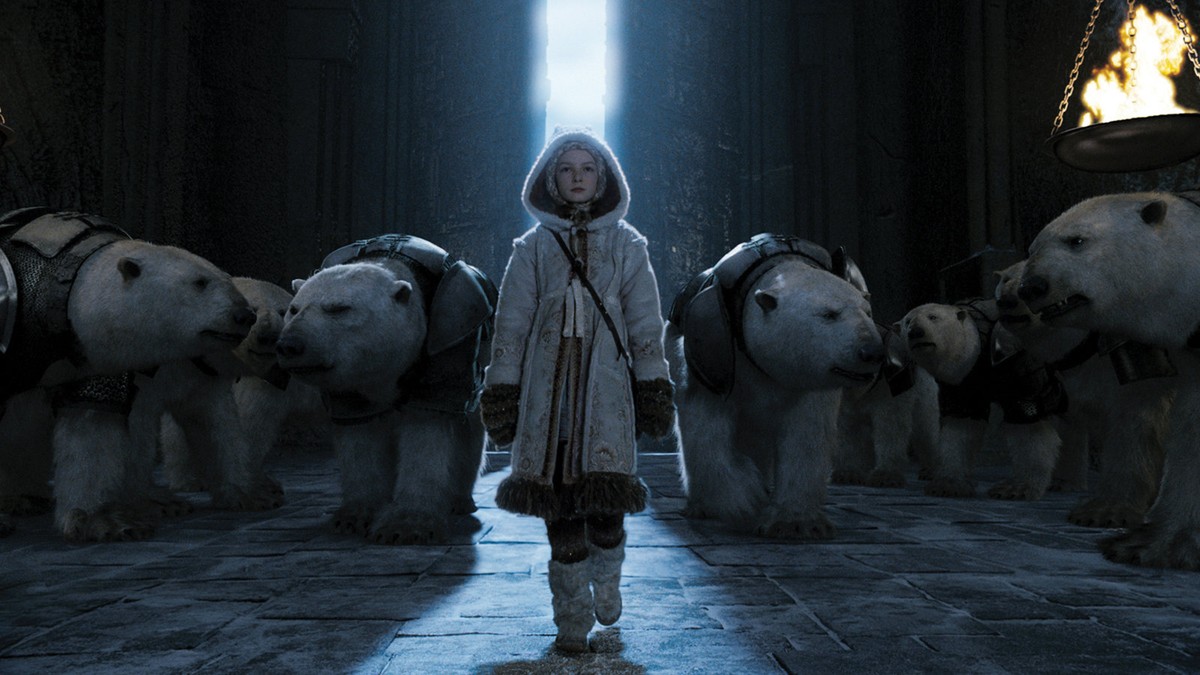
Studio interference reeks off this whole film. It’s been cut to ribbons. Ian McKellen and Christopher Lee were parachuted into the cast in order to make the film feel more like Lord of the Rings. McKellen sounds completely wrong as a mighty armoured bear (original casting Nonso Anozie would have been perfect). Lee chips in a single line in what is painfully obviously an addition from re-shoots. Anything potentially different or interesting is cut out. In fact anything that was unique about Pullman’s original books is cut out: as much is done as possible to make Pullman’s story as identikit and standard as hundreds of other bland fantasy dramas. As if they hadn’t realised the book was potentially really controversial in the more traditional parts of the US market, it seems like the studio only really read the books once the film was shot, suddenly realised they had made a massive mistake, and tried to reduce the danger as much as possible by making the film as bland as they possible could.

Chris Weitz is completely unsuited for directing it – and he actually feels like a hostage the more you read about the film’s turbulent production – but it’s not all bad. Dakota Blue Richards is actually pretty good as Lyra – she’s got a certain magic charisma. The set design is pretty terrific – even if it is a lot more steampunk than I pictured the novel as being. The special effects are pretty goods – the Dæmons are well done, and the puff of gold Dust they turn into when someone dies is striking. Some of the adult casting is pretty good – Kidman is just about perfect, Craig is pretty good, Sam Elliott stands out as Lee Scoresby. There are some neat cameos as well – I would have liked to see Jacobi get to tackle the third book, Eva Green is wasted, Tom Courtenay is pretty good. It just all rushes by so quickly. You don’t get the chance to get to know anyone fully. If the book was a bit episodic, this takes that worst element of it and ramps it up to eleven.

The Golden Compass tanked. It tanked so hard, New Line Cinema didn’t really recover. All plans for future films were scrapped. However, it is important in another way. In presenting such a horrifically neutered, stripped-down version of the story, it persuaded a lot of people that books rich in world building and content like this needed much longer than a traditional film to be brought to life. It helped persuade George RR Martin that TV was the way to go when selling the rights for Game of Thrones. And His Dark Materials will now live again as a 10 part TV series in the near future. For all its many, many failures – we owe it something.

Stardust (2007)

Claire Danes plays a star and Charlie Cox a village boy in charming adventure fairy-tale Stardust

Director: Matthew Vaughn

Cast: Claire Danes (Yvaine), Charlie Cox (Tristan), Michelle Pfeiffer (Lamia), Mark Strong (Prince Septimus), Robert De Niro (Captain Shakespeare), Sienna Miller (Victoria Forester), Jason Flemyng (Prince Primus), Rupert Everett (Prince Secundus), Kate Magowan (Una), Ricky Gervais (Ferdy), Peter O’Toole (King of Stormhold), Joanna Scanlan (Mormo), Sarah Alexander (Empusa), Nathaniel Parker (Dunstan Thorn), Henry Cavill (Humphrey), Dexter Fletcher (Skinny Pirate), Ian McKellen (Narrator)

Stardust is loosely adapted from Neil Gaiman’s novel of the same name, an adult fairy tale refashioned into a crowd pleasing family film: a warm and genuine adventure story, stuffed with romance, excitement and drama.

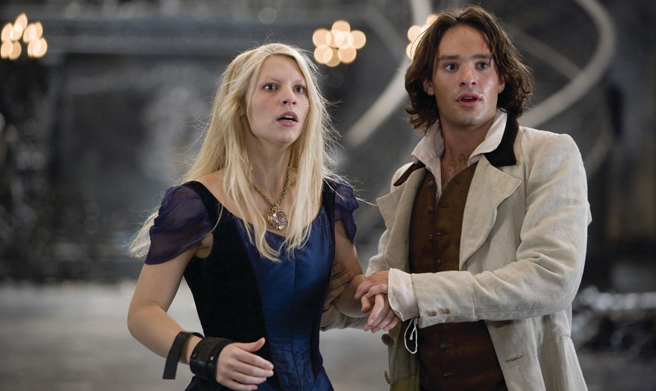
Tristan (Charlie Cox) is a dreamy young man in the village of Wall, which neighbours the mystical and forbidden world of Stormhold. In love with the selfish Victoria (Sienna Miller), Tristan vows to travel to Stormhold and bring her back a fallen star. However, the star has landed in the form of a beautiful young woman, Yvaine (Claire Danes), and the two of them find themselves on a difficult journey to return to Wall. Along the way they must dodge the witch Lamia (Michelle Pfeiffer) who wishes to sacrifice Yvaine to regain her beauty, and the surviving sons of the late king of Stormhold, particularly the ruthless Septimus (Mark Strong), who need Yvaine’s necklace to claim the throne.

What works about Stardust is that it has an air of whimsy about it, without ever feeling whimsical or corny. It’s a grown-up fairy tale, in the sense that it has some black humour and acknowledgement of sex, but really it’s more of a charming adventure story in a fantasy setting, which manages to keep its tongue in its cheek and not take itself too seriously. Matthew Vaughn’s direction has a very light touch and never allows this soufflé of a film to either puff itself up too much, or to deflate. Instead it rolls along with a giddy charm, with a delightful odd-couple love story at the centre. It’s a film that totally gets its tone spot-on, helped by confident direction and a wonderful score.

Charlie Cox plays romantic lead Tristan with a great deal of charm and really captures the romance at his centre. He also manages that extremely difficult task of being likeable – you can’t help but warm to him despite the fact that his self-awareness is completely off for a large chunk of the film. Claire Danes is equally good as the prickly Yvaine, hiding a great capacity for emotion and longing under a defensive exterior. Their romance is of course highly traditional – they bicker because they love each other! – but both actors carry it off with a great deal of style. You can’t help but want them to get over their problems and get together.

The romantic plotline is also never overwhelmed by the faintly Pythonesque comedy that surrounds it, particularly from the ghostly chorus of deceased Princes of Stormhold. Vaughn produces a great cast of comic actors for this group, while entrusting Mark Strong with the lion’s share of the screentime as the dashing decoy antagonist. In fact, the construction of the film’s narrative is rather neatly done, as this plotline of the inheritance of Stormhold is largely kept separate narratively from the romantic Tristan/Yvaine storyline, with the intersections only occurring at key points.

The real antagonist of the film however is Michelle Pfeiffer’s witch Lamia, Pfeiffer offering a neat portrait of vanity intermixed with cruelty. It’s a very decent inversion of a “movie star” glamour performance, and Pfeiffer’s heartless ruthlessness is a very nice contrast with Tristan’s altruistic openness. In fact Pfeiffer is very good in this film: she gets the balance so right that Lamia constantly keeps you on your toes as to how villainous or not she may be. I’m not quite sure that the film quite manages to completely bring the two characters plot lines together to provide a really effective narrative drive to the film, but she certainly works as an effective antagonist.

The film’s structure is a combination shaggy dog story and classic quest structure, which allows each sequence to take on its tone and structure, from thriller to comedy, depending on the characters involved. What threads this together is the growing (and very sweetly structured) love story between Tristan and Yvain which keeps the momentum up as the film moves from location to location, with cameo roles sprinkled throughout, without the film losing momentum (though it is probably 15 minutes too long). The film’s comfort with letting it sequences expand is clear with Robert De Niro’s Captain Shakespeare, a feared cloud pirate whose secret desires are not so secret as he might think. The film delights in essentially extended jokes like this – but it gets away with it because these jokes manage to be quite funny (De Niro in particular turns in a very good comic performance).

It’s a film that manages to remain distinctive and original, while appealing to a wide audience, which is quite some trick to pull off. It also manages to do this without losing its distinctive rhythm, which is both endearing and enjoyable. The “rules” of its world are clearly established, and while many of the actors are slightly tongue in cheek, they never laugh at their characters but only gently tip the wink at the audience. This freedom largely comes from the conviction and honesty Danes and Cox endow the central characters with, to ground the film. It alsohas a great sense of emotional intelligence to it, and brings a lot of depth to the characters. It also helps that it’s brilliantly designed, looks ravishing and is full of several delightful performances.

There’s lots of terrific stuff in this film, with a very sweet story at its centre. In fact this sweetness is probably the secret of its success: it never takes itself very seriously, it dances lightly from scene to scene and never allows itself to become too overblown. It’s got a terrific cast and is well directed, with a snappy bounce. At moments it does feel a little long, and some sequences overstay their welcome a bit too much – but the central characters are so winningly played that you don’t really mind. Sure this is not a masterpiece, but it has a sort of magic about it, the charm, excitement, adventure and romance, all mixed together with such confidence that it’s a pleasure to watch.

Beauty and the Beast (2017)


Dan Stevens and Emma Watson faithfully recreate almost shot-by-shot a much better cartoon

Director: Bill Condon

Cast: Emma Watson (Belle), Dan Stevens (The Beast), Luke Evans (Gaston), Kevin Kline (Maurice), Josh Gad (LeFou), Ewan McGregor (Lumiere), Stanley Tucci (Maestro Cadenza), Ian McKellen (Cogsworth), Audra McDonald (Madame de Garderobe), Gugu Mbatha-Raw (Plumette), Hattie Morahan (Agathe)

hhBeauty and the Beast was released at the perfect time. The generation who grew up watching the original could now take their children – or revisit the fond memories with their parents. It was a chance for everyone to wallow in sentimental nostalgia. Disney knew its market would be people who wanted something as close as possible to what they remembered: they certainly delivered.

Surely you know the story by now? But in case you’ve been living under a rock for your entire life: Belle (Emma Watson) is the beautiful but bookish village girl who dreams of a something more than this provincial life. When her father Maurice (Kevin Kline) is imprisoned by a horrific Beast, Belle volunteers to take his place and stays in the castle. The Beast and all his servants are enchanted and only true love can break the spell – will Belle and the Beast fall in love?

I would ask why Disney feels the need to make what are effectively shot-by-shot remakes of their animated classics, but the fact this raked in almost a billion dollars at the box office kinda answers that question. But make no mistake, creatively this is karaoke: a few small flourishes have been thrown in, but effectively it’s a faithful recreation of a film that was already pretty much perfect to begin with. In fact, watching it, the only real emotion I felt was a desire to watch the “real” thing again. Damningly, twice my wife and I stopped to look up the equivalent scenes from the original on YouTube: in every case they were better.

That’s the big problem. Of all these remakes, only The Jungle Book was a genuine reimagining of the original. This one follows Cinderella and hews as close as possible to the film you’ve already seen. The plot is identical. The song and dance sequences are the same. The characterisations are the same. Hell, half the line readings are the same. It’s a film that is so dependent on people’s affection for the original that it’s terrified of offering anything too different from it. In which case – why not just watch the original? Would you rather look at a poster or the actual Mona Lisa?

Condon has thrown in some new pieces here and there to get an extra 30 minutes of action. One decent invention does involve the spell also causing the villagers to forget the castle exists, which is neat. The others add less. Belle has been turned into as much of an inventor as her father and, in one particularly bizarre sequence, invents the washing machine. There is a rather confused sequence involving a magic book which allows the Beast to go anywhere in the world (the witch clearly left a plethora of magic devices behind to entertain the Beast) – raising the question of why he needs that enchanted mirror, since he can apparently physically travel through both space and time with his Tardis-book. LeFou is subtly reimagined as gay – but this is very quietly done so as not to damage the film’s box-office potential in some markets.

There is a rather clumsily done storyline around Belle’s mother dying of plague when she was a baby, which also adds nothing. The film may possibly be trying to construct some kind of clunky commonality between the Beast and Belle with their parental traumas, but a dead mother with a rose fetish shares little with the stereotypical Cold Abusive Aristocrat father the Beast has – and anyway, they’re already giving them plenty of common ground through the good stuff they’ve lifted straight from the original film. Nothing else new really stands out.

In fact, the film is so studiously faithful, you get annoyed when it deviates from the original – particularly as it invariably does scenes less well. The final battle between Gaston and the Beast suffers horribly, with the emotional narrative of the fight thoroughly muddled, in contrast with the original’s clear and efficient storytelling. In the original, the Beast despairs and refuses to save himself from Gaston’s attack until he sees Belle. Here, he’s sort of defending himself and sort of not, and Belle is given some action nonsense, and Gaston’s death is turned from a clean narrative (one treacherous thrust hits home, then in sadistically going for the second he falls to his death) into a strange sequence where he stands and brutally shoots at the Beast repeatedly until the stonework beneath him randomly collapses and send him plummeting to his doom.

None of this, however, compares to the butchering of the moment when Belle discovers the library. In the original this is an endearingly sweet moment, with the Beast overcome with excitement at giving Belle a gift she really wants. The audience shares in his delight, and is charmed by his touching anxiety that she will like it, just as they share in her wonder at the discovery. It’s a major moment in the growth of their relationship. Here it’s thrown away – the Beast shows her the library in a fit of irritation at her pedestrian Shakespeare tastes. The film gives all the time and emotional weight to the tedious “magic book” sequence, where they travel to the “Paris of my childhood” and discover that, yup, Belle’s mum died of plague. Well that was both depressing and uninteresting…

Anyway – take a look at those two library scenes…

The acting is pretty good. Emma Watson does a decent job, particularly considering the pressure on her. She performs the songs prettily, although they don’t soar the way they did when performed by someone with the vocal power of Paige O’Hara. Her Belle is thoughtful but has a level of defiance and independence that’s been stepped up from the original. Dan Steven’s Beast is much more of a prince under a ghastly shell – unlike the original he’s literate, can dance and is well spoken (which makes his moments of animalism and his soup eating failure stick out all the more). The rest of the cast are fine – Ewan McGregor is as flamboyant as you’d expect, Emma Thompson sings the song very well, Kevin Kline makes a lot of Maurice. However for each of them, there are moments when you remember fondly that the animators invested the originals with more emotion.

The one member of the cast who does stand out is Luke Evans. How is the guy not a star yet? Sure the swaggering braggart Gaston might be the best part in the whole film, but Evans nails it with all the energy and egotism you would expect. His scenes are the best in the film by far, and he’s the only one who manages to do something a little different with his role.

Of course it looks fabulous, but it feels somehow a little bit empty. All the things that move you are done (mostly better) in the original – in fact, a major part of why they move you is the memory of the original. The acting is pretty good and it’s well filmed and made – the design is terrific. But honestly, with the original out there what’s the point? Why would you watch this rather than the other one? It’s not as moving, it’s not as exciting, it’s not as funny, it’s not as charming. All it does is to try and recreate the original as closely as possible. You can stage Hamlet thousands of times and each production would be different, but Disney can’t stage Beauty and the Beast twice without replicating it.

If you want it to exactly match your memories, without being quite as good, it’s the film for you. If you want a Disney live-action film that feels like something original, watch The Jungle Book.

The Hobbit: The Desolation of Smaug (2013)


Martin Freeman does some good work in one of the rare moments where the film actually does a scene from the original book

Director: Peter Jackson

Cast: Martin Freeman (Bilbo Baggins), Ian McKellen (Gandalf), Richard Armitage (Thorin Oakenshield), Benedict Cumberbatch (Smaug/Necromancer), Evangeline Lilly (Tauriel), Luke Evans (Bard), Lee Pace (Thranduil), Stephen Fry (Master of Lake Town), Orlando Bloom (Legolas), Graham McTavish (Dwalin), Ken Stott (Balin), Aidan Turner (Kili), James Nesbitt (Bofur)

The Hobbit films are an interesting opportunity to watch a team try to recapture lightening in a bottle. The Lord of the Rings films were not just a hit – they were a cultural phenomenon and changed the lives of nearly everyone involved in their production. For many of the actors it will be the first line of their obituary. The Hobbit followed the same shooting plan (two years in New Zealand, three films shot back to back) but somehow it didn’t manage to recapture the same magic. It still made squillions of dollars of course, but it’s not as loved as the first trilogy.

Of course the main problem with this is that the three films were (let’s be honest) a rather bloated inflation of a pretty short kids’ book into almost 8 hours of film making. The Desolation of Smaug is one of the biggest victims of this aggressive padding, as action sequences are crammed into to fill up the running time, at the cost of those moments of character development that made the first trilogy such a rewarding investment (and even made the first film an enjoyable experience for all its faults).

This film is all too aware that it is a “big film” and a guaranteed box-office smash, so gives us the action it thinks the punters want. Strangely it all feels more like a contractual obligation (“Peter we need more Tolkien. Three more to be exact. Do what you have to do!”) – what it probably needed (as did the whole trilogy) is a new pair of eyes on it, a fresh take, rather than Jackson having to go back to the well. To be fair Jackson acknowledged this, and tried to hire Guillarmo Del Toro to direct the trilogy (still credited as creative consultant).

The action sequences in this film bizarrely expand moments from the book with overblown padding – they are invariably the duller parts of the film. In that I’ll include the ludicrous semi-comic barrel escape of the dwarves (turned from floating down the river to a chase orgy of Dwarves-Elves-Orc conflict) and the overextended attempt to dispose of Smaug in the Lonely Mountain (again marked by unbelievable acts of athleticism and derring-do which seem so out of step I wonder if we are meant to take them seriously). Add in the huge amount of action given to Jackson-favourite Legolas and we have an awful lot of dull, over-choreographed action padding out a very slim story (no more than 6 chapters of the original book). What the makers seem to feel are the film’s tentpole highlights are in fact the sags in the fabric.

It’s a shame because the moments where the film does hew more closely to the story of the book are easily the best bits. The confrontation between Bilbo and Smaug is the film’s real highlight (helped by Benedict Cumberbatch’s superb vocal work as the self-satisfied fire breather), and (with some tweaks) it’s pretty much straight out of the book. The material in Laketown is faithful enough to the tone of the book, while adding depth to its story and the life of the town so that you invest in its fate (Luke Evans does a good job with surprisingly little as Bard). The inclusion of Beorn the shapeshifter I could have done without (one for the fans) and stupid as the spider attack is, at least it was in the original book. But the more the film starts to focus away from the dwarf plotline and onto elf politics or the terribly vague rise of Sauron story, the less it holds your attention.

Bless him, by 2013 Jackson was probably the only person on the planet excited by seeing Orlando Bloom in a film. The acrobatic elf has all the depth and interest of a cartoon character, while his now heavily over choreographed fight scenes seem to be taking place in a different universe from the first trilogy. In fact, all the scenes involving the elves are deathly dull and add very little to the plot, little more than limp attempts to tie in the LOTR story more fully into The Hobbit. This focus on Legolas also steals screen time from the dwarves, making many of them little more than extras in their own story.

The problem with ramming so much action and extra plot in to link the films into LOTR is that we don’t get the time with the characters we need in order to feel the necessary concern for them. The main problem here is that there are too many characters. There are three people who can claim to be the lead in this film (Bilbo, Gandalf and Thorin). Behind them there are at least 10 prominent supporting characters and behind them at least another 12 small but important characters. That’s 25 characters the film needs to be juggle – in other words about 6.5 minutes each if you divide it equally. Jackson does a decent job with juggling these it has to be said – but it’s still way too many. I challenge any non-Tolkien fan to successfully identify pictures of all 13 dwarves without prompts.

It’s a shame as there are some very good performances in this. Martin Freeman continues to be perfect for the lead role, decent, brave and resourceful (but with small flashes of “ring addiction”); Ian McKellen of course just is Gandalf; controversial as her extended storyline is, I rather liked Evangeline Lilly’s performance; Ken Stott does a lot with limited screen time as Balin. Richard Armitage demonstrates his star charisma again as Thorin, a complex part he invests with a Shakespearean gravitas: in this film Thorin is at times kindly, stubborn, generous, selfish, patient, temperamental, a warm friend, a deeply suspicious comrade – Armitage holds all these threads together brilliantly. Honestly the guy is an absolute star.

Overall, I enjoyed Desolation much more than I remember doing in the cinema. Perhaps it helps that I’ve seen all three films, and understand more where this film is going. It’s still an overblown, overstuffed piece of work that doesn’t have the sense of soul that LOTR has. It mistakes high octane action for human interest and struggles to make all the characters in the film make an impression. A braver adaptation would have reduced the number of dwarves – but I can just imagine the riot from the book fans… What this film really is, of course, is 4-5 really good scenes, surrounded by padding to boost the running time – but those scenes (Smaug and Bilbo, Thorin confronting the people of Laketown, the few quiet talking bits) are very well done, and they just about make the film work. On repeated viewings you’ll find yourself drifting out to make a cuppa during the barrel chase. But you’ll certainly be in your seat when Bilbo first enters the Lonely Mountain’s treasure store. And its miles better than what was to come.