Tag: Irène Jacob

Three Colours: Red (1994)

Irène Jacob gives a soulful performance in Kieślowski’s crowning achievement Three Colours: Red

Director: Krzysztof Kieślowski

Cast: Irène Jacob (Valentine Dussault), Jean-Louis Trintignant (Joseph Kern), Jean-Pierre Lorit (Auguste Bruner), Frederique Feder (Karin), Samuel LeBihan (Photographer), Marion Stalens (Vet), Teco Celio (Barman)

Spoiler warnings: I wouldn’t usually do this for a film that was made over 20 years ago, but discussing this film is almost impossible without covering the entire plot so – be warned! This is a rich viewing experience you should discover for yourself.

Kieślowski’s great trilogy wraps up with Three Colours: Red, a fascinating, moving, intriguing puzzle of a film that opens itself up to countless interpretations. It’s a film that seems to be about a great many things, but wears its intelligence and insight very lightly, never hammering points home or getting too wrapped up in its own smartness. It’s primarily a story and never forgets that. It also pulls together threads and themes from the entire trilogy hugely effectively. It’s a great movie.

Valentine (Irène Jacob) is a student in Geneva, funding her time at university through part-time modelling. After accidentally hitting (but not killing!) a dog with her car, she meets the dog’s owner, retired judge Joseph Kern (Jean-Louis Trintignant). Joseph is spending his time in isolation from the world, listening to his neighbours’ phone calls, more out of a judge’s habit of finding out secrets than any truly malicious intent. Valentine challenges this blatant disregard of privacy, and she and Joseph begin to form an increasingly strong bond. 

Red is a beautiful film, wonderfully made and rewards constant analysis. Kieślowski described this as the hardest film of the trilogy to write, and you can see why. Dealing with themes of fraternity, it ties this in closely with love (romantic and otherwise). The entire film shows the strengths of people coming together, specifically Valentine and Joseph who develop a bond that enriches their lives. This is contrasted throughout with Valentine’s domineering boyfriend on the other end of the phone-line, and modern communication in general that builds distance between people. Joseph, a man distanced himself from all others, finds his humanity once he opens himself to considering other people as people.

Kieślowski’s film also plays interesting games with narrative and time. A seemingly minor character, Auguste, a lawyer training to become a judge, is slowly shown to share a huge number of life events with Joseph’s youth. The question that bubbles over the film is, is this a coincidence or are Auguste and Joseph somehow linked? Is Auguste in some way the same person as Joseph – some sort of reincarnation? Is this fate or chance or mere coincidence? Is Joseph, living like some lonely old-testament God in complete isolation, somehow trying to move events to correct errors in the past – to try and find some contentment for Auguste (whose conversations with his girlfriend he has been listening to) so that he avoids the life Joseph has led?

I like this idea. It appeals a lot to me, not least as I started to feel that Joseph was almost some sort of Prospero, using phone taps as his own private Ariel to know everything happening around him and then (more benignly perhaps than Prospero) using this to improve the lives of those close to him. Perhaps. There is even a seemingly magic storm at the end of the film that brings several characters together, not least the leading couples from the previous two films in the trilogy. It’s also a storm that, it is suggested, will bring Valentine and Auguste together.

It’s a romantic flourish at the end of the film that speaks of the possibilities for the future (though typically of this intriguing series, it’s a flourish that comes out of a ferry accident that kills over a thousand people – you can’t get something for nothing in this world, and no romantic story is straight forward). It’s also a natural development of the strong romantic link between Joseph and Valentine. If Joseph and Auguste are (essentially) versions of the same person, it’s a further suggestion that (in another life) Joseph and Valentine would certainly have fallen in love (to match the platonic love that develops between them). This interpretation of love joining people together is seen as well in the lead couples from Blue and White also surviving the accident.

Or is this all coincidence? Kieślowski plays the mystery and depth so lightly – lets these points float out or be lightly stated without tub-thumbing – that it leaves it all gently to the viewer’s imagination. You can make of it what you will: the story works just as effectively if you ignore all the things I just discussed. Joseph as the isolated, austere man who finds a warmth in himself awakened by the generosity and compassion of Valentine. All this stuff could just be the working of chance.

But either way, the film is about fraternity: people coming together, and communication and compassion making us human. Irène Jacob is wonderful as the endearing, romantic and empathetic Valentine, her brightness and humanity shining through. Jean-Louis Trintignant is superb as the judge, whose careful veneer of distance and coldness is punctured throughout the film. The scenes these two share are beautifully done: conversations that throb with emotion under the surface. Kieślowski again directs these scenes with a masterful minimalism, using differing heights and levels (they are very rarely on the same level, usually one sits or stands above the other) to show the dynamics subtly change between the two. These height differentials – with Valentine often kneeling at Joseph’s feet – also suggest a growing intimacy between the two characters. 
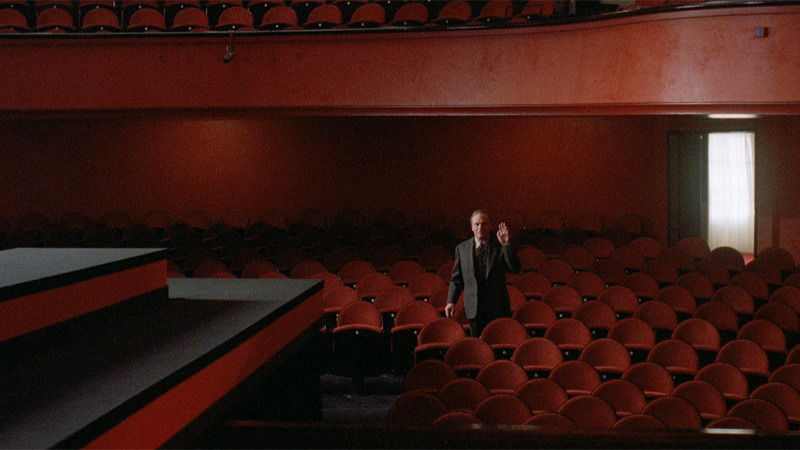
Technically the film is a marvel. It is lusciously filmed by Piotr Sobociński. The presence of red throughout is very well done and adds a poetic brilliance to the images. Kieślowski in particular shoots sunrises and sunsets with an astounding beauty, and uses light to add a huge emotional depth and beauty to private conversations. Zbigniew Preisner’s score is marvellous, a lyrical, beautiful series of compositions that rewards constant re-listening.

Red is a marvellous, thought-provoking and humane film crammed with wonderful and involving ideas, and brilliantly gives you loads to think about both narratively and thematically. It’s a warm and moving story, with darker elements that make those parts seem richer. With two marvellous performances at its centre, it’s brilliantly directed by Kieślowski (who tragically died shortly after the film’s release), with grace, poetry and passion. It looks wonderful, it sounds marvellous and it always make you think. It’s a masterpiece.
Othello (1995)

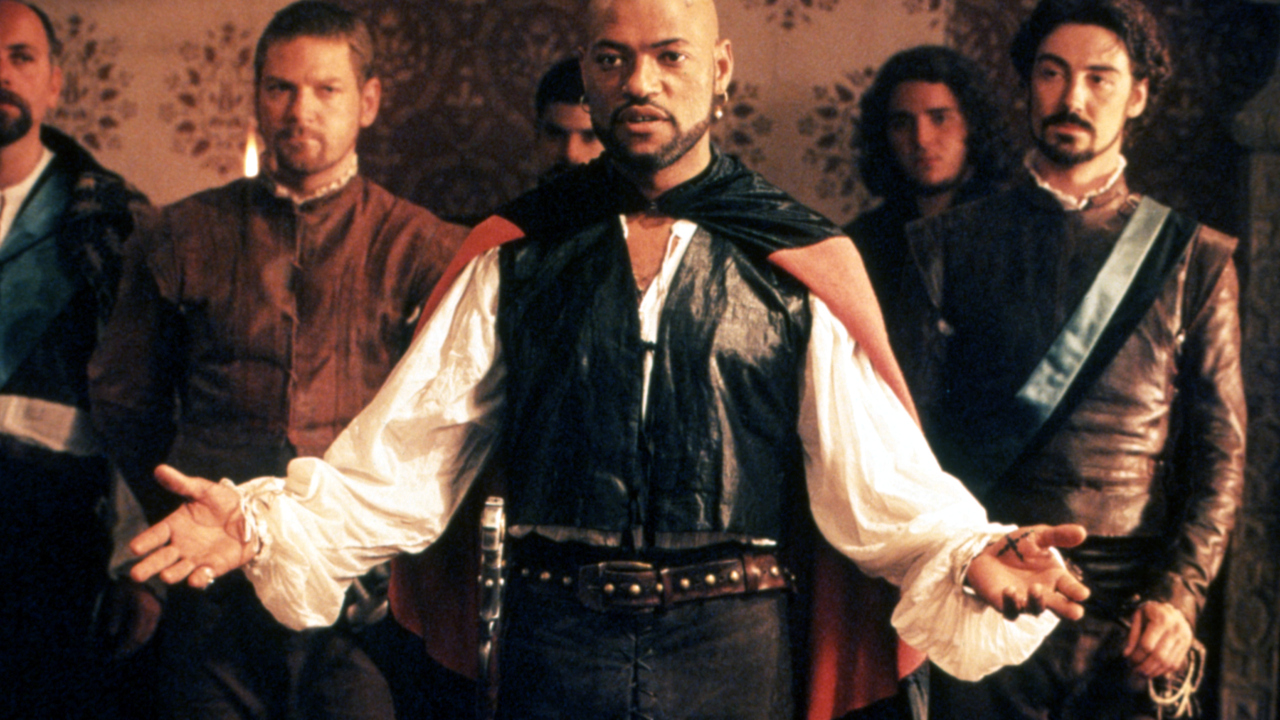
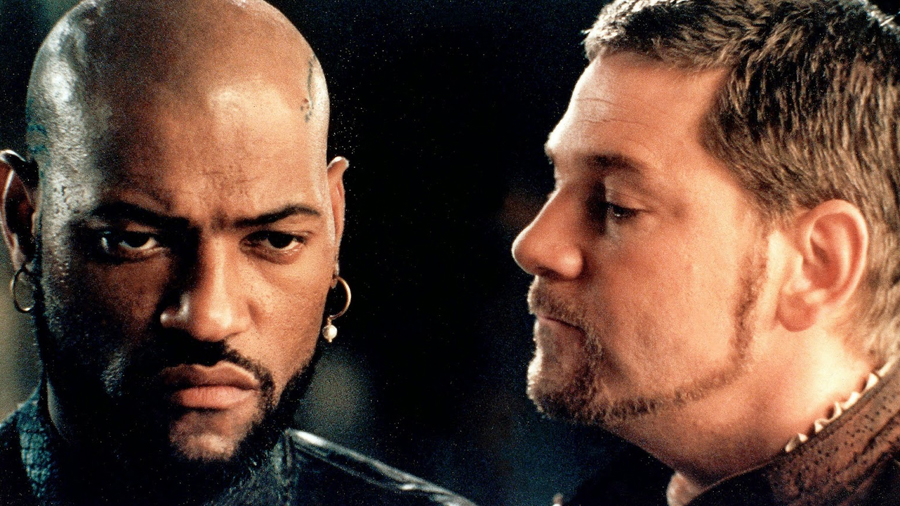
Laurence Fishburne falls foul of Kenneth Branagh’s schemes in this traditional but decent Othello adaptation

Director: Oliver Parker

Cast: Laurence Fishburne (Othello), Irène Jacob (Desdemona), Kenneth Branagh (Iago), Nathaniel Parker (Cassio), Michael Maloney (Roderigo), Anna Patrick (Emilia), Nicholas Farrell (Montano), Indra Ové (Bianca), Michael Sheen (Lodovico), Gabriele Ferzetti (Duke of Venice), Pierre Vaneck (Brabantio)

Othello is perhaps one of the most famous tales of betrayal and jealousy ever written. And yet Shakespeare’s tale of the noble general who descends into murder when convinced by his trusted ensign Iago that his wife is unfaithful, hasn’t often been made into a film. This is probably because its lead role requires a black actor and – for depressing historical reasons – most films aren’t considered good investments without a famous white actor in the lead (of course this has also been the case on stage). So we’ve had blacked-up performances from Orson Welles, Laurence Olivier and Anthony Hopkins – but this was the first proper adaptation of the play with a black actor in the lead role.

As the two leads, Laurence Fishburne and Irène Jacob are a mixed bag. Fishbourne has all the dignity and statue of the great general, and he brings a muscular physicality to the role which really works. He has a wonderful timbre to his voice and he handles the disintegration very well. He does sometimes feel a little hidebound by the language – treating the dialogue with a little too much reverence – but he’s the most believable Moorish general (for many reasons…) you’ve seen on screen so far. Jacob has greater difficulties – although many of these I think are due to this being her first film in English (talk about jumping in at the deep end) – and attempts to make Desdemona a free-spirit don’t really work that well.

Oliver Parker claimed he wanted to cast actors who weren’t associated with Shakespeare. Bizarre then that his cast is rounded out by Kenneth Branagh, the actor perhaps more associated with Shakespeare than anyone else alive. But then I guess when you can get Branagh in your movie, you aren’t going to say no. And it’s great he did, because this might just be one of Branagh’s finest Shakespearean performances: as if not also directing the thing (although many people mistakenly think he did!) freed him up to just focus on his performance. (It’s unfortunate for the other two leads that Branagh’s skill with both Shakespearean dialogue and performing it for the movies also serves to point up Fishburne’s more traditional take and Jacob’s discomfort.)

His Iago is superb, and he plays the part just right, never tipping the wink during his scenes with various characters, but playing Iago totally straight and completely genuine. He appears to be a decent, kind, lovely guy to everyone: it’s only in those asides to the camera that we see his real self, although even here he treats us with just as much charm. His Iago is the sort of guy you’d go for a drink with – and then be shocked to hear he had smilingly bad mouthed you to all your friends. Branagh also adds a homosexual undertone to the film, his Iago having incredibly mixed, repressed feelings about Othello: he seems genuinely moved when Othello makes him his lieutenant and a half twitch of regret crosses his face when the general dies.

Not that it stops him from being a bastard the rest of the time – and Parker does a very neat line in bringing the pivotal seduction of Othello to life on camera. On stage, Iago’s entrapment of Othello is a single, poison-dripping conversation – here, taking advantage of what you can do with film and editing, Parker spreads it over three locations: first a training-ground skirmish outside (where Othello bests Iago), then a sort of armoury changing room (where the outside is still visible), then finally a dungeon. As each lie gets more seductive, so Othello is literally dragged deeper and deeper into the castle. Then we get a neat flip: when he’s fully sold on Desdemona’s treachery, and begins raging and storming, we end up on huge open beaches or castle battlements, as if Othello has been reborn into a larger, refocused world.

This device smoothe out one of the problems with the original play – rather than Iago turning Othello against his supposedly beloved wife during one chat, the cuts from location to location (and different times of day) give the impression of a prolonged disintegration. Othello begins to get the first lines of each section, giving the impression that he has been dwelling on these lies in the interim, and that he is now the one bringing the subject back up, unable to stop prodding at it. It’s makes for a more convincing (and modern) psychological portrait of the corrosive triumph of jealousy than can be achieved in a traditional stage version.

The film has moments of invention – at one point Iago pours poison into Roderigo’s ear while they lie under a wagon where a couple are noisily rutting – and it does some really interesting stuff as mentioned with the “seduction” of Othello. Parker also throws in some expected cinematic tricks – so we get moments of Othello fantasising over Cassio and Desdemona together. But Parker’s not the most unique or challenging director, and he mostly shoots the film with a traditional straight forwardness, using a very traditional setting and editing style.

The film has other problems, too. Othello and Desdemona don’t have much chemistry between them, and Fishburne’s emotionally distant performance makes Othello harder to root for. Maybe this is just Branagh unbalancing the film – his Iago is so compelling, it throws off the film. Parker tries to make Desdemona a stronger character, but this doesn’t always work. Jacob’s slightly awkward tension with Shakespeare is part of this, but we also get the confusion of a Desdemona who fights for her life at the film’s conclusion and then strokes her husband’s head with affection as she dies.

Other performances don’t quite work. Michael Maloney is too overblown as Roderigo – though this Shakespearean wimp does at least get to genuinely threaten Iago and is slightly more convincing for the series of fights Iago puts him up to. Between them, the script editor and Anna Patrick turn Emilia, one of the play’s most intriguing characters, into a blank – she barely has a line in the first hour, and those she does have are delivered pretty blandly. Nathaniel Parker, though, is pretty good as Cassio (incidentally, Parker is of course the director’s brother, and Anna Patrick is the director’s sister-in-law – it’s a home movie!).

The main problem? As the play heats up to the final confrontations, the film slows right down. It’s hard to believe – as we enter Act 5 of the play – that there could still be half an hour of the film left, so snappy have the first four acts been. But the film dawdles and drags over the finishing line – and all the chase scenes of a desperately fleeing Iago can’t save it. For a film which has trimmed the play quite successfully into something sleek and fast-paced, it’s a shame that it drops all this for a wordy and over-played final half hour.

Of course Parker throws in decent moments: I like Cassio slipping Othello the knife he’ll use to kill himself. I really like Iago crawling his way on the bed loaded with dead characters, as if to try and force himself back into their story. The symbolism has been overplayed – and the image of two bodies buried at sea, water trails entwining, has been signposted far too often earlier – but these small moments work, even while the rest of the film’s conclusion drags. And maybe that’s because you don’t really care that much about Othello – he’s never seemed like a character easy to empathise with. And without that, the film can never completely work.