Tag: Isla Fisher

Now You See Me (2013)

A gang of magicians get up to all sorts of antics in light and empty caper Now You See Me

Director: Louis Leterrier

Cast: Jesse Eisenberg (J Daniel Atlas), Woody Harrelson (Merritt McKinney), Isla Fisher (Henley Reeves), Dave Franco (Jack Wilder), Mark Ruffalo (Agent Dylan Rhodes), Mélanie Laurent (Agent Alma Dray), Morgan Freeman (Thaddeus Bradley), Michael Caine (Arthur Tressler), Michael Kelly (Agent Fuller), Common (Agent Evans)
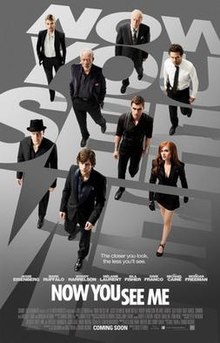
Sometimes the simplest tricks are the best. Remember David Blaine? All his huge illusions and stunts weren’t worth thruppence compared to the simple awe of watching him perform card tricks in front of stunned regular folks in the streets. This film is pretty much the same, a dazzlingly shot con-trick of a film that wants to reveal a stream of tricks that it was holding up its sleeves over its runtime, each twist being less and less impactful. The most magic thing in this is the sleight of hand card trick Jesse Eisenberg performs at the start of the film – after that it’s like watching your soul drain away over two hours under an onslaught of wham-bam twists.

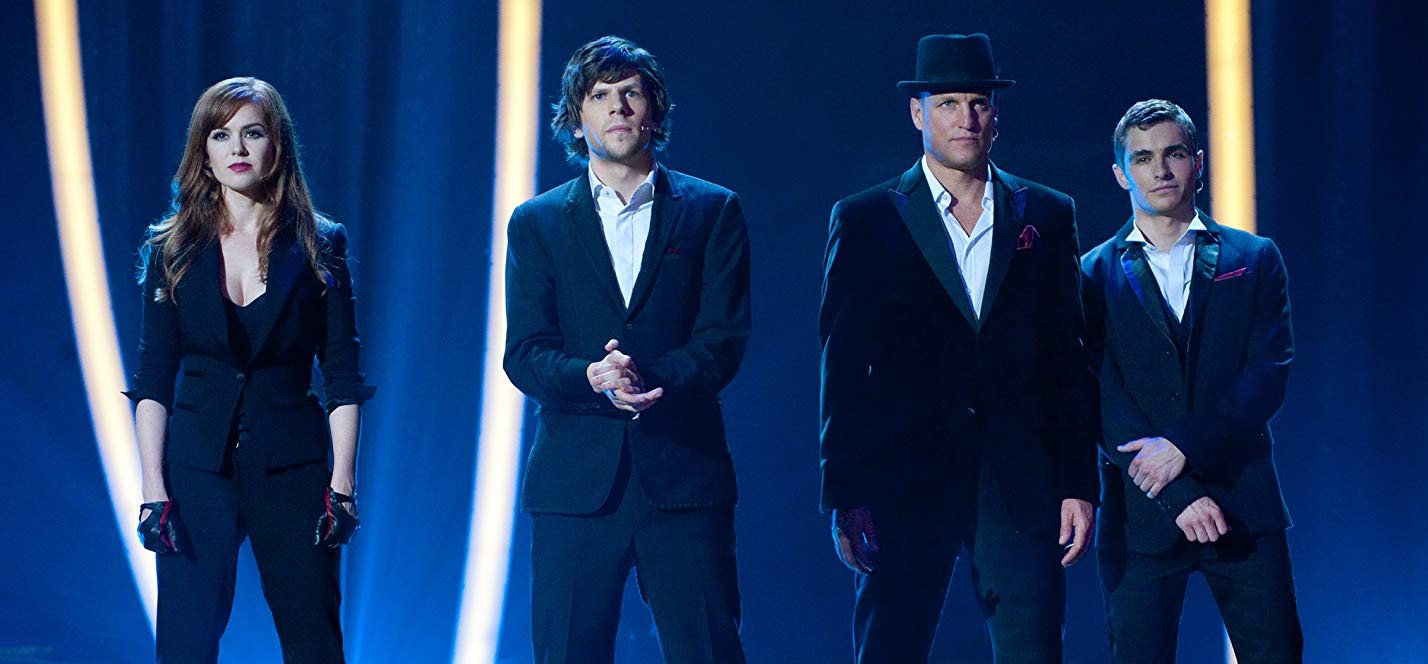
Anyway, J Daniel Atlas (Jesse Eisenberg), Merritt McKinney (Woody Harrelson), Henley Reeves (Isla Fisher) and Jack Wilder (Dave Franco) are a ragtag bunch of professional magicians, hypnotists, stunt performers and conmen who are recruited by a shadowy magical organisation known only as The Eye for reasons unknown. One year later they are performing huge stadium gigs, with the support of millionaire insurance man Arthur Tressler (Michael Caine), as The Four Horseman. During their first show they magic millions of Euros out of a bank in Paris while performing in Las Vegas – a stunt that attracts the attention of the FBI and Interpol who send agents Dylan Rhodes (Mark Ruffalo) and Alma Dray (Mélanie Laurent) to investigate. Meanwhile, the Horsemen are on the run from the law, and still working towards ends unknown, while dodging magic debunker Thaddeus Bradley (Morgan Freeman). But is anything as it seems?

The answer of course is no. But then what do you expect from a film that proudly announces (frequently) “the closer you look, the less you will see”. It’s a pretty good message for the film – but not in a good way – as Now You See Me is as insubstantial as air, a puff of showmanship so pleased with its twists and tricks that it completely fails to have a heart. By the time we get to the end of the film and realise almost everything we saw over its runtime wasn’t real you’ll feel disconnected rather than engaged.

In fact, as a heist/con movie, this isn’t that good. The formula depends on you thinking you’ve got it worked out and then BOOM you realise you didn’t. It also by and large depends on charming, playful leads (think Newman and Redford in The Sting) and on a sort of consistent logic where you get the satisfaction of pieces you didn’t even notice falling into place as vital clues. Now You See Me does none of this.

In fact, it’s so pleased to tell you that it pulled the wool over your eyes that it rushes several of its reveals with an indecent haste. It largely fails to sprinkle clues throughout the film and basically plays unfair with the whole audience. There are things you can never hope to work out as they are based on not being shown vital clues early on. Characters and the film carefully never reveal any hints of true allegiances or motivations until the last possible minute.

In fact it’s one of those films where most of the characters are, for large chunks of time, really pretending to be someone else. This can work, but it doesn’t here as most of the Horsemen are basically rather unlikeable arrogant arseholes. The four actors mostly coast through basic set-ups, and you’ll be pleased when they fade into the background in the second half of the move (all four of them are basically decoy protagonists, and the film shelves them when it can no longer think of a way of hiding their true motivations in plain sight any more). The real lead is actually Mark Ruffalo’s FBI agent, and Ruffalo is a charming, likeable, schleppy presence that you can root for, even if the plot takes us on a character journey with him that makes no real sense (the clue for this is the film’s references to a magician who buried a card in a tree years earlier for one trick). 

It’s flashy in its film making, and Leterrier has a workmanlike touch with making things look cooland putting the camera in interesting places. He has no real idea of character or pacing – the film is frequently quick, quick, slow – and he creates a film here that has nowhere near the brains it thinks it has. It’s all flash and no substance. Look too closely and you’ll see nothing there.
The Great Gatsby (2013)

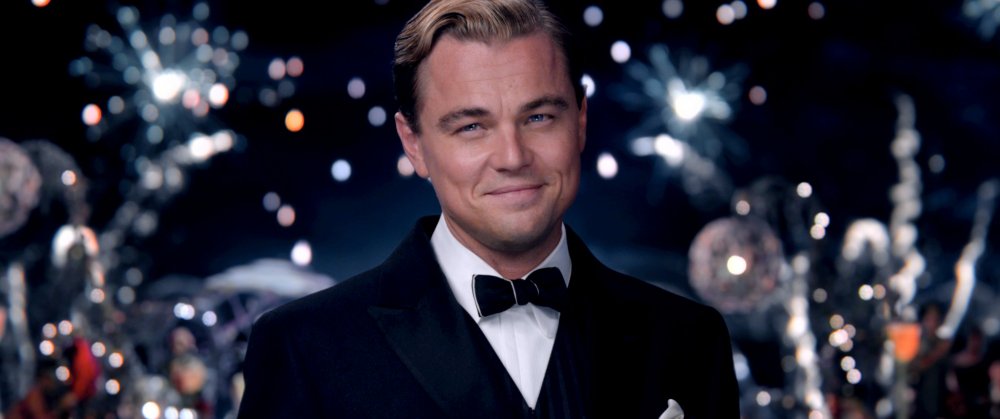
“Hello old sport”: Leonardo DiCaprio is The Great Gatsby

Director: Baz Luhrmann

Cast: Leonardo DiCaprio (Jay Gatsby), Tobey Maguire (Nick Carraway), Carey Mulligan (Daisy Buchanan), Joel Edgerton (Tom Buchanan), Elizabeth Debicki (Jordan Baker), Isla Fisher (Myrtle Wilson), Jason Clarke (George Wilson), Amitabh Bachchan (Meyer Wolfsheim), Jack Thompson (Dr Walter Perkins), Adelaide Clemens (Catherine)

The Great Gatsby is possibly the great American novel. I’ve only read it once, but I certainly admired its beautiful prose, capturing of an era of American life and understanding of the fragility behind America’s love of success. Baz Luhrmann is clearly a fan, as he spent years putting together this passion project, presenting the biggest, brashest version of Fitzgerald you are ever going to see.

Nick Carraway (Tobey Maguire) is a young writer turned bonds salesman in 1920s New York. He lives across the bay from his cousin, Daisy (Carey Mulligan) and her husband Tom Buchanan (Joel Edgerton), a brash old-money man carrying on an affair with Myrtle (Isla Fisher), the wife of his garage mechanic. Carroway’s next-door neighbour is the sumptuously wealthy, but mysterious, Jay Gatsby (Leonardo DiCaprio) whose parties and generosity are legendary. As Carraway gets to know Gatsby (as much as anyone can), he discovers that Gatsby has a deep, near obsessive, love for Daisy.

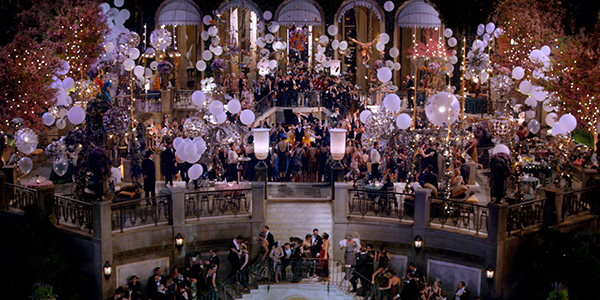
Luhrmann’s film is a technicolour explosion that uses many of the techniques you’ll be familiar with from any of director’s other films. The camera is a whirligig of motion. The colours are bright and primary. The whole tone of the film (certainly for its first hour) is larger than life. The narrative has been tweaked to take on the tone of a Greek Tragedy, with the loud noise, fast camera moves and speedy pace all inverted in the latter half to invoke sadness and tragedy. And of course, the music is deliberately anachronistic, mixing modern genre music with 1920s sounds.

Sometimes this high-budget technicolour brilliance does feel like it is partly getting in the way of the deeper themes that lie within the original. But that might be partly because the novel’s themes are so reliant on internalised feelings, unsaid or guessed emotions, and deeply purple prose, that these are ideas which are very hard to translate to the screen.

There is something to be said for Luhrmann turning one of the pillars of 20th-century American culture into a spiritual sequel to Moulin Rouge!. And Moulin Rouge! is what the film strongly resembles, not only in design, but its romantic structure, poetic retelling, high drama, sense of impending doom and danger behind the bright lights, assault on class and the way it stands in the way of true love, and the lack of freedom in our lives. Both even have sad, reflective authors book-ending events.

So your enjoyment of the film is probably going to depend on how you feel about Luhrmann’s OTT style. Love Moulin Rouge! and Romeo + Julietand you will probably find something to enjoy here (and you’ll also notice his love of tragic love stories). Saying that, of those three, Gatsby is the one the carries the least depth to it, which is intriguing as it probably mines the most psychologically rich source material. While Luhrmann understands that the book is about the real emotions masked by explosive parties and opulence – the film often feels as choked by these things as the characters do.

This is partly because I feel both Maguire’s and Mulligan’s performances don’t quite work. Maguire is so stripped back, quiet and passive he almost disappears – you don’t get a sense of Carraway as either a shrewd observer or someone wrapped up in events: instead he’s a passenger, like the plot contrivance Gatsby sometimes treats him as. Similarly, Mulligan is slightly overwhelmed by the movie, not giving a strong enough performance for her to break through. The film powers forward with such momentum and brashness, it squashes her.

It’s probably why the most successful lead performance by far comes from DiCaprio. He’s perfectly cast as Gatsby: so good in fact you wish he was in a more thoughtful, relaxed film that would give him a more of a chance to breathe. DiCaprio perfectly encapsulates the desperation just beneath Gatsby’s surface, the fear and uncertainty that lies under his suave urbanity. He completely gets the character, understands he is a showman presenting a front to the world because that’s what he thinks the world wants, but who is, in his own way, as empty and lost as the world of bright lights he is offering people. It’s an excellent performance.

Luhrmann’s work with DiCaprio is what gives the film it’s centre and, for all the colour, noise and joy of the first 40 minutes or so, it finds its heart in the moments of acting and character interplay as the Gatsby-Daisy-Tom love triangle comes to a head. This scene, with its bubbling emotions, high stakes and tension is like an oasis of calm in the high-faluting scenery that surrounds it. But then this is a film where the smaller moments actually come across as richer than the larger ones – partly helped by the fact that Joel Edgerton and Elizabeth Debicki both give excellent performances as the key supporting characters. 

The Great Gatsby captures the feel of Fitzgerald rather well, but for all the dialogue of the book placed over the film in voiceover, it never quite manages to capture the spirit of the book in the same way. It looks wonderful, and its dynamic filming is certainly enjoyably impressive, but it doesn’t quite become a film that deals in emotions and depth. It flashes and fizzles but it never lets us really soak in its ideas and themes. It’s all too much at times, and the tragic sadness at the heart of the story, of this lost boy trying to live the life of a man, never comes out as it should. An interesting and entertaining film, but not one that will last.

Nocturnal Animals (2016)


Amy Adams does a lot of reading and thinking in Tom Ford’s intriguing part thriller, part strange romance, part memory saga Nocturnal Animals

Director: Tom Ford

Cast: Amy Adams (Susan Morrow), Jake Gyllenhaal (Edward Sheffield/Tony Hastings), Michael Shannon (Detective Bobby Andes), Aaron Taylor-Johnson (Ray Marcus), Isla Fisher (Laura Hastings), Ellie Bamber (India Hastings), Armie Hammer (Hutton Murrow), Laura Linney (Anne Sutton), Andrea Riseborough (Alessia Holt), Michael Sheen (Carlos Holt)

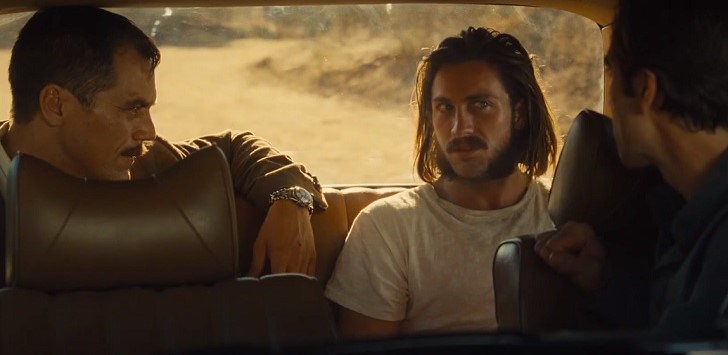
Susan Morrow (Amy Adams) is a society wife, running art galleries and married to an increasingly uninterested husband (Armie Hammer). One day she receives a copy of a manuscript from her ex-husband, Edward Sheffield (Jack Gyllenhaal). The book, while sensitive and from the heart, is also terrifying and visceral, and speaks to her in a way few things in her life have. It makes her begin to question her own choices. We see the story of the novel played out – Tony Hastings (Gyllenhaal again) and his wife (Isla Fisher) and daughter (Ellie Bamber) are waylaid late at night on an abandoned road by a violent local (Aaron Taylor-Johnson) – tragedy ensues.

It would be easy to say Nocturnal Animals is a stylish film that favours beauty over substance. But that would be untrue – Tom Ford has crafted a dynamically structured, intriguing puzzle, open to (and ripe for) discussion and reinterpretation over and over again. The film teases us with uncertainty and ambiguity, but it manages to avoid slipping into heavy-handed pretension. It leaves us with things unsaid, presenting parallel narratives and inviting us to mix and match them to create our own understanding. Ford’s skill is to not always present a definitive answer for how the book plot we are watching is meant to reflect on the plotline of the real world.

Ford is really good at distinguishing between the fiction and the reality. The world of Edward’s story is heightened in nearly every way, in a broad Western setting, while Morrow’s “real world” is cooler and contained, set in chilly apartment rooms or icy modern galleries or homes. The intercutting between the two is skilfully done, perfectly paced, never confusing or jarringly pulling us suddenly from one reality to another. The film avoids making obvious visual crossovers and links between the two (bar once – a moment that doesn’t really work), leaving the interpretation up to the viewer.

The story-within-a-story has a heightened tension, sometimes difficult to watch, not least in the road-rage incident that opens it. This sequence is almost unbearable in its whipper-cracker tension, with a threat of physical and sexual violence in every moment. The horror is almost palpable, sold a lot by Gyllenhaal’s struggles to control his panic and fear. Taylor-Johnson plays the demonic bully with an overblown operatic intensity, a hyper-real flamboyance that works well because it serves as a contrast with the grounded elements in the real story. It also adds to the sense of horror throughout this whole chilling sequence. Who hasn’t felt fear of being pulled over in a road in the middle of nowhere by terrifying, aggressive young men?

But all the elements of the story-within-a-story are cleverly balanced literary flourishes, carefully designed to appear just a little too close to “drama”, than those of the real world. Michael Shannon – a hard-boiled slice of charisma, he’s very good – is basically a stock character, repackaged with depth, but very much the sort of character you would find in a film rather than real life. Gyllenhaal’s Hastings similarly has the sort of moral conundrum and intense grief that feel that they belong more to a character from literary fiction than real life. The events of this story have a ferocious hyper-real intensity to them. Events in the story-within-a-story has a carefully constructed sense of dramatic irony.

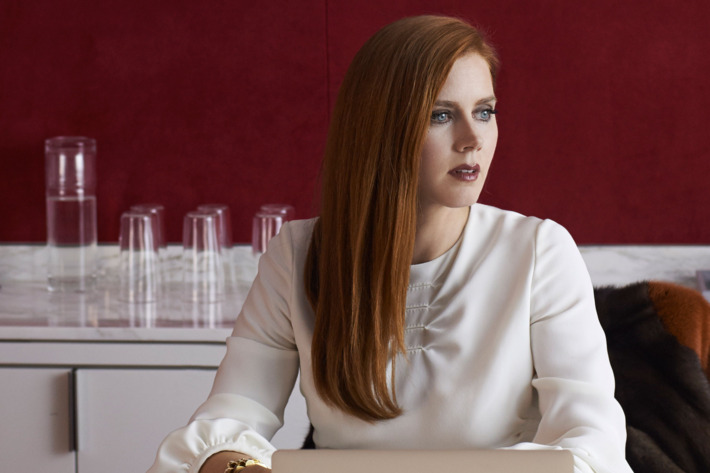
By comparison, the “real world” is almost deliberately low-key and humdrum –minor affairs, and small but telling secrets, lives that are stuck in dull ruts or unimaginative cul-de-sacs. Amy Adams gives a complex and fascinating performance, much of which is essentially her reacting to things she is reading. It’s a performance that reeks of regret, of a woman unhappy in the choices she’s made, but too in love with the advantages they’ve brought to risk changing. She’s so set in the conventionality of life she seems unable to even imagine using her independence to break free.

The film teases us by misleading us about the parallels between the characters in the real world and those in the story. Ford playfully implies at first what we are watching may be partly true, and invites us to wonder what may be invention and what might have actually happened in real life. Alongside that, he also uses the double casting of Gyllenhaal to demonstrate the self-identification writers have for their characters. How much does Sheffield see himself in Hastings – and how much do the events that occur to Hastings, suggest a self-loathing in Sheffield? Again it’s all left to our own invention and imagination. We get flashbacks to past events in the real world that serve to both broaden our understanding and make us question our preconceptions. 

The film builds towards a conclusion that is equally open. Despite its horrendous content in the story-within-a-story, there is a romantic longing in this film, a sense of a life not lived – and a hope for the future. The final sequence is completely open to interpretation – you could equally see it as hopeful (as Ford sees it) or bleak (as most audience members do) – I probably incline more to the latter, but that might just be me. Everyone though will think something a little different depending on what they see, and how they interpret it – the film doesn’t labour the points it makes or push you too far in any direction.

Nocturnal Animals is an intriguing experiment in form and content that works extremely well. It’s powered by some terrific performances and shot with grace and beauty by Ford. This is Ford really flexing his muscles as an artist of film, and he borrows liberally from Lynch to Hitchcock. Ford has a brilliant eye for composition and form and his editing is masterful. He gives his work a lyrical musicality, a sense of balance and rhythm – he’s also a fine, subtle writer and avoids the crudity of the showman. He’s a fine film maker, and Nocturnal Animals is an intriguing, at times hard to watch, but fascinating film that grabs hold of you and doesn’t let go.