Tag: Jack Lowden

Benediction (2021)

Benediction (2021)

Davies’ final film is a beautifully made, deeply sad, exploration of the long-term impact of trauma

Director: Terence Davies

Cast: Jack Lowden (Siegfried Sassoon), Peter Capaldi (Older Siegfried Sassoon), Simon Russell Beale (Robbie Ross), Jeremy Irvine (Ivor Novello), Kate Phillips (Hester Gatty), Gemma Jones (Older Hester Gatty), Ben Daniels (Dr Rivers), Calam Lynch (Stephen Tennant), Anton Lesser (Older Stephen Tennant), Tom Blyth (Glen Byam Shaw), Matthew Tennyson (Wilfred Owen), Geraldine James (Theresa Thornycroft), Richard Goulding (George Sassoon), Lia Williams (Edith Sitwell), Julian Sands (Chief Medical Officer)

Few generations carried scars as deep as that which saw millions of their fellows mown down in the endless bloody slaughter of World War One. For us, whatever understanding of the horrors of that conflict we have is often filtered through the war poets, who fought in unimaginable conditions. Terence Davies’ final film explores the life of Siegfried Sassoon (Jack Lowden, ageing into Peter Capaldi) whose life never escaped the shadow of those terrible sights and awful losses.

Benediction is a sombre, mellow, deeply sad portrait of a man who spent a lifetime searching for something, anything to fill the void the war had left in him. Following Sassoon’s life in a series of tableaux-style scenes that mix poetry reading, period music, news footage with flash-forwards to the tetchy, weary older man he will become, it’s a sad, reflective work that presents memory as a sort of prison that consigns everyone to a life sentence. Davies catches this beautifully in his stately, melancholic film where survival guilt goes hand in hand with bitter regret at missed opportunities.

It opens with Sassoon’s protest against the war – denouncing its content from his first-hand experience. Saved from the possibility of a firing squad by influential friends (chief among them, Simon Russell Beale’s good-natured Robbie Ross) Sassoon is dispatched to an Edinburgh military hospital to “recuperate”. There he meets and falls in love with the sensitive, shy poet Wilfrid Owen (Matthew Tennyson), a love he is scared to confess. After Owen is killed, Sassoon commits himself to a series of romantic relationships with selfish, bitchy men including Ivor Novello (a marvellously supercilious Jeremy Irvine, whose eyes are stone cold) and the shallow, vain Stephen Tennent (Calam Lynch, full of Bright Young Thing smugness, turning into a lonely, tragic Anton Lesser). As an older man, he converts to Catholicism and struggles to understand his son George (Richard Goulding).

Davies’ film posits a Sassoon who never recovered from grief at the death of Wilfrid Owen and could never truly forgive himself for being too timid to express his feelings. Davies films Sassoon and Owen in scenes that sing of unspoken intimacy, from an overhead shot of a swimming pool dip that feels like a pirouette, to the matching body language they exhibit while sitting watching a variety show at the hospital. They laugh and dance together, but at parting Sassoon cannot move himself beyond a tightly clasped handshake and a whispered urge to stay a few minutes longer.

In discussions with his doctor and friend Rivers (a lovely tender cameo from Ben Daniels), Sassoon tearfully talks of his fear of expressing his own emotions. Perhaps this, coupled with his self-blame, is why Sassoon placed himself in so many relationships with such transparently flamboyant shits? Davies certainly seems to suggest so: Sassoon had less fear of “being himself” when he was with arrogantly confident men like Novello and Tennant. Did he also, the film suggests, feel so crippled with regret and survivor guilt, that he couldn’t believe himself worthy of the love of gentle, decent men, such as the Owen-like Glen Byam Shaw (Tom Blyth).

Sassoon becomes a man who can never fully escape the never-ending hurt of memories. Even as an older man, Davies shows Capaldi’s Sassoon sitting in his garden, the background replaced by news footage of slaughter in the trenches. It’s mixed in with the shame Sassoon felt at his “stand” against the war being, in the end, a moment that changed nothing. Davies further paints his poetry as declining post-war, as if parts of his creative life never survived the shocks he experienced.

And always he hopes something might make him whole again. Sassoon races through these false dawns during the film: relationships with men, marriage to Hetty (Kate Phillips as the younger Hetty is nearly as oppressed with unspoken sadness as Sassoon), the birth of his son – all fail to deliver. So as an older man – in a neat CGI transition during a 360 camera move – Davies transforms Lowden to Capaldi as he tries Catholicism (there is another wonderful cut that takes us from young Sassoon’s silver military cross being dropped into a river, that transitions into the grey-suited older Sassoon lying in a crucifix position on the floor of a church).

But the tragedy of Benediction – and there is no denying it’s a deeply sad and even slightly depressing film – is none of these attempts fill his soul. The older Sassoon – sharp, prickly and with a stare that goes on and on from Capaldi – snaps at things he doesn’t understand, cruelly dismisses the older Tennant and bitterly complains at the lack of recognition his later work received. He’s a man desperate for companionship, but comfortable only on his own.

It’s particularly sad having seen the brighter, passionate and warm man he was. Much of Benediction succeeds due to an exceptional performance by Jack Lowden. Lowden brilliantly conveys Sassoon’s lingering depression and loss under the surface of every interaction. The cheery wit that covers the self-loathing that leads him into destructive relationships and painful situations is as well captured as the self-deceiving optimism he had that everything could be different. Lowden ends the film with an extraordinary emotional moment – filmed in tight one-shot by Davies – where we see, one the last day of the war, his impossible burdens lead him to a single, quiet, emotional outburst of the vast reams of pain that then continued to burn inside him for the rest of his life.

Benediction is about guilt, loss, regret and denying yourself opportunities at happiness and joy through an internal determination that it is not for you. There is something profoundly personal in this – Sassoon’s life in this film, mirroring many of the regrets Davies spoke of in his own life – a fact increased by the heartfelt, gentle construction of the film with its melancholic air and rich sense of empathy for its subject. As a final work, it’s a fitting tribute to both the poet and its director.
Mary, Queen of Scots (2018)

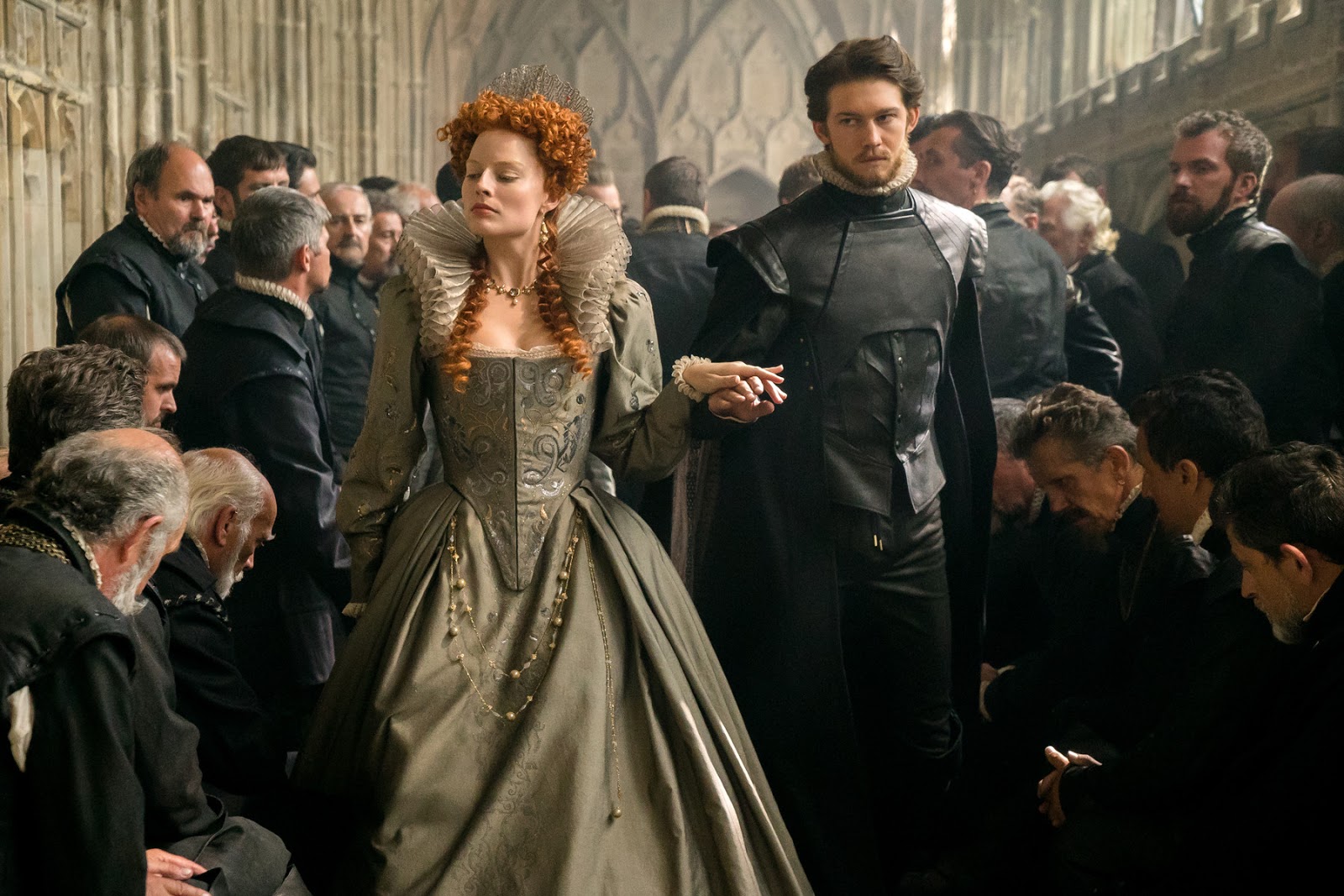
Margot Robbie as a particularly dense version of Elizabeth in misfire Mary, Queen of Scots

Director: Josie Rourke

Cast: Saoirse Ronan (Mary Queen of Scots), Margot Robbie (Elizabeth I), Guy Pearce (William Cecil), David Tennant (John Knox), Jack Lowden (Lord Henry Darnley), Joe Alwyn (Lord Robert Dudley), Gemma Chan (Elizabeth Hardwick), James McArdle (Earl of Moray), Martin Compston (Earl of Bothwell), Ismael Cruz Cordova (David Rizzio), Brendan Coyle (Earl of Lennox), Ian Hart (Lord Maitland), Adrian Lester (Lord Randolph), Simon Russell Beale (Robert Beale)

Mary Queen of Scots posterThe history of the Tudors has been mined so often by film and theatre that there can hardly be any hidden stories left to tell, barely any twists that can be unveiled or reimaginings that haven’t already been imagined. Mary Queen of Scots certainly fails to find any new angles on its oh-so-familiar tale, and even its attempt to rework events and characters keeps banging its head on those damn, unchangeable real events that spoil the story it seems to want to tell.
And it’s a familiar story. Mary (Saoirse Ronan) returns to Scotland from France after the death of her husband. Naturally many people aren’t keen to see this Queen, not least her half-brother the Earl of Moray (James McArdle) who was running the country, and protestant firebrand anti-feminist John Knox (David Tennant). But Mary is plugged in, sharp and savvy and she’s going to rule the country her way – and also put forward her claim for the throne of England currently held by her cousin Elizabeth I (Margot Robbie). It seems all is set for Mary’s success – until fortune begins to turn with her marriage to drunken playboy Henry Darnley (Jack Lowden). Conspiracy, murder, exile and execution are on the cards.

Mary Queen of Scots is a mess. For starters, Beau Willmon’s script does the near impossible of turning one of the most electric periods of British history into something stodgy, dull and hard to follow. Perhaps wrapped up in his House of Cards background, a show where there is a never ending stream of betrayals, counter crosses and twists for twists’ sake, Mary Queen of Scots is the same. The film is a constant parade of betrayals in Scotland, as lords shift and move sides from scene to scene with such swiftness, such lack of explanation, such lack of exploration of character and motivation, that you end up not only confused by ceasing to care. Decent actors like James McArdle and Ian Hart struggle through with ciphers (Hart literally changes sides every single scene). Martin Compston is given a confused character design as Bothwell that makes Mary’s third husband a hero until he makes a left-field heel reversal and becomes a bullying rapist. What a mess.

It’s even worse in England, where poor Guy Pearce’s every scene is a never-ending stream of exposition and historical context. Every single scene in England at the court drags and claws itself into nothingness, simply a load of dry, dense, uninvolving dialogue with characters whom we are never given any real reason to invest in. Just as the Scottish lords are ciphers who do whatever the plot requires them to do, with no time invested in developing their characters, so it’s the case with the English lords. There are many, many, many people to keep on top of but virtually no characters to invest in.

Willmon’s script also falls wildly in love with Mary herself, desperate to turn her into some genius politician and master of realpolitik, who we are frequently told is playing the game of courtly politics with aplomb and genius. “She’s out-manoeuvred us” one character constantly bemoans. However, the problem Willman has is that he eventually has to deal with the fact that the real life Mary made hideous, disastrous, stupid decisions. And since those decisions are basically the building blocks of the story (who she marries, who she trusts, who dies, where she goes, who she abandons etc etc.), there is no way around them. You are left with a film that tells you all the time how smart your lead character is, while most of the things she does are foolish.

Not least the marriage to Lord Darnley. Jack Lowdon gives a very good performance as a feckless, arrogant weakling. But surely only the densest woman alive could fail to see that Darnley is a hideously inappropriate husband? The film gets round this by stressing his charm and, in one hilariously misjudged scene, his intense skill at cunnilingus as being the thing that pulls the wool over her eyes. (After this first soft focus bit of oral play, Mary bashfully asks Darnley if he would like some “satisfaction” as well. No that’s fine he sweetly says – she really should be suspicious by then.) The film tries to course-correct by having Mary realise literally five minutes into the marriage that she has made a terrible mistake. But she doesn’t learn from it, as the rest of her life is a series of disastrous decisions, promoting the wrong people, snubbing others, leaving her son (the SINGLE MOST IMPORTANT PERSON IN THE COUNTRY) behind when she runs away… need I go on.

As well as trying to make Mary a genius, it also balances by trying to make Elizabeth an idiot. I swear there is not a single scene in this film where Elizabeth is not in tears about something. She shows no judgement whatsoever, struggles with her hormones, blindly follows the advice of her counsellors, spends half the movie making paper roses and stroking horses rather than running the kingdom. On top of which, this film which wants to make a point about the sexism women face dealing with a world of men, turns Elizabeth (the greatest queen England ever had) into a hormonal idiot, blindly led by men and obsessed with the idea of having children (even longingly trying to make her shadow appear pregnant) because, you know, deep down the ladies just be wanting babies. 

Now Saoirse Ronan and Margot Robbie do decent jobs with the versions of these people they play, even if none of this rings true. Josie Rourke does a decent job directing the film visually, with its Game of Thrones inspired look and feel (Edinburgh castle is turned into some sort of bizarre Dragonstone structure, half hewn out of a mountain). But its story is, to put it bluntly, really, really BORING. You are never given any reason to care about most of these characters, so the constant stream of betrayals and side shifting eventually becomes utterly unengaging. Every time you get near to thinking Mary is smart, she has to do a terribly dumb historically inspired real event, that actually makes her look even more stupid than she was. Mary Queen of Scots is a stodgy, dense, dull mess of a film that ends up being drier and less interesting than the sort of high-Hollywood epics from the 1970s it’s trying to update.

Dunkirk (2017)


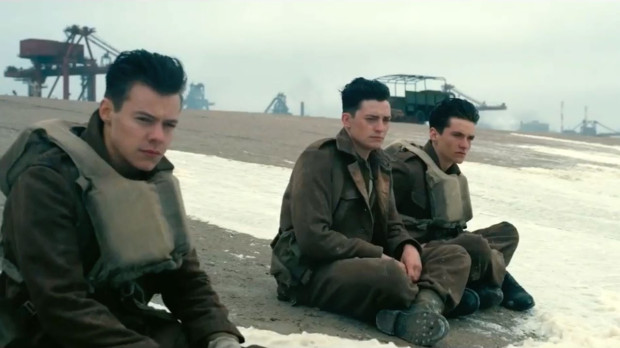
Harry Styles, Aneurin Barnard and Fionn Whitehead are three ordinary soldiers trying to get home in Christopher Nolan’s epic Dunkirk

Director: Christopher Nolan

Cast: Fionn Whitehead (Tommy), Tom Glynn-Carney (Peter Dawson), Jack Lowden (Collins), Harry Styles (Alex), Aneurin Barnard (Gibson), James D’Arcy (Colonel Winnant), Barry Keoghan (George Mills), Kenneth Branagh (Commander Bolton), Cillian Murphy (Shivering Soldier), Mark Rylance (Mr Dawson), Tom Hardy (Farrier)

“We must be very careful not to assign to this deliverance the attributes of a victory. Wars are not won by evacuations. But there was a victory inside this deliverance, which should be noted.” – Winston Churchill

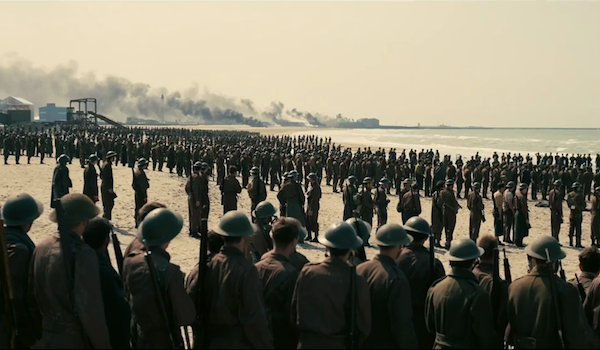
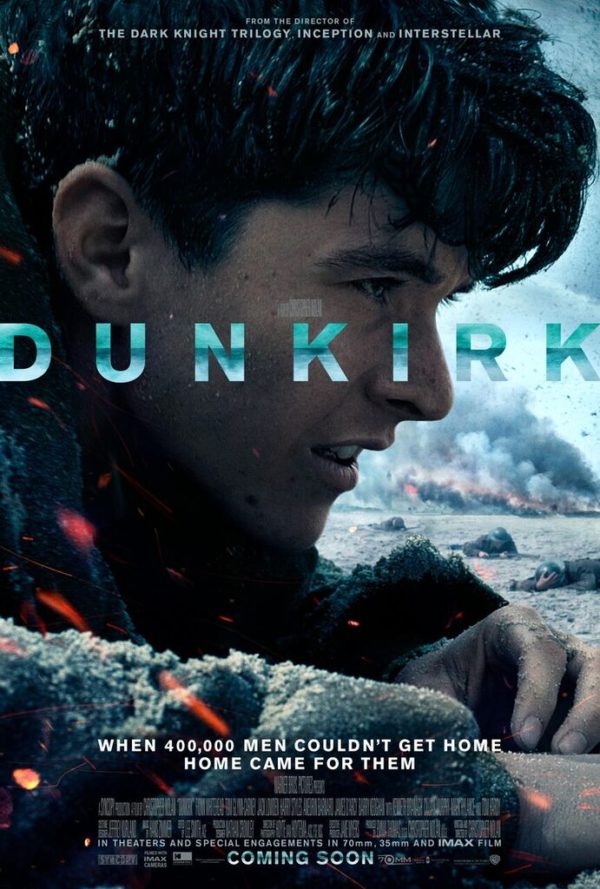
The evacuation of Dunkirk is a very British triumph. Beaten and encircled by the Germans, British forces were stranded in a small pocket around Dunkirk. The country looked certain to lose almost 400,000 men to death or imprisonment – the core of its professional army. The fact that almost 340,000 soldiers were evacuated was more than a triumph: it was almost a miracle. Christopher Nolan’s epic new film brings the triumph and adversity of this campaign to the big screen.

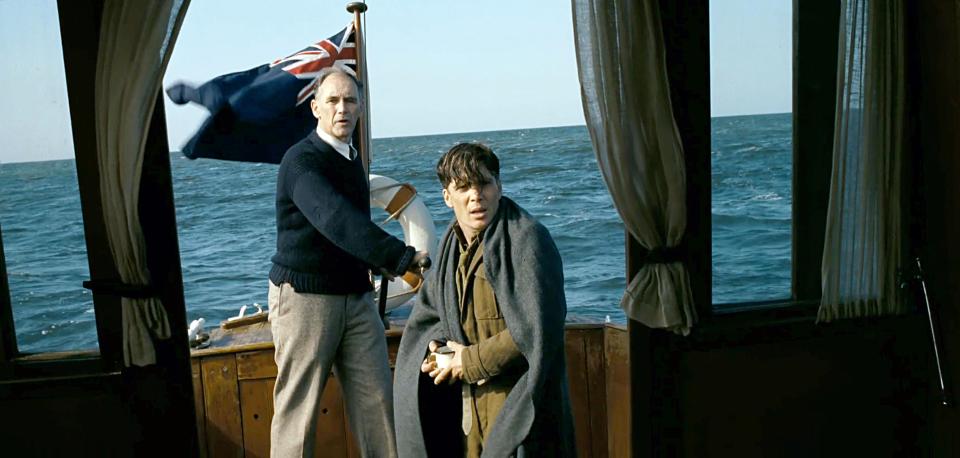
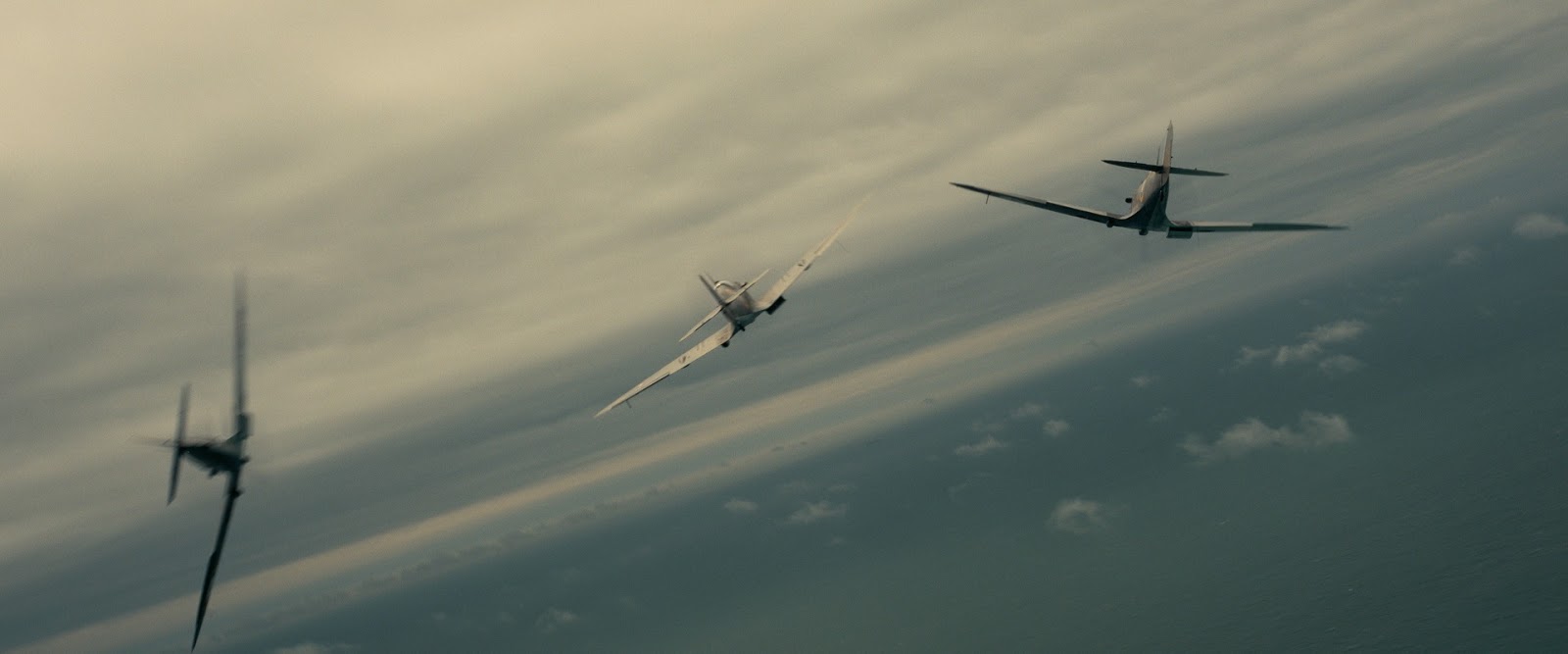
The action unfolds over a week around the evacuation of Dunkirk. On the beach Tommy (Fionn Whitehead), Gibson (Aneurin Barnard) and Alex (Harry Styles) are desperate to escape the chaos on the beach, where the evacuation is being managed from the one standing pier by Commander Bolton (Kenneth Branagh). On the sea, Mr Dawson (Mark Rylance) and his son Tom (Peter Dawson) head to Dunkirk in their small pleasure boat to help with the evacuation, picking up a traumatised soldier on the way (Cillian Murphy). In the air, Farrier (Tom Hardy) and Collins (Jack Lowden) fly a one-hour mission over Dunkirk to provide air support to the stranded soldiers.

As a director, Nolan’s calling cards are playing with narrative forms and timelines, while allowing personal stories play out on extremely grand canvases. Dunkirk feels like a summation of some kind of his career: its multi-layered timelines are gracefully and intelligently threaded together, and while the canvas is enormous, the human stories don’t get lost. The human interest running through the film is particularly impressive, as there is so little dialogue. It’s pretty close to “experience cinema” – it throws the audience into an immersive explosion of events, giving as much of an impression as it’s possible to give of the claustrophobia, tension and terror of being trapped on that beach.

The film-making is impeccable in creating this overbearing feeling. Hans Zimmer’s score thunders over the film, bearing down with a constant pressure and making excellent use of metronome ticking to keep hammering home the time pressure. Nolan brilliantly inverts scale in his filming to create a sense of claustrophobia – we constantly see sweeping shots of but the scale of our surroundings only forces home the seeming impossibility of what the British are trying to do. Individual soldiers seem tiny – how can one man possibly have a chance of escaping? It’s a brilliant mixture of sound and imagery to make the large seem small, the epic seem entrapping.

What Nolan does really well in this grand scale is to create a series of “ordinary soldier” characters. Despite the fact that we learn virtually nothing about them, these characters feel human and desperate. Again, they are such small, ordinary Everyman cogs in the giant machine of the army, that they become hugely relatable. It’s a hugely neat trick by Nolan, another brilliant inversion – just as he turns epic to claustrophobic, he turns ciphers into characters.

Recognising the need for balance between the overbearing impact of the Dunkirk beach sequences, the film allows a mix of story-telling and character types in its other two plotlines. So Mark Rylance’s boat captain voices much of the film’s humanitarianism, in a sequence that plays like a chamber piece – four people discussing duty and the impact of war in a confined space. Meanwhile Tom Hardy’s Spitfire pilot carries more of the traditional “war film” man-on-a-mission dynamics, engaging in a series of dog fights in the sky. Interweaving these stories offers not only relief to the audience, but also narrative contrast.

The interwoven storylines are also brilliantly done since they all take place in very different timespans. The plot at “the Mole” takes place over a week, “the sea” in one day, and “the sky” in one hour. Each of these timelines interlocks and unfolds in the film simultaneously, and characters move at points from one timeline to another.

Okay, writing it down, it sounds impossibly confusing and difficult to follow right? Who could keep track of all that? But the film is so brilliantly assembled that it always make perfect sense. Nolan uses several key markers – a boat, the fate of certain characters – to constantly allow us to see where we are in the story’s timeline. So we understand when we have moved from one timeline to another when we see a ship still on the beach that we’ve seen sinking elsewhere. This also increases the tension – we know at points what will happen before the characters do, because we’ve already seen the after-effects. Again, put it into words it sounds wanky and difficult to follow, but it really isn’t – and the film is put together with such confidence that it never feels the need to show off its narrative gymnastics. Nolan is confident enough to be clever without drawing our attention to it – a very difficult trick to pull off.

All this forceful story telling never prevents the story from also being at many points immensely moving and stirring. The arrival of the boats at Dunkirk is a genuine “lump in the throat” moment. The simple decency of Rylance’s boat captain gives a low-key impression of a very British sort of heroism, of quietly doing one’s duty while valuing every life and wearing your own grief lightly.

The film’s more action-based sequences are equally stirring and moving, because Nolan brilliantly establishes character with only a few brief notes. It’s made clear early on that Hardy’s pilot has only a limited fuel supply: every second he stays above Dunkirk protecting the men and ships below, he reduces his chances of getting home. It’s another sort of heroic self-sacrifice, and in a film that generally doesn’t shy away from showing the deadly consequences of war, Nolan is happy to give us some more traditional, fist-pumping heroics.

Nolan gets the maximum emotion from the more dialogue-heavy parts by hiring some terrific actors: Rylance, as mentioned is superb, and Cillian Murphy is very good as a shell shocked captain. Kenneth Branagh is perfect for conveying the weight of responsibility on the shoulders of the naval commander in charge of the evacuation. And elsewhere, Whitehead, Bernard and Styles all invest their ordinary Tommies with a great deal of emotion and empathy.

Dunkirk is a marvel of cinematic technique and accomplishment, which brings enough moral and emotional force to the drama to keep you engaged in the plights of its characters. You can marvel at the film making tour-de-force of its executions, but you never feel disengaged from it. It’s a marvellous film.

A United Kingdom (2016)


Rosamund Pike and David Oyelowo are a love match in underwhelming A United Kingdom

Director: Amma Asante

Cast: David Oyelowo (Seretse Khama), Rosamund Pike (Ruth Williams Khama), Terry Pheto (Naledi Khama), Vusi Kunens (Tshekedi Khama), Jack Davenport (Alistair Canning), Laura Carmichael (Muriel Williams-Sanderson), Jack Lowden (Tony Benn), Tom Felton (Rufus Lancaster), Charlotte Hope (Olivia Lancaster), Nicholas Lyndhurst (George Williams), Anastasia Hille (Dot Williams)

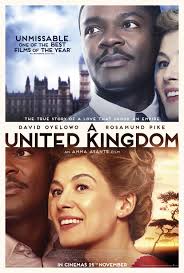
Some films just have a safe, crowd pleasing, “your whole family would like it” feel to them. A United Kingdom falls very neatly into this category. It’s a simple and straightforward story, told with a cosy safety that won’t challenge you or really stick in your memory.

Seretse Khama (David Oyelowo), heir to the throne of the Bamangwato tribe in what will become Botswana, is studying law in England in the late 1940s to prepare for his reign. He meets and falls in love with London girl Ruth Williams (Rosamund Pike) – and despite the protests of their families and their nations, they marry and resolve to build a life in his country working for the betterment of his people. But first they must overcome what seem insurmountable obstacles.

A United Kingdom is a very well-meaning film. It has an important story to tell about acceptance and prejudice. Many of the points it makes about the negative reactions to mixed race marriages and colonial politics are still painfully relevant today. It’s an earnest and good-hearted film. It’s just a real shame that it’s also not that special.

It’s well acted by the two leads, we can give it that. Sure they are presented as almost flawless individuals, but David Oyelowo and Rosamund Pike are engaging performers and give a lot of emotional weight to the story. Their courtship is sweetly hesitant and their relationship feels real and lived in. Oyelowo brings much of the magnetic charisma he has shown in a wide range of films to the part, and Pike’s neat mixture of prim Englishness, decency and stubborn self-determination work really well.

But the story it so simply done, the whole thing feels like a TV movie of the week. The film is flatly directed and conventionally shot: London is always dark, filmed through a blue lens, with rainwater or fog dripping off every shot. Africa by contrast is a vibrant, orange lensed place where every sunset and sunrise looks like a painting. Very few shots show much more imagination than that. There is no flair or originality to the cinematography, the composition of the shots, or even the musical score (which swells up stirringly at emotional moments and then fades instantly from memory). On every technical level, it can boast nothing more impressive than workman-like competence.

The narrative is equally simplistic: our heroes fall in love, deal with rejection, passionate speeches are made, allies are slowly won over and a deus ex machina finally makes everything fine. The stakes of what Seretse is putting at risk through his marriage are never made completely clear, despite all the talk of digging and diamonds. The final resolution of the entire problem is so simplified, contrived and rushed I almost had to double check the runtime to see if I missed anything. It’s all part of the same simplification in the story that sees sides change with confusing speed – Seretse’s sister goes from rejecting Ruth to treating her like a sister in a blink; Ruth’s father (distractingly played by Nicholas Lyndhurst, forever Rodney) is given one moment in a cinema to switch from prejudiced British working man to repentant father.

The characters themselves are very plainly drawn: they are either goodies or baddies with no attempt made to look at the deeper feelings or motivations behind them. For instance, Seretse’s uncle is shown as simply outraged by the marriage, with no attempt to explore why a marriage like this may not have been seen as ideal in a fragile community, or how it might have made holding a deal with the UK together difficult. Similarly, the Brit characters are almost to a man mustachio twirlers or bitchy mem-sahibs, callously sipping sherry as they thwart Seretse and Ruth’s plans. (Spare a thought for poor Tom Felton, yet again hired to play Draco Malfoy In A Different Historical Costume.)  Even Clement Attlee (so regularly beautified as the Prime Minister who oversaw the creation of the Welfare State and NHS) is portrayed here as a cold-hearted architect of realpolitik.

By making its lead characters so saintly and pure, and anyone who disagrees with them so cruel and sunk in villainy, the film weakens itself. Yes it has a sweet relationship at the middle, but it also manages to make this feel slightly lightweight, because the film itself is so flimsy. When their opponents are such cartoonish baddies, and their aims for their country so unclearly explained, it minimises the impact of the story. Instead of showing us the birth of a modern, democratic nation through the focal point of one couple’s struggle against prejudice and adversity, it makes both personal and national triumphs feel actually less impressive than they were – no more than a Sunday afternoon, Mills & Boon tale of a working class London girl and a handsome, “exotic” stranger.

A United Kingdom is an important story that has made itself into a slight one, a conventionally filmed and simplistically told tale that never carries the weight and impact it should do. Despite good performances from the leads, it’s really nothing special.