Tag: James Bridges

The Paper Chase (1973)

The Paper Chase (1973)

Overlong, shallow mentor-mentee film that never gets anywhere near finding enough depth or humour

Director: James Bridges

Cast: Timothy Bottoms (Hart), Lindsay Wagner (Susan Fields), John Houseman (Professor Charles W Kingsfield Jnr), Graham Beckel (Ford), James Naughton (Brooks), Edward Herrmann (Anderson), Craig Richard Nelson (Bell), David Clennon (Toombs)

It’s a tale as old as time: the ambitious youngster and the domineering mentor they both loath and love. The Paper Chase rolls through this familiar set-up, based on a novel by law professor John Jay Osborn (descendant of that John Jay) who might well have seen a bit of himself in his novel’s stern mentor. That mentor is Professor Charles Kingsfield (John Houseman), an imperiously patrician professor of contract law at Harvard. Kingsfield is a demanding teacher, treating his class with arch disdain, demanding the best from them. Among his class is Hart (Timothy Bottoms), a fiercely hard-working ambitious young man who finds himself not only increasingly admiring Kingsfield but also (unknowingly at first) in an on-again-off-again relationship with Kingsfield’s daughter Susan (Lindsay Wagner).

This forms the meat of James Bridges’ dry, only fitfully engaging Harvard-set film which ambles gently from largely predictable plot-beat to plot-beat. After an initially promising start it swiftly outstays its welcome. The Paper Chase is frequently far-too sombre, slow-paced and unenlightening film which frequently flatters to deceive either as a character study, an insight into the dynamics of the mentor-pupil relationship, a love story or a comedy. It bears considerable, highly unfavourable, comparison with the more modern Whiplash which takes essentially the same set-up (an ambitious student desperate to impress a domineering mentor he loathes and loves) but uncovers far more psychological depth and insight.

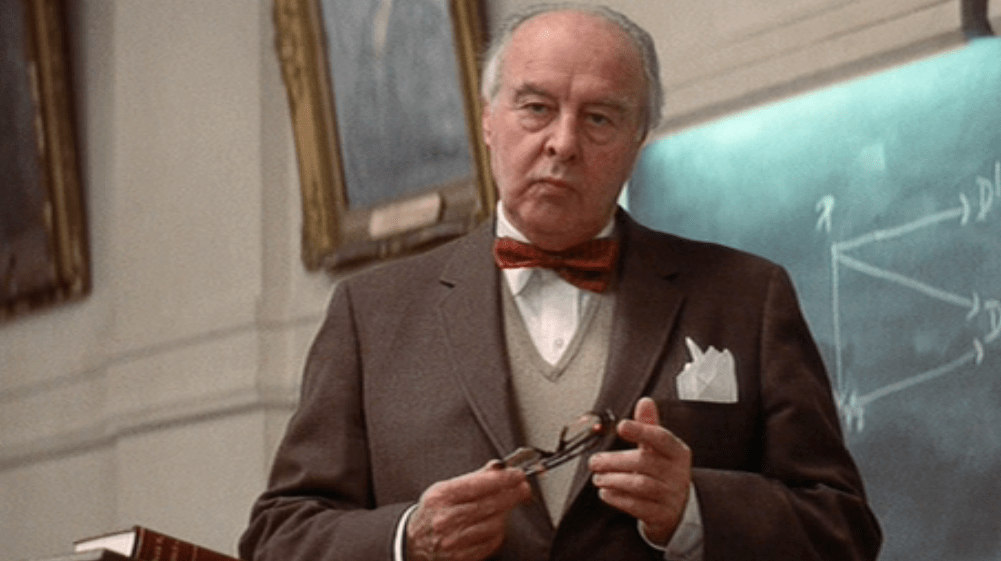
The Paper Chase’s main claim to fame is John Houseman’s Oscar-winning performance. Despite his veteran Hollywood status as producer and screenwriter, Houseman was effectively a newcomer with only a brief performance in conspiracy thriller Seven Days in May prior to this. Houseman took on a part turned down by a host of leading actors (James Mason was the original choice, but scheduling ruled him out). He had the advantage of years of experience as an acting coach at the Juilliard School – his students reflecting Kingsfield was not a radical departure from Houseman’s own teaching style – and having a legendary standing in American Theatre not a million miles away from Kingsfield’s standing in the law.

It’s a smooth, eye-catching performance but neither the role (nor Houseman’s performance) are particularly complex, mostly requiring an ability to confidently roll out arch syllables and raise sceptical eyebrows. It’s funny, but a surface delight, the film continuously avoiding any attempt to delve into the character. Does he brutally push his students to prepare them for a brutal profession? To separate the wheat from the chaff? Because he’s a bully? Who really knows. When a student in his class, struggling to keep up, attempts suicide, Kingsfield barely reacts. He’s a stone-eyed enigma to the end, the character all front and no depth. It’s hard not to think Houseman couldn’t have played it standing on his head (he wrote later, he almost felt ashamed about winning an Oscar for what he considered a ten-day vacation from his teaching).

There is a chance for uncovering real psychological interest in Bottom’s role. Unfortunately, Bottoms lacks Houseman’s charisma, making Hart an unengaging, frequently uninteresting character, who it becomes fundamentally hard to care about – a death knell in a film about Hart’s ability to grow up and not depend on the approval and praise of others. Trapped in The Paper Chase is an interesting tale of a man latching onto a father figure – a father figure who tries to teach him that looking for others for approval is a fool’s errand by treating him with disdain throughout. Such a tale never comes into focus.

Neither does the film’s chronicle of the relationship between Hart and Susan – engagingly played by Lindsay Wagner – burst into the sort of witty interplay the script is straining at. Instead it increasingly drags, not helped by the underplaying of both actors. The barrage of bust-ups and disagreements between them keeps promising to burst into life like an updated Hepburn-Tracy vehicle. Instead, it meanders almost pointlessly, neither making interesting points about Hart’s obsession with proving his worth or Susan’s desire herself to defy her father.

A far more interesting film would have delved more into exactly what attracts Hart to Susan. Surely it can’t be a coincidence that Hart feels an intense attraction to the daughter of the law professor he is obsessed with impressing? Are Hart’s feelings sparked by a subconscious awareness from their first meeting of the similarities between Susan and Kingsfield? Freud would go to town on Hart’s continuing desire to both seduce Susan in the bedroom and Kingsfield in the classroom. It could be rich material for the film, but The Paper Chase seems utterly unaware of this engaging subtext, settling instead for the blandly predictable.

Similarly, the film has no interest in exploring any of the interesting questions around teachers like Kingsfield, who rely essentially on intimidation and academic hazing to motivate students, ruthlessly accepting the collateral damage of drop-outs like a badge of pride. Never once does The Paper Chase pause to question the merits or failings of this system or the type of people it produces or behaviours it encourages. The suicide attempt of a classmate at the pressure applied by Kingsfield, doesn’t stop the rest of the cast giving him a round of applause at the end of the semester. Never does it seem to make up its mind whether Hart’s perverse hero-worship of Kingsfield (who effects to have no idea who he is) is Stockholm syndrome or a vindication of Kingsfield’s methods by transforming a potentially mediocre lawyer into A-Grade material.

In fact as the credits rolled on The Paper Chase I was left wondering what on earth I was supposed to take out of this. Does Hart learn to care or not care about what Kingsfield thought of him? Was Kingsfield a heartless law robot or a great teacher or something in between? Sure, it culminates with Hart throwing away his final exam mark sight unseen – but the film is careful to make sure we the audience have seen he’s (of course) aced the class. It’s a sign the film was as blindly in love with Kingsfield as Hart was, vindicating all his methods (deliberate or otherwise). The Paper Chase is slow, unenlightening, nowhere near funny or dramatic enough to sustain interest for a class let alone a whole semester.
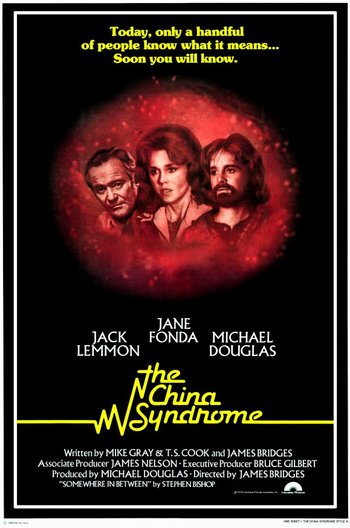
The China Syndrome (1979)

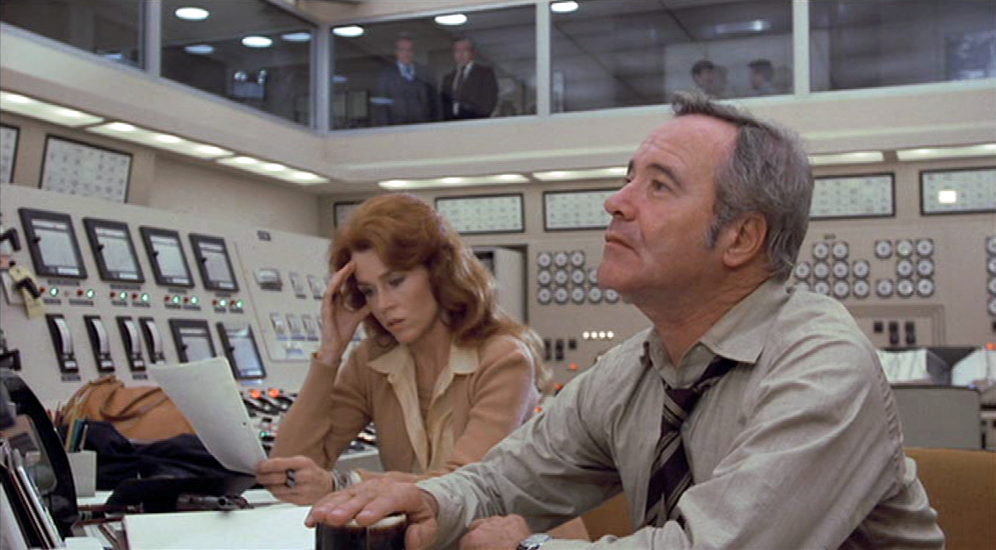
Jane Fonda and Jack Lemmon struggle against Big Business interests in the Nuclear Industry in The China Syndrome

Director: James Bridges

Cast: Jane Fonda (Kimberly Wells), Jack Lemmon (Jack Godell), Michael Douglas (Richard Adams), Scott Brady (Herman DeYoung), Wilford Brimley (Ted Spindler), James Hampton (Bill Gibson), Peter Donat (Dan Jacovich), Richard Herd (Evan McCormack), Daniel Valdez (Hector Salas)

Do we really trust nuclear power? There is something about the dangerous possibilities of splitting the atom that alarms people even today. For all that burning coal wrecks our atmosphere, people would still rather that than live downwind of a station powered on substances that could obliterate everything within a five mile radius if something went wrong. The China Syndrome is about exactly that, an accident at nuclear power plant that could spell disaster for California.

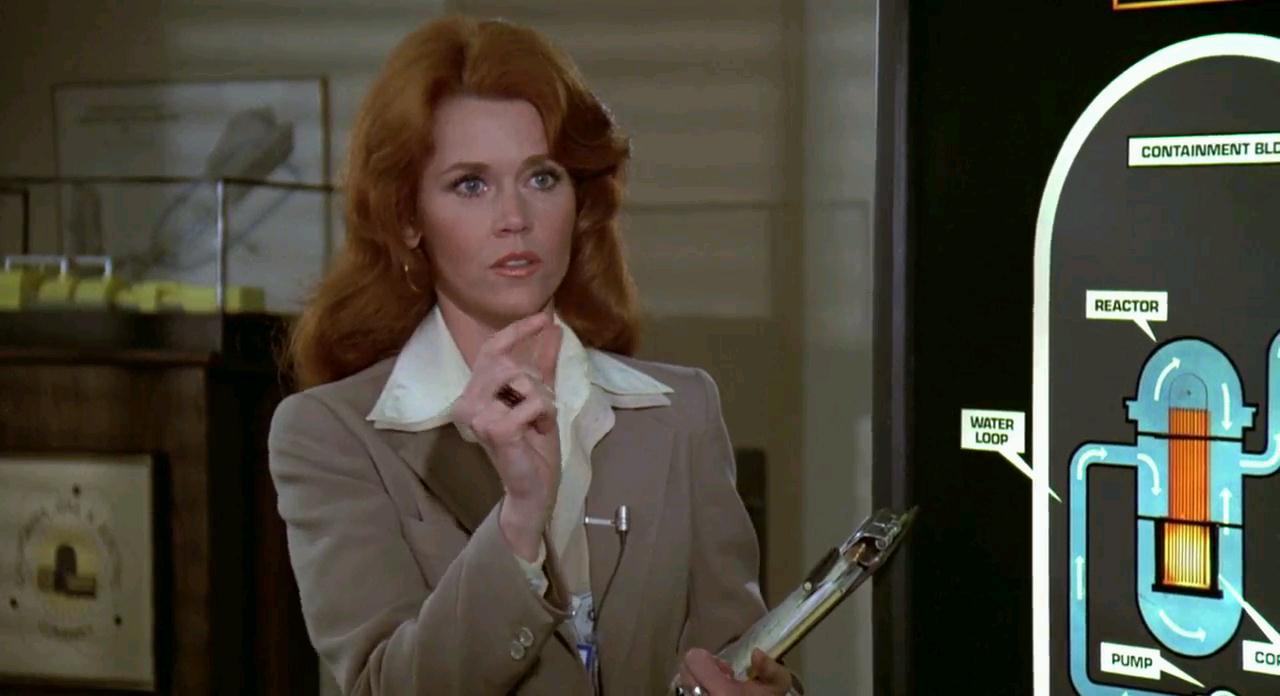
Kimberly Wells (Jane Fonda) is a roving reporter for a Californian news channel, who (thanks to her sexist bosses) is constantly relegated to ludicrous puff pieces (“Today a hot air balloon landed in downtown LA!”). Sent to a nuclear power plant, she stumbles upon the real news story she has waited her whole career for when she and camera-man Richard Adams (Michael Douglas) secretly film a near catastrophic incident. Investigations try to brush the event under the carpet, but shift supervisor Jack Godell (Jack Lemmon) knows corner-cutting and cost-saving is putting the whole of LA at risk – and, much against his inclination, he needs to speak out. 

The China Syndrome comes very much from that burst of 1970s conspiracy thriller films where shady big-business types are willing to throw almost anything under the bus in order to make a big bonus. It’s a film that takes a pop not only at the heartless bastards running a shoddy nuclear power plant (who couldn’t care less if the reactor is poorly welded together, so long as the money keeps rolling in) but also the hypocritical cowards running the media. The heads of the news channel kowtow swiftly to big business and are staggering in their sexism and race-to-the-bottom news coverage.

This film is as much about this brainless conformism as it is the dangers of nuclear power. The film is full of people who don’t want to rock the boat: half the people working at the plant would rather turn a blind eye to problems than pay the personal price of exposing them – even Jack Lemmon’s manager is the most reluctant whistleblower you’ll see in the movies. Fonda’s journalist may not be happy with her role as airhead eye-candy, but she will play the game in order to get ahead in the industry the role – and many of her media comrades seem almost totally lacking in any journalistic instincts. The film is bookended by inane TV coverage and advertising, a condemnation of an America that doesn’t ask questions and is sleepwalking towards catastrophe.

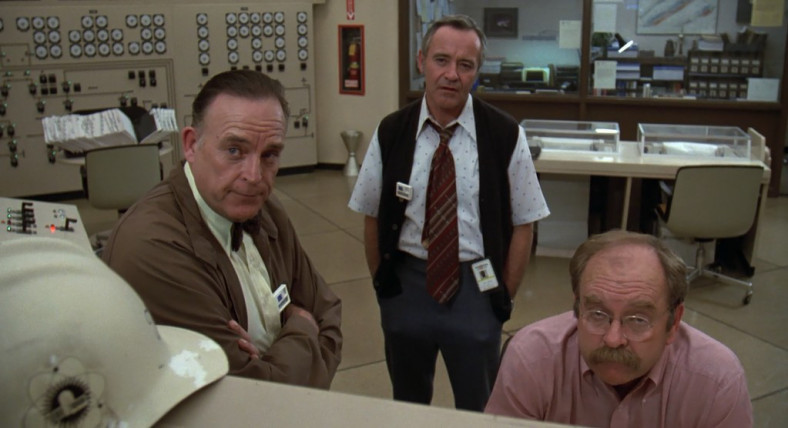
This catastrophe is, of course, extremely close – the power plant nearly goes into meltdown because a single dial gets stuck on a high reading, leading the control room to believe the nuclear rods are about to get flooded rather than nearly being exposed. Bridges mines a heck of a lot of tension from this crisis – told entirely from the perspective of the control room – as workers react with both stressed fear and a practised professionalism to a crisis that could become a disaster. Its part of a film where regular joes are generally professional and good at their jobs, but are let down and betrayed by the culture encouraged by the higher-ups.

Some of these themes, however, get a bit muddied in the film’s middle third, which gets bogged down way too much in nuclear theory, committee meetings, slow explanations of different types of weld, and dry lectures on the functioning of nuclear energy. While it is admirable that the film has no score, you can’t help but feel that a little music here to add some drama to Lemmon looking at x-rays or Fonda staring at diagrams could have helped pump up the tension. 

But it all gets paid off by the sudden (and surprising) shift to action and drama in the film’s final third, kickstarted by a surprisingly gripping car chase between Jack Lemmon’s quiet station manager and some shady goons hired by the company. Suddenly the film is powering through a tense series of set pieces that both feel like a different movie, while still a natural progression of the stakes.

Bridges directs the film very well. Each scene is calmly and coolly assembled, and he has a great eye and ear for technology and the noises and motions of machinery, which dominate the film – even if the film is rather in love with these background sounds, which risk taking over the soundtrack. It’s all part of stressing the cold mechanicalism and lack of humanity throughout both these industries. Sometimes the foot comes off the gas a little too much – you could probably trim at least 15 minutes – but when it comes to the moments of tension he directs with sharp snappiness.

The acting is also sublime. Jane Fonda is extremely good as Kimberly Wells. Initially she seems as light and superficial as the stories she is forced to cover, but Fonda paints a clever picture of a woman squeezed into playing a role, but yearning for (and capable of) so much more, who when she finds her moment shows levels of determination and cunning you would never have expected. For all her desire to become a ‘proper’ journalist though, Wells is savvy enough to make sure she is being filmed from her good side… Fonda makes her a careerist who uncovers a sense of moral purpose. She also manages to bring real emotion to the role, making Kimberly Wells a character we swiftly connect with.

The movie however is stolen away by Jack Lemmon, brilliantly low-key and everyday as the shift manager who becomes an overwhelmingly reluctant whistleblower. Lemmon’s performance is a perfect study in smallness, of a quiet dignity. He’s got no desire to rock the boat, quietly stating that the “plant is his whole life” – but when stirred, his professional pride transforms into determination to do the right thing, even while his lack of magnetism makes him unpersuasive and hard to take seriously. It’s a terrific performance of low-key tragedy, with Lemmon building the tension with small flashes of resentment, fear, determination and disillusionment flashing across his face. It’s a great reminder of what a marvellous dramatic actor Lemmon was.

Expertly produced by Michael Douglas (who does sterling work in the third-banana role as the camera man overflowing with conviction), The China Syndrome may at times be dry, but it makes up for that with its moments of high drama and moral conviction. By and large it avoids hectoring and lecturing the audience (when not teaching us about nuclear power), and lets its points be soft-sold rather than banged home. With some terrific performances, it’s a film that still feels relevant today, and is a great example of the 1970s conspiracy thriller genre.