
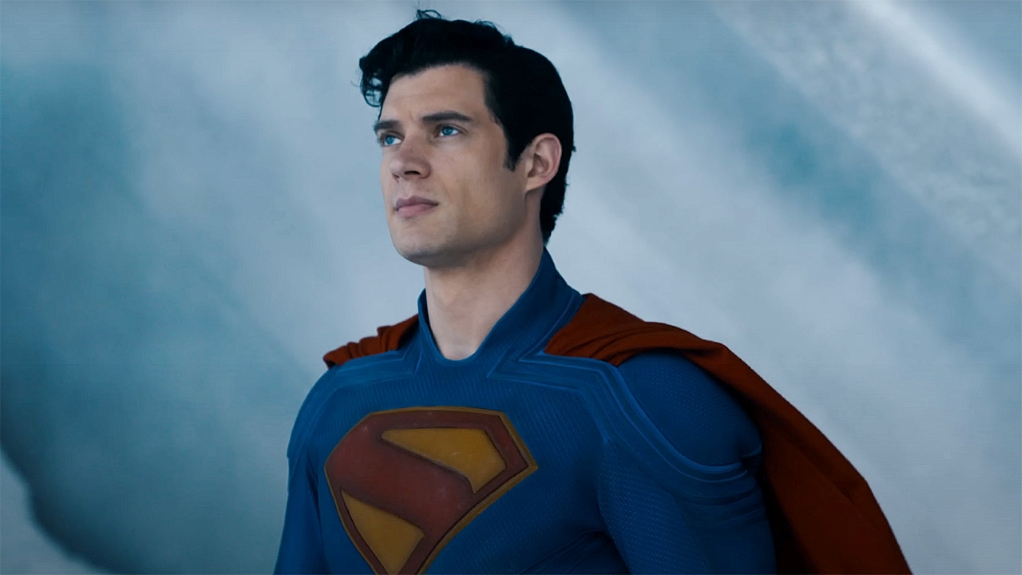
A fun, character-led, engaging film that makes a better stab at starting a massive franchise
Director: James Gunn
Cast: David Corenswet (Clark Kent/Superman), Rachel Brosnahan (Lois Lane), Nicholas Hoult (Lex Luthor), Edi Gathegi (Mister Terrific), María Gabriela de Faría (The Engineer), Anthony Carrigan (Metamorpho), Nathan Fillion (Guy Gardner), Isabela Merced (Hawkgirl), Skyler Gisondo (Jimmy Olsen), Sara Sampaio (Eve Teschmacher), Wendell Pierce (Perry White), Pruitt Taylor Vince (Jonathan Kent), Neva Howell (Martha Kent), Zlatko Burić (President of Boravia), Frank Grillo (Rick Flagg), Bradley Cooper (Jor-El)

In 1978 Hollywood promised to make us believe a man could fly. In 2025 it just wants us to believe a franchise can be reborn. Superman, again, hopes the man of steel can launching a DCU franchise to compete with Marvel (in some ways, hilarious that this is just at the point when the world seems tired of interconnected monolith Comic Book worlds). Has it learned the lesson of the first attempt? I’d say yes: under the experienced hand of James Gunn, Superman is light, fun, exciting and engaging. It may all be (inevitably) heading towards a city-sized smackdown to save the world, but at least it does it with a bit of charm and character work along the way.
What it also definitely isn’t is an origins story. And, in many ways, thank God: is there anyone under this yellow sun that doesn’t know Superman is from Krypton, his alias is mild-mannered reporter Clark Kent at the Daily Planet, he’s got the hots for Lois Lane, his enemy is balding super-genius Lex Luther and he’s got a deadly fear of Kryptonite? Gunn is totally spot-on that we didn’t another hour plus on film laboriously putting all those pieces in place again.
Superman instead throws us straight into the second act: the invulnerable hero (David Corenswet) getting beaten for the first time, outmatched by Lex Luthor’s (Nicholas Hoult) Ultraman who has all of Superman’s powers and none of his personality. It’s part of a doom spiral where Superman’s decisions to unilaterally intercede in a war are condemned for overstepping, painful revelations about his past leave him ostracised by the world and he winds up imprisoned by Luthor who wants to reshape the world as he sees fit. Can reporting (and romantic) partner Lois Lane (Rachel Brosnahan) rope in the Justice Gang (a group of meta-human heroes) to help?
That probably doesn’t give quite a clear enough picture of what a barmy, primary-colour spectacle Superman is. To say it throws in everything including the kitchen-sink at your would be an understatement. Gunn’s film is soaks in love for the scatter-gun, heightened reality of comic books. If the first wave of DCU films were about trying to ground superheroes in the real world, this throws us into a nutsy world where: the Justice Gang are celebrities and their members include a half-hawk woman and a cocky dickhead with a magic ring; the villain has a private pocket universe he’s using as a personal Guantanamo Bay; and battles with giant space monsters are such a regular sight people whip out their phones to film it rather than runaway.
In fact, in this world, Superman facing off against his super-powered foe in a city collapsing into a giant rip in space-and-time actually feels strangely grounded. Compared to floating around on flying platforms through a purple pocket universe or swimming through a river of anti-matter to save a meta-human baby who can change his form into any material on earth, it’s pretty normal. But Gunn’s film embraces its madness with a tongue-in-cheek joie d’vivre: in fact, it’s refreshing that the film acknowledges there is no point trying (once again) to Nolanise this stuff.
In fact, Gunn works hard to make sure any real-world commentary is delivered with a soft-touch. A key sub-plot about the invasion of Jarhanpur (a stand-in for both Ukraine and Gaza) by its neighbour Boravia (blatantly Russia) gets funnelled into a black-and-white moral issue. A Trump stand-in is Boravia’s blow-hard leader, with a thick Russian accent (distancing him from the real thing). Social media gets a kicking (not surprising considering the director’s personal experience on it), but with off-the-wall gags like Luthor owning a legion of engineered monkeys endlessly typing angry comments into the ether to drive algorithms. Metropolis is the only city where a daily paper not only drives discussion, but is the most trusted source of news.
The colourful barmyness also works, because Superman grounds itself in warm and relatable characters. Bought to life with a great deal of humility and relatability (the one area the film plays it completely genuinely) by David Corenswet, this version of Superman embodies the virtues of kindness. He’s endlessly polite and attentive, from his robot servants in the fortress of solitude to his hardest language being “gosh”. He’s dedicated to preserving life (from humane subduing of giant monsters to saving a squirrel mid-fight) and putting others first. He’ll go to great lengths to protect his pet dog Krypto (possibly the most genuinely endearing dog on screen since The Artist).
And it makes a great framework for a film that deconstructs Superman by stripping him of his certainties. Dramatically it’s always difficult to fear for an invulnerable hero, so Gunn’s decision to open with our hero having had the crap beaten out of him (not for the last time in the film) is a good touch. But Gunn also challenges Superman’s moral certainties, in particular with a unique reveal in Superman-lore leaving him questioning everything he thinks he knows about his past. It’s refreshing to see a film challenge superheroes for taking unilateral decisions on behalf of everyone, with even Lois criticising him for a power-grab. Sure, it’s a strawman – there is no doubt Superman’s decision to stop Boravia is the right thing to do – but it’s good to see it discussed and questioned.
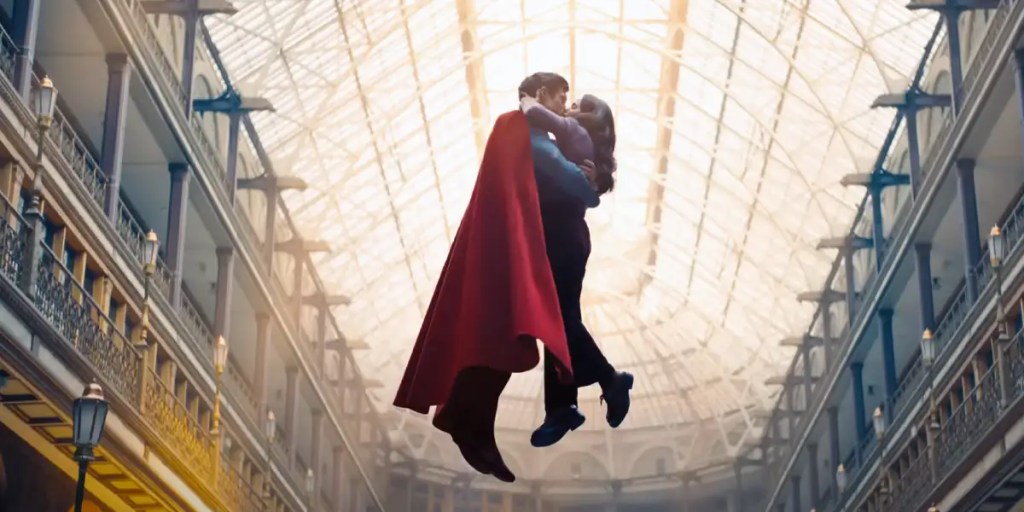
Superman uses this to explore characters, in particular the emotional vulnerability of Clark Kent and the bond between him and Lois. There is a refreshing scene where Corenswet and Brosnahan simply sit and talk about his turmoil, while outside the window in the distance a bizarre intergalactic-eye monster is fought by the Justice Gang. (Both a good gag, and a sign of the film’s focus on character). But, unlike other Superman films, Corenswet’s Man of Steel confronts him with the possibility of physical and moral failure on every level. Throw in a Luthor who, for all his man-child antics, carries out some of the darkest, most brutal acts any version of the character has before and this leads to some genuinely affecting moments of grief and guilt.
Gunn combines this genuine interest in character with some engaging use of obscure comic book characters, about him the general viewer has no pre-viewing expectations. Krypto is a genuinely funny addition as a hyper-active chaos pet. Nathan Fillion is good fun as a dickish blow-hard with super-powers. Edi Gathegi is wonderfully droll as the wearily frustrated Mr Terrific. And the three leads make a very effective combo: Corenswet’s selflessness and kindness very well contrasted with Hoult’s petulant arrogance while Brosnahan gives Lane gallons of determination and can-do attitude.
It’s not perfect. A sub-plot about Luthor’s girlfriend is presented as a victim of an controlling relationship and a source of comedy for a desperate neediness. It’s resort to a big-city smackdown is overly familiar, while a few reveals can be seen coming far off. Hoult’s Luthor is a big-swing of a performance that doesn’t always hit. But when it works, it’s a bubbly ball of super-hero-fun that celebrates basic decency, kindness and looking after each other. And maybe that’s the hero we need right now.
 Movie Musings