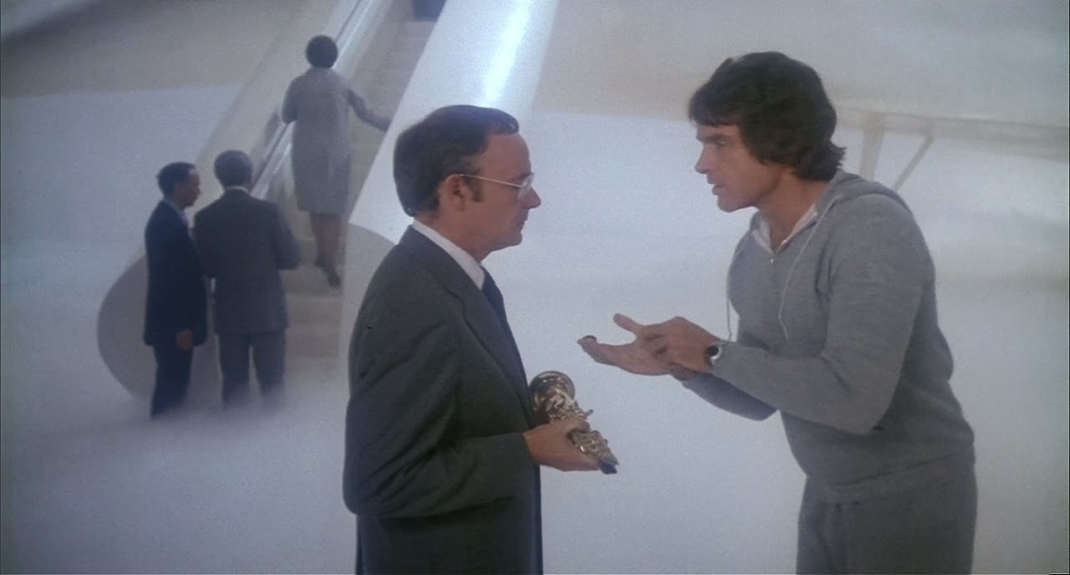
Tag: James Mason

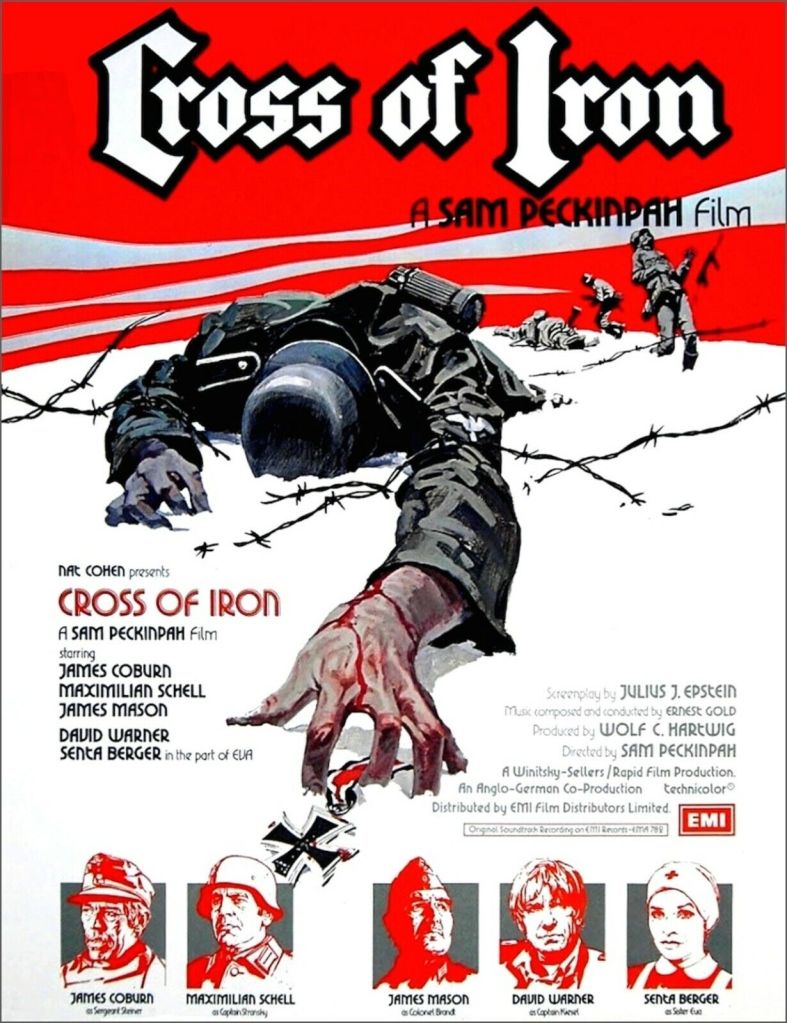
Cross of Iron (1977)

Cross of Iron (1977)

Grim war film, full of blood and horror, but lacking the depth it needs to really make an impact

Director: Sam Peckinpah

Cast: James Coburn (Sergeant Rolf Steiner), Maximilian Schell (Captain Stransky), James Mason (Colonel Brandt), David Warner (Captain Kiesel), Klaus Löwitsch (Krüger), Vadim Glowna (Kern), Roger Fritz (Lt Triebig), Dieter Schidor (Anselm), Burkhard Driest (Maag), Fred Stillkrauth (Reisenauer), Michael Nowka (Dietz), Arthur Brauss (Zoll), Senta Berger (Eva)

If War is Hell, it makes sense that Sam Peckinpah eventually bought it to the screen. Cross of Iron is, perhaps surprisingly, his only war film. But, in a sense, Peckinpah’s grim explorations of the brutal realities of violence made all his films war films. And what better setting for his grim eye than the gore and guts of World War Two’s Eastern Front. If war has any rules they fell silent in this hellish clash where no quarter was given and no decency could be found.

Sgt Steiner (James Coburn) knows this. A grizzled soldier, who despises war, Nazism and officers, he fights through the horrors of the front to protect his men. As the Wehrmacht flees, crushed by the late 1943 advance of the Russian army, the only hope is the vain chance of staying alive. But Steiner’s new commander, Captain Stransky (Maximilian Schell) has other ideas: a Prussian elitest, he’s here for an Iron Cross and the fact he’s inept, cowardly and inexperienced isn’t going to stop him. The clash between Steiner and Stransky will leave a trail of futile bodies in its wake.

Cross of Iron may well just be the grimmest war film this side of Come and See. Shot on location in Yugoslavia, Peckinpah films the Eastern Front as a muddy, chaotic mess where no one seems to have the faintest clue why they are there or where they are going. Soldiers huddle in shallow trenches, officers sit in dusty, crumbling bunkers, the sound of machine guns and the explosion of artillery forms a constant backdrop. Battles are smoky, horrific events with bullets flying, ripping through bodies that explode in squippy mess. Bodies are strewn across the battlefield. Even in the progress to the front lines, tanks absent-mindedly roll over bodies left ground into the muddy dirt.

Peckinpah brings his unique eye for violence to bear. Violence frequently takes place in slow motion, bodies twisting and turning in a crazed dance that seems to go on forever as bullets rip through them. The camera never flinches from the blood of war and the films throws us right into the middle of brutal firefights, tracking through smoky, muddied fields full of bodies. The soundtrack is punctuated by distant artillery gun fire. There is no heroism and the sole focus is staying alive. The soldiers have no interest in politics, no passion at all for the war – only one of them, the smartest dressed, is a Nazi. It’s simply something they vainly hope to survive to see the end of. Even the grizzled veteran Steiner hates the killing, hates the violence, hates the waste.

It makes us loath even more Maximilian Schell’s puffed-up braggart Stransky, a man born wearing an officer’s uniform but hopelessly ill-suited for it. Under fire at his first attack, Stransky is hopeless, reduced to bluntly stating the obvious (“My phone is ringing!”) and confusedly rambling about attacking, withdrawing and counter-attacking all in the same breath. Schell was born to play Prussian primma donnas like this, and he gives Stransky a real cunning and survival instinct. Despising Nazism – he sees himself as above the crudeness of the party – he’s a born manipulator, skilfully deducing the sexuality of his aide to blackmail him, but also a rigid stickler for the rules unable to comprehend a world where he isn’t on top.

He’s the antithesis of Steiner, who has everything Stransky wants: respect, glory, guts. Coburn is, to be honest, about ten years too old for the role (his age particularly shows during his brief respite in a base hospital, where he has a convenient sexual fling with Santa Berger’s nurse), but he’s perfect for the hard-as-nails humanitarian, who hides under the surface deep trauma at the horror he’s seen. Steiner is the natural leader Stransky wants to be and has the Iron Cross Stransky wants. Worst of all, Steiner doesn’t give a shit about the medal, when it’s the be-all-and-end-all for Stransky.

Stransky is so out of step, even the veteran front-line officers think he’s despicable. Colonel Brandt (a world-weary James Mason) scoffs “you can have one of mine” when he hears of Stransky’s dreams while his cynical aide Kiesler (a scruffy, shrewdly arch David Warner) takes every opportunity to show his disgust. Stransky is ignored by the soldiers and is rarely filmed away from his bunker, where he reclines on his bunk like an emperor and avoids any trace of conflict.

So, he knows nothing of the horrors of Steiner’s war. We however do. Cross of Iron opens with a successful raid on a Russian encampment. One of the victims, a young soldier his body torn apart by a mortar, is met with barely a reaction by the soldiers (“We’ve seen worse” says Steiner). Another captured Russian boy is later released by Steiner – and promptly machine-gunned in front of him by advancing Russian soldiers. Caught behind the lines, Steiner’s men are picked off one-by-one despite his desperate efforts to keep them alive.

Cross of Iron went millions over budget – largely due to Peckinpah’s chronic alcoholism (he binge drank every day while shooting and spent days at a time unable to work) – and as a result the ending is abrupt and overly symbolic. (Peckinpah and Coburn had about an hour to cobble it together and shoot it before the filming wrapped up). Peckinpah throws in some clumsy fantasy sequences (especially during Steiner’s fever dreams in hospital) and overly heavy-handed reaction shots from Coburn, overlaid with quick cuts to various horrors or shots of lost friends, which over-stresses the horror of war.  Much as Cross of Iron skilfully shows the grimness of conflict, it doesn’t balance this with real thematic weight and depth like, say, The Wild Bunch does.

It’s part of Cross of Iron’s flaws. Under the surface, I’m not sure that Cross of Iron has much more to say, other than war is hell. And with Peckinpah’s work here, there is a sort of satanic, indulgent glee in all that mayhem and slaughter, the bodies riddled by bullets. Peckinpah is a sadistic preacher, the sort of sermoniser who is so keen to tick off the evils of the world, that he doesn’t want to miss a thing. The film feels a little too much at times as a grungy, exploitation flick yearning for art.

But it still has a visceral impact that makes it stand out as grizzled war-film, helped by a granite performance by Coburn, with just enough vulnerability beneath the growls. A tough watch and a flawed film, that lacks the real insight and psychological depth it needs, but with some compelling – and shocking – moments.

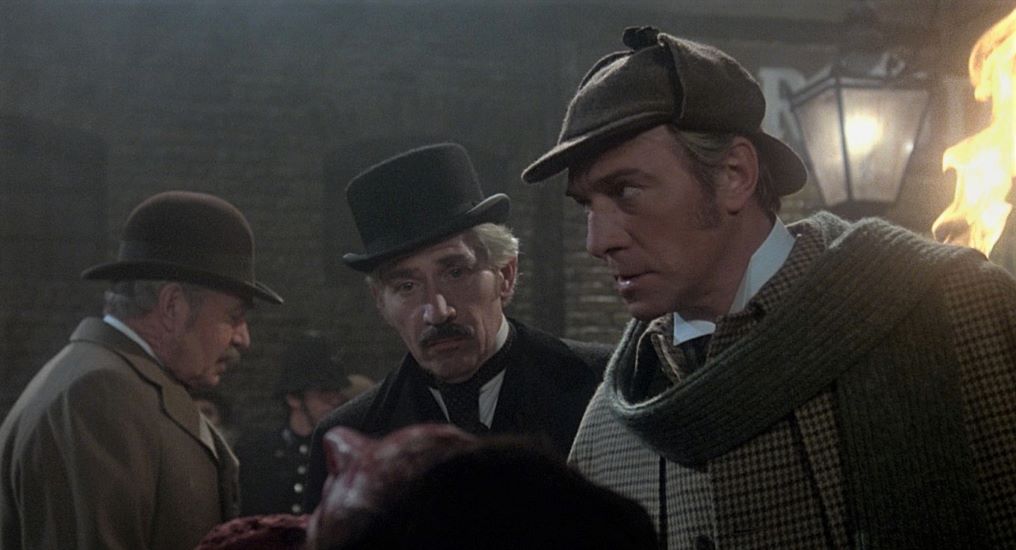
Murder by Decree (1979)

Murder by Decree (1979)

Sherlock Holmes investigates Jack the Ripper in this overlong but enjoyable Doyle pastiche

Director: Bob Clark

Cast: Christopher Plummer (Sherlock Holmes), James Mason (Dr John Watson), David Hemmings (Inspector Foxborough), Susan Clark (Mark Kelly), Frank Finlay (Inspector Lestrade), Anthony Quayle (Sir Charles Warren), Donald Sutherland (Robert Lees), Geneviève Bujold (Annie Crook), John Gielgud (Lord Salisbury)

In the world of Sherlock Holmes pastiches, it’s a popular sub-genre: Sherlock Holmes vs Jack the Ripper. How would Holmes have taken on the murderer who has baffled generations since those brutal Whitechapel killings in 1889? Murder by Decree explores the idea, mixing Conan Doyle with a deep dive into (at the time) the most popular theory in Ripperology, the Royal Killings (Murder by Decree indeed!).

It’s all pulled together into a decent, if over-long, film, shot with sepia-toned stolid earnestness by Bob Clark. With its fog-ridden Whitechapel sets (carefully built but always strangely empty), heavy-duty actors sporting large sideburns, wavy-screen flashbacks and carefully unimaginative framing, there is something very old-fashioned about Murder by Decree. That also extends to its Ripper theory, steeped in a very 70s class-conscious conspiracy. The film pads out its two-hour run time with many a POV shot of the Ripper prowling the streets, which bring to mind Jaws and slasher horror films of the time.

Where Murder by Decree does stand out is in its imaginative characterisation of Holmes and Watson. They are presented as affectionate friends – Mason’s older Watson has a sweet indulgent elder-brother feeling to him, giving Plummer’s sparkly Holmes plenty to tease and bounce off. They split the casework between them – Watson is an equal partner, even if Holmes does the brainwork – and use their strengths to complement each other (notably, Watson frequently distracts people so Holmes can interrogate a witness more closely). They genuinely feel like long-term friends (there is a delightful sequence where Holmes is so distracted by Watson’s attempt to fork a pea, that he squashes it onto the fork – to be met with a forlorn “you’ve squashed my pea” from Watson, who likes the peas intact so they “pop in my mouth”).

They are dropped into the middle of a very much of-its-time Ripper theory. Murder by Decree centres on the theory that the murders were ordered (the film reluctantly suggests tacitly) by the establishment to cover up the secret marriage of Prince Edward, Duke of Clarence to a Whitechapel woman, Annie Crook. This alleged marriage produced a baby, and a royal doctor, sheltered by a Masonic conspiracy, sets about eliminating everyone who knows the truth. Of course, it’s almost certainly bollocks – but with its mix of secret societies, Royals, a lost heir and the rest, it’s an attractive story.

It gains a lot from the performances of the two actors. James Mason flew in the face of then popular perception by presenting a quick-witted, assured Watson, more than capable of looking after himself (he bests a blackmailing pimp in a street fight and is very comfortable with guns – far more than the reticent Holmes). He’s still the classic gentlemen, who loves King and Country, but also shrewd, brave, loyal, able to win people’s trust and look at a situation with clear eyes.

With Christopher Plummer, Murder by Decree has one of the all-time great Sherlock Holmes. Plummer’s Holmes is refreshingly un-sombre, twinkly with a ready wit, who loves teasing Watson (cleaning his pipe with Watson’s hypodermic needles) and delights in his own cleverness. But Plummer takes Holmes to places no other film Holmes goes. The case as a devastating effect on him: he weeps at the fate of Annie Crook (consigned by conspirators to a slow death in an asylum) and furiously attacks her doctor. When the conspiracy is unmasked, he emotionally confronts the Prime Minister and berates himself for his failures. There is a depth and humanity to Plummer’s Holmes unseen in other versions, a living, breathing and surprisingly well-adjusted man, unafraid of emotion.

Sadly, the film takes a little too long to spool its conspiracy out. Rather too much time is given to an extended cameo by Donald Sutherland as a pale-faced psychic who may or may not have stumbled upon the killer. There are a lot of unfocused shots of that killer, all swollen black eyes and panting perversion. It relies a little too much on a Poirot-like speech from Holmes at the end explaining everything we’ve seen. But there are strong moments, best of all Geneviève Bujold’s emotional cameo as the near-catatonic Annie Crook, cradling in her arms a memory of her stolen child.

There are many decent touches. The film is open in its depiction of the filth and squalor of life in Whitechapel – a pub is an absolute dive, and the women pretty much all look haggard and strung out. It has a refreshingly sympathetic eye to the victims, with Holmes denouncing the attitudes of both Government and radicals (looking to make political hay from the killings) who see them as lives without intrinsic worth. Holmes places no blame or judgment on them, or the choices life has forced on them, which in a way puts him (and the film) quite in line with modern scholarship (even if there is the odd slasher-style shot of mangled corpses).

The main issue is the film never quite manages to come to life. It’s a little too uninspired, a bit too careful and solid where it could have been daring and challenging. There are good supporting roles: Finlay is a fine low-key Lestrade (at one point persistently raising his hand to ask his superior permission to speak) while Gielgud sells the imperious Lord Salisbury. There is enough here for you to wish the film just had a bit more of spark to lift it above its B-movie roots. But in Plummer and Mason it has a Holmes and Watson to treasure – and for that alone it’s worth your time.

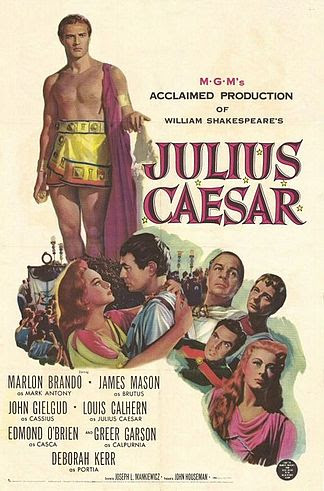
Julius Caesar (1953)

Mason and Gielgud confront Brando in Hollywood’s faithful Shakespeare adaptation Julius Caesar

Director: Joseph L Mankiewicz

Cast: Marlon Brando (Mark Antony), James Mason (Brutus), John Gielgud (Cassius), Louis Calhern (Julius Caesar), Edmond O’Brien (Casca), Greer Garson (Calpurnia), Deborah Kerr (Portia), George Macready (Marullus), Michael Pate (Flavius), John Hoyt (Decimus Brutus), Douglass Watson (Octavius)

Hollywood has always been in awe of Shakespeare. For large chunks of Hollywood’s Golden Age, it was felt the Bard’s mighty words could only be performed in a certain way by certain actors and that it somehow besmirched the Bard to put him on celluloid. It’s partly why there are few truly radical productions of Shakespeare on screen. By 1953 Orson Welles had directed inventive, challenging productions of Macbeth and Othello that reworked Shakespeare for cinematic effect, but these had been met by horror by some critics (‘how dare he change things!’). Julius Caesar fit the mould in many ways for how Hollywood felt Shakespeare should be done – traditionally, respectfully and by a cast of trained theatre actors. Then they threw in a curve ball by casting Brando as Mark Antony.

It’s hard now to really understand the hesitancy (and outright snobbery) from many about the very idea of Brando doing Shakespeare. This was the mumbling Stanislavsky-trained star of Streetcar, the earthy, T-shirt wearing slab of muscle that yelled “Stella!” – who on Earth did he think he was? Shakespeare is for plummy accents, focused on poetry. Brando took a huge risk taking this role on. But, today, his performance feels fresh, vivid and in many places strikingly modern.

Brando bought a more relaxed, natural style – and, yes he also affected a slightly plummy Brit accent – and bought a emotional realism to the most exhibitionist of Shakespeare’s great roles. (Let’s not forget, most of Antony’s part is a massive public speech). Brando creates an Antony who is passionate, loyal, committed – but also cunning, manipulative and very aware of the effect he is attempting to generate in that famous speech. He delivers the speech with aplomb, but concentrated as much on the emotion of what he was saying as the poetry of how he said it. It makes for an excellent marriage between two different styles of theatre, and Brando’s powerhouse delivery (Oscar nominated) carries real energy and dynamism.

It sits within a very traditional production, carefully shepparded to the screen by Joseph L Mankiewicz. Mankiewicz was a two-time Oscar winner for Best Director – but his reputation was largely formed on his mastery with dialogue and actors, rather than any visual sensibility. Julius Caesar is intelligently and faithfully bought to the screen – albeit with little cinematic flourish – shot with a moody black-and-white (designed to ape news-real footage and add further dramatic urgency to the action) on sets that were leftover at the studio from Quo Vadis. (Some of the busts are hilariously out of place – pretty sure Brutus has a bust of the Emperor Hadrian in his home, quite something seeing as he died 160 years before Hadrian was born.)

Mankiewicz by and large lets the play speak for itself.  What Shakespeare wrote, he largely says, and there is little in the way of message in a play that has been reversioned to almost any oppressive regime you can imagine. A few flourishes diverge from the text. He radically simplifies Acts 4 and 5 of the play (particularly the Battle of Philippi and the consecutive suicides of Brutus and Cassius), reducing these down to little more than half an hour. Wisely he focuses on the more dramatic Acts 1-3. The scheming is tense and moody, the assassination swift and brutal. The crowd scenes in Rome bustle with an immediacy and vibrancy – the camera often sits among the plebians during the speeches, encouraging us to share their feelings and reactions to the speeches. Antony is made a calculating and cunning figure – consciously waiting for certain reactions: he even, in one directorial flourish, enters bearing Caesar’s corpse during Brutus oration.

Mankiewicz’s main strength is in working with actors. Although Brando claimed the plaudits, the play is actually centred around Brutus, the intellectual of good intentions drawn into a conspiracy for the best intentions who finds principles and coups make for impossible bedfellows. The film’s finest performance is from the simply superb Mason, who was born to play tortured decent patricians like this and creates a Brutus stuffed with doubt, pride, arrogance, uncertainty and a little touch of fear. His patrician voice is perfect for this “most honourable of all the Romans”, and he sets about murder as the deeply unpleasant task it is, guided by his assumption that he-knows-best. The little moments are brilliantly done: from his petrified nerves at the assassination to his pious sermons on morality to Cassius to his tenderness and care for his wife and servants. It’s a wonderful performance.

To complement him, Mankiewicz recruited one of the greatest Shakespearean actors living as Cassius. Gielgud hadn’t done a film for over ten years (he always felt the cinema to be a minor art), and Julius Caesar was the only opportunity he had to capture one of his great Shakespearean performances on film until Prospero’s Books nearly 40 years later. It’s fascinating to watch a film where the old school (in Gielgud) and new school of acting (in Brando), both bring their own approaches to Shakespeare. This is Gielgud’s finest Shakespearean performance on camera – he must surely have learned more about acting on camera from Mason and Brando – the first time his style moved away from ‘singing the verse’ towards something more emotional, his Cassius a bitter, manipulative man who starts the film holding all the cards and ends up with none of them.

Watching these three powerhouse performers work is a treat – and also to see their styles merging and playing off each other. Mason is the perfect fusion of the realism of Brando and theatricality of Gielgud. Brando learned huge amounts from Gielgud, frequently consulting him on delivery. Gielgud surely took as much from Brando on adding greater emotion and realism into his screen performances, shirking the declamatory style that often makes him grand but unconnectable. The other actors around them offer versions of these styles: O’Brien stands out best as a shrewd and cunning Casca, Calhern tries a little too hard to be grand as Caesar, Kerr and Garson are a bit too theatrical in thankless parts as “the wives”.

Julius Caesar as a whole though is a lean, pacey and intelligent staging of the play, directed unobtrusively but professionally, very well acted by the cast. While Mankiewicz does nothing radical here – look at Orson Welles Othello and there you’ll see how the language of cinema can add a whole new perspective to Shakespeare, in a way this film never does. But while not radical, it focuses on story and character really well. The set-piece moments – the speeches, the murder, the plotting – are staged with urgency, energy and drama. Mainstream Hollywood still wasn’t ready for radical reworking of Shakespeare (this got lots of Oscar noms, Welles Othello was a flop), still seeing him as someone best cast in marble – but with Julius Caesar Hollywood took baby steps towards suggesting there could be a different future.

Odd Man Out (1947)

James Mason is wounded and on the run in Odd Man Out

Director: Carol Reed

Cast: James Mason (Johnny McQueen), Kathleen Ryan (Kathleen Sullivan), Robert Newton (Lukey), Robert Beatty (Dennis), Cyril Cusack (Pat), FJ McCormick (Shell), William Hartnell (Fencie), Fay Compton (Rosie), Denis O’Dea (Inspector), WG Fay (Father Tom), Maureen Delaney (Theresa O’Brien), Dan O’Herlihy (Nolan), Elwyn Brook-Jones (Tober)

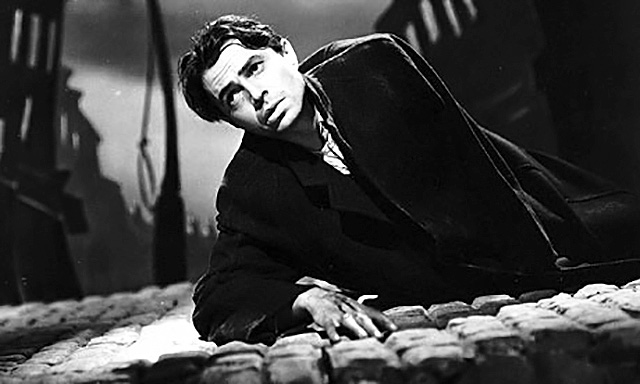
Is it set in Belfast, or is it set in Purgatory? We follow in the footsteps of Johnny McQueen (James Mason), a leader of “the organisation” (the IRA by another name), on the run in an Irish city with a bullet buried in him. With the police looking to bring him to book, Johnny has to find his way to safety – easier said than done when pain and blood-loss keeps you moving between consciousness and collapse. Is this Johnny’s dying fever dream? It’s a tempting interpretation of Carol Reed’s stunning Odd Man Out (the first of a hat trick of masterpieces from Reed over three years, the others being The Fallen Idol and The Third Man).

It’s a perfect marriage of styles. It opens with a sense of documentary realism that would do Rossellini proud, the camera flying over its unnamed Irish city. As we dive into the house where Johnny and his cell are hiding out, planning a robbery for much-needed funds, the film tips into a marriage of noir and classic gangster film. After the disastrous robbery, where Johnny shoots a man dead in a scuffle, the film becomes more and more an impressionistic series of vignettes as an at-times delirious Johnny stumbles from encounter to encounter, meeting a host of people who help or hinder him, many of whom want him for their own ends (from reward to bizarre artistic inspiration). All this is intermixed with his own increasingly tenuous grip on reality, some scenes floating and soaring with Johnny’s own fantasies and visions as the bullet in him slowly drains his lifeforce.

As Reed’s film increasingly moves into a world that is a few degrees less real than our own, you could argue that perhaps Johnny was dead from the start. That this is his own journey through some sort of Dante-inspired purgatory. His own odyssey, where he will encounter some who want to save him and others who want to damn him.  Reed brilliantly helps us share Johnny’s vulnerability by taking the film ever more off-balance. From Johnny’s visions of the past in the air raid shelter where he takes shelter we spiral down into a surreal bombed out house and an ending that has the sniff of Greek tragedy.

No wonder Johnny feels disconcerted, as this is a rag-tag city with its own rules. Half under construction, half well-established, where the streets are a mix of cars and horse-drawn cabs, Johnny’s journey takes him from dotty housewives to tramps to saviour priests and Dickensian artists. As his fever takes hold, so does the bizarreness of his settings, until he finds himself in an abandoned grand house leaking snow from outside, being painted by a drunken artist who wants to capture the moment of death on his canvas. It’s a million miles from the forensic reality of the robbery that the film started with. Yet it never feels out of place.

A large part of that is because of how brilliantly the film invests us in Johnny’s journey – with Reed’s inspired camera-work and story-telling pulling us into his experience. James Mason spends large chunks of the film in silence, but his performance is extraordinary. A man who seems partly aware that he’s dying, guiltily wanting to know if the man he shot died. Who even from the start seems to have lost his purpose, doubting if violence can bring the results “the organisation” wants, dazzled by sunlight after years in prison, who leads his cell through habit rather than inspiration. Mason’s brilliance here is capturing the very essence of suffering humanity, a confused and frightened man who struggles to understand what is happening around him. Buffeted by events, he’s sympathetic because he never feels in control.

Partly that’s because death feels like its always been waiting for Johnny. You can see it from the start, as he sits in his hide out wondering what its all been for. Kathleen (well played by an impressionable Kathleen Ryan) can’t get death off her mind as she talks about finding and saving Johnny or dying with him. Sympathetic priest Father Tom (a devout WG Fay) just wants to have the chance to save his soul. There is a sense of inevitability about the film – helped by Mason’s crumbling weakness – that destruction is coming and nothing can avoid it.

Reed’s film also has a brilliant sense of the compromises and shady questions of right-and-wrong. Johnny is a murderer and a terrorist – even if he also is a man plagued with doubt. Kathleen is a romantic and a fanatic. Hotel owner Theresa plays both ends against the middle. The coppers will do their duty, but they don’t seem vindictive, just determined to do what they must. There are no clear moral answers in this film, everyone has shades of grey.

It all combines together into one of the most inventive, dynamic and compelling British films of the 1940s by a director who was entering a purple patch where he could claim to be the greatest director in the world. This is a perfect fusion of styles – part realist, part impressionist – that puts you into a cold reality before tipping us into a poetic never-world where the boundary between life and death seems blurred. With a superb performance from Mason (and the rest of the cast), this is still one of the all-time greats.

Georgy Girl (1966)

Lynn Redgrave excels as permanent odd-girl out in Georgy Girl

Director: Silvio Narizzano

Cast: Lynn Redgrave (Georgy Parkin), James Mason (James Leamington), Alan Bates (Jos Jones), Charlotte Rampling (Meredith), Bill Owen (Ted Parkin), Clare Kelly (Doris Parkin), Rachel Kempson (Ellen Leamington), Denise Coffey (Peg), Dandy Nichols (Hospital Nurse)

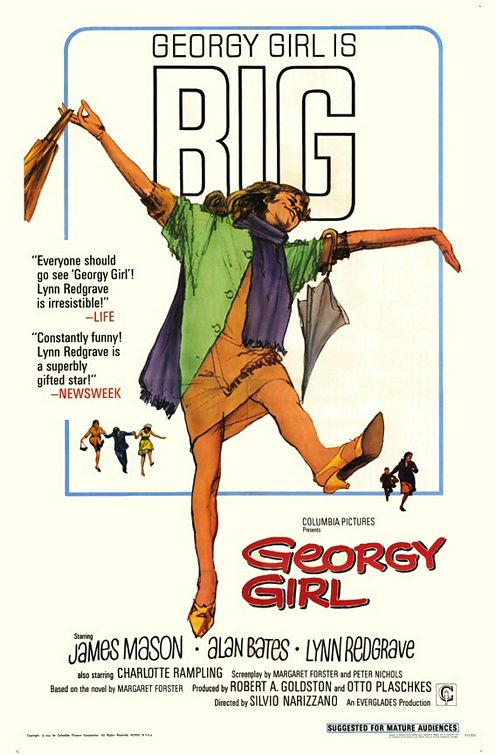
Made at the height of the Swinging Sixties – when London was the coolest city in the world – Georgy Girl is, in some respects, a time capsule. It was seen at the time as almost impossibly naughty and subversive, with open talk of abortions and affairs, mothers who feel their lives have been changed for the worse by having babies and young people struggling to accept their responsibilities. Now of course, it all looks rather tame. But there remains a charm to the film – helped above all by its performances – that still manages to make it a winning film, despite some of its attitudes raising entirely different questions today than its makers intended.

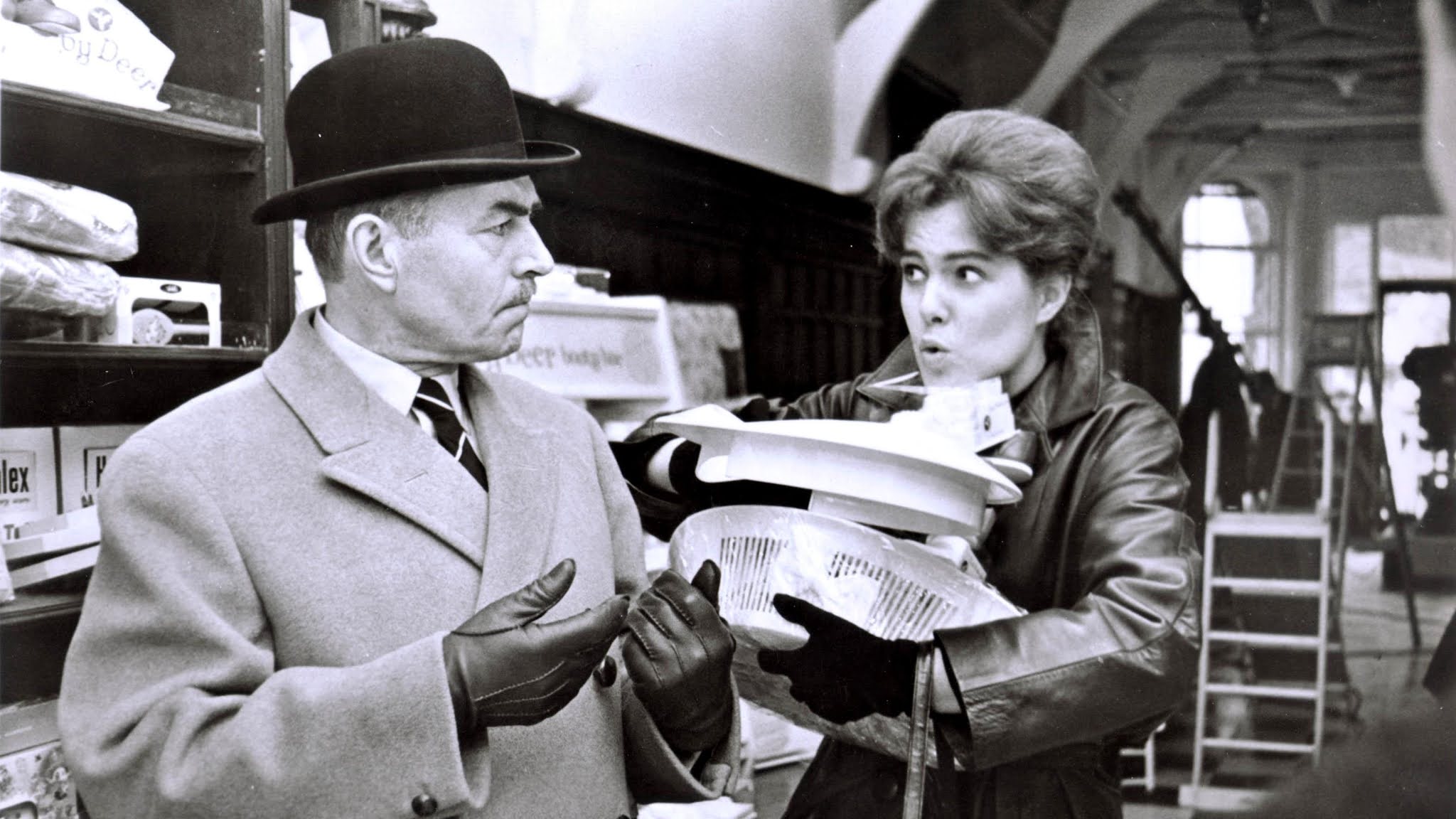
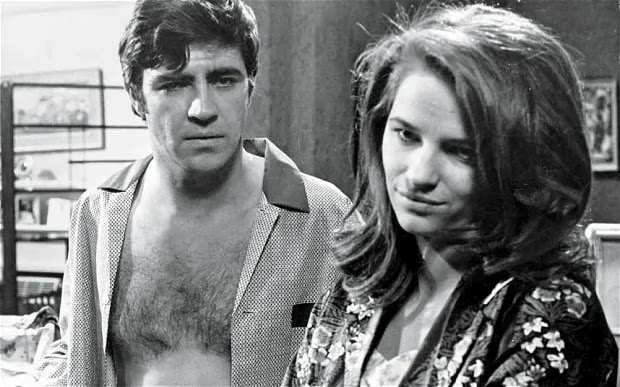
Georgy (Lynn Redgrave) is the plain-looking (and doesn’t the film keep reminding us of this!) daughter of the devoted butler (Bill Owen) to millionaire James Leamington (James Mason). Leamington has supported Georgy while she grows up – even letting her use his house for her children’s performance classes – but now his interest in her is changing. With his wife dying, James offers her the chance to become his mistress (with an actual contract). Georgy turns it down – not least because of her growing interest in Jos (Alan Bates), the fun-loving boyfriend of her flatmate Meredith (Charlotte Rampling), a drop-dead gorgeous violinist who treats him and everyone else with disdain. When Meredith falls pregnant with Jos’ baby, the two of them marry – but Meredith wants nothing to do with the child, a contrast to Georgy who has always dreamed of family.

It’s actually a film of cold, hard realities. Beware any film which gives you a conventional happy ending – the hero chasing a woman down a street crying out that he loves her – around the half way mark. All the characters are presented with choices, and are forced to either compromise or run away. It’s telling that the characters who most fit the mood of the era invariably run away, while those with a more traditional outlook stick it out. You could argue that far from being a celebration of the 60s, Georgy Girl is a fierce critique.

At the time, Georgy was seen as something of a free spirit. Perhaps this was because of her unconventional looks or her playful imagination when working with the children in her performance class. Maybe it was the opening sequence, which sees her getting a fashionable haircut, only to instantly wash it out in a sink. Or could it be because she treats her father’s wishes for her to listen to her elders and betters with disdain? (Let’s skirt over the fact her father seems to be effectively pimping her to his employer.) The way she makes a scene at Leamington’s birthday party by performing a raunchy cabaret number? Most of all though it may well have been due to the catchy (and instantly recognisable) Seekers song that plays over the opening and closing of the movie and serves as her calling card.

Interestingly though, watching it now, there is something incredibly conservative about Georgy – and quite possibly about the film itself. While she lives in the heart of the buzzing metropolis, Georgy’s dreams seem to come from another age: to become a mother, in a comfortable domestic setting. It’s hardly a feminist rallying cry. Georgy is so keen for this, she is perfectly willing to step (almost literally) into the shoes of Meredith, inheriting her husband, child and home. The film also misses no opportunity to remind the viewers Georgy is plain, dumpy and sexually inexperienced. Redgrave has been dressed to look like a sort of Teutonic housekeeper. The film doesn’t seem to quite know where to land between praising Georgy and slightly encouraging us, to chuckle at her.

Georgy isn’t in fact the swinging 60s icon in the film. That unquestionably is Charlotte Rampling as Meredith. Looking absolutely stunning, dressed by Mary Quant, Meredith is everything we expect from the era: confident, outgoing, ambitious, sexually liberated. But Meredith is also a stone-cold, ruthless, heartless bitch. Superbly played by Rampling, she treats Georgy as a servant, Jos as a mix between comfort blanket and vibrator, and decides to get married and have the child (rather than abort it as she has two others of Jos’ children – without telling him) because she’s bored. Once the poor child is born, the idea of sacrificing anything from her life is anathema to Meredith who promptly disappears over the horizon.

Georgy Girl is actually a film with much more mixed – even satiric – views of women and its era. The sort of liberation Meredith enjoys goes hand-in-hand with a selfish shirking of responsibility and using her beauty as a justification to treat everyone she meets as supplicants. Georgy is stuck in the middle, a woman in an era of growing freedoms but whose aims remain solidly in the Victorian era. The men are an equally mixed bag. Today we would certainly call what Leamington has been doing grooming. Jos has a happy-go-lucky 60s charm to him, but is flighty, unreliable, selfish and disappears with a smile the second the going gets tough. For all the film is sort of remembered for its joie-de-vive, it’s actually a searing look at the era with mixed feelings about its characters.

The fact we really end up caring for Georgy is due to Lynn Redgrave’s wonderful performance. A second choice for her sister Vanessa, the role typecast Redgrave in Hollywood’s minds as sort of dumpy loser (especially after her Oscar nomination). But she brings the role a real magnetism. Georgy is doomed to play second fiddle in people’s lives (and perhaps even her own). Perhaps the most 60s thing about her though is her determination to get what she wants – whether that is avoiding an affair with her father’s employer, or securing a good life for Meredith’s baby.

The rest of the cast are equally strong. Bates brings the best of his impish charm to the part (even if at times he tries too hard), as well as a metrosexual edge to Jos as someone very comfortable with joking around and being a bit camp. James Mason (who took a massive pay cut for the role, a decision which paid off with an Oscar nomination) is superb as fragile but creepy Leamington, a man who believes he is genuinely in love and is also excited at the prospect of replacing his bed-ridden wife (played by Redgrave’s actual mother Rachel Kempson, adding a nice Oedipal touch) with a younger model. Bill Owen mixes both a hilarious servility with assertions that his daughter “owes” Leamington something for all he’s done for her.

Georgy Girl works well because it is – and remains – funny as well as being dramatic and thought provoking. It might not be a feminist tract – and the character most likely to be seen as a feminist in the thing is its least sympathetic by far – and it might well affectionately scorn a woman who doesn’t look like a conventional man’s idea of attractive, and give her a traditional outlook behind a playful exterior – but it’s an energetic and rather charming film that does make you care. Separating it from the era it’s set in, might well do it a world of good.

A Star Is Born (1954)

James Mason and Judy Garland deal with ups and downs in Hollywood in A Star is Born

Director: George Cukor

Cast: Judy Garland (Esther Blodgett/Vicki Lester), James Mason (Norman Maine/Ernest Gubbins), Jack Carson (Matt Libby), Charles Bickford (Oliver Niles), Tommy Noonan (Danny McGuire)

A Star is Born’s story had effectively been told twice already in Hollywood – once under the same title in 1937 and once before that as What Price Hollywood?, directed by none other than George Cukor. But Judy Garland’s husband Sid Luft saw the project was perfect for her. Luft thought the volatile Garland needed a director who could draw the best from her – and who better than Cukor, who worked with actors perhaps better than any other director in Hollywood. Cukor had been worried about repeating himself – but the chance to direct his first musical, first technicolour epic and work with Garland was too tempting.

The story is of course familiar. Esther Blodgett (Judy Garland) is an aspiring singer who – with quick thinking and performance nerves of steel – saves drunken Hollywood star Norman Maine (James Mason) from humiliation by involving him in a musical number at a charity event. When he sobers up, Maine goes to visit Esther to thank her – and is blown away when he hears her singing. Convinced she will be a major star, Maine arranges for a screen test with studio head Oliver Niles (Charles Bickford) and later pitches heavily for her to be considered as a last-minute replacement on the studio’s big new musical when the star drops out. Esther – or Vicki Lester as the studio renames her – becomes a major star when the film is a smash hit. But as her career goes up and up, Maine’s alcoholism and unreliability start to catch up with him and his own career hits the skids.

Cukor’s A Star is Born is a big, charming, impressive film that mixes emotional desperation with moments of joyous celebration. The film was not the box-office bomb it’s often believed to be (although it did do disappointing business) but, worried about its length, the studio cut the film several times during its release. The film we have today is a slightly neutered version, with several scenes reassembled by film historian Ronald Haver using audio, the odd clip and still photographs (it adds an impressionistic section of the film which you can’t imagine Cukor would have cared for) – but Haver did locate several missing musical numbers which add to the film’s impact.

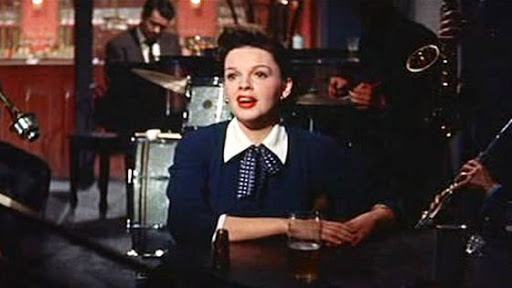
Garland sings all the numbers, and some of her best work ever is in this film. Her late night bar rendition of The Man That Got Away (the performance that wins Norman’s heart) is superb. I love the affectionate spontaneity of Someone at Last, Esther’s recreation to amuse Norman of the sequence she has spent the day filming in the studio. This scene is playful, sweet, funny and has a freshness not all the numbers have.

Some of the other numbers go on too long – and it’s hard to escape the feeling that they are in there solely because of Garland and not because they serve the plot. Because this isn’t really a musical as such, more of a romantic tragedy with the odd tune, with each number a performance. It works superbly because Cukor’s sympathetic direction draws some of her best work from Garland – and a truly superb performance from Mason. 

Cukor works particularly effectively with Garland who, in real life at this point, was far more similar to the destructive Maine (she delayed the film frequently with her absences and fluctuations in health). Garland is of course too old for the part – but it doesn’t really matter as she brings it such freshness, naturalness and emotional openness that you can persuade yourself that she’s a young ingénue at least ten years younger than she looks.

Garland was also surely helped by being paired opposite Mason. Not the first choice – that was Cary Grant – or indeed the second, Mason was hired as his professionalism and expertise could deal with Garland’s erraticism. Under Cukor’s direction he gives his finest work on screen here. His turns Maine into someone decent, charming, kind – but overwhelmingly self-destructive. His slightly slurred speech and ability to turn on a sixpence to anger makes for some of the best drunken acting you’ll ever see. But it works especially as we are desperate for Maine to kick the bottle. Because when he’s sober he’s the perfect husband and gentlemen. But Mason uses that to mine the deep tragedy of the character, his intense shame and self-loathing. The later sequences of drunken misbehaviour are heartbreaking (Maine’s drunken interjections at Esther’s Oscar-winning speech are almost unbearably painful to watch), and it’s all powered by Mason’s humanity in the role. It’s a truly great performance.

The film itself is perhaps a little slow and uneven around these performances. The musical numbers – whisper it – frequently slow the action down or grind the plot to a complete halt (none of them add anything to the story at all, and exist to showcase Garland). The film is so tightly focused on its two leads that it never develops any sub-plots to contrast with the main action. There is some light satire on Hollywood studios and their rapacious desire for more money – but not too heavy as the villain here is the odious press man (a weasly Jack Carson) while the studio head is a kindly, affectionate, fatherly figure who would never make a call based on business. The matter of fact way both stars have their names changed (the moment when Esther discovers Norman’s real name is a hilarious throwaway moment) is a neat gag. But the film takes a long time, frequently stopping for another Garland set-piece.

Perhaps the studio instincts were right that the film needed to be tighter – and some of the dialogue sequences reinserted by Haver hardly add much too the plot. Cukor’s direction is calm but assured though and the superb performances of the two leads make the film what it is. It looks fabulous with its technicolour depth, and it carries a genuine emotional force that pays off dramatically by the film’s conclusion. A Star is Born is uneven at times and overindulgent but it has more than enough going for it to reward the viewer.

North by Northwest (1959)

Cary Grant is on the run in the sublime North By Northwest

Director: Alfred Hitchcock

Cast: Cary Grant (Roger Thornhill), Eva Marie Saint (Eve Kendall), James Mason (Phillip Vandamm), Jessie Royce Landis (Clara Thornhill), Leo G. Carroll (The Professor), Martin Landau (Leonard), Josephine Hutchinson (“Mrs Townsend”), Philip Ober (Lester Townsend)

What is it about? Ernest Lehman went in wanting to write the “ultimate Hitchcock film”. And I think you can say he pulled it off. North by Northwest is the perhaps the most electric, fun, dynamic and nonsensical of all Hitchcock’s action-adventures, a neat bookend with The 39 Steps for Hitchcock’s career. It’s such good fun you scarcely notice the plot makes very little sense and the film is barely about anything at all other than a man getting chased. It has the most Macguffiniest MacGuffin in the whole Hitchcock career, an item of such little interest to the viewer that it never appears on screen and is only cursorily discussed. 

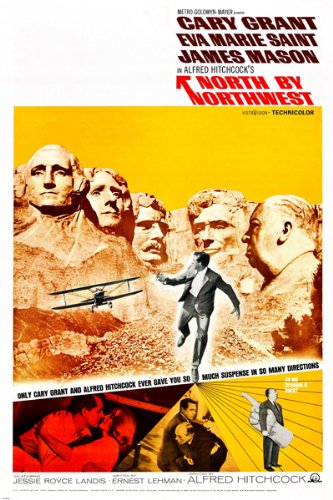
Cary Grant is Roger Thornhill, nifty Mad Man-esque ad executive (you can imagine that Don Draper dreamed of being Roger Thornhill) who accidentally gets mistaken by shady goons for the mysterious “Mr Kaplan”, actually a non-person used as a distraction by the FBI. Cue Thornhill’s kidnapping, interrogation by the goon’s suave leader (James Mason, never more James Mason than here), escaping a murder attempt, getting embroiled in the murder of a UN official and fleeing New York in the train compartment of smart and sexy Eve Kendall (Eva Maria Saint). And that’s before we even mention killer crop dusting planes, faked shootings, auction house shenanigans and a vertigo inducing game of cat-and-mouse on Mount Rushmore. Is there a more fun film in the world?

North by Northwest gained its Hamlet inspired title (“I am but mad north-north-west. When the wind is southerly, I know a hawk from a hawksaw”) and it’s pretty meaningless – Lehman basically liked it and throws in a fictional “Northwest airline” so Thornhill can fly ‘North’ at one point (geddit?!) – but it also captures a sense of manic powerlessness in the film. Thornhill spends a good slice of the film telling anyone who will listen he is notKaplan, while every action he carries out seems to serve only to convince his pursuers he definitely is. The film’s echo of madness in its title carries across to the frantic energy of the film, and Thornhill’s belief that he must surely be the only sane man in a world of lunatic chaos. 

And it’s prime Hitchcock chaos here in his most engaging, fast-paced and funny action adventure. The sort of prime piece of entertainment assembled with such skill, energy and excellence it looks really easy (but of course isn’t). Hitchcock keeps the momentum of this crazed chase perfectly pitched, and stages each of the set pieces so well that all of them have become icons of adventure cinema. Who can look at a crop dusting plane without thinking of Thornhill running in desperation, in the middle of nowhere, from a lethal plan swooping down on him from above? Who can look at Mount Rushmore without imagining Grant and Saint climbing all over it with Landau in pursuit?

It’s Grant as well that really makes the film work. He’s such an accomplished screen presence, so smooth and practised, it’s very easy to see this as a film where he is barely acting. But that would be to do him a major disservice. Not only is such a balance of light comedy and action so hard to pull off (so much so that Harrison Ford as Indy is possibly the only one who can get close – and that character is chalk and cheese with Thornhill) – but Grant builds a character who develops perceptively and clearly over the course of the film. 

Initially the typical Grantish stereotype – so suave, confident and shallow that even his middle initial “O” literally stands, Harry Truman like, for nothing – Thornhill begins as a man who blithely assumes he can drift through his life and getting anything without question. Events – and his embroilment in them – however see him develop from a deeply selfish and lazy man into one who carries moral force, loyalty, determination and dedication to duty and an increasing sense of confidence and derring-do. From the man who is the victim of circumstance at the start of the film, failing to get anyone to believe him, he becomes a man who saves himself and everyone else with his pluck, daring and resourcefulness. And he does it all while never losing his light, almost put-upon, wit and playfulness. It’s a truly great personality performance with real depth and development: a hollow man who becomes a real man of standing and purpose.

He’s backed superbly by the cast who seize their roles with gusto. James Mason drips British superiority and suaveness (has there ever been two such cool actors facing off?) as VanDamme, Eva Marie Saint is every ounce the brave, resourceful, daring and clever lady that prompts Thornhill to man-up. Jessie Royce Landis gets some lovely comic mileage from Thornhill’s pecking-hen mother (hilariously she’s only 8 years older than Cary Grant). Martin Landau simpers rather effectively as VanDamme’s fey sidekick.

The script is crammed with great lines from Lehman, all of which delivered superbly by the cast. But it’s a director’s treat, and Hitchcock delivers it brilliantly. I’ve mentioned that MacGuffin – it’s some microfilm or something in a statue that’s the root of the all the problems – but it hardly matters. The film powers forward with the dynamic energy of a comic farce crossed with action adventure. Thornhill’s initials spell out “ROT” and in an affectionate thing that’s what the film is – something that doesn’t take it self seriously but sets out to entertain at all costs. 

So we get Hitchcock splicing in rom-com flirtations between Grant and Saint (and no less than two shots of trains speeding down lines and into tunnels, just to hammer home exactly what they are doing to kill time on the ‘sleeper’ train) with edge-of-the-seat sequences (the slow tension build at an abandoned bus station while Grant waits for “Kaplan” only to fall victim to assault from crop duster) then segues back into comedy (the hilarious “pretend to be drunk” to escape assassination at an auction) it’s perfectly assembled. And that end sequence at Mount Rushmore – a near perfect mix of comedy, action, adventure, suspense, thriller and romance. It’s flawless.

William Goldman famously stated North by Northwest had the finest, most economical ending of all time – and it ties up perfectly and beautifully about six plot threads and cliffhangers in less than 70 seconds – but the entire film is a perfect package. Hitchcock’s glossiest chase adventure is wonderfully directed and in Cary Grant it perfectly married up possibly the only actor in the history of film with both the charisma and the acting chops to play the part with one of the greatest entertainments in the history of film. It’s mad, meaningless nonsesense – but who cares, it’s a great, great, great film.

The Reckless Moment (1949)

James Mason and Joan Bennett feel Reckless Moment pulls them toward temptation

Director: Max Ophüls

Cast: James Mason (Martin Donnelly), Joan Bennett (Lucia Harper), Geraldine Brooks (Bea Harper), Henry O’Neill (Tom Harper), Shepperd Strudwick (Ted Darby), David Bair (David Harper), Roy Roberts (Nagel), Frances E Williams (Sybil)

It’s a situation anyone could find themselves in: your daughter is infatuated with someone totally unsuitable, and despite all your efforts you can’t get her to shake him off. What’s perhaps more unusual is when the man turns up dead after an accident – but in such a way it looks like your daughter has bumped him off. What lengths will you go to, to save her from prison? That’s the problem faced by Lucia Harper (Joan Bennett) – and it’s made even more complex by the fact that the truth is out there and she’s being blackmailed by surprisingly sensitive small-time crook Martin Donnelly (James Mason), who finds himself developing feelings for Lucia.

Max Ophüls’ The Reckless Moment is an enjoyable enough noir-thriller, that mixes a wonderful sense of its locations with a perverted romanticism that first expresses itself through the daughter’s infatuation with a pathetic bent art dealer and then through the love blackmailer Martin Donnelly feels for his victim (and she for him). But it’s also a film about women, and how alone they can be when dealing with problems. Lucia’s husband is a never-seen presence on the end of a phone (busy building a bridge in Germany), her father-in-law is charming but useless and the two other men are criminals intruding into her life.

In fact this is quite ahead of its time with its thinking around women. Far from the usual tropes of a femme fatale, instead Mason takes on that role, while the mother turns out to be practical, brave and dedicated to keeping her family safe – while still more than a little open to illicit feelings of attraction. Lucia still has to balance all this with putting up a front of domestic business-as-usual with her family, not letting them see even a trace of the problems (including her daughter who is blissfully unaware of the situation she has landed her mother in). 

Ophüls’ directs this with a moody intensity, with a wonderful use of the LA backgrounds, particularly of the boat landing where much of the crucial action takes place. His camera placement is impeccable, and he finds a number of interesting and striking angles to throw events into a sharp relief. It’s a beautifully shot film, with wonderful use of black and white, and hints of Ophüls’ background in German expressionist cinema. His camera constantly manages to put us in the shoes of Lucia with tracking shots (another Ophüls’ trademark) loyally following her actions and placing the viewers into her perspective of events to help build out bonds with her. 

It’s a bond that obviously Donnelly ends up feeling very strongly tied to. James Mason enters the picture surprisingly late, and the film’s short length (less than 80 minutes) means many of the developments around the blackmail end up feeling rather rushed. Perhaps the plot didn’t even need the blackmail angle – there could have been more than enough tension of Lucia dodging the police case that surely should have built around her. Instead, the blackmail plot often feels rather forced, not least due to the build of a romantic subplot between the two characters.

It’s a romance that never quite rings true, partly because we never get the time for it to breathe. It seems forced and bolted onto the film because it is expected, rather than something that grows organically. It leads to sudden plot leaps, with Donnelly moving swiftly from business like to buying gifts and even offering to pay part of the blackmail for her to his shady boss. I’m not sure that the film ever earns this leap with its rushed runtime. It never pulls together into a romance that we can really believe in – and Lucia is such a carefully restrained and standoffish character that we don’t always get a sense of the emotions that she is carrying below the surface. 

Despite this Joan Bennett does a decent job as the heroine, an intriguing and rather admirable character who gets caught up in wild and crazy events but never lets them overwhelm her. Indeed, Ophüls’ stresses her calmness and practicality at several points, never shaken by demands of events and responding with ingenuity and calm to a range of circumstances. Bennett might not be the most charismatic actress, but she does a very good job here. James Mason struggles slightly with his slightly incoherent character arc, but as a reluctant heavy he does a marvellous job here, while mastering the sense of ruffled, shabby charm Donnelly has. It does help believe that he might contribute to a reckless moment of attraction from Lucia.

The Reckless Moment is a well-made B movie, that Ophüls’ adds a great deal to with his empathy for Lucia and stylishly smooth film-making. It makes for a very polished film, which on its actual character and plot beats doesn’t really always make a great deal of sense – rushing us into relationships and feelings that it doesn’t always feel the film justifies. But despite that there is just enough style here, even if this is always a film destined for the second tier of classics.

The Pumpkin Eater (1964)

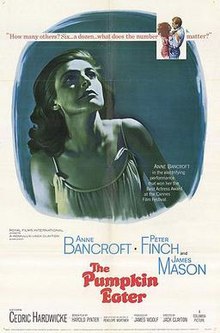
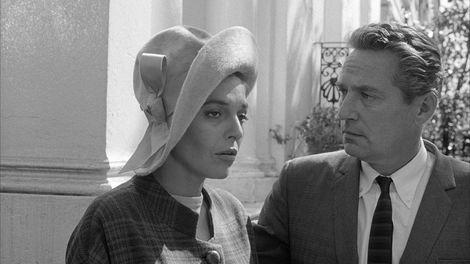
Anne Bancroft and Peter Finch in an unhappy marriage in the overlooked The Pumpkin Eater

Director: Jack Clayton

Cast: Anne Bancroft (Jo Armitage), Peter Finch (Jake Armitage), James Mason (Bob Conway), Cedric Hardwicke (Mr James), Richard Johnson (Giles), Eric Porter (Psychiatrist), Rosalind Atkinson (Mrs James), Frances White (Older Dinah), Alan Webb (Mr Armitage), Cyril Luckham (Doctor), Yootha Joyce (Woman at Hairdressers), Maggie Smith (Philpot)

Released in 1964, The Pumpkin Eater was rather unfairly seen as too strongly aping the new-wave of European film-making, in particular Michelangelo Antonioni and Ingmar Bergman. It’s a strange trend in British culture to ruthlessly lambast anything seen to be too good or too well made, as if trying too hard is vulgar and flies in the face of our love for the amateur. This is supremely unfair for The Pumpkin Eater (which I will say is weighed down by a pretty terrible title – Scenes From a Marriage would have been better, but that one got nabbed by Bergman) which is a little classic of a film.

Based on a semi-autobiographical novel by Penelope Mortimer about her marriage to lawyer-turned-writer John Mortimer (creator of Rumpole), Anne Bancroft (with an impeccable British accent) plays Jo Armitage: an intelligent woman, suffering from depression, with a huge number of children from three marriages. Her new husband, Jake (Peter Finch), is a charming man, a hard working screenwriter, an excellent father to all the children – and, alas, a selfish serial adulterer. The film charts the ups and downs of their marriage, often in a non-linear way, including Jo’s battle with depression and the fallout from Jake’s affair with the wife of a film producer Bob Conway (James Mason).

Shot in sumptuous black-and-white, The Pumpkin Eater is so well made by Jack Clayton it became almost a stick to beat it with. One contemporary review even mentioned it was “irritatingly without flaws” in its film-making, as if this was a bad thing! Clayton’s direction is detailed, precise and beautifully done and throws a host of fascinating images at the screen, as well as drawing out some simply superb performances from the cast. Clayton chooses interesting angles and visual mirrors – events from scenes are reflected and repeated, in different contexts, in later scenes. The camera takes up unusual positions, not least a zoom in on James Mason’s mouth as his character spits out vile insinuations.

Clayton’s direction also captures a superb sense of empathy with his characters. His depiction of depression and ennui in Jo Armitage captures the sense of drift beautifully. Early in the film, she is captured in shot aimlessly standing in the shade of a car port. At her lowest she seems to get almost stuck in the frame. The film’s most famous moment features Jo breaking down in despair in Harrods – a wonderful sequence that uses a combination of POV, overhead shots, a camera attached to Anne Bancroft as she works, and a crashing close up on Bancroft’s face (also repeated later in the film) that all serve to stress her isolation, her despair and the mixed to hostile reaction to her tears from the shoppers around her. 

But the film doesn’t solely take Jo’s side. It’s interesting how many contemporary reviewers – men and women – found Jo a tiresome and selfish woman (she’s not, just an unhappy one). That’s partly due to the film’s success in making Jake a fully rounded character. Sure he’s charming and fun, but he’s also clearly a great dad and genuinely cares for Jo – it’s just that he can’t help himself doing things that end up hurting her. The film is also careful to suggest that, deplorable as some of his actions are, he has a point about the pressure of adding another child to a family which already has about seven (two of them at least have been farmed off to boarding schools, and it’s clear in one late sad scene that Jo now hardly knows them). How are they meant to cope? How are they going to be able to support another baby?

The film works as well because both Bancroft and Finch give extraordinary, fully rounded performances in the lead roles. Bancroft had just won the Oscar for Best Actress, and it’s quite something to think that committing to this British picture was her next gig. But she immerses herself in the character, and sells every single one of the complex emotional ups and downs Jo goes through. She’s perfect at drawing us deeply into Jo’s sorrow and uncertainty, but also her brittleness and anger. She’s not afraid to acknowledge that sometimes depressed people are immensely difficult and frustrating – or that they are also intensely vulnerable and fragile. Peter Finch is equally good as a hail-fellow-well-met, whose selfishness doesn’t quite fit into his self-image as a good guy but who is overflowing with good intentions and small moments of kindness.

Both actors are helped immeasurably by a very strong script by Harold Pinter. Pinter’s structure intelligently draws out great depths from the material, as well as playing smart games with structure and timeline that provoke thought. He is the master of the stand-out scene, and the film is crammed with smaller moments that stand out in the memory. Maggie Smith has a brilliant cameo as a shallow, gossipy house guest who may or may not be having an affair with Jake. In one extraordinary sequence, Jo is accosted at a hairdressers by a total stranger (played by Yootha Grace) who recognises her from a magazine article about Jake, who oscillates between wanting to be her friend and vicious bitterness that she isn’t. 

It’s a sign of the gift parts that this film gives to actors. Stand-out amongst the remaining cameos is the great James Mason, whose cuckolded husband at first seems to be a decent, if overly bombastic life-of-the-party type, who reveals himself to have unending reserves of bitterness and poison and delights in pouring anger and suspicion into Jo’s ears.

Clayton and Pinter’s work dovetails perfectly here into a sharply intelligent, haunting film which throws you into a marriage that refuses to paint either side as either completely wrong or completely right (Clayton was even concerned the film may have gone too far in making Jake sympathetic to the detriment of Jo). A compelling storyline, in a beautifully made film crammed with intelligent lines and wonderful moments, The Pumpkin Eater can rightly claim to be an overlooked classic of British cinema.

The Deadly Affair (1966)


James Mason deals with marital and professional deception and betrayal in spy thriller The Deadly Affair (in every meaning of the word!)

Director: Sidney Lumet

Cast: James Mason (Charles Dobbs), Maximilian Schell (Dieter Frey), Harriet Andersson (Ann Dobbs), Harry Andrews (Inspector Mendel), Simeone Signoret (Elsa Fennan), Kenneth Haigh (Bill Appleby), Roy Kinnear (Adam Scarr), Max Adrian (Adviser), Lynn Redgrave (Virgin), Robert Flemyng (Samuel Fennan), Corin Redgrave (David)

The Deadly Affair is a faithful adaptation of John Le Carré’s first novel, Call for the Dead, that first introduced to both Le Carré’s distinctive vision of espionage (a world where spying is a dirty, depressing business, miles away from Bond), and also his principal recurring hero George Smiley – although Smiley here is renamed Charles Dobbs (Paramount held the rights to several recurring Le Carré characters as it was making The Spy Who Came in From the Cold). The Deadly Affair often gets forgotten in the list of Le Carré films, which is unfair – this is a fine, gripping, character-led thriller.

Charles Dobbs (James Mason), a senior case officer in British intelligence, meets with Samuel Fennan (Robert Flemyng): a civil servant in the Ministry of Defence, who has been anonymously accused of being a Russian agent. Dobbs all but agrees to clear Fennan in a friendly meeting – only for Fennan to go home and commit suicide. Dobbs investigates, but quickly finds that the facts – and the story of Fennan’s wife Elsa (Simone Signoret) – don’t seem to tie up. Working with retired police inspector Mendel (Harry Andrews), Dobbs investigates further – against the wishes of his superiors. This also helps to distract Dobbs from his disastrous home life with his serially unfaithful wife Ann (Harriet Andersson) and her growing closeness to his old war friend Dieter Frey (Maximilian Schell).

The Deadly Affairhas an old-school, unflashy, Hollywood professionalism to it, very smoothly directed by Sidney Lumet. Lumet and photographer Frederick A. Young slightly exposed each shot of the film to give the colours a drained, murky quality, which works extraordinarily well for the grimy Le Carré feeling. Lumet uses a series of careful POV and shot-reverse-shots to involve the audience neatly in the action – we are nearly always seeing events from someone’s perspective, and this helps us empathise with the characters and action. He also uses London locations expertly – everywhere is carefully chosen and shot for maximum impact, creating a world of dingy backstreets that perfectly matches the feeling of the story.

It also helps that Lumet changes very little from what was already an excellent source novel. It’s an intricate “whodunnit” puzzle, twisty and challenging enough to keep the audience guessing. What the film does really well is introduce Dobbs’ wife Ann as a central character in the storyline, and to make marital betrayal and deception a complementary subplot, alongside Dobbs’ involvement in the world of professional bluff and counter-bluff: during the day he practises the very same deception that pains him so much at home. (Le Carré would effectively lift some of the ideas of this film adaptation and reproduce them in later books, most especially Tinker, Tailor, Solider, Spy.)

This marital disharmony becomes a key theme in the movie – two people who are totally reliant on each other but can’t seem to stop hurting each other. Ann is in many ways the hellish wife – serially unfaithful and largely unrepentant – but Dobbs is equally difficult, unnervingly patient and silently (but never vocally or perhaps even consciously) judgemental. They have a complex arrangement, but also a clear understanding of each other, and their conversations sound like careful, familiar routines. Like a scab, Dobbs keeps picking at this wound of his wife’s infidelity – early in the film he returns home after a late call out to find his wife naked in bed. She rises to greet him provocatively, and they kiss, but Dobbs seemingly can’t let go of his own sense of impotence. Later Ann demands Dobbs expresses some rage and jealousy – as if looking for him to show some sort of feeling.

It’s a neat sub-plot for a film that focuses on a series of major personal and professional betrayals – I counted no fewer than five over the course of the film but there are probably more depending on how you define it – and which shows how spying can become wrapped up in personal affairs. Despite Dobbs’ apparent pride at treating his work with a determined coolness, everything is so very personal in this film. Characters react often with emotions rather than cool rational thinking – with the exception of one character who uses the emotions of others very rationally to manipulate them. Even the final confrontation of the film has a sad loss of emotional control at the centre of it – and leads to actions bitterly regretted by the survivors.


James Mason is very good as Dobbs, buttoned-up but slightly run-down, a man who presents a face of calm control and wisdom to the world, but at home is an insecure, deeply pained, impotent mess. Determined and principled in the world of espionage, he is hopelessly in love with his wife, to the extent of practically allowing her free rein to do as she wishes. Despite being in nearly every scene, it’s also a very generous performance, quiet and unshowy, that often cedes the scene to his partners. Harriet Andersson (though clearly dubbed) manages to make Ann someone who feels sympathetic and understandable – even though she is a colossal pain.

Lumet also gets some wonderful performances from the rest of the cast, not least from Harry Andrews who I think steals the movie as a narcoleptic Inspector Mendel, obsessed with facts and possessed of a dry professionalism. The film also gives a gift of a role to Simeone Signoret, a woman with a troubled past and indeterminate motives, bubbling with guilt and resentment. She is given no less than three tour-de-force scenes (one played almost in complete silence) and plays each brilliantly. There are neat cameos as well from Max Adrian (as a campy popinjay running Dobbs’ department) and Lynn Redgrave as an eager stagehand for an amateur theatre company with some vital evidence. 

The film’s conclusion revolves around two masterfully done sequences: one during a performance of Edward II (by the real Royal Shakespeare Company – spot several familiar actors on stage), the second an emotional confrontation at a dock that erupts into violence. It’s a wonderful dwelling on betrayal and its impacts. It also works an absolute treat as a low-key counterpart to Bond at his Swinging Sixties height, while still packing a jazzy score from Quincy Jones (which at first seems completely incongruous but actually helps to establish the mood really well). Directed with professional assurance with a host of fine performances – it’s a little bit of an overlooked gem.