Tag: Jamie Foxx

Ali (2001)

Ali (2001)

Will Smith captures The Greatest in a film that misses the fire and passion of Muhammad Ali

Director: Michael Mann

Cast: Will Smith (Muhammad Ali), Jamie Foxx (Drew Bundini Brown), Jon Voight (Howard Cosell), Mario van Peebles (Malcolm X), Ron Silver (Angelo Dundee), Jeffrey Wright (Howard Bingham), Mykelti Williamson (Don King), Jada Pinkett Smith (Sonji Roy), Nona Gaye (Khalilah Ali), Michael Michele (Veronica Porché), Michael Bentt (Sonny Liston), James Toney (Joe Frazier), Charles Shufford (George Foreman), Joe Morton (Chauncey Eskridge), Barry Shabaka Henley (Herbert Muhammad)
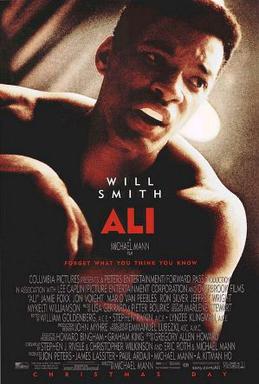
There is perhaps no greater sportsman of the 20th century than Muhammad Ali. Not for nothing did he call himself “The Greatest”. His impact on his sport is unrivalled, and his impact on our culture almost matches it. He’s one of those titanic figures that, even if you don’t care a jot for boxing, you know exactly who he is. Ali approved the film – and even more so, Smith’s performance – in Mann’s film that covers ten turbulent years in Ali’s life, from winning the title and changing his name, to refusing the Vietnam draft and losing his boxing licence and title, to reclaiming the title again in  the legendary “Rumble in the Jungle”.

If there is a major flaw about Ali, it’s that Ali was a man who was about so much more than just boxing – but Ali struggles to be more than a film about a boxer. It’s hard today to look at the film and not think that a black director would have had more connection with the emotional, cultural and political turmoil that defined Ali’s life in the 60s and 70s. Mann mounts all this well – and gives it plenty of empathy in the film – but his outsider perspective perhaps contributes to the film’s coldness.

Coldness is the prime flaw of the film. There was no sportsman larger than life than Ali. No public figure who demanded attention more, no boxer who fought his battles as much with wit, convictions and passion as well as fists as Ali. A film of his life needs to capture some of this magic alchemy: it needs to feel like a film that conveys the man Ali was. While there is no doubt there was a melancholy in Ali, a quiet inscrutability behind the pizzazz, this film leans too much into this. It does this while never really telling us anything about Ali’s inner life.

As two marriages are formed and collapse, we don’t get an understanding of what drew Ali to, and caused him to turn away from, these women. His relationship with the Nation of Islam ebbs and flows throughout, but other than a few on-the-nose statements from Ali, we don’t get an idea of how his faith defines him. We get his brave stand against serving in the Vietnam war, but not the emotional and intellectual conviction behind it (other than parading a series of famous quotes).

The film is packed with famous black figures – from Malcolm X to rival boxers and Ali’s support team – his father and family, not to mention three of his wives, but the relationship the film is most invested in is Ali’s mutual appreciation/attention-feeding verbal duels with boxing correspondent Howard Cosell (a pitch-perfect vocal and physical impersonation by Jon Voight). There feels something wrong about this film about a black icon, that his relationship with a white man feels the best defined.

But then it’s also a flaw with the film that its most striking, inventive and memorable sequences are all pitch-perfect recreations of filmed events. Will Smith perfectly captures the vocal and physical grace of Ali, and brilliantly brings to life his interviews with Cosell and his larger-than-life press conferences. The boxing matches are compellingly filmed, a perfect mix of slow-mo and immersive angles (they were largely fought for real, with few punches pulled). Ali’s final KO of Foreman in the Rumble in the Jungle, after several rounds of exhausting Rope-a-dope, is punch-the-air in its triumphal filming and scintillating excitement. But all of this stuff you could actually watch for real today. How essential is a film that uses actors to recreate, with better camera angles and superior editing, stuff that was filmed when it actually happened? Essentially if I want to see Ali stunning the world with his words, or sending Foreman to the canvas, would I choose to watch the man himself, or Will Smith’s perfect impersonation of him doing it?

There is nothing wrong with Will Smith’s performance though. For all his Oscar-winning work in King Richard, this is his finest performance. Bulked up to an impressive degree (Smith spent a year preparing for the film), he’s got Ali’s movements in and out of the ring to a tee and the voice is an unparalleled capture of The Greatest’s. It’s a transformative, exact performance – Smith has just the right force of character for the patter, but also brings the part a soulful depth that the film struggles to explore further. It’s a superb performance.

Enough to make you wish this was in a better, more passionate film. Ali was at the centre of a storm of civil rights and class war in America. He became the public face of a black community struggling to make its voice heard, sick of tired of being treated like second-class citizens by a country they were expected to die for in battle. The politics of the time is lost – Mario van Peebles has a wonderful scene as a troubled Malcolm X, but even he feels like a neutered figure – and the cultural impact of Ali is diluted.

The film ends with captions that dwell on Ali’s later boxing career and his marriages. That’s fine. But this a man who was so much more than what he just did in the ring. He used his position to take a stand on vital issues in America, at huge personal cost, when thousands of others would have settled down to mouth platitudes and make money. He took on the government and refused a compromise that would have allowed him to continue boxing, because he felt the war and America’s domestic policies were wrong. He was a brave leader of men, at a time of furious injustice. The film conveys the facts, but none of the glorious passion. It’s a photocopy of Ali, which is why its best bits are recreations of filmed events. It can’t quite understand or communicate the tumultuous feelings behind racial injustice in the 60s and 70s. It could – it should – have been so much more.
Spider-Man: No Way Home (2021)

Spider-Man: No Way Home (2021)

Tom Holland’s Spider-Man encounters friends and enemies from another franchise or two

Director: Jon Watts

Cast: Tom Holland (Peter Parker/Spider-Man), Zendaya (MJ), Benedict Cumberbatch (Dr Stephen Strange), Jacob Batalon (Ned Leeds), Marisa Tomei (May Parker), Jon Favreau (“Happy” Hogan), Jamie Foxx (Max Dillon/Electro), Willem Dafoe (Norman Osborn/Green Goblin), Alfred Molina (Otto Octavius/Doctor Octopus), Benedict Wong (Wong), Tony Revolori (“Flash” Thompson), Andrew Garfield (Peter Parker/Spider-Man), Tobey Maguire (Peter Parker/Spider-Man), Rhys Ifans (Dr Curt Connors/Lizard), Thomas Haden Church (Flint Marko/Sandman), JK Simmons (J Jonah Jameson)

It’s been out long enough now – and Marvel are even advertising the Guest Stars – so I guess we can worry slightly less about spoiling this massive crossover event. Spider-Man: No Way Home became one of the biggest hits of all time. It’s not hard to see why, in our nostalgia-loving times. But its not just about nostalgia – lovely as it is to see all those old characters once again. It’s also a hugely entertaining, rather sweet film, crammed with slick lines and jokes, while also, like the best of Marvel’s films, having a heart. We’ve got a hero here so humanitarian he goes to huge risks to try and save the villains. That’s refreshingly human.

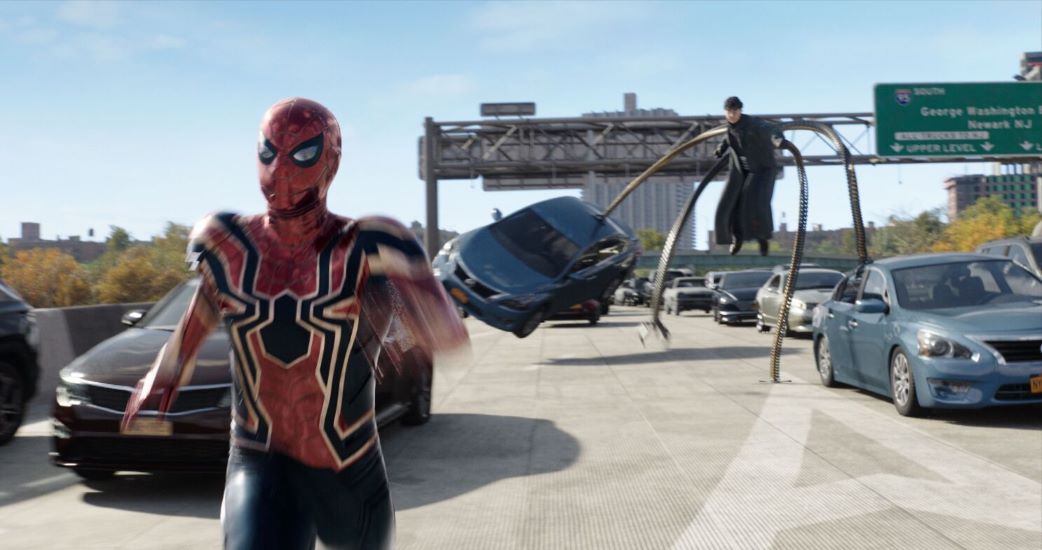
Picking up after the conclusion of Spider-Man: Far From Home, Peter Parker’s (Tom Holland) secret-identity is known. Parker finds himself at the centre of a massive, world-wide scandal, which ends the college chances of him and his friends MJ (Zendaya) and Ned (Jacob Batalon). Peter asks Dr Strange (Benedict Cumberbatch) for help: namely can the world forget who he is? When the spell goes wrong, people who know Parker’s identity from other realities start appearing. And these guys aren’t happy, with villains like Dr Otto Octavius (Alfred Molina), Electro (Jamie Foxx) and psychopath Green Goblin (Willem Dafoe) arriving. But, when Peter discovers sending them back will condemn them to die in the battle against their Spider-man, he decides to do everything he can to try and save them.

No Way Home’s success partly lies on the nostalgia factor, especially for those of us who loved the early Maguire films. And you can sign me up to that: I can’t believe it’s been 20 years since the first one came out! No Way Home throws in characters from all five pre-Holland films and zeros in on the best of the bunch. The films has a lot of fun shuffling and realigning these characters in interesting new combinations, often allowing them to moan about things like origin stories (there is a very funny exchange between Electro and Sandman on the danger of falling into experiments) or just to get on each other’s nerves (Molina’s Doc Ock is spectacularly grumpy).

You pretty much have to have a heart of stone not to enjoy seeing most of these characters again – particularly as they are played with such lip-smacking aplomb. Above all, Dafoe relishes the chance to cement his place as one of the great villains, switching perfectly between gentle and psychotic as the schizophrenic Norman Osborn/Green Goblin (and becoming the nemesis of no-less than two Spider-men). Molina is equally good: pomposity and rage turning into avuncular decency. These two landmark villains from the two best films take most of the limelight, with a smaller share for Jamie Foxx (far more comfortable here than he was in Amazing Spider-Man 2). But every villain is given moments of tragic depth and seeing them react to news of their deaths is strangely moving.

It sets the table rather nicely for a film about redemption. Peter believes he can save these villains from death if he can cure them and restore their humanity. While the pragmatic Strange sees this as pointless, Peter can’t turn his back on a chance to save people. On top of this, No Way Home also serves as a meta-redemption arc for the two previous franchises: Maguire gets a third film worthy of the first two and Garfield is given the sort of rich material he was denied in his failed series.

Which brings us nicely to the biggest returns. Denied by both actors for the best part of a year, this film throws not one, not two but three Spider-men at us, with Maguire and Garfield reprising their incarnations. All three delight in sparking off each other, riffing on everything from web-slingers to making normal life work (“Peter time”) alongside Spider-manning. Maguire settles nicely into the Big-Brother role, giving a worldly experience to the others without losing his gentle idealism. Garfield is sensational – lighter, funnier and warmer than he was in his own films, with a hidden grief that plays out with genuine impact.

Who couldn’t get excited about seeing these three together – or to see the film make these scenes work as well as it does? It shuffles and reassembles things we are familiar with, but presents them in new and intriguing combinations and above all feels true to the characterisations established in previous films. Maguire, Molina and Dafoe in particular feel like they’ve not been away since their own films, while Garfield and Foxx deepen and improve their characters. But it became a mega-hit because it has a truly strong story behind it.

A story staffed by strong, relatable characters. There is a genuine sense of alarm around how Peter and his friends in the film’s opening act are hounded and persecuted by a population scared of them. Even here redemption is key, with Peter going to dangerous lengths to try and get his friends a second chance at getting into MIT. These three characters have a sweet, warm friendship and the chemistry, in particular between Holland (who is sensational, endearing, funny but bringing the role great emotional depth) and Zendaya is stronger than it’s ever been.

And that’s before we hit the film’s genuinely endearing message. Holland’s still-optimistic hero (another excellent contrast with his more damaged alter-egos) is motivated by saving people. And that includes the villains. Maybe it’s the years of Covid, but there is something hugely lovable about a hero who wants to give people a second chance. It’s a living demonstration of “with great power comes great responsibility” (words this film introduces into the Marvel universe with powerful effect, in a mid-film climax). In fact the film is, in some ways, the origin-story Holland’s Spider-Man never had: it gives him a foundational tragedy, leaves him in an isolated position, strips him of his Iron Man style tech and leaves him in a set-up (alone in a cheap apartment, struggling to make ends meet and superheroing on the side) familiar from the comics.

Watts directs the film with real confidence and zest, especially outside the action set-pieces: there is frequent use of ingenious-but-not-flashy single takes and the film’s patient momentum for much of its first half, focusing on character and emotion, really pay off in the second half of fan-service and fights. The camera effects used for Peter’s web-slinging and his spider-sense have a delightful quirky invention. What he really does well though is zero in on the emotion and when events get tragic, he isn’t afraid to commit to that. It gives the film an emotional force that really connected with people.

That heart is what sustains it. It’s a joyful nostalgia trip – that redeems elements of the previous films – but this is a film that really cares about its characters – all of them – and wants you to as well. That gives difficult, emotional struggles to all its Spider-Men, that searches of the humanity in its villains, even the worst of them, making us sympathise with them even as they do dreadful things. Combined with the action and adventure – and the electric pace of the best of Marvel – No Way Home rightly stands as one of the best entries so far.

Collateral (2004)

Tom Cruise and Jamie Foxx take a long taxi ride in Michael Mann’s thriller Collateral

Director: Michael Mann

Cast: Tom Cruise (Vincent), Jamie Foxx (Max Durocher), Jada Pinkett Smith (Annie Farrell), Mark Ruffalo (Detective Ray Fanning), Peter Berg (Detective Richard Weidner), Bruce McGill (Frank Pedrosa), Irma P. Hall (Ida Durocher), Barry Shabaka Henley (Daniel Baker), Javier Bardem (Felix Reyes-Torrena)

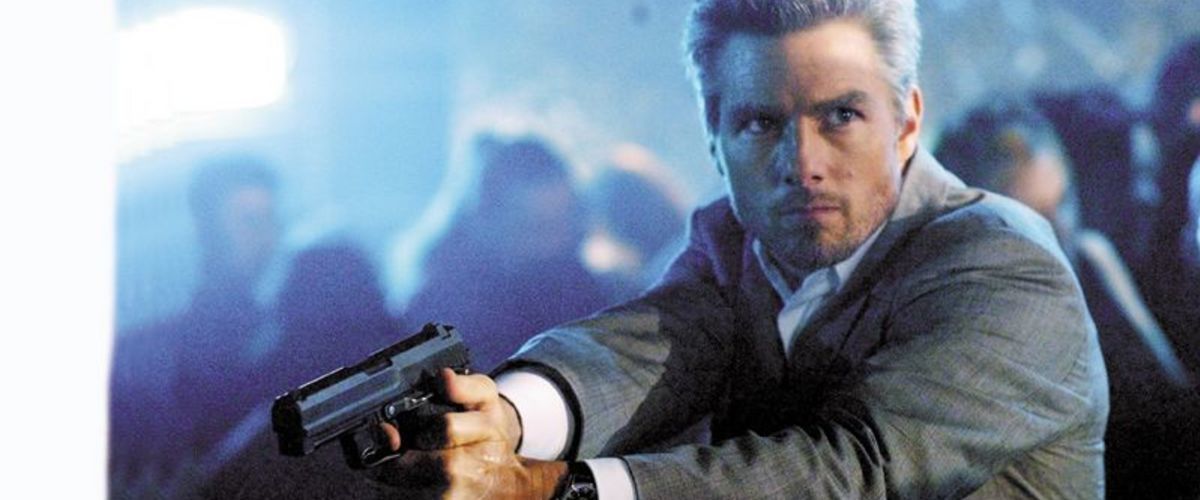
Tom Cruise enjoys throwing us film-goers curveballs every now and again. In Collateral he pops up as a sociopathic hitman, grey of hair and suit (like a buzzcut, rampaging John Major) leaving bodies strewn about the place. It’s great to see him in Michael Mann’s lean, very enjoyable action thriller, looking as sleek and soulless as the rest of LA.

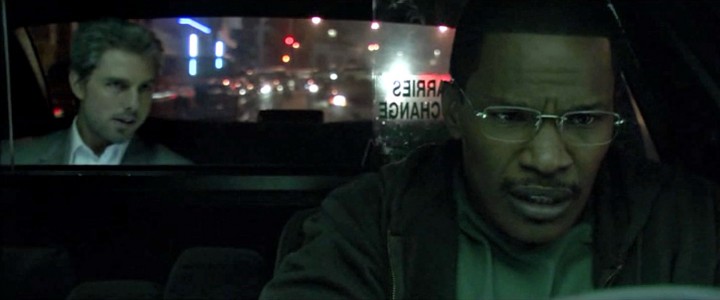
Cruise’s Vincent is a hitman in LA to knock off a list of targets. But how will he get from hit to hit? Why by hiring a taxi driver for a night: risk-averse dreamer Max (Jamie Foxx) who has been working “temporarily” as a taxi driver while he builds plans for his dream limo business for a mere 12 years. Max is thrilled to have a big spender in his car – until something goes wrong on hit #1 and a body lands on his cab. Max no has no choice but to assist Vincent – although Vincent ends up becoming more attached to Max than he might ever have imagined.

Mann shot his film on a high-definition video and it gives a very unique look at LA, really capturing the hazy yellows and cool blues of the city and giving everything in the picture a slightly grainier, starker look. But that would count for nothing if the story of the film wasn’t pretty good, and Collateral is a very effective action thriller, which doesn’t reimagine the genre but offers more than enough freshness to enliven the familiar elements it’s made up from. 

Its main assets (along with Mann’s cool, detached and pin-point sharp direction) are the performances of its two leads. Cruise is just about bang-on as a professional hitman, devoid of empathy, who finds surprising possibilities of friendship open in front of him. He’s a fascinating character, like someone who has spent so long studying people that he can just about replicate human reactions, without understanding the humanity behind them. Cruise’s obsessive preparation for his roles also help makes him flawlessly convincing as this lethal ubermensh.

Foxx however is just as good as a basically decent, friendly, low-key guy who is kidding himself that he is not drifting through life. It’s Max’s story we follow throughout the film – and it’s his sense of personal morality, his strict belief in right and wrong, that gives the film its dramatic force. Foxx also avoids undermining or laughing at Max, who is basically a man so buttoned up and cautious that (without a major push) he’ll clearly die of old age in that cab. 

These two characters thrown together have a curious chemistry – a sort of riff on the casual bonds that can develop between driver and passenger as they talk about their lives, views and interests. It’s not a friendship – certainly not in Max’s case – but it’s a strange sort of bond nevertheless. Vincent, you feel, hasn’t talked to many people like this – and while he’s still willing to threaten Max or put him at great risk, he still develops a strange protectiveness about him. It’s this quirky and different relationship that powers the film and finally makes it unique. This odd couple don’t overcome boundaries to become bosom friends, but they also don’t come together as fierce rivals. Instead they sort of work out a co-existence in that cab.

It’s the most interesting thing about a film that otherwise – to be honest – deals a pretty familiar deck with confidence. Sometimes the film plays its cards so well you overlook them – the first time I watched it, I was semi-surprised at the reveal of the final victim, but really it should be pretty obvious to anyone who has seen a movie before. The plot is full of moments like this that are played with a freshness – or with a cunning – that stops them from feeling familiar.

But that’s really what it is. The journey around LA from hit-to-hit is a familiar sounding idea. The encounters between Vincent and the targets are pretty familiar – the exception being a fascinating, and hard to read, encounter with Barry Shabaka Henley’s jazz player turned informant, which sizzles with tension – and the action scenes, while well staged, are the sort of shoot-outs we’ve seen before. Mann shoots them with a vibrant excitement, but it’s mostly B-movie stuff presented freshly.

What it comes down to is that relationship between those two characters, and the skill of director and actor in drawing out subtleties in performance. (Don’t listen by the way to the director’s commentary, which ruthlessly strips these subtleties away as Mann bangs on about heavy-handed, predictable backstories which thankfully don’t make it into the movie, but make it sound dumber than it is). Cruise and Foxx are both fantastic, Mann’s direction of this sort of icy-cold, impersonal, dangerous city is impeccable and the film itself doesn’t fail to entertain.

The Amazing Spider-Man 2 (2014)


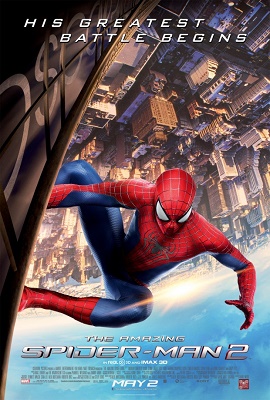
Spider-Man retreats in full flight from the shocking explosion of this film behind him

Director: Marc Webb

Cast: Andrew Garfield (Peter Parker/Spider-Man), Emma Stone (Gwen Stacy), Jamie Foxx (Max Dillon/Electro), Dane DeHaan (Harry Osborn/Green Goblin), Colm Feore (Donald Menken), Felicity Jones (Felicia Hardy), Paul Giamatti (Aleksei Sytsevich/Rhino), Sally Field (Aunt May), Campbell Scott (Richard Parker), Embeth Davidtz (Mary Parker), Marton Csorkas (Dr Kafka), Chris Cooper (Norman Osborn)

The Amazing Spider-Man 2 was set to launch a Spider-Manfranchise that “would last a THOUSAND YEARS!!!”. It didn’t. In fact this bloated, poorly constructed, overlong mess killed those plans stone dead. It says a lot that a film which took $709 million worldwide is considered a flop. But the reaction to the film was so mehthat there was no desire to see any further films about this Spider-Man. On every count the film is a catastrophic failure.

Peter Parker (Andrew Garfield) is enjoying the life of a super-hero, while struggling to maintain his relationship with Gwen Stacy (Emma Stone) due to his guilt over her father’s death. That sentence, by the way, demonstrates how schizophrenic this film’s tone is: a hero who loves life and simultaneously is plagued with guilt? He’s also obsessed by finding out what happened to his parents (killed off in a superfluous pre-credits flashback, setting up a mystery the film loses all interest in). At the same time, he must take on obsessive loner fan Max turned supervillain Electro (Jamie Foxx), and old friend Harry Osborn turned supervillain Green Goblin (Dane DeHaan).

After a so-so remake of Sam Raimi’s first Spider-Man, Sony seemingly decided to skip Spider-Man 2 and jump straight to a remake of the reviled Spider-Man 3. Many of that film’s disastrous mistakes are made again: romantic tension that never feels real, action sequences that feel like trailers and, worst of all, stuffing the film to the gills with villains (at least four characters can lay claim to being major primary or secondary antagonists). It also makes its own mistakes, chucking in endless references to a dull, confusing ‘mystery’ around Peter’s parents (that will never now be resolved).

On top of all that, there is something so nakedly grasping about Amazing Spider-Man 2 it’s almost impossible to love. It’s such a greedy film that almost every conversation and stray camera shot tries to set-up potential future movies (the low point being a camera pan down a room full of devices that will become the weapons of future baddies). The plot gets constantly drifts down side alleys as it frantically tries to establish enough plots for the studio to keep churning out films over the next five years. This also means it goes on forever without any real sense of impetus developing in the story.  The action is so nakedly shot with an eye on the trailer, that nearly each fight is literally shot with a crowd of people watching behind barriers, cheering events on.

Whatever happened to the trick of making a successful franchise being to make a good movie? Imagine a film focused on a single villain plotline, and played that off against a relationship drama (something like, say, Spider-Man 2). That might have been something worth seeing, that might have made you think “well I enjoyed that, I wouldn’t mind seeing another one”. But this film is little more than an extended trailer for films to come – it’s as soulless and empty as a piece of marketing puff.

Any ‘emotional’ moments are placed so blatantly as filler between the action that they carry no resonance. Does anyone give a toss if Gwen Stacy goes to London or not? Was anyone actually moved at all when she (spoiler!) dies at the end? For all of Spider-Man 3’s faults, at least when Harry Osborn went bad it resonated, as audiences had seen his and Peter’s relationship play out over two films. Here Harry is introduced, the next scene he and Peter openly say they are best friends, then they barely spend any further time together before Harry’s “shocking” volte-face. If the film can’t be bothered to spend any time earning it, why should I spend any time investing in it?

Andrew Garfield’s Peter Parker has his fans, but I’ve found him (in both films) an insufferable, cocky prick. Garfield is a very good actor, but his direction to play Parker as a young buck completely fails. His wisecracking persona works as Spider-Man, but falls flat as Peter, who never seems particularly sweet, relatable or endearing in a way Tobey Maguire managed so well. The parental plotline doesn’t help here either: having spent the first film not really giving a toss about the death of Uncle Ben, here he outright obsesses over his parents in a way that just doesn’t ring true, particularly as it carries with it an implicit rejection of Aunt May. His borderline controlling/stalkerish behaviour with Gwen Stacy is also pretty hard to stomach (he spends half the film telling her what to do, the other half either following her or openly stating he will never let her go – okay weirdo…)

It’s quite damning that despite all this, Garfield (and to be fair, Emma Stone) is the best thing in this lifeless pile of stodge. Jamie Foxx is so hilariously miscast as Electro it skewers the whole movie (surely part of the reason why he is in it so little). Foxx can’t resist showing the audience all the time that he (the actor) is far smarter, cooler and popular than the character – his contempt for the role drips off the screen. DeHaan overacts wildly as Harry, bested only by Giamatti’s cartoonish overblown shouting. Field cashes her cheque with professionalism as Aunt May.

People aren’t stupid. They can tell when they are being ripped off. And they can tell when a studio flings bangs and bucks at the screen with no heart and soul behind them, when a film’s been made by people who want to fleece fanboys, rather than create something that speaks to their love of the material. It’s the problem with both of these Garfield Spider-Man films (and to a certain extent Raimi’s last one). They are soulless, dead films made by committees. They listen to all the worst cries of the fans and then try to give them everything at once. They end up giving them nothing. Which is what this film is: a big, empty pile of nothing.