
Searing emotion, passions and fascinating enigmas abound in Campion’s brilliant landmark masterpiece
Director: Jane Campion
Cast: Holly Hunter (Ada McGrath), Harvey Keitel (George Baines), Sam Neill (Alisdair Stewart), Anna Paquin (Flora McGrath), Kerry Walker (Aunt Morag), Genevieve Lemon (Nessie), Tungia Baker (Hira), Ian Mune (Reverend), Peter Dennett (Head seaman), Cliff Curtis (Mana)

What’s really striking about The Piano is how literary it feels, despite the fact it’s an entirely original cinematic work. Every moment of Campion’s intelligent, beautifully constructed, often enigmatic and unreadable film feels like it has been plucked from the pages of a lost Booker Prize winner. Juggling themes of feminism and sexual awakening alongside colonial and masculine thinking, it’s a richly beautiful film awash with superb performances and a heightened, literary reality buried inside a film grounded in the mud and squalor of reality. It remains Campion’s finest achievement.
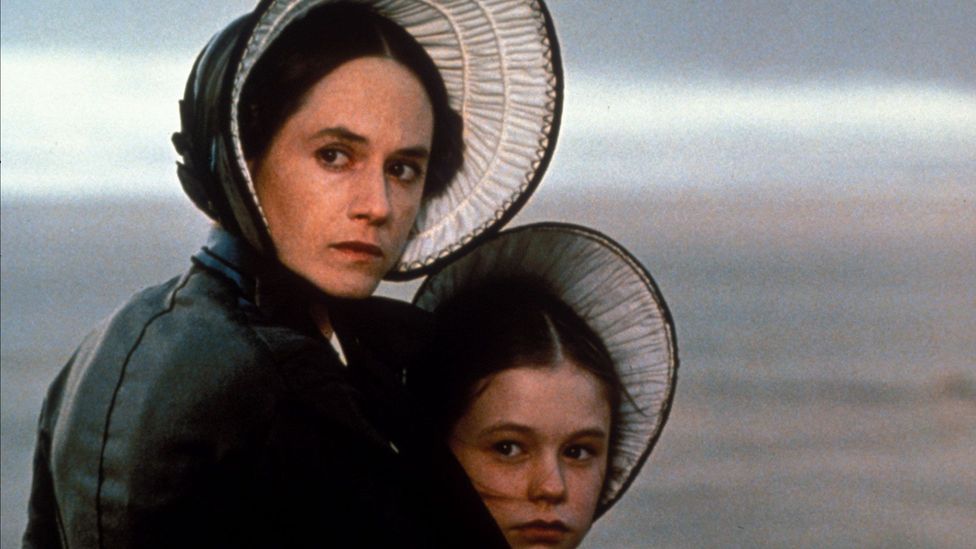
Ada McGrath (Holly Hunter) and her nine-year-old daughter Flora (Anna Paquin) arrive on the coast of nineteenth-century New Zealand. Having refused to speak since the age of six, Ada communicates through sign language and the precocious Flora. Silent in person, her treasured piano gives her a voice and allows her to express passions she otherwise keeps carefully controlled. Ada is to marry landowner Alisdair Stewart (Sam Neill), but he baulks at carrying the huge piano from the shore to his home through the forest. Instead, it falls into the possession of neighbour George Baines (Harvey Keitel). George, besotted with Ada, offers her the chance to earn it back one key at a time, in return for allowing him to “do things” while she plays it in his house. The arrangement leads to a complex, sexual love triangle between Ada, George and Alisdair that will see passions explode.
I wonder sometimes if The Piano is a bit of a problem for some campaigners today. You can discover plenty of retrospective reviews that find it hard to mask their disappointment that the film doesn’t offer a more pointed condemnation of its two male characters. Many want The Piano to show Ada rejecting Alisdair as a repressed potential rapist and George as a manipulative sexual predator. But Campion is telling a far more nuanced, feminist story than this easy-to-swallow structure. The Piano is not about pigeon-holing people into easily definable roles. Rather it looks at how unexpected bonds can rise and how darker, deeper passions can flair in unexpected ways.
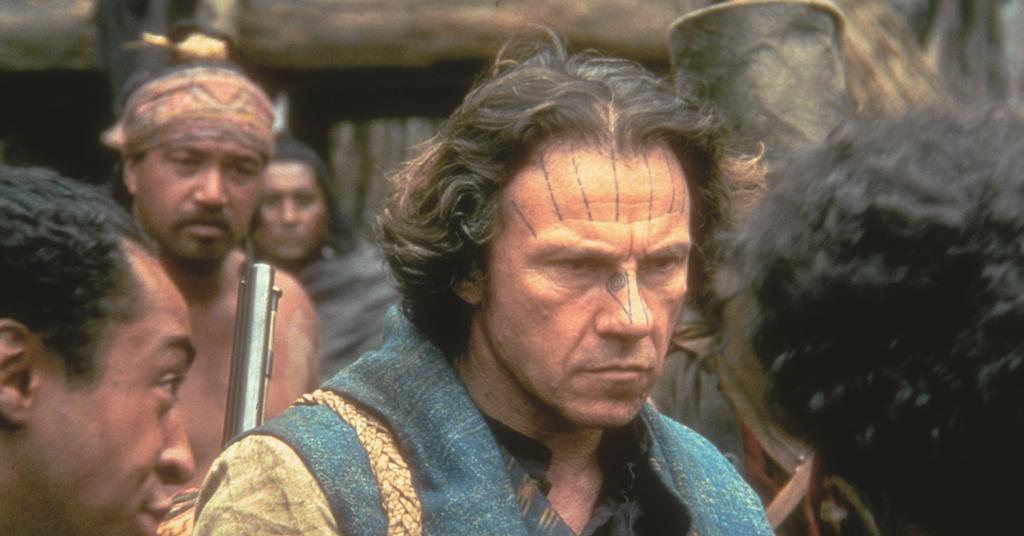
Because George’s at-first manipulative, outrageous offer actually awakens something unexpected in Ada. George is perfectly played by Keitel as outwardly a lump of inarticulate, labouring flesh but inwardly far more sensitive and strangely poetic – and his desire is based as much on a curious romantic longing and a sensitive fear of rejection. His requests are often based around the briefest of physical touches, the desire to see Ada’s shoulders and legs. He’s timid, shy and becomes increasingly open about his feelings for her.
Even more strikingly, Ada discovers that (after initial shock) she enjoys the bartering negotiation of the arrangement (offering more in-depth contact for a higher number of keys) and finds her ability to provoke desire in George both sexually liberating and exciting. So much so that, when George ends the arrangement (recognising that he cannot get what he really wants – Ada’s love – as long as it stands), her reaction is one of anger, more like a spurned lover, then a relieved victim.
This simmering desire is at the heart of Campion’s passionate work. Rewatching it’s striking how vital touch is in the film, how much it is linked to emotional and sexual connection. Campion focuses in extreme close-up on George stroking Ada’s skin through a tiny hole in her stockings – to her initial shock and increased pleasure. The slightest contact of hands between these two carries an emotional and sensual charge. It’s exactly the lack of this that becomes impossible not to notice in the relationship between Ada and Alisdair. Contact between them is minimal and when it occurs it carries darker meanings: most obviously the impotent, frustration Alisdair half-heartedly uses with Ada, then in the rain-soaked fury he will unleash when her betrayal is revealed.
Ada increasingly uses touch to control. She caresses and strokes Alisdair’s naked body at night – never allowing him to touch her in return – both to manipulate him but also, partly, to satisfy her own newly-discovered itch for sexual power, just as she grew to give herself over totally to the hold she had over George. Dressed in restrictive black, that covers almost her whole body, The Piano is about a flowering of a newly confident and sexually awakened woman from a repressed shell.
The language of the body ties into this. Campion reverses the expectations of nudity. Instead, it’s the male form of George we first – and almost predominantly – see. It turns this physically imposing man into someone vulnerable and sensitive. Like a romantic lover, he cleans the piano naked. He will reveal his body to Ada with shyness. When they first make love, he focuses on her pleasure rather than his own. He contrasts with the stiff-backed Alisdair, trapped in his formal clothes (compared to George’s indigenous tattoos and garments) who, even when Ada seduces him, uncomfortably tries to pull his trousers up over his bare buttocks.
Alisdair – superbly played by Sam Neill in a challenging role – is not a bad man, just a deeply unimaginative, repressed and self-satisfied one. He sees a woman’s duty as wife and nothing else. Just as he can only see the Māori on the land around them as simple savages, clinging to naïve superstitions (he cannot understand why they do not wish to sell or farm the land their ancestors are buried on), so he can find no common ground with Ada. He’s even subconsciously aware the piano is a means of emotional expression she refuses to share with him, causing him to do everything he can to remove it from his house with the same loathing he would have for a rival. But he’s also a timid, needy soul – witnessing George and Ada coupling, he watches from his concealment with a curious mix of envy, longing and sadness at something he will never have.
The Piano places Ada at the centre of this complex junction of feelings and emotions. Played with awards-laden brilliance (including the Oscar) by Holly Hunter, this is a woman who never speaks but whose complex emotional journey is always clear. Stubborn, difficult and demanding, we learn this is defence mechanism against a world she has so cut herself off from, so much so she has literally refused to speak for decades. Her piano is the only outlet she allows herself in a world with strict rules for women. Finding something alternative to this is a frightening and alluring prospect.
It’s one not necessarily understood by her daughter Flora (a brilliant Oscar-winning performance by Anna Paquin) who is so precocious in some ways – forcefully communicating her mother’s wishes – and so young in others. Flora understands little – with fateful consequences – of the emotional and sexual tangles around her and, like a child, often accepts the path of least resistance. She also sees the strong bond between mother and daughter as threatened by the presence of George – in a way she cannot comprehend, even after spying their intimacy together.
Campion’s film superbly ties these literary themes into a film of complex enigma and aching beauty (it’s beautifully filmed by Andrew McAlpine). The film is aided enormously in its emotional charge by the radiantly lyrical score by Michael Nyman (his distinctive sound makes the film sound like the finest film Peter Greenaway never made). The Piano offers challenging, thought-provoking and intriguing scenes at every turn, powered by a brilliant script and wonderful performances. Avoiding the obvious, it’s power and reputation has rightly only grown in the decades since its filming.

 Movie Musings