Tag: Janet McTeer

Mission: Impossible: The Final Reckoning (2025)

Mission: Impossible: The Final Reckoning (2025)

Cruise’s final mission is really a tribute to the star himself and his never-ending force of will

Director: Christopher McQuarrie

Cast: Tom Cruise (Ethan Hunt), Hayley Atwell (Grace), Ving Rhames (Luther Stickell), Simon Pegg (Benji Dunn), Esai Morales (Gabriel), Pom Klementieff (Paris), Henry Czerny (Eugene Kittridge), Angela Bassett (President Erika Sloane), Holt McCallany (Serling Bernstein), Janet McTeer (Secretary Walters), Nick Offerman (General Sidney), Hannah Waddingham (Rear Admiral Neely), Tramell Tillman (Captain Bledsoe), Shea Whigham (Briggs), Greg Tarzan Davies (Theo Degas), Charles Parnell (Richards), Mark Gatiss (Angstrom), Rolf Saxon (William Donloe), Lucy Tulugarjuk (Tapeesa)

Almost thirty years after the first film trotted into the cinema, Tom Cruise signs off (he claims) his franchise of death-defying stunts with a final entry that dials the global threat up so far you can almost hear the desperate whirring as the doomsday clock tries to keep up. Mission: Impossible: The Final Reckoning is big in every single way, packed with set-pieces, dense procedural plot mechanics that require reams of exposition, global annihilation round every corner and at the centre the towering, chosen-one aura of Ethan Hunt himself, the only man who can save the world.

The Final Reckoning takes off a few weeks after the now-rechristened Dead Reckoning (after it under-performed they didn’t want to scare people off with a Part 2 subtitle). AI demigod The Entity is hellbent on gaining control of the world’s nuclear arsenals so that, having presumably binged Terminator, it can SkyNet-like wipe out humanity. Ethan (Tom Cruise) is on the run, but he has a plan. Dig out the sunken Russian sub where the Entity was ‘born’, fish out its source code, hook it up to an Entity-killing virus and trap the AI would-be-overlord in what’s essentially a glowing USB drive. This mission will involve lots of running, fighting, defusing of nukes, diving to the bottom of the ocean, jumping between bi-planes mid-flight… he might as well chuck the kitchen sink as well.

Mission: Impossible: Final Reckoning has plenty of fun, even if it is hellishly overlong. It’s the sort of crowd-pleaser that gets people clapping at the end (as several people in my packed-out screening did). When the stunts come, they’re hugely well-staged. As always the Tom Cruise USP is front-and-centre: if you see him do it, he did it. Yes, Tom really did jump out of a naval helicopter into the raging Atlantic. Yes, that really is Tom, climbing over a speeding bi-plane thousands of feet-up with only a pair of goggles to keep him safe. It’s no-coincidence the villain is an AI who creates an artificial digital reality. The Mission: Impossible films are all about it keeping it solidly real.

But, once the initial adrenaline rush subsides, I’m wondering if its pumped-up thrills are going to be a bit more wearing second-time around. What struck me about The Final Reckoning is, that for all the huge amount of stuff going on, there is precious little heart in it. More than any other M:I film since the little-loved M:I:2 (practically the only film in the franchise not to get a shout-out here), the act of saving-the-world here is a job for one never-wrong superhuman. Cruise does almost everything, his team’s main role being getting into the right place to send him a message or wire up a computer. On top of that, the best of the series set-pieces had flashes of Ethan’s stress, fear and sense of ‘I cant believe I have to do this’ humour – all of that is mostly missing here.

The Final Reckoning loses a lot of the heart of what made the earlier films so rewarding. It loses the moments of friendship or sparky interplay between the team. Cruise and Pegg, the series main comic relief, share almost no scenes together. Klementoff and Davies do virtually nothing as new team members, other than shoot guns and get captured. Cruise shares more time with Atwell, but the bizarre is-it-a-romance-or-not between them is as oddly undefined as Ethan’s relationship with Rebecca Ferguson’s Elsa was (in fact it makes you realise the most sexual thing Ethan has done since film three is hold someone’s hand). Cruise is so often on solo missions, that the film could probably have dispensed with the team altogether with only a small plot impact.

The film only affords to slow down to give Ving Rhames (the only other guy to appear in every film) a moment of genuine emotion – though special mention must go to Rolf Saxon and Lucy Tulugarjuk who from small moments craft characters I genuinely grew attached to and worried about. Otherwise, the bonds of friendship that powered the franchises most successful non-stunt moments are absent. In fact, also missing are the heist caper set-pieces – even the famous face-masks are only employed very briefly.

The Final Reckoning dials the stakes up so much, they are effectively meaningless. In previous films, high-stakes were mixed with personal ones: we were always more invested in whether Ethan save his friends rather than the word. The film also struggles without a real antagonist. Its nominal human opponent, Esai Morales’ Gabriel, little more than a smirk and an obstacle. Shorn of the most-interesting element of his character – his fanatical loyalty to his AI master – Gabriel is neither particularly interesting or a threat. In its vast runtime, Final Reckoning has no time to actually explore what the personal link between Ethan and Gabriel actually was, making you wonder why on earth they bothered to put it in both films in the first place.

It’s not helped by the fact that the film is so constantly in motion, that virtually every single scene of dialogue is about communicating what’s going to happen next. There are constantly (admittedly skilfully batted around) conversations explaining why Ethan has to go there, get this, bring it here, do this to it, put it in that all within a ridiculously small window of time. Sometimes, to shake it up, we cut across to the US bunker where a gang of over-qualified actors (Bassett, Offerman, McCallany, McTeer and Gatiss) similarly explain what the Entity is doing to each other. (Although, like Rhames, Bassett gets the most interesting stuff to actually act as a President facing a Fail Safe like terrible choice).

What you realise is that The Final Reckoning is pretty confident that what really pulls the audience in is Tom Cruise doing crazy stunts, so that’s what it gives us. In fact, rather than a tribute to the series (despite closing plot points from Missions 1 and 3) what the film really feels like is a tribute to Cruise, the last man-standing among the old-fashioned superstars. Most of the dialogue puffs up Cruise’s Ethan into Godlike status (it’s not quite “living manifestation of destiny” like Rogue Nation put it, but close). Cruise carries out two extended fight scenes in his pants (though if I looked like that at 61 so would I). No other actors intrude on his stunts or messianic sense of purpose.

Which is amazingly done of course. Literally no-one does it better than Cruise. The fact that the movie feels like Cruise effectively shot most of it alone with just the crew, means it almost doesn’t matter that its plot is merely to link together set-pieces. And if someone deserves a victory lap – which is what this is – then that guy is Cruise. I’d have wanted more of the fun, humour and warmth that made most of the other films such massively rewarding hits. But The Final Reckoning gives more of what the series does that no other series does. And I guess that’s a fitting finale.
The Menu (2022)

The Menu (2022)

Dark satire is mixed with intelligent character work and a challenge to our assumptions in this intriguing film

Director: Mark Mylod

Cast: Ralph Fiennes (Julian Slowik), Anya Taylor-Joy (Margot Mills), Nicholas Hoult (Tyler Ledford), Hong Chau (Elsa), Janet McTeer (Lilian Bloom), John Leguizamo (Famous Actor), Reed Birney (Richard Liebbrandt), Judith Light (Anne Leibbrandt), Paul Adelstein (Ted), Aimee Carrero (Felicity), Arturo Castro (Soren), Rob Yang (Bryce), Mark St Cyr (Dave)

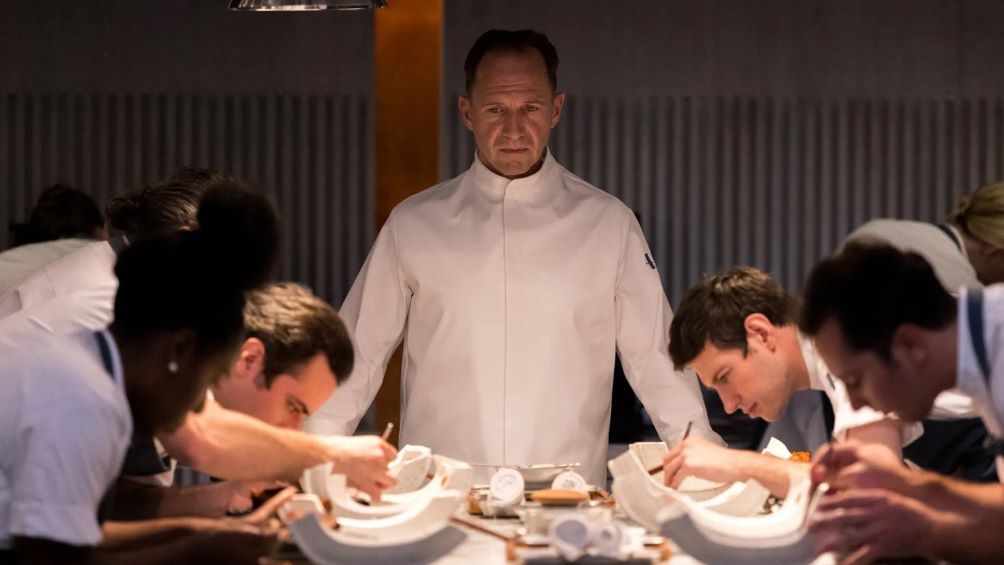
A dash of Succession. A soupcon of Hannibal Lector. Lashings of The Most Dangerous Game. All these ingredients are mixed to delightfully dark comic effect in The Menu, a sharp and tangy assault on class and modern society which leaves an unusual but satisfying taste in the mouth.

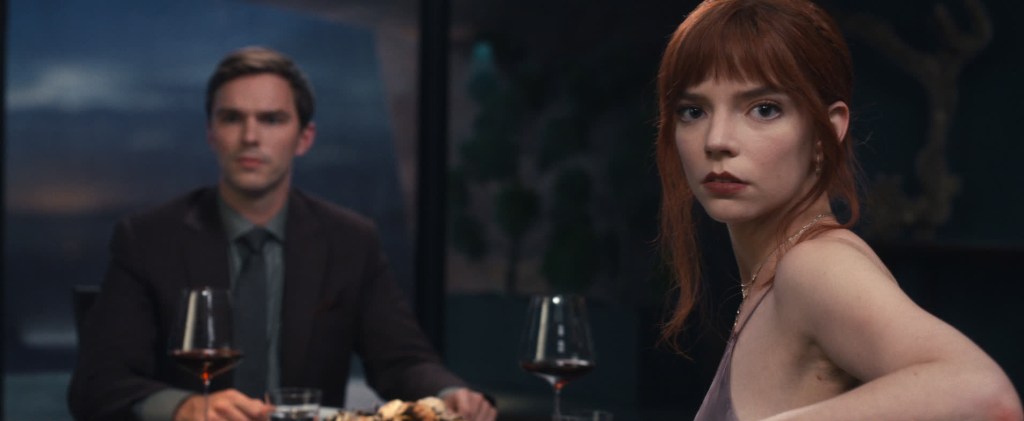
First those touches of The Most Dangerous Game. Julian Slowick (Ralph Fiennes) is a restauranteur so exclusive, his restaurant is based on a private island. Each course, of each menu is part of an overall story that forms the meal. For the story of the meal he is currently preparing, Slowick has selected an exclusive guest list of the rich and famous: businessmen, the rich, movie stars, food critics – the elite, the snobbish, the 1%. And the story he is serving up is one of increasingly grim retribution for this table-load of takers not givers. The only unexpected figure there is Margot (Anya Taylor-Joy), last-minute guest of obsessive food purist Tyler (Nicholas Hoult). How will this unexpected fly in the soup affect Slowick’s plans for the evening?

The Menu in many ways is a revenge satire. Slowick does not hold back in his increasing fury and bitterness at the people he serves without appreciation or gratitude in return. His customers are interested only in food if it costs a lot and is exclusive. They have no interest in his actual skills, in the staff (whose names they do not remember), the food itself or anything beyond their own desires. Many of the customers – most hideously a trio of “bro” investors (played with slapable smugness by Castro, Yang and St Cyr) – flash their jobs and cash expecting these to ensure their every whim is met. To them the world is like dough to be shaped into whatever bread they want it to be.

The film – with glee – exposes the hideous selfishness of the rich customers. A rich couple (Birney and Light) who have attended Slowick’s restaurants several times yet remember nothing about the food or the staff. Janet McTeer’s elite food critic, who practically scratches marks into her pen to mark the restaurants she has closed (she’s accompanied by a fawningly obsequious editor, played by Adelstein). A famous actor (John Leguizamo) who has long-since sold-out and treats his fans with contempt, joined by his spoilt rich-girl assistant/girlfriend (Aimee Carrero). Each of them is deconstructed in turns by Slowick over a series of courses parodying the snobbish bizarreness of high-class dining.

And here is where those touches of Succession make themselves known in the flavour. That series – and Mylod is a veteran (and its finest director) – also presents the ghastly shallowness and greed of the super-rich to expert comic effect. But what that show also does – and what Mylod brilliantly manages here – is make what could be two dimensional monsters sympathetic. The Menu presents these dreadful people with honesty; but, as the punishments – cruelly personal reveals, psychological torture, a finger cut off here, a man hunt there – pile up, you start to wonder if the punishment is too much?

The “bro” investors may be dreadful selfish, arrogant, dick-swinging morons: but they are also immature idiots who have never really grown up. The rich couple might treat places like this elite restaurant as a God-given right, but does that really deserve death? The food critic is harsh and arrogant, but is writing cruel words a mortal sin? The actor loathes himself for selling out his talent to make money and his girlfriend has simply been born into money and never wanted for anything. Do these people really deserve the monstrous ends Slowick has planned for them?

It’s the smartness of The Menu which could easily have invited us to just enjoy the rich and powerful being exposed, humiliated and punished. Instead, this is a smarter, more intelligent dish. The lower-class restaurant staff should be the people we are rooting for. But Slowick runs the restaurant like a cult, the staff near-robotic automatons that follow Slowick’s orders without question, intone their “Yes, Chef!” answers like a religious chant and snap to attention as one. Slowick’s number two Elsa – superbly played by Hong Chau – sums them up: all of them are desperate to become her boss and will follow Slowick to hell and back without a murmour and their heartless, personality free cruelty makes them very hard to root for.

As does Slowick himself. Here comes that sprinkling of Lector. Played with a superb, chilling intensity by Ralph Fiennes at his most coldly austere, Slowick could have been a character who swept us up in his intelligent superiority. But there is not a hint of joy in Slowick, only a vast, bubbling anger and resentment under a coldly precise exterior. Who on earth could look at this near-psychopath and think “I’d love to be him”? Slowick’s service is dryly, terrifyingly funny but you’d certainly not be left wanting to leave him a tip (unless it was your only way of getting out alive).

Instead, we gravitate towards the odd one-out. Anya Taylor-Joy is excellent as Margot, the unexpected guest who finds herself the only person unprepared for by Slowick, who is neither a member of the super-rich, but too free-spirited and independent minded to join the Slowick cult. Dragged along by Tyler – a hilarious performance of over-eagerness, snobbish elitism and stroppy self-entitlement by Nicholas Hoult – The Menu revolves more and more around the dance of death between her and Slowick. Like the audience, Margot is invited to pick a side to sympathise with.

It makes for a rich, lingering dish with an intriguing after taste, far more developed and better cooked than the sloppy revenge saga or re-heated leftovers it could have been. It left me wanting a second course.

Albert Nobbs (2011)

Glenn Close plays a woman pretending to be a man in the curiously empty Albert Nobbs

Director: Rodrigo Garcia

Cast: Glenn Close (Albert Nobbs), Mia Wasikowska (Helen Dawes), Aaron Taylor-Johnson (Joe Mackins), Janet McTeer (Hubert Page), Pauline Collins (Mrs Baker), Brenda Fricker (Polly), Jonathan Rhys Meyers (Viscount Yarrell), Brendan Gleeson (Dr Holloran), Maria Doyle Kennedy (Mary), Mark Williams (Sean), Bronagh Gallagher (Cathleen Page)

Passion projects are funny things. Everyone has them. And sometimes, when you put them together, other people struggle to see what all the fuss was about. Few films fit that bill more readily than Albert Nobbs. This cross-dressing, Victorian gender curio was something Glenn Close spent decades trying to bring to the screen, after starring in the original play off-Broadway.

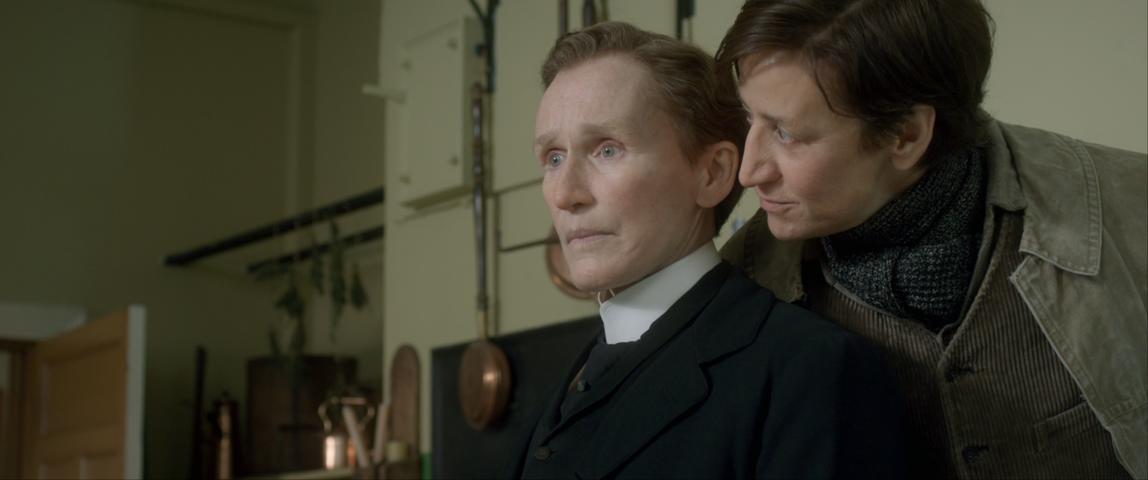
Albert Nobbs (Glenn Close) works as a butler at a middling hotel in late 19th-century Dublin. Nobbs keeps himself to himself and saves his tips and wages with the dream of buying his own tobacco shop. Nobbs also has another reason to cling to privacy: Nobbs is actually a woman, masquerading as a man in order to find work. Everyone at the hotel is totally fooled – but his world slowly begins to shift when he meets decorator Hubert Page (Janet McTeer), who similarly is a woman living as man, but who has her own business and a wife and family home. Page’s experiences make Nobbs begin to question this life of isolation – with disastrous consequences.

Albert Nobbs is a carefully filmed, respectful, dry and dull film. It’s nominally a film you might expect to have something to say about gender and sexuality – but its shyness around such matters, its lack of insight, its bashful awkwardness means it already looks like a museum piece. On top of which, most of the characters and situations it covers are frankly not particularly inspiring, dynamic or engaging. There isn’t actually much there to spark your attention.

Which it makes it even more surprising that Close was so drawn to this material. Why? It’s hard to say, as even her performance seems as buttoned up, oblique and distanced as the character she is playing (it doesn’t help that Nobbs is neither an interesting or engaging character, coming across like a person with an ill-formed personality, whom the viewer struggles to understand). You would expect her to have some sort of deep emotional bond with this character – but I’m not sure that really comes across.

The film fundamentally lacks the courage it needs to tackle issues of gender complexity. Nobbs has a troubled background of abuse and rape – but the story never really tackles this, instead using it as a lazy attempt to explain a confused sexuality. The film never really engages with the issue of whether Nobbs likes being a man or feels forced to do to make ends meet. It throws in a curveball scene where Nobbs relaxes on a beach walk wearing women’s clothes. But it never takes any step – even the most tentative ones – of Nobbs laying claim to relating more to being one gender or another. 

Nobbs doesn’t seem to identify as a trans man, a cis-gender woman disguising herself as a man for practical reasons in a patriarchal world, or as someone trying to live outside traditional gender constructs all together. It feels pretty uncomfortable with virtually any formulation along these lines, so avoids exploring any of them. It wants Nobbs to feel comfortable in women’s clothes, but also wants to admire Nobbs for living as a man, while also suggesting Nobbs is trapped by society. It’s a confused film.

In any case, the more time you spend with Nobbs the creepier Nobbs seems. It’s unfortunate that a large chunk of the film is given over to Nobbs’ confusingly motivated courtship of Mia Wasikowska’s maid. Throughout, Nobbs is strangely incapable of understanding any sort of emotional link between two people, and here seems unable to comprehend that Helen may have her own emotions and desires that don’t marry with Nobbs’ functional desire for a wife. This pursuit (seemingly to complete the picture of a desired future) creates an image of a stalker rather than someone really seeking a romantic connection. The fact that Helen and her rakish beau plan to swindle Nobbs hardly helps to make these characters likeable either.

Close’s performance doesn’t help with its locked in reverence. So it’s just as well that Janet McTeer bursts into the film with energy, (literally) baring all in seconds and bringing more vibrancy, dynamism and engagement in her scenes than the rest of the film put together. While Nobbs is a rather dull, empty vessel of a person, Page is a lesbian in a loving relationship, escaping marriage by pretending to be a man. That is a story I can get interested in, that can have relevance today: Nobbs’ isn’t. McTeer is excellent, and I wish the film her been about her.

Albert Nobbs is a worthy, but flat film shot with a slow reverence and delivering a story that promises much but completely fails to deliver. Aside from Janet McTeer’s wonderful performance there is very little reason to visit this film. In fact today its avoidance of even engaging with questions of gender and identity actually make it look rather gutless and pointless. A passion project that really makes no real sense.

The Woman in Black (2012)


Daniel Radcliffe sneaks round a haunted house in the creepy but not haunting The Woman in Black

Director: James Watkins

Cast: Daniel Radcliffe (Arthur Kipps), Ciarán Hinds (Sam Daily), Janet McTeer (Elizabeth Daily), Liz White (Jennet Humfyre), Roger Allam (Mr Bentley), Tim McMullan (Jerome), Jessica Raine (Joseph’s nanny), Shaun Dooley (Fisher), Mary Stockley (Mrs Fisher), David Burke (PC Collins)

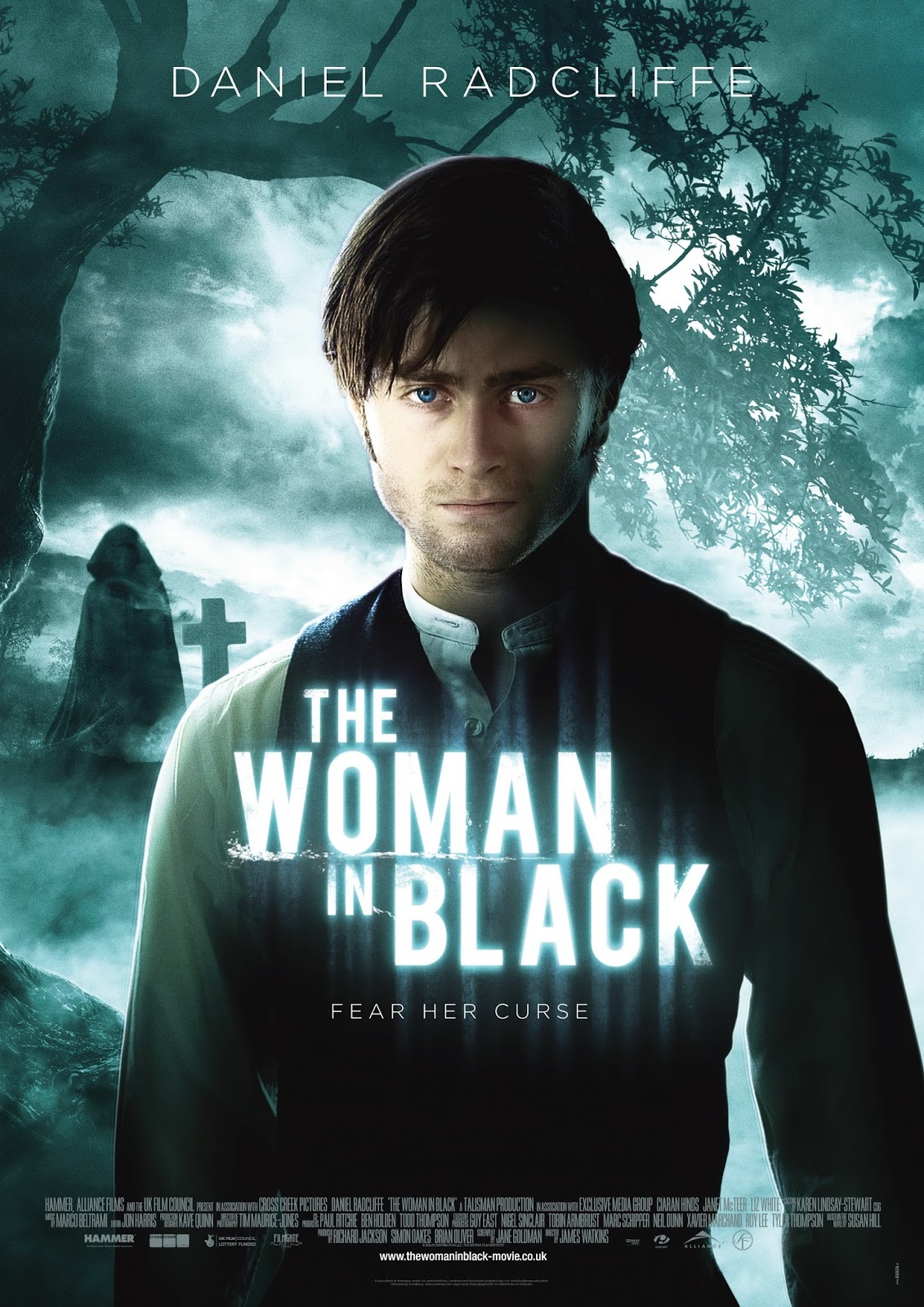
Susan Hill’s 1983 novel is a favourite modern ghost story – not surprising then, after a stage adaptation has been packing them in in the West End since 1987, that it hit cinema screens. Arthur Kipps (Daniel Radcliffe) is a widowed solicitor whose wife died giving birth to their son (now four years old). He is sent to an abandoned house in the countryside to review documents before the property is sold. The villagers nearby are hostile and wish him to leave. At the house he hears strange noises and sees a woman in black starring at him. Gradually the horrific nature of the house, and the curse on it, becomes clear.

The Woman in Blackis an effective and atmospheric scare-a-thon. It feels very creepy, it looks pretty good, it makes very good use of the sort of inherent terrifying nastiness you find in porcelain dolls, music boxes, creaking chairs, chintzy wall-paper and the wind whistling through the trees. It carries a lovely air of foreboding, and the shots (where we get them) of the woman in black herself carry a great feeling of menace and maliciousness. 

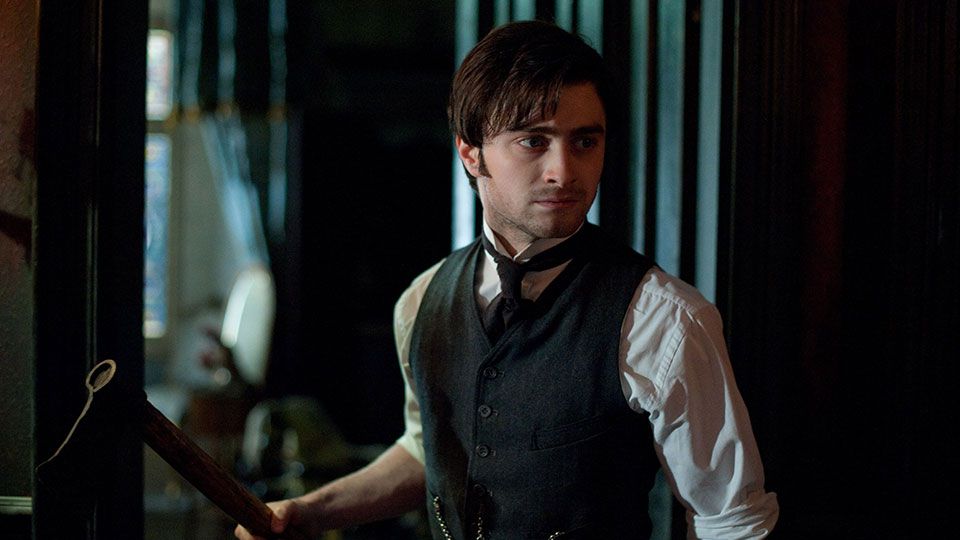
What is just as good though is its slim running time, because, effective as its jumps are, they are all structured in the same way. We get the haunted house late at night. We get Daniel Radcliffe walking round it slowly, breathing heavily, the camera carefully following him. We get slow camera movements around rooms until they begin to rest on an object or something appears in the corner of a frame. And then we get a crash of music and something flashes in front of the camera briefly. It’s a standard “boo” haunted house technique. Sure it’s very well pulled off indeed, and works great when it’s happening, but it’s a basic trick, using a sudden noise and distracting movement. 

Its good craftsmanship to make the same surprise (basically) constantly startling – but it’s like being on a rollercoaster. You can see each dip coming time and time again. You know exactly what’s going to happen, that you going to be plummeted down. And then when it happens you still have the adrenaline, driving your fear. But will you be scared after the rollercoaster has finished? Nope. 

That’s where the film’s sort of horror fails. There is nothing really lingering about this. Even when watching it late at night (as I did) it didn’t leave me unsettled five minutes after it finished. Effective horror films – The Shining – leave us with images and ideas that haunt us for years to come. This one barely lasts seconds. Compare it too, say, Blink, the classic Doctor Who episode. This comes up distant second-best. That works because it has a simple but brilliant idea (statues move!) and it has a brilliantly simple-but-very-hard-to-do way to avoid getting caught (don’t blink!). This just has things jump out at you. All the time.

This film is twice as long but has half the scares and dread of that. But all the film-makers can really think to do with this idea of a child-killing ghost is turn it into a “boo” monster. Charles Dickens’ The Signalman uses a premonition ghost like this to ominous effect – the ghost appears, that’s it. That’s all the haunting you need. Do you need the ghost moving around a house jumping out at Radcliffe? Nope. You start to feel the film-makers couldn’t think how to really extend this idea to fill a film (even one as short as 90 minutes), so needed to pad it out with no less than two extended sequences of Radcliffe creeping round a haunted house, sweating.

In the lead Daniel Radcliffe does his best but, to my eyes, seems hopelessly miscast. For starters he is manifestly far too young to be playing the father of a four-year-old child. Secondly, Arthur Kipps’ emotional trauma and depression seem to be just out of Radcliffe’s range – I’m not sure that Radcliffe is quite the actor I think of for world-weary misery. Now he does a decent job, but he neither looks nor feels quite right for the part. 

he Woman in Black is a B-movie done rather well, but a B-movie and nothing more. It exists to spook you and to make you jump. But, if it aspires to anything else, it never achieves it. As soon as it is finished you’ll never feel a need to see it again – and nothing from it will stick with you even an hour later. It’s a good atmosphere piece, but that’s really all it is. It’s as far from giving you a sleepless night as it could get.