Tag: Jason Schwartzman

Megalopolis (2024)

Megalopolis (2024)

Coppola’s ambitious epic commits the cardinal sins – boring, hard to follow and immensely tedious

Director: Francis Ford Coppola

Cast: Adam Driver (Cesar Catilina), Giancarlo Esposito (Mayor Franklyn Cicero), Nathalie Emmanuel (Julia Cicero), Aubrey Plaza (Wow Platinum), Shia LaBeouf (Clodio Pulcher), Jon Voight (Hamilton Crassus III), Laurence Fishburne (Fundi Romaine), Jason Schwartzman (Jason Zanderz), Kathryn Hunter (Teresa Cicero), Dustin Hoffman (Nush Berman), Talia Shire (Constance Crassus Catilina)

I wanted to like it. Honestly I did. I really respect that Coppola was so passionate about this dream project that he pumped $120 million of his own money into it to make it come true. You can’t deny the ambition about a film that remixes modern American and Ancient Roman history, within a sci-fi dystopia. But Megalopolis is a truly terrible film. Coppola wanted to return to the spirit of 1970s film-making: unfortunately what he’s produced is one of the era’s self-indulgent, overtly arty, unrestrained and pretentious auteur follies where an all-powerful director throws everything at the screen without ever thinking about whether the result is interesting or enjoyable.

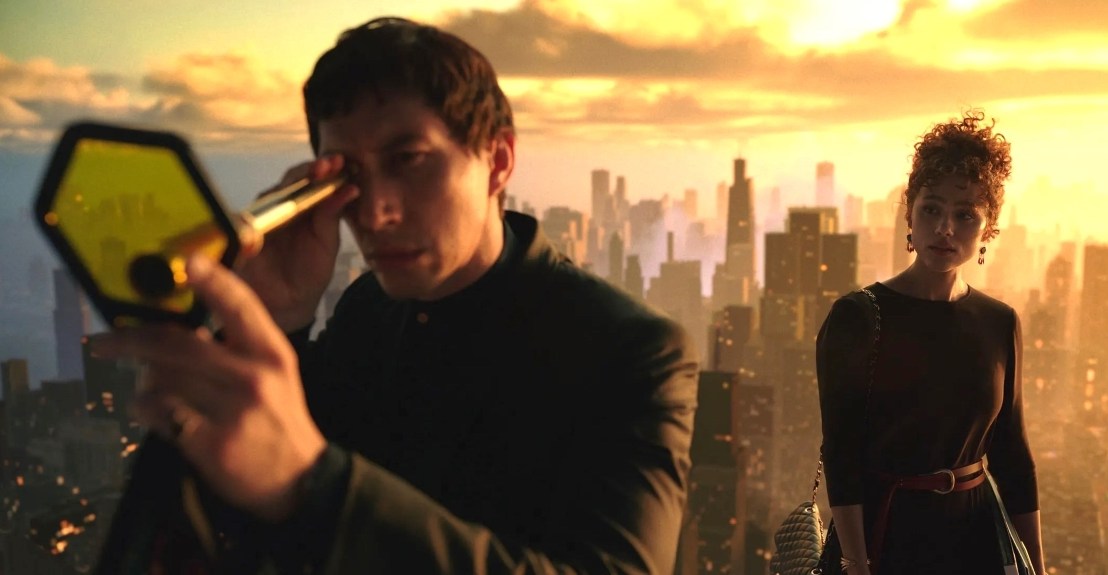
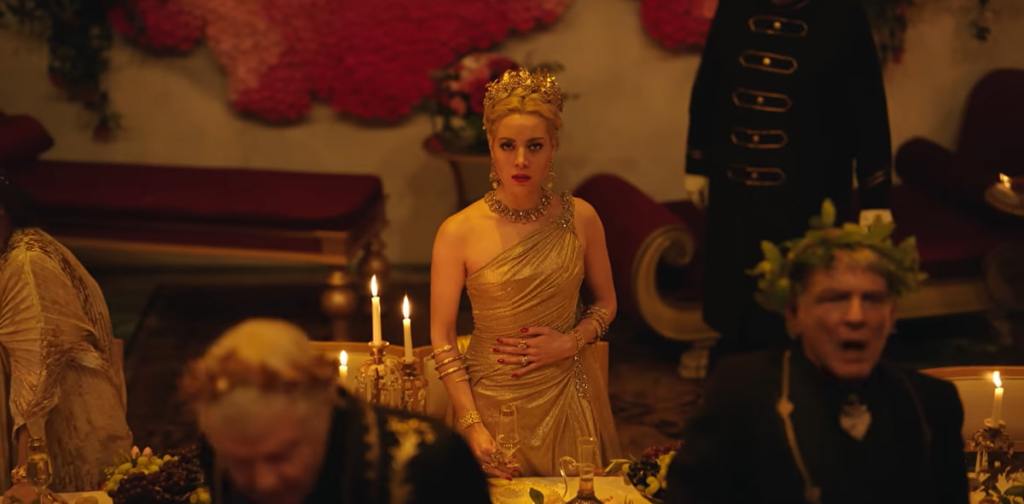
In New Rome (basically New York), Cesar Catilina (Adam Driver) is a visionary architect and inventor, who created ‘megalon’, a sort of magic liquid metal. His vision is to use it make a glorious new Rome. He’s opposed by Mayor Cicero (Giancarlo Esposito) who wants to focus spend on practicalities rather than castles-in-the-sky. This leads to a series of increasingly dirty political flights between Catilina, Cicero and Catilina’s cousin Clodio Pulcher (Shia LaBeouf) the degenerately populist nephew of super-wealthy banker Crassus (Jon Voight), who is married to TV star and ambitious social climber (and Catiline’s former girlfriend) Wow Platinum (Aubrey Plaza). Catilina is also in a tentative relationship with Cicero’s daughter Julia (Nathalie Emmanuel). Or yes and he can mysteriously stop time. Somehow. Even he doesn’t know how.

The film is a sympathetic portrait of Catiline, a powerful Roman who (probably) caused a scandal by shagging a Vestal Virgin then attempted to mount a coup with a heavily pandering populist set of promises which led to his suicide (after defeat in battle) and his followers being executed by then-consul Cicero. Megalopolis’ version mixes this with elements of Caesar’s career and remixes Cicero, Claudius Pulcher and Crassus into versions of their historical forbears. It’s a neat idea, but it’s utterly bungled in delivery. Megalopolis is a film practically drowning in pretension, bombast and self-importance, its script stuffed with faux-philosophy and clumsy political points, its Roman history crude and obvious.

It feels pretty clear Megalopolis should be three to four hours and has been sliced down to two and a quarter. The problem is it feels like it goes on for four hours and practically the last thing I could imagine wanting as the credits roll was watching yet more of this nonsense. The most striking thing about Megalopolis is how boring it is (I nearly dropped off twice – and I was in an early evening showing). It hurtles through a series of impressive-looking-but-dramatically-empty set-pieces that often make no real narrative sense and carry very little emotional force. Characters are introduced with fanfare and then abruptly disappear (Dustin Hoffman’s fixer gets a big moment then literally has a building dropped on him) and the final forty minutes is so sliced down it loses all narrative sense.

Megalopolis feels like a bizarre art project, a collage of influences, opinions, concepts and inspirations, as if Coppola had been collecting ideas in a scrapbook for forty years and then put them all in. His heavily-penned script forces clunkingly artificial lines into its character mouths, frequently feeling like a chance to show off his reading list. Marcus Aureilus, Goethe, Rousseau and Shakespeare among others showily pop-up, alongside speeches from the real Cicero. Driver even does a (to be fair pretty good) rendition of Hamlet’s ‘To be or not to be’ soliloquy, though it’s a sign of the film’s self-satisfied literariness that I can’t for the life of me work out why he launches into this at a press conference. Laurence Fishburne delivers the occasional narration with such poetic clarity, you almost forget it’s full of dull, gnomic rubbish, straining at adding depth to bland, fortune-cookie level statements.

It’s not just literary influences. The film is awash with pleased-with-itself cinematic references. Most obviously, Metropolis homages abound in its design, while Coppola’s breaking the film up with stone-carved chapter headings is a silent-film inspired touch. As well as Lang, there are clear nods-of-the-head to Abel Gance’s Napoleon (most obviously in its troika shots) while the smorgasbord of influences checks off everything from Ben-Hur to Vertigo to The Greatest Show on Earth (and damningly not as good as any of those, even DeMille’s clunker). All of this is combined with a wild mix of cross-fades, double exposures, sixties-style drug-induced fantasies and half a dozen other filmic techniques that are all very impressive but feel like a young buck looking to impress, rather than providing a coherent visual language for the film. Catiline’s time-stop abilities are some sort of clumsy stand-in for the powers of the film director – calling cut whenever he wants – but what we are supposed to make of the point of this in a film as randomly chaotic as this I have no idea.
The entire tone is all over the place. A scene of tragic maudlin grief will immediately be followed by sex farce. An attempted murder by a Buster Keaton inspired pratfall. A speech so overburdened with philosophical and literary allusions it practically strangles the person speaking it will lead into a joke about boners. The cast splits into two halves: one seems to have been told this is a serious film which requires deathly sombre, middle-distance-starring pontificating; the other half that they are making a flatulent satire. The random mix of acting styles has the worst possible effect: it makes those in the first camp seem portentous and dull; and those in the second like stars of an end-of-pier adult pantomime.

Driver makes a decent fist of holding this together, even if Catiline is an enigmatic, hard-to-understand character whose aims and motivations seem as much a mystery to Coppola as they do to the poor souls watching. But he can deliver a speech with conviction and seems comfortable mixing soul-searching with goofy dancing. Nathalie Emmanuel, though, is utterly constrained by taking the whole thing so painfully seriously that the life drains out of her. On the other side, Aubrey Plaza is the most enjoyable to watch by going for out-right-comedy as a vampish, power-hungry woman who uses her body to dominate men. Shia LaBeouf also goes so ludicrously overtop as a faithful version of the seriously weird Claudius Pulcher – he engages in cross-dressing, murder, incest and drums up crowds by quoting Trump and Mussolini – that it’s either daring or just as much of an unbearably self-satisified art project as the rest of the film depending on your taste.

But the main problem with Megalopolis is that its smug, pat-on-the-back, aren’t-I-clever artistic self-indulgence makes the film painfully slow and terrifically boring. How could a film that features riots, assassination attempts, orgies, murders, an actual meteor strike and magic time-stopping be as dull as this? When everything is thrown together without no emotional coherence whatever. Characters we don’t relate to or understand, who are either po-faced ciphers or flamboyant cartoons, stand around and quote literature at each other, while the director tries a host of flashy tricks he’s liked from other movies and never gives us an honest-to-God reason to give a single, solitary fuck about anything that’s actually happening at any point to anyone in the film.

It is perhaps the ultimate auteur folly. A director creating something that only appeals to him, at huge expense (and I suppose at least he paid for it himself rather than wrecking a studio) where no one was allowed to say at any point “this makes no sense” or “this is heavy-handed” or “this scene doesn’t mesh at all with the one before it”. Instead, it throws a thousand Coppola ideas at the screen, in a film designed to appeal to pretentious lovers of art-house cinema who like to tell themselves Heaven’s Gate is the greatest film ever made or the artform peaked with Melieres and it was all down-hill from there.

To approach the film in its own overblown style: whenever an auteur crafts, Jove plays dice with the Fates to decide on the cut of the cloth for Destiny’s Loom: should it come up sixes, the Muses smile, but should it be Snake Eyes, Pluto himself shall claim his due from those who would seize Promethean fire.

That makes as much sense as chunks of the film.

Hunger Games: The Ballad of Songbirds and Snakes (2023)

Hunger Games: The Ballad of Songbirds and Snakes (2023)

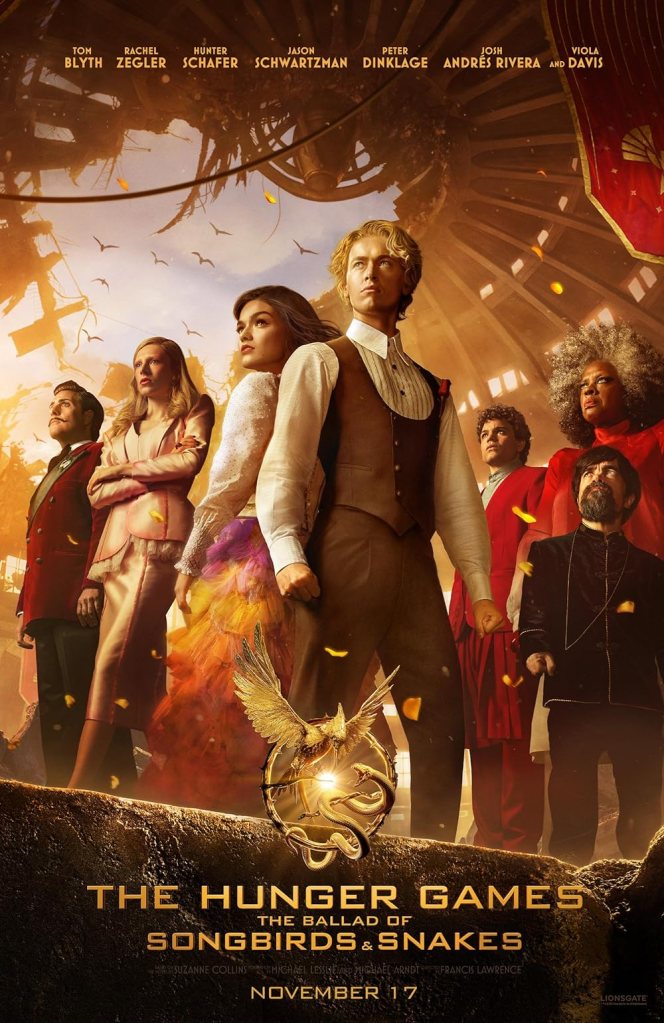
Terminally dull prequel, full of backstory you won’t care about at all

Director: Francis Lawrence

Cast: Tom Blyth (Coriolanus Snow), Rachel Zegler (Lucy Gray Baird), Josh Andrés Rivera (Sejanus Plinth), Viola Davis (Dr Volumnia Gaul), Peter Dinklage (Casca Highbottom), Jason Schwatzman (“Lucky” Flickerman), Hunter Schafer (Tigris Snow), Fionnula Flanagan (Grandma’am), Burn Gorman (Commander Hoff), Ashley Liao (Clemensia Dovecote)

Did you watch Hunger Games and wonder – ‘this is great and all but where did that guy Coriolanus Snow come from, eh’? Not sure I did. And I’m not sure I really needed to know, now that I’ve sat through all interminable 158 minutes of Hunger Games: Ballad of Songbirds and Snakes or Hitler: The Early Days. Imagine, if you will, the original Hunger Games movie – but if it was much longer, had an utterly uninteresting lead character and took itself so seriously you’d think it was offering a solution to third world debt and climate change all at once. Ballad of Songbirds and Snakes worst crime isn’t that it goes on forever, that it retreads old ground with no new ideas or that it feels like a pointlessly over-extended footnote. It’s that it is overwhelmingly, crushingly, dull.

People didn’t care about the back story: they cared about Katniss Everdean, a perfectly crafted character, hugely engaging and relatable on every viewing. I cared about her struggle to protect the people she loved not the backdrop of Panem politics. Did anyone? If I was interested in anything in Panem politics it was the way the Games both terrified the huddle masses of the districts and gave them hope. Unfortunately, this film either didn’t understand that, didn’t care or assumed we’d happily invest in the original’s villain if he was buff and had a dreamy girlfriend.

Young Coriolanus Snow (Tom Blyth, doing his best to sound like Donald Sutherland) is one of the leading students in Panem, selected to mentor a tribute through the 10th Hunger Games. Young Snow’s loins heat-up when his tribute is manic pixie dream-girl Lucy Gray (Rachel Zegler) from District Twelve. But what excites him more: a tumble with a girl from the sticks, or persuading outlandishly loopy games master Dr Volumnia Gaul (Viola Davis, the only person having fun) he knows how to turn this gladiatorial deathmatch into ratings gold? You got one guess what he picks.

Though it takes him a very, very, very long time to pick it. We watch this Proto-Hitler embrace his inner sociopath, through a weary trudge in Hunger Games lore with the origins of virtually every prop in the original movies lovingly laid out for us. Ever wondered why Snow wears that buttonhole? This is the film for you and then some. Almost every single thing in Ballad of Songbirds and Snakes is linked to something in the original movies. It’s the sort of unimaginative, world-shrinking yawn-fest where nearly every character shares a surname of a character from the original films – but of course Caesar Flickerman’s dad has exactly the same job, personae and style as he does!

You could let this go if Ballad of Songbirds and Snakes had an interesting story of its own. But it’s tedious, self-important plot makes Attack of the Clones look like Tolstoy. It chucks in a little bit of arena slaughter, but inexplicably makes it unclear how many of Coriolanus’ suggestions for improving the show are actually changing things. When the tributes perform for ‘favour’ is that something they always did (as most people behave like it is) or because Coriolanus scrawled memo suggested it (as the film implies)? The wider impact is also lost: are people bonding with Lucy Gray or having their child-killing-urges ticked in brand new ways by Coriolanus? Who knows.

It doesn’t help that Ballad seems shy about making Coriolanus himself a villain. It gives Tom Blyth a difficult act to pull off and he’s left playing his cards so close to his (inevitably) buff – his future sadism doesn’t stand in the way of a good topless scene in this film – chest that rather than wondering what will top him into sociopathy, he instead becomes a flat, boring character, with even his lust for Lucy fizzling rather than sizzling.

Rachel Zegler gets a bit more fun as this irritating mix of idealist and realist (she is pretty much whatever the plot needs from scene-to-scene – one minute angrily slapping away offerings of food, the next cowering in shocked fear when danger comes calling), with Ballad at least a good vehicle for Zegler’s vocal talents. But Lucy Gray remains too enigmatic – and, to be honest, just as dull in her unknowability – to ever become someone you care about. And never, for one minute, in her flower-crafted dress and perfect make-up do you believe she is a child of the ghetto in the way you did with Jennifer Lawrence.

Honestly the film misses a hero as complex and multi-layered as Katniss and splitting facets of her into two other characters just creates to incomplete characters. Throw in a plot that lacks any energy – it’s lackadaisical second half, with Coriolanus chucked into the wilderness as a Stormtrooper in District 12, goes on forever – and which gets bogged down in an utterly unengaging and confusing rebellion plotline with is resolved with a nonsensical narrative flourish – and it’s a recipe for disaster. It never, ever get the pulse racing as it stumbles, yawningly, to its end.

The stuff that actually is interesting gets shunted to the sidelines. A bored Peter Dinklage gets a late monologue on the creation of the Hunger Games that you desperately want to hear more about it, but don’t. Viola Davis, barrelling over-the-top under a mountain of demented hair, weird contact lenses and bizarre costumes, keeps talking about ‘the purpose of the Hunger Games’ in a portentous way that sounds like its leading somewhere but never does (so much so, I wondered if the filmmakers even understood the bread-and-circuses-as-control metaphor going on here).

Francis Lawrence directs as if this background-filling pamphlet from Suzanne Collins was a newly discovered Testament. The film is slow, stately and gives even the smallest, most inconsequential moments an unbearable level of self-important significance. It lacks pace and interest – so much so that even the slaughter of eleven scruffy, malnourished children and teenagers feels tired and ‘seen it all before’. There is no mystery, no sense of roads-not-taken, not even any peril . Just small elements of a more interesting later story being slotted dutifully in place, you realise you never wondered where Coriolanus Snow came from because it never mattered in the first place.

Asteroid City (2023)

Asteroid City (2023)

Anderson’s quirk filled film is a triumph of his own style but lacks the depth of his best work

Director: Wes Anderson

Cast: Jason Schwartzman (Augie Steenbeck/Jones Hall), Scarlett Johansson (Midge Campbell/Mercedes Ford), Tom Hanks (Stanley Zak), Jeffrey Wright (General Gibson), Tilda Swinton (Dr. Hickenlooper), Bryan Cranston (Host), Edward Norton (Conrad Earp), Adrien Brody (Schubert Green), Liev Schreiber (J.J. Kellogg), Hope Davis (Sandy Borden), Stephen Park (Roger Cho), Rupert Friend (Montana), Maya Hawke (June Douglas), Steve Carell (Motel manager), Matt Dillon (Mechanic), Hong Chau (Polly), Willem Dafoe (Saltzburg Keitel), Jake Ryan (Woodrow), Grace Edwards (Dinah), Aristou Meehan (Clifford), Sophia Lillis (Shelly), Ethan Josh Lee (Ricky)

Every time I go and see a Wes Anderson film, I hope I might fall in love again. Eventually, I’ll find something in Anderson’s overly distinctive, quirky style that I love as much as The Grand Budapest Hotel. Maybe the romantic in me is dying, because I think its never going to happen. Certainly it doesn’t with Asteroid City a film I sat watching thinking “I know some people will love this more than life itself, but for me sitting here it feels like waiting for the rapture”.

Asteroid City is another of Anderson’s films that’s an intricate puzzle box where the pieces shift like the brightly coloured squares on a Rubrik’s cube. It’s filtered through several layers of remove: we watch a 50s TV announcer (Bryan Cranston) introduce a stage performance of a playwright’s (Edward Norton) long-running play that is itself an entrée to a wide-screen, technicolour production of a host of eccentrics, including a recently widowed photographer (Jason Schwartzman), his grouchy father-in-law (Tom Hanks), a glamourous Hollywood star (Scarlett Johansson) and several others accompanying their kids to a remote town in the desert for a young stargazing and science competition co-sponsored by an army general (Jeffrey Wright), when the whole town is thrown into quarantine after a stop-motion alien drops in, looks around and flies off.

Somewhere in Asteroid City there is an interesting, slightly sad, meditation on grief, loss and ennui struggling to get out. The alien arrival makes everyone question the nature of the universe and their place in it. It’s easy to see the influence of Covid on a town flung into quarantine, and the resulting state of uncertainty throwing everyone off kilter. We are following a man who has recently lost his wife, being played in this film-within-a-play-within-a-TV-show by an actor who was (we discover) recently lost his own partner. At one point this actor asks the director if he is ‘doing it right’, if he is getting the emotion or the author’s intention: “just tell the story” the director (Adrien Brody) responds. I think that’s part of a message about just live and let the big questions take care of themselves, of trusting that we can do our loved ones proud. That’s an interesting, rewarding point.

But it’s lost in Anderson’s pitiless device, his never-ending quirk and the deliberately distancing, artificial nature of his world and the monotonous, arch delivery his script, camera work and editing imposes on a series of actors. What this film desperately misses is a leading player with the strength and independence of a Ralph Fiennes or a Gene Hackman: someone who can bring depth and a sense of reality to the stylised Anderson world, while still delivering something perfectly in keeping with his tone. To put it bluntly, Schwartzman is, to put it bluntly, not a sufficiently engaging or interesting actor to communicate his character’s inner turmoil under the surface which the film’s inner meaning requires. He too naturally, and trustingly, settles into the Anderson rhythm.

In this crucial role, he’s a misfire. With our leading player too much of an artificial character, someone we never believe is anything other than a construct of the film’s author, inhabited by a collaborator who doesn’t bring the independence or new vision the director needs, the more the deeper emotional layers of the film are drowned. Instead, the film becomes a crushing onslaught of style and trickery, devoid of any sense of reality at any point.

It eventually makes the film feel overly smug, too pleased with-itself, too taken with its intricate, tricksy construction. It is of course a triumph of art design and the photography is gorgeous, from the black-and-white of the TV studio and theatre, to the 60s tinged, artificial world of Asteroid City, crammed with its obviously fake skylines and vistas and technicolour inspired feel. That at least its impossible not to admire. But it’s also a mighty artificial trap that enfolds the entire film – and eventually the audience – in a world of weightless, arch, eyebrow-cocked commentary that promises a lot but winds up saying almost nothing of any interest.

There are performances to admire. Scarlett Johansson is very droll and finds some depths as an star actress struggling with a concealed depression. Tom Hanks looks most like the actor who feels like he can break out of the Anderson mould and discover some genuine emotion. Jeffrey Wright demonstrates few actors can do Anderson dialogue better than him, Bryan Cranston very droll and perfectly observed as Ed Murrow style TV man and Adrien Brody is loose, fun and inventive as the play’s director. But yet its everything inside this framework that feels somehow empty.

What I want from Anderson is someone to come in and shake him up, to point out that he is not betraying his aesthetics or style by injecting a small dose of reality and humanity into it. When he has done that in the past – moments in Rushmore, The Royal Tenenbaums and, above all, The Grand Budapest Hotel – he has delivered movies that are inventive, fun and playful but also carry real, lasting emotional impact. When he delivers in-jokes like Asteroid City, it feels like a party you have been invited to where everyone speaks in some made-up language they’ve not told you about in advance. And after not very long, all you want to do is to get up and leave.

The Grand Budapest Hotel (2014)

The Grand Budapest Hotel (2014)

Luscious visuals, hilarious gags mix with an air of sadness and regret in Wes Anderson’s masterpiece

Director: Wes Anderson

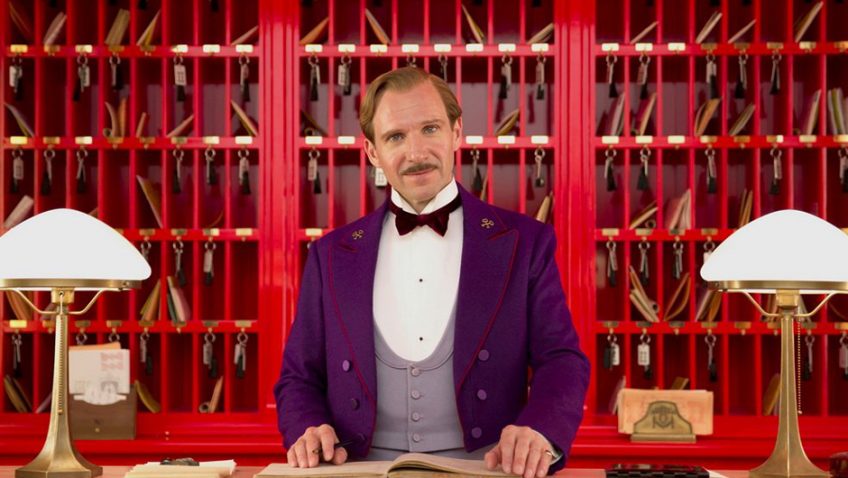
Cast: Ralph Fiennes (M. Gustav), Tony Revolori (Zero), F. Murray Abraham (Mr Moustafa), Mathieu Amalric (Serge X), Adrien Brody (Dmitri), Willem Dafoe (Jopling), Jeff Goldblum (Deputy Kovacs), Harvey Keitel (Ludwig), Jude Law (Young Writer), Bill Murray (M. Ivan), Edward Norton (Inspector Henckels), Saoirse Ronan (Agatha), Jason Schwartzman (M. Jean), Léa Seydoux (Clotilde), Tilda Swinton (Madame D), Tom Wilkinson (Author), Owen Wilson (M. Chuck)

I wrote recently I could forgive the flaws I’ve found in Kurosawa’s work, for the majesty of Seven Samurai. I can totally say the same again for Wes Anderson. He is a director I’ve sometimes found quirky, mannered and artificial – but God almighty he deserves a place in the pantheon for directing a film as near to perfection as The Grand Budapest Hotel, a delight from start to finish, as beautiful to look at as it is whipper-snap funny, as heart-warming to bathe in as it is coldly, sadly bittersweet. After three viewings I can say it is, without a doubt, a masterpiece.

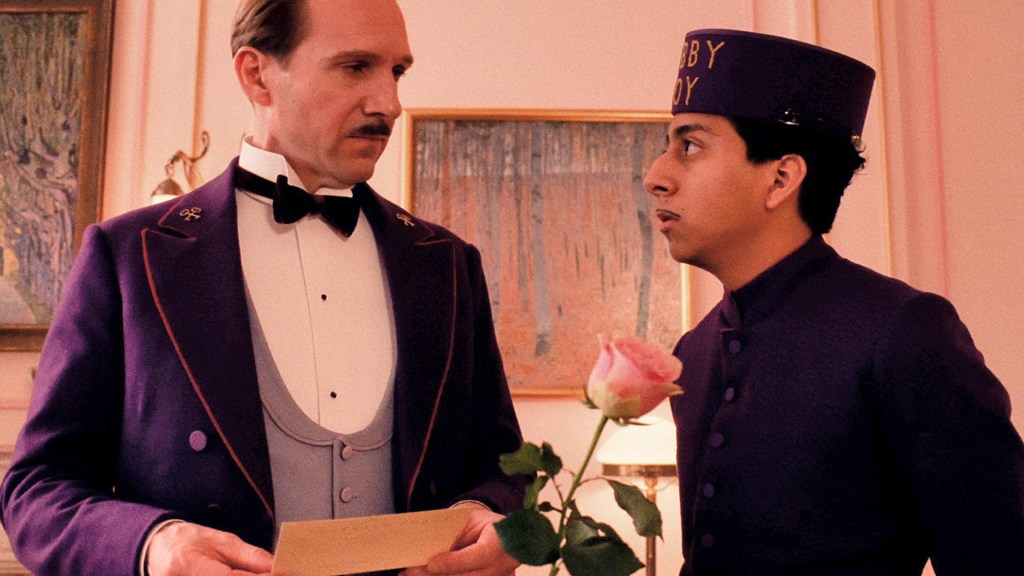
Like many Wes Anderson films, its storyline is eccentric, halfway between fantasy and absurdity. In 1932, in an opulent hotel, The Grand Budapest, concierge Monsieur Gustav (Ralph Fiennes) is the pinnacle of his trade: precise, fastidious, perfectionist, he can fix anything anywhere – opera tickets, the perfect table placement and a night of passion at any time for the elderly widows who visit his hotel. When one of them, Madame D (Tilda Swinton) dies leaving him a priceless painting, Boy with Apple he suddenly finds himself framed for her murder. Only his ingenuity, and the dedicated help of his protégé, best friend and surrogate brother/son, lobby boy Zero (Tony Revolori) will save him.

You can’t escape on the first viewing that The Grand Budapest Hotel is an extraordinarily funny film. Crammed with superb one-liners, it’s a showcase for a breathtakingly, blissfully funny performance from Ralph Fiennes whose comic timing is exquisite and whose mastery of the perfectly structured monologue of flowery language is as spot-on as his ability to deliver a crude punch-line. Anderson fills the film with clever sight-gags, bounce and a supreme sense of fun. You’ll laugh out loud (I frequently do, and I remember most of the gags) and wind back to watch them again.

But what lifts this is the wonderfully evocative, elegiac piece this beautiful film is. For all its comic zip, it unfolds in a romanticised past already a relic in 1932. We can’t escape the rise of Fascism that fills the film. Jack-booted soldiers accost and hunt Gustav and Zero. Adrien Brody’s furious heir to Madame D looks like a Gestapo officer, and his vicious heavy Jopling (Willem Dafoe so weathered, he looks like he’s been beaten by a carpet duster) has a stormtrooper menace. En route to Madame D’s funeral, Zero is nearly dragged off the train to be lynched by fascist thugs for being an immigrant and The Grand Budapest is taken over by this dreadful movement, filled with Mussolini-inspired ZZ insignia and blackshirts.

Under the jokes, the world Gustav represents has already died and been buried. We are never allowed to forget we are marching, inexorably, towards a very real-world war that will rip apart this fictional country and leave millions dead. Gustav’s gentile old-school charm ended with 1920s: and he sort of knows it. Fiennes, under the suaveness, conveys a man who falls back into potty language when he can no longer maintain his assured confidence that a straight-backed, polite assurance will solve any problem or a poetic reflection will allow them to put any unpleasantness behind them. Those days are gone and it makes for a deep, rich vein of sadness just under the surface.

It’s particularly acute because it’s made clear this is a memory piece. Anderson constructs the film like a memory box. It has no less than three framing devices. It opens and closes with a young woman in 2014 visiting a monument to a great writer, the author of the book The Grand Budapest Hotel. From there we flash back to the author (a droll Tom Wilkinson) in 1985 recounting how he met the man who inspired the novel, before heading again to a flashback to the 1960s where the young author (Jude Law) meets the man we discover is an older Zero (F Murray Abraham) who recounts the story we then watch. Each layer of the film descends deeper into Anderson’s artificial, carefully structured visual style, with its heightened sense of reality.

Old Zero – beautifully played by F. Murray Abraham – is introduced as a man of acute loneliness and sadness, who tells us early on the woman his young self loves, Agatha (a radiant Saoirse Ronan) will die and shuffles around the nearly abandoned The Grand Budapest (now a concrete nightmare of Communist architecture) with only his memories for comfort. No matter how jovial and bright the events of the 1930s are, we can’t forget that these are the reflections of a man full of regrets.

When old Zero’s narration turns to remembering Agatha, the lights around him dim: Agatha even enters the narrative almost by the side door: Gustav is arrested and imprisoned before she appears, along with a series of flashbacks-within-flashbacks to Zero and her meeting and her first meeting with Gustav, as if Zero had to steel himself to remember her (as reflected in Abraham’s tear-stained face). Later, when remembering the fates of Gustav (his best friend) and Agatha (the love of his life) he almost draws a veil over it (even their final scenes in flashback play out in monochrome). There is a deep, moving sense of humanity here, a powerful thread of grief that adds immense richness.

But don’t forget this is also a funny film! Anderson is an inventive visual and narrative director at the best of times, and here every single beat of his playful style pays off in spades. The entire 1930s section of the film (the overwhelming bulk of the narrative) plays out in 4:3 ratio, which to many other directors would be restrictive, but seems a perfect fit for a director who often composes his visuals with the skill of an expert cartoonist. The frame is frequently filled in every direction when within the grandeur of the hotel, but then feels marvellously restrictive for Gustav’s prison cell or the train compartments that seem to constantly carry Zero and him to disaster.

Anderson’s wonderfully precise camera movements also reach their zenith here. His camera is deceptively static, often placed in a series of perfectly staged compositions that places the characters at their heart, frequently looking at us. But then the camera will turn – frequently in a fluid single-plain ninety degrees to reveal a new image of character. There are Steadicam tracking shots that are a dream to watch. It’s combined with some truly astounding model shots (parts of the set are not-even-disguised animated models and miniatures, adding to the sense of fantasia) and the detail of every inch of the design (astounding work from Adam Stockhausen and Anna Pinnock) is perfection. The film is an opulent visual delight.

It’s a film of belly laughs and then moments of haunting sadness. But also, a wonderful celebration of friendship. The bond between Gustav and Zero is profound, natural and deeply moving – grounded, fittingly, in adversity from the agents of a hostile, oppressive state – and carries real emotional force. Newcomer Tony Revolori is hugely endearing as naïve but brave Zero, making his way in this new world (fitting the theme, he left his homeland after his family was destroyed by war) and sparks superbly with Fiennes and Ronan.

There is a wonderful beating heart in The Grand Budapest Hotel, amongst the farce, perfectly timed gags and cheekiness, that makes it a rich film you can luxuriate in. Anderson’s direction is faultless, Fiennes is a breathtaking revelation, both hilarious, affronted, decent and fighting the good fight. Gorgeous to look at, thought-provoking and laugh-out loud funny it’s a dream of a film.

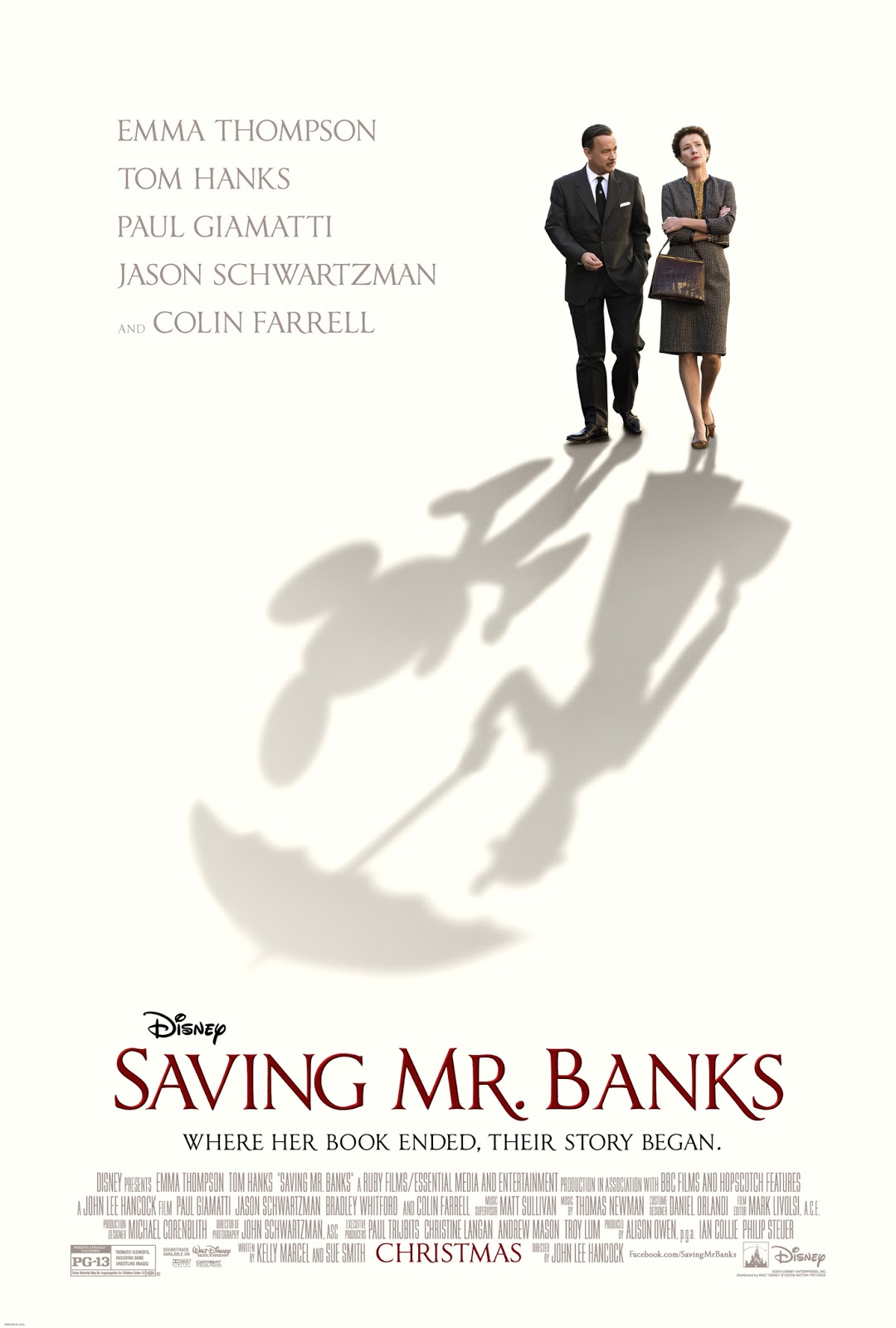
Saving Mr Banks (2013)

Tom Hanks and Emma Thompson clash on the making of Mary Poppins in Saving Mr Banks

Director: John Lee Hancock

Cast: Emma Thompson (Pamela Travers), Tom Hanks (Walt Disney), Colin Farrell (Travers Robert Goff), Ruth Wilson (Margaret Goff), Paul Giamatti (Ralph), Bradley Whitford (Don DaGradi), Jason Schwartzman (Richard M Sherman), BJ Novak (Robert B Sherman), Kathy Baker (Tommie), Melanie Paxson (Dolly), Rachel Griffiths (Ellie), Ronan Vibert (Diarmuid Russell)

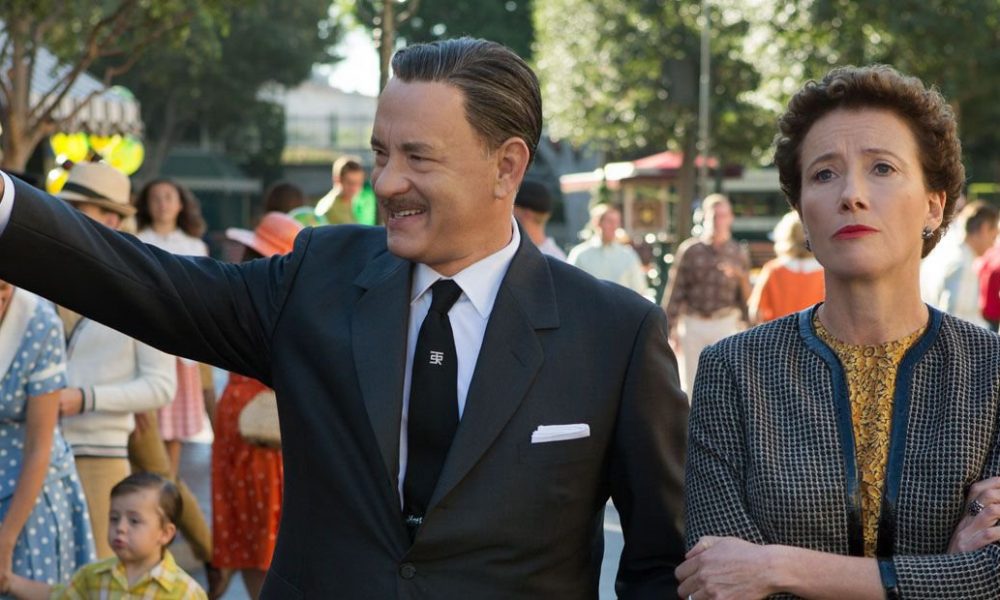
Walt Disney was a man used to getting what he wanted. And what he wanted more than anything was the rights to PL Travers’ Mary Poppins series. It was his kids favourite books, and he had promised them he would make the movie. It took decades – and Disney had to wait until Travers needed the money – but finally a deal was struck, with Travers having full script approval. So the hyper-English Travers is flown across the Atlantic to Los Angeles where she reacts with a brittle horror to every single suggestion from the Mary Poppins creative team, and distaste at the commercialisation of Disney’s enterprise. Based on the actual recordings (which Travers insisted on) from the script meetings, Emma Thompson is the imperious PL Travers and Tom Hanks the avuncular Walt Disney.

John Lee Hancock’s film is a solid crowd pleaser that, if it feels like it hardly delivers a completely true picture of the making of Mary Poppins, does put together an entertaining and interesting idea of the difficult process of creation and the tensions when writers (who don’t want to change a thing!) clash with film production companies. These problems being made worse by the clashing worlds of the loose, casualness and breezy friendliness of Los Angeles, and the intensely cold, buttoned-up Edwardianism of Travers, hostile to all shows of affection and any touches of sentimentality.

The film gets more than a lot of comic mileage out of these mixed worlds, with Travers’ every look of aghast, repressed, British reserve (“Poor AA Milne” she mutters while manhandingly a stuffed Winnie-the-Pooh toy out of her way, followed by “You can stay there until you learn the art of subtlety” as she dumps a massive Mickey Mouse cuddily toy against the wall of her bedroom) bound to raise sniggers at both her blunt hostility and cut-glass wit. Against this the American characters – all of them forced to dance to her tune – meet wave after wave of hostility with a practised American friendliness and warmth. It works a treat.

The film walks a fine line with its portrayal of Disney who is both a charming uncle figure and also a savvy and even ruthless businessman. Tom Hanks is spot-on with showing both sides of this man, making it clear how he managed to make so much damn money but also from how he managed to inspire such loyalty from many of his staff. Yes the film soft-peddles on many of Disney’s negatives – from refusing to show a single second of Disney smoking, to no mention of his active union-busting activities – but this is a film focused on Disney the impresario and negotiator. 

And what a person to negotiate with! That the film works is almost exclusively down to Emma Thompson’s imperious performance in the lead role. Thompson has a very difficult job here of turning someone so consistently rude, aggressive, arrogant and unpleasant as Travers (and over half of the film goes by before she says something nice to anyone) into a character we genuinely invest in, care about and laugh with as much as gasp at her rudeness. It’s a real trick from Thompson, adding a great deal if inner pain and vulnerability just below the surface, but only allowing a few beats of letting these feelings out for all the world to see. It makes for a performance that is superbly funny, hugely rude but also someone we end up caring about.

A lot of that spins from the careful recreation of Travers’ past in flashback, particularly her relationship with her father, Travers Goff (played with charm by Colin Farrell), an alcoholic bank manager in Australia when Travers was a child, who lived a life of irresponsibility mixed with bursts of playful, imaginative games with his daughter. It’s the realisation, by the elderly Travers, that her father was feckless and irresponsible that motivates her writing of Mary Poppins, the super-Nanny who flies in and saves not just the whole family, but specifically the father. Equally good in these sequences is Ruth Wilson as the despairing Mrs Goff.

It adds a sadness to the backstory of Travers – and an understanding of why she behaves the way she does – and the film also brings it round to a neat mutual meeting ground between her and Disney, who himself had problems with a father who drove him hard to achieve. It also explains Travers’ growing warmth to her chauffer, played by Paul Giamatti as a loving dad, the one person she demonstrates some affection to within the film.

It’s a film that wants to have its cake and eat it though, and it can’t resist adding a “happy ending” to the story of Travers finally accepting (even if she denies it) that she enjoys the Mary Poppins film and is moved by the saving of Mr Banks that it contains. In reality of course, Travers hated the film (though claimed some of it was passable) and refused Disney all permission to ever make any sequel. But that hardly matters here, to this fairy tale of saved souls which wants to see Travers saved – even if the truth was far more complex.