Tag: Jeanne Moreau

Chimes at Midnight (1965)

Chimes at Midnight (1965)

Welles reimagines Shakespeare’s Henry IV as a melancholic tribute to lost glories

Director: Orson Welles

Cast: Orson Welles (Sir John Falstaff), Keith Baxter (Prince Hal), John Gielgud (King Henry IV), Margaret Rutherford (Mistress Quickly), Jeanne Moreau (Doll Tearsheet), Alan Webb (Justice Shallow), Norman Rodway (Henry Percy “Hotspur”), Walter Chiari (Justice Silence), Michael Aldridge (Pistol), Tony Beckley (Poins), Charles Farrell (Bardolph), Patrick Bedford (Nym), José Nieto (Northumberland), Fernando Rey (Worcester), Keith Pyott (Lord Chief Justice), Andrew Faulds (Westmoreland), Mariana Vlady (Lady Percy), Ralph Richardson (Narrator)
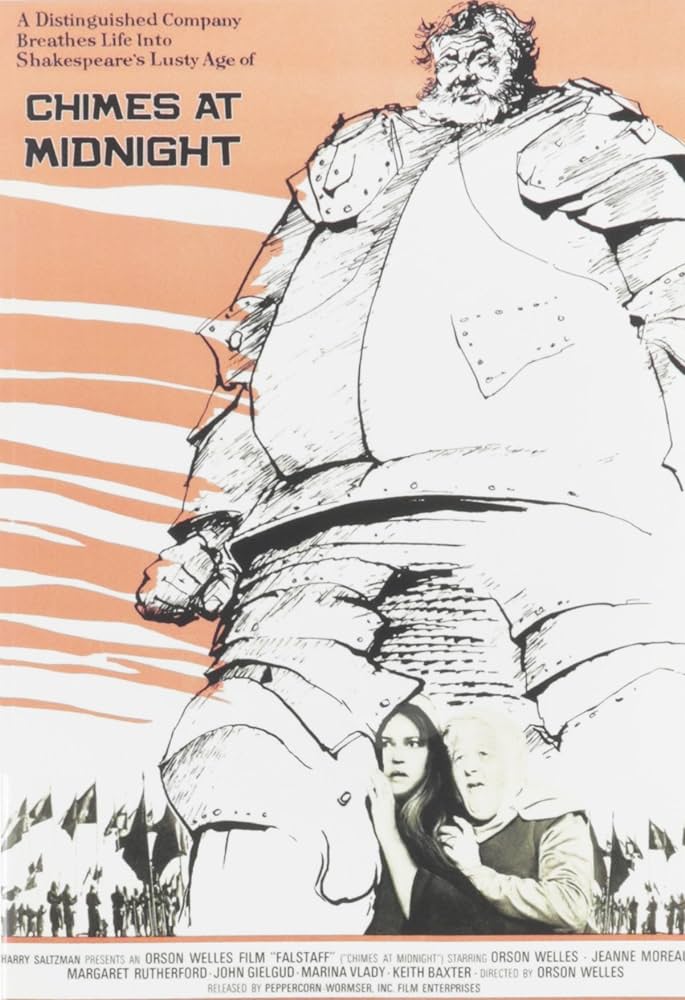
For decades Sir John Falstaff was the part Welles couldn’t get out of his head. He’d already made two attempts at re-working the first Henried for the stage, with Age of Kings in the 30s (where Welles played Falstaff in his twenties) and Chimes at Midnight in 60’s Dublin with Welles again as Falstaff and Keith Baxter as Hal in what would be Welles final stage performance. Welles was fascinated with the roistering knight so when he was offered a film of Treasure Island by a Spanish producer, he agreed on condition he could make Chimes at Midnight at the same time with the same cast. Naturally, this being Welles, not a frame of Treasure Island was made, but with Chimes at Midnight he created possibly his most influential Shakespearean work.

Surely, it’s no coincidence the two literary characters Welles felt the closest affinity to was the windmill-tilting wandering fantasist Don Quixote and the mountain of rogueish humour and memories of Golden Years long-gone, Sir John Falstaff. Welles arguably altered the interpretation of the Fat Knight for generations. Before Welles, he was a “Hail Fellow, Well Met” comic, the exuberant force-of-nature Prince Hal must sadly cast aside for the throne. But Welles knew, like few others, what a wasteland missed opportunities, lost glories and achievements-that-never-were lay behind the raconteur. His Falstaff might be cheeky and sometimes jolly, but he’s also a mountain of melancholy, a playboy with no achievements, his glory days long gone. Even without the rejection, there is no future for Falstaff, only hazy memories of a past long gone.

Chimes at Midnight brilliantly repackages, recuts and recombines several Shakespeare plays (not just Henry IV Parts 1 and 2 but also Merry Wives of Windsor, Henry V and touches of Richard II) to reframe this story around Prince Hal and Falstaff and away from both Henry IV and the politics of rebellion (not embodied by Norman Rodway’s bombastic Hotspur). Structure is imaginatively reworked, with Part 2’s recruiting scenes appearing before Part 1’s Battle of Shrewsbury and ingenious touches such as Henry V’s decision to “enlarge that man who railed against our person” retroactively applied to Falstaff rather than a nameless offender.

Welles makes Falstaff a mix of terrible influence and proud parent – no coincidence that a half-smile of pride crosses his face when Hal finally dismisses him. They banter and bounce off each other, but there is a world-weariness. Baxter’s Hal is beginning to focus his mind on the responsibilities that come with the throne. Falstaff alternates between awareness and denial that their salad days are on borrowed time. Strikingly, both of their most prominent soliloquies are overheard by the other. Hal’s secret plans to reform as King is delivered with steely regret by Baxter, while Falstaff stands a short distance behind him; later Falstaff’s mocking of honour in the aftermath of Shrewsbury is impatiently half-listened to by a Hal already starring towards the future. These are two characters who know each other, their flaws and their ruthlessness, more than they might like.

Chimes at Midnight is Welles’ lament not just for Falstaff but for the whole idea of a Merrie England. The film is a set in a wintery land, covered in cold snow and deeply unwelcoming. Mistress Quickly’s inn is a run-down building in farmland, Henry IV’s breath can be seen in his chilly castle, Silence and Falstaff huddle around a flickering fire after a wintery walk. There is a tiredness around the antics of Falstaff’s gang. Falstaff responds to Doll Tearsheet’s attentions with an impossibly weary “I am old Doll, I am old”. We are living in the winter of a whole way of life, which Hal will comprehensively kill off in favour of realpolitik. The days of dreamers like Welles-Falstaff are numbered.

Welles stresses these differences by shooting events in various locations in strikingly different ways. The Boar’s Head Tavern uses more fluidic camera-work, with events frequently happening in multiple plains – characters appear above others on balconies or at the head of stairs – with the action filled with raucous, swiftly choreographed interplay. This contrasts with the Cathedral-like classicism of Henry IV’s court. Where the Boar’s Head is confined and intimate, Henry IV’s medieval palace has towering stone walls, beams of light flowing down from large windows, courtiers still and quiet while Henry effectively speaks to himself, the exact opposite of the boisterous egalitarianism of The Boar’s Head. Justice Shallow’s ramshackle home of bittersweet memories sits somewhere between the two, where the melancholy Falstaff is closest to Henry’s regrets.

Chimes at Midnight is filled with this sort of superb visual language. The film’s centrepiece is a truly impressive set-piece of cinematic flourish, the Battle of Shrewsbury. A masterclass in fast editing, quick cuts and brilliant framing (that makes 200 extras look like a thousand) this scene captures in microcosm the film’s theme of the death of old-fashioned principles. It starts with a knightly charge and degenerates into mud-strewn, brutal hand-to-hand combat with death agonising and swift. You can see the roots here of Saving Private Ryan, with Welles not using cutting, adjusted film stock and montage to create something really visceral and even shocking, as bodies are forced into the mud or cry out in agony – and our fat ‘hero’ trembles and hides to avoid the barbarity.

This is certainly Welles’ finest acting performance in his Shakespeare films. While always a more limited actor than remembered (a combination of laziness and stage fight), Welles was born for this role. His Falstaff builds off an element of self-portrait: a man still capable of lighting up a room with humour (as seen in his delightful ‘mock trial’ of Hal) but who knows he has achieved only a fraction of what might have been (never before have references to Falstaff’s past glories felt more sad) and that only the march towards death awaits. No wonder Keith Baxter’s excellent Hal, clinging to the last chance to let his hair down, is torn somewhere between love, pity and good-natured contempt for this man. The interplay between the two is perfectly pitched.

Chimes at Midnight is filled with rich performances. It may also be Gielgud’s finest Shakespeare performance on film, his rich, fruity tones turning monologues into musings on self-doubt and regret, distancing the coldly austere king even more from the boisterous knight. (That voice is also a gift for the other actors: Welles, Baxter and Rodway all showcase impersonations of Gielgud’s distinctive voice.) This Henry is so full of doubt, bordering on contempt, for his son he may even believe Falstaff’s claims to be the true killer of Hotspur. Rutherford is wonderful as Quickly, earthy and caring; Rodway, from charging across the battle to impulsively springing out of his bath to meet a messenger clutching only a towel makes a superb contrast with Baxter’s calculating prince. Webb’s disappointed Shallow and Moreau’s kindly Doll also make an impact.

Chimes at Midnight’s main impact though is to reimagine these plays in a highly influential way – just look at the BBC’s more recent The Hollow Crown where the Henry IV productions are so indebted to Chimes it might as well be a remake, while Branagh’s Henry V is virtually a tonal sequel. Rarely again would these be plays seen as near-comedies with a sad-but-necessary final act. Instead, they became sadness-tinged meditations of lost chances and missed opportunities, with productions set not in Olivier-style pageantry, but Wellesian chill.

It’s a film tinged with melancholy, so it’s also fitting that as well as a swansong for a lost time, a “Merrie England” past where everything was possible and the future was golden, it’s also the last narrative film completed by Welles (all others would be either documentaries or filmed lectures). When Falstaff, thanked but coldly dispatched, exits clinging to the fantasy of a glorious return but heading towards death, it’s hard not to see Welles himself shuffling away, never again to persuade a young prince (or film producer) to give him a chance again. It’s a moving metatextual ending to a film that reinvents Shakespeare and expertly exploits the tools of cinema.
The Trial (1962)

The Trial (1962)

Welles exploration of paranoia and guilt is an easier film to admire than like (or enjoy)

Director: Orson Welles

Cast: Anthony Perkins (Josef K), Jeanne Moreau (Marika Burstner), Romy Schneider (Leni), Elsa Martinelli (Hilda), Suzanne Flon (Miss Pittl), Orson Welles (The Advocate), Akim Tamiroff (Bloch), Madeline Robinson (Mrs Grubach), Paolo Mori (Court archivist), Michael Lonsdale (Priest), Arnoldo Foa (Inspector A), Fernard Ledoux (Chief Clerk of the Court)

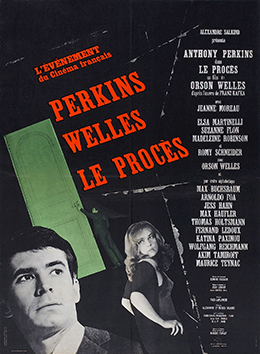
It had never happened to Welles before: in 1960 producer Alexander Salkind shoved a series of literary works at him and said “make one of these into a film! Money no object and complete creative control!”. Welles wasn’t going to say no. It hardly mattered that he’d barely even let Kafka cross his mind before: he could see a way to do The Trial and, by God, he wasn’t going to pass up this chance. To purists, The Trial is one of the few “pure Welles” flicks – the one Welles shepherded from start to finish and more-or-less ended up with what he wanted at the end of it (no wonder he called it “his best picture” – although he said that about all his pictures at one time or another).

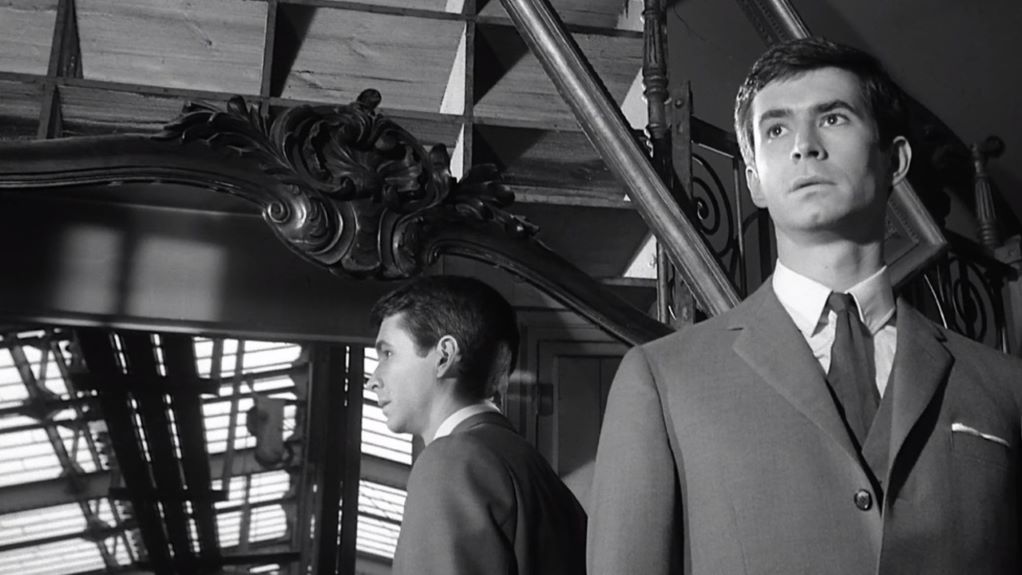
The Trial adapts, fairly faithfully, Kafka’s surrealist novel. Josef K (Anthony Perkins), a middle-management pen-pusher, is accused of a terrible crime without being told what it is. He stumbles from encounter to encounter, law court to law court, never given the ability to defend himself, spiralling down the rabbit hole with no sunlight. Welles’ The Trial captures this by turning Kafka’s work into a fever dream. Scenes link together with all the structural logic of a dream – locations seem randomly connected, with Josef turning corners and finding himself in courtrooms or opening cupboards to find surrealist sequences like his prosecutors being whipped by an angry functionary.

Welles shot much of the film on location in a single abandoned Parisian railway station, with the abandoned, decaying rooms redressed into a series of locations from the Advocate’s rooms, to a church to a law court. This was mixed with sequences shot in Zagreb industrial estates and a factory set made up of 850 extras banging typewriters in unison and all rising to end their working day at the same time. There is a horrible un-reality reality to The Trial, a deeply unsettling realisation you are watching something both set in a world real and impossible.

In fact, The Trial may be one of the most uncomfortable films to watch ever made in its innate understanding of the domineering terror of paranoia. Welles used a series of low angles and wide lenses to stress the oppressiveness nearness of walls and ceilings. Rooms always seem to loom in and crush the characters, with K himself frequently framed hemmed in by objects, walls and people. There is a sense of being “watched” in every scene – either from the oppressive bodies that surround K, or the prowling tracking cameras that follow him from location to location.

The Trial is a sort of paranoid’s wet-dream, a nightmare world where logic is gone, our lead character has no control over his movements or destiny and the entire world seems to be constantly bearing down on him and us. Who better to play the twitch-laden centre of this than Anthony Perkins. Awkward, uncomfortable and never anything-less than tense, Perkins features in almost every scene but always feels buffeted by events rather than controlling them. He makes K hugely uncomfortable with others – the many women who throw themselves at K he treats with suspicion mixed with terror. His self-loathing bubbles up whenever confronted with mirror images (such as Akim Tamiroff’s timorous Bloch), invariably reacting with barely disguised contempt.

What’s also interesting in The Trial is the possible insight into Welles’ character. The easy interpretation is to see K as Welles, the court standing in for the Hollywood machine that had shoved Welles from pillar to post and never given him a chance. But, if so, why did Welles urge Perkins to play the role as shiftily and uncomfortably as he does? There is an air of guilt around K throughout – as if The Trial was his nightmare about getting caught for whatever he did. Is this how Welles saw himself? How fascinating that this artistic behemoth read The Trial and seemed to see it as the paranoia of a guilty man. Did the film speak to a deep self-loathing in Welles himself? Did he, in the dark when the demons come, think he’d inflicted his destruction on himself?

It’s a fascinating idea and makes it even more interesting that Welles is all over the film. He plays the corpulent, arrogant advocate, meeting supplicants whole luxuriating in bed with his accustomed bombast. But he also speaks the film’s woodcut-illustrated opening parable (a story of a man waiting at a gate, that he moved from the books Priest to his faceless narrator). Welles’ tones are heard coming from a range of mouths as he overdubbed many of his Euro actors. He even speaks the credits. Everywhere you turn you see and hear Welles and it’s hard not to start to feel perhaps we are stumbling inside his own terrible fantasies. Perhaps The Trial is what Welles’ dreams (or nightmares) were like?

The feel of a nightmare often makes The Trial an uncomfortable and, if I’m honest, less than enjoyable watch for all the undoubted panache it’s made with. In fact, since the panache is partly designed to illicit that response, it’s almost a tribute to the film’s success. The Trial is masterful, but in its unsettling sense of paranoia also uncomfortable, although it’s fascinating to see Welles layering some (perhaps inner) guilt on top of Kafka’s tale of an innocent crushed in the system. Either way, there is plenty to admire if not love about The Trial.

The Train (1964)

Burt Lancaster takes on the Nazis and the schedule in The Train

Director: John Frankenheimer

Cast: Burt Lancaster (Labiche), Paul Scofield (Colonel von Waldheim), Jeanne Moreau (Christine), Suzanne Flon (Miss Villard), Michel Simon (Pape Boule), Wolfgang Priess (Major Herren), Albert Rémy (Didont), Charles Millot (Presquet)

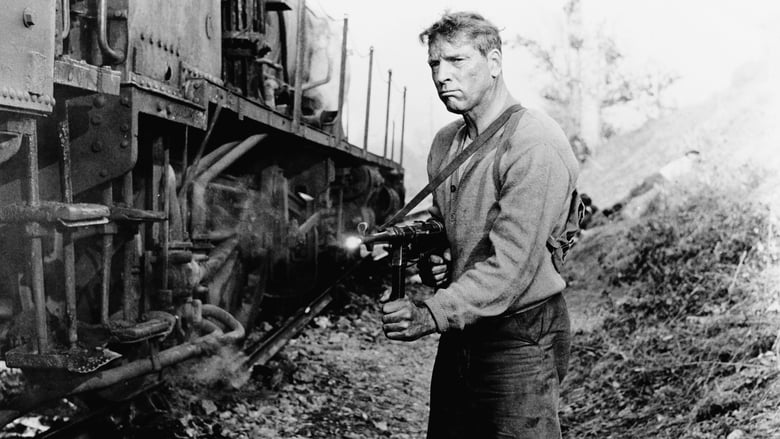
The German occupation of France draws to its close. Paris will fall in days to the Allies. As the Germans evacuate, Colonel von Waldheim (Paul Scofield) has other plans. All that fabulous modern art – all that stuff the Nazis call degenerate, the likes of Cezanne, Renoir and Monet –  that he has kept jealously guarded and locked up for years would be worth a tidy packet if he can get it back to Germany. Or is it that von Waldheim just loves the paintings so much he can’t let them go? Either way, he’s determined to load these priceless masterpieces onto a train and take them back into Germany – with rail network manager (and secret resistance fighter) Labiche (Burt Lancaster) bought in to lay on and then run the train. But will Labiche be willing to risk resistance and railway lives to prevent this looting of France’s cultural heritage?

John Frankenheimer’s rollicking, dark-edged war film mixes in serious questions amongst its compelling explosions and train wrecks. Namely – is any human life worth the cost of protecting a nation’s artistic heritage? Or in other words, what are we fighting for when we protect the nation – the people who live in it, or the ideas that underpin what a nation is? Because what von Waldheim is pinching here is a large chunk of France’s heritage – and it would be irreplaceable – and for many in the resistance it’s risks are acceptable to stop that. Even as the bodies start to pile up.

The Train is a slightly nihilistic war film, in which the vast majority of the cast wind up dead, leaving the survivors to wonder if those paintings were worth the dozens of lives lost to protect them. Frankenheimer even hammers it home in the conclusion by cross cutting between the bodies of the victims with the packing crates (each carefully labelled with an artist’s name), making the paintings seem even more like chilling tombstones. The Germans, rarely thinking for more than a second before gunning down resistance fighters or anyone caught working with them.

In this they take their lead from von Waldheim. Played with glacial chilliness by Paul Scofield, von Waldheim at first appears a reasonable, even decent man. But it becomes clear that this well-spoken, polite man has a mono-mania for art that trumps all considerations of human life. Von Waldheim believes art should belong only to those who can understand it, and clearly cares nothing for human lives around him, all of whom are disposable should he choose. Under his gaze, civilians are put against the wall without a second thought and soldiers instructed to meet all attempts at slowing the train with lethal force. Frankenheimer carefully builds over the course of the film von Waldheim’s unhinged amorality, culminating in a series of Dutch angles as he finally goes further than even his own soldiers will follow.

As his counterpoints we have the muscular humanity of Burt Lancaster. Focusing all his experience as an acrobat and circus performer in his youth, the film is a tribute to Lancaster’s athleticism. With Frankenheimer using a series of tracking shots and uninterrupted long shots, we are shown that without doubt it’s Lancaster jumping from moving trains, rolling down hills, jumping walls and bounding across roofs. Lancaster’s commitment also stretched to mastering many train engineering tasks with such success that he was able to perform them (uncut!) on film. 

Performance-wise the part falls carefully into Lancaster’s strengths as a tough-guy with a heart. And while at times he feels like what he is – a Hollywood star parachuted into the French countryside to do battle with the Germans – he nevertheless carries the film with a charismatic ease. His emoting – particularly in several speeches decrying the human cost of the operation – verges on the overly emphatic, but few other actors could have carried the near wordless final half an hour with such aplomb. Lancaster’s moral certainty and enraged humanity also makes a perfect contrast with Scofield’s distant amorality and coldness.

The action then takes place on a series of trains that have even greater impact because you know, unlike today, everything was done for real. Each of the crashes, explosions, de-railings and train-based stunt has the freshness and excitement of reality behind it. The real events that inspired the film saw the French Resistance prevent the art train leaving Paris through drowning it in red tape. But that’s a lot less exciting than an ingenious “wrong stations” routine or a desperate chase across the French countryside (and very few Hollywood directors shot France as well as Frankenheimer).

It all makes for an exciting cocktail, even if the central ideas of art vs. life are not explored as well as they could be. It captures that 1960s feeling of “war is hell” as bodies pile up, and Jeanne Moreau’s hotel owner gets a speech on the emptiness of men killing each other. Sometimes you feel The Train wants to delve deeper into the psychology and cost of its events – but then it slaps another train into a collision  and decides to be as much a “man on a mission” film. Either way, it adds enough depth to make it a rewarding watch. 

Jules et Jim (1962)

The film that launched a thousand menages: Jules et Jim

Director: François Truffaut

Cast: Jeanne Moreau (Catherine), Oskar Werner (Jules), Henri Serre (Jim), Vann Urbino (Gilberte), Boris Bassiak (Albert), Marie Dubois (Thérèse), Michel Subor (Narrator)

Of all the films of the French New Wave, Jules et Jim was the one that really captured the global imagination. Its success rode came not only from its embracing of the new French style, but also from the way it captured some of the mood starting to build across the world in the 1960s. Truffaut’s third film, it turned its then 29-year-old director into one of the most renowned directors in the world. Filmed with verve and imagination, it still holds up brilliantly today as well.

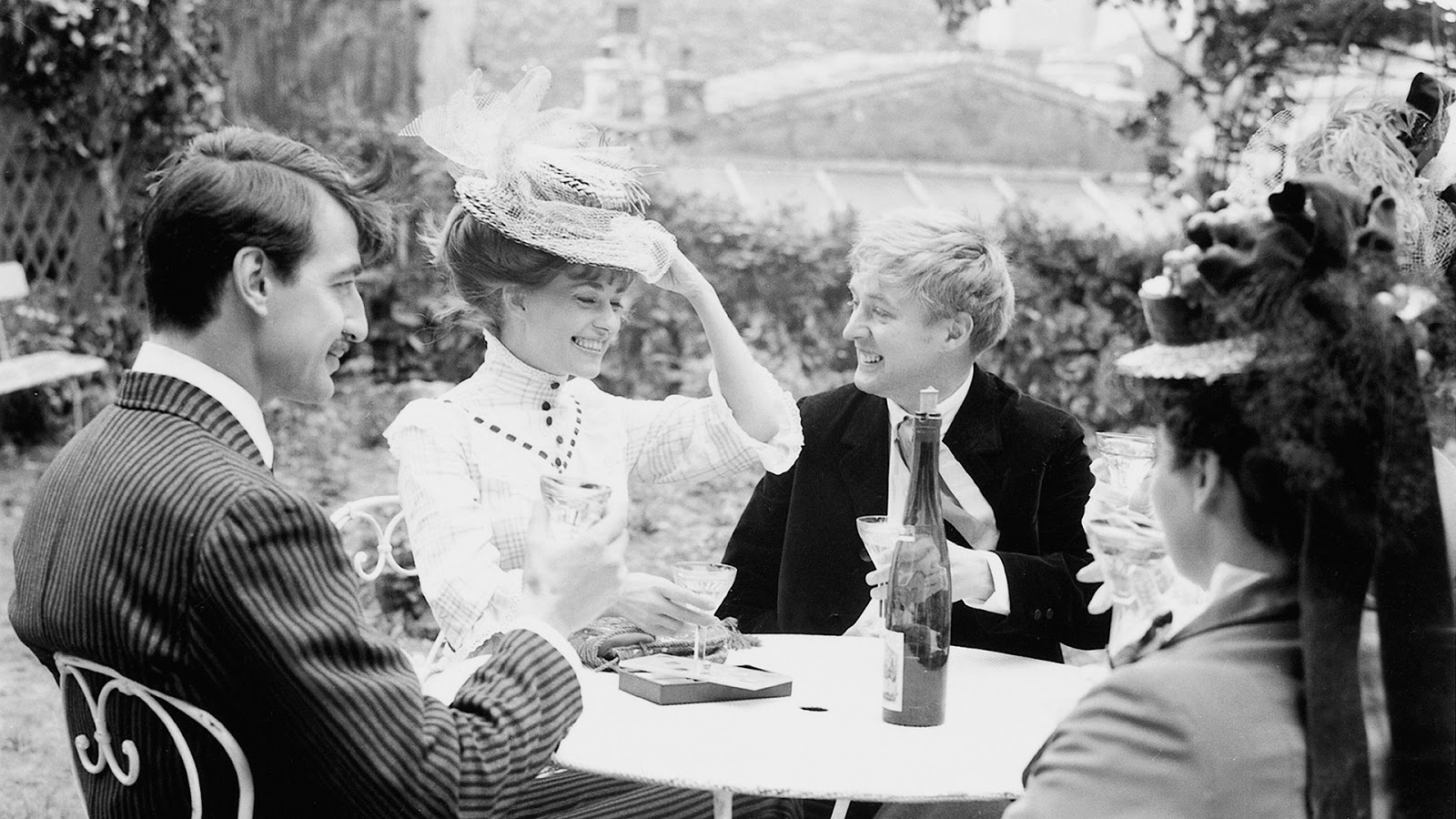
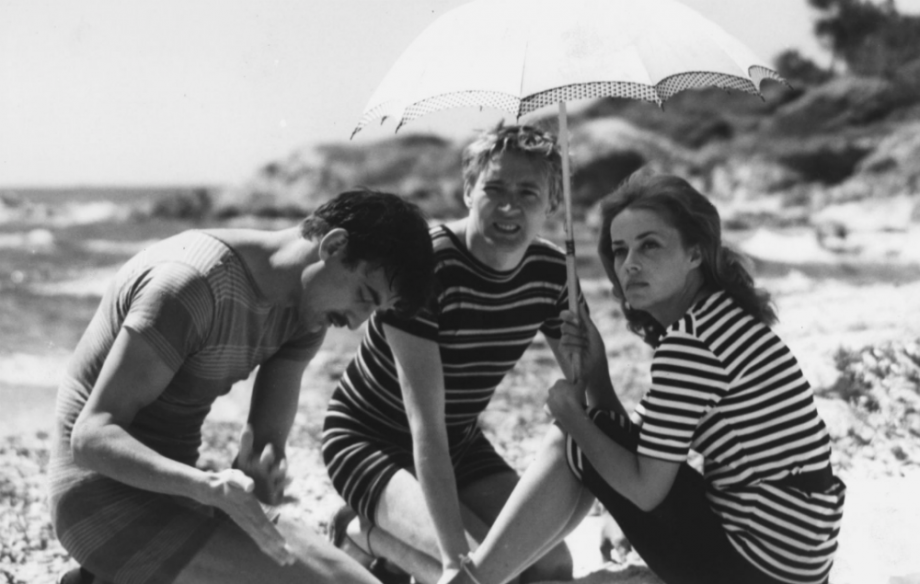
In Paris in the years before the First World War, French bohemian Jim (Henri Serre) and shy Austrian writer Jules (Oskar Werner) become best friends. They share everything – the arts, sport and occasionally women – and the bond between them is unshakeable. When both men meet Catherine (Jeanne Moreau), a free-spirited, extremely bohemian young woman, they both fall in love – although the infatuated Jules is the first to admit it. Both men fight for their countries in the Great War and return to civilian life: Jules marries Catherine and they have a daughter. But home life cannot keep Catherine bound down, and a visit to Jim throws the three of them into a curious but warm menage-a-trois. But can such bliss last forever?

Truffaut’s film is playful, vibrant and overflowing with style. While other French New Wave films prior to this had focused on sending the camera out into the streets and capturing the lives of everyday Parisians, Truffaut’s film mixes this with period trappings. Utilising the dynamic camera work of his peers, Truffaut throws in carefully selected newsreel footage and still photography. But all this material is edited with modern forcefulness, Truffaut using a range of freeze frames, wipes, dolly shots and several other editing and camera tricks to make this period story feel astonishingly fresh. The film is fast paced and brilliantly made, and Truffaut’s camera roves like an engaged but playful observer – a feeling added to by the use of a subtly wry narration.

According to legend, Truffaut found a copy of Henri-Pierre Roché’s semi-autobiographical novel in a charity bin and fell hard for the book. It’s a mark of Truffaut’s ability to judge the time he lived in, that he saw how clearly this story of bohemian free love in the 1920s would speak so strongly to the atmosphere of the 1960s. It’s a story that feels more dated today – and at times it’s hard not to feel a little bit annoyedby the very knowing, arty, exhibitionism of its characters, and the way they are very consciously living life as a performance – but it chimed like a bell back then. And the slight air of artificiality about many of the characters throughout gives even more of a jar of real emotion when they respond naturally to tragic and upsetting events.

Truffaut’s film – blessed with a simply sublime score from Georges Delerue, which captures the tone of the film perfectly – becomes a brilliant exploration of the freedom and imprisonment that comes from living your life for every new experience, and never settling. All three of the characters, to various degrees, refuse to settle for convention but are constantly striving for a marvellous new experience. Even the character least affected by these feelings, the more sensitive and weaker Jules, is willing to adapt and change his life constantly just so he can remain part of this circle and keep Catherine (with whom he is besotted) in his life.

Ah yes Catherine. Jeanne Moreau gives the sort of performance here that seems to define an entire generation. Again, today, Catherine’s constant striving for new experiences and addiction to the buzz of infatuation comes across at times as (to be honest) selfish. But she is also an electric figure, overflowing with life and joie-de-vivre. Moreau’s every scene is breathtakingly eye-catching – and Truffaut recognises this with carefully timed freeze-frames where the camera seems to soak in her beauty and dynamism as much as Jules and Jim. Moreau’s performance is truly iconic, like a force of nature, almost impossible to categorise – she is loving, selfish, brave, scared, flirtatious, bashful – and impossible to repeat.

It’s also clear why someone as unpredictable and all-consuming as Catherine gains the ever-lasting devotion of two close friends. Truffaut brilliantly captures both the hopeless devotion of these two men to this woman, and also the slight tinge of unspoken sexual bond between each other. Both men delight early in the film in each other’s permanent company, of this fact being recognised by all, and write each other poetry and stories. The film implies the fascination and longing both men have for Catherine, but also suggests that the strongest, most lasting bond is the one between the two men. Perhaps it is this that makes them so willing to settling into their menage – and certainly why, as Catherine’s interest in first one then the other waxes and wanes, it is each other’s company that they start to long for.

Of course that doesn’t mean that Jules doesn’t stay devoted to Catherine, a woman who gives him days of sunshine mixed with weeks of polite warmth. Oskar Werner is brilliantly sweet, gently naïve and vulnerable as Jules, filled with wit and tenderness but one of life’s passengers. He’s a man who follows rather than leads, or moves between the two other people in his life following the lead of first one or the other. The stronger willed Jim, played with a hardness and worldly realism by Henri Serre, is the one who both has the strength of character to hold Catherine longer and the will to turn away from her (even if for a short time).

The first half of the film is a marvellous explosion of relaxed joy, of pre-war innocence and youthful exuberance. It’s truly a young person’s film – and Truffaut’s  dynamic filming, inventive framing and giddy editing really captures this – and the film progresses much as life does into a middle age still clinging to the freedom of youth (like Europe attempting to recapture the innocence before the Great War) before beginning the descent towards the horrors to come of the 1930s. The film’s tragic conclusion has the sadness of a world lost, touched with the ridiculousness that seems inevitable for its exhibitionist characters. It makes for a marvellous and breathtakingly giddy ride, that (even if it looks at time dated in its very 1960s vibe) still carries a great deal of delight, joy and above all fun. Truffaut’s greatest achievement and most famous film still makes for a quite a calling card.