Tag: Jeff Daniels

Speed (1994)

Speed (1994)

Thrills never came faster (or as much on a bus) as they did in Speed one of the greatest action films of the 90s

Director: Jan de Bont

Cast: Keanu Reeves (Jack Traven), Dennis Hopper (Howard Payne), Sandra Bullock (Annie Porter), Jeff Daniels (Harry Temple), Joe Morton (Lt Herb McMahon), Alan Ruck (Doug Stephens), Glenn Plummer (Maurice), Beth Grant (Helen), Hawthorne James (Sam), Carlos Carrasco (Ortiz)

For most of the 90s, nearly every action film made was promoted as “Die Hard in/on an X”. We had determined, maverick heroes fighting alone against the odds on trains, planes, mountains, aircraft carriers, Alcatraz… You name it, it was Die Hard-ed. But which one was the best? It might just be Die Hard on a Bus – or rather Speed. A never-ending rush of propulsive excitement, Speed is one of the most entertaining films of the 90s. It’s possibly the best high-concept actioner ever made and if you don’t come out of it with a sort of daffy grin on your face there’s something wrong with you.

“Pop quiz, hotshot. There’s a bomb on a bus. Once the bus goes 50 miles an hour, the bomb is armed. If it drops below 50, it blows up. What do you do?” And there’s the whole set-up right there. Detective Jack Traven (Keanu Reeves) is the hotshot, who has already foiled mad bomber (Dennis Hopper’s scheme to hold a lift full of hostages for ransom. Now, for round 2, he’s got to try and keep a bus moving over 50mph through the streets of Los Angeles. Helping him out is passenger Annie Porter (Sandra Bullock) who takes the steering wheel, and best friend Detective Harry Temple (Jeff Daniels) who’s trying to find the bomber. It’s pedal to the metal all the way.

The fact that Speed is as good as it is, is a miracle. Graham Yost’s original script had the bus not going above 20mph (it was called Minimum Speed – and sounds hilariously like the Father Ted spoof where Dougal was trapped on a milk float that couldn’t go below 5mph). It was set entirely on the bus and ended with it exploding into the Hollywood sign. The hero was a wise-cracking smart-ass John McClane type, the bomber was revealed to be his friend Harry and one of the passengers was a cowardly lawyer who met a grizzly end. Die Hard director John McTiernan passed on this unpromising mess, recommending his regular cinematographer Jan de Bont instead.

De Bont – in what remains the only good movie he directed – helped restructure the film into three acts: hostages in a falling lift, hostages in a speeding bus, hostages in an out-of-control subway train. Joss Whedon rewrote the dialogue (Yost generously attributes “98.9% of the dialogue” to Whedon). The bomber became a separate character – with the insane energy of Dennis Hopper behind him. Bullock’s part became a combination love interest and comic sidekick. And Keanu Reeves’ Jack Traven, from being a McClane knock-off, turned into an earnest, dedicated, insanely brave and determined police-officer. And that lawyer was turned into Alan Ruck’s out-of-his-depth wide-eyed tourist. Boom: suddenly, we had a film that felt a little unique.

From there, what made it work was the propulsive pace. An opening act with a lift in peril, sets up the race against time, perilous stakes and dangerous risks (powered by an effective strings and drums soundtrack by Mark Mancina). There is a perfectly poised battle of wits between Hopper’s mastermind bomber and Reeves’ cop. Split second decisions and acts of chance have life-saving consequences. The dialogue is just the right side of cracking wise, with enough earnestness to temper the spice. The whole first act makes a hell of a movie in itself. Like the best of the Bond pre-credit sequences, you could go home happy at the end of it – and having never even seen a bus.

But hang about because that bus is well worth waiting for. More wildly exciting than a one-vehicle chase scene has any right to be, de Bont brilliantly cranks the tension up and never lets go. You’ll grip the edge of your seat as Traven races through town and down the freeway to try and get to the bus before it hits that ominous 50mph – even though, of course, we know there is no chance of him succeeding. Because, after all, if he did Reeves wouldn’t need to jump from a car to a bus at 50mph. de Bont – a skilled cinematographer – has the camera duck and weave among the traffic so hard you’ll feel the g-force throwing you back in your seat.

That’s before we even have the bus itself charging through traffic, with the reluctant Annie at the wheel. Throwing itself through crowded streets, around hair-pin bends and over huge gaps in unbuilt freeways, the entire film is basically an opportunity to gorge yourself on an unlikely vehicle doing gripping stunts at insane speeds. We also get the peril of Jack’s attempts to defuse the bomb on the run – when, inevitably, the fuel tank is damaged the film has the wit enough for Annie to say “what, you felt you needed another challenge?”. It’s, frankly, exciting, expertly shot and edited stuff.

And it also works because the characters are lightly – but very warmly – sketched. Reeves – at the time still best known as “Dude”-ing his way through Bill & Ted – shaved his hair to look more like Hollywood’s idea of an action hero. But what makes him stand out is the sincerity, politeness and rather endearing determination to save lives and serve his community. It’s the trademark Reeves sweetness that has made countless action films afterwards work – he’s never an alpha male or a ‘damn the consequences’ maverick. Bullock became an overnight mega-star with a performance overflowing with charm and wisecracking girl-next-door vulnerability. No one did lip-smacking villiany like Hopper. Daniels is great and the bus was crammed with reliable character actors who craft people we care about from crumbs.

That and the relentless excitement of almost every scene. I’ll agree that the third act resolution on the speeding subway train effectively just re-treads elements of the first two acts. Is it any wonder that Speed 2 was such a disaster when even the original can’t go through less than two hours without repeating itself? But you won’t care, because if the film doesn’t have you firmly in its grip by then, there must be something wrong with you.

De Bont never again even got near the outstanding quality of this ultimate thrill ride. But then, when you’ve touched action-thriller perfection, does that matter? Speed is the best high-concept, Die Hard rip-off ever made – so much so that you feel a bit churlish mentioning that as part of its DNA. Superbly paced, totally gripping and guaranteed to leave you with a big cheesy grin on your face, I’ve seen it more times than I can count and still I feel floored by it. You’ll believe a bus can fly.

Good Night, and Good Luck (2005)

Good Night, and Good Luck (2005)

The importance of journalism is loudly praised in this engaging but faultlessly liberal Clooney film

Director: George Clooney

Cast: David Strathairn (Edward R Murrow), George Clooney (Fred Friendly), Robert Downey Jnr (Joseph Wershba), Patricia Clarkson (Shirley Wershba), Frank Langella (William Paley), Jeff Daniels (Sig Mickelson), Tate Donovan (Jesse Zousmer), Ray Wise (Don Hollenbeck), Helen Slayton-Hughes (Mary), Alex Borstein (Natalie), Thomas McCarthy (Palmer Williams)

In the early 1950s America seemed to be in the paranoid grip of one man. Senator Joseph McCarthy was the tip of a spear of anti-Communism, targeting every part of American life. To have even had thoughts that might be seen as socialist or communist, was enough for you to be considered an Anti-American and potential enemy of the state. McCarthy led a campaign to unearth Communist spies and sympathisers in the government, military, business, academia and the media. Blacklists and persecution were rife, and the slightest past association could condemn you. It took many years before anyone took a stand against this.

One of the leaders of this stand was renowned journalist Edward R Murrow (David Straithairn). Famous for his broadcasts from London during the Blitz, Murrow hosted an investigative journalist programme See It Now. A passionate believer in the power of television to educate and inform, Murrow and his producer Fred Friendly (George Clooney) are appalled when Air Force officer Milo Radulovich is condemned to be discharged, based on members of his family being communists and a sealed envelope of charges he was never allowed to see. Despite the worries of network CBS, Murrow, Friendly and their team run an episode of the show that exposes McCarthyism and its injustice, the first of several investigating McCarthy. But what price will they pay?

Clooney’s well-made, heartfelt film, is an impeccably liberal piece of film-making that is a very sincere tribute to the potential of television to be more than just an idiot’s lantern. Clooney frames the film with Murrow accepting a lifetime achievement award in 1958: he uses the opportunity to make a speech rebuking the room full of executives and journalists for squandering the potential of television to inform rather than just entertain. Murrow would of course be horrified by what TV became. Good Night, and Good Luck is a rose-tinted view of television journalism at its pioneering best: just as the end result of See It Now being gutted by cuts is a realistic look at where the scales will fall if entertainment and money are balanced with principles and education.

Clooney’s father was a TV journalist, while Clooney himself majored in journalism. The cut-and-thrust of the newsroom is as intrinsic to him, as is a desire to investigate and inform as part of a healthy political debate. Good Night, and Good Luck captures the mood of a newsroom with a convincing confidence. Journalists debate the fine point of stories, editors rush to assemble films and executives balance the pros and cons. It’s all shot in a beautiful monochrome, that exquisitely captures the haze of cigarette smoke all this takes place in. It’s a shot with a handheld urgency, sharply cut, that puts us into this world of cut-and-thrust media decisions.

And it makes clear what TV news can be. Not agenda led, but facts led. Not kowtowing to power, but challenging it to justify itself. Looking into matters that are important, not sensational. Wanting to inform people and expand their understanding, rather than pander to the lowest common denominator. Murrow’s shows are scrupulously fact-checked, and allow full rebuttal from their subject. He comes at story not with a pre-supposed position, but based on where the facts and his editorial judgement leads him.

It all takes place in a TV set that’s really striking in its humbleness, compared to the operatic news sets we see today. The 1950s studio is small, cramped and simple – and by contrast the ideas are large, expansive and complex. Murrow’s set is little more than a chair with a TV monitor. His producer Fred Friendly, literally sits at his feet to hand him notes and cue him in with announcements and VT. The See It Now set contrasts vividly with the more grandiose sets for Murrow’s other show, a series of puff piece interviews with popular stars like Liberace. (While Murrow learns his scripts by heart for See it Now, he professionally reads through a series of cue cards for these for-the-money interviews).

Murrow and Friendly also won’t compromise. They defend their right to make the show to CBS President William Paley (a brilliant performance from Frank Langella), who prides himself on no direct intervention on the news but pushes for a less controversial line. The entire team is consulted on every issue. The newsroom is a place where our better angels can come out.

But it’s still happening in an America where people are careful about what they say and do. A subplot concerns reporters played by Robert Downey Jnr and Patricia Clarkson: secretly married – contrary to CBS policy – like those suffering from McCarthyism, they must live a lie in order to protect what they have. See It Now is in danger of criticism, cancellation and attack. Another CBS anchor, Don Hollenbeck – perfectly played by Ray Wise (and few actors are better at suppressed desperation than Wise) – is dealing with constant media persecution for his perceived communist sympathy. Murrow and Friendly are not perfect: they sometimes dodge the fights they can’t win and Murrow in particular shrugs off or ignores Hollenbeck’s concerns with tragic results.

But, as Clooney makes clear, the good outweighs all the rest. As Murrow, David Straithairn (Oscar-nominated) has never been better. He perfectly captures Murrow’s mannerisms, but mixes it with wonderful measure of honesty and decency, mixed with a degree of pride and self-righteous certainty. He dominates the film (with Clooney as a generous foil) and carries much of the film’s liberal message that smart, intelligent, dedicated men can change the world.

Good Night, and Good Luck might be the most soft-left liberal film made in Hollywood in the last fifteen years. But it is a fine example of film-making craft and the earnest honesty with which it is made in its own way inspiring. It’s Clooney’s finest film and it’s grounded in his strengths: fine actors and writing carrying a sincerely told message.

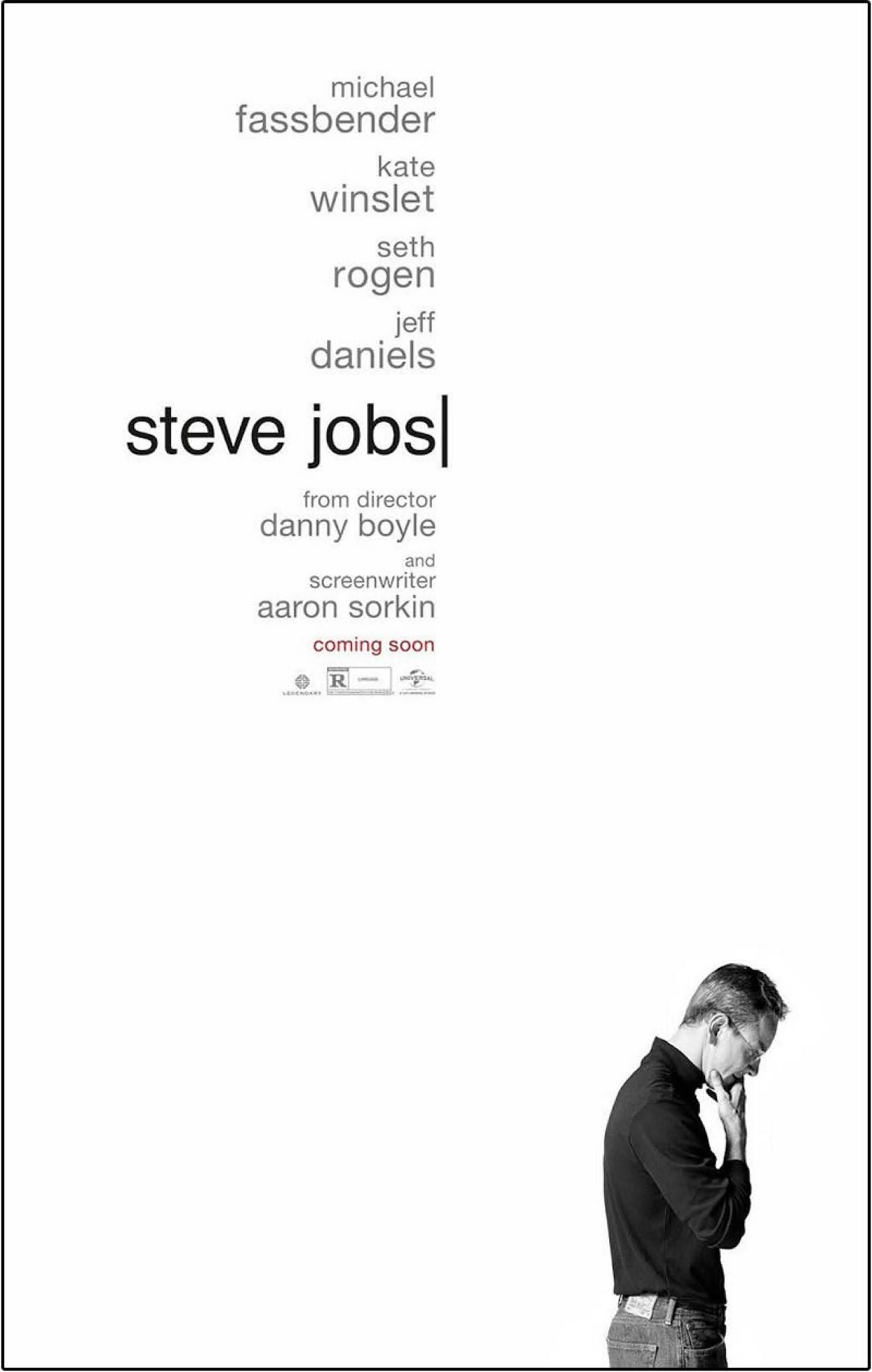
Steve Jobs (2015)

Michael Fassbender excels in Danny Boyle’s superb Sorkin scripted biopic Steve Jobs

Director: Danny Boyle

Cast: Michael Fassbender (Steve Jobs), Kate Winslet (Joanna Hoffman), Seth Rogan (Steve Wozniak), Jeff Daniels (John Sculley), Katherine Waterston (Chrisann Brennan), Michael Stuhlbarg (Andy Hertzfield), Perla Haney-Jardine (Lisa Brennan aged 19), Makenzie Moss (Lisa Brennan, aged 5), Ripley Sobo (Lisa Brennan, aged 9), Sarah Snook (Andy Cunningham)

The art of movie biography shouldn’t be slavishly covering every second of the subject’s life. It should be capturing their essence. Steve Jobs does exactly that, a superb distillation of its subject’s life and personality through focusing on the preparation for three vital project launches: the Apple Macintosh in 1984, the NeXT Computer in 1988 and the iMac in 1998, each playing out in real time. The contrasting (and continuing) clashes and tensions at each event – personal and professional – tells us more about the man and his impact than a cradle-to-grave biopic ever could.

It also helps that Steve Jobs has an electric script from Aaron Sorkin. Sorkin approached the project not like a film, but as a classic three-Act play. Steve Jobs is an explosion where all the special effects are the words, held together by pulsating ideas and a sense of rhythm musicians would envy. This is Sorkin at his absolute best, a script with zip and jokes but also a profound understanding of exactly the sort of tunnel-visioned visionary perfectionism Jobs encapsulated, all wrapped up with a beautifully judged emotional through-line. Only Sorkin can make just actors delivering dialogue as dynamic and edge-of-the-seat as a car chase.

And (like The Social Network) his intensely intellectual style, and sense for the frustration of the super-intelligent at the rest of us for not keeping up, is perfect for this tale of the creation of the future of computing. Sorkin uses product launches as a window into how fresh idea can be accepted (or not) by the world. The battles over them, with the focus on small details that communicate the big picture and the difficulties of making others understand the visionary core that makes something work is crucial – and brilliantly delivered here. That’s perfect for Sorkin, who is gifted at making big-picture passionate thinkers sound as brilliant as they are.

But what makes Steve Jobs perhaps his most compelling script, is that he adds an emotional undertone to it. Jobs was a visionary, who understood better than the customer what they really wanted. But he was also a flawed individual. Sorkin’s script makes clear that, like his computers, he was a closed system. Just as the Macs were designed to only work with their own software and not interface with others (Jobs’ gospel, the exclusivity of the product being what makes it special), so Jobs himself built his own conception of the world and refused to let anything outside that influence it, or allow any external factors to change his mind. Decide he was loyal to someone, and nothing they do will shakes that. Decide another has betrayed him, and the system locks them out.

Central to this is Jobs’ relationship with his unacknowledged daughter. From the 5-year-old he reluctantly spends time with, to the young girl he starts to form a carefully emotionally managed bond with to the 19-year old who finally tells him how much she resents his closed-system management of their relationship. Sorkin’s script brilliantly balances an insight into why Jobs might have acted like this (bound up in issues with his birth parents) and the emotional impact it has on the daughter (the hugs not returned, the words not said). Jobs isn’t a bad man – although the script doesn’t shy away from his selfishness, or the appalling things he said about Lisa’s mother in the press – or a straight-forward terrible dad. He’s just not quite capable (or willing) of giving the emotional commitment needs. It’s written tenderly with a great deal of empathy for both father and daughter.

This emotion is further bought out by Boyle’s dynamic humanism at the helm. It’s a reminder of what a great theatre director Boyle is: this film is basically one of the most dynamic plays you’ll ever see, fast cuts and graphics intermixed with extended one-shot dialogue scenes that allow his actors to flourish. Boyle employs on-screen graphics and montage to move us between the product launches, but isn’t afraid to let his camera serve the dialogue, with the exchanges brilliantly cut to the rhythm of the dialogue.

He also sets out a space for the actors to deliver uniformly superb performances. Front and centre is Michael Fassbender’s transformational performance. He communicates Jobs’ brilliance and his ruthless determination to never compromise. It’s a performance of messianic intensity, but also extremely grounded and real – and, like Sorkin, he understands the heart of the film is the father-daughter relationship. Fassbender carefully hides Jobs’ emotional need, just as he understands the dynamism that wouldn’t allow a hint of vulnerability and arrogance that judges everyone as second-best to himself. He’s a tough, difficult, uncompromising man – but also an egalitarian one, (eventually) willing to acknowledge his flaws, the biggest being his fear of emotion.

Equally brilliant is Kate Winslet as Joanna Hoffman, Jobs’ long-time confidante and ‘work-wife’, manager of each of the launches and a combination of mentor, conscience, counsellor and parent. Jeff Daniels is excellent as the businessman who goes from mentor to unforgiven rival. Seth Rogan gives his finest dramatic performance as Steve Wozniak, here a decent man and computing genius, who lacked Jobs’ ability to “play the orchestra” and shape events to his will.

It’s all wrapped up in a gripping film that feels like a fusion of theatre and film. If it has a problem, it’s that many will find its focus on the nuts-and-bolts of Apple hard to follow (and I confess, the script makes me understand the drama without understanding the product). But its strength is in understanding visionaries, their ability to shape ideas that wouldn’t occur to the rest of us – and the selfishness, and the damage that causes, that often goes hand-in-hand with that. With scintillating acting, skilful direction and, above all, a superb script, Steve Jobs is sharp and engrossing drama.

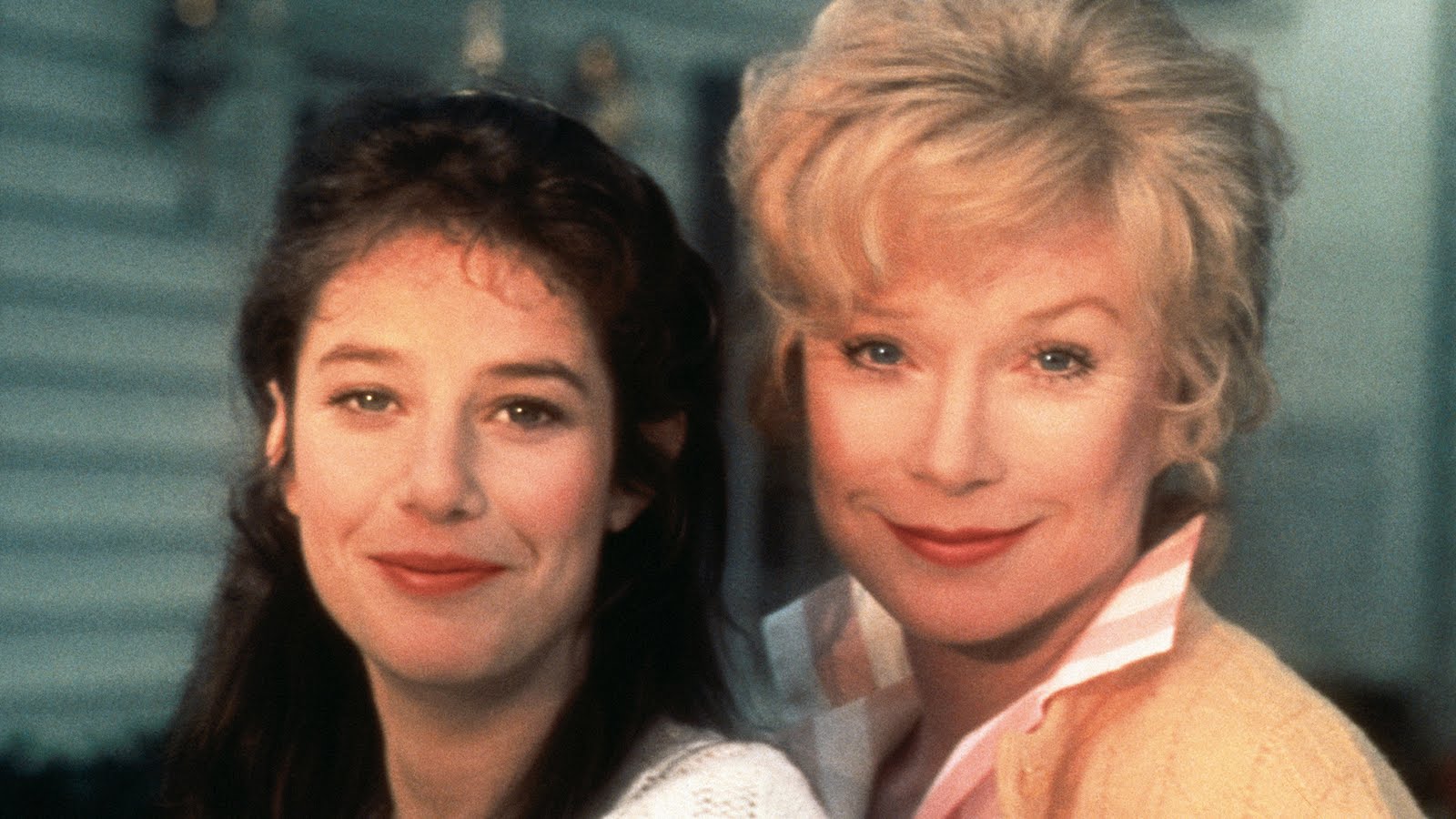
Terms of Endearment (1983)

Debra Winger and Shirley MacLaine are tempestuous but loving mother and daughter in Terms of Endearment

Director: James L Brooks

Cast: Shirley MacLaine (Aurora Greenway), Debra Winger (Emma Greenway-Horton), Jack Nicholson (Garrett Breedlove), Jeff Daniels (Flap Horton), John Lithgow (Sam Burns), Lisa Hart Carroll (Patsy Clark), Danny De Vito (Vernon Dalhart)

Spoilers: If you can spoil one of the most famous tear-jerkers of all time.

I think its fair to say 1983 was a weak year at the Oscars. The finest film of the year, Ingmar Bergman’s Fanny and Alexander, was a four-hour Swedish saga (and arguably a TV series anyway), wasn’t nominated. The most lasting films of the year, Flashdance, ScarfaceWar Games and Return of the Jedi, were never Oscar bait. Terms of Endearment motored through to hoover up five Oscars – beating out The Big Chill (cut from a similar soapy cloth), The Dresser (a British stage adaptation), The Right Stuff (a slightly cold Mercury programme saga box office flop) and Tender Mercies (a low-key character drama about a Country-and-Western singer that won Robert Duvall an Oscar). By any measure that’s not a list for the ages.

And Terms of Endearment had the added bonus of being the second biggest hit of the year, after Jedi (yes, I know!). It’s a surprise, as this sort of female led drama rarely scoops the big prize – so at least it makes a pleasant change. Terms spools out a collage of scenes (there are sometimes time jumps of years between scenes), chronicling the lives of over-protective, domineering mother-and-free-spirit Aurora (Shirley MacLaine) and her daughter, defiant, at times highly-strung, Emma (Debra Winger). The two have a difficult, though loving relationship, often depending on each other for emotional support – especially in their relationships: Emma’s with feckless philandering English Professor ‘Flap’ Horton (Jeff Daniels) and Aurora’s with playboy retired astronaut Garrett Breedlove (Jack Nicholson). But both come together when tragedy and illness strike.

Watching Terms of Endearment today, it’s often hard to see what the fuss was about. Although it wasn’t the first film to jerk tears via last-act illness (see Love Story), this started a wave of films where illness to a key member of the family (usually a mother) has a devastating, tear-jerking (but often eventually heart-warming) effect on the rest of the family (especially young children). Terms of Endearmentprobably does this better than those that followed, but watching it today its hard not to see it as something a little more familiar than it might have felt at the time.

Brooks’ background was in TV (he had several successful shows on his resume, from The Mary Taylor Moore Show to Taxi – so he certainly knew what the masses liked) and this, his first film, often feels like a cut-down mini-series. It matches exactly the sort of soapy, family saga of several TV epics of the time, and Brooks shoots the film with an unfussy, visually flat series of TV angles (aside from his skill with actors, his directing Oscar is a travesty). With each scene effectively standing alone – its collage effect means the film covers at least 14 years minimum with often only the age of the children any indication that time has passed – it also has a slightly bitty air of something assembled for cutting into episodes or advert breaks.

Not that there is anything particularly wrong with this. But, it does mean the film feels like it meanders along through a series of small crises, designed to be easily digestible. The film has a whimsical lack of directness – not helped by its overbearing (and dated) musical score. It relies strongly on sparky dialogue delivered by a cast who all look like they are having a good time (although, allegedly, they really weren’t with Winger and MacLaine in particular barely on speaking terms when the cameras weren’t rolling).

The main dramas are romantic. Aurora doesn’t quite know how to respond to her feelings for gnarled playboy Garrett. An early date between them hilariously contrasts her ludicrously over-formal clothes and his scruffy indifference. Its a difficult dance between two people who, for various reasons, are scared of commitment. But then Emma has made her own mistakes. She’s married Flip (is there a worse name in cinema?) for independence, but really they have nothing in common – and Flip’s eye quickly goes roving. Emma responds in a way her mother would understand: a potentially ‘first strike’ affair with John Lithgow’s meek bank manager (Lithgow and Winger have a wonderful scene at a diner, where he is almost too scared to touch her hand). You can see both mother and daughter teeing themselves up to make the same mistakes: the generations never learn from each other.

At the heart of the film is the mother-daughter relationship. But for me, this often lacks focus and never really coalesces into something that feels real or emotionally coherent. Now you could say that’s like life – and that’s a fair point – but several of the events feel heightened (particularly those featuring Aurora) and the characters are mutually dependent when the story demands it, and barely in touch when the opposite is needed. It’s easy to feel some connecting thread is being lost in those massive time-jumps. I found it hard to escape the feeling several times that people behave like this in the movies but never in real life.

But then, you get the final thirty minutes which revolves around the cancer diagnosis and eventual death of Debra Winger’s character. Here is where Brook’s flat, unobtrusive style comes into its own, his simple, restrained staging of these scenes making them surprisingly moving and affecting – especially considering the artificiality of some of what we’ve seen so far. For the first time, emotion, truth and earnestness – without too much blatant heart-string tugging – comes into play, and these simple scenes of two mothers saying goodbye to their children and each other end up having real emotional impact – as do the slightly stunned scenes of grief of those left behind.

It’s a shame then that most of the rest of the film before that doesn’t quite connect with me. The film was festooned with Oscars, but naturally the person most responsible for it working – Debra Winger – missed out. Winger is superb here, the only character who feels genuinely true, tender and also flawed in natural ways. She is slightly impulsive but also frightened of change, a character who can shout and rage but also is weak and dependent on emotional bonds. She’s totally believable and I would have loved to see more on her troubled relationships with her kids, and how her eccentric mother has impacted her ability to form bonds with her kids. The film doesn’t go there.

The Oscar went through to Shirley MacLaine who gives a big, showy performance as Aurora – and nabs the “Oscar Clip” moment as she bellows at nurses to give her daughter her medication. MacLaine’s Aurora never for one moment feels like a real person, but instead a novelistic invention of an eccentric mother, thrown on screen. MacLaine plays her to the hilt, but it’s a performance that feels mannered. But she gets the film’s fun moments – and gets to spark off Jack Nicholson who coasted to another Oscar as the sort of horny scoundrel he would play again and again for the much of the next thirty years on screen.

Terms of Endearment has enough in it that, if you like this sort of thing, you’ll love it. Perhaps it does mean more to mothers-and-daughters. I found it at times overly twee and laboured. But I can forgive it a fair bit for how effectively it displays grief – and how brilliant Debra Winger is in it. Over honoured? Sure. But, for its genre, a high point.

The Martian (2015)

Matt Damon is Lost in Space in The Martian

Director: Ridley Scott

Cast: Matt Damon (Mark Watney), Jessica Chastain (Commander Melissa Lewis), Jeff Daniels (Teddy Sanders), Kristen Wiig (Annie Montrose), Chiwetel Ejiofor (Vincent Kapoor), Sean Bean (Mitch Henderson), Michael Peña (Major Rick Martinez), Kate Mara (Beth Johansson), Sebastian Stan (Dr Chris Beck), Aksel Hennie (Dr Alex Vogel), Mackenzie Davis (Mindy Park), Donald Glover (Rich Purnell), Benedict Wong (Bruce Ng)

Imagine being abandoned somewhere really difficult to get out of. Now how about being abandoned somewhere where it’s literally impossible to escape? Well you can’t get much more impossible than Mars, a place so bloody difficult it doesn’t even supply you with such luxuries as oxygen, water or food. But that’s exactly what happens to astronaut Mark Watney.

Part of the first manned mission to Mars, Watney (Matt Damon) is struck by debris and presumed killed after a storm forces the crew to abandon their planet. With no one on Earth aware he is alive, Watney faces huge difficulties: the next Mars mission isn’t for four years, and will land over 2,000 miles away. He has only enough food for at best a couple of years, and his Mars Rover can only travel 70 miles before it needs to be recharged. Fortunately, Watney (as well as being incredibly inventive) is a botanist – and works out a complex improvised farm in the base to grow potatoes (the only potential crop he has) as well beginning to modify the Rover to drive to the next mission site in four years. But things change when NASA (after holding his funeral) spot his movements via satellite – and now the race is on to organise a rescue mission.

The Martian perfectly works out what we find appealing about survivor stories: a charming, easy to relate to, protagonist who inspires with his never-ending MacGyver-ish invention. The best sequences by far focus on this, as Watney uses whatever he has available, from radioactive waste to his own shit, to try and save his life. There is something hugely compelling about seeing such inspiration in the face of adversity – perhaps because you want to believe “heck that’s what I would do…”

The first half of the film is crammed with these moments, made even more enjoyable by Watney’s off-the-wall, amusing commentary on events via video diary. Watney never succumbs to despair but instead constantly puts as positive as possible a spin on his situation, aware that opening the door to despair is the road to the end. A lot of this works so well because of Matt Damon’s terrific performance in the lead role. It’s no easy thing basically holding the screen entirely by yourself, but Damon does an amazing job here. He’s not just funny and engaging, but he also subtly touches on deep inner feelings of isolation and loneliness.

Scott understands all this and shoots most of the sequences with Watney with a low-key, calm but technically assured simplicity. He lets the action here largely speak for itself, and shows a better ear for comedy than I think many people thought him capable of. He also uses Watney’s “suit cam” and the video diary format to constantly shake up the visuals and allow us to see Watney’s actions and decisions from different perspectives. His mastery of the sweeping epic comes into its own when the camera swoops over Martian panoramas, making the hostile red planet look unbelievably beautiful. 

It’s easy to see why NASA supported this film so strongly, as the organisation comes out of this impossibly well. This is essentially a fictionalised retelling of Apollo 13, with the astronauts surviving above, while the ingenious techies below work miracles to first communicate with, and then devise a rescue mission, for Watney. The film is deeply in love with NASA – despite some personality clashes, the NASA characters are all shown to be highly intelligent, compassionate people. Even “the suit”, Director Sanders (played with a square jawed patience by Jeff Daniels), is basically a humanitarian who wants to preserve human life (and is cool enough to have a brilliant Lord of the Rings gag).

Despite this, the struggles of the various bigwigs at NASA to save Watney are slightly less interesting than the opening half of the film based around Watney’s struggles to survive. Perhaps because, well done as it is, we’ve seen this sort of stuff before, done better – not least in Apollo 13 – and partly because what NASA is trying to do is not quite clearly explained in layman’s terms. Think of the simple brilliance of Apollo 13 when the engineers need to create a filter using only what the astronauts have on the ship: it’s easy to understand, clear, brilliant and gripping. Comparative scenes in this film just don’t land as quickly.

The film also struggles as events and twists in the midway part of the movie lead to Watney losing a lot his agency. Since most of the film’s unique enjoyment is seeing Watney conquer his environment, and gain mastery of the rotten hand that fate has dealt him, as soon as that element is removed and Watney turns into more of a man in distress, the film struggles to maintain its unique interest. It makes the second half of the film more conventional (Damon is noticeably in this much less, considering how much he dominates the first half) and also ends up comparing unfavourably with other, better films (sorry I mean Apollo 13 again…)

But The Martian is crammed with good lines, fine jokes and some good performances – even if some of the characters seem a bit sketchily drawn. Benedict Wong is very good as NASA’s top techno bod. Chiwetel Ejiofor and Sean Bean do well as the most clearly sympathetic senior NASA bods. Up in space, the rest of the crew are very lightly sketched, but Jessica Chastain gives a fine sense of authority to the Mission Commander. But make no mistake this is Damon’s movie – and he dominates both the audience’s interest and the film’s.

The Martian is a very well made, intelligent crowd-pleaser. It’s not a classic – and it’s slightly in the shadow of better movies – but it’s brilliantly put together and hugely engaging. The second half of the story is less compelling and more conventional than the first, but there is more than enough invention and enjoyment there for you to want to come back and see it again.

The Hours (2002)

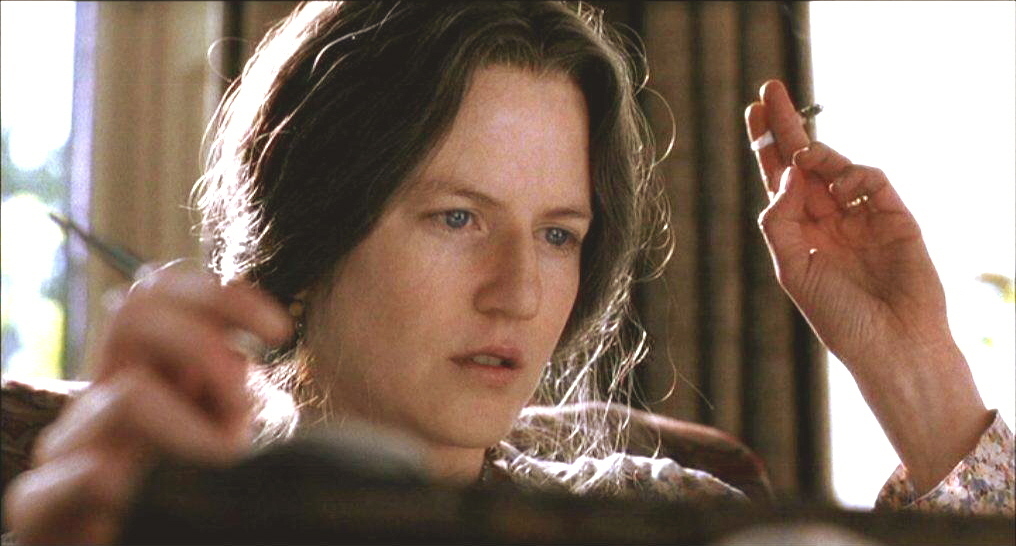
Nicole Kidman’s Oscar winning role produced a gallery of nose based puns, everyone convinced they could sniff out comedy gold

Director: Stephen Daldry
Cast: Nicole Kidman (Virginia Woolf), Julianne Moore (Laura Brown), Meryl Streep (Clarrisa Vaughan), Stephen Dillane (Leonard Woolf), Ed Harris (Richie Brown), Allison Janney (Sally Lester), Claire Danes (Julia Vaughan), Jeff Daniels (Louis Waters), John C Reilly (Dan Brown), Toni Collette (Kitty), Miranda Richardson (Vanessa Bell)

I remember when this film was released that it was garlanded with much praise as an intelligent and compassionate piece of filmmaking and a literate masterpiece. Well I’ve never seen it before and I have to say it holds up pretty well, even though it’s much more of a solid, impressive piece of professional film making than anything you might call a masterpiece.

The film covers three time periods each looking at one day in the life of three different women.  Inspired by Virginia Woolf’s novel Mrs. Dalloway, the day we see encapsulates in microcosm the life of each women. So we have Nicole Kidman as Virginia Woolf struggling to deal with depression while working on Mrs.Dalloway; Julianne Moore as a depressed 1950s housewife trapped in a suburban marriage; finally Meryl Streep as an editor in the 200s who has dedicated her life to looking after a poet friend who is dying of AIDS.

Each of these three plot lines are carefully intercut with both sharp scriptwriting and patient direction (Hare and Daldry’s stage experience here is a real boon for a concept that is actually quite theatrical). Although the opening sequence of the film suggests we might be in for a dizzying series of intercuts (the time period in this sequence switches almost every shot) it soon settles down into some well structured conversation scenes, moving almost in a cycle from our plot lines to another and only rarely directly cutting mid scene from time line to time line.

Of the plot lines I found Meryl Streep’s more modern day plot the most engaging and that Streep’s performance as the patient martyr carried the heart of the film. This was despite Ed Harris’ overblown performance as the dying poet, one of those two scene cameos that draw far more praise than they deserve. But this story has a tragic simplicity and Streep brings a lifetime of vicarious hopes and dreams out from every beat of the day.

Nicole Kidman however won the notice and awards as Woolf. Well deserved as these notices were, this is a more traditional part with clearer “award worthy” acting moments. While these are excellently done (Stephen Dillane is terrific as Leonard Woolf), the Woolf parts don’t quite link with the two other plot lines and, for me, didn’t carry the same emotional force that the tragedy of normal lifes did in the later plot lines.

Julianne Moore also does great work as a depressed housewife who lacks the emotional articulacy to fully understand her feelings, though the decision to introduce a direct link between the 1950s and 1990s plot lines later in the film does mean that the Woolf plot line feels even more like a slightly disconnected story. But this section of the film crackles with claustrophobia and Moore demonstrates the confused sexuality below the surface of Americana.I feel like I’ve been hard on this film, which is a very professional piece of work with some great performances and some real emotional high points. There are some great cameos from classy actors like Toni Collette, Jeff Daniels, Miranda Richardson, John C Reilly, Claire Danes and Allison Janney. It also is a very sensitive exploration of the pressure sexuality and emotions can press on people – even in the 1990s where homosexuality isn’t a dirty secret, Streep’s character still has more than enough confused emotional hang ups to sort out.

It’s a very good film but it’s so professionally done and smoothly assembled, the acting so sharp and on the money, that I’m not sure if there is as much heart behind the scenes in its making than appears on screen.