Tag: Jerry Zucker

Ghost (1990)

Ghost (1990)

Romance and the afterlife come together in a very earnest, but rather endearing, mega-hit

Director: Jerry Zucker

Cast: Patrick Swayze (Sam Wheat), Demi Moore (Molly Jensen), Whoopi Goldberg (Oda Mae Brown), Tony Goldwyn (Carl Bruner), Rick Aviles (Willie Lopez), Vincent Schiavelli (Subway ghost)

The biggest smash hit of 1990, Ghost turned Demi Moore into one of Hollywood’s biggest star, transformed ‘Unchained Melody’ into one of the most popular songs of all time and turned pottery into a hobby everyone thought they should try at least once. You wouldn’t have predicted any of this when you were pitched Ghost, helping to explain why nearly everyone in Hollywood turned it down. After all who wants a romantic film where the hero is six feet under and ectoplasmic by the end of the first act? Throw in that the film was directed by Jerry Zucker, best known for a parade of spoofs, comedies and farces and the smart money was on a bomb waiting to happen. Guess again.

Sam (Patrick Swayze) and Molly (Demi Moore) are a loving couple, living in New York: she’s a sculptor, he’s a banker (the sort of contrasting professions only Hollywood romantic couples have). They have big plans for the future; plans cut short when Sam is killed by a mugger. But Sam doesn’t move on with the bright heavenly light. Instead, he sticks around on Earth, wanting to be near Molly and desperate to find out who killed him. Something that’s hard to do when he can’t touch or move anything and no one can see or hear him except other ghosts. Two things change his (after)life – discovering his murder was only the tip of a pile of shady dealings at his bank that puts Molly in danger and fake-psychic Oda Mae Brown (Whoopi Goldberg) who isn’t quite as fake as she thought.

Ghost is extremely earnest and surprisingly endearing. Despite what the doubters said, from Romeo and Juliet to Titanic nothing gets people invested in a romance more than a tragic end. Ghost merely reshuffles the deck by placing this death at the start, then explores the on-going grief of two deeply bonded people, wrenched apart. It mixes that with familiar romance tropes: it doesn’t let Sam’s demise get in the way of the old “he just can’t say I love you too” chestnut (a Han Solo-ish ‘Ditto’ is his preferred response), inevitably finding a way to flip this in a later plot point.

Sure, it’s easy to giggle at the soft-focus obviousness of the lovey-dovey material between Swayze and Moore, but you can’t doubt their commitment or their natural chemistry. The film’s ace-in-the-hole of ‘Unchained Melody’-sound-tracked pottery turning into earth-rocking rumpy-pumpy is parody-bait, but kind-of-works in its soapy earnestness in showing how much they hunger for each other’s touch. (You could say it can’t be that good since they seem to fly through foreplay to climax in the time it takes a not-that-long song to play). Both actors are quite under-rated: Moore is perfectly tender and fragile (she was partly chosen for her ability to cry on a six-pence) but also tough and determined when the situation calls for it, while Swayze charmingly develops his character from cocky junior-master-of-the-universe to a deeper, more rounded man after he ceases to be alive.

Having stressed so much their tactile love in the film’s first act, it makes the afterlife hit harder. In this film haunting has the potential for a being a dull chore (the rules of haunting here were wonderfully parodied in BBC’s Ghosts sitcom): ghosts are stuck in whatever clothes they died in (without all the blood), can’t touch anything in the real world and end up sitting around waiting for they’re-not-sure-what. Dead Sam carries on one-sided conversations, tags behind Molly when she drives places and watches time go by so slowly. Ghost captures rather well the weakness of this situation: Sam sees all sorts of danger unfolding for Molly, but there is literally nothing he can do about it (a desperate Swayze thrashing his hand through things trying to stop them, plays rather well).

Ghost gets some brief meta-physical fun out of the lack of logic in ghosts being able to walk through walls and pass their hands through objects but can sit in chairs perfectly fine and never sink through floors (basically, don’t ask, as also parodied in Ghosts). It even chucks in some mildly-disturbing POV shots of what it looks like to Sam as he walks through someone else (icky basically). You can’t keep a high-flyer down though and Sam masters ‘ghost skills’ after what seems like a few hours training from an unbalanced poltergeist (a wonderfully twitchy Vincent Schiavelli), allowing him to interact with objects in the real world (he basically becomes an invincible superhero – and the ease he masters this makes me wonder why every single ghost can’t put aside an afternoon to learn how to do it. They’ve got the time after all!).

Of course, you couldn’t make a film about a man who can’t talk to anyone. Ghost has a trump-card in the Oscar-winning Whoopi Goldberg, having a whale of a time in a terrific comic performance as a hustling fraudster who unknowingly turns out to be a real psychic, eventually pushed into helping Sam. Goldberg provides nearly all of the film’s laughs – and her mad-cap energy makes an excellent contrast with the earnest leads – with her fast-talking frustration at the constant stream of interjections she hears from Sam (making conversations with other people rather challenging). It’s a role with several comic set-pieces, not least a crowded séance full of ghosts desperate to be heard, but also with heart as Oda Mae becomes a better person despite herself.

She does this of course by helping Sam root out exactly why he was murdered. The reveal of Sam’s secret nemesis will be a shock only to someone who has never seen a film before. Of course, his even cockier colleague and best friend (played with a sleazy desperation by a marvellously weasily Tony Goldwyn) is behind the shady financial dealings Sam was uncovering. Just to hammer home how much we loath Goldwyn’s Carl, he’s also a whiner, a guy who loves flashing his cash and makes some none-to-subtle topless moves on our grieving Molly. How dare he!

Ghost builds itself to a neat final confrontation that proves surprisingly affecting in its honesty (dead means dead) and its optimistic view of the afterlife as a place where love still lives on. Sure, it’s a bit corny and its weakness for teary, soft-focus romance is easy to poke fun at. But you can’t argue that it doesn’t work: it’s romantic, sweetly played, funny when it means to be (Goldberg is excellent) and surprisingly optimistic and feel-good.
First Knight (1995)


Casting choices only Hollywood producers could make #473: Richard Gere IS Lancelot du Lac

Director: Jerry Zucker

Cast: Sean Connery (King Arthur), Richard Gere (Lancelot), Julia Ormond (Guinevere), Ben Cross (Prince Malagant), John Gielgud (oswald), Liam Cunningham (Sir Agravaine), Christopher Villiers (Sir Kay), Valentine Pelka (Sir Patrise), Colin McCormack (Sir Mador), Alexis Denisof (Sir Gaheris), Ralph Ineson (Ralf), Stuart Bunce (Peter)

First Knight continues a proud tradition of Hollywood adaptations of British legends, with full-blown action and romance mixed with an anachronistic modern-ish vibe which clashes completely with the design of the rest of the film. Think anything from Ivanhoe to Robin Hood: Prince of Thieves. At heart these films are ridiculous, but to be a success they need to embrace this and create something with a bit of heart. First Knight is almost wholly absurd from start to finish – but it’s still remarkably good fun. Even when you laugh at the bizarre sequences that pepper the film, it’s still somehow entertaining. It doesn’t take itself seriously – so I feel people who lambast it are missing the point.

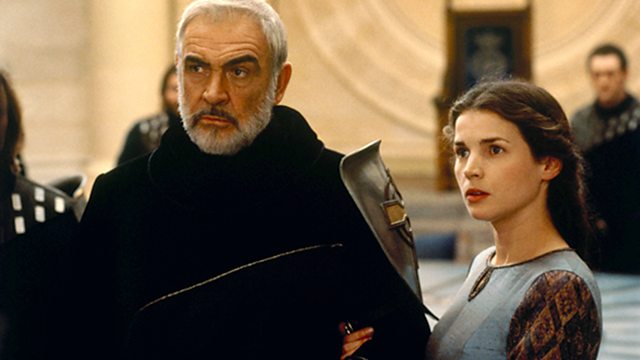
Anyway, it retreads the story of King Arthur (Sean Connery) with a modern mix. Here Arthur is an old man, marrying Guinevere (Julia Ormond) to seal a truce between Camelot and Guinevere’s home of Lyonesse. While being escorted to Camelot, an attempt is made by the villainous Malagant (Ben Cross) to kidnap Guinevere, but she is saved by charismatic chancer and expert swordsman Lancelot (Richard Gere). Returning to Camelot, she marries Arthur while Lancelot finds himself inducted into the Knights of Camelot. But their adventure together has led to a deep romantic bond between Lancelot and Guinevere – one that threatens to tear apart the harmony of Camelot.

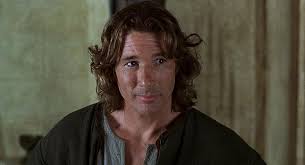
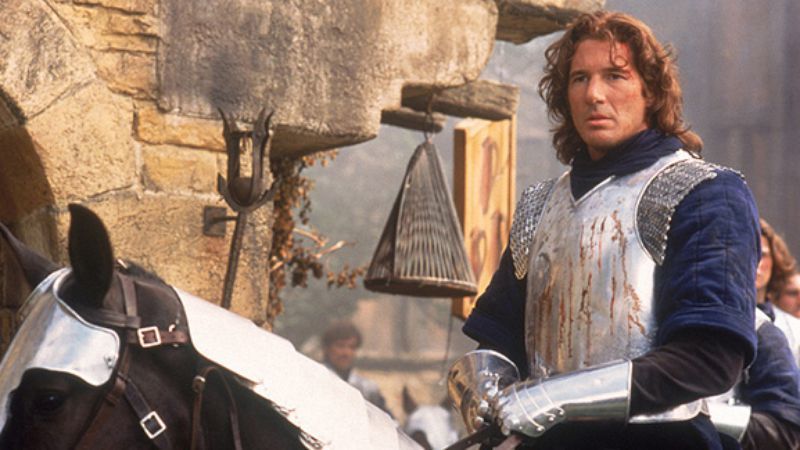
Something stupid or horrendously anachronistic happens in every scene of First Knight. Many of these moments are thanks to Richard Gere. Gere is at his most smirky here as Lancelot, an American Gigolo in King Arthur’s Court. There are few more modern actors than Gere – so seeing him in armour and cod-medieval garb jumps straight out as completely incongruous. Rather like Costner in Robin Hood, he makes no concessions to period whatsoever, and behaves more or less as he does in Pretty Woman. Every event in the film is met with his trademarked smirk-cum-grin and a twinkle in his eye. And while he clearly spent a lot of time on his sword work for this film, you literally never forget you are watching Julia Robert’s sugar daddy pretend to be a knight.

But then why should be really have made an effort to adjust his manner, accent or style for this film? After all this is a film where Lancelot takes part in a Total Wipeout competition – and on the basis of his performance in it is basically offered a spot at the round table. As a travelling entertainer, Lancelot woos the crowd with the sort of patter not out of place on a New York street corner. Later, the baddies hook up a boat with a pulley system that turns it into a super-fast speedboat. The baddies are all armed with pistol sized cross bows. It’s the sort of film where the lead villain rides into Camelot and shouts “Nobody move! Or Arthur DIES!”. Anyone watching this expecting a faithful exploration of Thomas Mallory seriously needs to change the channel.

So instead embrace the film for what it is. And enjoy the production values! The music score is swellingly impressive (now hugely familiar to any fans of Sky’s Ryder Cup coverage). The Camelot location looks brilliant. The costumes are wonderful – even if the knight’s armour (basically little more than a shield on the shoulder) looks horrendously inefficient. There is a very effective night-time battle excitingly filmed. The photography looks luscious. It’s shot with an old school, chocolate box, romance that makes everything look like a grand renaissance painting. The final battle between Malagrant and Lancelot is terrific.

I’ve also got to say that it offers an actually fairly interesting role to Sean Connery as Arthur. Considering that four years after this film he made Entrapment, a film in which he boffed Catherine Zeta-Jones, in a way it’s fairly daring for him to make a film that puts so much prominence on his age making him an unsuitable lover for Guinevere. His age is prominent in every scene (especially when counter poised with the modern vibrance of Gere). Half the time he’s with Guinevere he reminds her that he knew her as a child (yuck). He takes no part in any of the action – it’s Lancelot who (twice) rescue Guinevere, while Arthur commands from the rear. His relationship with Guinevere is almost devoid of sex and passion (they share only one remotely passionate snog). He even plays the poor cuckold, the man unable to excite his wife. Has Connery ever played such an unflattering part?


Julia Ormond – an actress who achieved a certain run of prominent roles in the 1990s – plays Guinevere. Despite the fact she seems to frequently find herself in distress, Ormond does manage to make Guinevere not feel like a damsel in distress. She’s proactive, she saves others, she’s defiant and (by and large) she knows what she wants and tries to get it. She also is an effective leader of her people. Ormond is also a fine, generous actress – she manages to convey a lot of chemistry with both Gere and Connery, two actors very different in style.

The film remains charged through with silliness. Ben Cross’ snarling villain has big speeches about how he wishes to escape from “the tyranny of Arthur’s Law”. The LAW is a major theme throughout the film – the characters bang on about it with an earnest insistence. Arthur falls back on it to make sense of his life. Lancelot struggles to understand and embrace the values it brings. Guinevere is determined to match law and duty together. Sure there are some silly grandstanding speeches about it – and the film runs with gleeful pride of Camelot as some sort of Socialist Utopia – but I suppose there’s a kernel of an idea at the centre here about justice and its importance in the world. It might mean we get a scene where Camelot is left totally undefended while everyone gathers for an open trial of Guinevere (guess what happens!), but at least it’s got an idea.

Of course that doesn’t get in the way of the silliness, the high blown acting, the silly events and the overblown dialogue. The heroes are all clean cut, and chiselled of jaw with perfect teeth, the villains all dressed in black, forever scowling and rugged of shave. It never for one minute feels remotely like it is happening in a truly medieval world. Richard Gere is, frankly, completely wrong as a medieval knight. But he’s strangely completely right for a film that is a chocolate box entertainment, a soufflé of a romance with swords and passion, that provides a few stirring moments and an interestingly different part for Connery. Gere is a perfect measure for the film – it’s a silly entertainment for those with an affection for Mills and Boon not Henry V. And there’s nothing wrong with that – it knows what it is, and knows what it wants to be taken as. Enjoy it. After all Camelot Lives!