Tag: Jessica Chastain

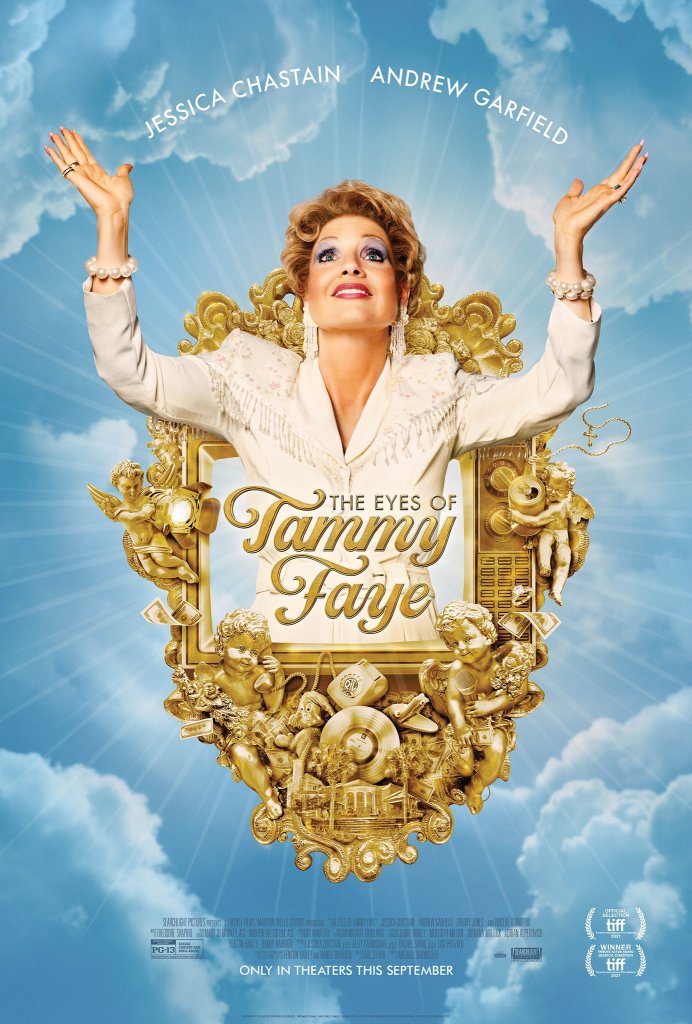
The Eyes of Tammy Faye (2021)

The Eyes of Tammy Faye (2021)

Transformative make-up can’t quite cover up this slightly empty film

Director: Michael Showalter

Cast: Jessica Chastain (Tammy Faye Bakker), Andrew Garfield (Jim Bakker), Cherry Jones (Rachel Grover), Vincent D’Onofrio (Jerry Falwell), Mark Wystrach (Gary S Paxton), Sam Jaeger (Roe Messner), Louis Cancelmi (Richard Fletcher), Gabriel Olds (Pat Robertson)
In the twentieth century, what better way to spread the Word of the Lord than television? The Eyes of Tammy Faye follows the lives of Tammy Faye Bakker (Jessica Chastain) and her husband Jim Bakker (Andrew Garfield), who co-founded the evangelical TV network, PTL (Praise-the-Lord). The network is a huge success but their marriage flounders, until both collapse when Bakker is convicted of embezzling millions from the network’s on-air fundraisers.

At least that’s what I found out what happened when I looked the Bakkers up. Narratively, The Eyes of Tammy Faye is a mess that often fails to make either events, or their impact, clear. Part of this might be legal worries – the film skirts around accusations of rape made against Bakker, fudging it as unspecified, unsavoury allegations from an ex-employee – but for the embezzlement, something Bakker was convicted for, there’s really no excuse. It’s genuinely hard to tell exactly how this crime happened or worked – the Bakkers’ life falls apart in the same way it rose, via a swift, stylishly assembled montage of headlines and soundbites.

Perhaps the film is unclear because it’s worried if there was too much information about precisely what happened, it might look like Tammy Faye was in on it. The film wants so much to make clear Tammy had no idea where all the money comes from, it has to keep us in the dark as well. Instead, it settles for being a sympathetic portrait of Tammy Faye, a genuinely nice person who stood out in the 1980s evangelical scene for focusing on the love of God, rather than all the social and political trends right-wing Christians wanted to let people know God definitely hated.

Despite aiming to be as sympathetic as possible, the film ends up rather short-changing her. Tammy argued to keep politics out of religion, uncomfortable with growing links with the Republican party and Reaganism. Even more admirably, she believed God loved gay people as much as he did anyone else, and that meant it was God’s will to love and support the gay community during the AIDS crisis. This was an almost unique – and brave – viewpoint. Tammy hosted AIDS sufferers on her show and, Princess Diana-like, urged an end to the prejudice and fear of those diagnosed with the disease. No one at the time with a similar public image was saying the same thing.

But the film boils this down to a single scene with Tammy hosting a Christian pastor AIDS sufferer on her TV show, and a couple of throw-away remarks from hissable bad guy, Reverend Jerry Falwell (a menacing Vincent D’Onofrio). The principle behind making such a stance gets lost, as does her life-long dedication to supporting the gay community (she ended up as a regular guest at Pride marches). The film is so focused on showing us she’s a nice, decent and kind person it doesn’t bother to show the principles behind her views.

It offers no explanation for how a woman whose whole life was steeped in conservative religious views interpreted Christianity so differently to nearly everyone else around her. It has no interest in the grit it must have taken to take this stance. Instead, it largely turns her into a candyfloss doll who loves everyone all the time because goshdarnit she’s so sweet.   

You could make a really interesting film here about a turning point in the politicisation of religion. Christian movements were flexing their muscles and pushing a conservative domestic agenda, heading down a road that would lead to violent debates on sexuality and abortion. The film could have used this life-story to explore these developments within the evangelical community. It flunks this opportunity, setting up goodies and baddies, skipping out details and draining a film that arguably should have been about politics into one that barely explains them.

It settles for being a conventional, safe and predictable cradle-to-grave biography about a nice person who gets in (unknowingly, of course) over her head, in a marriage to a man corrupted by fame. Jessica Chastain – winning a generous Oscar in a weak year – is lovable and perfectly captures the persona of Tammy Faye, but essentially just ticks off the expected biopic tropes. Andrew Garfield gives excellent support as her naïve husband, seduced by fame and money and confusion about his sexuality. (Another flunk of the film is never linking Tammy Faye’s support for the gay community with her obvious awareness of her husband’s suppressed feelings.)

The film won a second Oscar for its impressive make-up and hair, which transforms Chastain’s facial features (she did about 3-4 hours in the chair everyday) and plumps out Garfield’s face. It’s a trap the film gets seduced into: fascinating recreations of TV moments and appearances, that never really gets under the skin to help us understand either of the Bakkers’ at all.

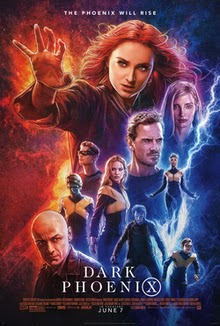
X-Men: Dark Phoenix (2019)

Sophie Turner does her best with a franchise that has finally seen better days in Dark Phoenix

Director: Simon Kinberg

Cast: James McAvoy (Charles Xavier), Michael Fassbender (Erik Lensherr/Magneto), Jennifer Lawrence (Raven Darkholme/Mystique), Nicholas Hoult (Hank McCoy/Beast), Sophie Turner (Jean Grey), Tye Sheridan (Scott Summers/Cyclops), Alexandra Shipp (Ororo Monroe/Storm), Kodi Smit-McPhee (Kurt Wagner/Nightcrawler), Evan Peters (Peter Maximoff/Quicksilver), Jessica Chastain (Vuk), Ato Essandoh (Jones)

As Dark Phoenix limps out of a cinema near you, losing the studio almost $100 million and finally consigning to oblivion for evermore an X-Men franchise that has lasted almost twenty years, it would be easy to think this must be one of the worst films in comic book history. It’s not. But then again it’s not the best. Dark Phoenix’s main problem is not really that it’s bad, more that it’s a bit meh. After umpteen films, I’m not sure there was anything new to show or tell about these mutant superheroes – and this film certainly failed to find it.

It’s 1992 and the X-Men are international heroes – something that may be going to the head of Charles Xavier (James McAvoy) who gets feted at major events and has a direct hotline to the President. On a mission into space to save a stranded space shuttle crew, powerful telepath Jean Grey (Sophie Turner) is hit by a strange cloud of glowing space power – and when she returns to Earth she finds herself struggling with a split personality, with a dangerous darker side of her personality taking control of her actions. It’s encouraged by a mysterious alien Vuk (Jessica Chastain) who wants the power in Jean Grey for her own ends. Can the X-men overcome conflict and tragedy to come together once again and save the world and Jean Grey herself from her demons?

Simon Kinberg finally takes the helm after producing and writing several other films in the series – although his promotion feels more like a failure to find anyone else interested in doing the job. General lack of real interest permeates the film, as if most of the stars only came on board because they felt an obligation to put a cap on the series. Jennifer Lawrence presumably came back in order to be killed off (no spoilers, it’s in all the trailers) while Michael Fassbender gives off the air of a man who’d rather be anywhere else. 

It’s not a huge surprise since the script goes through the motions, retelling a comic book storyline around Jean Grey’s “Dark Phoenix” personae that had already been done once (disastrously) already in X-Men: The Last Stand. Retreading the action here, this is certainly a better film (at least Simon Kinberg understands the characters and what makes them tick in a way Brett Ratner on that film didn’t) but it’s still a lot of the same story beats, similar types of location and brings it all together into a series of set pieces and moral conundrums that quite frankly we’ve seen before.

On top of which, Kinberg is not an imaginative enough visual stylist to make any of it look new. He’s not a bad director by any shot, but he’s a thoroughly middle brow one and he puts together a film that echoes and repeats stuff from the previous films in a way that never really feels fresh. Instead every single action beat or emotional moment feels like a quote from a previous film in the series, and never does the film really take fire and become its own thing.

This needed something special or new to bring the franchise roaring out in a blaze of glory. Instead it sort of meanders towards a resolution most people watching can probably already guess. Kinberg’s version of the story here also throws in several mistreads, most notably a plot line involving aliens and mystical clouds from space. Now I’m reliably told this fits with comic book lore. But much like in Spider Man 3 (remember that?!) when a blob of black alien space goo infected Peter Parker, introducing aliens into this series that has always seem grounded on Earth seems a bit – well – silly if I’m honest. Again it reminds you how slowly and carefully Marvel built up its universe stretching sand box. This ham-fistedly throws aliens of uncertain provenance into its world and somehow, despite this film featuring a hero who can shoot lasers out of his eyes, it feels a bit silly. 

It’s not helped that the aliens plot line is confused and their aims unclear or that Jessica Chastain looks non-plussed to be in the thing at all, as if she lost a bet or something. It does mean that we get a (reasonably) happy ending of our heroes coming together to fight an external threat – but even this feels like a tacked on reason to throw into the mix a clear antagonist, instead of dealing with the sort of shade-of-grey (no pun intended) antagonist who is also still sort of one of the good guys.

It’s telling that the film works best when it focuses more on character. Sophie Turner does a pretty decent job as Jean Grey, despite not being given masses to work with. James McAvoy enjoys the best storyline, of a Charles who has lost his way slightly and been seduced by fame – but deep down is still the humane, caring and loving character he has always been. It’s a new light to see the character in.

I think the main problem with this film is its lack of anything really original other than the odd beat like that. Everything as been seen before and, like X-Men Apocalypse despite the world-shaking events everything feels a bit rushed and lacking impact. Dark Phoenix is a decent enough entry into a long-running franchise and doesn’t short change you of the sort of thing you’d expect from an X-Men film. But that’s really it’s a problem. It’s a solid, average, okay entry into a long-running franchise but not the final hurrah the series needed to go out on an earth-shattering high.

The Martian (2015)

Matt Damon is Lost in Space in The Martian

Director: Ridley Scott

Cast: Matt Damon (Mark Watney), Jessica Chastain (Commander Melissa Lewis), Jeff Daniels (Teddy Sanders), Kristen Wiig (Annie Montrose), Chiwetel Ejiofor (Vincent Kapoor), Sean Bean (Mitch Henderson), Michael Peña (Major Rick Martinez), Kate Mara (Beth Johansson), Sebastian Stan (Dr Chris Beck), Aksel Hennie (Dr Alex Vogel), Mackenzie Davis (Mindy Park), Donald Glover (Rich Purnell), Benedict Wong (Bruce Ng)

Imagine being abandoned somewhere really difficult to get out of. Now how about being abandoned somewhere where it’s literally impossible to escape? Well you can’t get much more impossible than Mars, a place so bloody difficult it doesn’t even supply you with such luxuries as oxygen, water or food. But that’s exactly what happens to astronaut Mark Watney.

Part of the first manned mission to Mars, Watney (Matt Damon) is struck by debris and presumed killed after a storm forces the crew to abandon their planet. With no one on Earth aware he is alive, Watney faces huge difficulties: the next Mars mission isn’t for four years, and will land over 2,000 miles away. He has only enough food for at best a couple of years, and his Mars Rover can only travel 70 miles before it needs to be recharged. Fortunately, Watney (as well as being incredibly inventive) is a botanist – and works out a complex improvised farm in the base to grow potatoes (the only potential crop he has) as well beginning to modify the Rover to drive to the next mission site in four years. But things change when NASA (after holding his funeral) spot his movements via satellite – and now the race is on to organise a rescue mission.

The Martian perfectly works out what we find appealing about survivor stories: a charming, easy to relate to, protagonist who inspires with his never-ending MacGyver-ish invention. The best sequences by far focus on this, as Watney uses whatever he has available, from radioactive waste to his own shit, to try and save his life. There is something hugely compelling about seeing such inspiration in the face of adversity – perhaps because you want to believe “heck that’s what I would do…”

The first half of the film is crammed with these moments, made even more enjoyable by Watney’s off-the-wall, amusing commentary on events via video diary. Watney never succumbs to despair but instead constantly puts as positive as possible a spin on his situation, aware that opening the door to despair is the road to the end. A lot of this works so well because of Matt Damon’s terrific performance in the lead role. It’s no easy thing basically holding the screen entirely by yourself, but Damon does an amazing job here. He’s not just funny and engaging, but he also subtly touches on deep inner feelings of isolation and loneliness.

Scott understands all this and shoots most of the sequences with Watney with a low-key, calm but technically assured simplicity. He lets the action here largely speak for itself, and shows a better ear for comedy than I think many people thought him capable of. He also uses Watney’s “suit cam” and the video diary format to constantly shake up the visuals and allow us to see Watney’s actions and decisions from different perspectives. His mastery of the sweeping epic comes into its own when the camera swoops over Martian panoramas, making the hostile red planet look unbelievably beautiful. 

It’s easy to see why NASA supported this film so strongly, as the organisation comes out of this impossibly well. This is essentially a fictionalised retelling of Apollo 13, with the astronauts surviving above, while the ingenious techies below work miracles to first communicate with, and then devise a rescue mission, for Watney. The film is deeply in love with NASA – despite some personality clashes, the NASA characters are all shown to be highly intelligent, compassionate people. Even “the suit”, Director Sanders (played with a square jawed patience by Jeff Daniels), is basically a humanitarian who wants to preserve human life (and is cool enough to have a brilliant Lord of the Rings gag).

Despite this, the struggles of the various bigwigs at NASA to save Watney are slightly less interesting than the opening half of the film based around Watney’s struggles to survive. Perhaps because, well done as it is, we’ve seen this sort of stuff before, done better – not least in Apollo 13 – and partly because what NASA is trying to do is not quite clearly explained in layman’s terms. Think of the simple brilliance of Apollo 13 when the engineers need to create a filter using only what the astronauts have on the ship: it’s easy to understand, clear, brilliant and gripping. Comparative scenes in this film just don’t land as quickly.

The film also struggles as events and twists in the midway part of the movie lead to Watney losing a lot his agency. Since most of the film’s unique enjoyment is seeing Watney conquer his environment, and gain mastery of the rotten hand that fate has dealt him, as soon as that element is removed and Watney turns into more of a man in distress, the film struggles to maintain its unique interest. It makes the second half of the film more conventional (Damon is noticeably in this much less, considering how much he dominates the first half) and also ends up comparing unfavourably with other, better films (sorry I mean Apollo 13 again…)

But The Martian is crammed with good lines, fine jokes and some good performances – even if some of the characters seem a bit sketchily drawn. Benedict Wong is very good as NASA’s top techno bod. Chiwetel Ejiofor and Sean Bean do well as the most clearly sympathetic senior NASA bods. Up in space, the rest of the crew are very lightly sketched, but Jessica Chastain gives a fine sense of authority to the Mission Commander. But make no mistake this is Damon’s movie – and he dominates both the audience’s interest and the film’s.

The Martian is a very well made, intelligent crowd-pleaser. It’s not a classic – and it’s slightly in the shadow of better movies – but it’s brilliantly put together and hugely engaging. The second half of the story is less compelling and more conventional than the first, but there is more than enough invention and enjoyment there for you to want to come back and see it again.

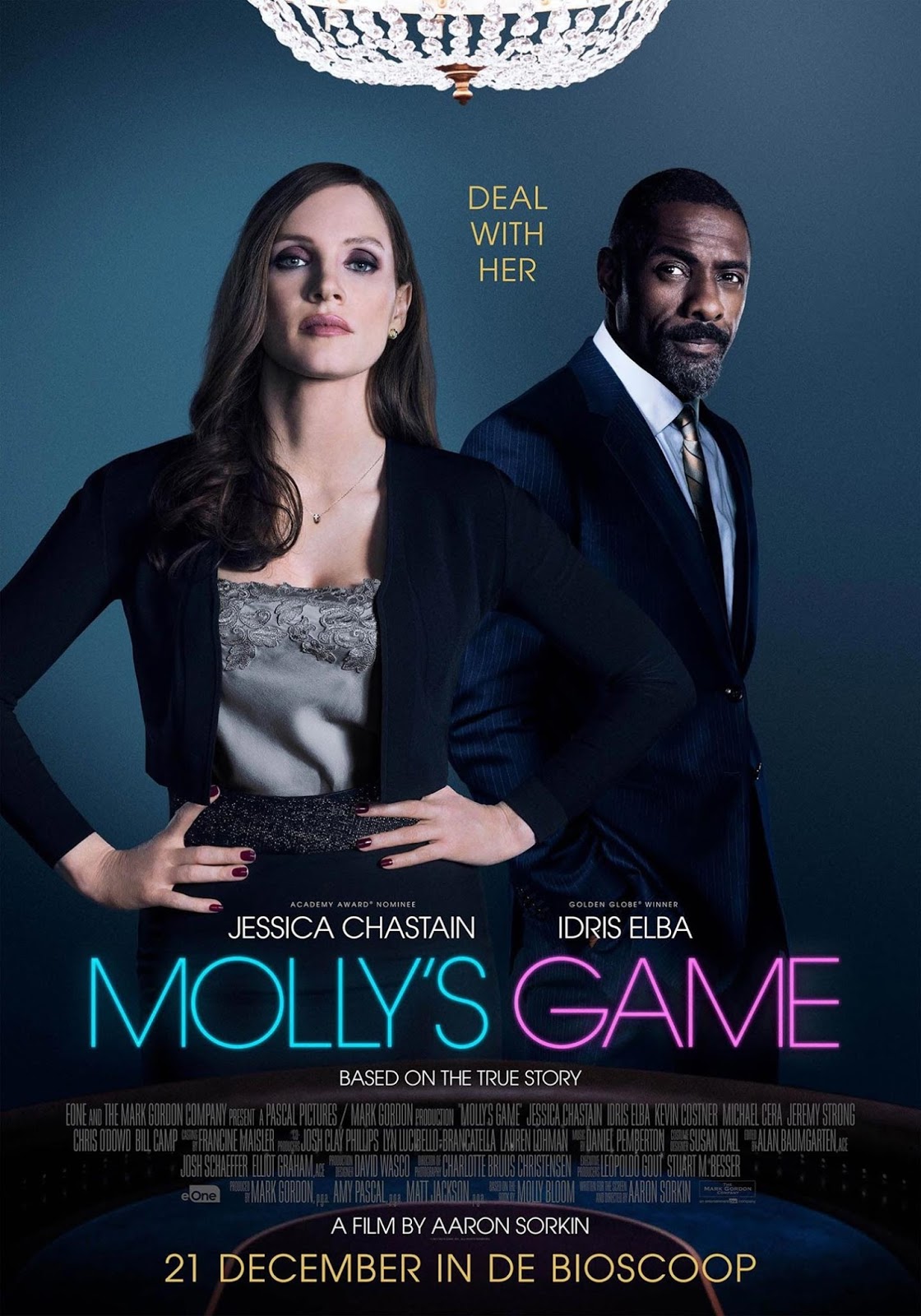
Molly's Game (2017)


Jessica Chastain and Idris Elba excel in Aaron Sorkin’s dynamically scripted Molly’s Game

Director: Aaron Sorkin

Cast: Jessica Chastain (Molly Bloom), Idris Elba (Charlie Jaffey), Kevin Costner (Larry Bloom), Michael Cera (Player X), Brian d’Arcy James (Brad), Chris O’Dowd (Douglas Downey), JC MacKenzie (Harrison Wellstone), Bill Camp (Harlan Eustace), Graham Greene (Judge Foxman), Jeremy Strong (Dean Keith), Angela Gots (B)

Molly Bloom (Jessica Chastain) is all set to join America’s Winter Olympics team, under the guidance of her ultra-demanding psychiatrist father Larry (Kevin Costner), when a freak accident ends her career. So she heads to LA and becomes embroiled in the world of high-stakes poker, eventually setting up and running her own high stakes games in LA and New York, earning millions. But, over a decade later (in a parallel plotline) she has had a millions seized and is battling against imprisonment for her connections to the mob, with only lawyer Charlie Jaffrey (Idris Elba) on her side.

Sorkin’s zippy new drama has plenty of sparkling dialogue – as you could expect! Sure this film probably also proves he’s not really a director (it’s over-long, a little flabby, and structurally not very clean) but the guy can certainly put a speech together. My main issue with Molly’s Game is I’m just not quite sure what its point is. Maybe it only exists to entertain, but it feels like it wants to put together a touching story about family, faith and the value of your word. I’m not sure it really manages to achieve any of this. 

The parallel plotlines don’t always do the film a lot of favours. The present-day plotline of Molly and Jaffey working to clear her from the various charges she has been accused of, continually hints at some serious gangsterism set-ups later on: largely these never really transpire. Actually, the film heads into pretty standard “my-Daddy-didn’t-love-me” territory. It shy’s away from being something different and interesting about excess and punishment into psychiatry solving our problems.

Sorkin doesn’t always get the structure right, as if he hasn’t got the patience to actually make sure the fundamental plot information was clear enough, so eager was he to get on with the verbal pyrotechnics. Time is spent carefully exploring several poker hands – but the exact nature of the illegality of what Molly does running her poker games gets glossed over in seconds. 

But then this is a film that isn’t really that interested in plot dynamics, or even in over-arching themes. What it’s interested in is sizzling dialogue, and letting actors deliver it. The camera sits back and watches. So it’s not a surprise the most memorable scenes feature Jessica Chastain and Idris Elba (both superb) in a room, talking (or arguing) with each other. It’s the moments like these where the film really works – and Sorkin the director basically stays out of the way, using a two-camera set-up to record the scenes, like a filming of a Broadway play. 

Those two actors dominate the film. Chastain is excellent as Molly – ambitious, driven, playful but also vulnerable and ever-so-slightly bitter, who gets where she is through her own intelligence and hard work. Chastain also embraces playing a character with such a strong moral code – she’s terrifically warm and human in the part. Elba is equally fine, a wry professional with his own strong moral code (yup, The West Wing writer still loves those liberals of great conscience), an articulate (of course!), passionate advocate who is far warmer than he first appears.

The rest of the film never quite lives up to this, maybe because the poker games are never really that interesting, or because the life Molly leads among the rich and famous seems ill-defined (she has possibly the least impactful drugs addiction seen on screen). For someone who remains loyal to the end to her clients, we are never really clear why other than a suggestion of her basic sense of honour. Her projects are all set-up with ease, and the film builds towards a solution buried in psychiatry speak that similarly feels a little too easy.

Because while it is great that Molly is not defined by a romantic relationship – she is defined by men in virtually every other way. Her entire career is based on pleasing rich, middle-aged men (from whom she frequently has to bat away expressions of devotion or sexual interest). Three times she falls victim to senior male partners in business relationships. Above all, she is defined by her relationship with her overbearing father (well-played by a low-key Kevin Costner). The scene where this comes to a head, a father-daughter exchange late at night on a snowy New York bench, is so well-written and played you almost overlook its pattness.

Sorkin’s script is the most important thing here – and the film is built around it. Like Scorsese’s Casino(a film he must have seen a couple of times!) most of its opening act is structured heavily around Chastain’s expertly delivered voiceover. The actors get to enjoy delivering his engaging rat-a-tat dialogue, the expert playing and sharp dialogue ends up carrying a lot of uplifting moments in the film. It’s a film that embraces Sorkin’s scripting, and doesn’t worry about being too filmic about it: the zippiest moments of editing are so because the dialogue or voice-over demands it.

Some of the roles aren’t quite so well drawn: Michael Cera is just plain miscast in a role that needed a young Rob Lowe as an absurdly glamourous Hollywood poker addict (I can’t imagine people crossing a street let alone a continent to play cards with Cera). The rest of the women in the script get short shrift – even Molly’s mother is little more than a walk-on part. 

Molly’s Game is a lot of fun, even if it’s probably about 15 minutes too long. It’s got some great dialogue and, if Sorkin turns out not to be the best interpreter of his own work, he’s certainly no dud as a director. Overall, the themes and plot don’t quite come together as well as they should. But it’s very well acted – Elba and above all Chastain are absolutely terrific – and it has more than enough sparkle to it for an enjoyable Friday night.

Zero Dark Thirty (2012)


Zero Dark Thirty tries to raise questions and views, but dodges many of them

Director: Kathryn Bigelow

Cast: Jessica Chastain (Maya), Jason Clarke (Dan), Jennifer Ehle (Jessica), Mark Strong (George), Kyle Chandler (Joseph Bradley), James Gandolfini (CIA Director), Stephen Dillane (National Security Advisor), Harold Perrineau (Jack), Mark Duplass (Steve), John Barrowman (Jeremy), Joel Edgerton (Patrick), Chris Pratt (Justin)

Zero Dark Thirty is a deeply troubling film: a journalistic investigation into the hunt for Bin Laden, shot with an action thriller film ethos. It wears its factual accuracy and research with an ostentatious pride on its sleeve, but ducks out of making any judgement on the issues it presents, as if afraid to pollute the events it displays with editorialising. But some events demand discussion and a point of view: as one critic said, you wouldn’t make a film about slavery that focuses on the cotton output. Similarly, a film that drives us towards the killing of the vile Bin Laden should also challenge us more about the methods used to capture him, the extent to which we “became what we hunted”.

And I don’t buy that the film is challenging us to recognise this ourselves. It starts with recordings from the 9/11 flights (a moment which made me feel uneasy to say the least and many family members were also unhappy with), its lead character Maya is caught up in two bombings and an assassination attempt, her best friend (well played by Jennifer Ehle) is killed in a suicide bombing. All of this, along with the film’s omission of any exploration of the terrorists themselves, is encouraging us to look at a particular side of the argument. Cementing this is the end of the film which, despite caveats, has a “mission accomplished” feeling – it may not be flag waving, but it does want us to feel the professionalism of a job well done, reinforced by the tearful release of 12 years of tension from Maya. We are not being encouraged to question the attitudes or assumptions of the characters in front of us; we are being steered towards a particular view of these characters and events. Without an explicit endorsement, but implicit suggestions that ends may well have justified means.

Of course, 9/11 was an abomination – but setting the deck the way the film does means it makes it easier to condone the terrible things that the CIA do in this film to get the results it got. That’s the problem with the film’s “stanceless stance” – its patting itself on the back for not taking sides means it doesn’t acknowledge any depths to its facts, it gives no context. There are many, many issues and motivations, from both sides, behind the events we see here – but we don’t learn anything about any of them. Instead the film is like a Wikipedia page with brilliant photography and editing: a skilfully presented PPT deck that shows us what happens, but doesn’t feel like it tells us anything about why or how it happened.

Torture is of course the main issue here. The film opens with a gruelling extended torture sequence of almost 25 minutes. The information it yields directly is questionable, but it does eventually lead to a crucial name, which is backed up later by Maya watching videos of others undergoing “extreme interrogation” and saying the same name. Now, torture in something like 24 feels different: there at least (a) the whole world was a cartoon, (b) the danger was immediate (“a nuclear bomb will go off in thirty minutes dammit!”) and (c) there was a sense of conflict in its perpetrators. Neither is the case here.

That’s not a defence of 24, but here it’s full on psychological and physical assault over a sustained period of time with no identified imminent threat and no real sense that the torturers feel they are doing anything wrong (I guess the film is suggesting they have become deadened to it, but still would it hurt to say something along those lines?). And it actually happened, and not just to bombers and terrorist kingpins, but (in this film) to couriers and bankers. Surely that demands some sort of acknowledgement in the film that it was wrong? Instead the film fudges this and the torture of suspects is shown to contribute in some way to the successful delivery of Bin Laden; there is no real questioning of whether the value of the information it directly obtained justified its use.

Part of the problem of the film is that it was originally commissioned as a film about the hunt for Bin Laden – the US actually finding him rather screwed up the narrative. There are elements of that original film in there: a hunt for a chimera, an obsession with one man that blinds us all to the bigger picture: “You’re chasing a ghost while the whole fucking network grows all around you” Kyle Chandler’s character cries out with frustration at one point. Maya (and the film) slaps him down – it never questions whether Bin Laden was worth the focus and expense. But it hints at the repurposed nature of the film, which would have had to tackle this question head on before Bin Laden was found. Was this the best use of their efforts? Was there a benefit to the war on terror outside of the satisfaction of punishing Bin Laden? How in control was Bin Laden of the jihad by then?

It feels to me that this film is two films uneasily mixed together. One film wants to explore the nature of obsession, and wants to question if it’s worth catching one man at the cost of diverting attention from hundreds of others. The other film is a triumphant story of patience and dedication rewarded. You can’t help but feel that a film released prior to Bin Laden’s killing might have been a more interesting and profound piece of work, which could have looked at the nature and cost of obsession. Instead, history itself pushes the film into saying “well it had ups and downs but the ends justified the means eventually”.

None of this doubt about the final film is of course an apology for the appalling crimes of Bin Laden and his followers. And Zero Dark Thirty is, however you cut it, a very well made film and Bigelow is an extremely good director. Jessica Chastain invests a character almost devoid of personality, about whom we learn almost nothing, with an emblematic depth that makes her feel like a profound embodiment of American determination and will, like some sort of morally conflicted female Gary Cooper. The film also does feel like it has something to tell us about an America under siege – although again, by shying away from editorialising, it loses the chance to present a specific commentary on how 9/11 affected the country, and its sudden sense of vulnerability and unease in the world.

It’s a troubling film, a film that seems to be dodging taking a moral stand on areas. It could still have said “some of things that were done were bad but the end result was good”: that would have been fine. But by not making any statement at all, it feels like it’s dodging the issue, not challenging us.

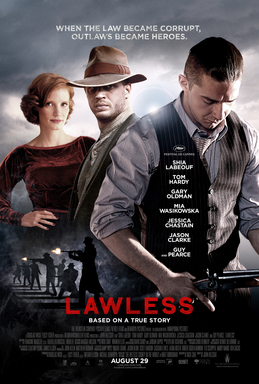
Lawless (2012)


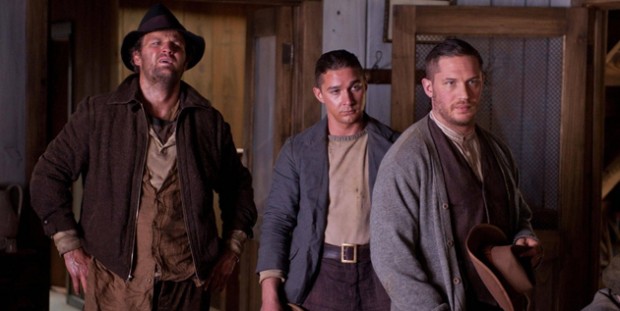
Brothers in crime. You can get a taste of the performances just from this still image.

Director: John Hillcoat

Cast: Shia LaBeouf (Jack Bondurant), Tom Hardy (Forrest Bondurant), Jason Clarke (Howard Bondurant), Guy Pearce (Marshal Charley Rakes), Jessica Chastain (Maggie Beauford), Mia Wasikowska (Bertha Minnix), Dane DeHaan (Cricket Pate), Gary Oldman (Floyd Banner)

Bootlegging, the Deep South, corrupt cops and the honourable code of criminals. It’s the sort of cocktail that’s made up dozens of films, some good, some bad, some ugly. This one definitely falls into one of the latter two camps.

It’s 1931, and the Bondurant brothers (Shia LaBeouf, Tom Hardy and Jason Clarke) run a moonshine business out of their Virginian countryside garage. One day the cops come a-calling, led by a corrupt US Marshall (Guy Pearce). They want a piece of the action. The brothers say no. So war breaks out…

Truth be told, this is actually quite a boring film – a pointless, clumsily constructed shaggy dog story that neither makes a point about the shabbiness of a bootlegging life of crime, nor challenges romantic assumptions about the small time crook challenging the system. There are a couple of random flashy scenes thrown in to allow the film-makers to demonstrate their technical expertise, but it’s all as weightless as a braggart regaling their guests at a dinner table. Hot air masquerading as a lungful of fresh stuff.

The performances dance between underpowered, over stretched and over indulged. Shia LaBouef doesn’t make his nominal lead a fully formed character. Jason Clarke makes no real impact in an underwritten role. Tom Hardy is the best of the bunch, but barely stretches himself as a bearlike family leader. Of the other major parts, Guy Pearce gives the kind of twitchy, pyrotechnical performance that is often mistaken for brilliant acting, all highblown showing off and no depth. Jessica Chastain and Mia Wasikowska are wasted playing contrasting love interests. Gary Oldman pops up for one scene as an overblown crime lord.

These performances drift along in the formless plot. There are nasty moments of violence that serve no purpose and don’t seem to tie into established characters personalities.  There are also poorly judged plot developments: at one point Jessica Chastain’s character is raped – mercifully off screen – an event never mentioned again. Characters are brutally dispatched; one has his manhood removed and posted to another character, others are strangled, shot or battered to death with spades. The violence continues on and off until the film ends with a confrontation scene between goodies and baddies. Nothing original or unique happens in this film – we’ve all seen it time and time again. There is no thrust to the story, no feeling that it is building towards a point or that a thematic point is being built. It’s just events happening for the sake of it.

Despite its flash and bravura crashes and bangs this is an empty, tedious movie that goes nowhere, says nothing and has no point. Nearly all the events of the film are predictable, from the fate of the villain to the crippled best friend (Dane DeHaan) who has victim written all over him from the first frame. Its surface sheen (it looks great, has a decent score etc.) and the look-at-me acting is enough to fool you for a moment into thinking “this must be a good film”. But it ain’t.