Tag: Jim Broadbent

The Legend of Tarzan (2016)


The Legend of Tarzan: The King of the Jungle takes on the MCU style. And loses.

Director: David Yates

Cast: Alexander Skarsgård (Tarzan/John Clayton III), Margot Robbie (Jane Porter Clayton), Samuel L. Jackson (George Washington Williams), Christoph Waltz (Captain Leon Rom), Djimon Hounsou (Chief Mbonga), Jim Broadbent (Lord Salisbury), Simon Russell Beale (Mr Frum)

Every so often you seriously wonder what the point of a film was. Are movie studios so desperate for a franchise that literally anything that has any kind of name recognition is considered a money-spinning franchise in the waiting? Welcome to the latest feeble attempt to jumpstart an epic franchise: the first (and surely last entry) in the Tarzan-verse.

In the late 1880s, the Belgians are carrying out terrible acts in Africa, spearheaded by ruthless Captain Leon Rom (a painting-by-numbers Christoph Waltz). To get hold of diamonds held by an H Rider Haggard gang of natives, he needs to lure Lord John Clayton III (better known as the legendary Tarzan) back into the jungle. But John (Alexander Skarsgård) has tried to put his life as the King of the Jungle behind him (for reasons never really made clear) and only once his wife Jane (Margot Robbie) is put at risk does he begin to reclaim what he has lost.

Was there any real demand for a Tarzan movie? Perhaps even more to the point, was there any audience for one? Since, I imagine, today most people only  on-screen Tarzan viewing experience was watching the Disney animated version, it’s hard to understand who the makers of this film imagined was going to engage with a confused, clichéd movie part dull origins story, intercut with a “rediscovering your roots” plot. And that’s the first of the major errors the film makes.

So determined is the film not to jump straight in with the context of who Tarzan is, that it keeps dribbling away from the actual plot to cram in small (confusing) moments establishing who his parents were, how he met Jane, how they left Africa etc. etc. etc. This stuff is far more interesting than any of the tiresome diamonds / kidnapped wife / White Man Saving Africa nonsense in the main plot, making all the “main” action feel like a sidetrack; not to mention that you’re several flashbacks in before you have any idea how Tarzan has ended up as a stuffed-shirt sitting in a clichéd London, slurping tea with his little finger extended, rather than swinging from vines in the jungle.

The film assumes a level of Tarzan-legend knowledge in its audience I sincerely doubt most viewers had, and the lag while you wait to catch up through the flashbacks is frustrating. The final product is a confused mess with no clear vision about what film it actually wanted to be. If it film wants to deal with the legend, why not just do that – and if it wants to introduce the origins, why doesn’t it just do that? Instead it’s neither one thing nor the other.

Mixed in with some feeble, faux superhero heroics is some clumsy post-colonial criticism of the Belgians’ terrible Congo record, but it goes nowhere in particular. A week on from watching it, I can’t remember what it was about at all. Stuff sort of happens, and there is a vague idea Tarzan is trying to save the Congo, but the film never kicks into gear. Events happen without any real narrative thrust – our heroes and villains literally meander down a river towards no-where in particular. It doesn’t help that almost every narrative beat in the film is completely predictable – this is the epitome of safe, uninspired film-making and storytelling, as if everything has been carefully honed in focus groups and committees.

A large part of the problem is Skarsgård’s lifeless performance in the lead role. Clearly bulging muscles and decent features were all the part really required, because there’s nothing in the way of character. He’s supposed to be a man who has lost touch with his past, confused and ashamed about his background. The film is building towards his emotional acceptance that his gorilla mother was his true mother. It’s a viable, if not especially original, plot – but it falls flat, simply because Skarsgård just isn’t interesting enough. His stilted performance conveys no inner pain or turmoil. Who cares who his mother was? Skarsgård doesn’t seem to, and neither did I.

It doesn’t help that all the rest of the actors (I mean all of them) are more interesting, eye catching presences. Jackson and Waltz are such seasoned pros they invest their paper-thin characters with their own charisma, though each of them could do what they are asked to here standing on their heads. Margot Robbie is actually rather radiant as Jane – even though she is never much more than a (defiant) damsel-in-distress.

The Legend of Tarzan is, at best, okay. It’s desperate to turn Tarzan into some sort of all-action superman, a competitor for the Marvel universe. But it focuses so much on trying to fill out the backstory and beef up the action that it fails to make a film with any characters in it we really care about. Instead this is the blandest, B-movie cornpuff you are likely to see and so instantly forgettable you’ll barely remember each scene as you watch it. It’s enjoyable enough but totally unsurprising, uninspired and fundamentally totally forgettable.

Time Bandits (1981)


Time travelling roguery in Time Bandits 

Director: Terry Gilliam

Cast: Craig Warnock (Kevin), David Rappaport (Randall), Kenny Baker (Fidgit), Malcolm Dixon (Strutter), Mike Edmonds (Og), Jack Purvis (Wally), Tiny Ross (Vermin), John Cleese (Robin Hood), Sean Connery (Agamemnon), Shelley Duvall (Pansy), Katherine Helmond (Mrs Ogre), Ian Holm (Napoleon), Michael Palin (Vincent), Ralph Richardson (Supreme Being), Peter Vaughan (Winston), David Warner (Evil), Jim Broadbent (Compere)

After leaving Monty Python, each Python went their own way. Terry Gilliam had been the slightly odd one, the eccentric animator who played the weirdos at the edge of the frame. Time Bandits would be pivotal in repositioning him as an ambitious, visionary director with a striking visual sense. It would also allow him (and co-writer Michael Palin) to create a fairytale fable with something for all ages, a film about a child’s view of the world which adults could embrace.

Kevin (Craig Warnock) is a dreamer, a young kid adrift in his parent’s materialistic world. Until one night a gang of dwarves calling themselves “Time Bandits” emerge out of his bedroom cupboard. They have a map that allows them to travel through time and use it to commit crimes and then escape to different centuries. Kevin joins them in their adventures, but none of them know they have attracted the attention of the Evil Genius (David Warner) who wants to use the map to escape his prison and recreate the world in his own image.

I still remember watching this film when I was younger and really enjoying (I must have watched it dozens of times). I have to say it holds up extremely well. Sure Craig Warnock isn’t the most inspired child actor of all time, but he has a wide eyed innocence and enthusiasm that anchors the film really well. Gilliam’s direction is brilliantly good – wild and inventive, like a punk-rock fairytale. The dwarfs make an inspired grouping, each embracing the once-in-a-lifetime chance of playing leading roles.

The main reason for the film’s success is Gilliam. His work is extraordinarily detailed and imaginative, while his visual sense makes shots that cost hundreds of pounds look like millions. Huge swathes of the film are shot with a low-angle lens that allows us to see everything from the perspective of our heroes, and also makes each of these larger-than-life events seem even more awe-inspiring. The design of the film is extraordinary, with striking images confronting you at every turn, either a recreation of events or the bizarre visuals of the “time of wonder”.

And those visuals are outstanding. Can you think of any other film where a knight on horseback bursts out of a bedroom cupboard, charges around the room in medium shot, and then gallops off through a field that has suddenly replaced the bedroom wall? How about an ogre who lives on a ship that is then revealed to be a hat for a giant who lives underwater? Evil’s Fortress is a swaggeringly brilliant triumph of production design, while his goat skulled, tall, hooded monsters must surely have been playing in JK Rowling’s mind when she came up with the Dementors.

The design also echoes the possibility that this is all a child’s fantasy. A careful look at Kevin’s bedroom shows pictures of everything we encounter. The final confrontation with Evil takes place on a set clearly inspired by the Lego bricks, chess board and toys that litter Kevin’s bedroom. 

The playful tone is also reflected in its lampooning of the “adult” world of technology for its dull materialism: Kevin’s parents watch a bullying gameshow (compered by a demonic Jim Broadbent) while sitting on armchairs still in their plastic wrapping. Evil’s obsessions all revolve around lasers and the microchip.

Away from all this, the film has a simple structure. It’s basically a series of really rather fun historical sketches, linked together by an engaging fantasy narrative. These scenes attracted guest star performers, all of whom excel (though it is odd to see them get top billing – Cleese is on screen for about three minutes, but gets top-billing!). 

The guest stars are terrific – Holm is hilarious as a chippy, height-obsessed Napoleon; Cleese very funny as a visiting-Royal-inspired Robin Hood, treating all around him with condescension; Ralph Richardson brings an absent-minded imperiousness and dry wit to his role as God; Connery sprinkles a touch of movie-star bravado as a kindly, gentle Agamemnon (the uncommented on joke being the movie’s ideal father figure is most famous for sacrificing his daughter…). 

If any performer high-jacks the film it’s David Warner as a dry-witted, viciously ego-maniacal Evil Being, getting most of the best lines. A sequence where he obliterates several underlings for minor transgressions hums with dark humour (and punchlines with the accidental obliteration of another minion off screen, met with a sheepish “Sorry”). On top of that, Warner brings just the right level of sinister child’s-nightmareish quality to the role, helped by a striking costume design that makes him look the love-child of a crocodile and a car engine.

The leads of the film (Kevin and the bandits) are extremely well drawn by Palin’s script, each of them with sharply distinctive personalities. David Rappaport (allegedly incredibly unpopular with the others due to his haughty disregard for them) is perfect as the arrogant self-appointed leader, but Jack Purvis is a stand-out as the warmly brave Wally. More than a few commentators have pointed out that the Bandits all serve as representatives of the members of the Monty Python troop, which adds another level of fun watching the film.

Time Bandits is electric good fun. I have no doubt I might find more to criticise without the memory of enjoying it so much when I was younger. Some of the sketches work less well than others – the scene with the ogre doesn’t quite work, and the ending, twistedly funny as it is, does feel slightly abrupt is. But the film never outstays its welcome, and it’s put together with such glee and accomplishment that there is always a line or an image that sticks with you. It’s a dark fairytale for children of all ages – and making something the whole family can enjoy is really quite a feat. Palin and Gilliam would have put together a sensational series of Doctor Who.

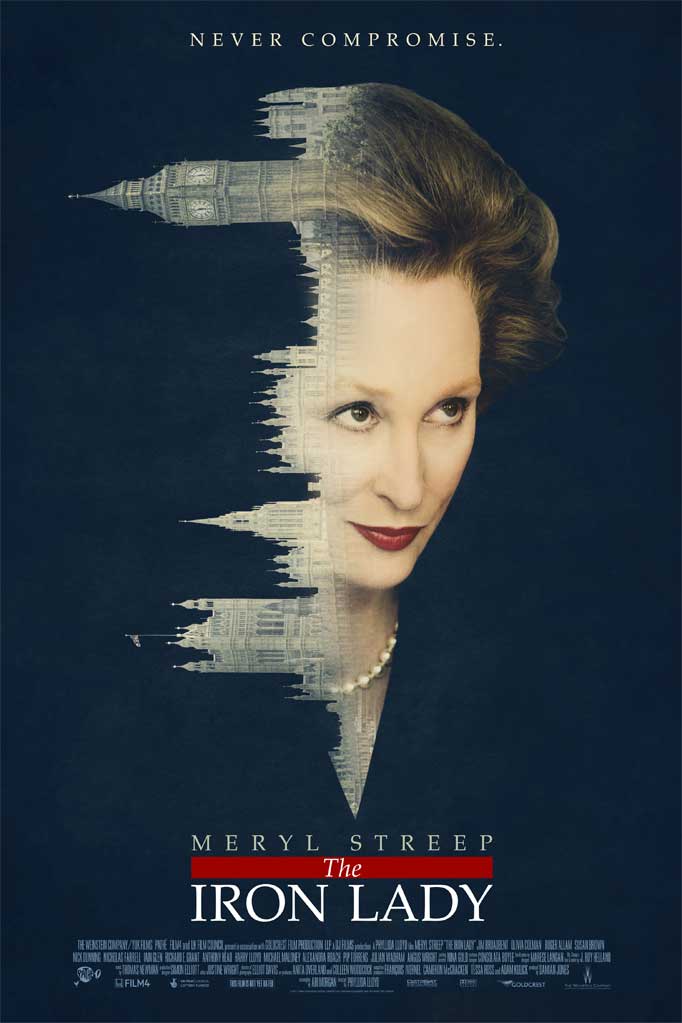
The Iron Lady (2011)


Meryl Streep impersonates the Iron Lady to excellent effect in this otherwise bland and forgettable, compromised mess of a picture

Director: Phyllida Lloyd

Cast: Meryl Streep (Margaret Thatcher), Jim Broadbent (Denis Thatcher), Olivia Colman (Carol Thatcher), Roger Allam (Gordon Reece), Nicholas Farrell (Airey Neave), Iain Glen (Alfred Roberts), Richard E. Grant (Michael Heseltine), Anthony Head (Sir Geoffrey Howe), Harry Lloyd (Young Denis Thatcher), Michael Pennington (Michael Foot), Alexandra Roach (Young Margaret Thatcher), John Sessions (Edward Heath)

In British politics has there been a figure as controversial as Margaret Thatcher? A domineering Prime Minister who reshaped the country (for better or worse depending on who you speak to), crafting a legacy in the UK’s politics, economy and society that we will continue to feel for the foreseeable future, she’s possibly one of the most important figures in our history. It’s a life rich for a proper biographical treatment; instead, it gets this film.

The film’s framing device is focused on the ageing Thatcher (Meryl Streep), now dealing with onset dementia and having detailed conversations with her deceased husband Denis (Jim Broadbent). Cared for by her daughter Carol (Olivia Colman), she reflects on her political career and the sacrifices she made personally to achieve these. Woven in and out of this are Thatcher’s increasingly disjointed memories of her political career.

The most surprising thing about this film is how little it actually wants to engage with Thatcherism itself. Perhaps aware that (certainly in the UK) Thatcher remains an incredibly divisive figure, the film’s focus is actually her own struggles with grief and approaching dementia. Her career as PM is relegated to a series of flashbacks and short scenes, which fill probably little more than 20-30 minutes of the runtime, shot and spliced together as a mixture of deliberately subjective memories and fevered half-dreams. Can you imagine a film about Thatcher where Arthur Scargill and the miners’ strike doesn’t merit a mention? You don’t need to: thanks to The Iron Lady it now exists. 

Perhaps Thatcher’s politics were considered to “unlikeable” – certainly, one imagines, by its writer and director – to be something to craft a film around, so it was thought better to brush them gently under the table. Instead the focus is to make Thatcher as sympathetic as possible to a viewer who didn’t share her politics, by concentrating on her struggles against sexism in the 1950s and her struggles with age late on. Why not accept what Thatcher stood for and make a film (for better or worse) about that? Perhaps more material on her actual achievements in office were shot and cut (the film does have a very short run time and underuses its ace supporting cast), but the whole film feels fatally compromised – which is more than a little ironic since it is about a woman famous for her lack of compromise.

In fact it’s rather hard to escape the view that Roger Ebert put forward: “few people were neutral in their feelings about [Thatcher], except the makers of this picture”. It’s a film with no real interest in either politics or history, the two things that defined Thatcher’s entire life. And as if to flag up the mediocre nature of the material they’ve chosen, it’s then interspersed with too-brief cuts to more interesting episodes from Thatcher’s life than those we are watching. Only when the older Thatcher hosts a dinner party and launches into a blistering sudden condemnation of Al-Qaeda and support of military action against terrorism (followed by her casual disregard of a hero-worshipping acolyte) do we ever get a sense of finding out something about her, or of seeing her personality brought to life.

The film’s saving grace is of course Meryl Streep’s terrific impersonation of Thatcher. I call it impersonation as the film so strenuously avoids delving into the events and opinions that shaped Thatcher that Streep gets very little opportunity to really develop a character we can understand, or to present an insight into her. Her performance as the older Thatcher – losing control of her mannerisms, deteriorating over the course of the film – is impressive in its technical accomplishment, but that’s largely what it remains. As the film doesn’t allow us to really know Thatcher, and doesn’t work with what defines her, it largely fails to move us when we see her weak and alone. So for all the accomplishment of Streep’s work, I couldn’t say this was a truly great performance – certainly of no comparison to, say, Day-Lewis as Lincoln or Robert Hardy as Churchill. I’d even say Andrea Riseborough’s performance in TV’s The Long Walk to Finchley told us more about the sort of person Thatcher was than Streep does here.

Despite most of the rest of the cast being under-used though, there are some good performances. Jim Broadbent is very good as Denis Thatcher, although again his performance is partly a ghostly collection of mannerisms and excellent complementary acting. However the chemistry between he and Streep is magnificent and accounts for many of the film’s finest moments. Olivia Colman does sterling work under a bizarre fake nose as a no-nonsense Carol Thatcher. From the all-star cast of British actors, Roger Allam stands out as image-consultant Gordon Reece and Nicholas Farrell is superbly calm, cool and authoritative as Airey Neave. Alexandra Roach and Harry Lloyd are excellent impersonating younger Thatchers.

The Iron Lady could have been a marvellous, in-depth study of the politics of the 1980s, and a brilliant deconstruction and discussion of an era that still shapes our views of Britain today. However, it wavers instead into turning a woman defined by her public role and views into a domestic character, and brings no insight to the telling of it. By running scared of Thatcher’s politics altogether, it creates a film which makes it hard to tell why we should be making a fuss about her at all – making it neither interesting to those who know who Thatcher is, nor likely to spark interest in those who have never heard of her.

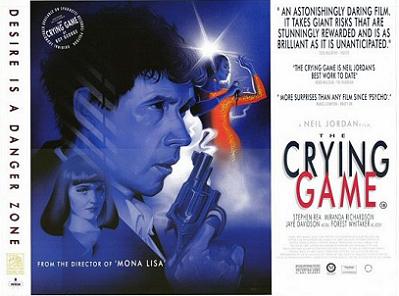
The Crying Game (1992)


Jaye Davidson and Stephen Rea play a dangerous game of attraction

Director: Neil Jordan

Cast: Stephen Rea (Fergus), Miranda Richardson (Jude), Forest Whitaker (Jody), Jaye Davidson (Dil), Adrian Dunbar (Peter Maguire), Tony Slattery (Deveroux), Jim Broadbent (Col), Ralph Brown (Dave)

The Crying Game is one of those little movies that could: a small scale British/Irish drama about human nature and dangerous relationships, which suddenly burst into the world big, was nominated for five Oscars and won one for its creator, turning him into a widely respected writer/director.

The film follows Fergus (Stephen Rea), an IRA soldier who, over a long night, bonds deeply with Jody (Forest Whitaker) a British soldier his unit are holding hostage with the intent of killing him if their comrades are not released. When Jody is accidentally killed trying to escape his execution, and British soldiers wipe out his cell, Fergus escapes to a new life in London, aiming to track down Jody’s girlfriend Dil (Jaye Davidson) whom Jody asked him to find. Fergus discovers things about himself and Jody in London he little anticipated – and also finds that his IRA companions, especially the dangerous Jude (Miranda Richardson), are not as deceased as he believed.

When it was first released in the UK, The Crying Game was a critical and box-office disaster. This was linked to its IRA plotline, largely on account of the film’s unwillingness to stick an unequivocally clear condemnatory label on the IRA. Of course, the film is not a film about terrorism at all – and whatever it says about the rights and wrongs of the British presence in Ireland (very little indeed), I think it’s pretty clear that it shows killing and violence are completely wrong. However, the film was saved by its huge success in America. There, its subject matter didn’t provoke the same level of controversy it was re-marketed as the biggest “twist” film since Psycho.

And ever since then I would say it has stayed in that list of great “twist” films – up there with The Usual Suspects, The Sixth Sense, Planet of the Apes, Fight Club and of course Psycho, among many others. Most of its mystique at the time was due to the fact that the twist was revealed just over halfway through the film and was based around a theme that has gained far more familiarity to us today. I won’t say what the twist is (just in case), as seeing it unfold is a pleasant surprise that turns what we think we know about several of the characters on its head. I’ll simply say that it is a question of identify and leave it at that.

Identity is appropriate, as that’s what this film is about: the images we build about ourselves and how we project those to the people around us. The way our environment, and the people we spend time with, help to shape the people we are. The sometimes unexpected depths that we discover within ourselves. The film is dramatically opposed to label altogether: hence it can present a gunman for the IRA who is a sensitive and kindly soul, whose relationships with others are based on gentleness (and Fergus is just one of three characters in the film who turn out to be very different from our initial perception of them). Many of these reveals are connected to understanding how love and affection can overlap with feelings of attraction and how we express these feelings. This is all parts of the film’s fundamentally humanitarian outlook.

The film has a poetic, at times almost dreamlike, quality about it. There is a lyrical ambience to many of the scenes, with the camera drifting comfortably through the action. Visions of Jody plague Fergus throughout, both day-to-day and (tellingly) during a sexual encounter with Dil. Jody’s image haunts the film, ghost-like, through the many photos of him in Dil’s flat. Many of the events have a similarly haunting sense of being a few degrees out of reality. It’s got the sense of a violent bedtime story or fairy tale in London.

Jordan’s script is outstanding – humane, witty, deeply felt – and the actors embrace the opportunity to play such multi-levelled, difficult-to-pigeonhole characters. It’s also brilliantly constructed into three clear acts, each of which comment upon and deepen the others: we have Fergus and Jody together in Ireland, a tragic growth of friendship and respect between two men; Fergus and Dil in London, a sweet and tentative romance built on secrets; and finally the return of the IRA to London, a destructive thriller. Each act feels like a natural development and there are no juddering changes of tone, as Jordan keeps the focus on the characters and their personal stories and feelings.

A large part of the film’s success is linked to Stephen Rea’s thoughtful and sensitive performance as Fergus, a man who has clearly stumbled into a life of violence despite his sensitive and rather tender nature (and our underlying natures guiding our actions is a major theme of the film). He’s a true lost soul, and his deep (and sudden) friendship with the kidnapped Jody has an ease about it that reveals depths about his character. His relationship with Dil has a sweetness to it, while Fergus is engagingly nervous and tentative of openly expressed love (not to mention that he lies to her – non-maliciously – from the start, as he knows far more about her than she realises). It’s a low-key but commanding performance with a real depth of feeling, and Jordan gives the character a powerful redemptive arc that Rea plays to the hilt.

There is also terrific work from the rest of the cast. This is one of only two films Jaye Davidson ever made, and the untrained naturalness of the acting adds a huge amount to the mystique of the character, as well as making Dil truly sympathetic and intriguing. Davidson’s short career also preserved the unique mystery around the character that was so essential to the film’s success. Forest Whitaker’s English accent is an up-hill battle, but the actor brings his force-of-nature charisma to the part so completely you overlook that he isn’t convincing as a Londoner, a solider or a cricketer. What you do believe is his connection with Fergus, while Whitaker is able to suggest dark hints throughout that his bond with Fergus is as least part manipulation.

Miranda Richardson has the grandest role as a death-dealing IRA hitwoman, which she delivers with aplomb, her dark eyed fanatical fury making her a dangerous antagonist for the film. Jim Broadbent also shines in an early role as an enigmatic barman, but there is hardly a bum note in the acting, although Tony Slattery is perhaps a little too broad as Fergus’ worksite boss.

The Crying Game is a hugely rewarding film to watch, a deep and thoughtful film, packed with wonderful scenes, great acting and guaranteed to lead to discussion and debate after it has finished. Yes it’s a film with a famous twist – but it is not a film defined by that twist. Instead that is only part of the rich tapestry of the film’s exploration of identity, desire and self-knowledge, in which the images we are present to others are as difficult to interpret as the images we present to ourselves.

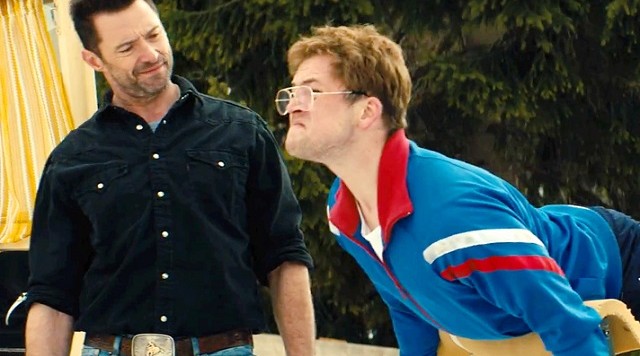
Eddie the Eagle (2016)


Some more comic escapades in the not-really-true-at-all film of Eddie the Eagle’s life

Director: Dexter Fletcher

Cast: Taron Egerton (‘Eddie’ Edwards), Hugh Jackman (Bronson Peary), Iris Berben (Petra), Keith Allen (Terry Edwards), Jo Hartley (Janette Edwards), Tim McInnerny (Dustin Target), Mark Benton (Richmond), Jim Broadbent (BBC Commentator), Christopher Walken (Warren Sharp), Rune Temte (Bjørn), Edvin Endre (Matti Nykänen)

Watching Eddie the Eagle, it’s interesting to think that Edwards was ahead of his time. An unqualified ski jumper with a certain natural talent and a lot of dedication, his unspun, naïve enthusiasm effectively made him a perfect YouTube sensation, 15 years before that term existed. His joyous reactions and “just pleased to be here” manner while coming last in two ski-jumping competitions at the Olympics meant the public couldn’t get enough of him (then or now it seems) and he’s probably about the only thing anyone can really remember about the 1988 Winter Olympics.

I found my heart completely unwarmed by this lamely predictable film, a virtual remake of Cool Runnings and Rocky, which can barely move from scene to scene without tripping over clichés. In other sports films, the snobbery against the underdog feels unjust because we know they deserve to be there. Edwards doesn’t deserve to be there, and doesn’t prove himself anything other than a brave novelty act. Perverse as it sounds, the one area where the film deviates from its predictable formula is the part that makes everything else not really work.

It’s not a particularly funny film. That may be partly because every single comic beat in it is taken from somewhere else, but joke after joke falls flat. Scenes meander towards limp conclusions that can be seen coming a mile off. Every single character is either a cliché, mildly annoying or both. Jackman strolls through the film barely trying. Taron Egerton plays Eddie as virtually a man child, a naïve mummy’s boy, an innocent in the world of men, curiously sexless, but a cheery enthusiast with a never-say-never attitude. However, I often found him less endearing and more mildly irritating.

Virtually nothing in the film is actually true. This doesn’t necessarily matter, but I felt it made the film slightly dishonest. It leaves us with the impression Edwards was set to go on to success in his career – he wasn’t. It doesn’t mention the Olympic committee changed the rules to prevent amateurs taking part in this highly dangerous sport at this level. It doesn’t even begin to mention that almost the entire cast are invented supporting characters, or that many of the real characters (such as Edwards’ father) have had their personalities totally reimagined.

It also reshuffles the truth to make Edwards seem far more incompetent and unlikely than he actually was. In reality an accomplished amateur athlete and skier who just missed the Olympic team, he’s here reinvented as a barely proficient, uncoordinated klutz, a buffoon on skis. Egerton’s otherworldly naivety (at times his childish outlook on the world borders on the mentally deficient) is to be honest rather grating. By hammering up his ineptitude, it’s hard to really think that he should be clinging to these dreams that he’s not suited to perform.

Channel 4 run a TV reality ski-jump show called The Jump. Several celebrities who have taken part in it have suffered serious injuries. With that in mind, is it really wrong to wonder if a sport isn’t right in saying “the unqualified and the amateur shouldn’t be attempting this”? Yes the Olympics is partly about competing in the right manner – but shouldn’t that mean also protecting people from themselves?

The one slightly brave move the film makes is to briefly toy with the idea that Edwards is fundamentally misguided. Before the Olympics begins, his trainer pleads with him to continue his training, wait four years and qualify as a proper athlete rather than a novelty, to have a future of several Olympics rather than cheating into one. Edwards (and the film) ignores him, but I found I was thinking “you know what, he’s right”. The film never manages to remove from Edwards the whiff of the joke act.

I’ve been incredibly hard on this film – it’s not like it’s trying to do anything serious or meaningful. It just wants to tell a nice story about a nice guy. It prides itself on being a bland formulaic piece of film making. But I didn’t find it moving or heartwarming and I didn’t warm to Edwards. I admire his determination, but he’s like those deluded singers chasing their dream on X Factor. The characterisation of Edwards makes him hard to relate to and his final “success” doesn’t mean anything as the film never escapes the feeling that he is being laughed at rather than with. Add the fundamental dishonesty of the film and I found it really unsatisfying.

Give it a miss. Watch Cool Runnings instead. That’s full of invention too of course, but the invention is truer to the facts and the spirit of the truth, and the film itself is far funnier and more satisfying than this one.

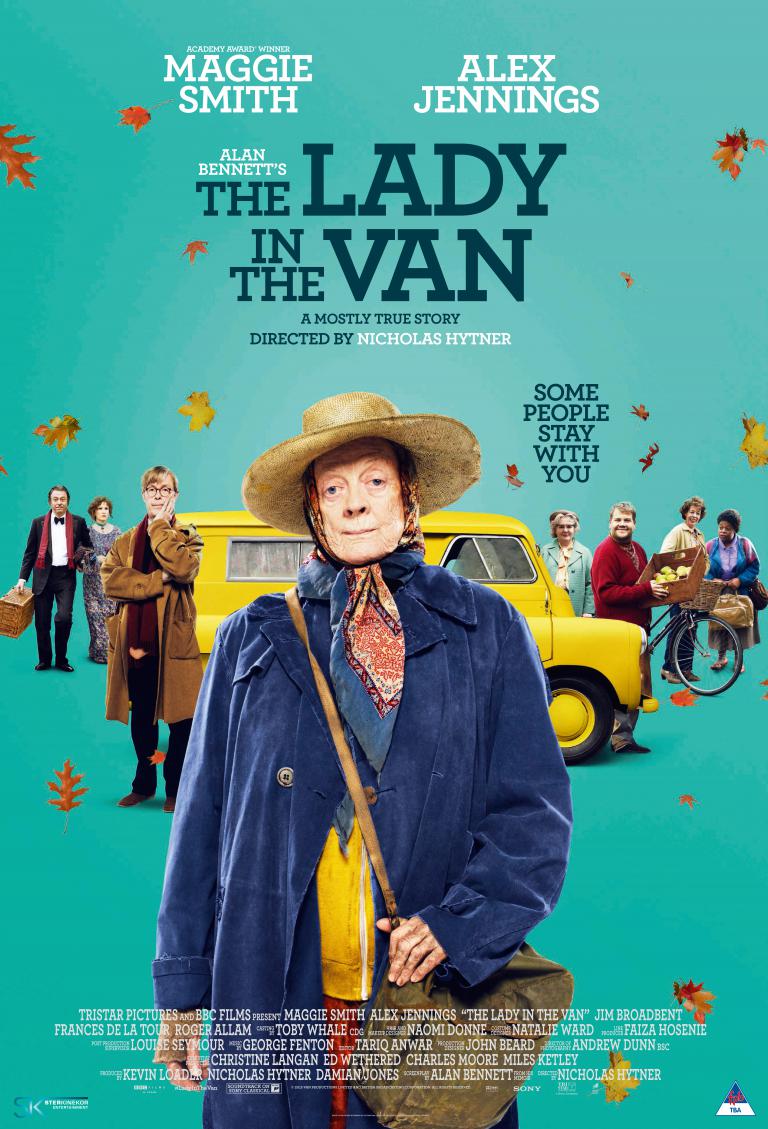
The Lady in the Van (2015)

Maggie Smith and Alex Jennings tearing up the neighbourhood

Director: Nicholas Hytner

Cast: Maggie Smith (Miss Shepherd), Alex Jennings (Alan Bennett), Roger Allam (Rufus), Deborah Findley (Pauline), Jim Broadbent (Underwood), Claire Foy (Lois), Frances de la Tour (Ursula Vaughan Williams)

This screen adaptation of Alan Bennett’s play is entertaining and a feast of good acting, even if not a lot actually really happens in it. Nicholas Hytner directs, as he did with the original National Theatre production, with Maggie Smith also reprising her role as the titular bag lady. Interestingly the theatrical device of two versions of Alan Bennett  (as the narrator) is also carried over from the film, with Alex Jennings playing both Bennett and his “Bennett the Author” persona.

Mary Shepherd (Maggie Smith) is an elderly bag lady who lives out of a broken down van which she insists painting a garish bright yellow. Befriended by ‘neighbour’ Alan Bennett (Alex Jennings) she moves the van onto his drive – and stays for 15 years. The film chronicles their unlikely friendship, as well as Bennett’s conflict with himself over his motives (in this and in everything else) and slowly reveals Mrs. Shepherd’s background.

It’s a witty and entertaining meandering film that oddly feels rather like the biggest budget home movie in the world, a sort of National Theatre party with the action taking place in Alan Bennett’s real home, Hytner himself popping up as an un-named character (as well as appearing on screen at the end with the real Bennett) and its dozens of cameos from British theatre, not least cameo appearances from all the cast of The History Boys (a rather distracting eye-spy game when you notice it). This doesn’t make it not fun – its a delight to see so many great actors at work – it just feels a little odd.

What probably keeps this from being impossibly smug is that it is actually a very acute (and self accusatory) examination of the author himself and the nature of writing. Bennett is not afraid at every point to question his motives and to accuse writers of exploiting those around them for material. Of course this is slightly distanced by the device of the “two” Alan Bennett’s, but this is pretty much essential to dramatise a conversation a man has with himself without using voiceover. Alex Jennings is, by the way, terrific in both roles – a wonderful mimic, but also really understands the psychology of the part and makes the contrasts between the two Bennett’s immediately clear.

Maggie Smith though is the star here and she is a shining one. She brings not only her usual wit and comic timing to the part,but she also is able to demonstrate with a few beats, or a small aside, years of pain and loneliness. She makes a woman who is basically quite unpleasant and difficult, into someone you care deeply about. A late sequence of her playing the piano – music being something she has avoided for years – is deeply moving because of the simplicity and genuine feeling she plays the moment with.

Hytner directs with a smooth unfussiness and a great deal of polish – I’ve always thought he is a natural at film directing, and he resists the temptation for visual flashiness. It goes without saying that he is a superb actors director. The final act of this film however doesn’t quite click into place – the comment on giving Miss Shepherd “the ending she would have wanted” doesn’t quite work and the final conversion with a decreased Miss Shepherd a scene too far. It’s an anecdote rather than a story – and a good anecdote well told – but not something I can imagine wanting or needing to see again.