Tag: Joe Pantoliano

Empire of the Sun (1987)

Empire of the Sun (1987)

Beautifully shot version of Ballard’s semi-biographical novel with a superb lead performance

Director: Steven Spielberg

Cast: Christian Bale (Jim Graham), John Malkovich (Basie), Miranda Richardson (Mrs Victor), Nigel Havers (Dr Rawlins), Joe Pantoliano (Frank Demarest), Leslie Phillips (Mr Maxton), Masatō Ibu (Sergeant Nagata), Robert Stephens (Mr Lockwood), Takatarō Kataoka (Young pilot), Emily Richard (Mary Graham), Rupert Friend (John Graham), Ben Stiller (Dainty), Paul McGann (Lt Price)
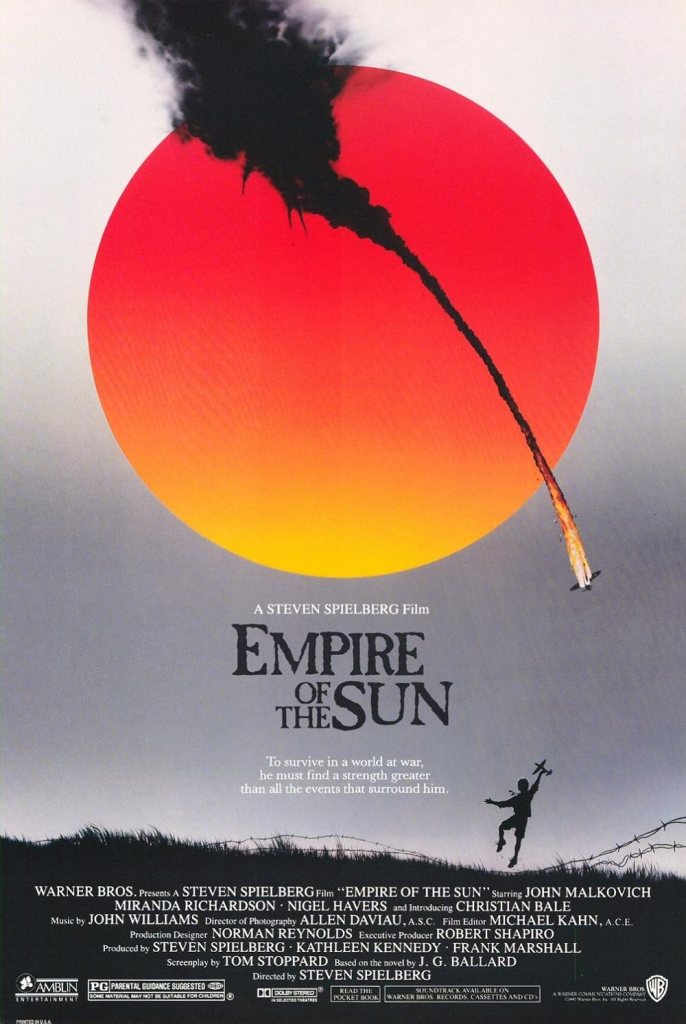
JG Ballard was 12 when he was sent from Shanghai to a Japanese internment camp in 1943 for the remainder of the Second World War. His experiences formed the basis for his novel, Empire of the Sun. The key difference being that, unlike him, young Jim Graham (an incredible Christian Bale) is separated from his parents, falling under the duelling influences of charmingly callous grifter Basie (John Malkovich) and compassionate Dr Rawlins (a very good Nigel Havers), switching between starving trauma and boyish excitement at the explosions of war around him.

Empire of the Sun was originally due to be a David Lean project, before he handed the reins to producer Steven Spielberg. Keen to echo one of his idol’s works – keen to make a film that could sit alongside The Bridge on the River Kwai – and clutching an excellent Tom Stoppard adaptation, Empire of the Sun becomes a grand epic, gorgeously filmed by Allen Daviau. But it also a strangely under-energised affair. It has flashes of powerful emotion, moments where it is profoundly sad and moving. But it’s also an overlong film that struggles to fully commit to a young boy’s emotionally confused reaction to war.

On its release, Empire of the Sun suffered in comparison to Hope and Glory. Unlike Spielberg, John Boorman’s presented a deeply personal, autobiographical view of war through his own memories. Boorman, remembering his own experiences, was not afraid to present war as a child might see it: the grandest game in the world. It’s something Empire of the Sun struggles to process, awkwardly struggling to fuse Jim’s romantic view of the camp as a home full of adventure and its neighbouring airstrip being lined with fighter planes he worships, with his understanding that the guards are dangerous temperamental bullies prone to violence. There is something in this difficult to manage balance between childish wide-eyed excitement and terror at war that Spielberg can’t quite master.

Which isn’t to say there’s not a lot to admire in Empire of the Sun. Visually it’s a wonder, from its early green fields and blue-sky framed shots of the Shanghai British community to the increasingly yellow-filtered bleakness of the punishing, drought packed prison camp and death march that is the eventual fate of the internees. If anything, the film is a little too strong on the desolate beauty of the POW camp, the grand visuals sometimes making an awkward fit with its tale of childhood trauma. John William’s overly grand score – too reminiscent of the adventures of previous Spielberg films – also doesn’t quite work, overpowering moments of the film that should feel more subtle.

This visual and aural grandness would work, if Spielberg could commit to Jim’s frequent view of war as a grand game. After all, separated from his parents in Shanghai he cycles anywhere he wants. In the camp, he cosplays as an American pilot and charges around with the breathless energy of a kid at summer camp. To him, an attack on the airfield becomes a glorious fireworks show. Spielberg is more comfortable with the scenes showcasing Jim unquestionable distress (in particular, a teary breakdown over his inability to remember his parent’s faces). It’s a film that wants to be a survivor’s story amongst suffering, but in which the lead spends a great deal of time enjoying his situation.

Empire of the Sun can’t quite wrap its head around Jim’s psychology, never quite willing to commit to the perspective of a naïve child who can’t quite understand the real horror of the situation he’s in, even while death piles up around him. It’s more comfortable with familiar coming-of-age tropes, such as the early stirring of Jim’s sexuality with Miranda Richardson’s alluringly distant Mrs Victor. (Richardson is very good as this society grand dame, fonder of Jim than she admits).

None of this though is to bring into any question the breathtakingly mature performance by future Oscar-winner Christian Bale (Spielberg’s greatest directorial feat is the unstudied naturalness he helps draw out of Bale). Bale’s performance does a lot to square the circle of Jim’s excitement with the fragile trauma under the surface, almost more than the film does. If there is one thing Spielberg’s film does get, thanks to Bale, it’s a child’s inexhaustible reboundability. Jim is never quite spoiled by his experiences: shaken yes, but still a kind, imaginative child with a relentless optimism. Bale’s performance is highly nuanced, the flashes of pain and panic very effective, the subtle hardening of his survival instinct very well judged.
Bale’s stunningly mature performance powers one of Empire of the Sun’s strongest themes: Jim’s subconscious quest for substitute parents. Barely able to remember his real parents, Jim looks to other adults to fill the gap, while lacking the maturity to judge who is appropriate and who not (he even allows himself to be ‘renamed’ from Jamie to Jim). This brings out a strong Oliver Twist subplot, with Jim fixing himself onto an amoral American Fagin. John Malkovich gives a serpentine menace to the amoral Basie, the grifter who always comes out on top, demonstrating just enough affection for Jim while never leaving you in doubt he’d eat the boy alive if circumstances called for it.

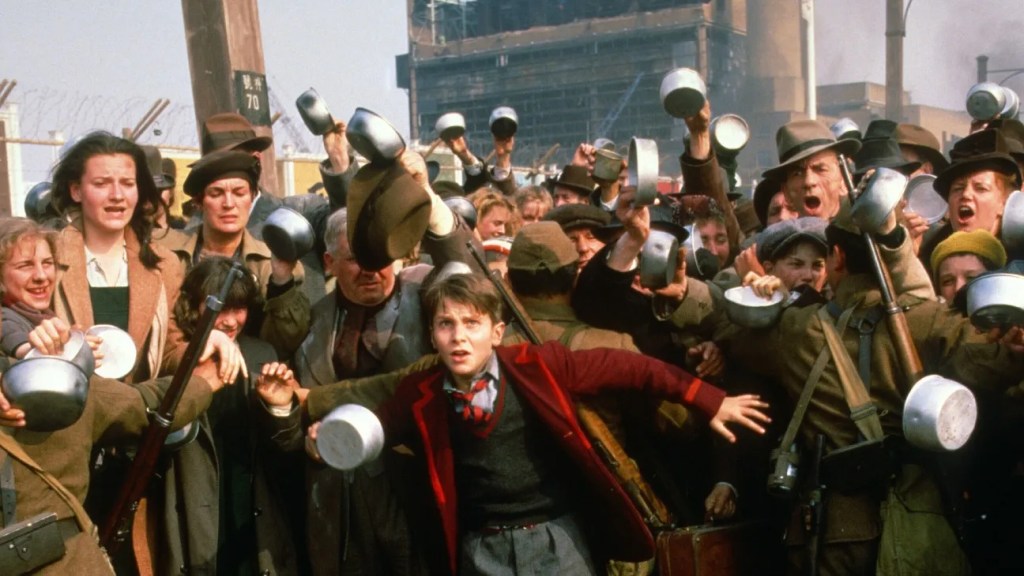
With so many strengths, it makes it more of a shame Empire of the Sun doesn’t quite click. It’s at least twenty minutes too long, dedicating too much time to larger scale moments which, while impressively staged, distance us from the heart of the movie. It works best with smaller personal moments, even within its epic sequences. The Japanese army marching into Shanghai is masterfully staged, but it’s the terror of Jim as he loses his parents in a surging crowd that carries the real impact. Similarly, Jim watching the A-bomb explode, light flowing across the screen, has a silent power. Some moments capture the changing world in microcosm brilliantly: Jim’s discovery that his parent’s staff are looting his home, has the maid respond to his anger by calmly walking across the room and slapping him. This moment captures the fall of everything Jim has known perfectly.

You wish there was more of these smaller, more intimate moments in Empire of the Sun – just as you wish that the film was more slimmed down, more focused and better able to engage with the complex child’s perspective that could simultaneously love and hate the way. Spielberg’s film despite its many strengths and virtues, isn’t quite willing to do that.

Memento (2000)

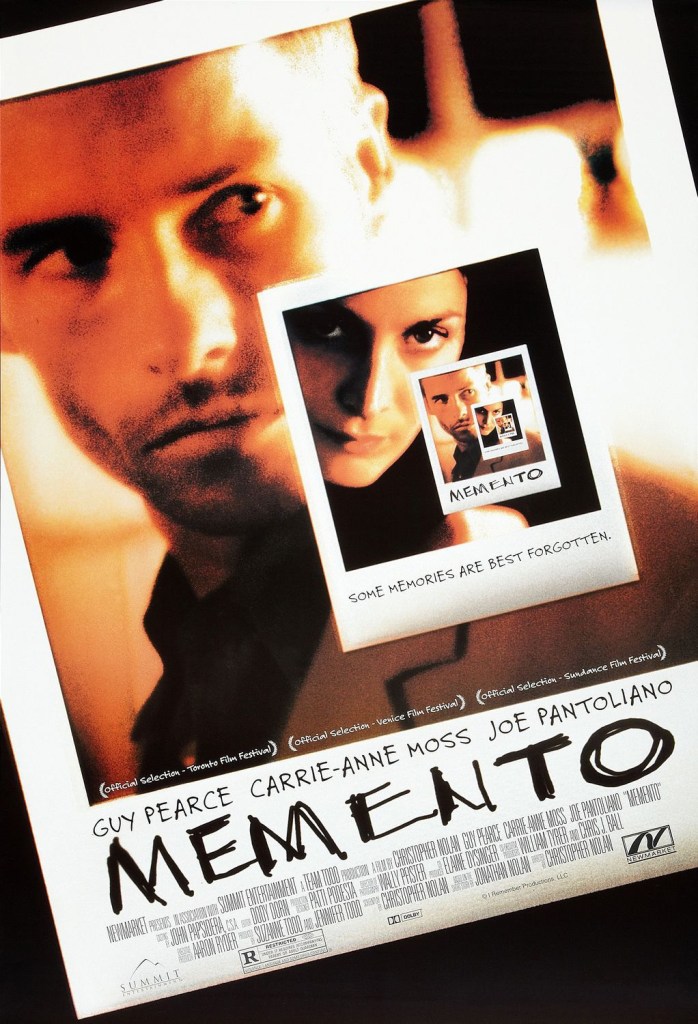
Memento (2000)

Nolan’s Hollywood debut is still a mesmerising, inventive and inspiring noir thriller

Director: Christopher Nolan

Cast: Guy Pearce (Leonard Shelby), Carrie-Anne Moss (Natalie), Joe Pantoliano (Teddy), Mark Boone Jnr (Burt), Jorja Fox (Catherine Shelby), Stephen Tobolowsky (Sammy Jankis), Harriet Sansom Harris (Mrs Jankis), Callum Keith Reinne (Dodd)

Memento is a twisty-turny thriller of man who can’t remember anything that has just happened to him. But it’s also a tragedy of a man who actually can never forget. Leonard Shelby (Guy Pearce) has anterograde amnesia, a condition that prevents him forging new memories. Every few minutes or so, his memory resets and he forgets what just happened to him. But he can never forget what happened to him immediately before his condition: the murder of his wife by a mysterious assailant. Effectively, Leonard lives forever in that last moment he remembers: it has always just happened, and has shaped his life into a relentless search for revenge.

It’s a realisation I made after a watching again Christopher Nolan’s sophomore calling-card, surely one of the most complete artistic statements of intent Hollywood has seen this century. You can see the roots of all that was to come here, from Batman to Oppenheimer, via Tenet, Inception and Interstellar. Memento is a gripping thriller and also a playful and intriguing dance with narrative conventions, largely told backwards (each seven minute or so section in colour occurs after the scene that preceded it) but also featuring a black-and-white parallel narrative that takes place (it is revealed) chronologically, that eventually links up with the other narrative (the film, effectively, ending somewhere in the middle of the story).

Far from a stunt, this is ingenious, exciting story-telling from Nolan, superbly recreating some idea of what it might be like to never remember why you are somewhere, where you have been or whether you have ever met the person you are talking to before or not. You could say the story, once rearranged in chronological order, is simple – but everything is easy to follow with a map.

Memento’s structure reflects part of Leonard’s perspective, forcing you constantly to watch the film in the moment and never be able to apply your wider knowledge of the narrative. No matter how familiar I become with the film, I find I inevitably become as confused and lost as Leonard is, your mind struggling to reorder and reinterpret “later” scenes as you discover the “earlier” ones, the whole film fracturing into mini-arcs (the chase where a bemused Leonard doesn’t know at first whether he’s chaser or chase; the bar conversation that starts in the middle; the mysterious woman who appears in a bathroom, and so on).

Even more ingeniously, we realise Leonard is essentially ‘re-born’ with every cut-to-black. He will never feel anger towards someone who wronged him minutes earlier or fondness towards someone who was kind to him. The Leonard dead-set on a goal one minute will cease to exist the next, with only any notes remaining to guide him. Essentially, Leonard is constantly handing over to himself: even he knows this: that decisions he makes in a moment effectively carry no implications, because he won’t remember them. He will never feel guilt, or regret, shame, pride and delight.

Leonard prides himself on making his life work through a rigorous system of mental conditioning. His short-term memory may be destroyed, but his ability to “learn” has not. He talks proudly of his system: carefully written notes, annotated polaroids of key people, places and objects, certain things always kept in certain places and, of course, a body littered with tattoos of crucial facts about his wife’s murder. What’s ingenious about Nolan’s film is that, like Leonard, we never know the context of any of this. When Leonard makes a note, what prompted him to do it? Like him we don’t know.

That lack of context exposes, over the course of the film, the nonsense of Leonard’s system. Trusting notes – particularly written by himself – implicitly from moment-to-moment, leaves him wide open to manipulation. If he has a polaroid of an object with the note “This belongs to you”, he will assume it is true. If someone produces evidence of a friendship or mutual interest, he will believe it. Even more chillingly, we discover Leonard himself is more than capable of leaving himself breadcrumbs he knows his future selves can (and will) misinterpret. After all he’ll never remember the deception and will never waver in the belief that he would never deceive himself.

Like Leonard we can never know the truth about the people he talks to. Should we listen to the message “don’t believe his lies” about the ingratiating weaselly Teddy – especially since the film “begins” with Leonard shooting him in the head as the killer of his wife. Or is Teddy, played with a perfectly smarmy, smart-alecky wit by Joe Pantoliano, the friend he claims to be? Does Natalie, the quiet but helpful woman who has also lost someone (memorably played with a beautifully balanced mix of the austere and tender by Carrie Anne-Moss), deserve the absolute trust Leonard accords her based on his annotated polaroids? After all, the manager of the hotel he’s staying at (a marvellously droll cameo from Mark Boone Jnr) cheerfully confesses to ripping him off, since he knows Leonard won’t remember it next time they speak.

What becomes clear is that Leonard, for all his surface assurance and confidence is a raw emotional mess, utterly lost in the world he inhabits and trapped forever in an emotional state of raw grief and fury, his politeness a ‘learned’ habit as much as his mantras and endlessly repeated stories. Guy Pearce gives a fantastic performance of a character both deeply vulnerable but carrying reserves of bitterness that are intensely dangerous when unleashed. Pearce’s empathetic performance, low-key and underplayed throughout, helps us build a deep connection with Leonard, making the audience want him to succeed, while never hiding the possibility of danger in a man who knows nothing about the world around him other it has deeply wronged him.

It’s that hidden emotional state Nolan’s twisting film hides in plain sight throughout. After all, we know Leonard is capable of acts of violent rage – its literally the first thing we see him do. Opening the film with a shot of a Polaroid developing, played in reverse (so the image gets fainter), Nolan even shows us at the start that the facts will become less clear as the film progresses. Despite both these things, it’s frequently shocking how what we think of Leonard and those around him changes.

It’s told with a superb streak of film noir, but also a dark wit (after all, a guy who you can be as blatant false to you as you like because he’ll act like your friend five minutes later, is inherently funny) that means sucker-punch moments when we make crucial discoveries about objects, characters and even the story of Sammy Jankis (a similarly afflicted man, investigated by pre-accident Leonard in his old life as insurance claims investigator) land with a real wallop.

Memento is truly unique, a near unrepeatable trick expertly pulled off by a director who even in his second film was able to present a complex, multi-layered narrative with the assurance of a veteran. What’s interesting about Memento is that, away from the mechanics of how it is told, there is very little self-conscious flash or bombast about it. It uses flair when it serves the story, but otherwise lets events speak for itself. And it unfolds like an onion, each layer rewatch revealing a fresh new layer that shocks the senses. Superbly acted and brilliantly made, it’s a modern noir masterpiece.

The Fugitive (1993)

The Fugitive (1993)

An innocent man goes on the run in the one of the finest thrillers of the 90s

Director: Andrew Davis

Cast: Harrison Ford (Dr Richard Kimble), Tommy Lee Jones (US Marshal Sam Gerard), Sela Ward (Helen Kimble), Joe Pantoliano (US Marshal Cosmo Renfro), Jereon Krabbé (Dr Charles Nichols),Andreas Katsulas (Fredrick Sykes), Daniel Roebuck (US Marshal Bobby Biggs), Tom Wood (US Marshal Noah Newman), L Scott Caldwell (US Marshall Erin Poole), Johny Lee Davenport (US Marshall Henry), Julianne Moore (Dr Anne Eastman), Ron Dean (Detective Kelly), Joseph Kosala (Detective Rosetti), Jane Lunch (Dr Kathy Wahlund)

I think there are few things more terrifying than being accused of something you didn’t do. How can you hope to prove your innocence, when no one listens and there isn’t a scrap of evidence to back up your story? How dreadful again if the crime you are accused of, that everyone thinks you are guilty of, is the brutal murder of your wife? The double blow of everyone thinking you guilty, while the real killer walks free. What would you do to clear your name? And how much harder would that be, if you were also on the run from the law who are eager to prep you for the electric chair?

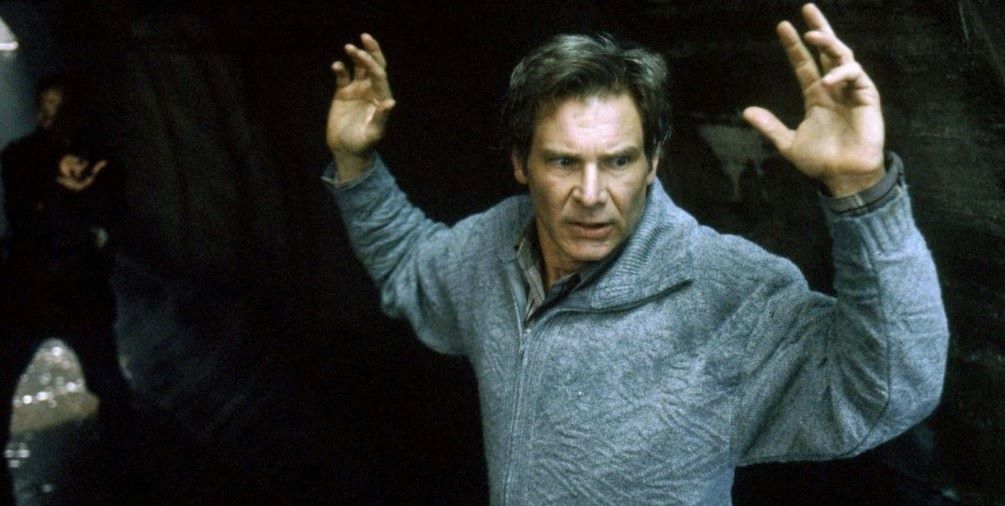
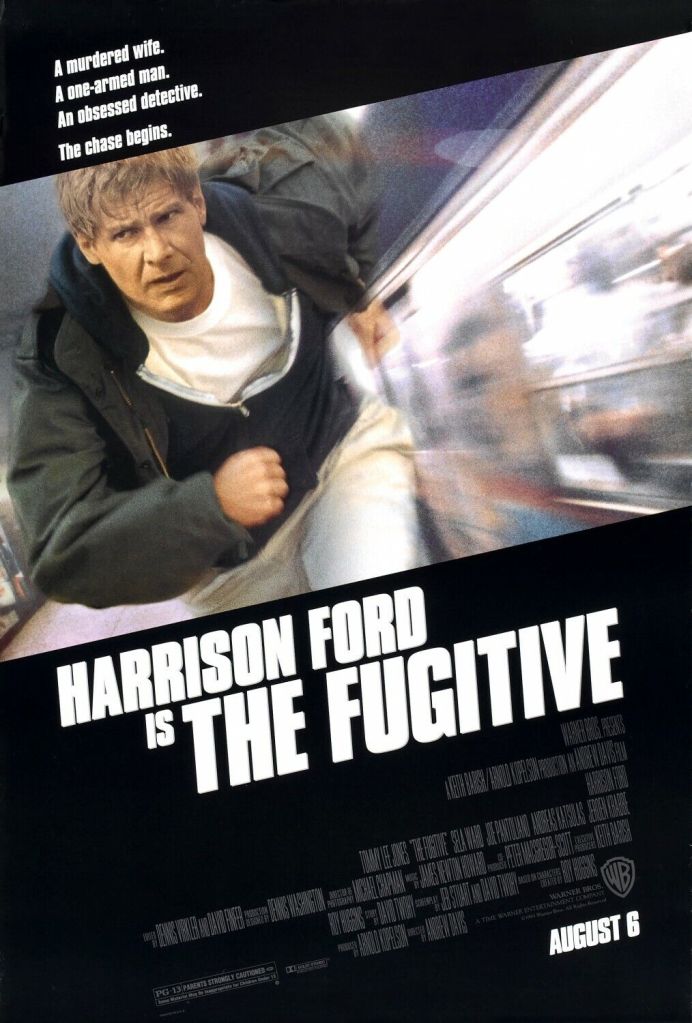
It’s the key idea of The Fugitive, adapted from a hit 60s TV show, and undoubtedly one of the best thrillers of the 90s. Harrison Ford is Dr Richard Kimble, on death row for the murder of his wife Helen (Sela Ward). In transit to prison, an accident caused by a convict’s escape attempt gives him a chance to escape. Returning to Chicago, Kimble is determined to hunt down the mysterious one-armed man he knows murdered his wife and work out why. Problem is, he’s being chased down by a team of US Marshals led by the relentless Sam Gerard (Tommy Lee Jones), who’s not interested in Kimble’s guilt or innocence, only in catching him.

The Fugitive is propulsive, involving and almost stress-inducing in its edge-of-the-seat excitement. It’s a smart, humane and gripping thriller, both a chase movie and an excellent whodunnit conspiracy thriller. It’s one of those examples of Hollywood alchemy: a group of people coming together at the right time and delivering their best work. It’s comfortably the finest work of Andrew Davis, a journeyman action director, who delivers work of flawless intensity, perfectly judging every moment. It’s shot with an immediacy that throws us into the city of Chicago and its surroundings (Davis was a resident of the city and worked with photographer Michael Chapman to bring the real city to life on screen) and the film never lets up for a moment.

It gains hugely from the casting of the two leads. No actor can look as relatably harassed as Harrison Ford. Determined but vulnerable – there is a marvellous moment when Ford squirms with suppressed fear rising in an elevator filled with cops – Ford makes Kimble someone we immediately sympathise with. He’s smart – evading police, forging IDs, inveigling himself into hospitals to access amputee records – but constantly aware of the danger he’s in, brow furrowed with worry, narrow escapes met with near-tearful relief. Ford excels at making righteousness fury un-grating – the film makes a lot of his boy-scout decency – and never forgets Kimble is a humanitarian doctor, putting himself frequently at risk to save lives, from pulling a wounded guard from wreckage during his escape or saving a boy from a missed diagnosis in the hospital where he is working as a cleaner.

You need a heavyweight opposite him, which the film definitely has with Tommy Lee Jones. Jones won an Oscar for his hugely skilful performance. It would have been easy to play Gerard as an obsessed, fixated antagonist. Jones turns him into virtually a dual protagonist. Much as we want Kimble to stay one step ahead of the law, we respect and become bizarrely invested in Gerard’s hunt for him. Jones is charismatic as the focused Gerard, but also a man far more complex than he lets on. He genuinely cares for his team, takes full responsibility for their actions and finds himself becoming increasingly respectful of Kimble, even entertaining the idea of his innocence.

Not that an unspoken sympathy will stop him doing his job. When Kimble pleads his innocence at their first meeting his (iconic) response is “I don’t care”. Later, he doesn’t hesitate to fire three kill-shot bullets at Kimble when nearly capturing him in a government building – Kimble saved only by the bullet-proof glass between them. Jones never loses track of Gerard’s dedication above all to doing his job (the investigation he starts into Kimble’s case is motivated primarily by it being the most efficient way to work out where Kimble might go). But the edgy humour and pretend indifference hide a man passionate about justice and with a firm sense of right and wrong.

These two stars make such perfect foils for each other, it’s amazing to think they spend so little time opposite each other. Davis makes sure those few meetings have real impact, starting with their iconic early face-off at the top of a dam. A gripping chase through the bowels of this concrete monster, it’s also a brilliant establishing moment for how far both men will go: Gerard will continue the hunt, even after losing his gun to Kimble in a fall – because he has another concealed, ready to hand; Kimble won’t even think about using a gun and will go to the same never-ending lengths to preserve his chance at proving his innocence, by jumping off that dam.

The film implies they recognise these similarities in each other. Perhaps that’s why Kimble even eventually bizarrely trusts Gerard as a disinterested party – even while he remains terrified of Gerard catching up with him. The unpicking of (what turns out to be) the conspiracy behind Helen’s death is carefully outlined and surprisingly involving (considering it rotates around sketchily explained corporate shenanigans) – largely because Davis has so invested us in Kimble’s plight.

That’s the film’s greatest strength. Everything draws us into sharing Kimble’s sense of paranoia: that one misspoken word or bad turn could lead to his capture. Scored with lyrical intensity by James Newton Howard, it’s tightly edited and only gives us information when Kimble gets it. We only learn information about the night of the murder as he remembers or uncovers it. Davis twice pulls brilliant “wrong door” routines, where both editing and the careful delivery of information to us at the same time as Kimble makes us convinced that raids are focused on him, when they are in fact looking at someone else entirely.

This sort of stuff makes us nervous, worried for Kimble – and hugely entertained. I’ve seen The Fugitive countless times, and its relentless pace, constant sense of a never-ending chase and the brilliance of its lead performers never make it anything less than utterly engrossing. There is barely a foot wrong in its taut direction and editing and it’s crammed with set-pieces (the dam face-off, a chase through a St Patrick’s Day parade, a breathless fight on an elevated train) that never fail to deliver. It’s a humane but sweat-inducing thriller, a near perfect example of its genre.

The Matrix (1999)

Keanu Reeves and Hugo Weaving defy gravity in ground-breaking sci-fi The Matrix

Director: The Wachowskis

Cast: Keanu Reeves (Neo), Laurence Fishbourne (Morpheus), Carrie-Anne Moss (Trinity), Hugo Weaving (Agent Smith), Joe Pantoliano (Cypher), Marcus Chong (Tank), Anthony Ray Parker (Dozer), Julian Arahanga (Apoc), Matt Doran (Mouse), Gloria Foster (The Oracle), Belinda McClory (Switch)

In 1999 we all waited for the release of a science-fiction film that would change the genre forever. Problem is we all thought it would be Star Wars: The Phantom Menace, when in fact the entire world went crazy for The Matrix. It helped that The Matrix was everything The Phantom Menace wasn’t: tight, exciting, brilliantly made and above-all endlessly, effortlessly and completely cool. And it still is: not even its dreadful, dreadful sequels could dent its genius or legacy. The Matrixis a flash of counter-culture: anarchic, teenage fantasy taking over the main-stream. It’s still brilliant.

Thomas Anderson (Keanu Reeves) is an office-working drone by day, hacker Neo by night, who wishes there was more to life than this. He’s going to get more than he wished for when he’s offered a choice between the “Red Pill and the Blue Pill” (truth or fantasy) by Morpheus (Laurence Fishbourne), leader of a mysterious hacker group with super-human athleticism and strength. Choosing the Red Pill, Neo wakes up to find himself plugged into a massive machine – and that the world he knows is nothing more than a post-apocalyptic cage, a computer simulation known as The Matrix, used by the all-conquering machines to keep humanity docile while they use their bodies as batteries for their empire. Even more than that, Morpheus is convinced Neo is “The One”, a prophesied saviour who will bring an end to the Matrix. Can Neo accept his destiny?

The Matrix is a superb fusion of a whole host of questions that clearly fascinate the Wachowski siblings. Questions of identity come flying to the fore, as well as the battle for individualism in a conformist society. The Matrix has very earnest points to make about learning to embrace the people we really are, which it delivers with a host of references to philosophy and psychology. It could have become indulgent and self-important (a trap the sequels would fall into), but it delivers the story with a crowd-pleasing burst of energy, mixing in film noir, kung-fu and some rather endearing characters that we end up really caring about.

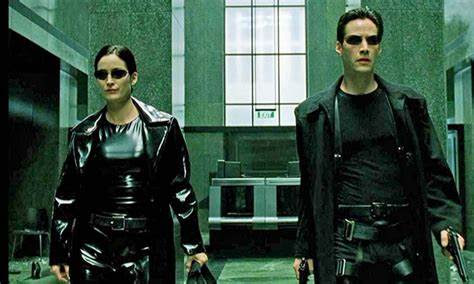
It’s also of course super, super cool. Everything about it passes the test: from the leather trench coats and shades to the high-octane action and the sense that the film is speaking directly to the alienated, authority-nose-thumbing teenager in all of us. This is a film for the people, the under-dog, with something for anyone who has ever felt trapped, bored or oppressed by their fate (i.e. nearly everyone) and reassures them that their dreams of having a special destiny might actually come true. It tapped into people’s joy and fantasy in a way The Phantom Menace totally failed to do.

This is a classic slice of mysticism. It’s not a film as clever as it thinks it is – it’s main calling card is still Alice in Wonderland the go-to for all films musing on dreamlike fantasy worlds – but it still throws a host of fun little questions and thinking points at the audience. Today, its also easier to see how the film is a celebration of counter-culture and sexual fluidity in a way that had to be snuck under the wire in the 90s. It asks (in a simple) way questions about who we are and what is it all about, in a way that really appeals to rebels. It’s the sort of film a Camus-loving teenager who is fed up with their parents, dreams they had the skill to make.

Skill is the key here. This is a superb achievement by the Wachowskis. It’s brilliantly directed, fast-paced and electric. The camera-work frequently makes use of a flurry of flashy tricks (reflections are a common theme), but which never over-whelm the narrative. It’s revolutionary use of freeze-frame camera work – an ingenious invention created “bullet time” where a series of cameras each taking one shot seem to allow us to rotate at normal speed around actors caught mid jump – introduced something we’d never seen before (and was much imitated and parodied later). The action sequences are stunning – a series of high-stakes, super-cool kung-fu-laced punches and kicks that are shot with a fluid camera that manages to seem both classic and deeply immersive.

It also works because our heroes are really underdogs. We are told again and again that they are vulnerable in the Matrix – that for all their gravity defying feats of strengths, when they come up against the “Agent” sentient programmes, they stand little or no chance of surviving. The goodies die with astonishing regularity in the film, and even the leads are shown to be extremely vulnerable in combat. Our empathy for them is so well crafted, that we even forgive the fact that they gun down countless numbers of their fellow humans during the film (it’s handwaved that anyone can become an agent at any time, so the slaughter of dozens of regular Joes is pretty much essential to prevent this).

A lot of that is also down to the excellence of the main performers. The film channels Keanu Reeves instinctive sweetness and gentleness in a way few other films managed to do as successfully before – he’s brilliantly convincing as both the kick-ass hero, but also the endearing fish-out-of-water who says “woah” as Morpheus jumps over a building. Carrie-Anne Moss is determined, assertive and very humane as Trinity while Laurence Fishbourne’s natural poise and authority are perfectly utilised as Morpheus. Opposite them we have a performance of such dastardly, lip-smacking, Rickmanesque consonant precision from Hugo Weaving, that Agent Smith becomes an iconic villain.

It all comes together into a film that delicately weaves a plucky under-dog story of a hero trying to find his purpose around a few perfectly staged, edge-of-the-seat action set-pieces, that hits a perfect balance between a wider-audience and a cool and pulpy indie vibe. It’s the sort of film that will please the masses, but many people will still feel is speaking very personally to them. Hugely influential, it remains a masterpiece of action and science fiction cinema which, while never as clever as it thinks it is, is hugely vibrant in its filming and endlessly, repeatedly exciting when watching.

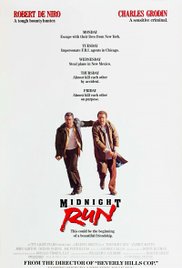
Midnight Run (1988)


Robert De Niro and Charles Grodin go on the road in terrific buddy-movie action comedy Midnight Run

Director: Martin Brest

Cast: Robert De Niro (Jack Walsh), Charles Grodin (Jonathan “The Duke” Mardukas), Yaphet Kotto (Special Agent Alonzo Mosely), John Ashton (Marvin Dorfler), Dennis Farina (Jimmy Serrano), Joe Pantoliano (Eddie Moscone), Richard Foronjy (Tony), Robert Miranda (Joey), Jack Kehoe (Jerry Geisler), Wendy Phillips (Gail), Danielle DuClos (Denise Walsh), Philip Baker Hall (Sidney)

There are few comic set-ups you can get better mileage from than an “odd couple” – they meet, they argue, they grow closer, they fight again, they reconcile. It’s a standard formula. Midnight Run throws this together with a road trip formula (two people have to get from A to B but via every other letter of the alphabet). Really it should be hugely predictable. But Midnight Run is well written, very well acted and hugely fun – it manages to feel both light and frothy, but also sufficiently real and dangerous. It’s a great comic movie.

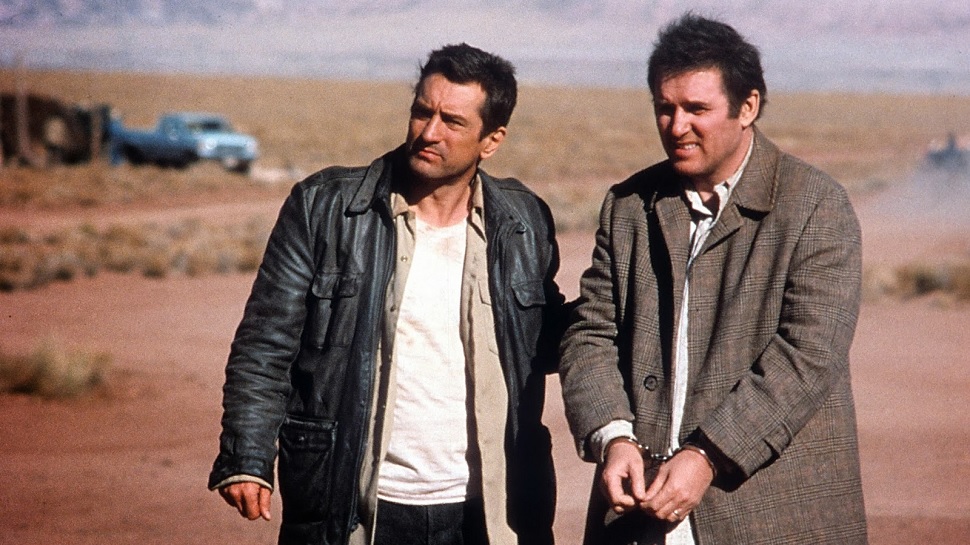
Jack Walsh (Robert De Niro) is a down-on-his-luck bounty hunter. Having been run out of the Chicago police force years ago for not taking a bribe, he’s skilled at his job but fundamentally unlucky and disenchanted. He’s looking for one big job to get him out: and it comes when mob accountant Jonathan “The Duke” Mardukas (Charles Grodin) skips bail. Hired by bail bondsman Eddie Moscone (Joe Pantoliano), Walsh has four days to find the Duke bring him back to LA before his bail is forfeit – manage it and he’ll get a cool $100k. But the Duke has stolen millions from the mob – so they want him dead, the FBI want him to testify, rival bounty hunters want to take him in – it’s all working out into a very long week for Walsh.

I really enjoyed Midnight Run when I first watched it years ago – and it’s been years since I’ve seen it – so it’s a delight to find it is as good as I remember. In fact, if anything, I think it might be better. It’s very funny – without anyone playing the material for overt or obvious laughs – but it’s also got a lot of soul. It never loses sight of the characters at its heart, in particular the loneliness, sadness and regret at the heart of Walsh, who presents a chip-on-his-shoulder stance to the world, to hide a decent and honourable man who can’t believe his principles are rewarded.

De Niro took on Midnight Run because he wanted to try comedy (he had just played Satan and Al Capone, so probably had earned a rest). Walsh is probably one of his best comedic performances, because he treats it with the investment he gave his greatest roles. He makes Walsh a real person – and he’s willing to downplay the comedy. He doesn’t mug or play to the camera (as he has more recently), he just plays the role with a slight wryness, a touch of lightness from the actor, while the role itself is kept real. His increasing frustration and world-weary resignation matches up perfectly with the hint of sadness he keeps under the surface. It’s a very effective performance.

It helps as well that De Niro allows Charles Grodin to carry the bulk of the comedy. Grodin was cast over the wishes of the studio – but it was an inspired move as the chemistry between the two actors is fantastic. They play off each other brilliantly, Grodin the more worldly, urbane and dry accountant, opposite the stressed out Walsh. Grodin is very funny, and very genuine – and he’s as whippersmart as the Duke himself, constantly keeping us on our toes as to when the Duke is telling the truth, and when he is pulling the wool over our (and Walsh’s) eyes. 

The film throws these two into a series of increasingly hilarious events – from a panic-attack on a plane, to a sneaky piece of con-man work in a back-district town – but mixes it up with genuine moments where the two open up to each other (there is a wonderful scene where Walsh, under the Duke’s gentle probing, final opens up about his past). Each of these moments is wonderfully played, and works so well because the two actors have a genuine connection between them. Both lift the other: Grodin clearly helps De Niro relax and loosen up, De Niro encourages Grodin to bring a greater depth to his acting than ever before.

The contrivances and competing parties they take on also throw in plenty of fun problems. My recording from the BBC from years ago was somewhat sanitised, so it’s a surprise to hear how many times De Niro uses the f-word in this film! Martin Brest films all this with a controlled restraint – perhaps a little too much control (Yaphet Kotto has talked of his misery of performing endless takes of even the simplest scenes). But the dangers Walsh has to take on walk just the right line between feeling real, and feeling comedic.

So we have a sinister gang-boss (played with lip-smacking relish by Dennis Farina), but his underlings on the ground are realistic-feeling, but non-too-bright gangsters (sharp enough to keep track of Walsh, dull enough to constantly say the dumbest things). The Feds are led by a tensely wound-up Yaphet Kotto, but the comedy comes from his cold stares at his underlings, who are prone to state the obvious. John Ashton is good value as a rival bounty hunter, a regular joe not-as-smart-as-he-thinks, but more than smart enough to win the odd hand. Joe Pantoliano gives possibly one of his most Pantoliano-performances of weasily whininess as Walsh’s bail bondsman boss.

Midnight Run rattles along brilliantly. It’s hugely entertaining, with a series of surprisingly high-blown action set-pieces (all met with a dry reaction from the Duke – “I’m sure we’re completely safe” when a pursing gun-laden helicopter temporarily drops out of view – and in turn a furious “Will you shut the fuck up!” from Walsh). Martin Brest gets the balance just right between comedy and drama, and creates a very funny movie where you end up caring a great deal for the characters. It’s a road-movie, buddy comedy that feels fresh and really works because it manages not to feel like it’s trying too hard. And of course it has a great closing scene – and one of my favourite end-lines to a movie ever: “Looks like I’m walking”. Check it out. You’ll like it.