Tag: Joel McCrea

The Most Dangerous Game (1932)

The Most Dangerous Game (1932)

Manhunting takes on a new meaning, in this punchy, influential horror-thriller that launched a whole genre

Director: Ernest B. Schoedsack, Irving Pichel

Cast: Joel McCrea (Bob Rainsford), Fay Wray (Eve Trowbridge), Robert Armstrong (Martin Trowbridge), Leslie Banks (Count Zahoff), Noble Johnson (Ivan), Steve Clemente (Tartar), William Davidson (Captain)

It’s man of course. Adapted from Richard Connell’s iconic short story, The Most Dangerous Game sees famous big-game hunter Bob Rainsford (Joel McCrea) washed up on jungle island in the middle of the ocean. He finds a Gothic castle, home to White Russian aristocrat Count Zahoff (Leslie Banks). Zahoff is an overblown egotist with a hunting obsession. He seems an urbane, generous – if sinister – host. But what’s behind that locked iron door? If he’s such a passionate hunter where are all his trophies? And why do people keep getting ship-wrecked and disappearing on his island?

The Most Dangerous Game is staged in a trim 63 minutes, with much of the first half being build-up towards the extended chase sequence that fills it’s second half. The film kickstarted a genre of “manhunt” films, which would take its ideas (and violence) much further. On its release, many of the shots of Zahoff’s human trophy room (with its mounted and pickled heads and his grim, wry commentary of the fates each met on his hunt) were cut, and the first victim, drunken buffoon Martin Trowbridge (Robert Armstrong) is killed off camera. That’s not to say the violence is avoided as the film’s final battle features snapped spines, stabbings and death by bloody-thirsty hounds.

It all makes for an exciting film, told with whipper-sharp pace. This is especially surprising considering how relatively slowly it starts, with Rainsford and his friends chatting about the ethics of hunting (oh the irony!) on their luxury yacht before it sails into Zahoff’s booby trap. Any idea we are in for a staid journey is quickly dispelled as Rainsford’s two fellow survivors are swiftly gutted by sharks, forcing him to swim for shore and the striking, immersive jungle set.

The Most Dangerous Game was shot on the same sets as King Kong – either concurrently or as a test for design work for that classic, depending on who you ask. Schoedsack would go on to direct that – and bring along Wray, Armstrong and several other members of the cast – and TMDG is a wonderful initial try-out for Kong. You can even recognise shots and settings from that film, while the film’s wonderful use of tracking shots, careful editing and superb whip-pans as hunter and hunted charge through the bushes makes for brilliant dramatic tension in its own right.

That’s after we’ve had the odd gothic, horror-tinged oddness of Zahoff’s castle. Zahoff’s trophy room is somewhere between medieval torture chamber (a sort of iron maiden device seems to be the main persuader Zahoff users to get guests to join in ‘the game’) and haunted house, with pickled heads bubbling in jars. The house itself is intimidating, huge in scale with rooms decorated with blood-thirsty hunting tableaus inspired by myths and legends.

It all matches Zahoff’s own OTT grandness. Played, in a remarkable film debut, by Leslie Banks, Zahoff is a truly iconic villain. Banks, a war veteran with striking scars and half of whose face had been paralysed, is a mesmeric, captivating presence whose eyes shine with obsessive indifference and sadistic glee. Spending his nights pontificating to his guests – who he treats with snobby disdain – he’s also a braggart and a cheat. He talks a good game of giving his guests a “fair chance” – but arms them only with a knife, while he has a bow and arrow and rifle (not to mention a team of dogs and three burly, violent, Tartar servants). Banks plays the role to the absolute hilt, dressed in stormtrooper black, a riotous operatic grandness just the right side of camp, relishing every second.

He soaks up most of the interest in the film. Joel McCrea is left with little to do but to look wary – although the revenge-soaked fury he returns with in the film’s violent denouement is effective. Fay Wray adds a lot of charm to the film in this early trial as scream queen. Robert Armstrong tries the nerves a little too much as her drunken brother, overplaying the comic stumbling. But the relative grounded normality of McCrea and Wray is needed for us to stick with them when they are reduced to fleeing through the jungle to escape the maniacal eyes of Banks.

Zahoff of course wants to get the respect of noted hunter Rainsford, but that doesn’t stop him frequently cheating in their battle of wills. He’s smart enough to dodge Rainsford’s traps, but doesn’t hesitate to unleash his hounds or leave (what he believes to be) the killing blow to someone else. It’s a nice beat to remind us that, for all his big speeches, Zahoff is an inadequate bully desperate to be the legend he claims to be.

It’s something we grow aware of throughout the film’s momentum packed second half, essentially a wild chase through the jungle with Rainsford and Eve desperately trying everything to stay one step ahead (the original story didn’t include a female character, but it’s a wonderful insertion which helps humanise Rainsford considerably compared to Zahoff). The unrelenting action, expertly shot, is undeniably exciting (even if we expect, based on its successors, a higher number of innocents being chased to meet fatal deaths) helping to make TMDG one of the most influential B-movies around.

Foreign Correspondent (1940)

Foreign Correspondent (1940)

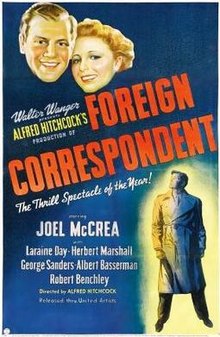
Hitchcock’s thriller is a stunning adventure story and a passionate call for action

Director: Alfred Hitchcock

Cast: Joel McCrea (John Jones/Huntley Havestock), Laraine Day (Carol Fisher), Herbert Marshall (Stephen Fisher), George Sanders (Scott ffolliott), Albert Basserman (Van Meer), Robert Benchley (Stebbins), Edmund Gwenn (Rowley), Eduardo Cianelli (Mr King), Harry Davenport (Mr Powers), Edward Conrad (Latvian)

In 1940, Hitchcock was new in America, after a parade of successes in Britain. 1940 was a red-letter year for the master, directing not one but two of the films up for Best Picture. The Oscar was carried home for his masterful gothic adaptation of Du Maurier’s Rebecca, but equally memorable was Foreign Correspondent, a stirring, heartfelt thriller about the build-up to war in Britain, a passionate cry for American intervention and brilliant propaganda contribution to the British war effort (even Joseph Goebbels tipped his hat to it).

John Jones (Joel McCrea) is the new foreign correspondent in Europe for the New York Morning Globe. Given the pseudonym “Huntley Havestock” (because it sounds better), Jones is picked out because he’s a hard-boiled crime journalist, practised at winkling out a story, rather than the cozy posh boys usually sent out to Europe. In Amsterdam, Jones attends a peace conference hosted by leader of the British peace party Stephen Fisher (Herbert Marshall), where eminent Dutch diplomat and architect of the fragile European peace Van Meer (Albert Basserman) is due to speak. While Jones falls in love with Fisher’s daughter Carol (Laraine Day), Van Meer mysteriously falls to show at the dinner – and arrives at the conference the next day only to fail to recognise Jones and immediately get assassinated. Suddenly Jones finds himself in the middle of a dangerous game of spies with only British journalist Scott ffolliott (George Sanders) and Carol to help him.

Hitchcock’s Foreign Correspondent is a masterful spy caper, in the style of many of his early successful works such as The Thirty-Nine Steps, superbly assembled by a genius at the top of his game, with access to funding and techniques beyond what he had in Britain. Hitchcock went through several versions of the script – there were no fewer than nine writers who worked on this film, four of whom are credited – but it matters not a jot when the script they finally came up with matched such superb, zingy, screw-ball style dialogue with such brilliant set-pieces.

The film also had a serious purpose as well. From the start, this is a cry of one of Britain’s most prominent ex-pats to his newly adopted nation to join the effort to preserve Western civilisation against the onslaught of Nazi oppression. Joel McCrea’s Jones – a part written for Gary Cooper, who forever regretted turning the role down – is the quintessential American, disinterested in the world, sure of America’s place in it, who has his eyes opened and passion ignited by seeing up-close and personal the dangers from the agents of totalitarianism. The agents of the enemy nation – probably Germany, a country that is referenced in passing, but the film deliberately keeps it shady in an attempt to appear even-handed – are ruthless, brutal and unscrupulous. Their plans are fiendish and they are bent on world domination. But all this is worn very lightly within a caper framework that has as much interest in Jones falling in love with Carol as it does with foiling the baddies.

It also plays neatly on Jones’ very old-school American obsession with fair-play, and bringing down the baddies no matter what. Witnessing Van Meer assassinated before his very eyes, Jones is determined to go to any lengths to ensure both that justice is done and he is the man who gets the story. At the same time, Jones also has an honest and homely sense of romanticism about him. The film gets a tonne of comic and romantic mileage out of the cracking dialogue between McCrea and Loraine Day as Carol, with the sort of intelligent, witty banter that wouldn’t seem out of place in a screwball comedy, with Jones’ blunt “I say what I mean” attitude crashing beautifully against Carol’s more English rectitude. 

Hitchcock shows himself a brilliantly adept director of comedy – something he doesn’t get enough credit for – in these sequences between the two of them sparring over the course of the movie. And it’s not just them, but also his work with George Sanders – cast against type as a cool, noble British agent – brilliantly hilarious as the curiously named “ffiolliott” (the sequence, mid car chase, where he calmly explains to the befuddled Jones while bullets fly why his name has no capital letter is hilarious). Comedy is a rich vein in Foreign Correspondent and it works so well here because it lightens both the drama of the thriller elements and the political message of “pro-intervention”.

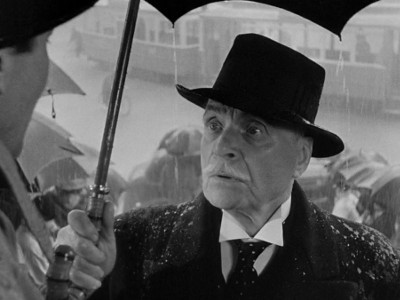
The thriller sequences are just as superb. The assassination sequence is a stand-out, a shooting on a rain soaked series of steps outside a conference, with the assassin making his retreat through a crowd of on-lookers carrying umbrellas under hot-pursuit from Jones. Hitchcock takes his camera above the crowd, meaning we only follow its progress through the disruption of the umbrellas, before the two men emerge (bullets flying) and move straight into a breathless car chase through the Dutch countryside. It’s a masterful sequence.

And it’s far from the last. The film has a superb series of tension-filled sequences, from Jones playing an elaborate game of cat-and-mouse in a Dutch windmill, trying to avoid being seen by the German agents occupying it while finding out as much as he can about their plans, to Jones reporting what he has found to a man we already know is a double agent. Edmund Gwenn, cast well-against type as a jovial, remorseless assassin, gets a brilliant sequence of attempts to kill Jones without putting him on guard, culminating in a vertigo inducing sequence at the top of Westminster Tower. It’s the second such sequence, Jones already having to climb over the roof of a hotel in Amsterdam to escape assassins (along the way brilliantly hitting the neon sign of the Hotel Europe so that it reads “Hot Europe”). Hitchcock tops it all with a brilliant plane-crash sequence shot with chutzpah and daring and is a technical marvel considering the resources available in 1940.

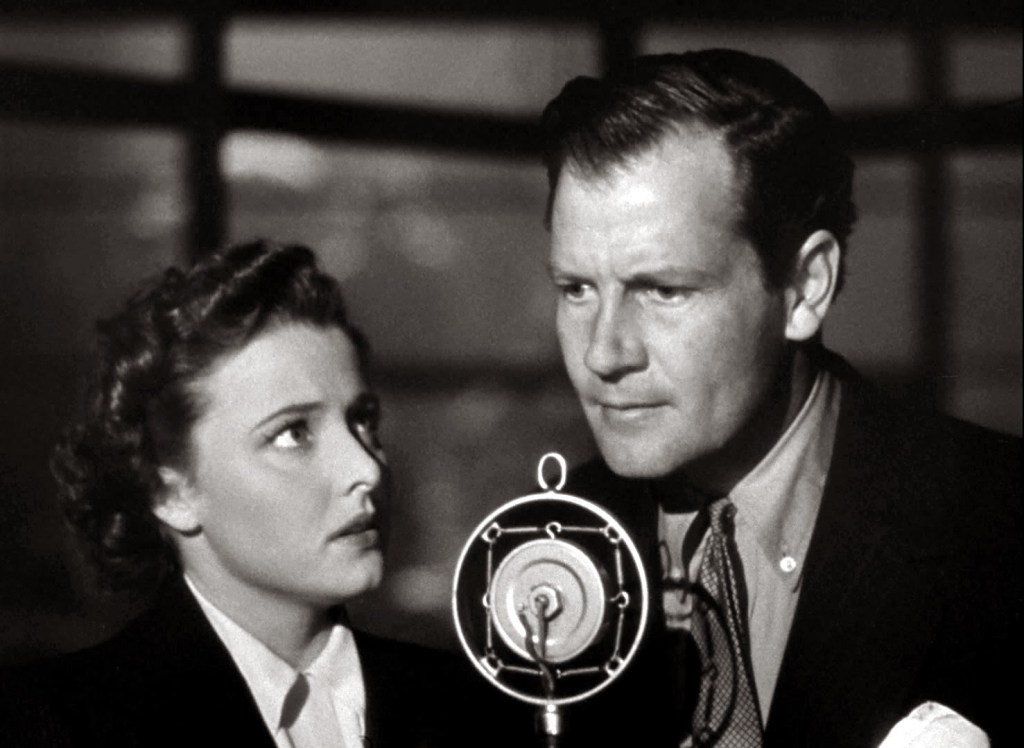
All this excitement and adventure helps to deliver the message of the film as strongly pro-interventionist to encourage the Americans to enter the war on the side of the Allies. Van Meer (a fabulous performance from Albert Bassermann of old-school nobility, made even more astonishing by the fact he didn’t speak a word of English and learned it all phonetically) has a brilliant, impassioned speech – all the more affecting for its  lack of histrionics – that condemns the brutality and violence of the dictatorships. The film is capped with Jones’ Ed Murrow-style broadcast from Blitz-besieged London. Both sequences raise genuine lumps to the throat – McCrea’s delivery is perfect – and the final sequence is all the more astonishing when you realise it was conceived and shot before the Blitz even started.

Not that the film is completely obvious in its allegiances. The turn-coat Brit in the film is a complex, even sympathetic figure who is merely serving his actual home country in the best way possible. He’s largely presented as reluctant to commit crimes, but believing that they must be done and is even allowed a heroic death. His identity perhaps is fairly guessable (he even has a Germanic dog!) but it still works very well in the film.

Hitchcock draws superb performances from the cast – helped by that script of zingers. McCrea is just about perfect, Day very sweet, Sanders is brilliant, Herbert Marshall’s Stephen Fisher a brilliant portrait of arrogance and tortured duty, Robert Benchley very funny (and writing his own scenes) as Jones’ colleague who’s struggling to stay on the wagon, Harry Davenport superb as Jones’ His Girl Fridayish editor. Basserman was Oscar nominated – and deserves it for his big speech – but it could have been any of the cast who got that nod, such is the quality here. Foreign Correspondent is often overlooked among the master’s many, many triumphs. But any pro-interventionist, anti-German film that has even Joseph Goebbels singing its praises must have a fair bit going for it.

Sullivan's Travels (1941)


Joel McCrea and Veronica Lake go on a journey of discovery – with a lot of jokes

Director: Preston Sturges

Cast: Joel McCrea (John L. Sullivan), Veronica Lake (The Girl), Robert Warwick (Mr Lebrand), William Demarest (Mr Jonas), Franklin Pangborn (Mr Casalsis), Porter Hall (Mr Hadrian), Byron Foulger (Mr Johnny Valdelle), Robert Grieg (Burrows), Eric Blore (Sullivan’s Valet)

Sullivan: I’m going out on the road to find out what it’s like to be poor and needy, and then I’m going to make a picture about it. 
Burrows [his butler]: If you’ll permit me to say so sir, the subject is not an interesting one. The poor know all about poverty and only the morbid rich would find the topic glamourous.

Preston Sturges was one of Hollywood’s first writer-directors, a whip-sharp satirist. In Sullivan’s Travels he turned his guns firmly on Hollywood, satirising the industries self-importance. However, what he did so well was to counterbalance this with a genuinely insightful look at the urban poor and a celebration of the magic of the movies. The fact that he managed to cover this all in one movie – without making the film feel wildly inconsistent in tone – is quite some accomplishment.

John L. Sullivan (Joel McCrea) is a Hollywood director tired of making shallow crowd-pleasers. He wants to make a serious, social-issue film (called O Brother Where Art Thou?). When studio heads point out he knows nothing about the working man, Sullivan declares he will head to live the life of a drifter until he understands them. After several false starts, it isn’t until he meets a girl (Veronica Lake) that he starts to truly experience the life of the poor.

I’ve mentioned Sullivan’s Travels shifts in tone. In many ways, it’s a film that wants to have its cake and eat it – to be a satire of self-important move-making, and at the same time be an important movie. The extent to which it succeeds is a matter of taste: I can imagine plenty of people being thrown by the sudden shift in tone that kicks in for the final 40 minutes, after the slapstick and screwball comedy of the opening hour. But that’s partly the point. Sullivan’s Travels works because it puts all the objections you could make to a film “teaching” real people about their lives in that first hour – so you feel disarmed heading into the final half hour when the film does just this.

So that first hour first: it’s very funny. The scattergun satire of Hollywood folks is brilliantly done. The fast-paced dialogue of Sullivan and his studio bosses discussing his plans is wonderfully funny – how could you not like an exchange like this:

Sullivan: I want this picture to be a commentary on modern conditions. Stark realism. The problems that confront the average man!
Studio head #1: But with a little sex in it,
Sullivan: A little but I don’t want to stress it.

What’s sparkling about the exchanges is that Sullivan is just as out-of-touch and elitist as the suits, but with a higher degree of self-delusion. His attempts to head off onto the open road and live the life of the drifter are hilariously inept – his first sees him travelling with a “support team” (including a doctor, chef and media man); the second sees him accidentally return back to Hollywood. Sullivan wants to make a film about real people, but Sturges stresses he is as clueless and confused about the subject as any other rich Hollywood snob. The film has a glorious mixture of verbal acrobatics and slapstick pratfalls to demonstrate the comedy of this extraordinarily rich man (who at one point off-handedly runs through the features of his vast home) trying to relate at a distance to the poor.

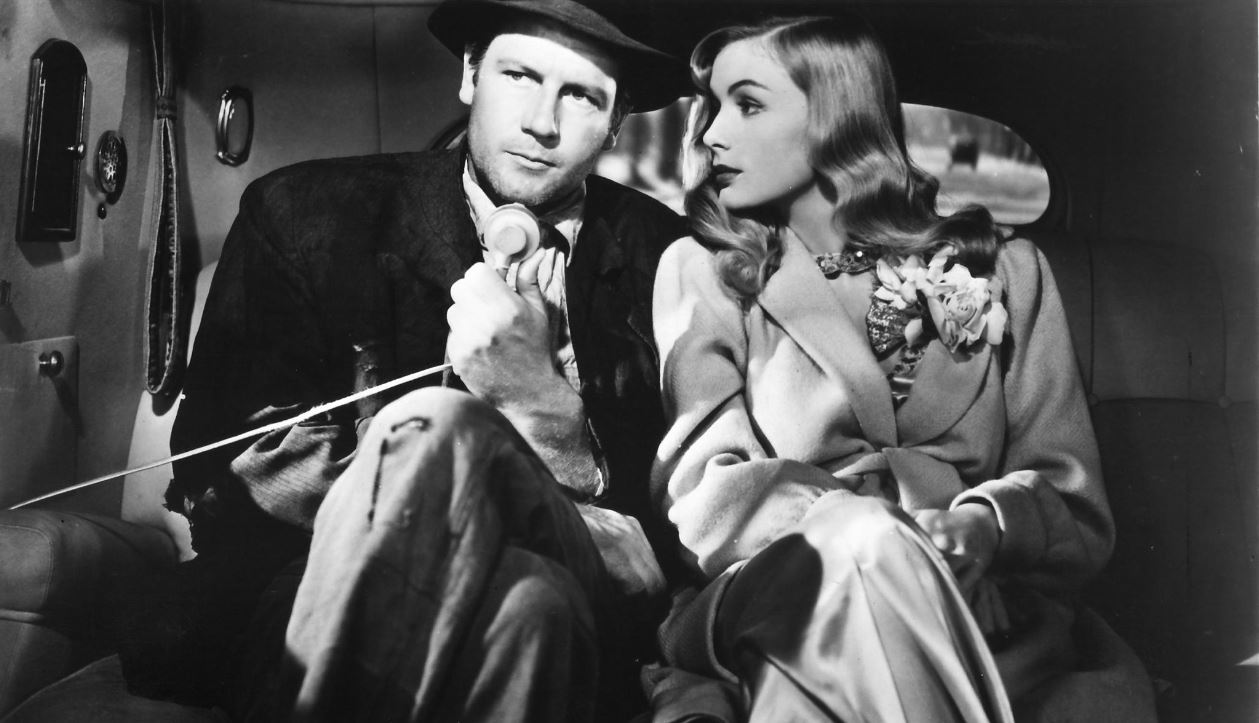
It takes his meeting with Veronica Lake’s unnamed Girl for him to begin to understand the drifter’s life. Lake’s character remains unnamed, which is another joke on Hollywood – earlier Sullivan discusses women in films with the phrase “There’s always a girl in the picture”, so the plot shoe-horning a Girl in (without even naming her) as a sort of beggar Viola is, in itself, a neat parody of the structural conventions of Hollywood films. Anyway, it’s the introduction of this character that serves as Sullivan’s gateway into seeing what the world is like. Disguised as a boy (which allows plenty of neat gags in itself) the Girl takes Sullivan on a tour of shanty-towns and soup kitchens.

It’s here the tone of the film slowly shifts towards seriousness as we finally get to see the lives of paupers, in a film satirising a Hollywood director who wants to make a film about that subject. It’s wonderfully meta! Sturges shoots these scenes with tenderness and simplicity, without dialogue and scored only by gentle music. There are some small laughs on the way – but we never laugh at the poor and the overall impression is of the quiet dignity of these people just struggling to get by. It couldn’t seem further away from Sullivan’s privileged expectations. It’s quiet and it’s dignified.

Sullivan ends the film (for various reasons) as part of a chain-gang, and finally true suffering and gains the strength of character to acknowledge his own vanity. In one of the film’s most magical sequences, Sullivan watches a film with his fellow convicts and a poor black congregation. Unlike a sequence earlier where he watched a film with the urban middle class (hilariously then every possible breach of cinema etiquette is made, from crunching loud food to babies wailing) this audience are transported by the magic of a Walt Disney cartoon.

This sequence is justly famous, not only for its innocent charm, but also its ahead-of-its-time treatment of the black congregation. The congregation is open-hearted, intelligent and generous. There is a marvellous (and moving) rendition of Go Down Mosesand the black working class is contrasted with the dehumanising conditions of the chain gang. The whole sequence points out the underlying social injustice of America during this era. It’s wonderful – so well done you forget the film (in its jauntier first half) had a crude “white face” gag with its forelock-tugging black chef.

That’s the kind of film this is – a real mixture of genres, of views, of satire on social commentary mixed with real social commentary… Sturges throws almost everything at the wall here, and nearly all of it sticks. The underlying theme, if there is one, is the nature of class and privilege in America. Sullivan is well-off, from a rich background. He finds himself on a chain-gang when he is mistaken for the bums he is attempting to find out more about – but when he is revealed as a rich film director he is immediately released, despite still being guilty of the offence he was arrested for in the first place. In America, money talks and everyone else walks.

Sullivan’s Travels is probably not going to be everyone’s taste. Watching it, I missed the comedy of the first half during the more serious second half, cleverly done as the build of expectations was (how can you criticise the film, when the film is already criticising itself successfully?). Sure parts of it are dated, but it contains so many different types of film-making (screwball wit, Chaplin-esque pratfalls, animation, social realism, melodrama, romantic comedy) it’s almost a film school essay. It also manages to make its changes of tone throughout feel like natural developments.

All this and I’ve hardly mentioned the performances. The cast is full of brilliant character players, all of whom get their moments to shine – Sturges cast from a pool of regular actors, and he was a superb judge of distinctive faces and unique vocal delivery. Veronica Lake is very good – endearing but also sharp and smart as the Girl – but the film is totally anchored by Joel McCrea’s superb, low-key, straight-forward performance which resists all temptations to wink at the camera. 

Sullivan’s Travels feels like a little known masterpiece – but it deserves being known better. It’s original, it’s funny, it’s moving, it’s clever and it’s packed full of great moments. It’s a wonderful example of old-school Hollywood looking harshly at itself – not only at its shallowness and formulaic nature, but also at its self-importance and self-satisfaction – but still acknowledging that the escapist pleasure it can give to people is valuable, that it can be a force for good, for all its faults. It tries to have its cake and eat it – but do you know what? It’s probably one of the very few films that pulls that off.