Tag: John Carpenter

Escape from New York (1981)

Escape from New York (1981)

B-movie thrills and an epic piece of world building in this very fun cult actioner

Director: John Carpenter

Cast: Kurt Russell (Snake Plissken), Lee Van Cleef (Commissioner Bob Hauk), Ernest Borgnine (Cabbie), Donald Pleasance (The President), Isaac Hayes (The Duke), Harry Dean Stanton (Brain), Adrienne Barbeau (Maggie), Tom Atkins (Captain Rehme), Season Hubley (Girl in ChockFull o’ Nuts)

In the 1980s New York was pretty much America’s crime capital, so it wasn’t too much of a stretch to imagine an insanely dystopian America of 1997 where Manhattan is turned into a massive jail surrounded by a wall with its population entirely made up of murderous gangs and criminals (sadly without the severed head of the Lady Liberty lying in the middle of the streets). That’s what we get in Escape From New York (great title!). Problem is, it also makes it incredibly hard to get into New York – a real issue when a hijacked Air Force One crashlands there and the President (Donald Pleasence) needs rescuing.

Who ya gonna call? None other than grizzled, scowling, no-nonsense ex-Special Forces legend turned criminal Snake Plissken (Kurt Russell). Plucked from a line of convicts by Commissioner Hauk (Lee Van Cleef), Snake is given a simple offer: fly a glider into Manhattan, find the President and bring him back in 22 hours so he can speak at vital peace conference and in exchange get a pardon. And just to make sure he doesn’t back out? Inject him with explosives that will go off in exactly 22 hours unless Hauk switches them off. Into New York Snake goes, a Mad Max hell under the thumb of kingpin The Duke (Isaac Hayes), with his only allies an eccentric ex-cabbie (Ernest Borgnine) and married couple Maggie (Adrienne Barbeau) and an old (untrustworthy) partner-in-crime Brain (Harry Dean Stanton).

From all this pulp, Carpenter serves up a very entertaining slice of B-movie fun and games, that frequently makes very little narrative sense (by the end relying on hilariously convenient plot developments and off-screen meetings), where the 22-hour countdown seems to alter with as little consistent logic as the shifts between night and day (judging by the sky, at one point it takes Snake well over an hour to take a lift up the World Trade Centre which even in a dystopian hell seems like a long time) and where characters switch allegiances as easily as you and I change socks.

But that hardly matters when Carpenter was so focused on making B-movie fun and use every penny of his tiny budget to maximum effect. Escape From New York is above all a triumph of creative world-building. In broad strokes – the sort of well-built skeleton that leaves the audience wanting to fill in the muscles and skin themselves – it presents a compelling view of an America that has so comprehensively gone-to-shit that a city is now a prison, a forever-war is taking place with both the USSR and China, the President is a corporate stooge (with British accent!) and the whole country is run by a proto-fascist police force. It’s full of neat little touches – not least the computer voice at the Manhattan prisoner processing centre that offers prisoners the chance of voluntarily immediate cremation rather than be chucked into the city – that suggest a panoply of dystopian mess behind it.

The world of Escape From New York is so intriguing, it carries the fairly bog-standard urban warfare against lunatic gangs plot that Carpenter had already mastered with Assault on Precinct 13. Once Snake lands his glider atop the World Trade Centre (for extra un-intentional retrospective impact, hijackers also fly Air Force One into a couple of Manhattan skyscrapers), truthfully there isn’t much in terms of the action that we haven’t seen before. Shoot-outs on streets lined with trashed cars and graffiti, fisticuffs in abandoned train stations and boxing ring match-ups between Snake and a giant bruiser armed with a baseball bat full of nails. Most of the film is basically a hide-and-seek cat-and-mouse chase. Eccentrically presented stuff, but all fairly run-on-the-mill.

What makes it work is that post-apocalyptic mystique and Carpenter’s determination to make every shot count. Not least because the budget only stretched to about a day’s filming in New York (probably why both sequences atop the World Trade Centre illogically take place at nighttime). The rest was shot in a burnt-out district of St Louis. There is a great deal of demented imagination that has gone into the design of the film, not least the cyber-punk barminess of the gang costumes, from the Duke’s Napoleonesque shoulder braids to the punk-rocker scuzziness of his number two Romero (an eye-catching performance of bizarre oddness from Frank Doubleday).

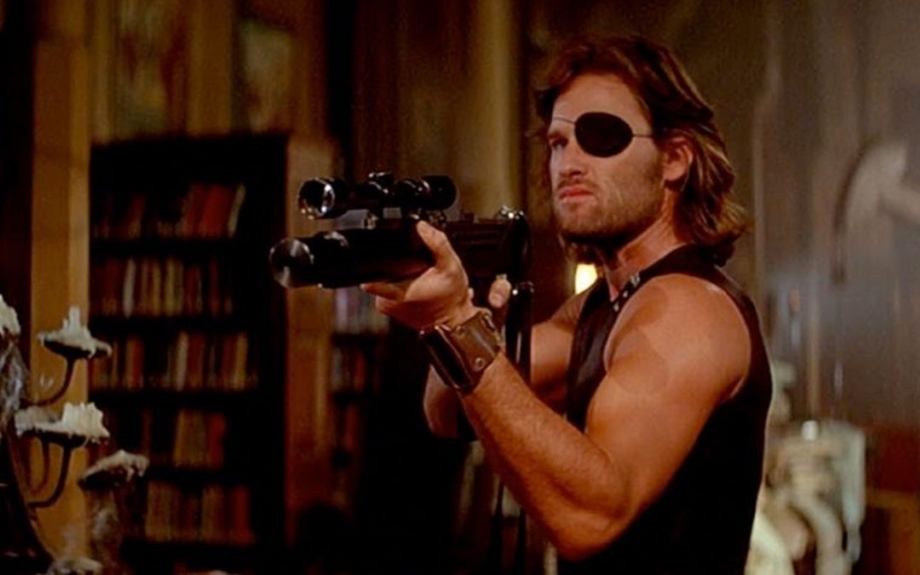
It helps when you have some committed performances, not least from Kurt Russell as ultimate man’s-man maverick Snake Plissken. Strange to think now that Russell, best known for Disney work, was seen as an odd choice for the bitter, shoulder-chipped, ruthless Snake. But it’s a role he embraces whole-heartedly, making Snake both a selfish guy who literally barely cares about anything other than himself and the sort of ideal tough-as-nails maverick who gets things done that we all kind of want to be. He’s also – from his eyepatch to his grizzled monosyllabic dialogue to his unveiled contempt for all the double-dealers and bullies he meets – effortlessly cool.

Russell sets a lot of the tone for the movie, his low-key scowl allowing a lot of the rest of the cast to cut loose in eccentric roles. Ernest Borgnine overflows with cheery New York patter, which doesn’t even slow down when he lights a Molotov cocktail to ward off marauding gang-members. Harry Dean Stanton weasels as a constantly side-shifting guy we are assured is a genius (despite all evidence to the contrary). Donald Pleasance has a whale of a time as an uncharismatic functionary who, it becomes clear, doesn’t care about anyone other than himself. Best of all, Lee Van Cleef (perhaps flattered that Russell seem to be homaging his Spaghetti Western roles) smirks, gloats and scowls as a relentlessly ends-rather-than-means boss.

Escape From New York barrels along to a blackly comic ending (in which our pissed off maverick hero potentially scuppers a major peace conference out of a fit of resentful pique). It’s intriguing world-building riffs wonderfully on Mad Max (in fact, you could argue that later Mad Max films basically riff of Escape From New York) and while its action is fairly routine, it’s acted and directed with huge verve and fun. The sort of thing you call a guilty pleasure.
The Thing (1982)


The men of an Antarctic base encounter a deadly force from space in The Thing

Director: John Carpenter

Cast: Kurt Russell (MacReady), Wilford Brimley (Blair), TK Carter (Nauls), David Clennon (Palmer), Keith David (Childs), Richard Dysart (Dr. Copper), Charles Hallahan (Norris), Peter Maloney (Bennings), Richard Masur (Clark), Donald Moffat (Garry), Joel Polis (Fuchs), Thomas Waites (Windows)

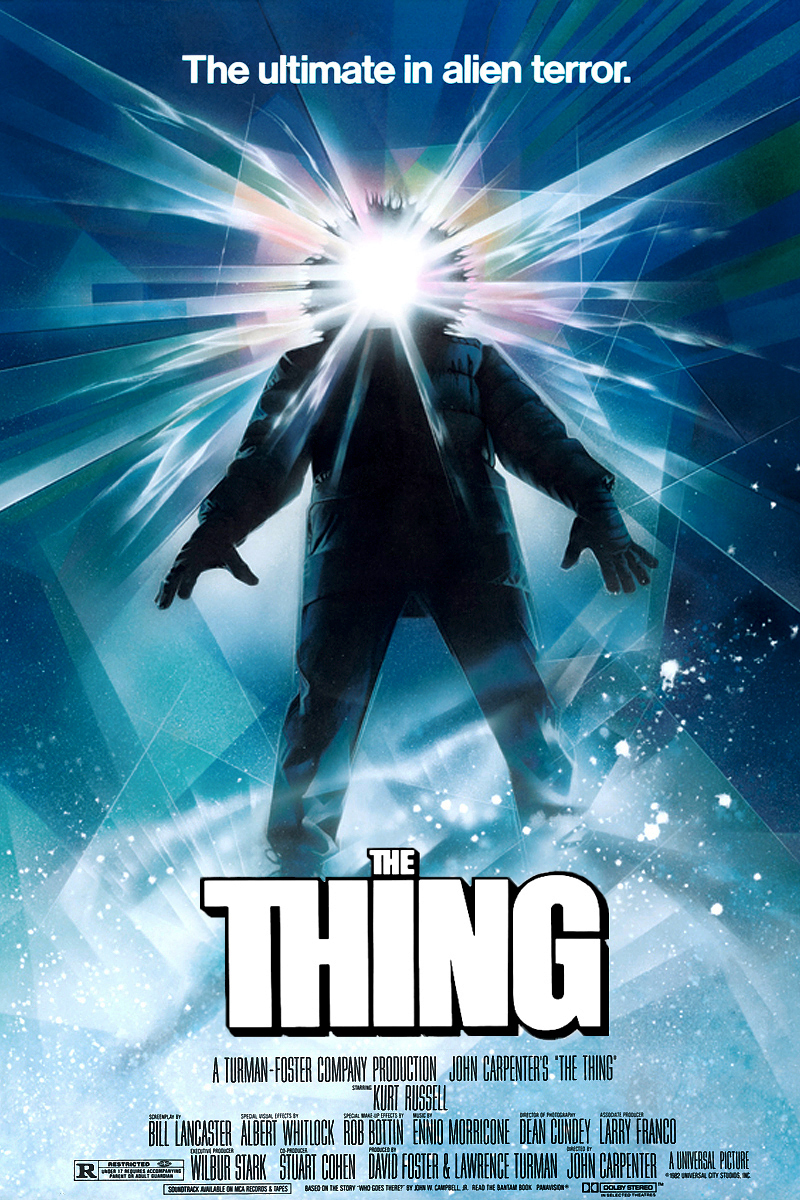
In a curious coincidence, The Thing was released on the same day as Blade Runner. Both have since gone on to become landmark science fiction films, hugely influential to future film makers. Both have scenes that linger in the memory, and have ambiguous endings fans have discussed for decades. Both were also disastrous box office bombs and with negative critical reactions.

The Thing is a creeping masterpiece of sci-fi, body horror and paranoia. On an Antarctic base, an American research team rescues a dog being pursued by two Norwegians from a base close-by (the two Norwegians are both killed, one accidentally, one shot dead after firing at the Americans). Investigating the Norwegian base to see what happened, they find it destroyed and a series of grisly corpses, including one with two faces. Soon it becomes clear the Norwegians fell victim to an alien who has the power to perfectly copy and replace living organisms. The Americans realise they are trapped on the camp, with no idea who them may now be a “Thing” rather than human.

John Carpenter’s creepy, atmospheric horror film is an endlessly gripping thriller that rewards constant rewatching. Its shot with an unnerving simplicity of movement, with the focus getting tighter and tighter. We start with an unsettling helicopter shot taking in the panorama of Antarctica but, before long, the action is confined to single rooms in the American camp, with our leads shouting suspiciously at each other. The whole film is underplayed by an eerie Ennio Morricone score that really gets under your skin with its haunting electronic strains. It’s a classic by any definition of the word, and it never, ever gets old or tired: I’ve seen it a dozen times, and each time new small moments grab me, shots enchant me – and it never fails to be tense, unnerving and scary.

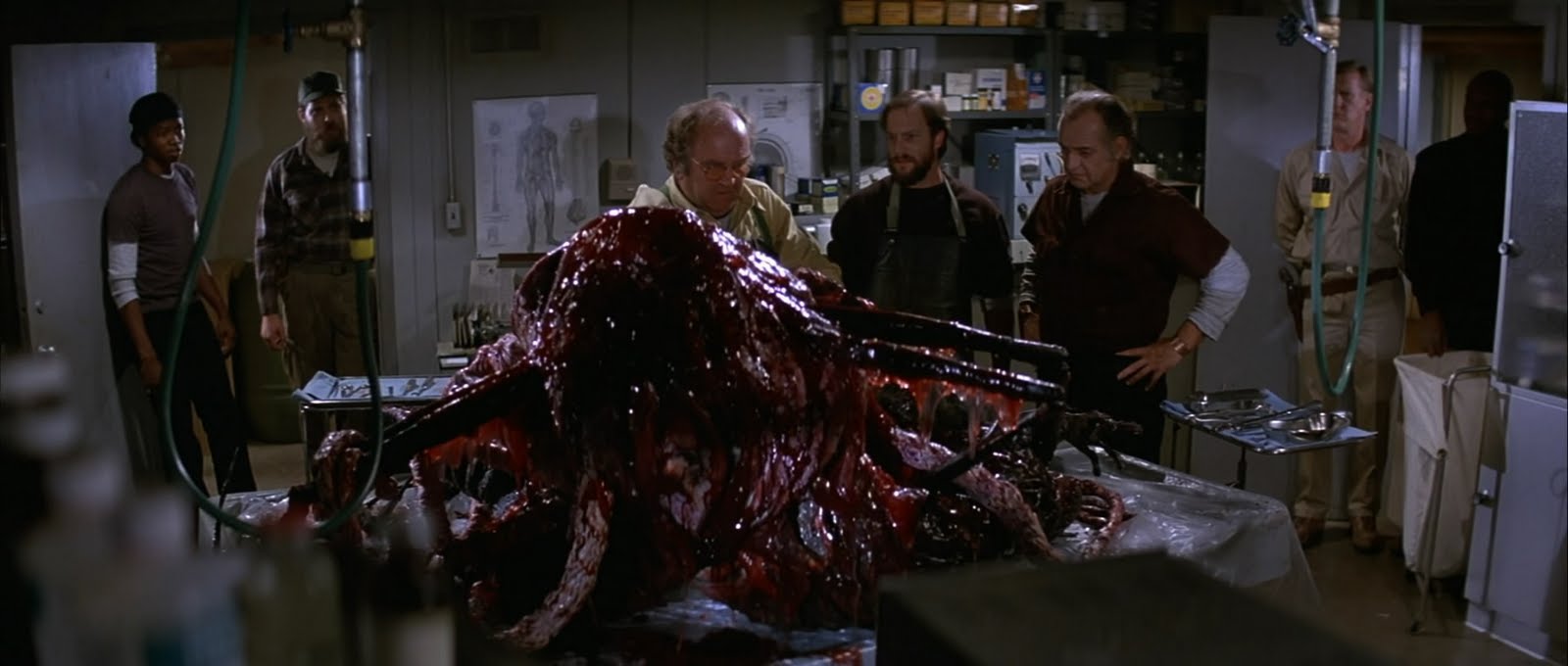
“You’ve got to be fucking kidding” a character states at one point. It’s pretty easy to imagine that this was the reaction of the critics at the time, at the onslaught of body horror. The Thing’s process of absorption is not only disgusting (usually involving flesh and skin peeling back to reveal all sorts of crazy shit), but its defence mechanisms involve similar depths of insane grossness. By the time our heroes are incinerating replacements with a ruthless lack of concern, we’ve already seen chests turn into massive tooth jaws, a dog Thing peel its own face off, and a head of a Thing separate itself from a burning body, grow spider legs and scuttle away. You’ve got to be fucking kidding indeed.

The Thing is pretty much a landmark in prosthetic work (you’ve never seen anything like this before). And the body horror still packs a major punch – I couldn’t eat my sticky bun while the Dog Thing ripped itself apart in the middle of a kennel early on (those poor other dogs by the way…). Some of the most effective stuff is actually the smaller scale moments – there is a great moment where a Thing grabs another character by the face and hand and face merge together. It has a truly yucky feeling to it. It’s all so carefully constructed and inventive that it haunts and fascinates. But if it was just a parade of gross images and nightmare fuel it wouldn’t have lasted. What makes it work is that it has a cracking story and a great set of characters. 

Carpenter collects a terrific group of actors, headlined by Kurt Russell. Russell’s MacReady is the perfect lead for this sort of film, a grizzled maverick slacker who reveals (when the shit hits the fan) the natural charisma of the born leader, the only man there able to make the hard calls. He even has a perfect little introduction scene, playing chess with a computer (whose voice makes it the only female character in the film incidentally). Having narrowly lost the game against a tactically more cunning opponent, he pours his drink into its workings, effectively destroying the game board. That gives you a pretty accurate idea of where the film is going. The whole film is Macready’s struggle against an opponent who is cunning, brilliant and (almost literally) faceless – is it any wonder he decides that destruction could be the only way to win? 

The rest of the cast give a lot of depth to their otherwise trope-based characters. In particular, Dysart, Brimley, David, Hallahan, Moffat and Masur stand out for creating unique feeling characters, each of them feeding into the growing paranoia that infects the camp. Because that’s what makes this film last: it’s a brilliant study of paranoia, suspicion and a group of macho men (to varying degrees) squabbling aggressively with each other in a confined space. Carpenter really captures this sense of twisted group dynamics – establishing plenty of tensions and personality flaws and clashes even before the horror begins. It feels like a real cold war movie: interlopers in our midst, but we don’t know who they are. It’s a slow burn that really pays off when the action explodes in the second half of the movie. 

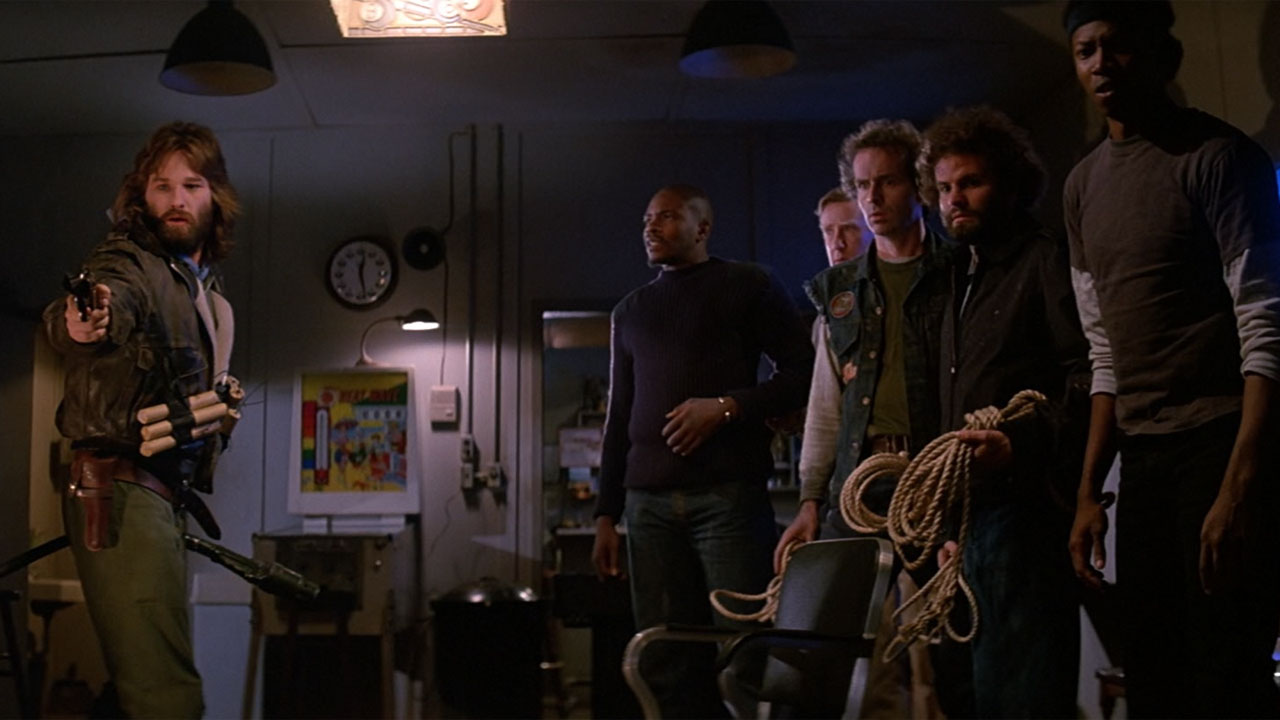
And that pay-off is compelling. A particularly masterful sequence involves a series of blood tests (now a hoary old stable of these things, but at the time something really new). MacReady essentially ties up all the other remaining characters (living and dead) and sticks a scolding hot wire into a blood sample from each man. The idea being the blood of any Thing will react aggressively to the “attack”. Carpenter really lets this scene build slowly – not least because MacReady is holding all the men at dynamite and gun point. The slow build-up reveals a few innocent men, each untied to help Macready. Then just as MacReady (and the audience) begin to relax – someone fails the test and the scene jumps into body horror chaos. Completing the tests after that is a near wordless sequence of jump cuts from test to test, with the number of untied men slowly growing. It’s brilliantly done: slow – quick – slow. Perfect tension drama. It’s the centrepiece of the whole damn movie.

The other thing Carpenter really understands is that set-ups like this are perfect discussion fodder for fans. Just as we love to debate whether Deckard is a replicant or not, there are plenty of similar points in this film. Most of this revolves around Blair, the first to work out the danger the Thing will cause if it reaches civilisation: when does he become infected? How many of his actions are human, how many Thing? At one point MacReady visits him (isolated in a hut) and finds him sitting calmly asking to come back in. Creepily beside him, an unused noose hangs from the roof: it’s not commented on in the scene at all, but it speaks volumes for possible interpretations. This sort of stuff throws itself open to a debate for the ages – the film enigmatically provides enough clues without definitive answers. It does this for a number of events – deaths go unexplained, materials are destroyed and we never find out by whom. The film is full of shady events, of key moments happening off camera, of mysteries going as unanswered for the characters as they do for the audience. Ripe for you to add your own interpretation.

The final scene of the film continues this: the surviving characters sit in the burning wreckage of their base. For all they know, either or neither of them may, or may not, be Things. But it hardly matters: the cold is coming in and we (and they) know anyone left in these conditions will be frozen in a matter of hours. So you get this brilliantly low-key, weary but charged exchange:

Survivor #1: Maybe we shouldn’t.

Survivor #2: If you’re worried about me…

Survivor #1: If we’ve got any surprises for each other, I don’t think we’re in much shape to do anything about it.

Survivor #2: Well, what do we do?

Survivor #1: Why don’t we just… wait here for a little while… see what happens?

So – the question stands? Who is a Thing and who isn’t? It’s a perfect, unsettling, final frame discussion point – and one that has kept feeding debate for years.

The Thing is a nasty, grimy, tense, unsettling, gruesome, gory, yucky, scary, paranoia-inducing masterpiece. It’s easily the best thing John Carpenter ever made (its failure at the box office seemed to break the director’s spirit, as nothing he did ever again reached this). As a slow-burn, cold war flavoured conspiracy and suspicion story it’s out of the top drawer – it captures perfectly the psychosis and fear that can be brought on by trapped isolation. It’s crammed with perfectly formed scenes. It has a terrific, nearly nihilistic feel to it – even the most competent of the men (MacReady) is way out of his depth here. Our alien nemesis is a master of psychology and tactics. So is the film.