Tag: John Kani

A Dry White Season (1989)

A Dry White Season (1989)

A passionate, clear-eyed and largely unsentimental denunciation of Apartheid, the best of its kind

Director: Euzhan Palcy

Cast: Donald Sutherland (Ben du Toit), Janet Suzman (Susan du Toit), Zakes Mokae (Stanley), Jürgen Prochnow (Captain Stolz), Susan Sarandon (Melanie Bruwer), Marlon Brando (McKenzie), Winston Ntshona (Gordon), Thoko Ntshinga (Emily), Leonard Maguire (Professor Bruwer), Gerard Thoolen (Colonel Viljoen), Susannah Harker (Suzette de Toit), Andrew Whaley (Chris du Toit), John Kani (Julius), Richard Wilson (Cloete), Michael Gambon (Magistrate), Ronald Pickup (Louw)

The late 1980s saw a small wave of films denouncing the horrors of Apartheid in South Africa, a racist system founded on cruelty and injustice. Many of these films struggled with either being overly earnest or turning their (inevitably) white lead character into a saviour figure. A Dry White Season is perhaps the best of trend, perhaps because it focuses on a fictional story rather than real history (instantly gaining it the sort of dramatic latitude drained out of Cry Freedom) and directed by Euzhan Palcy, the first Black woman (then aged only 32) hired by a major studio, with a cast of the cream of Black South African actors, who knew all too well this world. A Dry White Season is also notable for its critical view of white South Africans who, bar a few exceptions, are presented as tribalist blind-eye-turners, furious at anyone who shakes their world view.

Ben du Toit (Donald Sutherland) is the epitome of smugly complacent Afrikaner (Sutherland even has a plump false belly, to hammer home his cosy self-satisfaction). A former rugby star, teaching white history in a private school, to him the system is always fair and if a Black man is arrested he must have done something wrong. That’s shaken when school gardener Gordon (Winston Ntshona) asks him for help, first after his barely-a-teenager son is beaten by police then again when the same son dies in custody after a protest. Ben’s first reaction is to shrug and say nothing can be done: the scales fall from his eyes when Gordon asks the wrong questions and is in turn murdered in custody by brutal Captain Stolz (Jürgen Prochnow). Working with campaigner Stanley (Zakes Mokae), Ben finds his entire world view falling apart as he is compelled to uncover the truth – to the fury of his wife, daughter, in-laws and colleagues who increasingly see him as a traitorous boat-rocker.

A Dry White Season doesn’t shirk on the violence of Apartheid. It says a lot that an early truncheon-wielding police assault on a township, and the scarred backside of Gordon’s son soon feels everyday. The student protest – many of its attendees literally no more than children – is met with lethal force from white soldiers carrying machine guns, indiscriminately shooting down children at point-blank range. Gordon is waterboarded and brutally tortured. Anyone who crosses the security forces faces violent assassination or fatal beatings. Palcy unflinchingly shows this horror – and frequently cuts away from atrocities to shots of the du Toit’s enjoying their wealthy, contented life of sports and garden parties. The impression is clear: underneath this contented life for the whites is a brutal, violent, repressive system supressing all rights for the many.

Palcy brings the sort of perspective perhaps only a Black film-maker could. There is no attempt in A Dry White Season to shelter the audience. Instead, we are exposed to the worst the system has to offer. Palcy adds impact with her casting of several extraordinary South African actors. Ntshona, Mokes and Kani among others had all experienced this themselves (Kani lost an eye in a police beating). Their performances are superb. Ntshona’s simple, honest bravery is deeply moving while Ntshinga is heart-breaking as his wife. Kani drips moral authority as a solicitor. Best of all Mokae’s activist Stanley is a superb portrait of warm, world-weary wit barely covering a life of fury.

What’s really refreshing is we expect the white characters to feel shame or guilt as the truth edges into their lives. This doesn’t occur: in fact, bar Sutherland’s du Toit and his young son (the same age as Gordon’s child – the film opens with the two of them playing together) all the white characters furiously protect the system. Sides are firmly picked and no blurring of the lines is tolerated. His daughter (Susannah Harker at her most Aryan looking) just wants him to shut up and stop spoiling things. Richard Wilson’s avuncular headmaster can’t hide his anger at du Toit’s ‘treason’. The police’s deference evaporates the second du Toit asks the wrong questions about the wrong people.

Even du Toit’s wife – memorably played with a raw harshness by Janet Suzman – progresses through irritation, horror to outright disgust at du Toit. Suzman – a South African who fled the country and long campaigned against Apartheid – pours all her anger into a show-stoppingly racist speech where she claims Black people are dangerous and don’t deserve any rights, that the Afrikan’s own South Africa and any violence against Black people doesn’t matter so long as the whites continue to live well. She represents a system supporting a boot stamping on Black faces for the rest of time.

It takes time for du Toit to realise there is no justice. Even after Gordon is murdered, he is convinced a trial will reveal the truth. He is of course, fantastically wrong – the trial being rigged from the start to produce a ludicrous suicide verdict. The trial is conducted by human rights lawyer McKenzie, played in a show-stopping cameo by Marlon Brando. Coming out of retirement to support the project (and working at union rate), Brando flexes his muscles one last time to deliver a charismatic, witty turn as a shambling Rumpole-like barrister who knows from the start his only result will be making the powers-that-be faintly embarrassed at their blatant injustice. If Brando’s support didn’t extend to learning his lines – he’s blatantly reading them from off cue cards or having them funnelled to him through a visible ear-piece – he’s still a stand-out in a sequence that makes abundantly clear just how complicit the whole system is in murder.

Sutherland – a fine performance of stunned, sad-eyed bemusement – makes du Toit a well-meaning men who realises he can never go back to his old life after peaking behind the curtain. It’s a nice touch in A Dry White Season that he never becomes a conventional white saviour: most of his actions lead to disaster, he’s reliant on Mokes’ Stanley and (other than his son) he fails to persuade anyone. But what chance does he have? Placy even shows many Black people have given up. At least one of Gordon’s torturers is a Black police officer and Gordon’s son and his friends open the film berating Black workers in a boozer that their apathy only props up the system. After Gordon’s death, a Black priest counsels turning the other cheek. But then the courage needed to protest is immense: Stanley smilingly states he long-ago accepted he was a dead man and it’s that which keeps him going.

A Dry White Season ends with a touch too much melodrama and a slightly too ‘Hollywood’ ending – but then it’s so relentlessly depressing that even a small victory is a relief. But, in the main, while sometimes rough and ready, it actually presents an important message with real dramatic force, stuffed with fine performances and a brutally realistic view of South Africa. It does give us some hope for the future: the only other white persuaded is du Toit’s young son: and it’s the young who are only hope for long-term change.
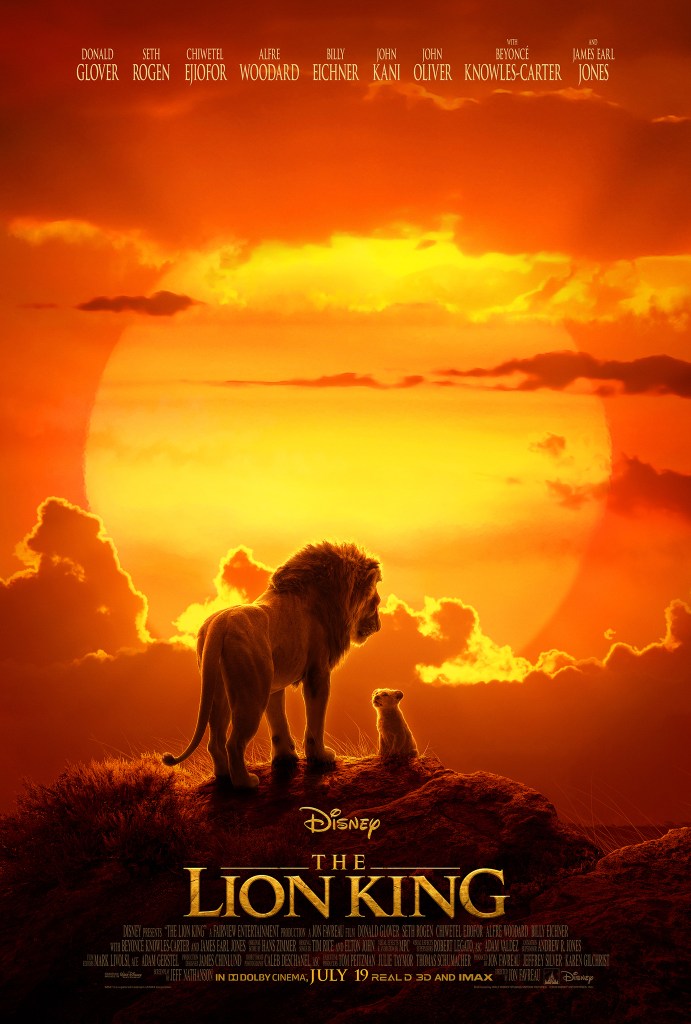
The Lion King (2019)

The Lion King (2019)

Soulless, heartless remake designed to make Disney as much money as possible

Director: Jon Favreau

Cast: Donald Glover (Simba), Beyoncé Knowles-Carter (Nala), Seth Rogan (Pumbaa), Chiwetel Ejiofor (Scar), James Earl Jones (Mufasa), Alfre Woodard (Sarabi), Billy Eichnor (Timon), John Kani (Rafiki), John Oliver (Zazu), Florence Kasumba (Shenzi), Keegan-Michael Key (Kamari), Eric André (Azizi)

We all like to pretend Disney is the custodian of our childhood dreams – that they exist on to give us even more gorgeous memories to treasure. Bollocks. It’s a corporate enterprise existing solely to create more money for shareholders. If you were in any doubt, cast your eyes across The Lion King, a bottomless collection bucket for the God of Mammon. There is literally no reason for this film’s existence, other than to lure people into the cinema for the express purpose of removing their pennies from their pockets and dropping them into Disney’s McDuck vault for the next time the shareholders want to take a dip.

Seen the original? Then you know the plot. At least Disney’s previous nakedly commercial “live-action” remakes of Beauty and the Beast and Aladdin had the decency to introduce a few new plot elements so there was at least a little bit of surprise content. Even if it was tedious stuff like the Beast’s Tardis mirror to the past or the Genie’s love interest. Here the extra 15 minutes is made up solely of padding, dreadful unfunny comic and utterly unnecessary extra characters who make literally no impression (Timon and Pumbaa now run a sort of hippie commune).

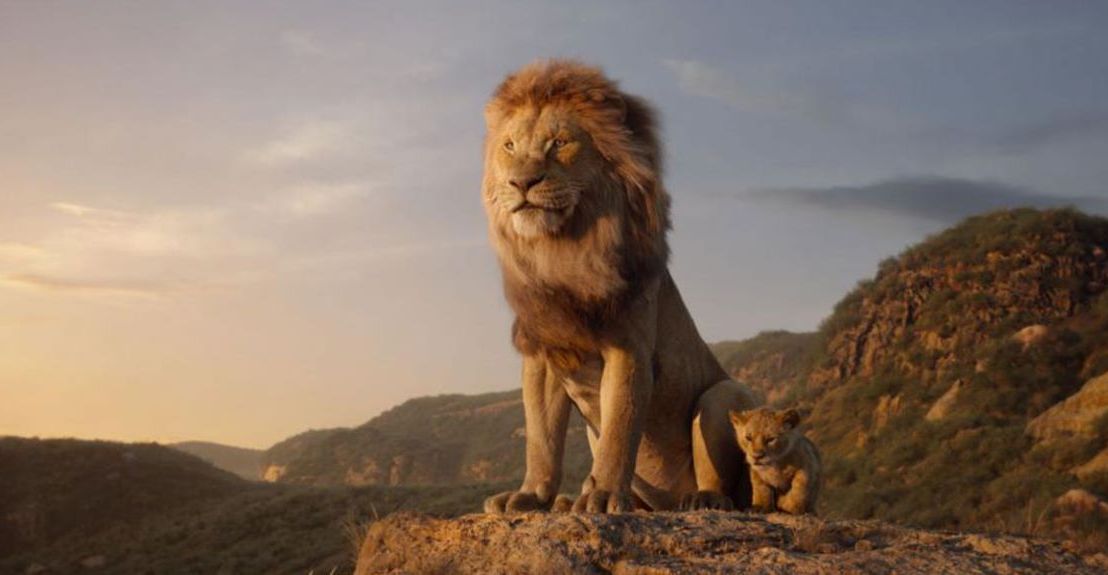
Disney made huge play out of the fact this is a “live action” Lion King. That’s the selling point. So proud of this were they, that they were hilariously pissed off when the Golden Globes nominated the film for Best Animated Film. But nothing in this film is real, or live action – except, as Favreau later bragged, the first shot of the film showing the sunrise. Everything you see here is created in a computer: from the tufts of Mufasa’s mane to the grass that dances in the breeze. Far from watching a live-action film, this is an orgy of CGI wizardry that constantly pats itself on its back for the hard work and detail that went into its creation. Who cares if the result has no heart?

Because that’s the case. The Lion King is a soulless cultural abomination. It is almost entirely a shot-by-shot remake, with the only changes being the occasional introduction of new (less good) dialogue. The characters have the same conversations, with less snap, laughs and emotion. It’s the sort of film-making karaoke some people like to call affectionate homage, but instead feels like pandering and no-one having the guts to change even the slightest moment from the original. How hard would it have been to match the plot, but find new ways to film it? This however matches shots, camera moves, angles, edits – the whole damn thing. If you had a choice between seeing the Mona Lisa or watching a computer do a Mona Lisa paint-by-numbers, which would you choose?

It also feels like no one stopped for a second during their self-congratulatory film-making to ask one or two obvious questions. Firstly, I don’t think its racist to say this, but to my eyes most lions look the same. No real effort has been made to distinguish any of them from each other (with the obvious exception of Scar) – this particularly effects the lionesses who all essentially look the same. Secondly, one of the first things you’ll notice about most animals is that they have inexpressive faces that do not display emotion and that they have mouths that have not been designed for talking.

With an animated lion you can get round this. You can draw a look of fear on Mufasa’s face because you aren’t limited to only using the facial movements that a real lion can. Their faces can shift and change to match the emotions of a real person – they can look happy or sad, cynical or sarcastic, joyful or mournful. You can’t do this with a real animal, because animals don’t have expressive faces. The whole cast of The Lion King have stiff, stationary faces that never react to the emotional events around them. They often can’t even move their mouths to properly replicate speech (Favreau starts to get round this by having as much of the dialogue delivered off camera as possible).

What you end up with is a series of robotically cold shots of animals not emoting, mechanically going through the emotions to replicate a masterpiece. Mind you, perhaps it’s a good thing that the film tries to rip-off the original as much as possible because whenever it does its own thing it thuds face-first into a pile of animal dung. Pumbaa is given a hideously on-the-nose line about “I can’t stand bullies” (to replace his “they call me Mr Pig!” battle cry). Eichhorn, Oliver and Rogen litter the film with unfunny fourth-wall-leaning references which stink of over-indulged recording booth improv. A few songs are butchered (most noticeably Be Prepared) and several musical cues are reworked in a way that dramatically reduces their impact. Even the obligatory new song is lacklustre and weirdly tonally wrong for the moment it’s used.

The cast struggle, never quite sure how they should approach the content. Spare a little sympathy for Ejiofor, stuck trying to follow one of the greatest vocal performances of all time – but his response to this is to bend himself into all sorts of shapes to be as different from Jeremy Irons as possible. The result is an underwhelming Scar, who lacks presence, menace, or the glorious manipulativeness of the original. Other actors are flat-out fails, most particularly Eichhorn who turns Timon an unlikeable bitchey whiner. Only John Kani really does something that feels like a good mix of homage and original work as Raffiki – he’s one of the few genuinely African voices in a film that loudly “prided” itself on its mostly African-American cast, but still has all the lions speaking in reassuringly American accents – and casts white actors into almost every non-lion role.  

But that’s a side note. The Lion King is a ruthlessly, exploitative attempt to make money. Which it managed to do to an enormous degree. So, I guess it hardly matters that surely no-one will be watching it in five years’ time. Or that its CGI created lions are expression-free automatons existing in a shiny world of non-reality. Or that the entire enterprise is a heartless, soulless, nakedly commercial stare deep into the belly of a conglomerate that sees people as nothing more than ATM machines. The Lion King is an abomination and will take pride of place in Hell’s multiplex for all time.

Black Panther (2018)

Chadwick Boseman is the legendary Black Panther in Marvel’s solid comic book outing

Director: Ryan Coogler

Cast: Chadwick Boseman (T’Challa/Black Panther), Michael B. Jordan (N’Jadaka/Erik Kilmonger Stevens), Lupita Nyong’o (Nakia), Danai Gurira (Okoye), Martin Freeman (Everett K Ross), Daniel Kaluuya (W’Kabi), Letitia Wright (Shuri), Winston Duke (M’Baku), Angela Bassett (Ramonda), Forest Whitaker (Zuri), Andy Serkis (Ulysses Klaue), John Kani (T’Chaka)

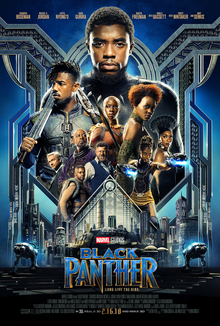
Marvel’s comic book world is now so stuffed with characters, worlds and dimensions that it is remarkable how many of its heroes are white and male. Black Panther does something completely different, giving us a set of African heroes and placing the common framework of a Marvel film within a very proud, and distinct, African heritage. So you can pretty much guarantee you ain’t seen a comic book film quite like this one.

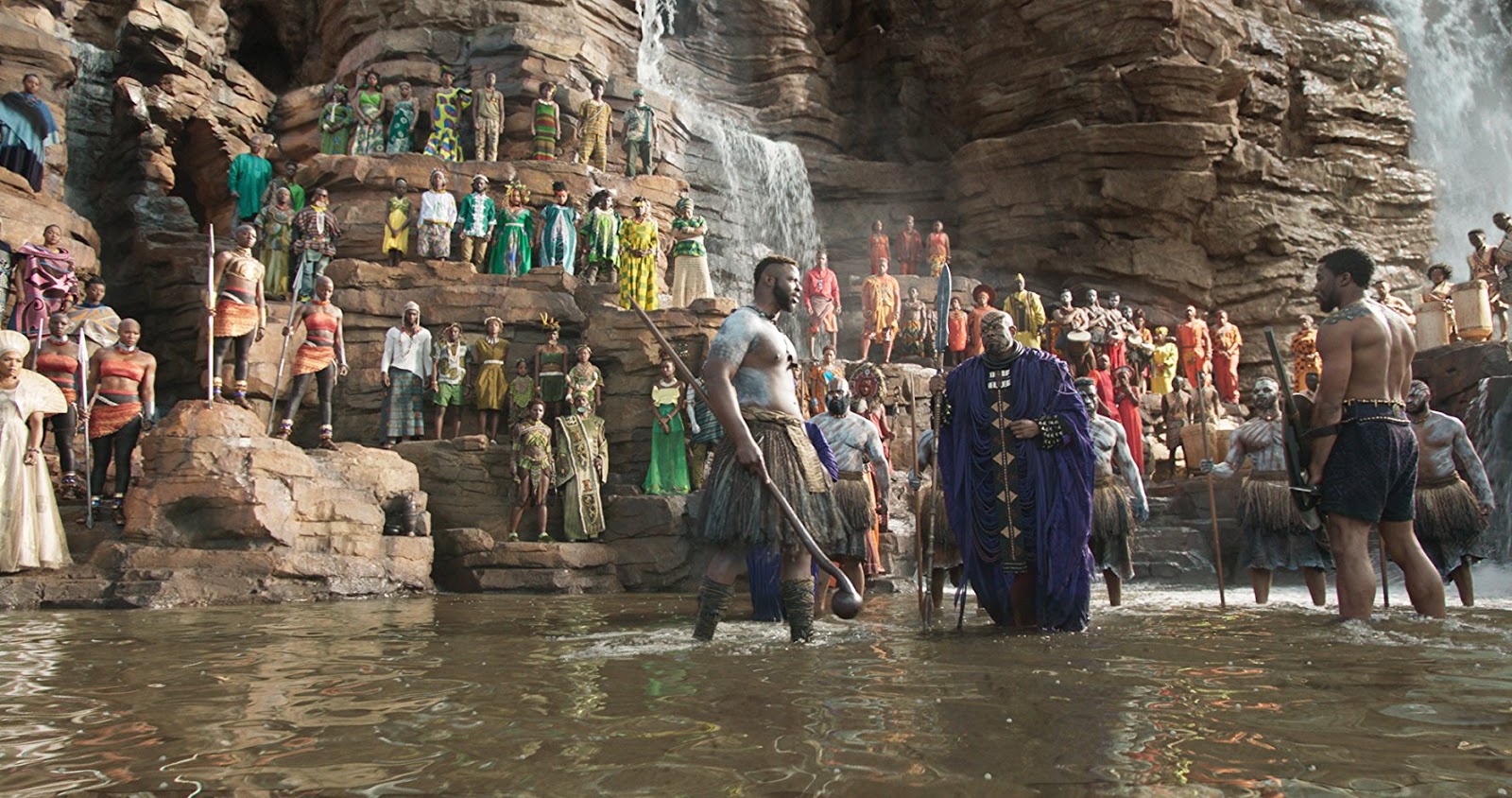
After the death of his father (in Captain America: Civil War), T’Challa (Chadwick Boseman) becomes king of the secretive nation of Wakanda. Camouflaging itself as a poor and unadvanced nation in order to avoid interaction with the rest of the world, Wakanda has in fact for centuries been mining a remarkable metal, vibranium, that has helped the nation become hugely technologically advanced. Its king also bears the responsibility of being the “Black Panther”, ingesting a vibranium-infused herb to gain superhuman speed and strength. However, others have their eye on the throne, not least Erik “Kilmonger” Stevens (Michael B Jordan), who wants to turn Wakanda into a force that could protect the black people of the world from their historical oppressors and avenge centuries of slavery.

Black Panther never fails to be entertaining. The film is shot with a genuinely vibrant excitement, and I love the way it proudly embraces a comic book twist on African tribal heritage. In fact the film’s depiction of an African nation which is secretly the most powerful and advanced nation in the world is really quite an impressive political statement.

Ryan Coogler directs the film with flashy brilliance and comes up with a few ways of presenting what are (essentially) action sequences we’ve seen many times before in unique new ways. The stand-out is an early action scene in a Korean bar, filmed to appear as an immersive single take around a large set, the camera dipping and zooming from character to character. Coogler also brings a fair amount of visual wit to the fights while not losing the emotional and character depth the story is aiming for.

The film also has some fine performances, with Boseman dripping dignity, nobility and decency as T’Challa. Regular Coogler collaborator Michael B. Jordan gives a great contrast as bitter LA slums kid turned misguided would-be dictator Kilmonger. Danai Gurira stands out as proud general Okoye, torn between duty and personal loyalties. Hell even Forest Whitaker – clearly loving every moment of this OTT Marvel world – gets some weight and dignity out of his typical grandstanding style.

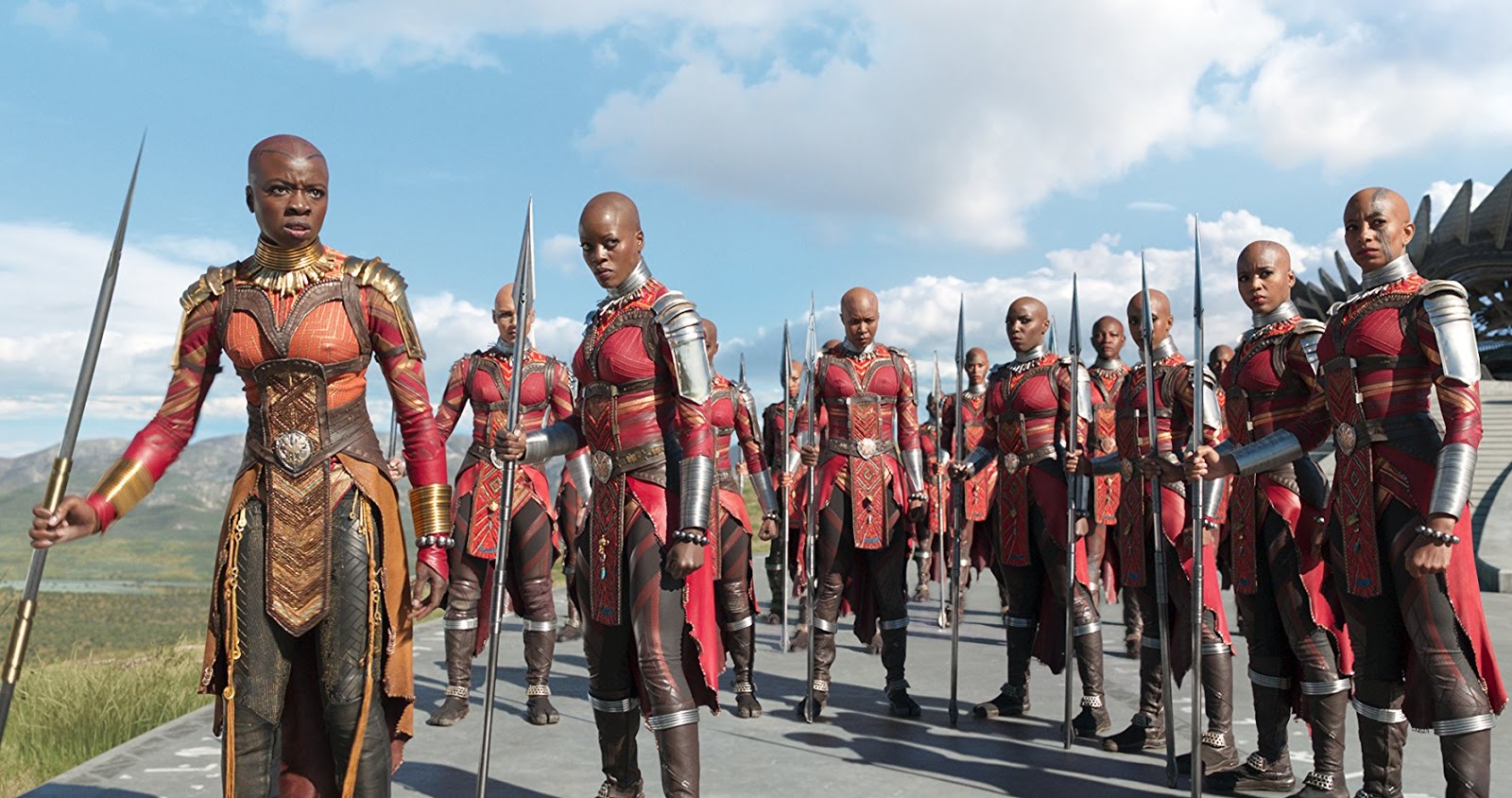
It’s another mark for the film that the world of Wakanda is so effectively gender neutral. Kings of Wakanda have a Praetorian Guard of female warriors, most of the leading voices on its council are women, and its technical genius is T’Challa’s sister Shuri (played by Letitia Wright in a charming, star-making performance). Sure it doesn’t feel like the role of Black Panther himself is up for grabs for anyone lacking a penis, but this is a world where women are equal, if not leading, partners in the action.

The film also addresses issues of post-colonial struggle, not least attitudes towards slavery and oppression handed out to Africa over centuries. Kilmonger’s fiendish plot is, in many ways, actually quite sympathetic – he wants to use Wakanda’s resources to protect those of African descent across the world. Jordan gets some good moments from his speeches laced with anger at the historical treatment of Afro-Caribbeans and, to be honest, it’s hard not to see his point. So hard in fact that the film has to drop hints that Kilmonger is a potential tyrant to stop him from seeing too reasonable. 

This is where the film’s plot starts to get slightly hazy. The character arc of T’Challa himself is pretty unclear. Traditionally in these films, the character must embrace his destiny. Problem is, a lot of this arc was covered in Captain America: Civil War. The writers are unable to give him a truly compelling replacement arc here. T’Challa drops a few references early on to not feeling ready – but basically swiftly embraces it. He never outlines a real alternative agenda to Kilmonger – there are characters in the film who argue “Wakanda doesn’t get involved in the world”, but he isn’t one of them, so there is no journey towards engagement with the outside world (on far more humanitarian terms than Kilmonger advocates). 

Frankly, Okoye is given a better character arc than T’Challa, beginning by advocating “we must serve the throne and respect our traditions even if we doubt them”, and learning later to follow her own conscience. T’Challa, in contrast, is no discernibly different at the end of the film to how he was at the beginning. 

T’Challa’s journey is basically getting something, losing it and then getting it back. Strip away Boseman’s performance and the character is basically pretty dull. He partly suffers, as does the rest of the film, from an overstuffed cast spreading the focus of the film far too thinly and leading to character arcs and interconnections feeling rushed. Kilmonger’s connection with T’Challa is forced – they only know each other for at best two days! – and there is a superfluity of villains. There’s not only decoy antagonist Klaue (and his gang) hanging about for a good chunk of the film, but also Daniel Kaluuya’s ill-defined best friend turned opponent, W’Kabi. Combining Kilmonger and W’Kabi would have helped no end, allowing two different, divergent agendas to develop and cause a relationship rift between two friends (Kaluuya is instead totally wasted in a nothing part, whose allegiances change depending on the demands of the plot). 

The good guys fare no better: Lupita Nyong’o is completely wasted as a love interest who feels stuffed into the movie because, y’know, these films gotta have one. She does nothing in the film that could not be easily done by another character, and nearly all of T’Challa’s emotional scenes – and personal motivation – are tied into his sister rather than this are-they-aren’t-they-a-couple. 

It’s all part of the traditionalism that underlies the film. Its structure is familiar and, like many Marvel origin films, the villain is a dark reflection of the hero with similar skills. The final battle is traditional and a little dull (and feels very similar to Avengers: Infinity War). The film avoids showing T’Challa torn between isolation and intervention – he in fact advocates both in the first 15 minutes – and doesn’t really make much of the prospect of a hero changing his mind or developing his views to embrace a wider world.

But it stands out because it is different. And it deserves no end of praise for making such a film so full of love and respect for its heritage. It walks a very difficult line between enjoying the bright exotic colours while not making the film patronising or overly “other-worldly”. How many other Hollywood films have, at best, two white characters (well played in both cases by Martin Freeman and Andy Serkis)? How many others would dare have the villain make a defiant, sizzling and emotionally inspirational speech about racial oppression and the hypocrisy of the West (though the film goes easy on America, with the speech taking place at the hilarious “Museum of Great Britain”. Where is this place – please get my tickets!).

That it slightly dodges and fudges the implication of these themes in its plotting and the conception of its hero – who is basically a dull character played by a charismatic actor – doesn’t reduce its pleasure at doing something different. I’m not sure it will stand up to repeated viewings – look past the setting and it does little new – but it’s a worthy entrance in a crowded universe.