
Tag: John Lee Hancock

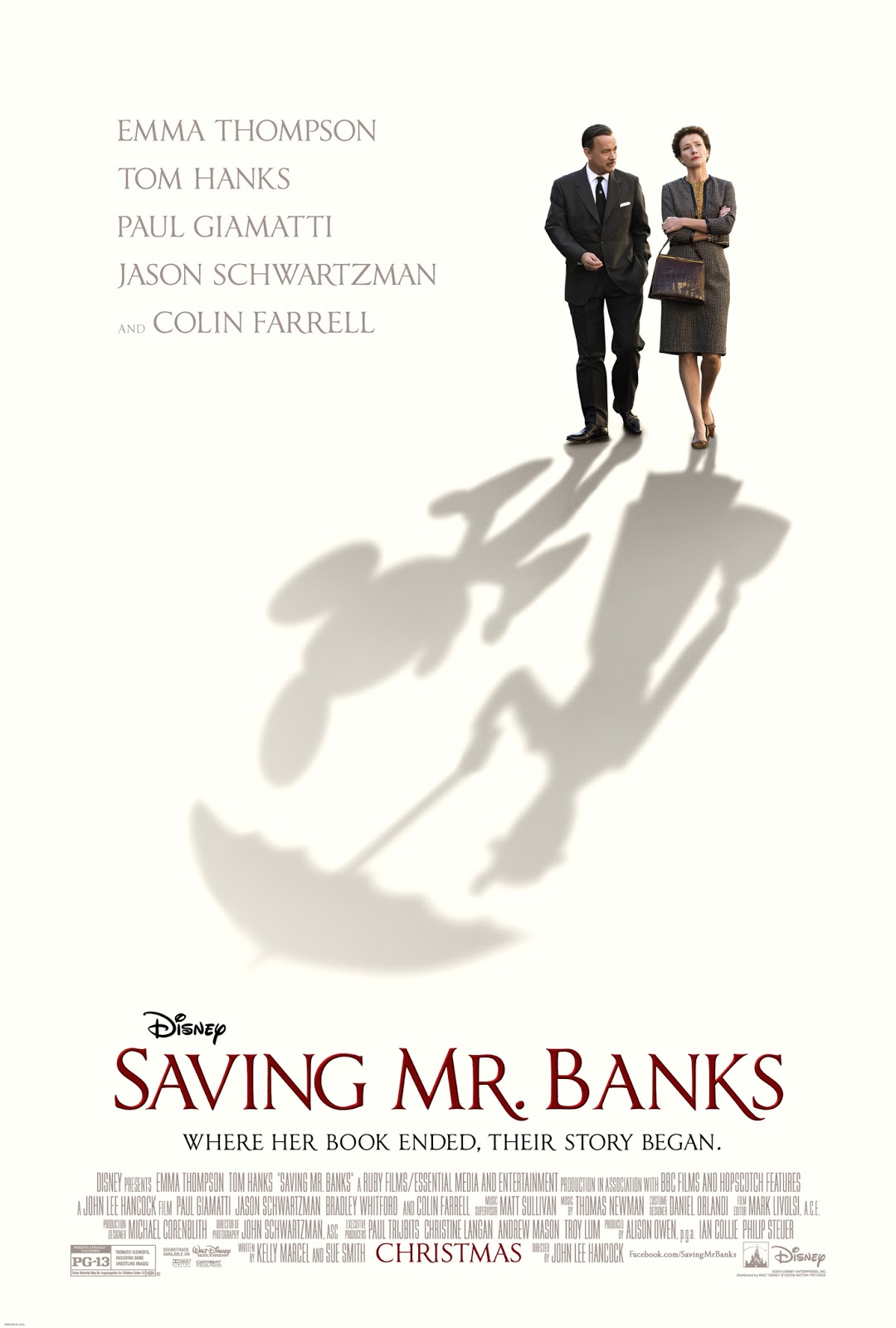
Saving Mr Banks (2013)

Tom Hanks and Emma Thompson clash on the making of Mary Poppins in Saving Mr Banks

Director: John Lee Hancock

Cast: Emma Thompson (Pamela Travers), Tom Hanks (Walt Disney), Colin Farrell (Travers Robert Goff), Ruth Wilson (Margaret Goff), Paul Giamatti (Ralph), Bradley Whitford (Don DaGradi), Jason Schwartzman (Richard M Sherman), BJ Novak (Robert B Sherman), Kathy Baker (Tommie), Melanie Paxson (Dolly), Rachel Griffiths (Ellie), Ronan Vibert (Diarmuid Russell)
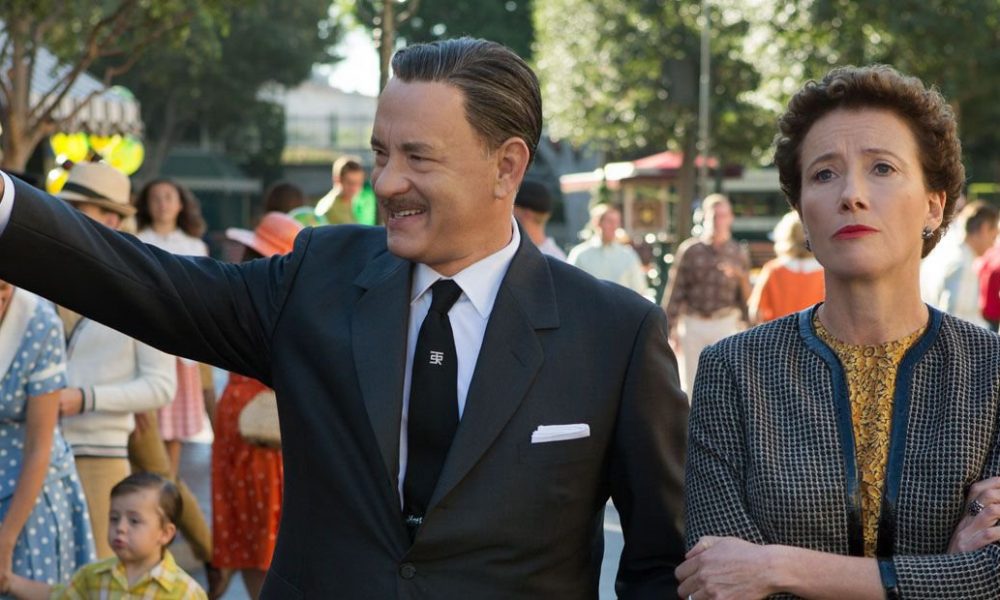
Walt Disney was a man used to getting what he wanted. And what he wanted more than anything was the rights to PL Travers’ Mary Poppins series. It was his kids favourite books, and he had promised them he would make the movie. It took decades – and Disney had to wait until Travers needed the money – but finally a deal was struck, with Travers having full script approval. So the hyper-English Travers is flown across the Atlantic to Los Angeles where she reacts with a brittle horror to every single suggestion from the Mary Poppins creative team, and distaste at the commercialisation of Disney’s enterprise. Based on the actual recordings (which Travers insisted on) from the script meetings, Emma Thompson is the imperious PL Travers and Tom Hanks the avuncular Walt Disney.

John Lee Hancock’s film is a solid crowd pleaser that, if it feels like it hardly delivers a completely true picture of the making of Mary Poppins, does put together an entertaining and interesting idea of the difficult process of creation and the tensions when writers (who don’t want to change a thing!) clash with film production companies. These problems being made worse by the clashing worlds of the loose, casualness and breezy friendliness of Los Angeles, and the intensely cold, buttoned-up Edwardianism of Travers, hostile to all shows of affection and any touches of sentimentality.

The film gets more than a lot of comic mileage out of these mixed worlds, with Travers’ every look of aghast, repressed, British reserve (“Poor AA Milne” she mutters while manhandingly a stuffed Winnie-the-Pooh toy out of her way, followed by “You can stay there until you learn the art of subtlety” as she dumps a massive Mickey Mouse cuddily toy against the wall of her bedroom) bound to raise sniggers at both her blunt hostility and cut-glass wit. Against this the American characters – all of them forced to dance to her tune – meet wave after wave of hostility with a practised American friendliness and warmth. It works a treat.

The film walks a fine line with its portrayal of Disney who is both a charming uncle figure and also a savvy and even ruthless businessman. Tom Hanks is spot-on with showing both sides of this man, making it clear how he managed to make so much damn money but also from how he managed to inspire such loyalty from many of his staff. Yes the film soft-peddles on many of Disney’s negatives – from refusing to show a single second of Disney smoking, to no mention of his active union-busting activities – but this is a film focused on Disney the impresario and negotiator. 

And what a person to negotiate with! That the film works is almost exclusively down to Emma Thompson’s imperious performance in the lead role. Thompson has a very difficult job here of turning someone so consistently rude, aggressive, arrogant and unpleasant as Travers (and over half of the film goes by before she says something nice to anyone) into a character we genuinely invest in, care about and laugh with as much as gasp at her rudeness. It’s a real trick from Thompson, adding a great deal if inner pain and vulnerability just below the surface, but only allowing a few beats of letting these feelings out for all the world to see. It makes for a performance that is superbly funny, hugely rude but also someone we end up caring about.

A lot of that spins from the careful recreation of Travers’ past in flashback, particularly her relationship with her father, Travers Goff (played with charm by Colin Farrell), an alcoholic bank manager in Australia when Travers was a child, who lived a life of irresponsibility mixed with bursts of playful, imaginative games with his daughter. It’s the realisation, by the elderly Travers, that her father was feckless and irresponsible that motivates her writing of Mary Poppins, the super-Nanny who flies in and saves not just the whole family, but specifically the father. Equally good in these sequences is Ruth Wilson as the despairing Mrs Goff.

It adds a sadness to the backstory of Travers – and an understanding of why she behaves the way she does – and the film also brings it round to a neat mutual meeting ground between her and Disney, who himself had problems with a father who drove him hard to achieve. It also explains Travers’ growing warmth to her chauffer, played by Paul Giamatti as a loving dad, the one person she demonstrates some affection to within the film.

It’s a film that wants to have its cake and eat it though, and it can’t resist adding a “happy ending” to the story of Travers finally accepting (even if she denies it) that she enjoys the Mary Poppins film and is moved by the saving of Mr Banks that it contains. In reality of course, Travers hated the film (though claimed some of it was passable) and refused Disney all permission to ever make any sequel. But that hardly matters here, to this fairy tale of saved souls which wants to see Travers saved – even if the truth was far more complex.

The Blind Side (2009)

Sandra Bullock sets her own rules, campaigning for a better life for a young black man in The Blind Side

Director: John Lee Hancock

Cast: Sandra Bullock (Leigh Anne Tuohy), Tim McGraw (Sean Tuohy), Quinton Aaron (Michael Oher Tuohy), Jae Head (SJ Tuohy), Lily Collins (Collins Tuohy), Ray McKinnon (Coach Cotton), Kathy Bates (Miss Sue), Kim Dickens (Mrs Boswell)

Sandra Bullock won an Oscar for this sweet but unchallenging film, the sort of thing you could have expected to see on TV in the 1990s as a “movie of the week”. She plays Leigh Anne Tuohy, a determined and driven woman who adopts and mentors Michael Oher (Quinton Aaaron), a gentle giant of a teenager who has grown up in foster care and who struggles with shyness. Michael has been accepted by his school for his potential skill, but the school can’t cater for his requirements for a less traditional teaching model (he struggles with reading and confidence). All that changes as Leigh Anne pushes for Michael to get the support he needs and encourages him to excel as a footballer.

This is the sort of naked crowd pleaser that will leave a smile on your face – and probably escape your mind after a few days. It’s devoid of challenge and ticks every single box you would expect this kind of rags-to-riches story to cover – the initial struggle, the growth in confidence, the setback, the rebound, the happy ending. It’s all there – and packaged very well by Hancock (heck the film won a surprise nomination for Best Picture).

It’s powered above all by a forceful, larger-than-life performance by Bullock, the sort of “personality” part that the actor has always excelled at (there is no doubt she’s a hugely engaging performer and always has been). Bullock grips the film by the horns and rips through the expected scenes. She’s a glamourous rich woman who isn’t afraid to go toe-to-toe with the local gangsters! She’s wealthy but she’s still in touch with her roots! She’s beautiful but she wears the trousers in the household! It’s everything you would probably expect, and Bullock can more or less play it standing on her head. She brings all her expert comic timing and exuberance to bear and mixes it with an emotional concern and empathy rarely called for in the romcoms that have made up much of her career. In a weak year (Carey Mulligan in An Education was her only plausible rival for the little gold man) she took the prize.

It’s probably the only thing that The Blind Side will be remembered for, however much most people will enjoy it when watching it. Its story of good triumphant and a disadvantaged young man getting the chance to come to peace with himself and turn his life around, are bound to put a smile on most faces. There are lots of funny lines, and Leigh Anne is such a powerhouse she makes a chalk-and-cheese partnership with anyone she shares a scene with. But it’s basically not got a lot more to it than just showing you a rags-to-riches tale, with a few slight notes of racial tension thrown in (and then barely even explored in any depth). A more interesting film might have taken more note of the differences between the Tuohy’s background and the poverty of Michael’s childhood neighbourhood and the fate of the rest of the people who grew up (none of whom had his advantages). But this is more interested in presenting an unlikely, balsy, champion of the underdog promote his life.

I suppose you could say that this film tells the story of the troubled background and eventual success of a young black man and not only filters all this through the experience of a family of wealthy white people, but also suggests that the chances of a black man achieving this without the support of a white family was practically impossible. But, then this isn’t a film with a political agenda. It’s just trying to tell a charming, uplifting story. Take it on those terms and it’s enjoyable. Try to delve into it any deeper and it will puff up and disappear in a burst of feelgood warmth. But the only reason it will be remembered – the only reason why it even remotely stands out – is as the film Sandra Bullock won an Oscar for.

The Founder (2016)


Michael Keaton accepts the praise as Founder of the McDonalds Business Empire

Director: John Lee Hancock

Cast: Michael Keaton (Ray Kroc), Nick Offerman (Richard McDonald), John Carroll Lynch (Maurice McDonald), Linda Cardellini (Joan Smith), B.J. Novak (Harry J. Sonneborn), Laura Dern (Ethel Kroc), Justin Randell Brooke (Fred Turner), Kate Kneeland (June Martino), Patrick Wilson (Rollie Smith)

McDonalds. The Golden Arches are ubiquitous, not just in America but across the whole world. But how did this happen? How did a small business – just one stand in a small town in America – suddenly become a global monolith?

Ray Kroc (Michael Keaton) is a luckless travelling salesman, selling supplies to drive-in diners. In California he encounters a diner the likes of which he has never seen before: a walk-up restaurant serving high quality food in disposable packaging, instantly. The business is McDonalds, run by brothers Dick (Nick Offernan) and Maurice (John Carroll Lynch). Kroc instantly recognises the potential of the business, and strikes a deal to franchise the formula across America, although the McDonald brothers will maintain control over all changes. Kroc, however, has the drive and ambition the McDonald brothers lack – and he slowly begins to stretch and expand the deal, taking on more and more power. Eventually he will become “The Founder” of the business that bears his original partners’ names.

What’s interesting about The Founder is that it has a certain element of wanting to have its cake and eat it. It’s simultaneously a semi-celebration of American entrepreneurship and a condemnation of big business crushing the little guy. This sounds like it should make for a confusing film but actually it kinda works. It fits the complex world of major business successes – someone like Kroc had the skills and the ruthlessness to actually make McDonalds into a global super-company in a way the McDonald brothers never did. At the same time, Kroc is clearly incapable of creating anything himself (even most of his business-building ideas come from other people) and the McDonald brothers have the real “American” entrepreneurial invention to create something new.

So the film becomes an engaging story of how businesses grow and develop, which largely manages to remove Hollywood sentiment from the equation. Kroc isn’t exactly a hero – he’s selfish, ruthless and places himself first constantly – but he’s not exactly a villain either. He’s a downtrodden striver, who has too continually push to be accepted by those who look down on him. He has a sense of loyalty and love for his brand – even while he begins to shut the McDonald brothers out of their own business. Similarly the McDonald brothers have a homespun honesty to them, but they are also naïve and unrealistic in their demands and desires for the business.

The film relies a lot for its success on Keaton’s slightly tragic desperation in the lead role, his yearning to improve and better himself. The first half of the movie shows his charm but also demonstrates his business acumen, his genius in recognising that what the McDonald brothers have invented could work on a huge scale. He’s hard-working and initially luckless, and the snobbish knock-backs he receives from banks and investors when peddling an idea get us on his side – after all we know it’ll be worth billions. It’s a Capraesque spin: he’s the little guy bucking against the system who becomes the very monolithic monsterous system himself. We can’t even be certain where we see the flip.

What becomes clear is that Kroc himself is somehow empty, somehow slightly devoid of depth, a man able to move smoothly from concept to concept with no lingering sense of guilt. He discards the McDonald brothers (after copyrighting their name) with as much calmness as he drops his wife (Laura Dern, in a thankless part as The Loyal Wife). Despite this though, the film never brings itself to condemn Kroc. It’s a little in love with the chutzpah of Kroc’s success and his persistent positivism, while seeing those he has had to drop on the way as tragic victims of the monolithic American business success Kroc has created.

We are invited to have similar sympathetic feelings about the hapless McDonald brothers: innocents in a world of business, able to create something that can change the world but hopelessly incapable of translating it into the type of scale that it could achieve. The film doesn’t forget that the McDonald brothers are the victims here, and Offerman and Lynch are both superb as two brothers with a deep personal bond and a love for their business and each other. But it also partly follows Kroc’s line – these two do not have the vision and ambition to take their idea to the next level. They are innovators but they are small-scale ones. The film daringly doesn’t just take their side as the little guys crushed by the system; it also allows itself to consider if they to a certain extent failed themselves. They never learn either, accepting Kroc’s handshake agreement for future royalties at the end of the film, an agreement we are all too aware even when it is happening will probably never be met.

The film has a certain love for the Americana of McDonalds and fast food joints, and it’s both an advert for the triumph of the business (the customers are all uniformly happy, and the ordinary employees in Kroc’s empire are all wonderfully warm) and a sad testament to the small businessman being swept aside by the big company. It’s quite a feat for the film to manage both at the same time and remain coherent. It’s both an advert for and attack on McDonalds, but it holds both these ideas simultaneously at the same time really well. Well worth a watch.

The Alamo (2004)

“Remember The Alamo!” Problem was the movie going public didn’t

Director: John Lee Hancock
Cast: Dennis Quaid (Sam Houston), Billy Bob Thornton (Davy Crockett), Jason Patric (James Bowie), Patrick Wilson (William Barret Travis), Emilio Echevarría (Antonio López de Santa Anna), Jordi Mollà (Juan Seguin), Leon Rippy (Sergeant William Ward)

“Remember the Alamo!” was the famous war cry of the Texan rebels fighting to make Texas an independent state from Mexican rule. Problem was, fast forward 90 odd years and it seems not enough people did. This lovingly reconstructed re-telling of the doomed attempt to defend The Alamo (a sort of Western Zulu with a downer ending) was a box-office disaster.

In 1836, a civil war raged in Mexico, which then included Texas. American immigrants and other groups fought to make Texas an independent state, with an eye on later joining the United States. A small force is sent to garrison the Alamo, a key fort recently captured from the Mexicans. But the Mexicans and their President Santa Anna are descending on the Alamo in full military force…

The Alamo is a pretty decent film. It’s not a classic and at times it’s a rather staid and straight-laced history lesson, po-facedly cramming in as much as it can within its running time. But it’s got many merits, not least the fact that it’s willing to focus on character rather than action, and embraces the fact that sieges tend to be rather long, dull affairs punctuated by moments of sheer terror.

Billy Bob Thornton gives a sharply intelligent and thought-provoking reading of Davey Crockett, playing him as man painfully aware that he is a legend, and wearily trying to balance this with also being a “normal” person, with the same fears and desires as other men. He plays Crockett as a gentle, even rather sensitive soul, a good listener, sharply self-critical and scared that he can’t live up to the reputation he has. As he says at one point: “If it was just me, simple old David from Tennessee, I might drop over that wall some night, take my chances. But that Davy Crockett feller… they’re all watchin’ him.” At one moment (in a scene that the film overplays by returning to at least twice in flashback), Crockett plays the violin on the ramparts to battle the Mexican drums, giving a brief Shawshank-like moment of freedom through the power of art.

The two main leads don’t disappoint alongside him. I enjoyed Patrick Wilson’s stiff-necked William Travis, whose cold and formal manner slowly reveals a decent man and a brave leader (though no master tactician). Jason Patric also manages to land just the right side of rogueish as a drunken James Bowie, the men’s leader of choice. Dennis Quaid has the dullest, least developed part as a larger-than-life Sam Houston. Impressive as these characterisations are, the film doesn’t really have time for anyone else to make an impression – while Emilo Echevarria’s Santa Anna is little more than cardboard cut-out of villainy.

The film’s main problem is its reverent regard for the moment in history that it is covering. For starters, its makers assume everyone shares this: there is no opening crawl, or scene setting voiceover, to tell us where we are, what’s going on and when. The filmmakers assume us to be as au fait with Texan independence as they are. I had to literally stop the film for a good ten minutes and read some quick timelines of Texan independence, as well as skim a few Wikipedia pages on Texan history, so I could follow the storyline.

Secondly, it’s so keen to cover all the major historical events, that at points it’s more than a little dry. Its slow pace has the upside of really allowing us to get to know the characters at its centre (the original run time was closer to 3 hours, which would have allowed many of the background characters to come to life as well). But with the runtime cut down, combined with the assumptions made about the viewer’s historical knowledge, it sometimes becomes a little tricky to either engage with the drama fully or to completely understand what’s going on.

The recut of the film after disastrous test screenings also means that the film has what feels like a tacked on “happy ending”, with the last twenty minutes given over to the (very shortened) Houston campaign against the Mexicans and Santa Anna’s capture. The film rockets through this, barely pausing to explain tactics or events, seemingly wanting to give meaning to the sacrifice at the Alamo. Some half-hearted attempts are made to contrast slaughter of the Mexican soldiers with that of the Alamo defenders, but not much.

But this is not a bad film by any means, just a fatally compromised one. It’s trying to be an intelligent, grown-up piece of film making – a character study out west – but it’s also trying to be an action film. It doesn’t quite succeed in being either, but it’s at its best as a character study, helped by some really strong, thoughtful performances. Hancock isn’t, to be honest, an original enough director to bring to life the epic scope and sweep that the film needs, but it’s clear he cares about this a lot. In fact that’s the best thing about this film: it’s clear that everyone in the film cared deeply about this story and desperately wanted this film to be a classic.

It’s a shame that this story is one that seems to have less relevance to the masses today, and that this film can’t quite coalesce all the efforts of everyone involved into something really memorable.