Tag: John Madden

Operation Mincemeat (2022)

Operation Mincemeat (2022)

Wartime heroics get bogged down in bland love-triangles and tedious inventions

Director: John Madden

Cast: Colin Firth (Ewen Montagu), Matthew Macfadyen (Charles Cholmondeley), Kelly Macdonald (Jean Leslie), Penelope Wilton (Hester Leggett), Johnny Flynn (Ian Fleming), Jason Isaacs (Admiral John Godfrey), Simon Russell Beale (Winston Churchill), Paul Ritter (Bentley Purchase), Mark Gatiss (Ivor Montagu), Nicholas Rowe (Captain David Ainsworth), Alex Jennings (John Masterman)
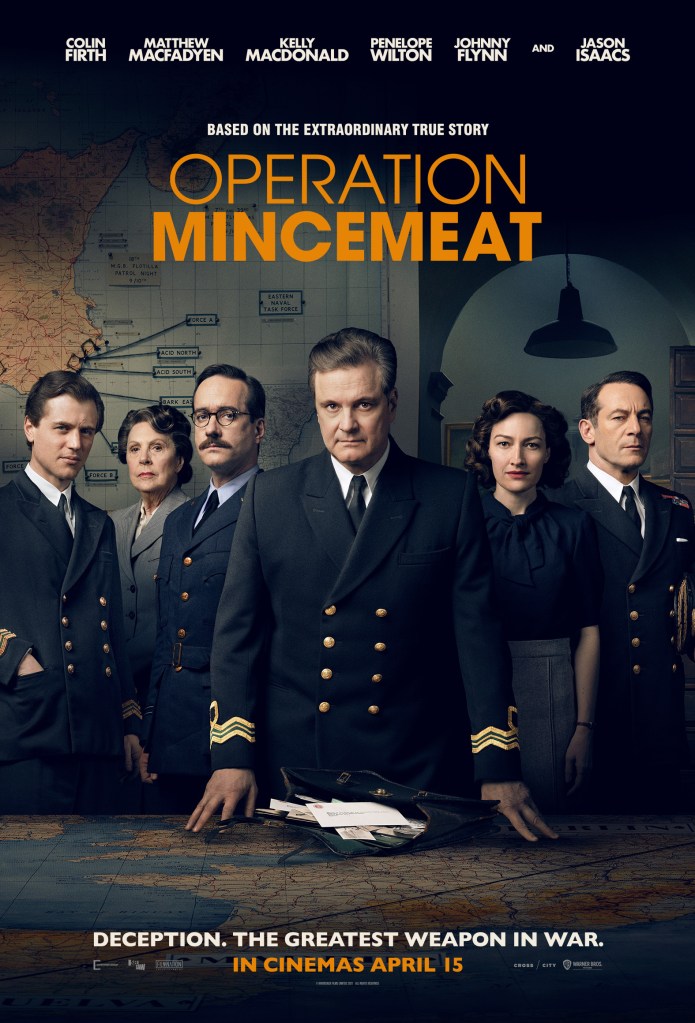
In April 1943 a body washed up on the shore of neutral Spain. It was a Major William Martin, carrying Allied plans to launch a massive invasion of Greece in July 1943. German agents intercepted these plans before they could be returned to the British and the Germans shifted their troops to counter this invasion. Problem for them was, Major Martin wasn’t real, the plans he carried were inventions and the Allies were planning to attack Sicily. Welcome to Operation Mincemeat.

Adapted from an entertainingly written and well researched book by Ben MacIntyre, Operation Mincemeat is about one of the most successful wartime deception plans ever launched. The film is a bit of a deception operation itself. Although it looks like a Boys-Own caper film, with eccentric boffins solving problems and running circles around the Nazis, it’s actually a dry, slow, sombre film that seems embarrassed at even the faintest idea of flag-waving Wartime heroism. Instead, everything is glum, depressing and bogged down in invented details that never convince.

Which is a real shame, because when the film focuses on the things that actually happened it’s both entertaining and informative. To create Major Martin, MI6 needed a body – specifically a military-age male who drowned. That was almost impossible to find in London at the time – and the final ‘candidate’ had to be kept as ’fresh’ as possible for months. The letters he carried included ‘private correspondence’ from one British General to another – a letter that went through almost twenty drafts as the British authorities squabbled about how blunt its ‘personal’ views could be. When the body washed up, a helpful Spanish officer tried to return the papers immediately. When the film is on this material it’s good.

But it feels embarrassed by the idea of enjoying this stuff. After all, war is hell and the idea that we could even for a moment think these eccentrics (nearly all of whom spend their time penning spy stories) might find part of this subterfuge fun is disgraceful to it. So, we are constantly reminded of the horrors of war: the moral quandaries of using a person’s body for an operation, the troubling “wilderness of mirrors” of espionage. All this means that lighter moments – or moments where we could enjoy the ingenuity of the characters – are rushed over as soon as possible.

The other thing the film is embarrassed about are the lack of female characters. As such Kelly MacDonald’s Jean Leslie – who contributed a vital photograph of herself as ‘Major Martin’s’ paramour and the background of this fictional relationship – is elevated to third wheel in the planning. But, in a move that feels bizarrely more sexist and conservative, she also becomes the apex of a love triangle between herself and Firth and MacFadyen’s characters. This tedious triangle takes up a huge amount of time in an overlong film and is fatally scuppered by the total lack of chemistry between any of the participants.

It also means our heroes are forced to spend a lot of time running around like love-sick, horny teenagers, following each other and passing notes in class. At one point Cholmondeley tells Jean about Montagu’s wife with all the subtlety of “I saw X kissing Y behind the bike sheds”. This also means that the matey “all in this together” feeling essential to these sort of caper films (which is what this story really is) is undermined. This ends up feeling rather like a group of people who learn to dislike each other but vaguely put personal feelings aside for the greater good.

The real exciting history clearly isn’t exciting enough. Instead, ludicrous, artificial “improvements” littered through the story. I get that Jason Isaacs’ Admiral Godfrey is turned into a moronic, obstructive bureaucrat for narrative reasons. But the ridiculous shoe-horning in of a link between the Operation and the Anti-Nazi resistance in Germany in the second half of the film feels blatantly untrue even while it’s happening. By the time one of our heroes is being confronted by a German agent in their own home, the film has checked out of reality.

Truth is, this is a bad film, over-long, overly dry and crammed with artificial flourishes. Partially narrated by Ian Fleming (a woefully flat performance by Johnny Flynn, sounding oddly like Alex Jennings), the film attempts to draw links between this and the formation of James Bond but these fall as flat as everything else. MacFadyen gives probably the best performance among some wasted Brit stars. The truth is, a one-hour straight-to-camera lecture from Ben MacIntyre would have been twice as entertaining and interesting and half as long. A chronic misfire.
Shakespeare in Love (1998)

Joseph Fiennes and Gwyneth Paltrow juggle love and inspiration in the delightful Shakespeare in Love

Director: John Madden

Cast: Gwyneth Paltrow (Viola de Lessops), Joseph Fiennes (William Shakespeare), Geoffrey Rush (Philip Henslowe), Colin Firth (Lord Wessex), Ben Affleck (Ned Alleyn), Judi Dench (Queen Elizabeth I), Simon Callow (Edmund Tilney), Jim Carter (Ralph), Martin Clunes (Richard Burbage), Antony Sher (Dr Moth), Imelda Staunton (Nurse), Tom Wilkinson (Hugh Fennyman), Mark Williams (Wabash)

It’s become fashionable since 1998 to criticize Shakespeare in Love. It’s one of those films that the Oscar has diminished –you’ll swiftly find someone who’ll say “can you believe it beat Saving Private Ryan?” It doesn’t help that the film become a poster-child for Harvey Weinstein’s Oscar success, his tireless and canny promotion campaign for the film being credited for its sweeping the board. All that buzz is unfair, as it distracts from a hugely enjoyable, very funny, heartfelt and charming film, stacked with scenes that will make you laugh or let out a sad little sigh.

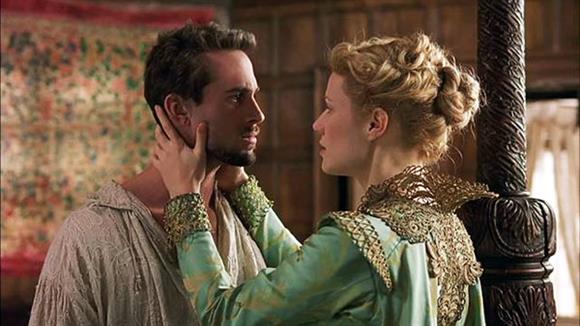
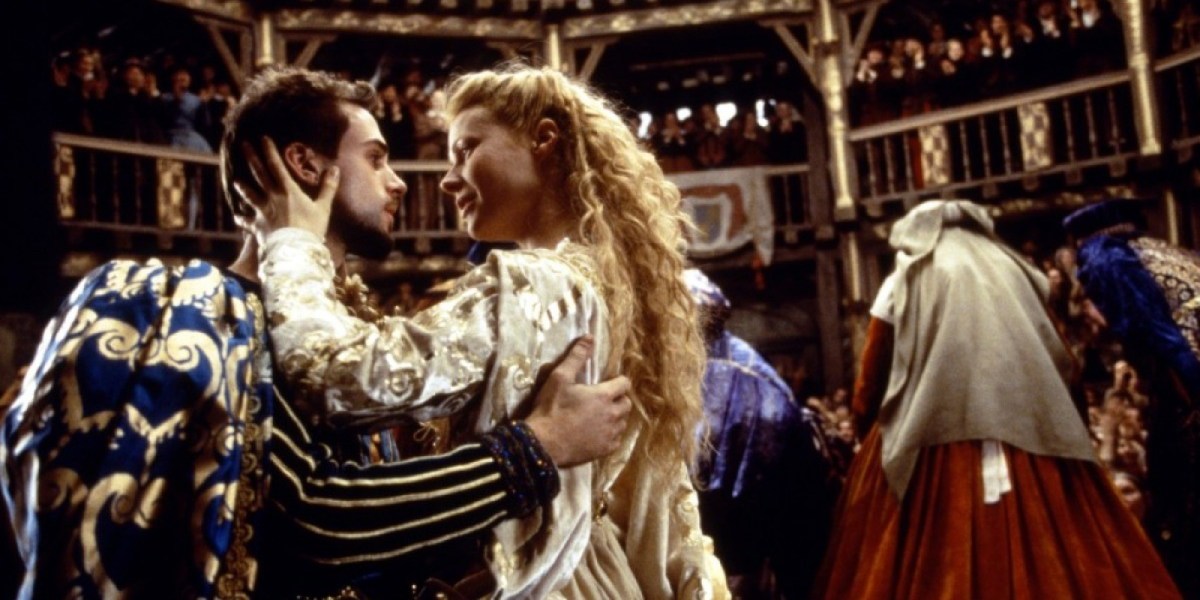
It’s 1593 and Will Shakespeare (Joseph Fiennes) has writer’s block. His latest play, Romeo and Ethel the Pirate’s Daughter just can’t get started despite the fact he’s promised theatre manager Philip Henslowe (Geoffrey Rush) that he’ll have it ready in a few days. Will only begins to find inspiration when he falls in love with Viola de Lessops (Gwyneth Paltrow) – little realising that Viola and the promising young actor in his company, Thomas Kent, are one-and-the-same. Viola, passionate about the theatre, dreams of acting on the stage and falls in love with Shakespeare (while keeping her Thomas Kent identity secret) – but her wealthy parents want her to marry the noble Lord Wessex (Colin Firth). Will these two star-crossed lovers find happiness? Or will their destiny follow the lines of the increasingly dark play about two young Verona lovers, that Romeo and Ethel is morphing into?

The largest part of Shakespeare in Love’s success rests with its script. The original idea had been doing the rounds in Hollywood for several years (Julia Roberts was determined to do it at one point, but only with Daniel Day-Lewis as Shakespeare, who was not interested). Marc Norman developed the concept and a plotline (originally much darker). But the film’s captivating wit and playfulness only really cemented itself when Tom Stoppard adapted the script into the frothy, super-smart comedy it became, crammed with riffs and gags about the Bard, Elizabethan theatre and show business. It’s also got a very funny – and humanising – idea of the world’s most famous writer suffering from writer’s block and then falling in love like he’s in one of his own plays.

Stoppard’s other trick was to repackage the concept into a delightful romantic comedy, centring the love story and downplaying other elements (such as Shakespeare’s quest to go solo and build his theatre career). With that, and the plot brilliantly refracting and reflecting Romeo and Juliet in tone and structure (just like that play, the first half is pure comedy, the second half darker in tone). In particular, the film is crammed with Shakespearean plot points and themes (from cross-dressing to plays-within-plays, mistaken identities, ghosts etc etc) all of which playfully  appear, cramming the film with delightful easter eggs.

It’s a celebration of the joy and magic of theatre – but it also hit big in Hollywood, because it’s essentially a Hollywood-studio comedy transmuted into the 1590s. Henslowe feels like a chancing B-movie producer, in debt who feels that with the idea of promising a share of profits (“there never are any”) instead of a salary, that his financial backer “may have hit on something”. There are puns about the unimportance of writers, billing on posters, the neurosis of creative people (even including an Elizabethan psychiatrist), oversized production credits, forced “happy endings” and sticking to tried-and-tested formulas. Gags call back to show-biz staples (“The show must…” “Go on!”). While it may be set in a theatre, there is a lot of the Hollywood studio in this.

But, with Stoppard at the pen, it was never going to be anything other than a loving tribute to the power of theatre to change lives. Shakespeare’s Romeo and Juliet is presented as a landmark in theatre history, a shift towards putting real-life emotion on stage instead of a few cheeky laughs and “a bit with a dog”. There is a wonderful plotline for Tom Wilkinson’s at-first all-business moneylender Fennyman, who discovers in himself a sense of wonder and delight for the theatre that melts his heart. (Wilkinson is outstanding here, a brutal man turned teary-eyed spectator, thrilled to be playing the apothecary). It weaves its charms so well about the delights of theatre, that you’ll even forgive the cliché of the stammering actor who finds his confidence on the first night. You even get a belting performance of Romeo and Juliet(with all the dull bits removed).

What really sucks in audiences through is the love-story – and Shakespeare in Love has a belter of a romantic plot. Riffing on Twelfth Night, As You Like It and of course Romeo and Juliet among many others, it’s a delightful series of misunderstandings, confusions and then passion, that eventually builds to an ending that’s bittersweet but true. It’s also beautifully played by the actors. Joseph Fiennes is so good here, a masterful display of light comedy tinged with sadness, so quick and electric with inspiration that I’m still amazed he didn’t go onto to better things.

Paltrow’s teary Oscar-acceptance has rather blighted the memory of her performance, but she has an earnestness and innocence that is deeply endearing and brings with it a radiant intelligence and emotional maturity that sees her turn into a realist. Wisely, the film’s ending sheds the other, minor plots, to hone in on an ending that is both sad and hopeful, that reflects real life (Shakespeare was after all, a real man married to someone else in Stratford) and sets up a thematic idea of love and inspiration being a life-long romance, that touches every moment of our lives, even when the loved person themselves is far away.

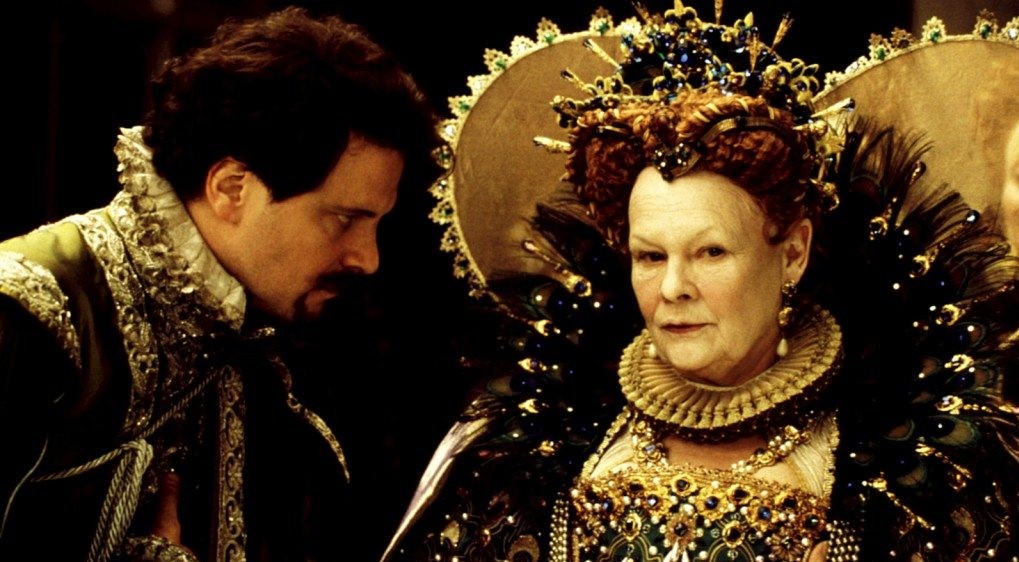
Directed with a smooth, professional sense of pace and joy by John Madden, it becomes a sweeping, surprisingly epic film, with a brilliant reconstruction of Elizabethan England and a luscious musical score by Stephen Warbeck heightening each scene’s emotional impact. The leads are marvellous, and there isn’t a weak-link in the strong cast. Judi Dench famously won an Oscar for her 8 minutes, but then its quality not quantity that matters and Dench’s archness is perfect for the role. Rush is hilarious as the grubby Henslowe, Affleck never better than his grand-actor parody, Colin Firth scowls expertly as “the other man” and Rupert Everett is dry and witty in a brief cameo as Christopher Marlowe, feeding Shakespeare suggestions.

You could say that Shakespeare in Love is just a romantic comedy. In many ways that would be fair. It doesn’t re-invent a genre, like Saving Private Ryan did. But, it’s a brilliantly mounted, intelligent and extremely funny one, with a superb script, some brilliant performances and wonderfully mounted. While it makes some good riffs on theatre, Shakespeare and the nature of love, it’s principle mission is to entertain – a big cinematic entertainment about the greatest playwright ever. And don’t we always say that comedy is exactly what the academy is biased against?