Tag: Joseph Gordon-Levitt

Lincoln (2012)

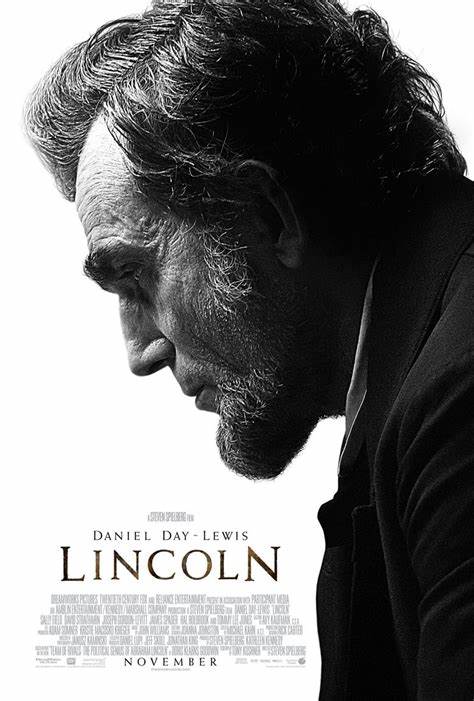
Daniel Day-Lewis gives on the great transformative performances as Lincoln

Director: Steven Spielberg

Cast: Daniel Day-Lewis (Abraham Lincoln), Sally Field (Mary Todd Lincoln), Tommy Lee Jones (Thaddeus Stevens), David Strathairn (William Seward), Joseph Gordon-Levitt (Robert Lincoln), James Spader (WN Bilbo), Hal Holbrook (Preston Blair), John Hawkes (Robert Latham), Jackie Earle Haley (Alexander Stephens), Bruce McGill (Edwin Stanton), Tim Blake Nelson (Richard Schell), Joseph Cross (John Hay), Jared Harris (Ulysses S Grant), Lee Pace (Fernando Wood), Peter McRobbie (George Pendleton), Gloria Reuben (Elizabeth Keckley), Jeremy Strong (John Nicolay), Michael Stuhlbarg (George Yeaman), David Costible (James Ashley), Boris McGiver (Alexander Coffroth)
It took me three viewings until I felt I got Lincoln. Previously – in the cinema and the first time at home – I respected it. I admired the skill with which it was assembled. But I had found it hard to see it as much more than a critically acclaimed civics lesson, Spielberg at his most prestige. Returning to it the third time with the pressure well and truly off, suddenly I discovered a film I’d never seen before, an intensely dramatic telling of the perilous struggle to pass the Thirteenth Amendment to abolish slavery. A vibrant, beautiful and surprisingly intense story of how close Congress came to vetoing it. What had seemed a stuffy museum piece, instead came to life as a dramatic piece of cinema. It goes to show you should never be afraid to give something another go. Or two.

This biopic of Lincoln goes down a very modern route of avoiding covering the Great Man’s entire life. Instead it zeroes in on little more than a crucial month. It’s January 1865 – in what we know are the final months of the President’s life – and Abraham Lincoln (Daniel Day-Lewis) confronts a terrible choice. Civil war has torn America apart for year and peace may be on the horizon. But Lincoln fears a reformed America, with all its Southern slave states back in the fold, will find a way to end his Emancipation Proclamation and restore slavery to its height. To prevent this, Congress must ratify the Thirteenth Amendment to the Constitution ending slavery. But, with many in Congress worried that such an Amendment will end any chance of peace, Lincoln is in a terrible position. Should he sacrifice peace for abolition? Or vice versa? Either way, it will be a no-holds barred fight on the floors of Congress.

Spielberg’s film is near perfect in its shooting and editing, while its historical detail is brilliantly on-point. You couldn’t fault a moment of its making. However, what makes the film a success is the director’s skilful ability to combine graceful (even stately) old-fashioned film-making expertise, with a truly compelling sense of the passions and dangers we face when democracy is in action. And the overwhelming tension when the stakes are high and we have no guarantees of the end result. Another film – the stately civics lesson I once took the film for – would have shown the passage of the bill as a Whiggish inevitability, a progress filled march to a better world.

Lincoln isn’t like that. This is a film that shows politics then and politics now ain’t that different. For every principled man, there a dozen looking out for the main chance, marking time or who are too scared to worry about right and wrong. The Amendment is delivered not by impassioned oratory from the President. It’s carried by skilled floor management and the employment of a trio of political lobbyists with briefcases stuffed with cushy job offers in the rebuilt America.

Votes are brow-beaten out of people, threats and persuasion are used in equal measure. There is no winning people over with poetic oratory. At one point, Lincoln makes a simple and heartfelt plea for one congressmen to do the right thing: the guy votes against him. One of the film’s moments of triumph sees fervent abolitionist Thaddeus Stevens refuse to be provoked into expressing his true views on the floor, instead offering a statement that he does not believe in equality “in all things”, knowing any other answer will be used to build opposition against the bill. Is there any other film in American politics where one of the biggest cheer moments is one of our heroes compromising and spinning his true views into something far less threatening?

It’s all part of the film’s demystification of American history as not being something made from marble, but instead being real and true. If anything though, this sense of realism – of danger and the very real possibility of defeat – makes the final vote (a long sequence that almost plays out a congress vote in real time) both far more dramatic and also surprisingly moving. Because we appreciate every step of the backroom handshakes, fights, compromises and (let’s be honest) corruption and shady deals that got us here. And, more than anything, the film has made clear Lincoln is willing for this brutal war (the horrors of which, both in battle and bloody aftermath, intrude at key points in the film) to go on for as long as it takes, to ensure this Amendment.

Lincoln is the heart of the film: and it’s almost impossible to state how central Daniel Day-Lewis is to the film’s success. This is an extraordinary performance. I don’t think you can understate how venerated Lincoln is in the American memory. With his distinctive features and a permanent memory of him sitting like a marble God in the centre of Washington, it’s hard for many to imagine that this was ever a real man. But Day-Lewis has turned in a performance here that transforms Lincoln into a living, breathing man but never once compromises his greatness.

From the voice (a wispy lightness, a million miles from the deep, Shakespearean accent you would expect – and entirely accurate) to the ambling walk, to the film’s embracing of Lincoln’s eccentric monologing, his love of whimsy and jokes, his autodidact passion for language, his warmth and love for his family – and his righteous anger when frustrated by those who cannot see the big picture – this is extraordinary. Day-Lewis is compelling in a way few actors can be. His Lincoln is superbly human. Every moment is beautifully observed, but this is so much more than an actor’s tricks. His Lincoln is someone you can come out of the film convinced that he was talking to you, that you understand him as a human being not a cipher. I felt I knew and understood Lincoln more from watching this film than I ever had from a history book. It’s breathtaking.

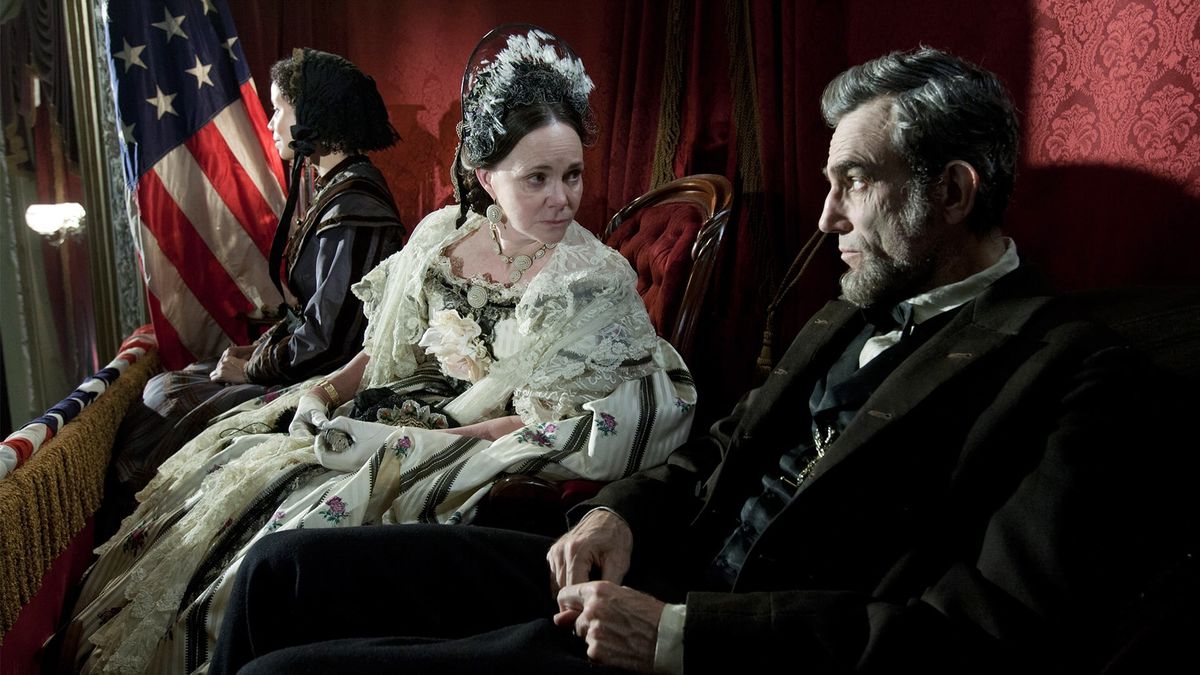
Of course it inspires everyone else in the cast to give their best. The at times difficult marriage between Lincoln and his wife gives some wonderful material for Sally Field (easily her finest performance in decades). Mary Todd Lincoln is aware she will always be a disappointment for her husband as a partner, but equally feels that her public mourning for this lost child speaks of a deeper humanity than her husband. Loyal if questioning, she’s also abrupt and clumsy enough at times to be a liability.

Tommy Lee Jones is exceptional as Thaddeus Stevens, prickly, difficult but also morally pure (the film has helped rediscover the unjustly overlooked Stevens). Previous Lincoln performers Strathairn and Holbrook give very good support. James Spader is great fun as colourful lobbyist. Joseph Gordon-Levitt is all restricted ambition as Lincoln’s son. Jared Harris shines in a few scenes as Grant. Gloria Reuben has a few beautiful moments as Mary’s confidante Elizabeth Keckley.

Lincoln is a film shot with all the prestige of an American Merchant-Ivory, in love with the power of democracy. But it’s also open-eyed on how a system like America’s works, and how perilous delivering “the right thing” can be. Emotional and engrossing, it’s powered above all by a towering sublime performance by Daniel Day-Lewis who might as well be the 16th President reborn. It took me three viewings to see the richness here – but I am so glad I stuck it out.

The Trial of the Chicago 7 (2020)

Sacha Baron Cohen leads a campaign for justice in Aaron Sorkin’s The Trial of the Chicago 7

Director: Aaron Sorkin

Cast: Eddie Redmayne (Tom Hayden), Sacha Baron Cohen (Abbie Hoffman), Joseph Gordon-Levitt (Richard Schultz), Mark Rylance (William Kunstler), Yahya Abdul-Mateen II (Bobby Seale), Michael Keaton (Ramsey Clark), Frank Langella (Judge Julius Hoffman), John Carroll Lynch (David Dellinger), JC MacKenzie (Tom Foran), Alex Sharp (Rennie Davis), Ben Shenkman (Leonard Weinglass), Jeremy Strong (Jerry Rubin), Kelvin Harrison Jnr (Fred Hampton), Noah Robbins (Lee Weiner), Daniel Flaherty (John Froines), Caitlin Fitzgerald (Daphne O’Connor)

Aaron Sorkin’s work celebrates the great liberal possibilities of America. Is there any writer who has more faith in the institutions of the American state – while being so doubtful of many of the actual people running those institutions? You can imagine Sorkin sees more than a bit of himself in Abbie Hoffman, jocular prankster and wordsmith, angry at his country in the way only someone who really loves it can be. This idea is at the heart of Sorkin’s biopic of the trial of seven activists for promoting violence in the build-up to the Democratic convention of 1968 in Chicago.

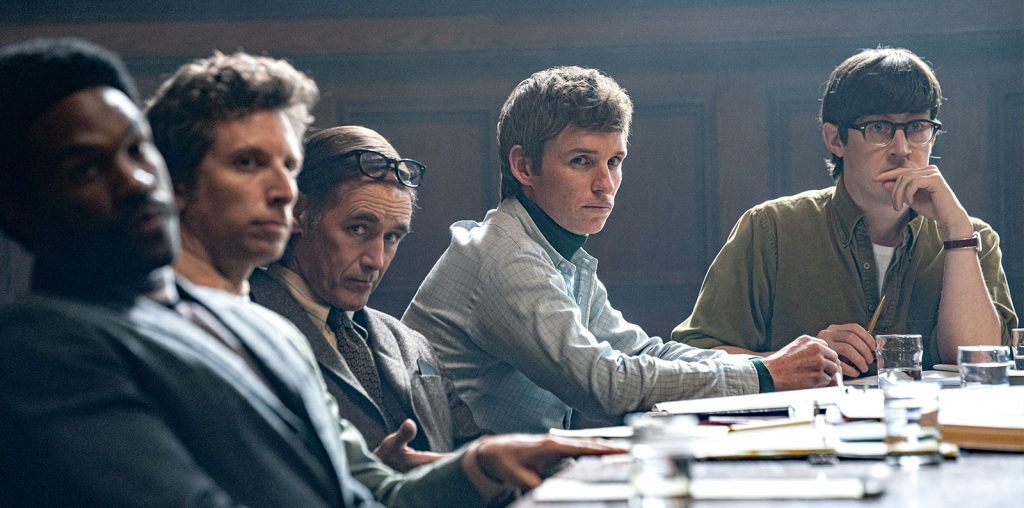
Vietnam is in full swing with young men dying in their thousands to defend a cause many are starting to believe isn’t worth it. Nixon has just been elected – and his government wants to make an example of these left-wing, hippies he believes are drowning out “the silent majority”. Student leaders Tom Hayden (Eddie Redmayne) and Rennie Davis (Alex Sharp), hippie activists Abbie Hoffman (Sacha Baron Cohen) and Jerry Rubin (Jeremy Strong), and pacifist David Dellinger (John Carroll Lynch) are arraigned in court for conspiracy to incite a riot, facing a ten year prison sentence. Black Panther Bobby Seale (Yahya Abdul-Mateen II), who wasn’t in Chicago at the time, is thrown in to make them look more threatening. With radical lawyer William Kunstler (Mark Rylance) in their corner, the defendants deal with a slanted case from the government, being backed all the way by the judge Julius Hoffman (Frank Langella) who can’t hide his contempt for them.

The Trial of the Chicago 7 feels like it’s on the cusp of making a grand statement about the rights and liberties of Americans, at a time of great civil unrest. With the country more divided now than it’s  ever been since the events of the film, this should be a timely message. But somehow the film doesn’t quite manage to deliver it. There is too much going on – an attempt to cover divisions in the left and counter-culture, the events in Chicago in 1968, the trial, clashes outside of court – it’s almost as if Sorkin the director has failed to marshal Sorkin the writer into making a clear and coherent thematic point. Instead the film becomes a chronicle of shocking courtroom events, affecting, but not as earth-shaking as it should be.

Part of this is the fragmented script. An occasional device is used, whereby Hoffman turns the events of the trial into a lively stand-up routine at some unspecified future point. This is a pretty neat idea as a framing device – however it only pops up at odd moments rather than giving a spine to the film (as well as missing the chance to filter events through the perception of one member of its sprawling cast). You end up thinking it’s just Sorkin the writer coming up with a way of giving us information Sorkin the director can’t work out how to do visually.

This tends to affect a lot of the stuff outside of the courtroom. Sorkin’s dialogue is surprisingly plodding here, too often ticking the boxes or establishing backstory and motivation that will play out later. He has his moments and his gift for capturing revealing details make for brilliantly inspired speeches and dialogue riffs that reveal acres of character while feeling very light. But, considering what he is capable with (and could have done with this material) it feels like autopilot.

That’s the problem here: it’s a little too pedestrian. Only an argument between frustrated liberal Hayden and his lawyer Kuntsler captures something of the dynamic pace of Sorkin at his best. Other scenes – such as an out of courtroom scene between decent just-doing-my-job prosecutor Richard Schulz (a low-key but very good Gordon-Levitt) and Hoffman and Rudin – are a little too on-the-nose in making their points about liberty, truth and justice. 

The strongest moments by far are in the courtroom – and the true-life staggering lack of proper procedure followed there. The film is rightly angry, without tipping too much into outright preaching. It’s shocking to see how little the rights of the defendants were respected. Much of this came from the attitude of the judge, Julius Hoffman: a traditionalist, his contempt for the defendants clear throughout, handing out contempt of court charges like sweeties. Frank Langella stands out as a man so convinced of his own morality – and so locked into his own certainty about right and wrong – that he is completely unaware many of his rulings are biased and is deeply hurt at being accused of racial imbalance, while having the only black defendant literally bound and gagged.

Yahya Abdul-Mateen II is superb as Bobby Searle, the Black Panther leader furious at being roped into the trial. Searle loudly – and vigorously – protests the trial has not been delayed to allow his lawyer to attend and that he has been refused (consistently) by the judge his right to represent himself. The treatment of him is shocking and appalling. But it feels like no attempt is made to put this in wider context either of civil rights at the time or in America since. And that feels like a major miss. We’re only a few degrees from the same effectively happening today.

This is part of the film’s general problem in finding its real focus, or wider context. I suspect its heart is probably in the views expressed by Hoffman on the stand – particularly those around not having his thoughts on trial before – but this film is too scatter-gun.

What the film does do well is with the quality of its performances. Sorkin may be a rather a visually flat director – his shooting of the convention riots completely fails to conceal the lack of budget – but he encourages great work from actors. Redmayne and Cohen give skilled performances as the acceptable and radical faces of left-wing politics. Strong is wonderful as a hippie with a firm sense of right and wrong, while Carroll Lynch is great as a pacifist driven to the edge. Mark Rylance excels as radical lawyer Kunstler, softly spoken but passionate, who brings fire to proceedings.

It’s a shame though that The Trial of the Chicago 7 settles for mostly being a walk-through of the trial. An attempt to really capture a sense of the deeper politics gets lost, and the failure of the film to really draw parallels with today or place these events in their wider context feels like a missed opportunity. Even the film’s end captions don’t give you as much information as you would hope – especially telling considering its abrupt ending. A well-meaning effort, but a middle-brow film.

Inception (2010)

Leonardo DiCaprio caught between dreams and reality in Inception

Director: Christopher Nolan

Cast: Leonardo DiCaprio (Dom Cobb), Joseph Gordon-Levitt (Arthur), Marion Cotillard (Mal Cobb), Ellen Page (Ariadne), Tom Hardy (Eames), Ken Watanabe (Saito), Dileep Rao (Yusof), Cillian Murphy (Robert Fischer), Tom Berenger (Peter Browning), Pete Postlethwaite (Maurice Fischer), Michael Caine (Professor Stephen Miles), Lukas Haas (Nash), Tallulah Riley (Disguise woman)

What is reality? It’s a question that for many of us never comes up. But in the artificial and exciting world of film, it’s a legitimate question. These worlds we watch unspooling before us on the cinema screen, so large, so real, so exciting. Could we get lost in them? And how much do the films we love echo the dreams that fill our nights, the movies we create in our mind to keep our brain active during those hours of complete physical inactivity? And what happens when the world of imagination and possibility becomes more compelling, more comfortable – and perhaps more real – to us than the actual flesh-and-blood world around us? These are ideas tackled in Inception: the blockbuster with a brain. 

Set in some unspecified point in the not-too-distant future, Dom Cobb (Leonardo DiCaprio) and his partner Arthur (Joseph Gordon-Levitt) are “extractors”, shady corporate espionage experts who use experimental military technology to enter shared dream states with their targets. While in their dreams, they have complete access to their subconscious mind, where secrets can be extracted. A wanted man in the States, Cobb is forced to ply his trade despite his yearning to return home to his children. After a job goes wrong, their would-be target Saito (Ken Watanabe) hires the pair to take on a far more challenging role: rather than extract an idea he wants them to plant one – a technique called “inception” – into the mind of a business rival (Cillian Murphy) to get him to dismantle his father’s empire. To do the job, Cobb needs a new team, including dream “architect” Ariadne (Ellen Page), dream identity forger Eames (Tom Hardy) and dream compound chemist Yusof (Dileep Rao) – and needs to try and control his own dangerous subconscious version of his late wife Mal (Marion Cotillard) who is determined to destroy his missions.

Just a plot summary should give an idea of the twisty-turny world of imagination and ideas that Christopher Nolan mixes in with big budget thrills and excitements, in the most original sci-fi/philosophy film marriage since The Matrix. Of course it helps when you have the clout of having directed a hugely successful comic book series, but Nolan was brave enough to trust that an audience for this sort of action-adventure caper wanted to have their brains stretched as far as their nerves. So he creates a dizzying and challenging piece of escapism that plays around with the audience’s perceptions and understanding of the nature of dreams. 

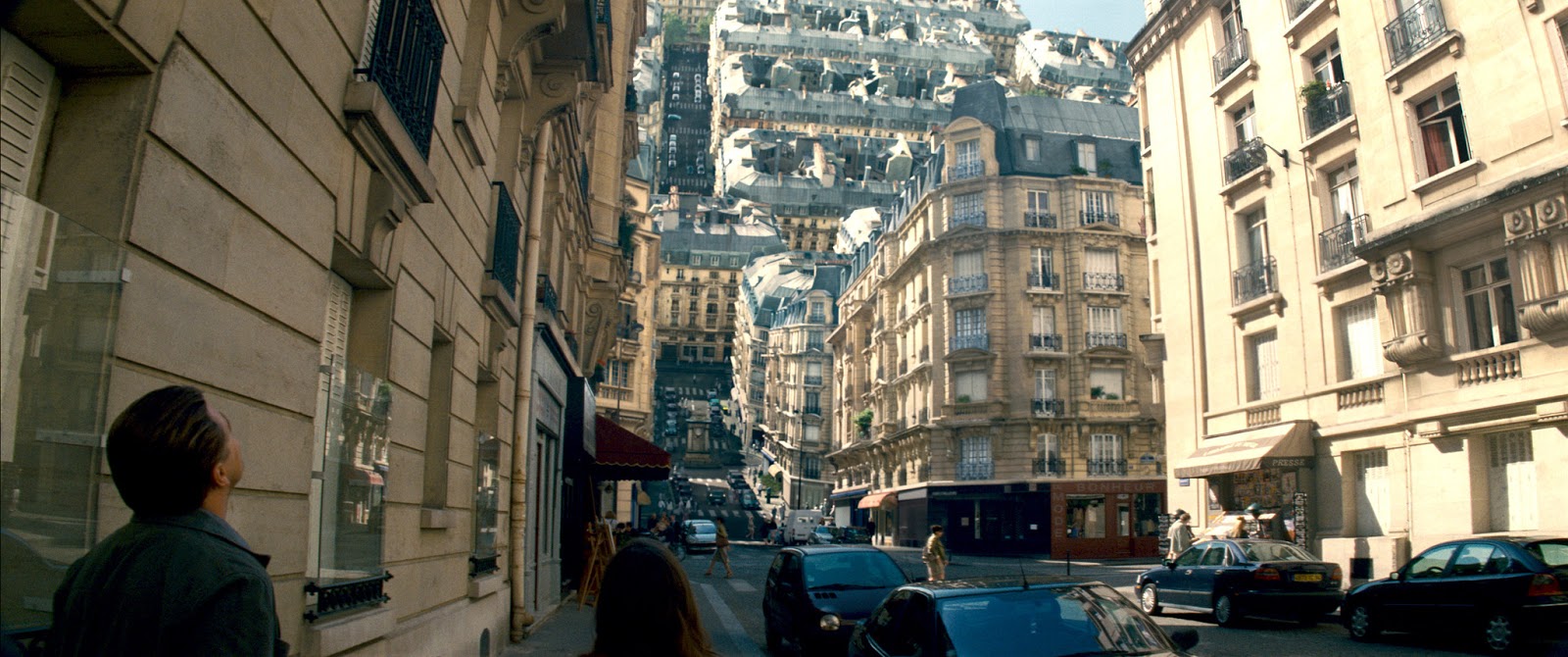
In the world of dreams, the film is a fabulous tight-rope-walk of dazzling concepts. Here everything is possible, with Nolan throwing at us worlds from film fantasy: intricate Samurai houses, brawling third-world streets, luxurious hotels, Bond-style winter bases and entire cities that literally fold, bend and reinvent themselves around the film’s dreamers, worlds that defy conventional rules of physics and time. This world is presented with genuine visual panache at every point, Nolan’s mastery of the language of film leading to a sensational series of slight-of-hand tricks and compelling set-pieces, all the while making you question which events are real and which are dreams or even dreams within dreams. In these worlds, the characters have the ability to literally shape a world to meet their needs, and the dangerous attraction of these worlds – even if they are not real – is the dark temptation that hangs over every frame. 

Because it’s those ideas beneath the action that give the film depth as well as excitement, that ability to ask questions and openly invite the audience to begin theorising themselves to fill in any blanks. Within the world of Inception, characters can create dream states within dreams, to share one person’s dream while simultaneously all being inside the dream of someone else. These multiple levels are cleverly established as being as much of a risk for the characters in getting confused as they are for the audience, with the characters carrying personal “totems” to help them judge if what they are seeing is reality or not. This is made all the more difficult by the establishment that your subconscious will manifest people to populate the dream worlds – and these will turn on invaders they detect in the dream.

All of this tunnels down into the deep limbo of our subconscious – and also introduces as a concept Nolan’s fascination with time. In dreams, time moves at a different pace, and this differential becomes all the greater as you descend down levels in dreams within dreams. A few minutes can become an hour in a dream and become almost a day in the dream within it – and years within the dreams beyond that. This is brilliantly demonstrated by Nolan in the film’s dazzling central sequence as the film intercuts between three timelines in three different dreams – each impacting the other.

It’s another masterful touch – the impact of actions on dreamers’ bodies in the level above can be felt in their world. A slap to the face in the real world can send someone in the dream flying across a room. A bucketful of water turns into a tidal wave in the dream. The dreamer falling in the world above removes gravity in their dream (giving Joseph Gordon-Levitt a cult fight scene in a gravity free world that sees him gracefully leaping from floor to ceiling to wall). The visuals are extraordinary, but the intriguing logic of the inter-relation between reality and the dreams – and the way dreams struggle to explain external effects – lend all the more credence to the mixing of reality.

But then, as Nolan suggests, isn’t that film after all? In dreams we move from location to location and struggle to remember the journey in between. We find ourselves doing tasks and not knowing how we started. Chases, faulty logic, sudden reversals and changes – these are the rules of film, it’s editing slicing out the boring bits and focusing on the reality. We are dropped into the middle of Cobb’s story and only slowly find the backstory, a gun filled chase through an African city is almost indistinguishable from similar sequences in the dreams. The final sequence of the film is a purposefully cut series of images that are very true to the rules of film, but feel alarmingly close to the rules of dream (unsettling us about whether what we see at the end is truth or dream, a debate that continues today). It makes for fascinating stuff, as well as a commentary on film itself.

Nolan’s film is gloriously entertaining, even if in its haste at points it does fail to explain how certain events and concepts truly work – but doesn’t really matter so compelling is the journey. The cast, enjoying the chance to mix action hijinks with genuine characters and dialogue are very strong, with DiCaprio anchoring the film wonderfully as the conflicted, lonely, defensive and daring Cobb. Hardy made a name for himself in a cheekily flirtatious performance, which sparks wonderfully with Gordon-Levitt’s more po-faced Arthur. Page creates a character both naïve and at times almost gratingly intrusive. Cotillard makes a difficult balance look easy playing a character part real and part dream figure. Watanabe is archly dry as the investor. There isn’t a weak link in there.

It may at times move too fast and not always make itself completely clear. It might be a bit too long in places and take a little too long to make its point – but it’s ambitious, challenging, intriguing film-making that rewards repeated viewing. Not least with its cryptic ending in which we are forced to ask how much of what we have seen is real and whether – like Cobb perhaps? – we should even care at all if the end result is so positive. With the fascinating world of dreams – and the rules there that we encounter – it gives us a firm grounding for the its meditation of the dark attraction of fantasy, embodied by the genial wish fulfilment of the movies where adventure lies around each corner and the heroes triumph.