Tag: Josh Gad

Frozen 2 (2019)

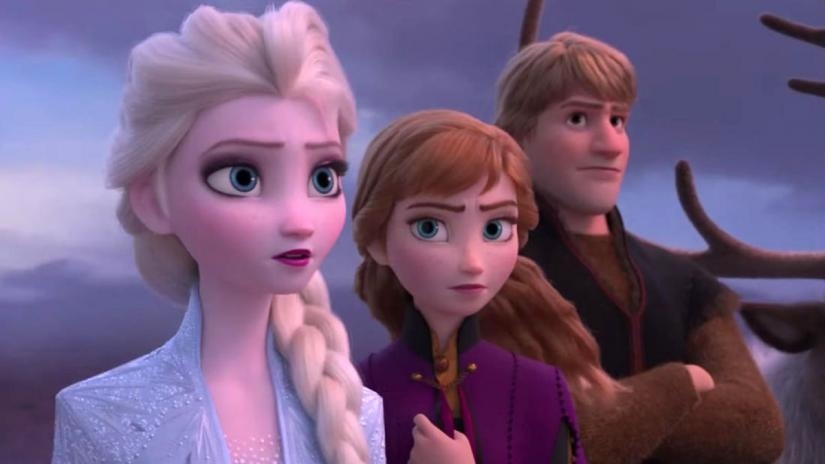
The gang are all back together in Frozen 2

Director: Jennifer Lee, Chris Buck

Cast: Kristen Bell (Anna), Idina Menzel (Elsa), Josh Gad (Olaf), Jonathan Groff (Kristoff), Sterling K Brown (Mattias), Evan Rachel Wood (Iduna), Alfred Molina (Agnarr), Martha Plimpton (Yelena), Jason Ritter (Ryder), Ciaran Hinds (Pabbie), Jeremy Sisto (King Runead), Rachel Matthews (Honeymaren)
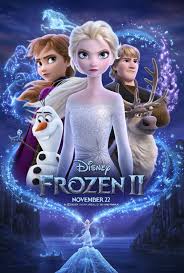
Frozen was a phenomenon, a film that seemed to come out of nowhere and seized the imagination (and the passions) of audiences. Why did it work so well? It’s got a great bunch of characters, a focus on sibling affection that is very easy to relate to (and very different from most romance-based Disney films), a well-rounded bunch of characters (so easy to relate to, they inspired a number of fan in-jokes in a way that only characters in films you really care about can) and of course that song. Frozen II works very hard to double down as much as possible on the things that worked, and to give you the chance to spend more time with these characters. If it fails to match the magic of the first film, it still makes for an entertaining trip to the cinema.

Elsa (Idina Menzel) and Anna (Kristen Bell) are now living together in the kingdom of Arendelle, and all is peace and contentment. Until one day a siren call that Elsa keeps hearing from across the water occurs at the same time as a series of elemental events in the kingdom, each harnessing earth, fire, air and water. The sisters quickly work out that this must be connected in some way with the stories their parents told them of the Enchanted Forest, a magical land near to Arendelle that  disappeared after a mysterious feud between the two kingdoms. Accompanied by living snowman Olaf (Josh Gad), Anna’s boyfriend Kristoff (Jonathan Groff) and his reindeer Sven, the sisters head off to find the cause of the disturbances, solve the mystery of the enchanted forest and save Arendelle. Phew!

Frozen 2 is engaging, fun and has some very good jokes. Its main problem is a plot that feels both sprawling and epic and also muddled and confusing. As the film hits its final act, you may well feel more than a little confused about why events are unfolding like this, what the motivations of certain characters are, why some things happen to characters etc. What the film seems to lack is a compelling unfolding of the plot, and a clear structure of how these events link together to form the overall arc.

As such, we seem to head to several locations and constantly encounter a series of magical creatures, but never really get a firm grasp of how they link together. The film has a series of flashbacks and expands the backstory of the series, but then never really pulls together clearly how the events of the past shaped the present. The moment where this is explained feels rushed and murky, and seems to revolve around a sort of “anti-magic” attitude from a key character in the past that has no context with the rest of the film and never feels really clear. 

The plot may not be the strongest, but where the film really does work is in its sense of humour and its fun script, and the engaging riffs Lee and Buck make on the previous film. Fan humour from the first film – not least the close relationship between Kristoff and Sven – is doubled down on in this film with a series of knowing sight gags. Olaf – far more engaging here than in the first film – has a series of excellent fan gags, peaking in a hilarious showpiece moment where he essentially acts out the entire plot of Frozen for the people of the Enchanted forest (all of whom respond like the fans). It’s a hilarious show piece, and a real sign of the film’s strengths, which are often when it is riffing on the first film.

The film also carries across the other things that worked from the first film. The close relationship between the two sisters is central to most of the film’s development (although it also means that Anna seems to have to protest her devotion in virtually every scene). The sense of outsider and isolation in Elsa is also explored further, with her confusion over being happy where she is but still yearning for something more. The film also threads in a charming B-plot of Kristoff’s attempts to propose to Anna, which provides both charm and several moments of comic gold.

The film does struggle to find a replacement song for Let It Go, although Into the Unknown comes close, another inspiring, story-packed, ballad for Idina Menzel to bring to inspired life again. The song also plays well with the several fans who have seen Elsa become a gay icon, with most of the lyrics leaning on the idea of heading out from the safety of knowing where you are to finding your true self in the “unknown”, answering the siren call of your own desires. Also of course, it’s a belting song which you can enjoy on its own merits!
Murder on the Orient Express (2017)


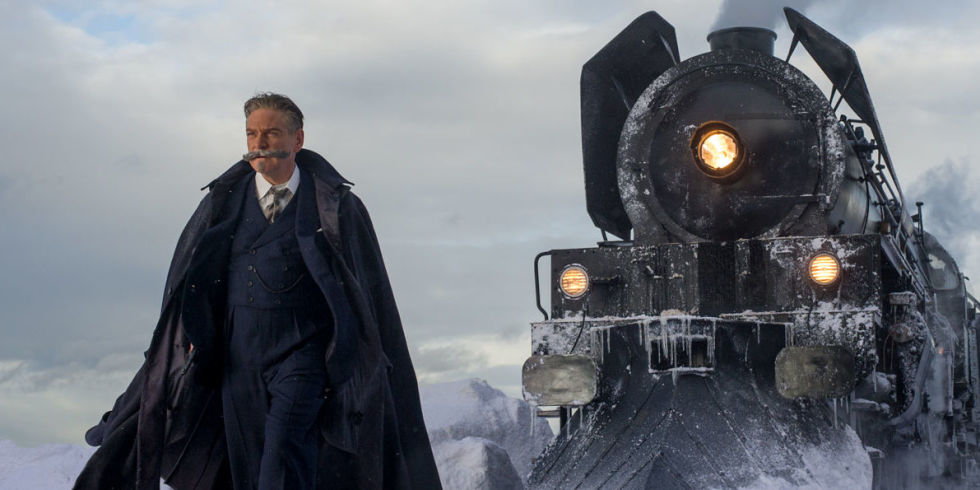
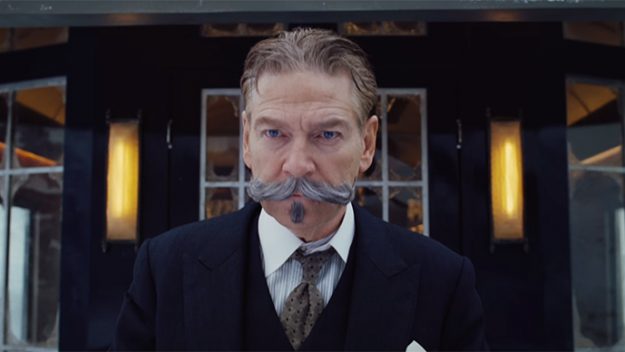
A dishevelled Kenneth Branagh (and tache) investigates a Murder on the Orient Express

Director: Kenneth Branagh

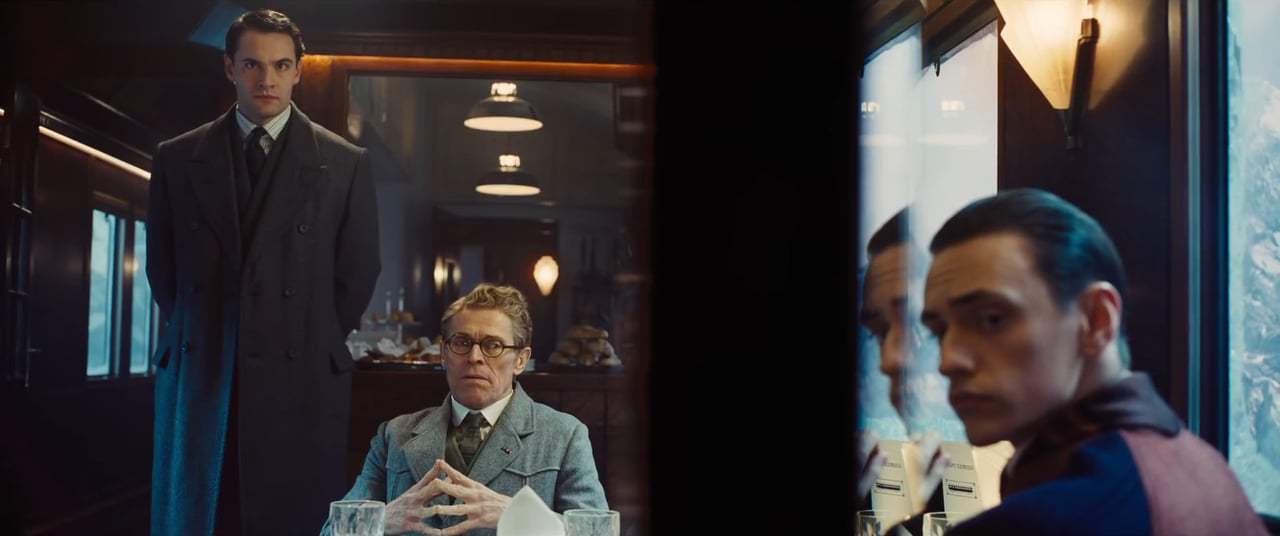
Cast: Kenneth Branagh (Hercule Poirot), Tom Bateman (Bouc), Penélope Cruz (Pilar Estravados), Willem Dafoe (Gerhard Hardman), Judi Dench (Princess Dragomiroff), Johnny Depp (Samuel Ratchett), Josh Gad (Hector MacQueen), Derek Jacobi (Edward Masterman), Leslie Odom Jnr (Dr Arbuthnot), Michelle Pfeiffer (Caroline Hubbard), Daisy Ridley (Mary Debenham), Marwan Kenzari (Pierre Michel), Olivia Colman (Hildegarde Schmidt), Lucy Boynton (Countess Elena Andrenyi), Manuel Garcia-Rulfo (Biniamino Marquez), Sergei Polunin (Count Rudolph Andrenyi), Miranda Raison (Sonia Armstrong)

Is there a murder mystery with a more widely known resolution than Murder on the Orient Express? Possibly not – if for no other reason that film and television versions of this story are as numerous as the suspects in the actual mystery. If that wasn’t a big enough challenge for Branagh to take on, he also joins a list of umpteen actors to play Poirot himself: following in the (very precise) footsteps of the big guns: Finney, Ustinov and of course, above all, David Suchet. How does his version of this most famous detective in his most famous adventure measure up? Well, with mixed results.

For those who don’t know, Hercule Poirot (Kenneth Branagh) is “possibly the world’s greatest detective”. Here, he is travelling back from Istanbul  on the Orient Express, a berth having being secured at the last minute by his friend Bouc (Tom Bateman) the director of the line. En route he is approached by the sinister Ratchett (Johnny Depp), who asks if he can serve as his bodyguard. Poirot refuses – only for Ratchett to be murdered that night. Bouc asks Poirot to investigate – and it soon becomes clear that the dozen other passengers in Ratchett’s carriage could all have had motives to kill him. But who is the killer?

Murder on the Orient Express is on the cusp of being a very good film. But, like the train itself, it gets bogged down too often in changes from the source material that add nothing, action scenes that feel toe-curlingly out of place, and bombastic filming that goes a little bit too far. In many ways it captures some of the faults of its director, my much-loved hero Kenneth Branagh – and I do love him, but as a director he has a tendency to make things too big, to wear his love of the complex shot on his sleeve; to basically try too hard. As a director, that’s what it feels like he’s doing here.

It’s filmed with a luscious, chocolate box, old-school Hollywood grandeur. The camera swoops and zooms over some gorgeous landscape as the train puffs through snowy mountain scenery. There are some loving travelogue tracking shots of Istanbul and Jerusalem. The film lingers with a loving eye on the luxury and class of the Orient Express itself (including some egregiously clunky product placement). The costumes look lovely.  But the end result of all this lavish filming is that it sometimes goes too far towards the reassuring, Boxing-Day-afternoon treat. 

Everything is a little too technicolour at points. It also means that some of Branagh’s more self-consciously tricksy camera work stands out a little too much. A “birds-eye” view of the discovery of the body (the camera above the heads of the actors looking straight down) is oddly disconnecting – it works a lot better when Poirot and Bouc examine the crime scene, giving the audience a god like view of the scene. Some overly complicated shots swoop up along the aqueduct where the train is stuck, past Poirot speaking to characters, then over the top of the train. It’s a rather too overblown and clumsy attempt to make a conversation seem cinematic – it feels a little forced.

It’s one of many points where the film feels like it is trying too hard to make the story edgier or more overtly cinematic. Not the least of these are sequences that up the action quotient. I feel very confident this is the first Poirot film you’ll ever see where the hero is involved in not one but two dynamic fights. One of these is a bizarre chase down the aqueduct with Poirot and another character. The second involves gunfire (an effective shock to be fair) and Poirot using his cane as a weapon in hand-to-hand combat. 

There is nothing wrong with making Poirot more active – Branagh’s character is very much the ex-soldier and policeman, busting open the door to Ratchett’s berth to investigate, walking over the train’s roof, brow-beating the odd suspect (at one point at gun point). It’s just all too much – what audience is this playing to? Who really goes to a Poirot film expecting a goddamn fight scene? Even Count Andrenyi is introduced ninja-kickboxing photographers (I’m not joking here) – is this really what Agatha Christie would have wanted?

There are some odd choices made to deepen Poirot’s character. He is given some sort of lost romantic interest – no less than four times in the film he is given scenes where he holds a photo and bemoans “mon cher Kat-a-rean”. In the opening sequence, Poirot’s love of symmetry is introduced by him accidentally stepping in a cow pat and then stepping in it with his other foot to make each equal. Not only does a “stepping in shit” joke seem wildly out of place, but I don’t believe someone as fastidious and observant as Poirot would even step in it in the first place, let alone choose to step into it twice.

The train doesn’t just stop, it’s nearly taken out by an avalanche. A knife isn’t just discovered, it’s literally found stabbed into a character’s back. Characters have been changed to allow a more diverse cast – which I applaud – but making Arbuthnot a soldier turned doctor is a change that makes very little sense. The claustrophobia of the original is lost by having workers turn up almost immediately to dig the train out. Several scenes are filmed outside, with workers surrounding the train digging it out. Some of these undermine the original or are a little silly.

The suspect assemble

But I’m being really hard on this film because there are major flashes of promise here. Not least in Branagh’s performance as Poirot. I’m very confident in saying that, after David Suchet of course, this is the second best Poirot committed to film. The first thing anyone will notice is of course the moustache. Yes it looks absurd, but you attune to it quickly. It’s also a plot point: Poirot uses it, and his eccentricities, to lure people (Columbo style) into a false sense of security. When the film relaxes into just letting Poirot investigate (and hues closer to the original), Branagh gives Poirot a warm humanity and gentleness. His eyes are a wonder – intense disks of sadness. 

Branagh gives Poirot a love of order and justice that defines his world view – and the film introduces a moral conundrum for Poirot in the solution of the crime. I would say David Suchet’s TV version did this better – stressing Poirot’s Catholicism and belief in the rule of law as major factors that conflict him when confronted with the solution. But Branagh captures a real sense of Poirot’s conflict (even if the solution reveal is overplayed and overshot – right down to a “last supper” style tableaux in a railway tunnel) and his sadness, confusion and decency are really lovely – there is even a very neat touch with him forgetting to straight and smarten his appearance, as he deals with the ramifications of his solution to the murder. He looks like cartoon character, but he makes Poirot a real man. I would definitely like to see him do the role again.

The rest of the all-star cast rather struggle for crumbs, as the focus remains solidly on Poirot (largely because the film is intended as the possible first in a series). Tom Bateman is excellent as Bouc, charming and endearing but also given a character arc that sees him develop and change. Of the stars, Depp is suitably grimy as Ratchett, Pfeiffer imperiously stylish and skittish as Hubbard and Odum Jnr affecting as Arbuthnot. I was very taken with Daisy Ridley’s Mary Debenham, a young charm hiding steel underneath. Dafoe, Dench, Colman, Jacobi and the rest are given little to do but are reliably excellent when they are. Others like Cruz feel wasted. 

When the film focuses on Poirot simply investigating, it is very good. Each interrogation of the passengers is brilliantly played by Branagh – Poirot subtly adjusting his methods and approach depending on the person he is talking to. Poirot’s introduction sequence in Jerusalem has a playful Sherlock feel to it: Poirot solving a crime in seconds (having been dragged from his hotel, where he pickily demands eggs that are perfectly equal), including accurately predicting how the criminal will try and escape. There are lots of lovely moments – but just when you settle down to enjoy it, something wildly over-the-top or silly happens.

Murder on the Orient Express is by no stretch of the imagination a bad movie. In some places, it’s charming and a lot of fun. If it’s designed for watching on a bank holiday afternoon it works very well. But it’s, at best, the third best version of this story on film (after the 1974 Lumet film and the Suchet TV version). Do we really need to watch the third best version of an already familiar story? If we could transplant Branagh’s performance into Lumet’s film, now that would be something. But as it is, we’ve got a decent if flawed film that just tries too hard to do too much.

Beauty and the Beast (2017)


Dan Stevens and Emma Watson faithfully recreate almost shot-by-shot a much better cartoon

Director: Bill Condon

Cast: Emma Watson (Belle), Dan Stevens (The Beast), Luke Evans (Gaston), Kevin Kline (Maurice), Josh Gad (LeFou), Ewan McGregor (Lumiere), Stanley Tucci (Maestro Cadenza), Ian McKellen (Cogsworth), Audra McDonald (Madame de Garderobe), Gugu Mbatha-Raw (Plumette), Hattie Morahan (Agathe)

hhBeauty and the Beast was released at the perfect time. The generation who grew up watching the original could now take their children – or revisit the fond memories with their parents. It was a chance for everyone to wallow in sentimental nostalgia. Disney knew its market would be people who wanted something as close as possible to what they remembered: they certainly delivered.

Surely you know the story by now? But in case you’ve been living under a rock for your entire life: Belle (Emma Watson) is the beautiful but bookish village girl who dreams of a something more than this provincial life. When her father Maurice (Kevin Kline) is imprisoned by a horrific Beast, Belle volunteers to take his place and stays in the castle. The Beast and all his servants are enchanted and only true love can break the spell – will Belle and the Beast fall in love?

I would ask why Disney feels the need to make what are effectively shot-by-shot remakes of their animated classics, but the fact this raked in almost a billion dollars at the box office kinda answers that question. But make no mistake, creatively this is karaoke: a few small flourishes have been thrown in, but effectively it’s a faithful recreation of a film that was already pretty much perfect to begin with. In fact, watching it, the only real emotion I felt was a desire to watch the “real” thing again. Damningly, twice my wife and I stopped to look up the equivalent scenes from the original on YouTube: in every case they were better.

That’s the big problem. Of all these remakes, only The Jungle Book was a genuine reimagining of the original. This one follows Cinderella and hews as close as possible to the film you’ve already seen. The plot is identical. The song and dance sequences are the same. The characterisations are the same. Hell, half the line readings are the same. It’s a film that is so dependent on people’s affection for the original that it’s terrified of offering anything too different from it. In which case – why not just watch the original? Would you rather look at a poster or the actual Mona Lisa?

Condon has thrown in some new pieces here and there to get an extra 30 minutes of action. One decent invention does involve the spell also causing the villagers to forget the castle exists, which is neat. The others add less. Belle has been turned into as much of an inventor as her father and, in one particularly bizarre sequence, invents the washing machine. There is a rather confused sequence involving a magic book which allows the Beast to go anywhere in the world (the witch clearly left a plethora of magic devices behind to entertain the Beast) – raising the question of why he needs that enchanted mirror, since he can apparently physically travel through both space and time with his Tardis-book. LeFou is subtly reimagined as gay – but this is very quietly done so as not to damage the film’s box-office potential in some markets.

There is a rather clumsily done storyline around Belle’s mother dying of plague when she was a baby, which also adds nothing. The film may possibly be trying to construct some kind of clunky commonality between the Beast and Belle with their parental traumas, but a dead mother with a rose fetish shares little with the stereotypical Cold Abusive Aristocrat father the Beast has – and anyway, they’re already giving them plenty of common ground through the good stuff they’ve lifted straight from the original film. Nothing else new really stands out.

In fact, the film is so studiously faithful, you get annoyed when it deviates from the original – particularly as it invariably does scenes less well. The final battle between Gaston and the Beast suffers horribly, with the emotional narrative of the fight thoroughly muddled, in contrast with the original’s clear and efficient storytelling. In the original, the Beast despairs and refuses to save himself from Gaston’s attack until he sees Belle. Here, he’s sort of defending himself and sort of not, and Belle is given some action nonsense, and Gaston’s death is turned from a clean narrative (one treacherous thrust hits home, then in sadistically going for the second he falls to his death) into a strange sequence where he stands and brutally shoots at the Beast repeatedly until the stonework beneath him randomly collapses and send him plummeting to his doom.

None of this, however, compares to the butchering of the moment when Belle discovers the library. In the original this is an endearingly sweet moment, with the Beast overcome with excitement at giving Belle a gift she really wants. The audience shares in his delight, and is charmed by his touching anxiety that she will like it, just as they share in her wonder at the discovery. It’s a major moment in the growth of their relationship. Here it’s thrown away – the Beast shows her the library in a fit of irritation at her pedestrian Shakespeare tastes. The film gives all the time and emotional weight to the tedious “magic book” sequence, where they travel to the “Paris of my childhood” and discover that, yup, Belle’s mum died of plague. Well that was both depressing and uninteresting…

Anyway – take a look at those two library scenes…

The acting is pretty good. Emma Watson does a decent job, particularly considering the pressure on her. She performs the songs prettily, although they don’t soar the way they did when performed by someone with the vocal power of Paige O’Hara. Her Belle is thoughtful but has a level of defiance and independence that’s been stepped up from the original. Dan Steven’s Beast is much more of a prince under a ghastly shell – unlike the original he’s literate, can dance and is well spoken (which makes his moments of animalism and his soup eating failure stick out all the more). The rest of the cast are fine – Ewan McGregor is as flamboyant as you’d expect, Emma Thompson sings the song very well, Kevin Kline makes a lot of Maurice. However for each of them, there are moments when you remember fondly that the animators invested the originals with more emotion.

The one member of the cast who does stand out is Luke Evans. How is the guy not a star yet? Sure the swaggering braggart Gaston might be the best part in the whole film, but Evans nails it with all the energy and egotism you would expect. His scenes are the best in the film by far, and he’s the only one who manages to do something a little different with his role.

Of course it looks fabulous, but it feels somehow a little bit empty. All the things that move you are done (mostly better) in the original – in fact, a major part of why they move you is the memory of the original. The acting is pretty good and it’s well filmed and made – the design is terrific. But honestly, with the original out there what’s the point? Why would you watch this rather than the other one? It’s not as moving, it’s not as exciting, it’s not as funny, it’s not as charming. All it does is to try and recreate the original as closely as possible. You can stage Hamlet thousands of times and each production would be different, but Disney can’t stage Beauty and the Beast twice without replicating it.

If you want it to exactly match your memories, without being quite as good, it’s the film for you. If you want a Disney live-action film that feels like something original, watch The Jungle Book.