Tag: Julia Garner

The Fantastic Four: First Steps (2025)

The Fantastic Four: First Steps (2025)

Fun entry in the MCU, bright, pacey and entertaining – but never engages with its deeper issues

Director: Matt Shakman

Cast: Pedro Pascal (Reed Richards / Mister Fantastic), Vanessa Kirby (Sue Storm / Invisible Woman), Ebon Moss-Bachrach (Ben Grimm / The Thing), Joseph Quinn as (Johnny Storm / Human Torch), Julia Garner (Shalla-Bal / Silver Surfer), Ralph Ineson (Galactus), Sarah Niles (Lynne Nichols), Mark Gatiss (Ted Gilbert), Natasha Lyonne (Rachel Rozman), Paul Walter Hauser (Harvey Elder / Mole Man)

It’s taken almost seventeen years (can you believe the MCU has been going for so long?!) but ‘Marvel’s First Family’ finally make it to the party, escaping one of those legacy rights deals the comic giant signed before working out it could make films itself. Since, for those interested, there are already three Fantastic Four origins-films for you to seek out (they gained their powers from flying through a space storm), Fantastic Four throws us straight into the second Act of our heroes lives, communicating their origins in an in-universe TV show celebration of their achievements (including a montage of them defeating a parade of second tier villains, including Mole Man and an army of super-intelligent chimps) before throwing them up against their biggest challenge yet.

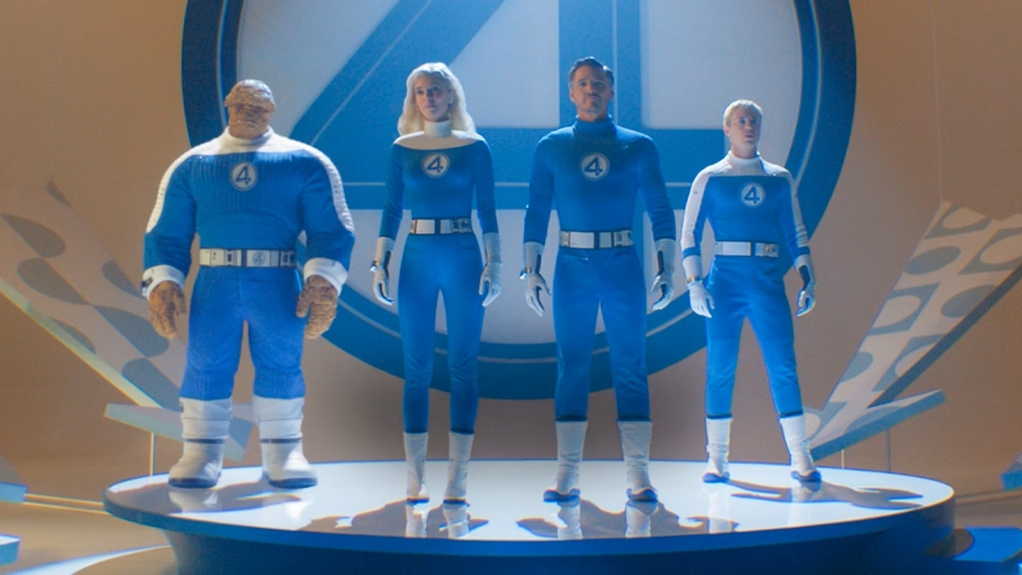
For their unofficial leaders, Reed Richards (Pedro Pascal – whose real life super-power seems to be that he appears in all movies) aka Mr Fantastic science super-genius and master strategist with limbs of rubber and Sue Storm (Vanessa Kirby) aka Invisible Woman, the world’s greatest diplomat, who can create forcefields and make herself (and others) invisible) there is the challenge of impending parenthood. And for the whole gang, also including scientist and wild-child Johnny Storm (Joseph Quinn) – he can set his body on fire – and Reed’s best friend, astronaut and Herculean powered made-of-stone Ben Grimm – it’s the threat of Galacticus (Ralph Ineson) a planet-eating giant whose herald (Julia Garner) arrives on a silver surfboard and announces Earth will be his next snack, unless the Four hand over Sue’s unborn child.

The Fantastic Four’s decision to skip the origins story throws us straight into a story that’s a lot of fun. A very enjoyable romp with some well-sketched out characters (played by engaging and charismatic actors), a few extremely well-made set-pieces, plenty of humour, just enough heart and a decent, city-crushing, smackdown at the end. It’s directed with a lot of bounce and joy by Matt Shakman and despite being about literally earth-shattering events manages to keep the focus tightly on the family at its core (perhaps a little too tightly, but more on that later).

It’s also a delightful triumph of design. Set in a sort of cyber-punk 1960s (the idea being that Richard’s intellect has super-powered mankind’s development), it’s a gorgeously realised world of 60s design, all curving surfaces and primary colours, intermixed with souped-up 60s technology like ingenious androids that run on cassette decks and flying cars, like The Jetsons made flesh (doubly engaging as the film so obviously committed to real sets rather than blue-screen invention). I also rather liked the implied joke that the world has progressed only in the areas Richards’ considered worthwhile: so this world has faster-than-light travel, flying cars and abundant energy sources, but totally lacks hi-def television or social media (and who can blame Richards for that).

There is also a certain charm in how the Four are universally beloved heroes. Everywhere they go, they are flooded by admirers and merchandise wearing children (it’s quietly never explored if the Four paid for their colossal, futuristic tower and private space base with a fortune in image deals). Reed fills time between inventing the future with hosting a TV show about science for kids, while Sue essentially runs the United Nations. Johnny is the star of every social event and Ben bashfully lifts the cars for the kids in his Brooklyn neighbourhood and flirts shyly with a primary school teacher (Natasha Lyonne).

This world is pleasingly shaken up by the arrival of the Silver Surfer, a charismatically unreadable turn from Julia Garner (under a CGI naked silver body). First Steps successfully uses this threat to humanise a group of heroes who otherwise might have proved too good to be true. For starters, their confident assurances all will be well when they head for space turns out to be far from the case when they are comprehensively outmatched by an immortal planet eater and his physics-defying silver herald. First Steps most exciting and thrillingly assembled scene is their retreat from a first encounter with this giant, a brilliantly managed high-octane chase around a black hole with a few extra personal perils thrown in on top, made even more gripping by Michael Giacchani’s pitch-perfect score.

That’s before the devilish conundrum of balancing the fate of seven billion people with Sue’s unborn son. If First Steps refuses to really dive fully into it, it does successfully raise the emotional stakes. It’s also a ‘reasonable’ offer from Galactus, a surprisingly soulful anti-villain, played with a mix of disdainful arrogance and death-dreaming melancholy by Ralph Ineson (there is a lovely moment when he takes a break from imminent city-smashing to pick up and sniff a fistful of Earth as if he’s forgotten the smell) desperate to escape the cycle of endlessly devouring planets to maintain his interminable life.

Horrific as it is to imagine a baby taking his place, First Steps avoids really delving into this intergalactic trolley problem. Because, at heart, it’s a film where superheroes alarmingly make decisions for billions of people with no oversight or pushback. Having unilaterally decided to reject Galactus’ offer, the Four seem surprised the rest of Earth are less than thrilled at their impending demise because the Four won’t make a Sophie’s Choice. There is some rich potential here to really delve into the way the Four are, arguably, benign dictators, reshaping this world in their own image and accepting adulation and unquestioning following. First Steps ignores it – the world’s discontent underdone by a single speech from Sue – and only for a split second is the moral quandary treated as something meriting genuine debate. As the surfer points out, if the kid was an adult he would certainly accept: is it right to take that choice from him?

But it’s a comic book movie, right? So, let’s not overthink it. And Marvel was never going to darken its First Family with hints of elitest oppression, demanding sacrifices from others (and the world makes huge sacrifices to protect their child) but not themselves. First Steps is a fun film. I liked its vibe, like a live-action Incredibles (only not that good), I enjoyed the BB4-like robot Herbie, all four of its leads are highly likeable with excellent chemistry. So, I’m trying to just not think about where this onrushing trolley is going and instead enjoy the view.

Martha Marcy May Marlene (2011)

Martha Marcy May Marlene (2011)

Durkin’s debut is atmospheric but not quite satisfying enough look at the danger of cults

Director: Sean Durkin

Cast: Elizabeth Olsen (Martha/Marcy May), John Hawkes (Patrick), Sarah Paulson (Lucy), Hugh Dancy (Ted), Brady Corbett (Watts), Christopher Abbott (Max), Maria Dizzia (Katie), Julia Garner (Sarah), Louisa Krause (Zoe)

When 22-year-old Martha (Elizabeth Olsen) surfaces after two years off-the-grid, seeking help from her sister Lucy (Sarah Paulson) and Lucy’s husband Ted (Hugh Dancy), they think she’s still the same slightly selfish screw-up she’s always been. But unknown to them, Martha has spent those missing years rechristened as Marcy Man in a patriarchal Manson-like cult in the Catskills run by charismatic Patrick (John Hawkes). As Martha attempts to readjust, she is haunted by flashbacks to the cult and a growing paranoia that her escape from Patrick’s clutches might only be temporary.

Durkin’s debut film is a masterclass in unsettling atmosphere. With its gloomy photography and stretches of unsettling silence, it never lets the viewer relax. Lucy and Ted’s luxury country house ends up feeling as unsafe and uncertain as the cult’s rickety farm. Well-handled cuts take us suddenly from present to flash-back – for example, a cut sees Martha dive from Ted’s boat to land in the waterfall near the cult’s farm. Auditory and visual transitions run throughout the whole film – Martha’s sleeping positions in the house suddenly mirrored in flashbacks, or food preparation in one timeline transitioning to the same task in the other. It makes everything feel as disjointed and jagged to us as it does to Martha.

This unsettling uncertainty, where the “safe” environment of Lucy and Ted’s house increasingly mirrors the unsafe world of the cult, is a neat way of suggesting the struggle of people like Martha to truly escape. It also complements a very effective, star-making turn from Elizabeth Olsen. At times hostile, Martha is just as likely to withdraw, Olsen showing her deeply unsettled by everyday acts like her sister combing her hair (an act reminiscent to her of the cult’s sexual abuse), or blankly not comprehending the society’s everyday rules. Desperate for reassurance, she still clings to the cult’s empty mantras, lashing out with furious venom when she feels vulnerable. It’s a soulful, damaged and delicate performance that carries much of the film.

Martha Marcy May Marlene captures the horrific, insidious manipulation of the cult. John Hawkes is very good as a quietly charismatic, intimidating man who, without ever raising his voice, controls every situation he is in through self-confidence and absolute certainty. The cult is firmly hierarchical, with Patrick at the top, men below and women at the bottom, serving the men – from cooking food (and not eating so much as a crumb until they are finished) to taking part in partner-swapping orgies watched by Patrick. All women are initiated into the cult through a “cleansing” ritual – being drugged by the other women, then raped by Patrick and they and the other members are brain-washed into pride at being “chosen” for Patrick’s wisdom.

Durkin leaves the nature of the cult deliberately ill-defined, in itself a comment on the shallow emptiness of these movements and the intellectual mediocrity of their leaders. When a row develops over dinner, Martha responds to the (admittedly smug) Ted by angrily parroting the cult’s empty, depth-free anti-money and anti-capitalist statements. The cult roughly follows the Manson Family playbook in breaking into homes and stealing (or worse) to fund its activities. Its main function is dehumanising its members, so they will think nothing of killing and abandon all personal boundaries. Martha still suffers from the latter: used to sleeping in communal rooms, she thinks nothing of wandering into Ted and Lucy’s room and lying down to sleep on their bed while they noisily have sex in the other half of it (they are not pleased, much to her bemusement).

There is good stuff here – which makes it disappointing that the film ends up, for me, feeling slightly unsatisfying. We get no real sense of what made Martha join this cult, or who she was before it sunk its claws into her. We also get very little sense of what made Martha decide to escape. The film suggests maybe her reaction to the murder of the owner of one of the wealthy homes they break into: but since the film later suggests that murder (and Patrick’s teaching that killing is somehow doing people a favour) is a fairly regular occurrence in the cult, this also feels unlikely.

The film also avoids really diving into interesting questions about readjustment and de-programming from traumatic experiences. For all it brings Martha’s PTSD to the fore, it doesn’t really show much development in either Martha’s feelings towards the cult or her understanding of her experiences. Now it’s true the road to recovery isn’t a straight line of narratively smooth continual healing, but a long, complex journey with many setback. But as a film, focussing solely on this part of her life ends up rather repetitive, like we’re struck watching just part of a longer story.

Durkin’s film is instead really a study of paranoia – Martha’s growing, unspoken, fear that the cult is coming for her and her family. But for those fears to really work, we need to feel the cult is capable of pre-meditated murder – the only killing we see is sudden and unprepared, other house entries showing the cult go to great lengths to be undetected. The film caps with a deliberately ambiguous sequence that may or may not be a mix of reality, chance, coincidence and Martha’s paranoid fears. But it’s a sequence that feels like it’s been created to conclude the film, rather than something that grows organically throughout, blunting some of its impact.

It’s a shame as there is a lot to like in this impressive, atmospheric debut, not least Durkin’s coldly unsettling direction, Olsen’s terrific performance and very good supporting turns from an exasperated-but-patient Sarah Paulson as Lucy and Hawkes’ dark, quiet charisma. But Martha Marcy May Marlene eventually boils down to telling you that being in a cult is traumatic, without really exploring the nuances of the struggle to overcome that or what pulls you into that situation in the first place. By focusing on paranoia, it feels like it tells only part of a wider, more interesting story.

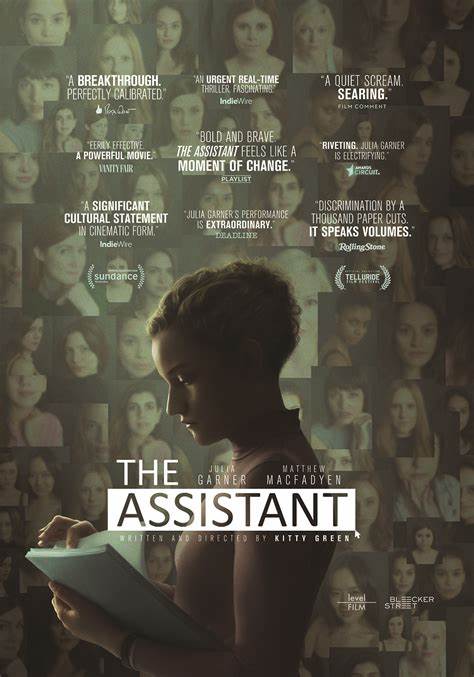
The Assistant (2020)

Julia Garner is a silent witness to monstrous goings-on in a Hollywood studio in The Assistant

Director: Kitty Green

Cast: Julia Garner (Jane), Matthew Macfadyen (Wilcock), Makenzie Leigh (Ruby), Kristine Froseth (Sienna), Alexander Chaplin (Max), Juliana Canfield (Sasha), Dagmara Domińczyk (Ellen), Bregje Heinen (Tatiana), Jon Orsini (Assistant), Noah Robbins (Assistant)

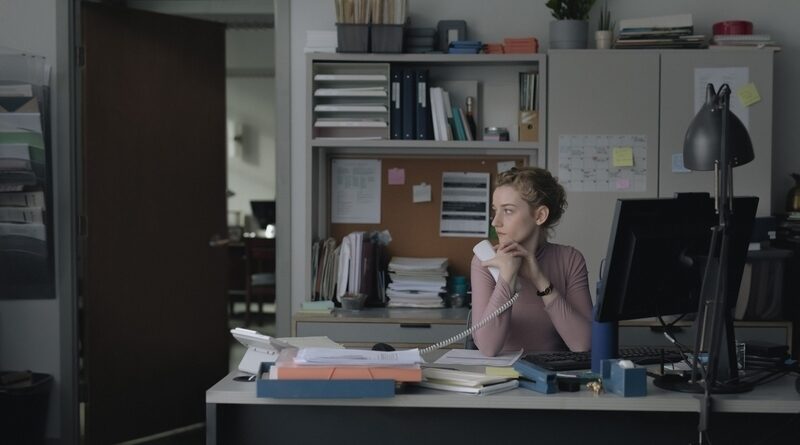
Jane (Julia Garner) is a low-level assistant in a Hollywood production company, run by an unseen movie mogul (but there’s no doubt that it’s Miramax and Harvey Weinstein). First in and last out every night, Jane is silent, downtrodden and treated as little more than a piece of furniture by the rest of the staff. Following her over one working day, from scrubbing semen stains out of her boss’ sofa and ending with her leaving the office as he takes advantage of another aspiring actress, The Assistant doesn’t have a plot as such. Instead it’s an experience film – a glimpse into an industry where abuse of your position is so common-place that it permeates every inch of a company, that is set-up to completely service the greed of its president.

Kitty Green’s film is very good at getting across the grinding, depressing, overbearing misery of entry level jobs. Jane slaves for hours at thankless, menial tasks. Coats are thrown at her, cups dunked down in front of her to clean, she is never addressed by name and barely has eye contact with another member of staff. Her contact with her boss is enraged phone calls after non-existent errors (for which she has to write grovelling email apologies) or tiny moments of praise communicated by third parties. Jane is still clinging to the dream of one day becoming a producer herself – but her day-to-day life is a never-ending stream of insults, misery and exploitation.

The film is also very good at showing how someone like Weinstein got away with it for so long. It’s because everyone knows – so much so that it’s become normalised, a part of everyday life, something that no longer seems outrageous or disgusting but just a part of how the business operates. People joke about not sitting on his sofa. Everyone knows what “private screening” is code for. People book late night flights so their boss can have time for his evening exploitation of young actresses. His erectile dysfunction medicine is delivered to the office. Headshots of actresses are printed off and piled on his desk, like a hardcopy of Tinder. The HR department goes out of its way to cover up his crimes.

Jane’s encounter with Matthew MacFadyen’s slimey HR manager is the film’s highlight. Concerned about a naïve young waitress who has clearly been plucked out of a country diner for the bosses perverse entertainment, Jane tries to raise her concerns with HR. She is promptly told complaints will destroy her career, be seen as her own envy – and that she doesn’t need to worry as she is not “his type”. MacFadyen oozes corrupt indifference.

It’s the film’s highlight, as it’s the closest it gets to a giving Jane a character arc. It’s the only time we see her pushing against her working environment – and then making a conscious decision to do nothing about it. While the film’s idea to cover a single day in Jane’s career, after she has spent weeks at the company, is successful in getting across the grinding monotony and everyday sexism and culture of abuse, it does mean the film effectively makes its point in the first fifteen minutes and then repeats it endlessly for the next 70. It also means that, while Julia Garner is very good her character largely hits the same note of downtrodden concealed pain and anger continually.

A more interesting film – if more conventional – could have charted several weeks, allowing us to see how the optimism and excitement Jane seemed to start with in her career was beaten out of her by her appalling abusive workplace. It would still have allowed us to grasp all the monstrous normality of the boss’ abuse, but we could have had a richer exploration of the impact on her.

As it is, The Assistant instead gives a brilliant sense of how horrible an industry can be when the greedy, destructive, vileness of its head permeates every inch of it. But that’s kind of all it says or tells us. It gives us a wonderful sense of what this workplace might be like – but its lack of event, plot or character dynamics means it doesn’t always make for rewarding drama.