Tag: Julianne Nicholson

Blonde (2022)

Blonde (2022)

Exploitative biopic of Marilyn Monroe that doubles down on misery, discomfort and leaves you feeling rather like a Peeping Tom

Director: Andrew Dominik

Cast: Ana de Armas (Norma Jeane Mortenson/Marilyn Monroe), Adrien Brody (The Playwright), Bobby Cannavale (Ex-Athlete), Xavier Samuel (Cass Chaplin), Julianne Nicholson (Gladys Pearl Baker), Evan Williams (Edward G Robinson Jnr), Toby Huss (Whitey), David Warshofsky (Mr Z), Caspar Phillipson (Mr President), Dan Butler (IE Shinn), Sara Paxton (Miss Flynn)
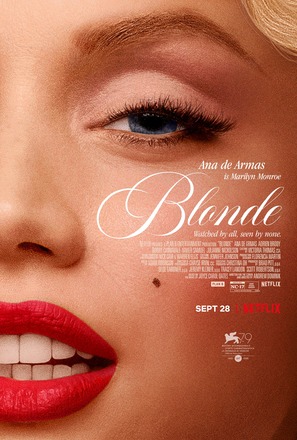
Few icons had such cultural impact in the 20th century as Marilyn Monroe. Maybe Elvis – coincidentally also the subject of a 2022 biopic. Even people who have never seen a Monroe film can impersonate her or knows about that dress being blown up around her. It’s also pretty widely know she had a difficult life, troubled family and some disastrous marriages culminating in her tragically early death from an overdose. Blonde, based on a novel by Joyce Carol Oates, dives into a heavily fictionalised account of Monroe’s life, focusing overwhelmingly on anything that could be seen as miserable, shocking and traumatic to the exclusion of almost everything else.

In doing so it’s hard not to think that, for all its attempts to shine a light on the difficulties of Monroe’s life, it’s not also partly exploiting her as well, turning her into a sort of misery porn entertainment. Over the course of nearly three hours, we see her raped at least three times, beaten, fall victim to elaborate revenge plots, forced through two blood-soaked abortions, pumped full of drugs to get her through film shoots and constantly at the centre of slavering piles of male filmgoers who scream for her attention and call her a whore the second she walks past. To say Blonde is a miserable film that’s tough to watch is putting it lightly.

Why does Marilyn put herself through it? The film offers no real answers, beyond the simplest, crudest flashes of pop-psychology possible: Daddy issues. Growing up not knowing who her father is, Marilyn’s life is a quest to find either her father or an acceptable substitute. That could be the audience, the husbands she calls “Daddy” or the hope that the person claiming to be her father who sends her a letters, might one day meet her. This is about as far as the insight goes. How issues influenced her choices and decisions is left frustratingly untold.

The film skims over the creative control she gained over her movies, the production company she set up and her skill as comic actor (it focuses much more on her dramatic Actor’s Studio work). It never once tries to understand why she continues in a career she hates so much – she had plenty of chances, even in this film, to back out – or what lured her to the silver screen and a quest for superstardom in the first place. It’s as if acknowledging Monroe worked hard to get her career would undermine the victimhood the film is determined to define her with.

The film suggests “Marilyn Monroe” is a persona put on by Norma Jean. This is another crude piece of psychology. We completely skip the years Norma Jean must have spent creating this persona and we never learn what influences it or get an understanding of “who” this Marilyn is. I suppose it’s “Marilyn” who smiles at film premieres or appears on screen: but we get little sense of how Norma Jean might have used this alternative persona to get her through the day. For all the time we spend with her, we never understand her beyond someone desperate for love with severe Daddy issues.

The film is so clumsily mishandled, its makers were reduced to stating it was not intended as an anti-abortion movie. This despite both abortions being horrifying experiences (one with a drugged Marilyn begging that she’s changed her mind, the other a late blood-soaked possible-fantasy where Marilyn is kidnapped has an implied Kennedy baby removed). Worse than this, the film Marilyn hammers home Marilyn’s sense of guilt. During her first abortion she imagines herself in a house burning down around her and later imagines a conversation with a giant foetus, which asks “Mummy why did you kill me?” and begs her not to do the same for her future babies. Not exactly the sort of messaging you expect from a #metoo film.

On top of this, Blonde is a film almost unbearably pleased with itself. This is Art with a capital A, R and T. Dominik shifts from colour to black-and-white, changes film stock and constantly shifts and changes the aspect ratio from shot-to-shot. In almost three hours, only once could I see any logic in this: as Marilyn agrees to marry Joe DiMaggio, the frame closes in on her from 2.35:1 to 4:3, a neat visual metaphor for the constricting marriage she has signed up for. Other than that, there is no rhyme or reason for any of these visual changes in the film. It doesn’t comment on the action, reflect emotional beats, delineate between reality or fantasy… it just smacks of an overindulged director using all the flashy tools for the sake of it. It becomes intensely irritating.

There is a committed lead performance from Ana de Armas (even if her Cuban accent does sneak through), who captures beautifully Monroe’s physical and vocal traits and sells what emotional titbits she is given in the salacious, muck-raking framing of the film. Her traumatic relationship with her disturbed mother, a sex-filled thruple with Hollywood princes Cass Chaplin and Eddy Robinson Jnr, raped by Darryl F Zanuck and a surprisingly-vile John Kennedy (while a TV in the background shows missiles rising – boom boom), knocked about by a jealous Joe DiMaggio (in real life he remined close to her and organised her funeral, but hey ho)… it’s all meant to be shocking but it’s all dialled up with glee of a two-bit muck-rag, flogging the hot goss.

That’s standard for the whole film, a flashy, pleased-with-itself epic that focuses on misery and pain for its subject at the cost of everything else and ends up telling us very little about her or her inner life, instead leaving us feel slightly like peeping toms for watching.
I, Tonya (2017)

Margot Robbie triumphs as Tonya Harding in I, Tonya

Director:  Craig Gillespie

Cast: Margot Robbie (Tonya Harding), Sebastian Stan (Jeff Gillooly), Allison Janney (LaVona Golden), Julianne Nicholson (Diane Rawlinson), Bobby Carnavale (Martin Maddox), Paul Walter Hauser (Shawn Eckhardt), Caitlin Carver (Nancy Kerrigan), Bojana Novakovic (Dody Teachman)

In 1994, Tonya Harding (Margot Robbie) is the bad-girl of ice skating. From a working-class Portland background, with a domineering mother (Allison Janney), she struggles to be accepted in the upper-class world of ice skating. After some success, including becoming the first American ice skater to complete two triple axel jumps, she constantly finds success undermined by her own failings and indiscipline, and the influence of her wastrel, abusive husband Jeff (Sebastian Stan). When competing with rival Nancy Kerrigan for a place on the 1994 Winter Olympic team, Tonya encourages her husband to send Kerrigan threatening letters to put her off. What happens instead is an attack on Kerrigan that breaks her knee – and the fallout will have devastating consequences.

I,Tonya is much more than a film about an attack on a rival skater. Tonya (in the film) complains that the event (which she claims to have had so little to do with) has overshadowed her whole life, but that’s not a mistake the film makes. The film is instead a brilliant deconstruction of class and media in America. Tonya struggles in the world of ice skating because she comes from a working-class, trailer-trash background. This leads her to grow up with several chips on her shoulder, aggressively acting out against judges and fellow competitors, because she wants to belong but never feels she does. In a country that likes to pride itself that it doesn’t have the sort of class system the UK has, it’s a striking commentary on how Tonya completely fails to escape the impact of her poor, violent background – and uses it as a justification and excuse for everything that happens to her in the film.

Her background also makes it every easy for the media to cast Tonya as a villain, first as the difficult punk of ice skating, later as the Machiavellian arch schemer of a vile plot. The worst part of this is – like the reality stars of the 00s who would follow her – Tonya feels she needs to keep playing a role in order to “stay in the public eye”. In turn, the media – largely embodied here by Bobby Cannavale’s delighted media commentator, who gleefully recounts every key moment of the film in a smug series of talking head interviews – keeps the pressure on, puffing her up into whatever it requires her to be to fill a 24 hours news cycle. It’s surely no accident that the film ends with camera moving away from Jeff’s house, while news of OJ Simpson’s arrest plays on the television.

And why does Tonya fit herself into this role? Because, the film suggests, she is a victim who has confusingly absorbed her victim status into her personal relationships and self-value. Treated appallingly be her domineering mother, and hit constantly by her worthless husband, Tonya clearly believes that she is personally of very little worth. If she is so used to being an angry, raging punchbag at home, is it any wonder that she settles into that role publically? To the extent that, throughout, Tonya constantly sidelines or pushes away the more supportive people around her, like Julianne Nicholson’s (who is very good) dedicated coach.

The film handles this range of complex psychological and social themes with aplomb. In a neat touch, the film acknowledges that the events of its narrative are so controversial that everyone in it has a different view. The film is framed through a series of talking head interviews with the leading players (played by the actors) twenty years on. Each of them tells a contradictory version of the story and around the “incident”. The film, bravely, gives some weight to all these viewpoints. It’s brilliantly handled, as we see certain scenes from the perspectives of different characters, which makes them much easier to relate to. Gillespie also has a lot of fun with the film leaning on the fourth wall – frequently characters turn to the camera mid-scene for a few words of commentary, sometimes to stress a point, other times to deny the thing we have just watched ever happened. 

The eclectic and dynamic storytelling works an absolute treat, and Gillespie gets the tone absolutely right. While dealing with serious themes, the film is also blissfully funny. Much of the fourth wall humour is brilliant. While taking the characters seriously, the film is also written with a real dark wit. And (once you remind yourself that Kerrigan’s career was not seriously affected by the attack), the build up to the scheme itself, and the feeble cover up, is hilarious. Everyone in the chain of events is stupider than the person above them. Tonya is no genius, her weak husband is a clumsy fool, his friend Shawn an idiotic fantasist, the men hired to attack Kerrigan almost unbelievably stupid. The inevitable crumbling of the plot is hilarious in its disintegration.

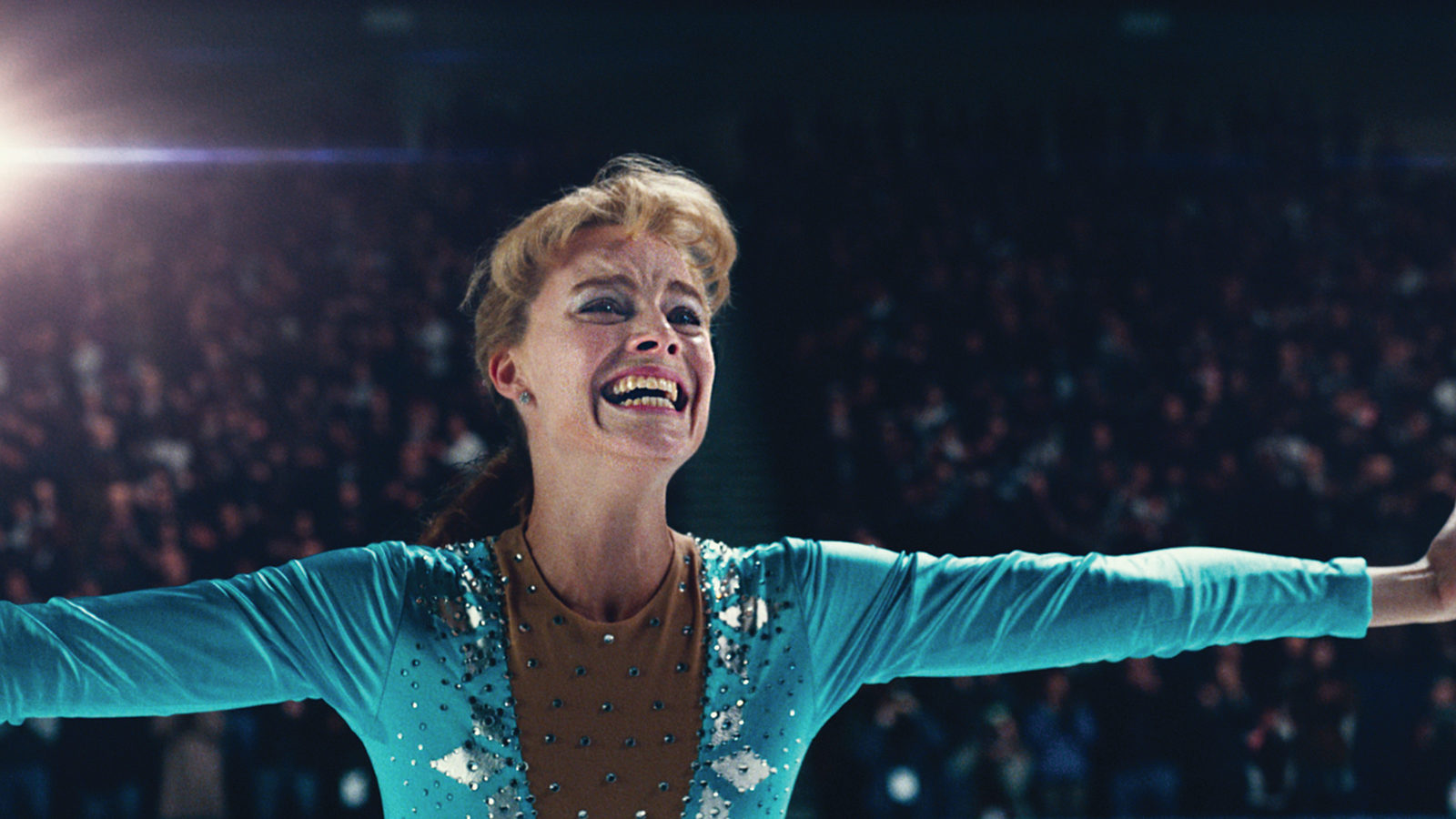
It works as well because of the strength of the acting. Margot Robbie is superb as Tonya. She fills her performance with empathy for Tonya, but never lets her off the hook – Tonya never takes responsibility at any point for anything she does. Robbie gets the balance just right between the “little girl looking for love” vulnerability of Tonya, mixed with the bitterness and rage that always lurks just below the surface. She acutely understands the messed up psychology of someone who has been treated badly by everyone around her, and then finds it impossible to form a healthy relationship with the world.

On Oscar-winning form, Allison Janney rips into the sort of part that must have (rightly) looked like a total gift on the page. It’s a scene-stealing role: Harding’s mother is a foul-mouthed bully whose every other line is a zinging put down or resentment-filled burst of cruelty. Janney, however, keeps the part real: there is always a sense that somewhere in there, she genuinely feels she is doing what’s best for her daughter, even if her methods are completely misguided. Sebastian Stan is equally good as Tonya’s weak-willed, not-too-smart husband and Paul Walter Hauser is hilarious (as well as a remarkable physical match) as Shawn. 

I, Tonya is a very smart, very funny piece of social satire mixed with tragedy. While being very funny, it’s also sad and rather moving. It has some terrific acting in it and is directed with confident, but not overly flashy, aplomb by Gillespie. As a commentary on the media it’s well judged, and as a look at the impact of class at America it feels fresher than ever.

Black Mass (2015)

Johnny Depp dives into his make-up box in this sup-par wannabe Goodfellas

Director: Scott Cooper

Cast: Johnny Depp (James “Whitey” Bulger), Joel Edgerton (John Connolly), Benedict Cumberbatch (William Bulger), Rory Cochrane (Stephen “The Rifleman” Flemmi), Kevin Bacon (Charles McGuire), Jesse Plemons (Kevin Weeks), Peter Sarsgaard (Brian Halloran), Dakota Johnson (Lindsey Cyr), Corey Stoll (Fred Wyshak), David Harbour (John Morris), Julianne Nicholson (Marianne Connolly), Adam Scott (Robert Fitzpatrick), Brad Carter (John McIntyre), W. Earl Brown (Johnny Martorano)

Well Goodfellas casts a long shadow doesn’t it? Certainly long enough to completely drown Black Mass which, despite some good acting and period detail, never really comes together into something compelling or engrossing or even really that interesting. But you’ve got to admire how often Scott Cooper must have watched Scorsese’s classic. Shame he didn’t bring anything new to the table.

In South Boston in the mid-1970s, James “Whitey” Bulger (Johnny Depp) controls organised crime. With his rule under challenge from rival gangs, Bulger turns informer to the FBI – specifically agent and childhood friend John Connolly (Joel Edgerton) – offering information on his rivals in return for being allowed to take over their business. Inevitably, Bulger exploits the relationship for his own gain – with the increasingly blind-eye of Connolly who becomes more and more embroiled in the underworld. 

So there are good things in this. The period detail is pretty good. There are plenty of good gangster moments, even if they’re the reheated leftovers from everything from The Sopranos to Goodfellas. The low-level gangsters we follow have a slightly different perspective – even if most of their characters are completely interchangeable. It’s interesting that Bulger moved in such legitimate circles as the FBI and his State Senate President brother (well played by Benedict Cumberbatch). But the film never really makes this come together to mean anything. You don’t learn anything, you don’t understand anything new – it’s just a series of events.

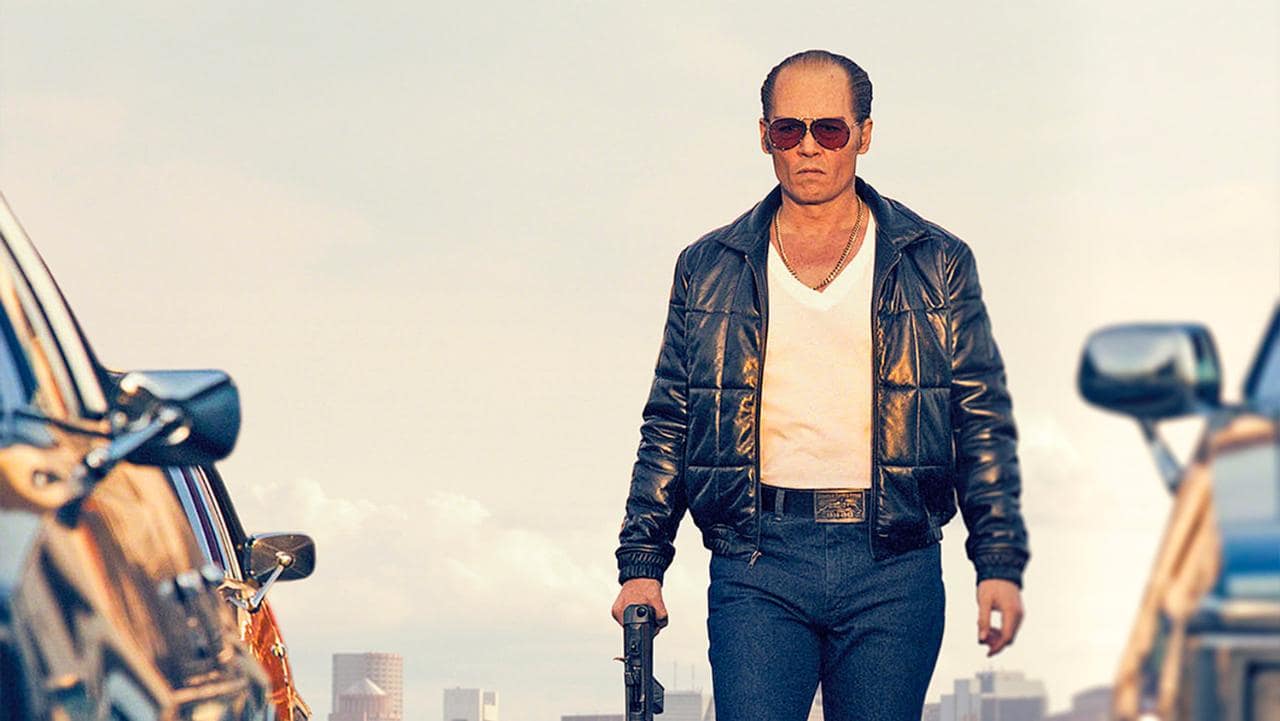
That’s despite, to be fair, a very good performance by Johnny Depp. Sure the part caters to Depp’s Olivier-like love of the dressing-up box – here he sports bad teeth, a bald patch, a paunch and a pair of searing bright-blue contacts that make him look like a Muppet demon – but for all that, he is very good. His natural presence works to make Bulger a leader and he has a swaggering, dry, cruel quality to him that never makes him anything less than unsettling. He also conveys the monstrous moral blankness behind Bulger, using a fig-leaf of loyalty to cover his destruction.

It’s a shame then that he’s not really given anything to do. Too much of the part is reminiscent of other things: from Jack Nicholson in The Departed (to be fair, Bulger was the inspiration for that character), to Joe Pesci’s “Do I amuse you?” speech or his insanity from Casino. Montages as tired as a sleepless night run through the collection of funds and the beating of rivals. It’s just all so predictable. It’s a box ticking exercise. Yawn.

The biggest shame is that, in Connolly, the film has a far more interesting potential lead character. Imagine it repositioned to follow him instead: the semi-chancer, semi-star-struck kid swept up in the glamour of crime. So much more interesting. How far did he turn a blind eye? How far was he essentially an accomplice? Did he feel or know he was doing the wrong thing? Consider Depp’s brilliance in Donnie Brasco and then imagine what he could have made of this Faustian figure: and what an interesting film we could have had.

Instead, good as Edgerton is, the film barely scrapes the surface of his thoughts or motivations. We get beats – and his wife (excellently played by Julianne Nicholson) is clearly disgusted by his gangster friends – but it constantly falls flat as we keep pulling back to Bulger, or internal FBI arguments that tell us nothing. On top of this Bulger’s empire is ham-fistedly explained: it’s never clear what his reach is, what his main crimes are or what his aims are. We see killings but don’t often know why – and a sequence in Miami is so poorly explained I still don’t know what it was about.

The film introduces Bulger’s lieutenants – but reduces them to identikit hangers on. All the flash-back retrospective confessions (a framing device the film uses to very mixed effect) in the world can’t turn them into characters. Even Bulger’s relationship with his patrician brother gets lost in the shuffle – again a film focused on a crime lord and his State Senator brother would have been more interesting.

Black Mass is well made – but its problem is that there is on the edges a far more interesting film that never comes into focus. If they had chosen a different focus we could have had a film worth watching. Instead, like Connolly, the film is seduced away by the dark soul of Bulger. Depp is great – but the film is so in love with him and his transformation that it becomes something completely forgettable.