Tag: Kenneth Branagh

Much Ado About Nothing (1993)

Kenneth Branagh and Emma Thompson triumph in this brilliant adaptation of Much Ado About Nothing

Director: Kenneth Branagh

Cast: Kenneth Branagh (Benedick), Emma Thompson (Beatrice), Denzel Washington (Don Pedro), Michael Keaton (Dogberry), Keanu Reeves (Don John), Richard Briers (Leonato), Robert Sean Leonard (Claudio), Kate Beckinsale (Hero), Gerard Horan (Borachio), Imelda Staunton (Margaret), Brian Blessed (Antonio), Ben Elton (Verges), Jimmy Yuill (Friar Francis), Richard Clifford (Conrade), Phyllida Law (Ursula)
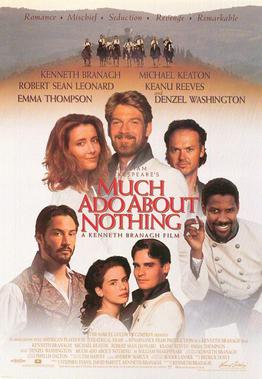
Branagh’s Much Ado About Nothing was his second Shakespearean directing gig, but his fourth film – and it’s clear from the first frame what a confident director he has become. Much Ado is one of the best Shakespeare films ever made, and certainly the greatest film version of a Shakespearean comedy, largely because it’s not only charming and hugely enjoyable but also actually funny – a pretty rare feat for any filmed version of a Shakespeare comedy.

From the opening you pretty much know you are in safe hands. Branagh loves the vibrant excitement of cinema, and delights in bringing the meaning out of Shakespeare’s text. Both ideas are central to the opening of the film, with Emma Thompson’s luscious reading of “Sigh No More”, while the camera pans across a bucolically blissful Tuscan setting. This feeds straight into Beatrice’s playful banter with the messenger – and Richard Briers gives the first indication of the film’s attention to small character details with his “don’t go there” look when the messenger tries to correct Beatrice’s teasing defamation of Benedick. From there the film explodes into a triumphant Magnificent Seven style arrival of Pedro’s lords on athletic horseback (backed by Patrick Doyle’s inspiring overture), while Leonato’s household excitedly (in a typical Branagh tracking shot) prepare to greet them, before an overhead crane shot introduces the two groups meeting in a courtyard. Everything you need to know about the sort of film you are getting – and Branagh’s ability to marry the language of cinema with the language of Shakespeare – is right there.

Branagh’s setting of the play in a golden Tuscan villa is perfect for both its playful, relaxed, soldiers-back-from-the-war plot line and the heated romances and jealousies that fuel the plot. Is it any surprise feelings are running high in such a sultry and hot climate? The two worlds – the army men and the people of Leonato’s household – are immediately clear. And the setting communicates the film’s mood – fundamentally bright, sunny, cheerful. Kick back your heels, you are being taken on a high-spirited, exotic holiday.
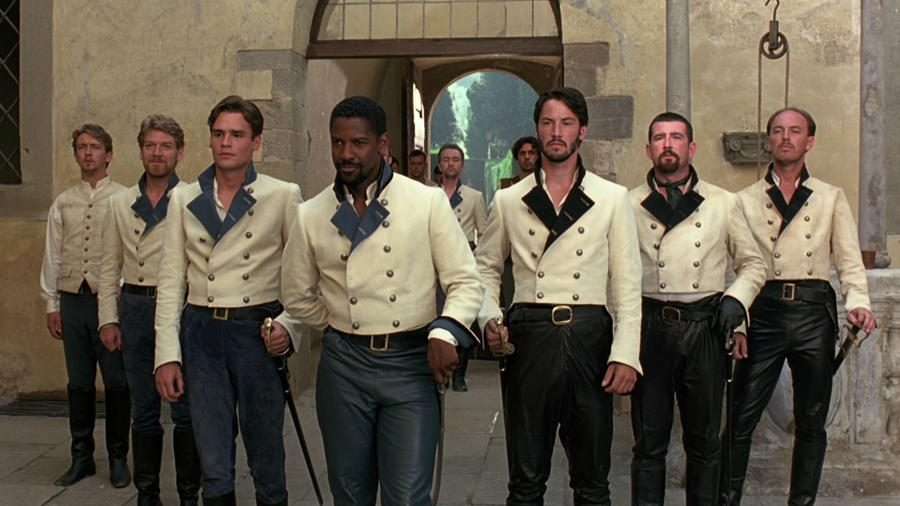
In this playful setting, Branagh invariably gets the tone just right. Shakespearean comedy is so reliant on live audience reactions, on bouncing off the audience, that creating this on film without that live element is really difficult. Trust me, watch any number of BBC Shakespeare comedies (don’t worry I’ve done it for you) and you will see immediately how hard it is to get that bounce and comedic juice out of these shows. Branagh gets it spot on here – the characters are so likeable, the delivery of the actors so assured, the spirit of the film so light yet perfectly controlled, that the comedy lands nearly every time. Above all, the actors look like they had a whale of a time making the film – and that enjoyment completely communicates to the audience.

The gulling scenes of both Beatrice and Benedick are expertly played and hugely entertaining: Branagh skilfully cuts them to fast-paced essentials, and then gets the best possible comic mileage out of them – from skilled cut-away shots for reactions to wonderful ensemble playing (Briers in particular is superb as a Leonato slightly out of his depth in trickery). It’s easy for the Beatrice gulling scene to fall a little short after the Benedick one – but, largely thanks to Emma Thompson’s excellent performance, that certainly doesn’t happen here.

But Branagh understands Much Ado is not just a comedy: it comes perilously close to being a tragedy. For at least an act of the play, our heroes are at loggerheads, and murder and death are almost the end results. From Claudio’s explosively violent reaction to Hero’s perceived betrayal at the wedding to Leonato’s furious denunciation, horror and danger are ever-present. This then leads us into Beatrice and Benedick’s wonderful post-wedding. Branagh sets this in a small chapel – adding an echo of marriage vows to the understanding the pair reach – and Thompson’s passion, fury and pain are met (for the first time) with quiet, mature understanding from Branagh’s Benedick. Thompson’s order for Benedick to “kill Claudio” carries a fiery conviction that chills. It’s a brilliant scene.

A lot of this works so well because of the brilliance of the acting. Branagh is charming, very funny and mixes this with a growing emotional depth and maturity as Benedick. But the film belongs to Emma Thompson who is quite simply astounding as Beatrice – surely one of the greatest performances of the role you will catch. She is the soul of the movie, at turns playful, frustrated, joyous and consumed with grief and rage. She speaks the lines (needless to say) with absolute clarity and emotion, but even more than that her intelligence dominates the movie. You can’t take your eyes off her.

But this is a very strong cast of actors, the best mix Branagh got between Hollywood stars and his regular players. Denzel Washington is simply perfect as the noble but strangely distant Pedro (his moments of isolation at the close of the film are as touching as they are unsurprising). Richard Briers gives some of his best work in a Branagh film as a Leonato, moved to great emotion and feeling. Leonard and Beckinsale are perhaps not given huge amounts of interpretative depth, but are very lovable. Gerard Horan is very good as a swaggering Borachio.

It’s easy to knock Keanu Reeves but – aside from his untrained voice, which makes him sound duller and flatter than he actually is – his Don John is actually pretty good. As a physically very graceful actor he completely looks the part, and he glowers and fumes with all the intensity you could require – and after all, Shakespeare didn’t give Don John much more to do than that.

No the real problems with the production – and the parts that don’t work – are Dogberry and Verges. Now I can see what Branagh is trying to do here: the malapropisms of Dogberry’s dialogue are rarely, let’s be honest, that funny, and would work even less well on film. But the decision to make Dogberry and Verges a cross between Monty Python and the Three Stooges doesn’t really work. Michael Keaton is giving it his all here to try and get some humour out of this – but his straining for every laugh, combined with gurning over delivery, bizarre accent and physical over-complications, just deaden every single Dogberry scene. These scenes largely flop.

But it doesn’t matter when every other scene in the film works so damn well. And, however much you might drift away during the Dogberry moments, the rest of the film will capture your heart and mind every time. Filmed with a luscious richness and stylish confidence, this is a ravishing and flamboyant film that will never fail to entertain. By the time the final reconciliation has happened, and the house erupts into a joyous celebration party – filmed, with astonishing chutzpah, as a single take, staggering in its complexity, that covers close-up, tracking shot and huge crane shot – while Patrick Doyle’s score gives a swelling version of Sigh No More, you’ll be in love yourself. And if not – well look to yourself.

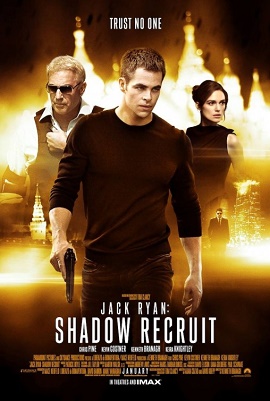
Jack Ryan: Shadow Recruit (2014)


Chris Pine comes out from behind the desk to head into the field in Jack Ryan: Shadow Recruit

Director: Kenneth Branagh

Cast: Chris Pine (Jack Ryan), Keira Knightley (Cathy Muller), Kevin Costner (Commander Thomas Harper), Kenneth Branagh (Viktor Cherevin), Len Kudrjawizki (Konstantin), Alec Utgoff (Aleksandr Borovsky), Peter Andersson (Dimitri Lemkov), Elena Velikanova (Katya), Nonso Anozie (Embee Deng), Colm Feore (Rob Behringer), Gemma Chan (Amy Chang), Mikhail Baryshnikov (Minister Sorkin)

Jack Ryan is the all-American, ordinary-analyst-turned-CIA Agent at the centre of the late Tom Clancy’s books. He’s been played by a range of actors, from Alec Baldwin to Ben Affleck via Harrison Ford, but his character remains the same – a boy scout, a man of principle and simple courage, pushed to do what must be done. He’s smart and quick-witted. Jack Ryan: Shadow Recruit was meant to serve as another reboot, to restart the Jack Ryan franchise after a mixed reception to Ben Affleck’s The Sum of All Fears. Sadly, it was another false start.

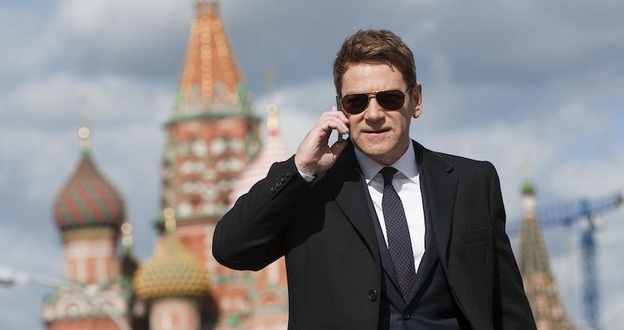
An origins story, it opens with Ryan (Chris Pine) studying at the LSE, before joining the marines in the wake of 9/11. He is critically injured in a helicopter crash, where he hauls two men from the wreckage while suffering from a broken back. Learning to walk again, he falls in love with Dr Cathy Muller (Kiera Knightley) and is recruited as a financial analyst by Thomas Harper (an effectively gruff but charismatic Kevin Costner) from the CIA’s Department of Making-Sure-We-Don’t-Get-Hit-Again (catchy name). Collecting financial intelligence while working as an auditor at a Wall Street firm, he notices some worrying financial deals from funds controlled by Russian tycoon Viktor Cherevin (Kenneth Branagh). Going to Moscow under the guise of auditing Cherevin, he and Cathy quickly find themselves embroiled in a dangerous terrorist conspiracy.

Jack Ryan: Shadow Recruit is decent fun. It’s also a rather impersonal and safe piece of film-making, that structurally and creatively feels like a 1990s action film reset in the 2010s. In a world of Jason Bourne, it genuinely feels a little old-fashioned and uninspired. It takes recognisable elements from dozens of action films and remixes them with a certain flair, but not a lot of imagination. It feels like the least “Branagh” film Branagh has directed, the camerawork being surprisingly restrained and contained considering his love of sweeping opera and dynamic, showy visuals.

But Jack Ryan is not a bad film, it’s just an enjoyably average one. It puts Ryan front-and-centre of the film, and Chris Pine really delivers in establishing Ryan’s old-fashioned principles of right and wrong, his sense of duty and his willingness to do what needs to be done when called. Pine also does a great job of demonstrating Ryan’s fear and panic as he finds himself increasingly out of his comfort zone – not least in a terrifying hotel bathroom brawl with an under-used Nonso Anonzie – in the aftermath of which he drops his mobile while trying to call for backup, and then can’t remember where the hell “Location Gamma” is when told to report there to meet a contact.

Of course, this incarnation of Ryan as an analyst rushed into the field doesn’t last, and the film succumbs from there to turning Ryan into an old-school action man, the sort of guy who drives cars at 85 mph through Moscow streets with ease, jumps on a motorbike and roars off in pursuit of a bomb with maverick self-assurance and takes on a trained assassin with a Die Hard-ish confidence. It’s a shame that the interesting character work of the first 2/3rd of the movie gets lost in the final third – but it’s another sign of the film delivering what it feels an action film should be rather than finding something unique and original.

At least Pine gets some good material to work with, which is more than can be said for Kiera Knightley. For all her American accent, this is Knightley at her most British Rose, her toothy, coy grin ever-present in every scene – and that’s about all she contributes. Not that this is entirely her fault, since Cathy is a character sketched on a fag packet, a successful doctor who obsessively worries that her husband is having an affair, making her feel weaker and needier than the filmmakers perhaps realise Later she exists to be a Damsel in Distress, and is then given a spurious involvement in identifying the villain’s target – which she identifies not because it is a medical facility she is familiar with, or perhaps somewhere she visited as a child or on a professional call-out, but solely because Her Man works there. (As if these CIA geniuses couldn’t work out that a financial terror attack on the US might be targeting Wall Street).


The villain’s plot is dully labyrinthine, but can be safely boiled down into having something to do with financial chicanery and a bombing attack, to destroy the US economy. Not that it really matters – it allows a suitable mix of booms, bangs and the sort of tense “breaking into the office to download the files against the clock” sequence that you’ve seen several times before. Kenneth Branagh cuts himself a bit short with Cherevin, a character who seems sinister but is really barely competent and hits every villain trope from pervy leering to executing an underling. We barely get any sense of his motivations or his background.

He’s also probably the only Russian nationalist in the world who is a Napoleon Bonaparte fan. Last time I checked, Napoleon was the enemy in the War of 1812 that redefined Russian history for the next 100 years. But then I’ve read a few Napoleonic era books, so I’m biased… This film clearly knows nothing about Bonaparte, with Ryan declaring at one point that the planned attack is “straight out of Napoleon’s playbook” – how Napoleon’s trademark fast movement and combined use of infantry and artillery, drilled to perfection, relates to a basic distraction strategy I don’t know but never mind. But then this is a dumb action film that name checks Napoleon because you’ve probably heard of him, rather than because it makes sense.

There is a lot to groan at, or say meh to, in Jack Ryan. But yet, I’ve seen it three times and it grows on me each time. Chris Pine is a very likeable screen presence, and the build-up of the film works well. Branagh directs it with a taut efficiency, even if it’s a film that lacks any real inspiration and feels like one for the money. But it presents its 1990s-style action beats with enough conviction and sense of fun that you kinda go with it. Yes it’s totally forgettable, but run with it and you’ll find yourself strangely charmed by it.

Murder on the Orient Express (2017)


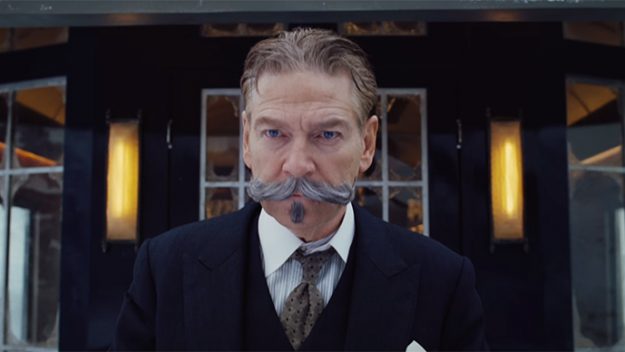
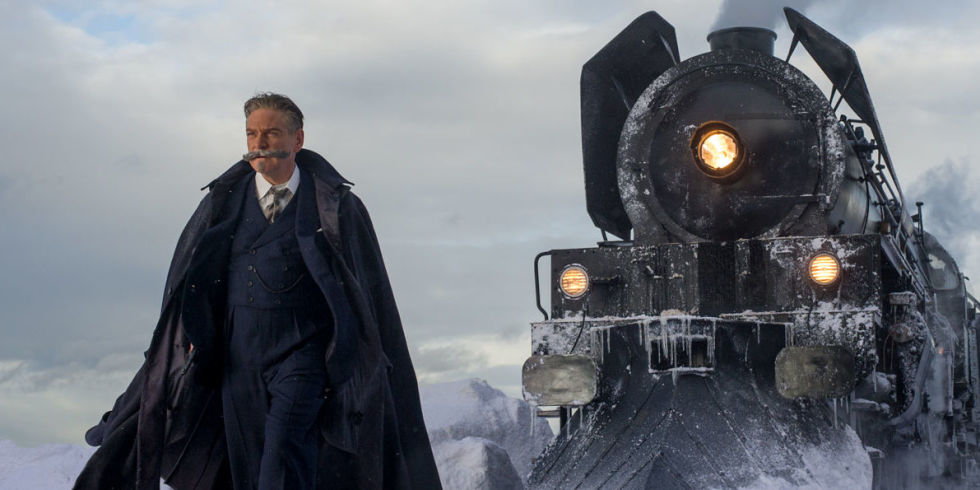
A dishevelled Kenneth Branagh (and tache) investigates a Murder on the Orient Express

Director: Kenneth Branagh

Cast: Kenneth Branagh (Hercule Poirot), Tom Bateman (Bouc), Penélope Cruz (Pilar Estravados), Willem Dafoe (Gerhard Hardman), Judi Dench (Princess Dragomiroff), Johnny Depp (Samuel Ratchett), Josh Gad (Hector MacQueen), Derek Jacobi (Edward Masterman), Leslie Odom Jnr (Dr Arbuthnot), Michelle Pfeiffer (Caroline Hubbard), Daisy Ridley (Mary Debenham), Marwan Kenzari (Pierre Michel), Olivia Colman (Hildegarde Schmidt), Lucy Boynton (Countess Elena Andrenyi), Manuel Garcia-Rulfo (Biniamino Marquez), Sergei Polunin (Count Rudolph Andrenyi), Miranda Raison (Sonia Armstrong)

Is there a murder mystery with a more widely known resolution than Murder on the Orient Express? Possibly not – if for no other reason that film and television versions of this story are as numerous as the suspects in the actual mystery. If that wasn’t a big enough challenge for Branagh to take on, he also joins a list of umpteen actors to play Poirot himself: following in the (very precise) footsteps of the big guns: Finney, Ustinov and of course, above all, David Suchet. How does his version of this most famous detective in his most famous adventure measure up? Well, with mixed results.

For those who don’t know, Hercule Poirot (Kenneth Branagh) is “possibly the world’s greatest detective”. Here, he is travelling back from Istanbul  on the Orient Express, a berth having being secured at the last minute by his friend Bouc (Tom Bateman) the director of the line. En route he is approached by the sinister Ratchett (Johnny Depp), who asks if he can serve as his bodyguard. Poirot refuses – only for Ratchett to be murdered that night. Bouc asks Poirot to investigate – and it soon becomes clear that the dozen other passengers in Ratchett’s carriage could all have had motives to kill him. But who is the killer?

Murder on the Orient Express is on the cusp of being a very good film. But, like the train itself, it gets bogged down too often in changes from the source material that add nothing, action scenes that feel toe-curlingly out of place, and bombastic filming that goes a little bit too far. In many ways it captures some of the faults of its director, my much-loved hero Kenneth Branagh – and I do love him, but as a director he has a tendency to make things too big, to wear his love of the complex shot on his sleeve; to basically try too hard. As a director, that’s what it feels like he’s doing here.

It’s filmed with a luscious, chocolate box, old-school Hollywood grandeur. The camera swoops and zooms over some gorgeous landscape as the train puffs through snowy mountain scenery. There are some loving travelogue tracking shots of Istanbul and Jerusalem. The film lingers with a loving eye on the luxury and class of the Orient Express itself (including some egregiously clunky product placement). The costumes look lovely.  But the end result of all this lavish filming is that it sometimes goes too far towards the reassuring, Boxing-Day-afternoon treat. 

Everything is a little too technicolour at points. It also means that some of Branagh’s more self-consciously tricksy camera work stands out a little too much. A “birds-eye” view of the discovery of the body (the camera above the heads of the actors looking straight down) is oddly disconnecting – it works a lot better when Poirot and Bouc examine the crime scene, giving the audience a god like view of the scene. Some overly complicated shots swoop up along the aqueduct where the train is stuck, past Poirot speaking to characters, then over the top of the train. It’s a rather too overblown and clumsy attempt to make a conversation seem cinematic – it feels a little forced.

It’s one of many points where the film feels like it is trying too hard to make the story edgier or more overtly cinematic. Not the least of these are sequences that up the action quotient. I feel very confident this is the first Poirot film you’ll ever see where the hero is involved in not one but two dynamic fights. One of these is a bizarre chase down the aqueduct with Poirot and another character. The second involves gunfire (an effective shock to be fair) and Poirot using his cane as a weapon in hand-to-hand combat. 

There is nothing wrong with making Poirot more active – Branagh’s character is very much the ex-soldier and policeman, busting open the door to Ratchett’s berth to investigate, walking over the train’s roof, brow-beating the odd suspect (at one point at gun point). It’s just all too much – what audience is this playing to? Who really goes to a Poirot film expecting a goddamn fight scene? Even Count Andrenyi is introduced ninja-kickboxing photographers (I’m not joking here) – is this really what Agatha Christie would have wanted?

There are some odd choices made to deepen Poirot’s character. He is given some sort of lost romantic interest – no less than four times in the film he is given scenes where he holds a photo and bemoans “mon cher Kat-a-rean”. In the opening sequence, Poirot’s love of symmetry is introduced by him accidentally stepping in a cow pat and then stepping in it with his other foot to make each equal. Not only does a “stepping in shit” joke seem wildly out of place, but I don’t believe someone as fastidious and observant as Poirot would even step in it in the first place, let alone choose to step into it twice.

The train doesn’t just stop, it’s nearly taken out by an avalanche. A knife isn’t just discovered, it’s literally found stabbed into a character’s back. Characters have been changed to allow a more diverse cast – which I applaud – but making Arbuthnot a soldier turned doctor is a change that makes very little sense. The claustrophobia of the original is lost by having workers turn up almost immediately to dig the train out. Several scenes are filmed outside, with workers surrounding the train digging it out. Some of these undermine the original or are a little silly.

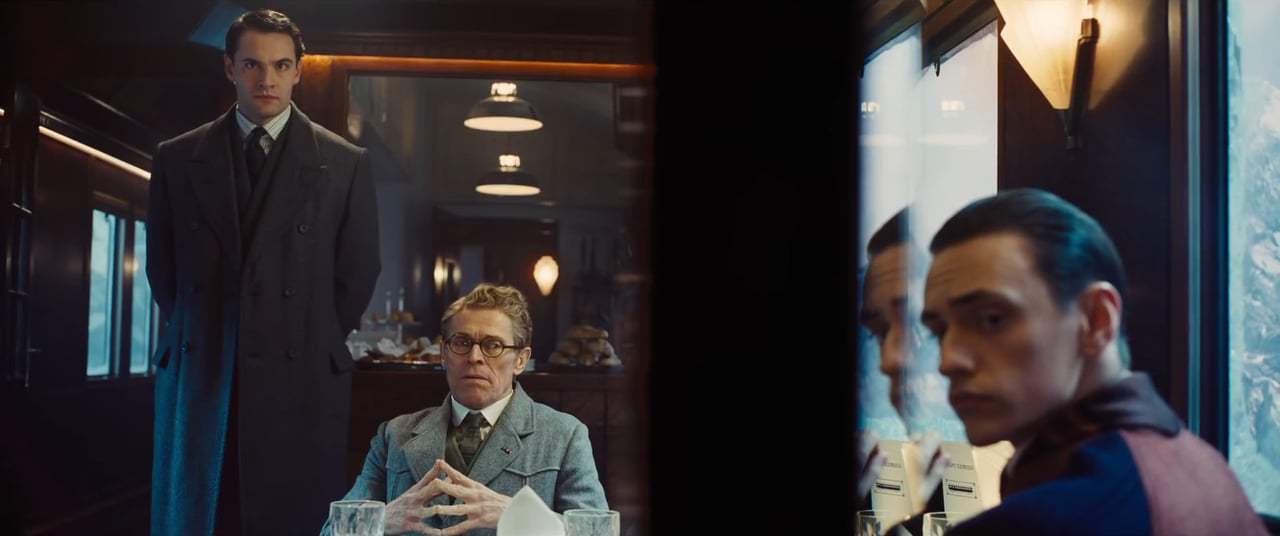
The suspect assemble

But I’m being really hard on this film because there are major flashes of promise here. Not least in Branagh’s performance as Poirot. I’m very confident in saying that, after David Suchet of course, this is the second best Poirot committed to film. The first thing anyone will notice is of course the moustache. Yes it looks absurd, but you attune to it quickly. It’s also a plot point: Poirot uses it, and his eccentricities, to lure people (Columbo style) into a false sense of security. When the film relaxes into just letting Poirot investigate (and hues closer to the original), Branagh gives Poirot a warm humanity and gentleness. His eyes are a wonder – intense disks of sadness. 

Branagh gives Poirot a love of order and justice that defines his world view – and the film introduces a moral conundrum for Poirot in the solution of the crime. I would say David Suchet’s TV version did this better – stressing Poirot’s Catholicism and belief in the rule of law as major factors that conflict him when confronted with the solution. But Branagh captures a real sense of Poirot’s conflict (even if the solution reveal is overplayed and overshot – right down to a “last supper” style tableaux in a railway tunnel) and his sadness, confusion and decency are really lovely – there is even a very neat touch with him forgetting to straight and smarten his appearance, as he deals with the ramifications of his solution to the murder. He looks like cartoon character, but he makes Poirot a real man. I would definitely like to see him do the role again.

The rest of the all-star cast rather struggle for crumbs, as the focus remains solidly on Poirot (largely because the film is intended as the possible first in a series). Tom Bateman is excellent as Bouc, charming and endearing but also given a character arc that sees him develop and change. Of the stars, Depp is suitably grimy as Ratchett, Pfeiffer imperiously stylish and skittish as Hubbard and Odum Jnr affecting as Arbuthnot. I was very taken with Daisy Ridley’s Mary Debenham, a young charm hiding steel underneath. Dafoe, Dench, Colman, Jacobi and the rest are given little to do but are reliably excellent when they are. Others like Cruz feel wasted. 

When the film focuses on Poirot simply investigating, it is very good. Each interrogation of the passengers is brilliantly played by Branagh – Poirot subtly adjusting his methods and approach depending on the person he is talking to. Poirot’s introduction sequence in Jerusalem has a playful Sherlock feel to it: Poirot solving a crime in seconds (having been dragged from his hotel, where he pickily demands eggs that are perfectly equal), including accurately predicting how the criminal will try and escape. There are lots of lovely moments – but just when you settle down to enjoy it, something wildly over-the-top or silly happens.

Murder on the Orient Express is by no stretch of the imagination a bad movie. In some places, it’s charming and a lot of fun. If it’s designed for watching on a bank holiday afternoon it works very well. But it’s, at best, the third best version of this story on film (after the 1974 Lumet film and the Suchet TV version). Do we really need to watch the third best version of an already familiar story? If we could transplant Branagh’s performance into Lumet’s film, now that would be something. But as it is, we’ve got a decent if flawed film that just tries too hard to do too much.

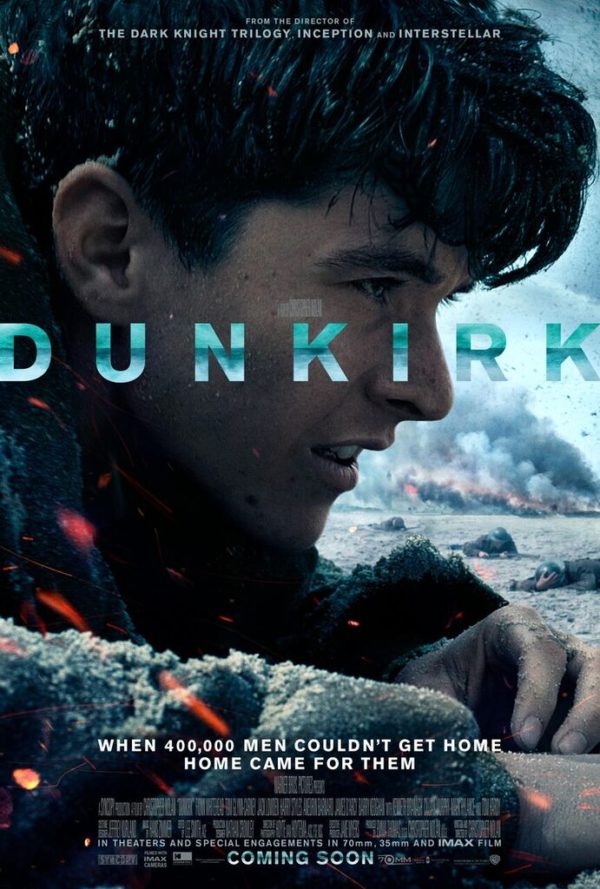
Dunkirk (2017)


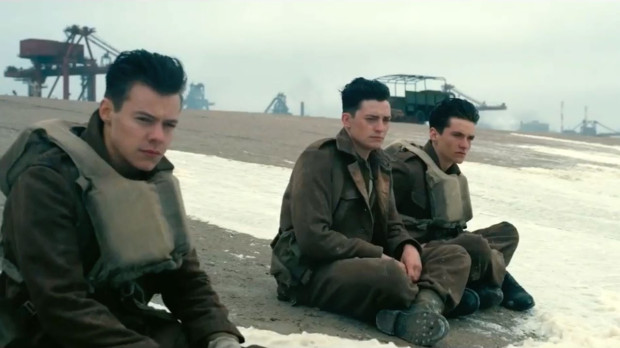
Harry Styles, Aneurin Barnard and Fionn Whitehead are three ordinary soldiers trying to get home in Christopher Nolan’s epic Dunkirk

Director: Christopher Nolan

Cast: Fionn Whitehead (Tommy), Tom Glynn-Carney (Peter Dawson), Jack Lowden (Collins), Harry Styles (Alex), Aneurin Barnard (Gibson), James D’Arcy (Colonel Winnant), Barry Keoghan (George Mills), Kenneth Branagh (Commander Bolton), Cillian Murphy (Shivering Soldier), Mark Rylance (Mr Dawson), Tom Hardy (Farrier)

“We must be very careful not to assign to this deliverance the attributes of a victory. Wars are not won by evacuations. But there was a victory inside this deliverance, which should be noted.” – Winston Churchill

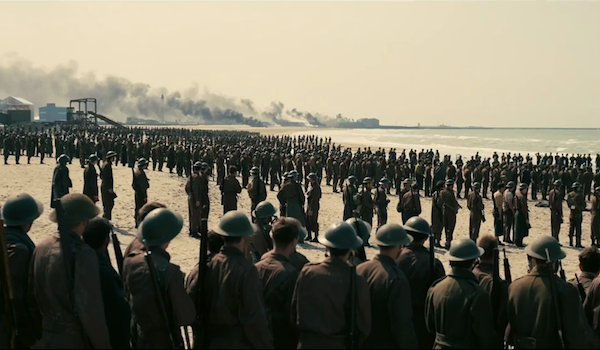
The evacuation of Dunkirk is a very British triumph. Beaten and encircled by the Germans, British forces were stranded in a small pocket around Dunkirk. The country looked certain to lose almost 400,000 men to death or imprisonment – the core of its professional army. The fact that almost 340,000 soldiers were evacuated was more than a triumph: it was almost a miracle. Christopher Nolan’s epic new film brings the triumph and adversity of this campaign to the big screen.

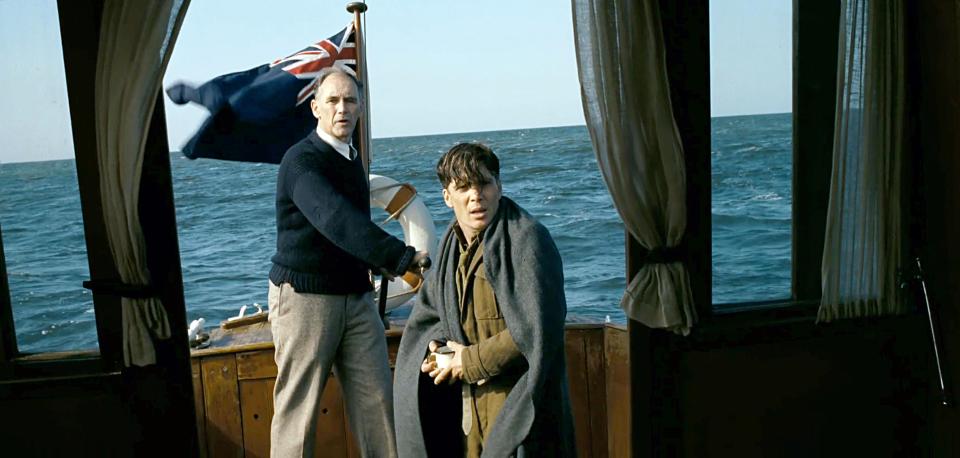
The action unfolds over a week around the evacuation of Dunkirk. On the beach Tommy (Fionn Whitehead), Gibson (Aneurin Barnard) and Alex (Harry Styles) are desperate to escape the chaos on the beach, where the evacuation is being managed from the one standing pier by Commander Bolton (Kenneth Branagh). On the sea, Mr Dawson (Mark Rylance) and his son Tom (Peter Dawson) head to Dunkirk in their small pleasure boat to help with the evacuation, picking up a traumatised soldier on the way (Cillian Murphy). In the air, Farrier (Tom Hardy) and Collins (Jack Lowden) fly a one-hour mission over Dunkirk to provide air support to the stranded soldiers.

As a director, Nolan’s calling cards are playing with narrative forms and timelines, while allowing personal stories play out on extremely grand canvases. Dunkirk feels like a summation of some kind of his career: its multi-layered timelines are gracefully and intelligently threaded together, and while the canvas is enormous, the human stories don’t get lost. The human interest running through the film is particularly impressive, as there is so little dialogue. It’s pretty close to “experience cinema” – it throws the audience into an immersive explosion of events, giving as much of an impression as it’s possible to give of the claustrophobia, tension and terror of being trapped on that beach.

The film-making is impeccable in creating this overbearing feeling. Hans Zimmer’s score thunders over the film, bearing down with a constant pressure and making excellent use of metronome ticking to keep hammering home the time pressure. Nolan brilliantly inverts scale in his filming to create a sense of claustrophobia – we constantly see sweeping shots of but the scale of our surroundings only forces home the seeming impossibility of what the British are trying to do. Individual soldiers seem tiny – how can one man possibly have a chance of escaping? It’s a brilliant mixture of sound and imagery to make the large seem small, the epic seem entrapping.

What Nolan does really well in this grand scale is to create a series of “ordinary soldier” characters. Despite the fact that we learn virtually nothing about them, these characters feel human and desperate. Again, they are such small, ordinary Everyman cogs in the giant machine of the army, that they become hugely relatable. It’s a hugely neat trick by Nolan, another brilliant inversion – just as he turns epic to claustrophobic, he turns ciphers into characters.

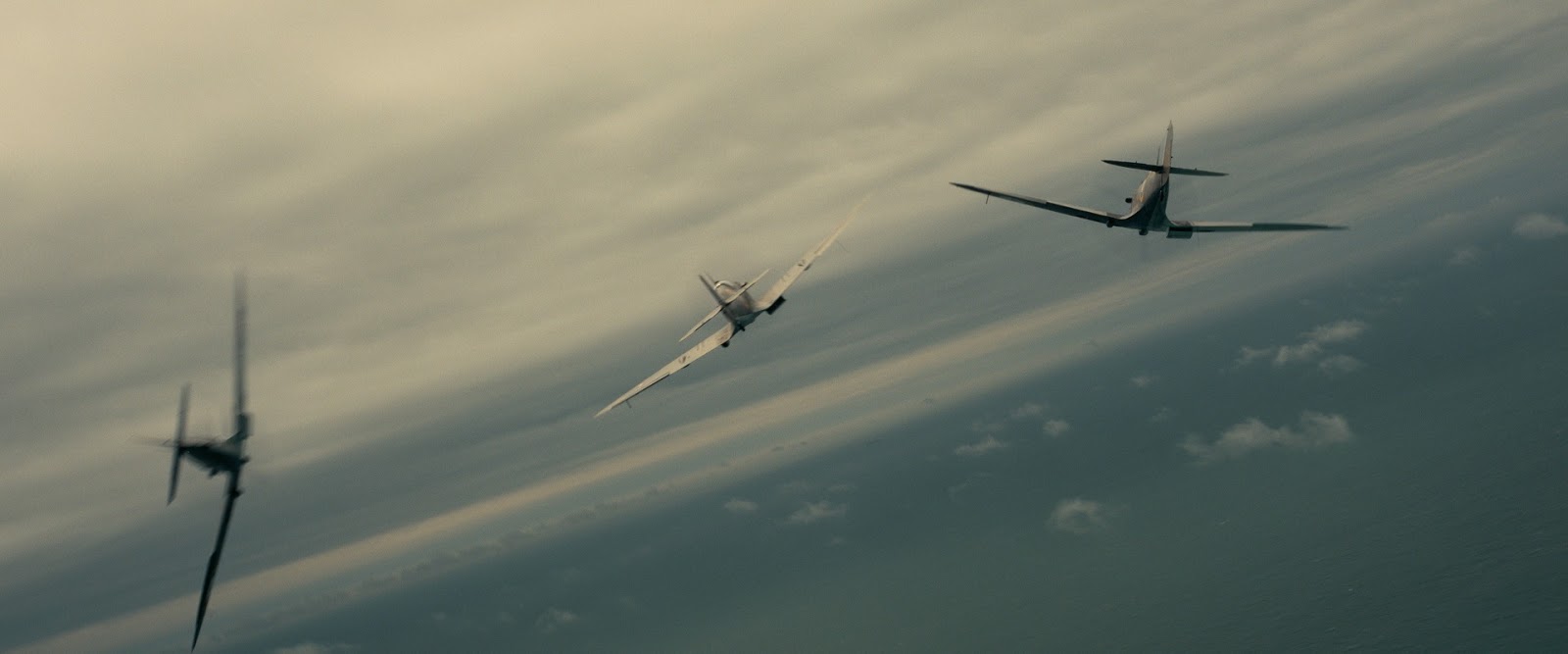
Recognising the need for balance between the overbearing impact of the Dunkirk beach sequences, the film allows a mix of story-telling and character types in its other two plotlines. So Mark Rylance’s boat captain voices much of the film’s humanitarianism, in a sequence that plays like a chamber piece – four people discussing duty and the impact of war in a confined space. Meanwhile Tom Hardy’s Spitfire pilot carries more of the traditional “war film” man-on-a-mission dynamics, engaging in a series of dog fights in the sky. Interweaving these stories offers not only relief to the audience, but also narrative contrast.

The interwoven storylines are also brilliantly done since they all take place in very different timespans. The plot at “the Mole” takes place over a week, “the sea” in one day, and “the sky” in one hour. Each of these timelines interlocks and unfolds in the film simultaneously, and characters move at points from one timeline to another.

Okay, writing it down, it sounds impossibly confusing and difficult to follow right? Who could keep track of all that? But the film is so brilliantly assembled that it always make perfect sense. Nolan uses several key markers – a boat, the fate of certain characters – to constantly allow us to see where we are in the story’s timeline. So we understand when we have moved from one timeline to another when we see a ship still on the beach that we’ve seen sinking elsewhere. This also increases the tension – we know at points what will happen before the characters do, because we’ve already seen the after-effects. Again, put it into words it sounds wanky and difficult to follow, but it really isn’t – and the film is put together with such confidence that it never feels the need to show off its narrative gymnastics. Nolan is confident enough to be clever without drawing our attention to it – a very difficult trick to pull off.

All this forceful story telling never prevents the story from also being at many points immensely moving and stirring. The arrival of the boats at Dunkirk is a genuine “lump in the throat” moment. The simple decency of Rylance’s boat captain gives a low-key impression of a very British sort of heroism, of quietly doing one’s duty while valuing every life and wearing your own grief lightly.

The film’s more action-based sequences are equally stirring and moving, because Nolan brilliantly establishes character with only a few brief notes. It’s made clear early on that Hardy’s pilot has only a limited fuel supply: every second he stays above Dunkirk protecting the men and ships below, he reduces his chances of getting home. It’s another sort of heroic self-sacrifice, and in a film that generally doesn’t shy away from showing the deadly consequences of war, Nolan is happy to give us some more traditional, fist-pumping heroics.

Nolan gets the maximum emotion from the more dialogue-heavy parts by hiring some terrific actors: Rylance, as mentioned is superb, and Cillian Murphy is very good as a shell shocked captain. Kenneth Branagh is perfect for conveying the weight of responsibility on the shoulders of the naval commander in charge of the evacuation. And elsewhere, Whitehead, Bernard and Styles all invest their ordinary Tommies with a great deal of emotion and empathy.

Dunkirk is a marvel of cinematic technique and accomplishment, which brings enough moral and emotional force to the drama to keep you engaged in the plights of its characters. You can marvel at the film making tour-de-force of its executions, but you never feel disengaged from it. It’s a marvellous film.

Mary Shelley's Frankenstein (1994)


Kenneth Branagh struggles to bring Mary Shelley’s Frankenstein to life

Director: Kenneth Branagh

Cast: Robert De Niro (The Creature), Kenneth Branagh (Victor Frankenstein), Tom Hulce (Henry Clerval), Helena Bonham Carter (Elizabeth), Ian Holm (Baron Frankenstein), John Cleese (Professor Waldman), Aidan Quinn (Captain Robert Walton), Richard Briers (Grandfather), Robert Hardy (Professor Krempe), Trevyn McDowell (Justine Moritz), Celia Imrie (Mrs Mortiz), Cherie Lunghi (Caroline Frankenstein)

In 1994 Kenneth Branagh was the heir of Laurence Olivier: a man who could act, direct and produce, who never had a false step, whose every film was a success. In other words he was ripe for a kicking, and Mary Shelley’s Frankenstein was the stick used to beat him. It was practically the founding text of “Branagh-bashing”, for a time one of the favourite sports of the British press.

Victor Frankenstein (Kenneth Branagh) grows up obsessed with defeating death, traumatised by the death of his mother. Training as a doctor in Vienna, after the murder of his mentor Professor Waldmann (an effectively serious John Cleese), he uses the body of the murderer to create the Creature (Robert De Niro) – but, horrified by what he has created, he flees home to Geneva. While the Creature comes to terms with being an outcast, Victor marries his sweetheart Elizabeth (Helena Bonham Carter) – only for her to become a target when the Creature vows revenge.

Okay the good stuff about this film: the production design is terrific, the Frankenstein house in particular a marvellous set. It’s also a very faithful adaptation, pretty much following the book (apart from a late, horribly melodramatic “Bride of Frankenstein” sequence). Branagh gets some affecting moments out of the film, particularly in the calmer moments – De Niro gives an interesting performance and the retention of the Walton framing device in the Arctic is well done. There is a good film in here. But it’s buried completely under the overblown shouting, swooping cameras and booming music that covers the rest of the film.

Contrary to his reputation as a purveyor of intricate Shakespeare adaptations, Branagh has always been a lover of big movies, who brings an operatic intensity to cinema. The problem is he goes too far here. This is at times so ridiculously overblown and frenetic in its tempo, you start to think Branagh is trying too hard, desperate to make a big budget smash. Wanting to make a big, gory, gothic horror film, he dials everything up to eleven, and the sturm und drang eventually becomes a tale full of sound and fury signifying nothing.

Interestingly, this intensity is particularly overbearing in the Frankenstein scenes, rather than those focusing on the Creature. Several scenes are filmed with the camera swooping round in circles over long intense takes, while the score thunders away. This principally happens in scenes of high emotion – the deaths of Frankenstein’s mother and his mentor Waldmann are both operatically overblown (in the latter Branagh literally cranes up and screams “No!”). Eventually it all becomes too much. You are crying out for everyone to take a breath and just deliver a line calmly.

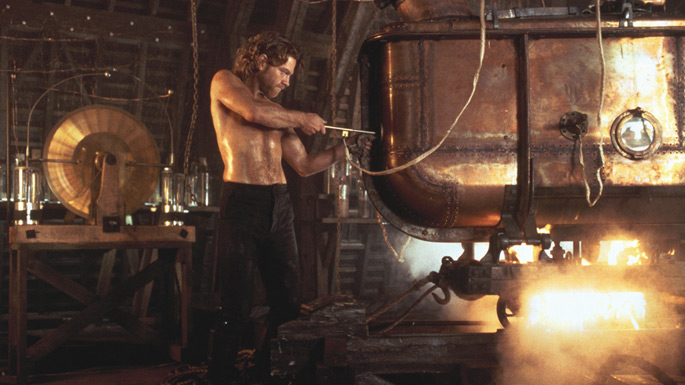
Now I can see what Branagh is doing here. He’s looking to emulate the high-Gothic semi-camp of 1930s horror films. That’s the charitable explanation for why he spends the entire Creature-birthing scene running round topless (he must have spent ages on that chest), with Patrick Doyle’s score booming away, while the camera swoops and sweeps around him. Branagh is partly channelling Colin Clive’s mad scientist from James Whale (he even bellows “Live!” in pure Clive style twice in the film), but by going for overwhelming bombast in his performance, he misses out on making the character relatable. Now Victor is a selfish asshole of course, but we should at least relate to him a little bit: I’m not sure many people can in this film.

It’s a real shame because there is in fact, under the frantic editing and dizzying camerawork, a quieter, more intelligent film trying to get out. Branagh’s Frankenstein is a man deep in trauma about death, unable to cope with losing people, whose fear becomes a dangerous obsession. The romance between Victor and Helena Bonham Carter’s sweetly innocent Elizabeth has a lot of warmth (the chemistry is also excellent: no surprise to hear that the actors started a long term relationship on the set of this film). There are moments here meditating on life and death, but they constantly get lost in the next ridiculous bloody action scene, or explosion of overblown acting.

Similarly, De Niro mines a lot of confused sympathy from the Creature – probably because he seems the quieter and more “normal” person, for all his scars and acts of murder. The sequence with the Creature looking after the family of a blind man (a decent Richard Briers) sees De Niro mine a great deal of vulnerability and innocence from his situation. The contained camera work and restrained acting make these the finest scenes in the film, more memorable than any of the blood and guts that fill the final half hour.

De Niro and Briers: Your only chance to see Travis Bickle and Tom Good share a scene

And those blood and guts are a problem, because this is not a scary film. Not even one little bit. Instead it’s either ridiculous or juvenile – in a sequence where a character literally has their heart ripped out by the Creature, Branagh can’t resist not only having the Creature holding it up to the camera, but for the camera to jump to a close up of the heart literally beating in its hand. Not scary, not gross, just stupid and childish. At any points of tension we get the pounding music and running around and shouting like a Gothic Doctor Who. If only Branagh had taken a breath and treated the material more calmly and sensibly we could have ended up with something creepy and spooky, rather than garish.

It’s a real, real shame because honestly there are some good things in this movie. I’ve mentioned De Niro, but Tom Hulce is also terrific as Clerval and Bonham Carter very good as Elizabeth. There are moments of real class in the design and production – I’ve lambasted Patrick Doyle’s score a bit, but there are some very good tracks in here. The problem, much as it massively pains me to say it because I love him, is Branagh. His performance and direction is just too much: too giddy, too overblown, too frantic, too overwhelming. The film comes across less as a tribute to old style melodramatic horror movies, more a very intelligent gifted man talking down at fans of the genre, giving them what it appears the genre is about on the surface, rather than the depths that actually appeal to people. Despite its merits, the film is not alive, but dead inside.

Love's Labour's Lost (2000)


Shakespeare meets Musicals in Kenneth Branagh’s Love’s Labour’s Lost

Director: Kenneth Branagh

Cast: Alessandro Nivola (King Ferdinand of Navarre), Alicia Silverstone (Princess of France), Kenneth Branagh (Berowne), Natascha McElhone (Rosaline), Carmen Ejogo (Maria), Matthew Lillard (Longaville), Adrian Lester (Dumaine), Emily Mortimer (Katherine), Timothy Spall (Don Armado), Nathan Lane (Costard), Richard Briers (Nathaniel), Geraldine McEwan (Holofernia), Richard Clifford (Boyet), Jimmy Yuill (Constable Dull), Stefania Rocca (Jaquenetta)

Love’s Labour’s Lost is one of Shakespeare’s lesser-known comedies. There is a reason for that – it’s simply not that good (it’s certainly the weakest Shakespeare play Branagh has brought to the screen). I’ve sat through some turgid, and terminally unfunny, stage productions of the play in the past – but this movie version presented something different, as Branagh plays fast and loose with the script and turns it into an all-singing, all-dancing musical, with only the barest sprinkling of Shakespeare dialogue.

LLL isn’t really about anything. The King of Navarre (Alessandro Nivola), invites his three best friends (Kenneth Branagh, Adrian Lester and Matthew Lillard) to join him in three years of academic study, during the course of which they will forsake all female company. Of course, no sooner than the deal is made but the Princess of France (Alicia Silverstone) and her three companions (Natascha McElhone, Emily Mortimer and Carmen Ejogo) arrive in Navarre. Will love blossom to prevent the plans of the King? You betcha.

It’s slight stuff. The play always feels a little bit unfinished – it ends with the lovers separated (or as the play puts it “Jack hath not Jill”) but with hints of hope. It’s oddly structured – more like the first part of a series of plays than a standalone (the lovers don’t get together until almost Act 4, and the men and women spend very little time together). There is a series of dull sub plots revolving around the academics of Navarre, with whole scenes made up of obscure Latin jokes. As the icing on the top, a clown and a foppish Spaniard form a bizarre love triangle with a busty country wench. None of these plots is really resolved at the end. It’s a play that focuses a lot more on floral dialogue and intricate poetry rather than narrative.

Branagh addresses a lot of these problems by simply trimming the play to the absolute bone. I would guess at least 65% of the dialogue has been cut – probably more. Although this means some roles are now so small they feel like sketches (in particular many of the more working-class characters and academics), it does mean that this has a bit more narrative thrust and energy than most productions. Moving the setting to 1939 also gives a good context to the play, and places the political issues into an understandable context. It also gives a tension to underlie the lightness of the rest of the play. Branagh manages to remove most of the cumbersome exposition dialogue by replacing it with a series of 1930s-style cine-news reels (spryly voiced by Branagh himself). He even resolves the “cliffhanger” ending of the play with a similar device (reflecting the tonal shift at the end of the original play), which helps to ground the otherwise lightweight play in a very real world, where war carries a cost.

Of course, the main invention was to replace the intricacy (and obscurity!) of some of the dialogue with song and dance routines. The songs are carefully chosen from the great musical composers of the 1930s and 40s, and are delicately interwoven with the dialogue. Now for the purist this could of course be a source of fury, but when the material is one of the weaker plays, getting this “greatest hits” version of the text alongside some excellent songs works really well.

The song and dance numbers also have a certain charm about them. Most of the cast are not especially talented singers and dancers – only Nathan Lane and Adrian Lester have song and dance experience (and it certainly shows when Branagh allows them to let rip). The actors went through an extensive “musicals boot camp”, which certainly taught them the steps, but the musical numbers still retain a charming amateurishness about them. Sure it helps a truly gifted dancer like Adrian Lester stand out, but it’s also quite sweet to see actors like Richard Briers tripping the light fantastic. (Check Lester out at around 3:10 in the video below).

The real issue with some of the actors chosen is less with their song-and-dance strength, but that their acting strength doesn’t quite cut the mustard. Branagh’s delivery and comic timing is spot on, and McElhone is a worthy adversary cum love interest for him; but Nivola and Silverstone are a little too out-of-their-depth to bring much more than blandness to their key roles. Amongst the supporting roles, Nathan Lane stands out in making Costard actually quite funny, but Lillard mistakes gurning for wit. Mortimer and Ejogo are engaging but have precious little screentime.

The film is shot with Branagh’s usual ambition on a set that has a deliberate air of artificiality about it, evoking the classic 1930s studio musical. All exteriors deliberately feel like interiors, and there are homages aplenty, from Singin’ in the Rain to Ethel Merman. Each musical number has its own unique feel and the majority are shot with Branagh’s usual love of long-take. Some of the numbers stick in the head longer than others – but that’s just the nature of musicals. Particularly good are I Won’t Dance, I Get a Kick Out of You, I’ve Got a Crush on You, Cheek to Cheek and a steamy tango to Let’s Face the Music and Dance.

LLL doesn’t want to do anything more than entertain – and sometimes it probably tries a little too hard to be light and frothy, as if Branagh was consciously kicking back after the mammoth undertaking of his uncut Hamlet. Perhaps that is why LLL appealed to him – Shakespeare comedies don’t get less treasured or more inconsequential than this, so he had total creative freedom to do what he liked, in a way that a Twelfth Night or a Much Ado About Nothing wouldn’t allow him. It’s the sort of film you need to plug into the mindset of – and some aren’t going to be able to do that. It’s not a perfect film, but the lightness Branagh handles things with pretty much carries it through.

Perhaps that lightness however is slightly the problem: in Branagh’s previous films he found a perfect mixture between influential reimaginings (Henry V), wonderful crowd-pleasers (Much Ado) and reverential labours of love (Hamlet). People probably expected something else from him than a high-budget, lightly amateur musical with precious little Shakespeare in it. I think this partly explains the hesitant response this has received from the public and critics since: it’s just such an unlikely ideal that people didn’t seem to know how to respond to it.

Of course, as anyone who has sat through an average production of the play can tell them, they weren’t missing much from what has been cut – and this is still an infectiously funny, frothy concoction. It may have a slightly mixed acting bag – some of the leads are underpowered, while some strong actors like Timothy Spall are underused – but the actors do seem to be enjoying themselves, and this enjoyment basically communicates to the audience. It’s not a concept that could have worked with a long running time, but it sure works for the short term. It’s an odd concept – and it was a huge box office bomb – but it’s one that works.