Tag: Kerry Condon

F1 (2025)

F1 (2025)

Brilliantly shot racing is the centre piece of this straight-forward, massive advert for the sport

Director: Joseph Kosinski

Cast: Brad Pitt (Sonny Hayes), Damson Idris (Joshua Pearce), Kerry Condon (Kate McKenna), Javier Bardem (Rubén Cervantes), Tobias Menzies (Peter Banning), Kim Bodnia (Kaspar Smolinski), Sarah Niles (Bernadette Pearce), Will Merrick (Hugh Nickleby), Joseph Balderrama (Rico Fazio), Callie Cooke (Jodie), Shea Whigham (Chip Hart)
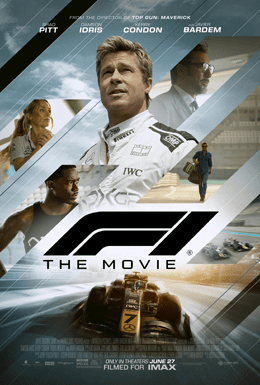
No one exactly says it, but “I feel the need for speed!” hangs over the whole of F1. Set in a fictional F1 team – although every other team, driver and team manager we see is real, with F1 superstar Lewis Hamilton serving as both producer and ‘final boss’ for the film’s conclusion – it’s by-the-numbers plot is the glue holding together a host of excitingly cut scenes of cars zooming round straights and bends.

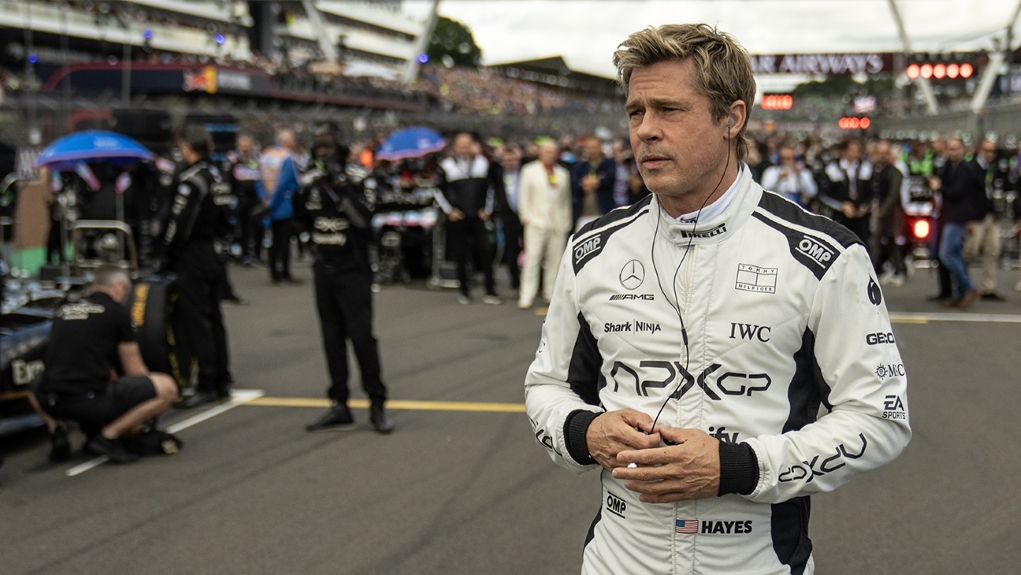
It’s half-way through the season and struggling APXGP don’t have a point, and if they don’t win one of the remaining nine races the corporate suits will sell the team. Owner Rubén (Javier Bardem) tries a Hail Mary: signing up ex-F1 prodigy turned racing gun-for-hire Sonny Hayes (Brad Pitt) to pull it out of the bag. But can Sonny’s old-school ways mesh with his hi-tech team, led by technical director Kate (Kerry Condon) and ambitious, social-media friendly team-mate Joshua Pearce (Damon Idris)?

F1’s alternative title is F1: The Movie and it’s basically a massive advert for the sport. (In fact, not just F1 since it drips with product placement in almost every frame.) With the glamourous face of Brad Pitt front-and-centre, this is all about dragging more eyeballs onto the sport, presented here as an impossibly balls-to-the-wall, high-octane, Fast and Furious style, non-stop adrenaline rush with every race awash with excitement, unpredictability and thrills. (No first-to-last lap processions here!) Of the nine Grand Prixes we see, not a one goes by without a pulsating crash, gloriously skilled over-takes or final lap miracles. This F1 putting its best suit on and asking you out on a date.

After his success with Top Gun: Maverick, Kosinski was a logical choice to bring the same excitement to cars as he did to planes. The camera gets down and low with the drivers, either sitting with the car as it zooms on the track or zeroing in on the drivers’ faces as the scenery whips by. It’s tightly edited, often cut perfectly to the beat of various classic rock songs, the film sounding like a Top Gear Greatest Hits compilation CD. This is some of the best edited and assembled footage of racing you’ll see (not surprising since they had F1’s full co-operation) and is the clear highlight.

F1 pitches for the widest possible audience by making sure even the biggest rube watching can follow the action with almost every second of race footage accompanied by commentary explaining exactly what’s happening and why. Sky commentators Martin Brundle and David Croft probably have more dialogue than most of the actors, feeding us Spark Notes F1 lore, probably irritating the petrol-heads but a godsend to newbies. Interestingly, they don’t talk about how much the film slightly mis-represents the rules. For starters, any driver who carried out as many ‘accidental’ minor collisions as Sonny does in an early race (to provoke the safety car’s emergence and make it easier for his team to score a point) would probably find himself on a one-way ticket to a ban. Never mind the APXGP car being crap at qualifying but unbelievably good in races. I guess, due to the drivers who the film is selling as gods of the gearstick – which is also why a F1 rules official (played by Mike Leigh regular Martin Savage) is portrayed as humourless bureaucrat for enforcing the sports own labyrinthine red tape.

Anyone expecting an F1 season to play out like F1 is in for a disappointment. But then, this is about dragging you in to see if you get sucked in by the moments when the sport does live up to this. Everything else is completely subservient to selling the experience, hence the paint-by-numbers script. There is scarcely a single narrative beat in the film you can’t predict from the set-up, and every character is only lifted from being a lifeless caricature through the charisma of the actors. It’s quite old school really: part of suppressing the truth of F1 (the engineering is key) in favour of the romantic (the drivers are the magic sauce that brings the win).

F1 has a fawning, romantic regard for the sort of old-school, manly no-nonsense of Brad Pitt, the film largely being about establishing everyone would perform better if they took more than a few leaves out of his book. For starters, Damson Idris’ JP would really become a winner if he focused on the driving not social media and started training like Pitt does (running the track, catching tennis balls and flicking playing cards) rather than putting trust in a high-tech gym. Pitt’s Sonny is never wrong in the film with mistakes only happen when his advice is ignored. He’s shown to have the dedication and in-bred knowledge to zero on the key data about the cars (F1 heavily endorses science in the cars, even as it subtly disparages science in the gym) to hone its performance. His samurai-life view, of moving from race to race (from Daytona to F1 and on) only dreaming of speed and the pure joy of driving is relentless praised.

Saying that, F1 does rather charmingly fly the flag of the importance of teamwork (just so we really get it, Pitt pointedly states several times it’s a team sport, where a second saved by a pit stop team is as vital as a second gained by the driver). F1 goes into detail of how important pit stop teams, racing strategy and technical design of the car are to success. Again, it feels like a pointed rebuttal of an argument non-fans of the sport might make, that it’s just men driving fast in a circle for about two hours.

Fundamentally though, F1 offers very old-fashioned entertainment, with very expected cliches. Kerry Condon’s technical director may speak briefly about the hurdles she’s had to climb over to become the sport’s sole female in her role – but her primary role is as really as coach and love interest to Pitt. Anyone who needs more than five seconds to work out that Tobias Menzies’ smirking corporate suit probably isn’t the ally he claims to be needs to see more movies. Sonny and JP’s relationship follows familiar rail tracks of rivals-turned-friends and the film even has the motor sport equivalent act four “you’re off the case” moment beloved of movies. But, if I’m honest, Pitt doesn’t have the charm and vulnerability that Cruise does (Sonny is so cool and collected, he’s never as relatable or loveable as he needs to be), and the film lacks a strong emotional centre to invest in. It’s entertaining enough of course, but it never finds a real, durable, re-watchability for anything other than the fast-moving cars at its heart.

The Banshees of Inisherin (2022)

The Banshees of Inisherin (2022)

Director: Martin McDonagh

Cast: Colin Farrell (Pádraic Súilleabháin), Brendan Gleeson (Colm Doherty), Kerry Condon (Siobhan Súilleabháin), Barry Keoghan (Dominic Kearney), Pat Shortt (Jonjo Devine), Jon Kenny (Gerry), Brid Ni Neachtain (Mrs O’Riordan), Gary Lydon (Paedar Kearney), Aaron Monaghan (Declan), Shelia Fitton (Mrs McCormick), David Pearse (Priest)

Pádraic (Colin Farrell) and Colm (Brendan Gleeson) are life-long friends on the small Irish island of Inisherin. Until one day, in 1923, Colm bluntly says he won’t speak to Pádraic again as “I just don’t like ya no more”. What on earth has led to this seemingly permanent severance? Did Pádraic do something wrong? The torment of not knowing will create a huge strain on Padraic, who prides himself on “being nice” and can’t understand why the older Colm doesn’t want to chat him. Just as Colm can’t understand why Pádraic can’t leave him alone, especially as he is almost universally agreed to be dull. Eventually this blunt stop to a friendship swiftly escalates out of all control.

McDonagh’s film is packed with the scintillating dialogue you would expect, and he combines it with an intriguing, tragedy-tinged character study where two sympathetic characters tip themselves into destruction through the unwillingness of either of them to compromise. It’s no coincidence that the film is set during the Irish Civil War. Cut off from the mainland on their tranquil island (where life feels like it hasn’t changed for the best part of 100 years), the characters are disturbed from their own civil war, every now and again, by the sound of gunfire and explosions from the mainland. The Banshees of Inisherin can be seen as a commentary on civil wars: don’t they all start, essentially, from someone deciding they have had enough and “just don’t like ya” anymore?

This marvellously rich film boils down a whole country tearing itself apart over what sort of future it wants, into one personal clash over two people’s future. The future increasingly obsesses Colm, a man preoccupied with mortality (who assumes his life can now be counted in years rather than decades), suffering from depression, worried he will disappear leaving no mark. A talented fiddle player, he wants to be like Mozart, remembered decades later – and he can’t do that wasting time every day for hours on end listening to Pádraic talking about his “wee donkey’s shite”.

It’s a perspective on the future, that Pádraic just can’t understand. For him, what does it matter what people you’ll never meet think about you? What matters to him is that the people around him like him and remember him as a “nice fella”. Not in a million years does legacy occur to him: the familiarity of everyday being the same is the most comforting thing, and change a horrific and terrifying thing to be avoided as much as possible.

You can see all this instantly in Colin Farrell’s heart-rending performance as this gentle, fragile but unimaginative soul, heart-broken at the inexplicable loss of his best friend. The film is a striking reminder that, contrary to his looks, Farrell’s best work is in embodying lost souls, the sort of people never ready for the life’s hurdles. Pádraic certainly isn’t, and his attempt to process what has happened defeats him. A man who considers his pet goat his next best friend and is as reliant as a child on his sister, doesn’t have the ability to understand what Colm is driving at about mortality, assuming instead he will stumble across the right words to be welcomed back into Colm’s company. He becomes the unstoppable object, trying to batter down Colm’s wall of silence.

He’s onto a losing battle, as Colm reveals himself to be – either due to his depression or his just not caring any more – the immovable force. Wonderfully played with a tinge of sadness and a depression-induced monomania, by Brendan Gleeson, Colm is a decent guy in many ways but fails to appreciate or consider the effect his actions will have on others. Instead he is focused on achieving at least something notable from his life. It leads to dramatic steps to drive Pádraic away, Colm threatening to cut off one of his fiddle playing fingers every time Pádraic bothers him, a threat he transpires to be more than willing to carry out.

And so civil war breaks out. As well as the parallels with Ireland’s war, I also felt strong echoes of our own poisoned social-media discourse. By his own lights, Colm believes his sudden severing of contact with Pádraic is perfectly reasonable. Many people who have “ghosted” others no doubt feel the same. Colm is reasonable when he explains it, and he still steps in with silent acts of comfort and support when Pádraic falls foul of the island’s brutish police office. But he never considers the traumatic impact this unexplained change will have on Pádraic – or how flashes of kindness can be as cruel as hours of non-acknowledgement.

Radicalism, in civil war and social media, quickly takes hold. What else can you call Colm’s threat to slice off his own fingers (the fingers he needs to live his dream of fiddle-playing legacy)? Just like people blowing hard on Twitter, he needs to deliver or lose face. Pádraic makes angry, passionate condemnations of Colm in the pub, like he’s posting rants online. Things escalate to a point where no-one feels they can step away or backdown.

That’s the tragedy McDonagh identifies here. This one decision of Colm’s – no matter the motives – ends up having disastrous effects on both men. Pádraic changes from a gentle soul to someone capable of wrathful fury and lifelong grudges. Colm literally disfigures himself, guaranteeing he will never achieve the very thing he started this for. Could there be a better parable for the destructive nature of civil combat? Neither Colm or Pádraic are willing to compromise: what if Colm said he would only see Pádraic once or twice a week, eh? Just like Ireland, they burn the world down.

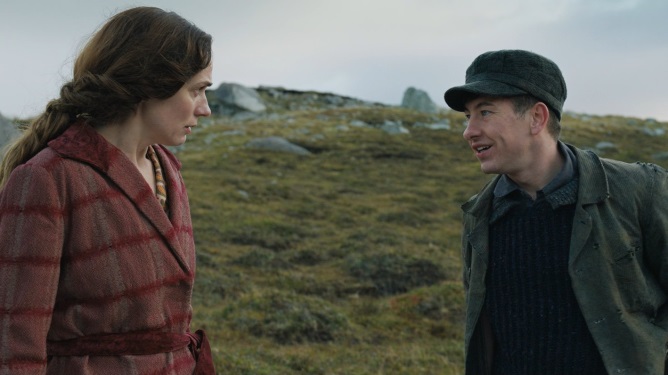
This all takes place in a rich framework, with McDonagh skilfully working in clever, challenging sub-plots. The legend of the banshee, who foretold death and enjoyed watching destruction, is woven throughout, embodied by the sinister Mrs McCormick (a ghostly Shelia Fitton). The most forward-looking person on the island is Pádraic’s sister Siobhan – brilliantly played by Kerry Condon – who finds herself wondering why on earth she stays in such a self-destructive small-world. Barry Keoghan (also superb) plays the universally acknowledged village dunce, who (if you stop and listen to him) quotes French and poetry and (for all his crudeness and lack of social graces) is clearly a man stunted under the heel of his abusive father, the village policeman.

As events escalate and rush out of control – McDonagh’s pacing is very effective here – the film slows for carefully judged moments of emotional power, from the burial of a beloved pet to a character weeping in bed at the painful choices that must be made. McDonagh has created a powerful universal metaphor for the dangers of extreme, definitive choices and a total rejection of compromise by boiling it down to the smallest scale possible.

And your sympathies ebb and flow, due to the beautiful performances from its leads. Farrell is heartbreaking, a memory you carry as he becomes more vengeful. Gleeson is coldly reasonable, even as we grow to understand his crushing sense of mortality and character-altering depression. These two actors power an intelligent and thought-provoking film that achieves a huge amount with subtle and rewarding brushstrokes.