
Tag: Laurence Fishburne

Mission: Impossible III (2006)


Tom Cruise and Kerri Russell take on a truly challenging assignment in Mission: Impossible III

Director: JJ Abrams

Cast: Tom Cruise (Ethan Hunt), Philip Seymour Hoffman (Owen Davian), Ving Rhames (Luther Stickell), Billy Crudup (John Musgrave), Michelle Monaghan (Julia Meade), Jonathan Rhys Meyers (Declan Gormley), Maggie Q (Zhen Lei), Keri Russell (Lindsay Farris), Simon Pegg (Benji Dunn), Eddie Marsan (Brownaway), Laurence Fishbourne (Theodore Brassel)

If there is one thing Tom Cruise does better than anyone in the movies, its run. Man, can that guy run well on camera. It’s not as easy as you’d think – watch people run in real life, and they probably look galumphing and awkward. But Tom looks as sleek as a gazelle. Every stride stresses his authority and unflappable coolness. I mention it because Tom does a lot of running in this film. The dénouement is basically him running over a mile and half, nearly in real time, a lot of it one long shot. 

JJ Abrams came to Mission: Impossible off the back of his successful TV series, Alias, in which Jennifer Garner’s undercover agent takes on a variety of disguises, working in a team, on a series of missions to get impossible-to-obtain artefacts against terrific odds. JJ Abrams carries the formula that worked so well in that series straight into this one.

The whole film plays out like an Alias movie. It even uses that series regular gambit of an opening scene throwing us dramatically into the story before flashing back “72 hours earlier”. Just like Alias, we have our lead trying to make a relationship work without saying what they do for a living, a family feeling in the team’s relationship, a geeky tech guy with a heart of gold, double and triple agents, glamourous locations – it’s everything an Alias fan could want, with Cruise’s Ethan Hunt essentially Sydney Bristow in all but name. This also brings out the best in Cruise, who looks like a man born again in the role.

Mission: Impossible: III is truly delightful, big-screen fun, rebirthing the series and placing team interplay firmly back at the centre, setting the tone and template the next two films have followed. Ethan Hunt (Tom Cruise) is in semi-retirement, training agents and planning to marry Julia (Michelle Monaghan). However when his young protégée Lindsay Faris (Keri Russell) is captured while investigating sinister arms dealer Owen Davian (Philip Seymour Hoffman), Hunt sets out to rescue her – and finds himself up to his neck in shady and dangerous goings-on.

Every action scene in the film is brilliantly entertaining (the mid-film drone assault is wind-it-back-and-watch-again exciting.). Of course, Cruise takes more than his fair share of the juicy moments – including a crazy jump off the roof of a Hong Kong building that has to be seen to be believed – but Abrams makes this a team movie in the way neither of the two previous films had been. Each member brings crucial skills to the table, and has moments to shine. Pegg takes the stand-out role of a witty, nerdy tech back at the base (sure enough his role was expanded later), but each feels an essential part of the story.

It also helps that the film has a terrific baddie to bounce off – the series has not had a better villain than Hoffman’s ice cold arms dealer. Sure Davian is pretty much a part Hoffman could play standing on his head – but he’s got just the right balance of rage and ruthless intellect.

If you want to see a single example of why this film works, take a look at that opening scene. Who could resist a film that opens with a scene as masterfully directed as this, sizzling with tension and ending with a smash cut to black over a gun shot and into the opening score? Hoffman and Cruise are excellent (Hoffman’s ice-cold control providing a great contrast to Cruise, who runs the gamut of defiant, furious, faux-reasonable, desperate and pleading), but it sets out the huge stakes for the film, it keeps us nervily waiting for the film to catch-up with what we’ve seen, and it tells us how vitally important what Davian wants is to him – and how desperate Hunt is to protect Julia.

Abrams has a perfect understanding of dramatic construction.  Everything in the film is carefully established and set-up, so we always understand the dangers and the threats. MI3 also uses its macguffin extremely well. What do we learn about “the Rabbit’s Foot”, the possession of which is of such vital importance? It’s small enough to fit in a suitcase, it’s stored in a round glass tube, it’s got a biohazard label and it’s worth millions. That’s it, but it doesn’t matter: Abrams establishes the most important thing – it’s dangerous and Davian wants it more than anything. Everything spins out from that with smooth efficiency.

The pace never lets up, but the characters and their relationships are never left behind. In particular Monaghan and Cruise’s relationship is skilfully established in surprisingly few scenes, and something we end up really rooting for. Abrams never goes overboard – the film is stuffed with action and excitement but never feels bloated or indulgent: the final confrontation is particularly effective because it is fairly small scale and is focused on the Hunts’ relationship.

Mission: Impossible 3 is one of the most joyful entries in a film franchise that deserves a lot of kudos for (by and large) focusing on plot, story and character alongside action sequences that have a feeling of tangible reality about them. It’s not completely perfect – a shock reveal about a turncoat in the IMF is hardly a surprise, considering the small number of candidates and the actors playing them – but it’s about as close as you can get to an endless enjoyable fairground ride.
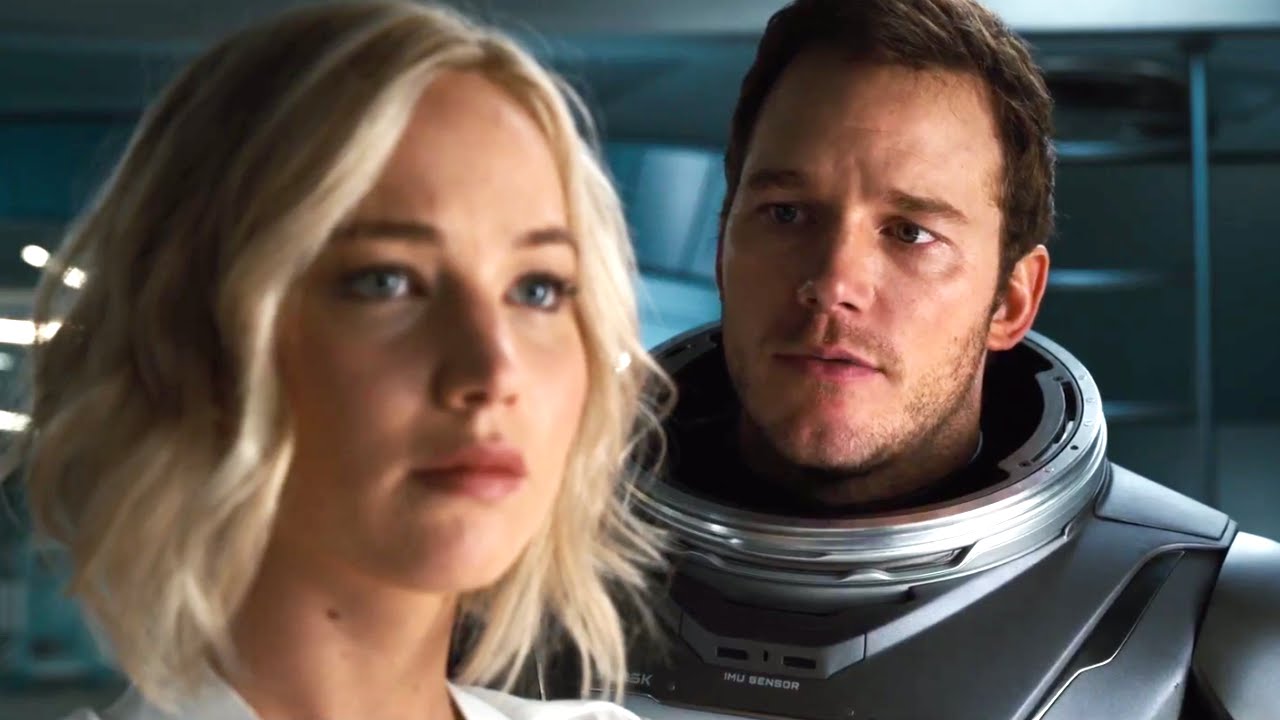
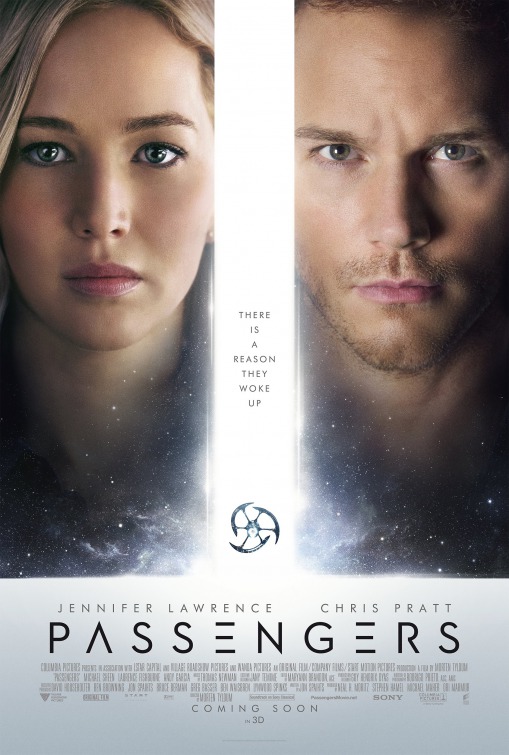
Passengers (2016)


Jennifer Lawrence and Chris Pratt juggle moral dilemmas in the surprisingly dark Passengers

Director: Morten Tyldum

Cast: Jennifer Lawrence (Aurora Lane), Chris Pratt (Jim Preston), Michael Sheen (Arthur), Laurence Fishburne (Gus Mancuso)

The Avalon is a spaceship carrying over 5,000 passengers and crew to a new planet for resettlement. With the flight due to last 120 years, everyone is in suspended animation. After an accident, passenger Jim Preston (Chris Pratt) is woken 90 years early. Trapped on the ship, unable to return to cyrosleep or change the direction of the ship, and with the round-trip time for messages to Earth being 76 years, Jim faces living the rest of his life alone on a spaceship. After over a year of isolation, with only android bartender Arthur (Michael Sheen) for company, Jim succumbs to temptation and wakes another passenger, Aurora (Jennifer Lawrence), for companionship. They fall in love over time – but how will Aurora react when she finds out the truth?

Passengers was a film that received a negative reaction perhaps because it managed to successfully not spoiler its plot in advance. While the trailer seemed to promise this would combine mystery and romance in a space setting, it’s actually more about the effects of isolation and the moral quandary of relieving your own despair by placing someone else in the same position. While the film is never going to win awards for its exploration of psychosis, it certainly tries to tackle this idea and explain – but not excuse – why Jim takes the decision he does.

A lot of people felt this suggested Aurora effectively falls in love with her kidnapper-cum-stalker, and that Jim’s actions are glossed over. Well I’d argue against this. Firstly, the film never shirks the repercussions of Jim’s decisions – indeed that’s really what the film is about: can you forgive the unforgiveable? A large chunk of the film is a build up to Jim taking a decision he acknowledges is wrong, and feels tremendous guilt and shame about. The later section of the film revolves around the impact of this action coming to light. Discovery of the truth destroys Aurora and Jim’s relationship, and it’s uncertain for much of the rest of the film whether there will ever be any forgiveness for Jim. If the film had shelved the issue, or Jim had been forgiven within minutes of screentime, that would be another question.

Secondly, the film works hard to show the savage psychological impact of complete isolation, and (after a year of this) the dangerous temptation of having a companion a push of a button away. Jim is clearly not in his right mind when he makes his decision – and later when Aurora faces the prospect of similar isolation, she responds with similar despair. If there is a fault with this, it is that the film shies away from defining the time progression explicitly enough – and doesn’t quite have the courage to increase its timeline (imagine if Jim had been alone for 3-5 years rather than one. Imagine if Jim and Aurora had not spoken for 2-3 years rather than one etc. Straightaway, I think the actions in this film could have been more readily understood by people).

Thirdly, these questions of isolation and morality are not as black and white as your casual internet moaner would like. Trapped alone with no human interaction, with literally zero chance of being rescued, is a psychological situation it’s just impossible to comprehend. Expecting people to behave as they would normally is simply unreasonable. Jim and Aurora do not fall in love after the truth comes out – they fall in love well before this (sure Aurora doesn’t know what Jim has done, but her feelings for him are real) – so it becomes a question of forgiving someone you love who, in extraordinary circumstances, has done something they normally would never do.

As such, Passengers is actually the sort of film where it will benefit you to discover more about what the film is going to be about before you go into it (and how often do you hear that?). Because, once you know the sort of film you are going to get, it’s not that bad a film. It’s handling of these moral issues is, I’ll readily admit, not the most effective or thought provoking (and the lack of mention of it before the film’s release, and its slight fudging through the film, suggests the “suits” weren’t happy with it either) but at least this is a film with some ideas behind it. If it had really seized the effect of isolation as its theme, and really explored the moral issues behind Jim’s actions, it might well have avoided much of the criticism. But it does enough to make some of that criticism unfair.

Away from this main plot point, Passengers is an entertaining, high-budget, character piece. Whatever your view of the character, you can’t argue against Pratt’s charisma and wit as a performer and Lawrence is also good. It’s not their best work, but they make the relationship – with all its peaks and troughs – work, and it’s endearing or tense as required. Michael Sheen is also excellent as the humanish-but-not-human-enough android bartender. The design of the ship is imaginative and the film looks gorgeous. The second half of the film delivers a fine series of tense set-ups (even if many of them are echoes of things we have seen before), and Tyldum does well to ensure that the often swiftly changing mood of the film (despair-romance-anger-tension-danger-terror etc.) seems like a smooth progression rather than a jarring one.

Passengers doesn’t have the courage of its convictions to really explore its “Ben Gunn in Space” set-up, and much of the criticism of its plot stems from its not-completely-committed exploration of the effects of isolation. But, if you know what you are going to get, it’s an entertaining film.