Tag: Lee Pace

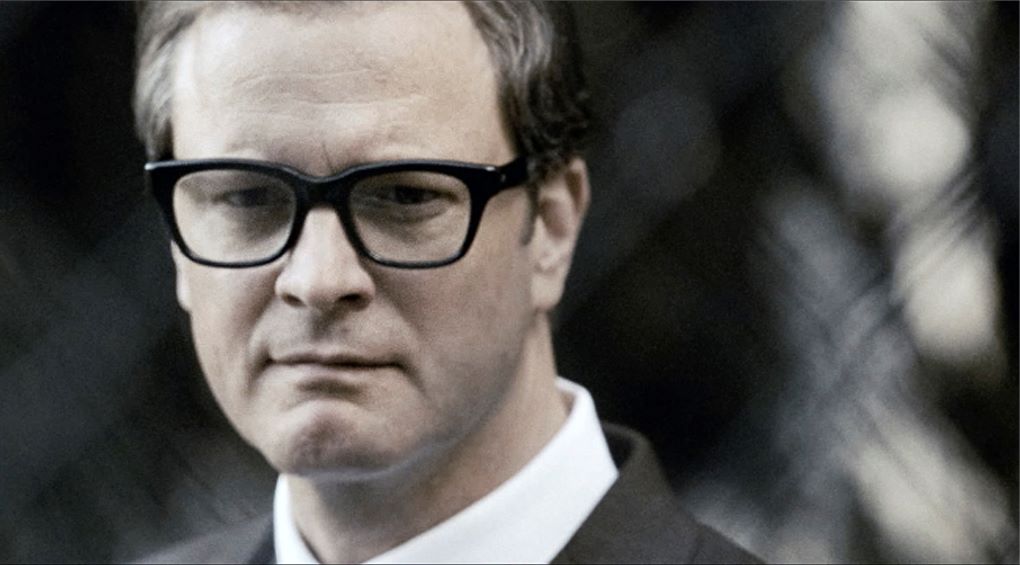
A Single Man (2009)

A Single Man (2009)

Grief is at the heart of this moving, beautifully made debut from Tom Ford

Director: Tom Ford

Cast: Colin Firth (George Falconer), Julianne Moore (Charley Roberts), Nicholas Hoult (Kenny Potter), Matthew Goode (Jim), Jon Kortajarena (Carlos), Paulette Lamori (Alva), Ryan Simpkins (Jennifer Strunk), Ginnifer Goodwin (Mrs Strunk), Teddy Sears (Mr Strunk), Lee Pace (Grant Lefanu)

Grief is like a gaping wound that never heals. It’s an unbearable burden LA-based English professor George Falconer (Colin Firth) can’t bear any longer. Distraught after the death of his partner of sixteen years Jim (Matthew Goode), George decides November 30th 1962 will be the last day of his life. He will spend the day putting his affairs in order, soaking up the isolated intensity of moments, have dinner at his oldest friend Charley’s (Julianne Moore) house, then take his life. Adapted from Christopher Isherwood’s novel, A Single Man follows that one day.

The universal pain of grief and vibrancy of love shines out of one of the most tender gay-love stories ever made (strikingly shot and acted by a straight director and leads). A Single Man is a film that aches in every frame with the desolation of loss and the agony of moments that can never be claimed, touches that can never be made and conversations that can never be had. It studies how empty and overbearing life can feel when we know we must face it alone, without the person who made the world make sense to us.

It is of course a double burden when that loss cannot be acknowledged. George learns of the death of Jim via an awkward phone call from Jim’s brother (a vocal cameo from Jon Hamm) who can’t bring himself to openly acknowledge the love between the two men and tells him it’s a “family only” funeral. George himself can only convey repressed English regret during the phone call, before collapsing into lurching emotional hysteria after it. His loneliness and cool distance from others is all a side effect of man who must always hide his true feelings and who and what he is.

The film gains a huge amount from Colin Firth’s extraordinary performance in the lead role, hiding a seething, raw pain under a genteel and refined exterior. This seemingly cold, precise man – who dresses like a fashion model and is polite to a fault – is a tempest below the surface of loss that cannot be expressed. It’s as much the burden of putting on one face to the world, knowing there is another below the surface, that has crushed George’s spirit over the past years, as the loss of Jim. All of this is captured by Firth with exquisite sensitivity, in a perfectly judged performance.

Even George’s closest confidante Charley – his best friend, and one-time experimental romantic fling, now a depressed divorcee – can’t quite understand George’s feelings for Jim. Played with a wonderful air of domestic, middle-aged tragedy by Julianne Moore, Charley still can’t quite believe a homosexual love can ever really be the “equal” of a heterosexual one – that some part of George would have been happier if he had accepted a ‘normal’ relationship and family with her rather than the more ‘exotic’ relationship he chose. If even those closest to George can’t really see his relationship as legitimate, what chance does his apple-pie neighbourhood have of doing so?

It’s the intense loneliness – no one to share his pain with, no way to really mourn his love – that has finally beaten the will to carry on for George. Ford’s direction reflects his sense of ennui by presenting the world as coldly drained out, rich colours replaced with greyscale-tinged greys and blues. Warm colours only intrude in those moments where George consciously decides to engage, one final time, with the wonders the world has to offer, the frame filling with warmth and colour.

Ford’s elegiac film doesn’t shy away from the coldness of pain and loss. Opening with a (literally) chilling scene, as George imagines encountering Jim’s dead body in the snows, it conveys the functional distance the world can seem to have when we are dealing with life changing internal feelings. George is entrapped into tired conversations about university politics (his gaze drifts to two male tennis players, the screen momentarily filling with colour). Reflecting his fastidious nature, he carefully puts his affairs in order at the bank and catalogues keys, account details and suicide notes on his desk. All of it feels irrelevant compared to the pain within.

But A Single Man is also a hopeful film. Even when the world seems at its bleakest – when we have decided we can’t go on – there is still hope. It’s represented here by Nicholas Hoult, warm, open and honest as George’s student Kenny who intuitively identifies something is wrong with George and goes to huge lengths to try and find out what. The tenderness between the two – and the protectiveness as well as genuine smiles Kenny can promote in George – is a beat that suggests there may still be some chance of happiness in this world where we least expect it.

It’s part of the same warmth and humanity that underlies Ford’s heartfelt film, wonderfully directed. If it was a parade of bleakness, it would have far less effect. But flashbacks to George and Jim together show the joy and comfort of their lives, while the small moments of warmth and humanity in the present constantly remind us of what George’s decision will cost him.

The film’s final dark splash of irony may well be a little too on the nose, sign posted as a possibility a little too heavily earlier in the film. But, in its exploration of grief and intelligent, intense character study it’s a wonderful debut from Ford. And Firth’s extraordinary, career defining role (a year later, after winning the Oscar for The King’s Speech he thanked Tom Ford as being someone who owed a piece of the award to) is one for the ages that speaks to anyone who has ever known loss.
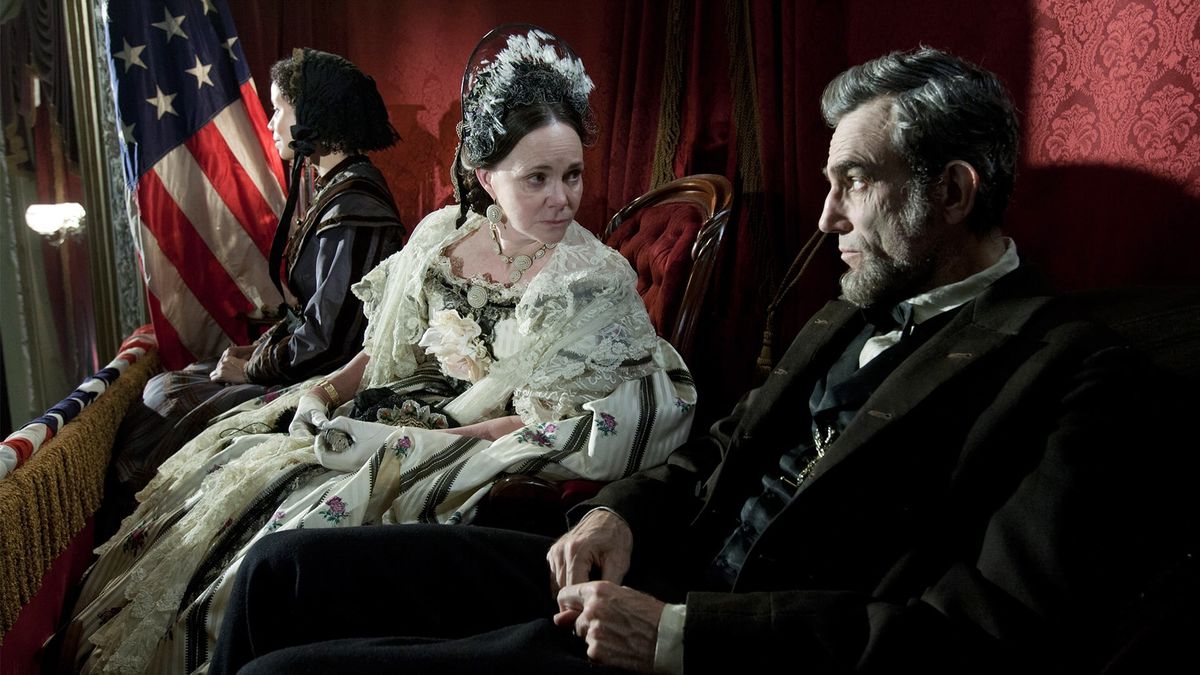
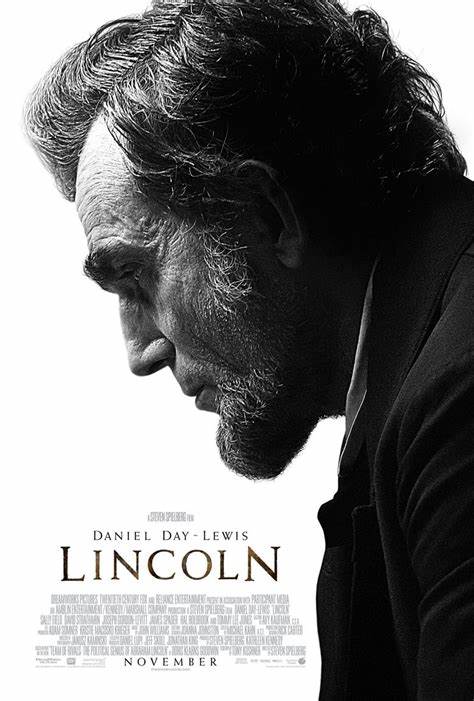
Lincoln (2012)

Daniel Day-Lewis gives on the great transformative performances as Lincoln

Director: Steven Spielberg

Cast: Daniel Day-Lewis (Abraham Lincoln), Sally Field (Mary Todd Lincoln), Tommy Lee Jones (Thaddeus Stevens), David Strathairn (William Seward), Joseph Gordon-Levitt (Robert Lincoln), James Spader (WN Bilbo), Hal Holbrook (Preston Blair), John Hawkes (Robert Latham), Jackie Earle Haley (Alexander Stephens), Bruce McGill (Edwin Stanton), Tim Blake Nelson (Richard Schell), Joseph Cross (John Hay), Jared Harris (Ulysses S Grant), Lee Pace (Fernando Wood), Peter McRobbie (George Pendleton), Gloria Reuben (Elizabeth Keckley), Jeremy Strong (John Nicolay), Michael Stuhlbarg (George Yeaman), David Costible (James Ashley), Boris McGiver (Alexander Coffroth)

It took me three viewings until I felt I got Lincoln. Previously – in the cinema and the first time at home – I respected it. I admired the skill with which it was assembled. But I had found it hard to see it as much more than a critically acclaimed civics lesson, Spielberg at his most prestige. Returning to it the third time with the pressure well and truly off, suddenly I discovered a film I’d never seen before, an intensely dramatic telling of the perilous struggle to pass the Thirteenth Amendment to abolish slavery. A vibrant, beautiful and surprisingly intense story of how close Congress came to vetoing it. What had seemed a stuffy museum piece, instead came to life as a dramatic piece of cinema. It goes to show you should never be afraid to give something another go. Or two.

This biopic of Lincoln goes down a very modern route of avoiding covering the Great Man’s entire life. Instead it zeroes in on little more than a crucial month. It’s January 1865 – in what we know are the final months of the President’s life – and Abraham Lincoln (Daniel Day-Lewis) confronts a terrible choice. Civil war has torn America apart for year and peace may be on the horizon. But Lincoln fears a reformed America, with all its Southern slave states back in the fold, will find a way to end his Emancipation Proclamation and restore slavery to its height. To prevent this, Congress must ratify the Thirteenth Amendment to the Constitution ending slavery. But, with many in Congress worried that such an Amendment will end any chance of peace, Lincoln is in a terrible position. Should he sacrifice peace for abolition? Or vice versa? Either way, it will be a no-holds barred fight on the floors of Congress.

Spielberg’s film is near perfect in its shooting and editing, while its historical detail is brilliantly on-point. You couldn’t fault a moment of its making. However, what makes the film a success is the director’s skilful ability to combine graceful (even stately) old-fashioned film-making expertise, with a truly compelling sense of the passions and dangers we face when democracy is in action. And the overwhelming tension when the stakes are high and we have no guarantees of the end result. Another film – the stately civics lesson I once took the film for – would have shown the passage of the bill as a Whiggish inevitability, a progress filled march to a better world.

Lincoln isn’t like that. This is a film that shows politics then and politics now ain’t that different. For every principled man, there a dozen looking out for the main chance, marking time or who are too scared to worry about right and wrong. The Amendment is delivered not by impassioned oratory from the President. It’s carried by skilled floor management and the employment of a trio of political lobbyists with briefcases stuffed with cushy job offers in the rebuilt America.

Votes are brow-beaten out of people, threats and persuasion are used in equal measure. There is no winning people over with poetic oratory. At one point, Lincoln makes a simple and heartfelt plea for one congressmen to do the right thing: the guy votes against him. One of the film’s moments of triumph sees fervent abolitionist Thaddeus Stevens refuse to be provoked into expressing his true views on the floor, instead offering a statement that he does not believe in equality “in all things”, knowing any other answer will be used to build opposition against the bill. Is there any other film in American politics where one of the biggest cheer moments is one of our heroes compromising and spinning his true views into something far less threatening?

It’s all part of the film’s demystification of American history as not being something made from marble, but instead being real and true. If anything though, this sense of realism – of danger and the very real possibility of defeat – makes the final vote (a long sequence that almost plays out a congress vote in real time) both far more dramatic and also surprisingly moving. Because we appreciate every step of the backroom handshakes, fights, compromises and (let’s be honest) corruption and shady deals that got us here. And, more than anything, the film has made clear Lincoln is willing for this brutal war (the horrors of which, both in battle and bloody aftermath, intrude at key points in the film) to go on for as long as it takes, to ensure this Amendment.

Lincoln is the heart of the film: and it’s almost impossible to state how central Daniel Day-Lewis is to the film’s success. This is an extraordinary performance. I don’t think you can understate how venerated Lincoln is in the American memory. With his distinctive features and a permanent memory of him sitting like a marble God in the centre of Washington, it’s hard for many to imagine that this was ever a real man. But Day-Lewis has turned in a performance here that transforms Lincoln into a living, breathing man but never once compromises his greatness.

From the voice (a wispy lightness, a million miles from the deep, Shakespearean accent you would expect – and entirely accurate) to the ambling walk, to the film’s embracing of Lincoln’s eccentric monologing, his love of whimsy and jokes, his autodidact passion for language, his warmth and love for his family – and his righteous anger when frustrated by those who cannot see the big picture – this is extraordinary. Day-Lewis is compelling in a way few actors can be. His Lincoln is superbly human. Every moment is beautifully observed, but this is so much more than an actor’s tricks. His Lincoln is someone you can come out of the film convinced that he was talking to you, that you understand him as a human being not a cipher. I felt I knew and understood Lincoln more from watching this film than I ever had from a history book. It’s breathtaking.

Of course it inspires everyone else in the cast to give their best. The at times difficult marriage between Lincoln and his wife gives some wonderful material for Sally Field (easily her finest performance in decades). Mary Todd Lincoln is aware she will always be a disappointment for her husband as a partner, but equally feels that her public mourning for this lost child speaks of a deeper humanity than her husband. Loyal if questioning, she’s also abrupt and clumsy enough at times to be a liability.

Tommy Lee Jones is exceptional as Thaddeus Stevens, prickly, difficult but also morally pure (the film has helped rediscover the unjustly overlooked Stevens). Previous Lincoln performers Strathairn and Holbrook give very good support. James Spader is great fun as colourful lobbyist. Joseph Gordon-Levitt is all restricted ambition as Lincoln’s son. Jared Harris shines in a few scenes as Grant. Gloria Reuben has a few beautiful moments as Mary’s confidante Elizabeth Keckley.

Lincoln is a film shot with all the prestige of an American Merchant-Ivory, in love with the power of democracy. But it’s also open-eyed on how a system like America’s works, and how perilous delivering “the right thing” can be. Emotional and engrossing, it’s powered above all by a towering sublime performance by Daniel Day-Lewis who might as well be the 16th President reborn. It took me three viewings to see the richness here – but I am so glad I stuck it out.

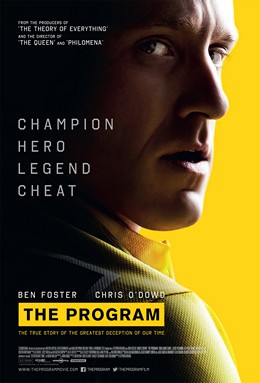
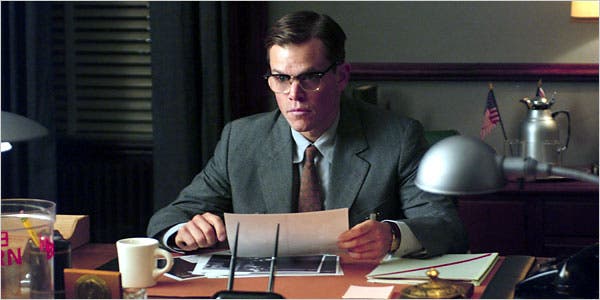
The Program (2015)

Ben Foster is the disgraced Lance Armstrong in this functional but insight free biopic The Program

Director: Stephen Frears

Cast: Ben Foster (Lance Armstrong), Chris O’Dowd (David Walsh), Jesse Plemons (Floyd Landis), Lee Pace (Bill Stapleton), Guillaume Canet (Michele Ferrari), Denis Menochet (Johan Bruyneel), Dustin Hoffman (Bob Hamman), Edward Hogg (Frankie Andreu), Elaine Cassidy (Betsy Andreu), Laura Donnelly (Emma O’Reilly), Sam Hoare (Stephen Stewart)

In sports there has probably never been an icon who fell so far as Lance Armstrong. Stephen Frears’ film reconstructs the story of Armstrong’s – played by Ben Foster – career, from finding his natural build and ability isn’t enough to win the Tour de France, through cancer diagnosis and recovery and then into his record-breaking run of Tour victories, all achieved off the back of running a comprehensive and professional doping system, and his final fall from grace.

Frears’ film is well-made and stylish and good at capturing the freedom and excitement of professional cycle racing. It’s also a skilled reconstruction of its time period, and a fairly well structured chronicle of events, which it reconstructs from journalist David Walsh’s (played here with a fine sense of moral outrage by Chris O’Dowd) book Seven Deadly Sins. Walsh had written stories for several years questioning Armstrong’s achievements, and Frears’ film puts together the events and testimonies that convince Walsh of Armstrong’s cheating with a documentarian skill.

Where the film fails though is its lack of drama and, crucially, its willingness to use dramatic and creative licence to attempt an exploration of Armstrong’s personality. What drove this cancer survivor to abuse his body with a parade of substances? How did Armstrong balance his passionate campaigning for a cure for a cancer with the lie he was presenting the world of how he didn’t just recover from cancer, he used it as a springboard to become the greatest endurance athlete in the world? Basically, what the film doesn’t really try to do, is get inside the head of its lead character.

Instead, the film follows its title: The Program. There is greater interest in the how of this cheating regime, not the why. Now perhaps in real life Armstrong is the shallow, narcissistic bully he often seems here, obsessed with winning at all costs with no moral quandaries at all. But it hardly makes for entertaining or satisfying drama. Foster is a brilliant physical match – and he captures the ruthless forward-drive of Armstrong very well – but this is a film that doesn’t really scratch the surface of what made Armstrong. We never get a sense of his motivations – or really his reactions as the world tumbles around him.

There is a fascinating story to tell here, but it’s almost as if the film is worried about giving this sinner some feet of clay we can sympathise with (to mix a few metaphors). Instead Armstrong is all chilled front and nothing underneath, and his villainy is so central from day one that we get neither a satisfying sense of a hypocrite unmasked nor of a Promethean fall from grace. 

Actually, Frears may well have been more interested in making a film where Jesse Plemons’ Floyd Landis was a central character – the devout Christian persuaded to take part in the doping scheme, who becomes Armstrong’s successor only to be immediately discredited in a way Armstrong would not be for years. It’s the tragedy of Landis that really has dramatic potential – a decent man who is well aware what he is doing is wrong, but is too weak to not accept the easy path to glory. It’s this story that has real dramatic potential – and might well have made a better focus for the movie.

The Program isn’t a bad film. It captures the drama of its sport well, and it brings together the events that led to Armstrong’s fall with professional skill. But it’s more of documentary than a drama and to be honest there isn’t much in it that couldn’t be picked up better from actually reading Walsh’s book. There was a lot of potential here – but it needed a film more willing to explore and understand its central character rather than just condemn him as a monster and move on.

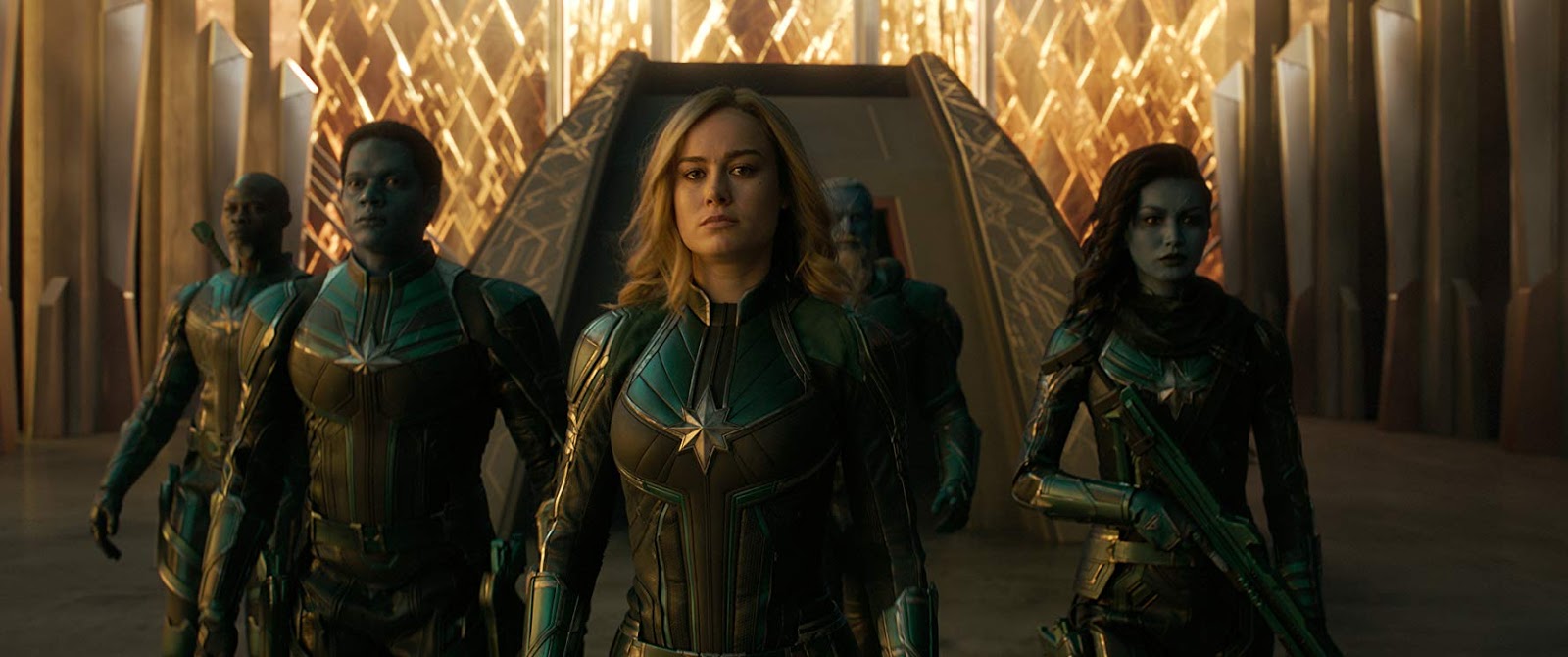
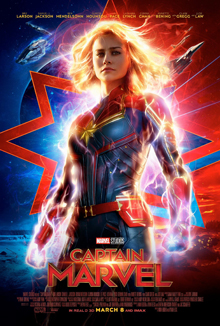
Captain Marvel (2019)

Brie Larsen is Captain Marvel – yah boo sucks Trolls!

Director: Anna Boden, Ryan Fleck

Cast: Brie Larson (Carol Danvers/Veers), Samuel L Jackson (Nick Fury), Jude Law (Yon-Rogg), Ben Mendelsohn (Talos/Keller), Djimon Hounsou (Korath), Lee Pace (Ronan the Accuser), Lashana Lynch (Maria Rambeau), Gemma Chan (Minn-Evra), Annette Bening (Supreme Intelligence/Mar-Vell/Dr Wendy Lawson), Clark Gregg (Phil Coulsen)

After almost 11 years, the big criticism of the Marvel Cinematic Universe has been that it had never made a film with a woman as the lead. Sure, we’d had various strong female characters, but never had one been trusted with headlining a movie. Well the studio has put that right with Captain Marvel, a hugely enjoyable, if not exactly groundbreaking, superhero origins story that can stand up with some of the best origin movies the studio has produced.

In the Kree civilisation, Veers (Brie Larson) is in training to take her proper place in the Star Force, under the tutelage of her mentor Yon-Rogg (Jude Law). But she’s struggling to control her immense powers, with her dreams plagued by strange visions and half memories of a planet that looks to us viewers a lot like Earth. After a Star Force mission goes wrong, Veers is captured by the shape-shifting Skrulls and their leader Talos (Ben Mendelsohn), her memory being searched for a time on Earth that she doesn’t remember. Escaping, she finds herself on Earth in 1995, and quickly allies with SHIELD operative Nick Fury (Samuel L Jackson, impressively digitally de-aged) to find out what the Skrulls want. But is everything as it appears? And what will happen as Veers starts to remember her true identity, as long-missing air-force test pilot Carol Danvers?

Captain Marvel I guess you could say is not an ambitious film. It largely sits pretty close to the well-established Marvel formula for introducing a new character, and it presents a series of visuals, fights and general tone mixing light-jokes with action beats extremely well. It’s a very professionally assembled product. However, what makes it work is the strain of emotional truth, and an interest in character as the driving force for events, that runs right through the centre of the film. It’s a testament to the imaginative and original direction from Boden and Fleck that at the centre of each clash we see, not the action and the pyrotechnics, but the emotion and character that give these things meaning.

They are also helped by an interesting plot, with some very decent twists, that throws the viewers into the deep end and carefully drip-feeds us information at the same pace as Carol picks it up. This also helps hugely for investing in Brie Larson’s Carol Danvers, a character who doesn’t know who she is and where she came from. Brie Larson does a terrific job, crafting a character “strong and determined”, but also witty, impulsive, brave, caring, decent and rather sweet with a strong moral compass that clearly, from the start, governs all her actions. It’s a fine performance and Larson is equally convincing in the film’s lighter, funnier moments as she is when banging heads together.

That helps keep the tone of the film pretty consistent as it heads through various twists and turns and rugpulls. Now I am sure some of these twists would be seen coming by anyone immersed in Marvel comicbook lore, but for us Muggles I appreciated the reveals about several characters defying expectations. The film also avoids false tension – a character is so obviously a shape-shifted replacement, it’s a relief that the film confirms this in minutes and the characters work it out shortly after. It’s a smart way for the film to fool you into thinking where it is going, while building towards more interesting reveals later on – particularly as it throws our expectations for several characters into the air.

And the action when it takes place is great fun, primary-coloured and accompanied by a great selection of 90s tracks. Because Boden and Fleck have spent so much time carefully developing the characters at its heart, these become action moments you can genuinely invest in, where people you care about are in peril, rather than the bangs and crashes without consequence that plague other films.

It’s also mixed extremely well with comedy. Samuel L Jackson in particular gets some great comic mileage out of a young Nick Fury, a man on his way to becoming the hard-as-nails guy we’ve seen in countless movies, but here still young, playful and (hilariously) besotted with a cat rather wittily called “Goose”. Ben Mendelsohn also gets some good moments from his mysterious shape shifter and Jude Law has a sort of put-upon charm as Carol’s mentor. There are also some lovely moments as Carol rediscovers her memories and rebuilds a relationship with her former best friend and fellow test pilot Maria Rambeau, well played by Lashana Lynch.

Captain Marvel is such good fun, such good old fashioned entertainment, that it seems to have defeated the efforts of the internet trolls to consign it to oblivion. It’s sad to say that, following in the footsteps of Black Panther, The Last Jedi, Star Trek: Discovery and Doctor Who, another “fan boy” franchise entry has seen its opening overshadowed by a bunch of sad wankers with key boards hammering into the internet (and whining into YouTube) about Disney and “the suits” forcing fans to watch stories about people who aren’t white males. Larsen and Captain Marvel got it in the neck for being sexist (it’s not about a man and Larsen dared to say she thought film critics were overwhelmingly white and male – guilty in this case), pushing a feminist agenda (because, like, it had a woman in it that wasn’t a damsel-in-distress or hooker-with-a-heart-of-gold) and not representing what the fans wanted to see in comic films (muscular men saving ladies and hitting things basically). Never mind that social commentary in the old days used to be what these fans bragged about their passions being so full of. Now any character who doesn’t fit a narrow set of racial and sexual criteria is an attempt by the PC brigade to push these pricks out of the fandom. Well to be honest we are better off without this turgid slime polluting fandom with their putrid stench. Put frankly, if films like Captain Marvel make some idiots decide they are going to boycott Marvel for ever more, well good – please fuck off and let the door slam you on your arse on the way out.

Anyway, rant over. Captain Marvel is great fun, Brie Larsen is great, the action is well done, the jokes are funny, the story is engaging and it’s all done and dusted in two hours. Go and see it.

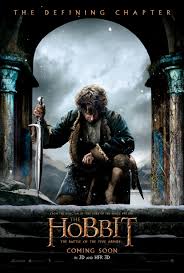
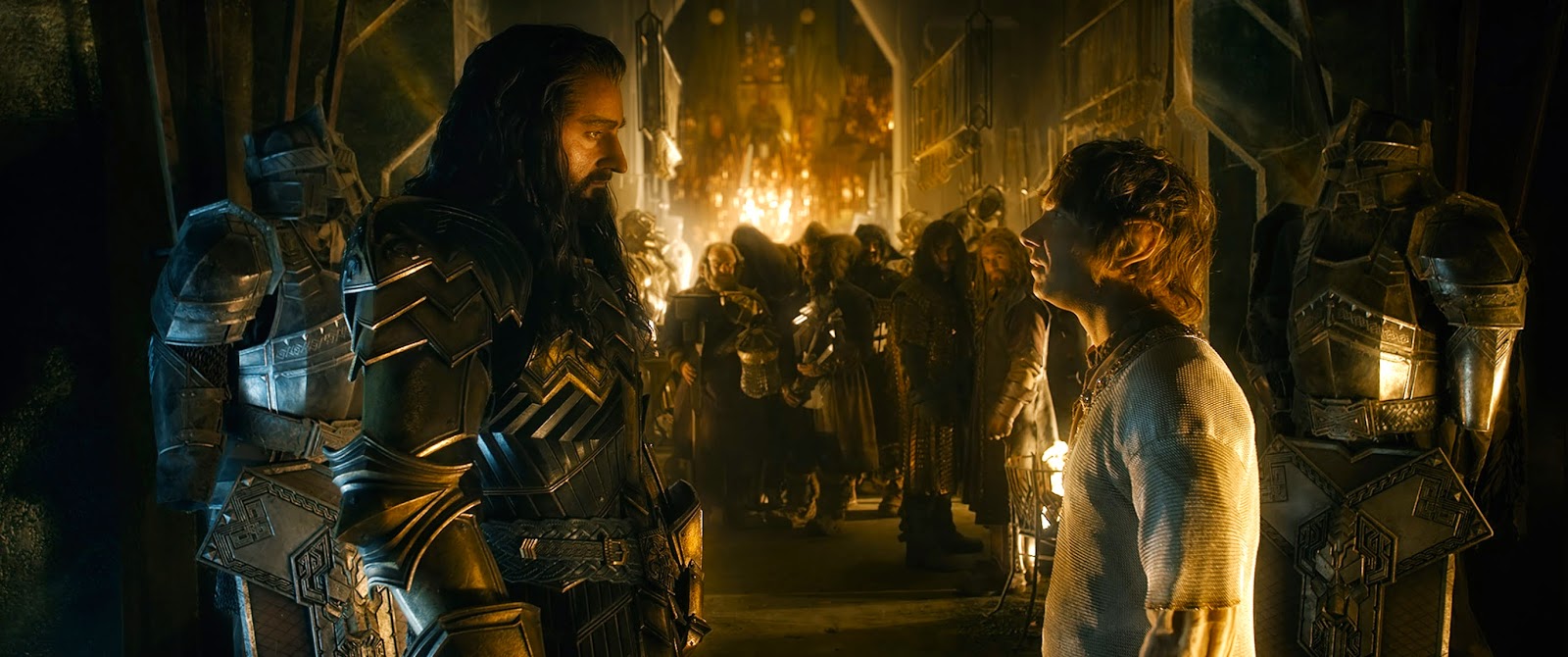
The Hobbit: The Battle of the Five Armies (2014)


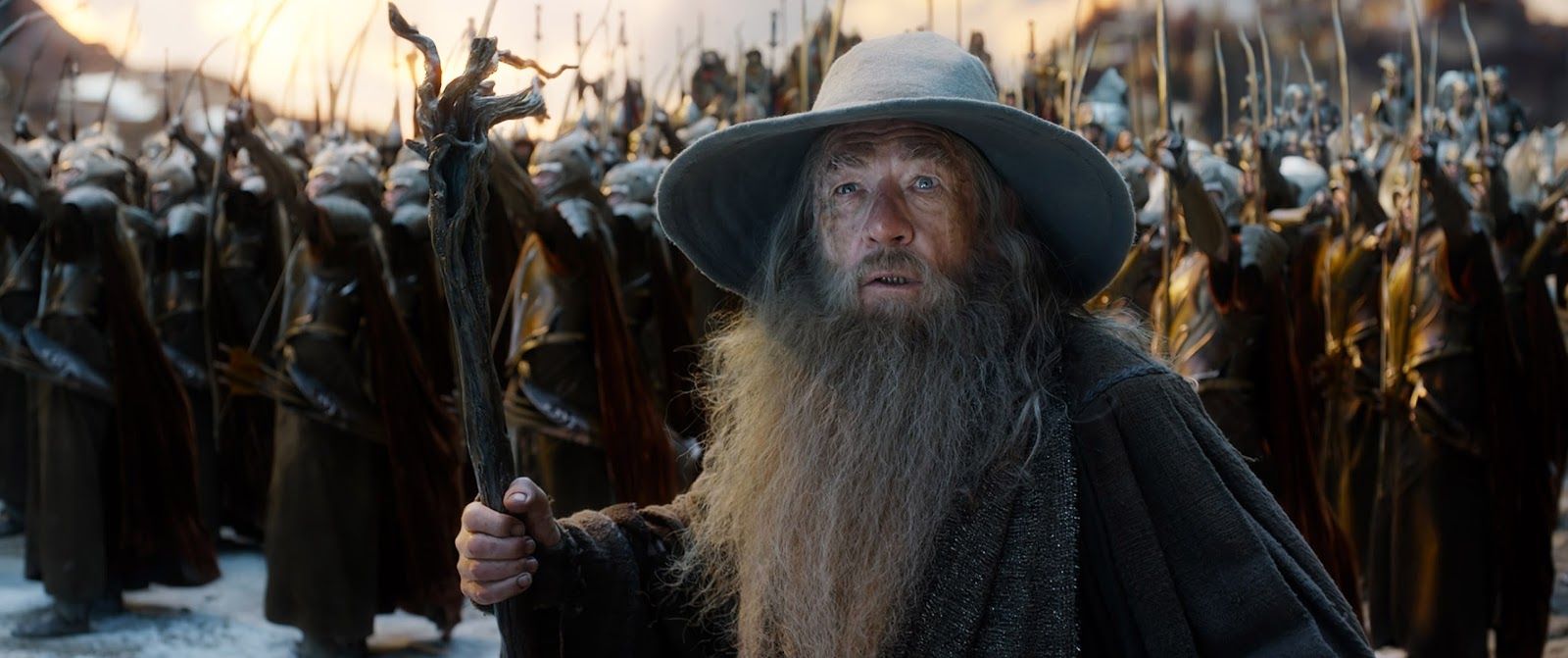
Gandalf prepares to take on many foes – not least the script and editing – in The Hobbit: The Battle of the Five Armies

Director: Peter Jackson

Cast: Martin Freeman (Bilbo Baggins), Ian McKellen (Gandalf), Richard Armitage (Thorin Oakenshield), Luke Evans (Bard), Evangeline Lilly (Tauriel), Orlando Bloom (Galadriel), Aiden Turner (Kili), Lee Pace (Thranduil), Ken Stott (Balin), Cate Blanchett (Galadriel), Ian Holm (Old Bilbo), Graham McTavish (Dwalin), Christopher Lee (Saruman), Hugo Weaving (Elrond)

I feel like I’m running out of things to say about this desperately flawed trilogy – but here we go… Peter Jackson finally finishes his great contractual obligation, serving up another film that expands out a slim couple of chapters of a children’s book into something that strains so heavily for the feel of something epic and world shattering, it feels like a constipated man struggling on the loo.

We’ve finally made it to the Lonely Mountain. Smaug is killed by Bard (Luke Evans) during his attack on Lake Town, while Thorin (Richard Armitage) seizes control of the fortune under the mountain. However, the mountain now becomes a struggle point between the dwarves and their allies: Bard and his people and Thranduil (Lee Pace) and his elves, who are all looking to gain control of its treasures. While Bilbo (Martin Freeman) attempts to make an increasingly maddened Thorin see sense, Gandalf (Ian McKellen) brings warning of an imminent attack by an army of Orcs – will this mutual enemy bring our heroes together at last?

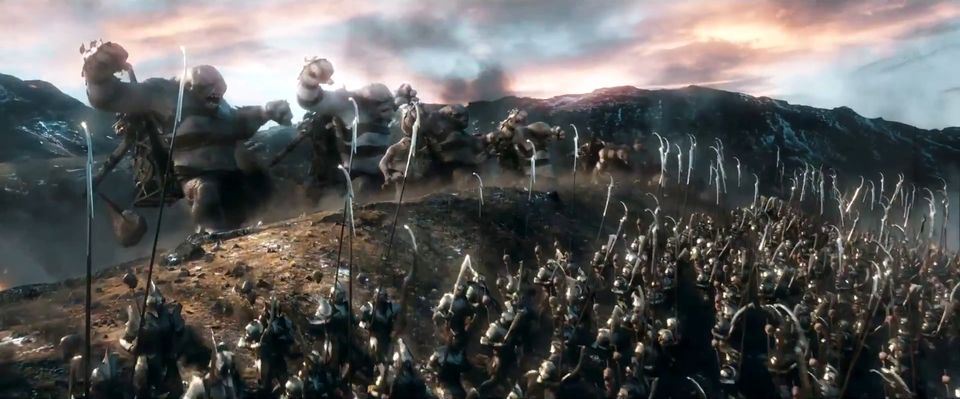
The Battle of the Five Armies is the moment where you knew this sprawling, sausage-fest of a trilogy had lost what soul it had. Almost the entire runtime is given over to battle sequence, seems to go on forever and ever with no respite. We see a host of clashes that carry none of the poetry of The Lord of the Rings, and a host of characters we don’t really know fighting with each other. Frankly, it’s hard to care. It looks great, but it’s just empty spectacle, sound and fury signifying absolutely nothing at all. In fact, it’s all so unclear that watching this movie for a third time I still have absolutely no fucking idea what this battle is even about! What are the Orcs doing? Why are they attacking? 

As always character moments are constantly sacrificed. The dwarf company are ruthlessly trimmed of screen time–even Ken Stott’s Balin doesn’t get much of a look, bizarre as he’s been established previously as Thorin’s confidant. Apparently James Nesbitt nearly wept when he saw this film – not surprising since he must barely be on screen for more than five minutes. Crucial moments that should make us care about these characters are constantly lost: Thorin’s descent into madness occurs completely off camera, Gandalf’s struggle to keep the peace gets glanced over, Bilbo nearly gets completely lost in the shuffle from special effect to special effect.

Tragically, far too much screen time is given to two characters Jackson has parachuted into the film. Weaselly Lake Town official Alfrid is given seemingly endless scenes of “comic relief” – a shame since he’s about as funny as being hit in the mouth by a hammer. I understand Jackson must find this character funny, and that he felt some comic relief was needed amongst all the fighting – but quite frankly he’s wrong. Alfrid is not funny – I think you’d go a long way to find anyone who liked him – and secondly if they needed comic relief characters, why not let one of the dwarves fill that function rather than introducing a new character 2/3rds of the way into the story? 

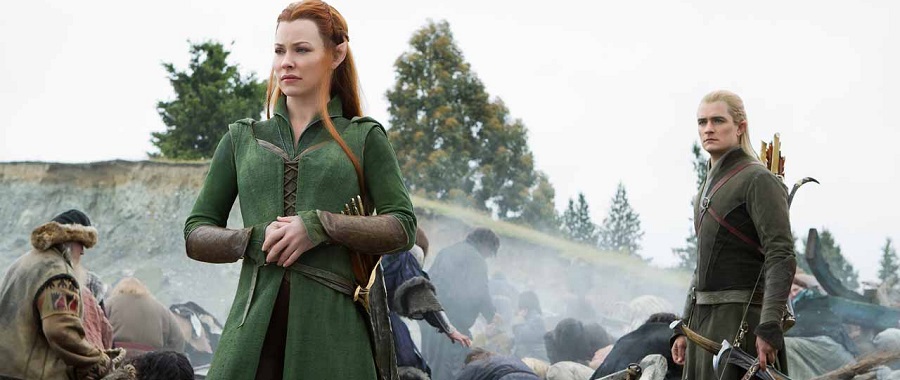
The second character who gets far too much to do is our old friend Legolas. The elf’s plot line is given never-ending minutes of screen time, his struggles and conflicts given (it feels) even more screentime than Bilbo’s. Do we really need to see Legolas searching for the orcs? Do we really need to see him doing ridiculously impossible feats in the middle of combat? Are we given any reason to care about him at all, other than the fact we remember him from Lord of the Rings?

Legolas’ inclusion demonstrates almost everything wrong in this series. Did Jackson include so much of him because he didn’t need to think quite so much about what to do with the character, being already so familiar with him? When Legolas (at best a secondary supporting character in the story) has his battle with some random Orc, intercut (and even prioritised in the edit) over Thorin’s climactic battle with Azog, the clash the entire trilogy has been building towards, you know something is seriously wrong.

On top of which, Legolas’ inclusion undermines Jackson’s other big invention, the Legolas-Tauriel-Kili love triangle. Really this should be a Tauriel-has-to-marry-Legolas-but-wants-to-marry-Kili structure – that at least would work, right? We’d understand her struggle and division – and it would add a lot more weight to her feelings for Kili. Instead, Jackson is worried this might make Legolas look unsympathetic – so instead Tauriel is sorta in love with both with them, a confused, messy structure that makes no real sense. To add insult to injury, when Tauriel and Kili are threatened by random nasty Orc, who saves the day? Legolas. Who fights Tauriel’s battles for her? Legolas. Jackson introduces a love triangle, and then undermines it because he doesn’t want to criticise his beloved character. He introduces a female character, only to reduce her to a victim obsessed with lurve. It’s a disaster.

You feel Jackson threw in this plot because not a lot actually happens in this movie. Doubly annoying then that so many plots we do care about disappear so swiftly. The Arkenstone, the cause of so much struggle, is completely forgotten half-way through. The fate of Bard and the Lake Town survivors is glossed over. The dwarves get benched from the action for ages. The plotline around the Necromancer is wrapped up with embarrassing and confusing swiftness. Thorin’s plotline is rushed together at the edges, with the focus constantly on getting more fighting in shot.

It’s a real shame that the actors don’t get the time they deserve to really let their performances flourish. Armitage is, as always, superb as a Thorin who loses himself in greed and desire for gold, and becomes cruel and bitter before remembering his nobility. Martin Freeman is still great as Bilbo, honest, normal and delightful despite being given little to do. Ian McKellen still has all the Gandalf qualities of wisdom and grandfatherly authority. Among the rest of the cast, Luke Evans continues to be a stand-out as the noble Bard.

There are moments of action that really work. Smaug’s attack on Lake Town is the film’s dramatic highlight – shame its over in 12 minutes. But it’s brilliantly shot, has moments of heroics and looks great. Thorin and Azog’s battle really works because Thorin is just about the only character in the film we really care about. But much of the rest of the fighting is just silly – gravity-defying bashing (Legolas and Saruman are particularly guilty of this) or never-ending struggles in the battle itself – in which by the way, only men seem to be allowed to be seen doing anything brave.

The Battle of the Five Armies is in many ways a fitting conclusion to the series. Millions of dollars are spent on making a brilliantly designed and shot series of images. But no time is spent on making us care about anything. We invest almost nothing emotionally in the story at all. While we might be a bit sad at seeing people die, we know so little about many of them their deaths hardly stick with us. Why did Jackson not see this? Yes Lord of the Rings was a masterpiece and tough act to follow – but when you see the love and care dripping from every frame of that 12 hour trilogy, and then you move to this mess, you can’t help but think: where did it go wrong? It’s not a complete disaster – the films are always watchable – but they could have been so much more. Instead, they’re the bloated, incoherent footnotes to a great trilogy.