Tag: Leonardo DiCaprio

The Great Gatsby (2013)

“Hello old sport”: Leonardo DiCaprio is The Great Gatsby

Director: Baz Luhrmann

Cast: Leonardo DiCaprio (Jay Gatsby), Tobey Maguire (Nick Carraway), Carey Mulligan (Daisy Buchanan), Joel Edgerton (Tom Buchanan), Elizabeth Debicki (Jordan Baker), Isla Fisher (Myrtle Wilson), Jason Clarke (George Wilson), Amitabh Bachchan (Meyer Wolfsheim), Jack Thompson (Dr Walter Perkins), Adelaide Clemens (Catherine)

The Great Gatsby is possibly the great American novel. I’ve only read it once, but I certainly admired its beautiful prose, capturing of an era of American life and understanding of the fragility behind America’s love of success. Baz Luhrmann is clearly a fan, as he spent years putting together this passion project, presenting the biggest, brashest version of Fitzgerald you are ever going to see.

Nick Carraway (Tobey Maguire) is a young writer turned bonds salesman in 1920s New York. He lives across the bay from his cousin, Daisy (Carey Mulligan) and her husband Tom Buchanan (Joel Edgerton), a brash old-money man carrying on an affair with Myrtle (Isla Fisher), the wife of his garage mechanic. Carroway’s next-door neighbour is the sumptuously wealthy, but mysterious, Jay Gatsby (Leonardo DiCaprio) whose parties and generosity are legendary. As Carraway gets to know Gatsby (as much as anyone can), he discovers that Gatsby has a deep, near obsessive, love for Daisy.

Luhrmann’s film is a technicolour explosion that uses many of the techniques you’ll be familiar with from any of director’s other films. The camera is a whirligig of motion. The colours are bright and primary. The whole tone of the film (certainly for its first hour) is larger than life. The narrative has been tweaked to take on the tone of a Greek Tragedy, with the loud noise, fast camera moves and speedy pace all inverted in the latter half to invoke sadness and tragedy. And of course, the music is deliberately anachronistic, mixing modern genre music with 1920s sounds.

Sometimes this high-budget technicolour brilliance does feel like it is partly getting in the way of the deeper themes that lie within the original. But that might be partly because the novel’s themes are so reliant on internalised feelings, unsaid or guessed emotions, and deeply purple prose, that these are ideas which are very hard to translate to the screen.
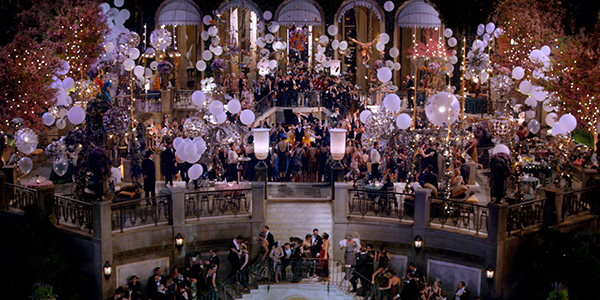
There is something to be said for Luhrmann turning one of the pillars of 20th-century American culture into a spiritual sequel to Moulin Rouge!. And Moulin Rouge! is what the film strongly resembles, not only in design, but its romantic structure, poetic retelling, high drama, sense of impending doom and danger behind the bright lights, assault on class and the way it stands in the way of true love, and the lack of freedom in our lives. Both even have sad, reflective authors book-ending events.

So your enjoyment of the film is probably going to depend on how you feel about Luhrmann’s OTT style. Love Moulin Rouge! and Romeo + Julietand you will probably find something to enjoy here (and you’ll also notice his love of tragic love stories). Saying that, of those three, Gatsby is the one the carries the least depth to it, which is intriguing as it probably mines the most psychologically rich source material. While Luhrmann understands that the book is about the real emotions masked by explosive parties and opulence – the film often feels as choked by these things as the characters do.

This is partly because I feel both Maguire’s and Mulligan’s performances don’t quite work. Maguire is so stripped back, quiet and passive he almost disappears – you don’t get a sense of Carraway as either a shrewd observer or someone wrapped up in events: instead he’s a passenger, like the plot contrivance Gatsby sometimes treats him as. Similarly, Mulligan is slightly overwhelmed by the movie, not giving a strong enough performance for her to break through. The film powers forward with such momentum and brashness, it squashes her.

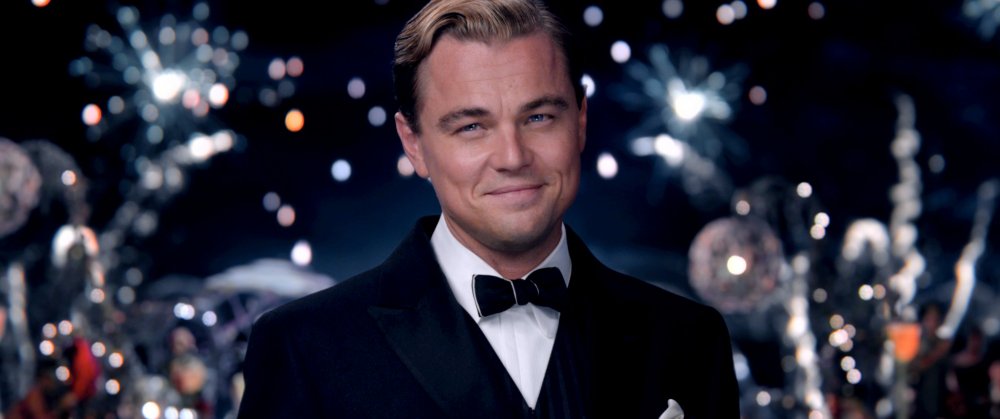
It’s probably why the most successful lead performance by far comes from DiCaprio. He’s perfectly cast as Gatsby: so good in fact you wish he was in a more thoughtful, relaxed film that would give him a more of a chance to breathe. DiCaprio perfectly encapsulates the desperation just beneath Gatsby’s surface, the fear and uncertainty that lies under his suave urbanity. He completely gets the character, understands he is a showman presenting a front to the world because that’s what he thinks the world wants, but who is, in his own way, as empty and lost as the world of bright lights he is offering people. It’s an excellent performance.

Luhrmann’s work with DiCaprio is what gives the film it’s centre and, for all the colour, noise and joy of the first 40 minutes or so, it finds its heart in the moments of acting and character interplay as the Gatsby-Daisy-Tom love triangle comes to a head. This scene, with its bubbling emotions, high stakes and tension is like an oasis of calm in the high-faluting scenery that surrounds it. But then this is a film where the smaller moments actually come across as richer than the larger ones – partly helped by the fact that Joel Edgerton and Elizabeth Debicki both give excellent performances as the key supporting characters. 

The Great Gatsby captures the feel of Fitzgerald rather well, but for all the dialogue of the book placed over the film in voiceover, it never quite manages to capture the spirit of the book in the same way. It looks wonderful, and its dynamic filming is certainly enjoyably impressive, but it doesn’t quite become a film that deals in emotions and depth. It flashes and fizzles but it never lets us really soak in its ideas and themes. It’s all too much at times, and the tragic sadness at the heart of the story, of this lost boy trying to live the life of a man, never comes out as it should. An interesting and entertaining film, but not one that will last.

J. Edgar (2011)


Leonardo DiCaprio is excellent in Clint Eastwood’s decent J. Edgar

Director: Clint Eastwood

Cast: Leonardo DiCaprio (J. Edgar Hoover), Armie Hammer (Clyde Tolsen), Naomi Watts (Helen Gandy), Judi Dench (Anne Marie Hoover), Josh Lucas (Charles Lindbergh), Dermot Mulroney (Norman Schwarzkopf), Damon Herriman (Bruno Richard Hauptmann), Jeffrey Donovan (Robert F. Kennedy), Zach Grenier (John Condon), Ken Howard (General Harlan F Stone), Stephen Root (Arthur Koehler), Denis O’Hare (Albert S Osborn), Geoff Pierson (A Mitchell Palmer)

J. Edgar Hoover holds a unique place in American history. As the first ever director of the FBI he ruled it as his own personal fiefdom from 1935 to his death in 1972. A workaholic, he revolutionised the investigation of crime in the USA, centralising records, introducing and championing scientific techniques, and working to change the image of lawmen into heroes. On the other hand, Hoover frequently abused his position, used the FBI to investigate rivals and stamp out groups he judged as dissident, and put together secret files of unpleasant and damaging material on political opponents.

Eastwood’s film actually does a pretty good job of balancing these two J. Edgar Hoovers, and of presenting a fairly even-handed portrait of a man most people see now as the worst example of a power-abusing policeman. The film follows the career of Hoover (Leonardo DiCaprio), focusing in particular on the Lindbergh kidnapping, clashes with Presidents, and his relationships with his deputy (and probably long-term lover) Clyde Tolsen (Armie Hammer) and with his domineering mother (Judi Dench). 

The film’s main advantage is a typically power-house performance from Leonardo DiCaprio. His Hoover blusters with insecurity, resentment and a monomaniacal obsession with his own sense of right and wrong. He’s the sort of guy who takes a woman on a date because he thinks it’s time to get married and then takes her to see his filing system. Hoover was a man whose life was work and power – but DiCaprio doesn’t forget that amidst the maniacal power grabbing, he had a confused personal sexuality.

The film suggests Hoover repressed his homosexuality due to the influence of his mother (“I’d rather have a dead son than a daffodil”), and contrasts this painful struggle with the preppy, tender, manly Clyde Tolsen, played with equal skill by Armie Hammer. Tolsen was Hoover’s long-term friend and companion, they holidayed together, ate meals together, lived opposite each other, and Tolsen even accepted the flag after Hoover was buried – neither man married. The film creates a fairly sweet love story of a man who couldn’t fully accept his own feelings falling in love with a man comfortable with who he was. 

The old-married feeling of this couple – whose physical contact never really goes much further than the occasional hand holding – is the emotional heart of the film. Although the repressed Hoover never admits his love openly (to the occasional hurt of Tolsen), it’s actually a fairly good expression of a normalised same-sex marriage, and Eastwood never succumbs to some of the odder gossip about Hoover’s cross-dressing (except in grief at the death of his mother) or sexual preferences.

His relationship with his mother (whom he lived with his whole life until her death) is more predictable: she is demanding and controlling, he is loving, placid and deferential to her. It’s what we’ve seen before several times – and Judi Dench can play this role standing on her head – but it gives us a nice context to get inside Hoover’s head and understand why he behaved the way he did. 

The film doesn’t lose track of Hoover’s ongoing political clashes. We get showpiece senate hearings as Hoover struggles to establish the FBI with the powers it needs to combat crime (DiCaprio is pretty electric in these scenes). Repeated shots show Hoover watching various inauguration parades, or stopping to stare at the same portrait of Washington as he heads in to meet with (and intimidate) various (unseen) presidents. The film hits these beats hard at times – did we need Hoover telling Robert Kennedy that he has information on “your brother, the President of the United States”? But it’s not afraid to show Hoover unsympathetically, particularly in his vindictive campaign against Martin Luther King.

What Dustin Lance Black’s screenplay, and Eastwood’s professional, smooth direction, do well is explain why Hoover may have hated these people so much. The film focuses on Hoover’s early days – full of anarchist bombings, wildfire communist strikes that led to clashes with the police, years of bank robbers and gangsters carrying on unrestricted in America – that makes you at least understand why he felt America was under threat. 

The film’s reconstruction of period detail is exquisite, and much of the photography has a brilliantly murky, sepia tone to it I really liked. The reconstruction of details from the Lindbergh kidnapping is very well done. All this is much better than some of the wonky “old age” make-up Di Caprio, Hammer and Watts (playing Hoover’s faithful secretary) have to labour under towards the end of the film (Hammer in particular looks slightly ridiculous under laboured liver patches). 

In structure, this is a fairly traditional biopic, and in trying to cover Hoover’s entire career it often skips over or misses key incidents. In an era where “modern” biopics tend to focus on dramatizing one key moment in their subject’s life (such as Selma or Lincoln), J. Edgar feels a bit more like a 1990s biopic. It crams so many events in, it sometimes feel like an “and then this happened” sort of film, rather than the more interesting thematic film under the surface.

It’s also struggling to bring more interesting depths out. It has a neat structure of Hoover dictating his biography to a string of indistinguishable “trusted” FBI agents (each scene has a different one, and there is neat visual gag as Eastwood cuts to a series of these guys in a row offering the “wrong” answer to Hoover’s question as to who was the most famous American of the 20th century – the answer being Lindbergh). Interestingly a final speech from Tolsen suggests much of what we have seen is Hoover’s vainglorious “legend building” rather than the “true story” – a theme that you feel could have been explored more.

It’s stuff like this that makes J. Edgar stand out a bit more. That and the wonderful performances from DiCaprio and Hammer, as the truly rather sweet married couple-who-weren’t. The film could make more of exploring the psychology of Hoover – the man who hated anyone different, including homosexuals – but who carried this open secret. But there isn’t time. It’s a film with good ideas and scenes, which could be more than it is. But it’s a decent film for all this. Many won’t like the fact that it takes a sympathetic angle on Hoover. But it shows every life has its right and wrongs.

Blood Diamond (2006)


Leonardo DiCaprio and Djimon Hounsou excel in this self important Hollywood message film

Director: Edward Zwick

Cast: Leonardo DiCaprio (Danny Archer), Djimon Hounsou (Solomon Vandy), Jennifer Connelly (Maddy Bowen), Arnold Vosloo (Colonel Coetzee), Michael Sheen (Rupert Simmons), David Harewood (Captain Poison), Basil Wallace (Benjamin Kapanay), Jimi Mistry (Nabil), Kagiso Kuypers (Dia Vandy)

Hollywood films set in Africa often have a difficult conundrum – they want to tell a story about that often troubled continent, but struggle to do so without feeling impossibly worthy – and often need to filter the story through the experience of white westerners in the region. Blood Diamond tries to avoid these traps very hard – but largely ends up falling into them.

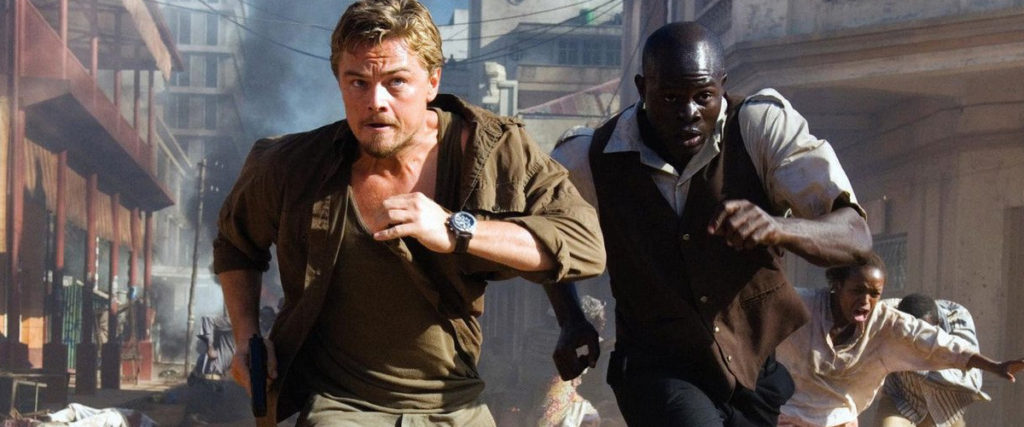
In 1999, Sierra Leone is ravaged by Civil War. Fisherman Solomon Vandy’s (Djimon Hounsou) village is attacked by rebels, led by Captain Poison (David Harewood), and his son is taken as a child soldier. Captured Vandy is forced to work at the diamond mines, where he discovers a priceless “Blood Diamond”. After concealing it, Vandy is captured by government troops. Overhearing of the diamond’s existence from a confrontation between Vandy and Poison in prison, Rhodesian arms trader Danny Archer (Leonardo DiCaprio) enlists Vandy to claim the diamond – promising to help find Vandy’s lost family with the help of journalist Maddy Bowen (Jennifer Connolly).

The only thing that elevates this rather shallow film is the excellence of its two lead performers. Both DiCaprio and Hounsou give committed, energised and emotional performances way beyond the clichés and mundane predictability of the rest of the film. DiCaprio has a fairly standard redemption cycle, but invests Archer with an inner pain, a supressed sense of honour and a bitter anger at the world that acts as a shield against opening himself up to affection and friendship. Hounsou takes on the difficult task of effectively representing Africa, but makes Solomon a living, breathing man, a loving father but also a rash man, defensive but burning with emotions.

It’s a shame the rest of the actors aren’t given the time to build these sort of real human portraits out of this stodgy script. Jennifer Connolly in particular is cursed with a lousy part – every third line is either a plot device or a method of communicating facts and figures from the writer’s research. The film is bookended by tedious “G8” meeting scenes where (mostly white) politicians effectively sanctimoniously read the contents of Wikipedia’s Sierra Leone pages at each other. 

The film manages to tick most of the expected boxes of African-set Hollywood films, with poverty, violence, blood diamonds, war lords and child soldiers all mixed in. It’s very clear all involved were of the opinion they were making an “important” film. It’s this “on the nose” seriousness that prevents the film from being a really effective piece of message-film making, not helped by Zwick’s careful but uninspired direction. It’s not a bad film by any stretch, but it is only a competently well-made, average one.

Throughout, messages are heavily delivered and metaphors hammered home (a metaphor about the blood in the soil is whacked over our head at a crucial dénouement). The film overeggs the pudding for its emotional moments – the final scene certainly goes too far. Many of these problems come back to the script, which is so wedded to its research and earnestness, that it keeps getting in the way of the moments when the film tries to come to life. We never really feel we are actually sharing the experience of those most affected by events (even Vandy is really a supporting actor in his what should be his own movie, his experience filtered through the impact it has on Archer).

So this is a flawed film, but it still sort of works – and most of that praise needs to go to the leads, who deserved a far better film. It’s predictable and sanctimonious, keen to be a landmark piece of cinema, but really it’s just another Hollywood “message” piece. DiCaprio and Hounsou sell the hell out of the predictable story and stodgy script, and make it one that keeps your interest throughout, even if it never really hits you with the impact it desired.

The Revenant (2015)

Leonardo DiCaprio conquers the wilderness

Director: Alejandro González Iñárritu

Cast: Leonardo DiCaprio (Hugh Glass), Tom Hardy (John Fitzgerald), Domhnall Gleeson (Andrew Henry), Will Poulter (Jim Bridger), Forrest Goodluck (Hawk), Duane Howard (Elk Dog), Arthur Redcloud (Hikuc), Melaw Nakehk’o (Powaqa), Grace Dove (Glass’s wife), Lukas Haas (Jones), Paul Anderson (Anderson)

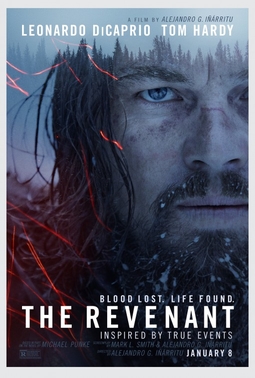
The Revenant may have been one of the hardest films ever made. Iñárritu’s bleak survivalist masterpiece may not be the easiest watch – and certainly not the most fun – but it is something really unique and interesting, an attempt to completely submerse the audience in one character’s experience, with little interest in narrative, context or characterisation.

In 1823, Hugh Glass (Leonardo DiCaprio) is mawled by a bear while leading a group of trappers away from an Indian ambush. Slowing the rest of the men down, he is left in the care of a small party led by Fitzgerald (Tom Hardy). Fitzgerald abandons Glass to save his own skin – murdering Glass’ young son, he leaves Glass for dead, alone in the frozen wilderness.

This is a true experience film, that’s probably easier to admire and respect than it is to love, or even enjoy. As a technical accomplishment it is outstanding: it looks absolutely fantastic. Apparently all lit by natural light, the film has a dusk/dawn beauty to it throughout its running time that perfectly captures the harshness of the setting. The camera also unstintingly follows the burdens of its central character, close and personal with the action, often using hand held and Steadicam to throw us into the action: the three major “action” sequences have an almost unbearable intensity to them.

Iñárritu’s direction is masterful – this is a splendidly directed piece of cinema, a bravura display of accomplishment, which has the confidence to largely not draw attention to itself. In fact, that’s a major strength of the film – its technical brilliance, its striking editing and wonderful photography all serve the purpose of bringing us closer to the experience of Glass, throwing us into the world. The opening attack of the Indians on the trapper probably deserves a host of Oscars by itself, a frighteningly vivid, desperate conflict that the film throws the viewer right into the middle of. Similarly the fateful bear attack has a brutal efficiency about it that makes the viewer feel every bite and blow on DiCaprio’s battered body.

It’s well known that Leonardo DiCaprio won the Oscar for his role in the film. Possibly this was as much (if not more) a testament to his fierce commitment to this role than the actual performance. There is certainly no debate about that. Never mind the freezing cold conditions, DiCaprio spends a third of the film bound to a filthy stretcher before being swept down rapids, eating a raw fish from a lake, and climbing naked inside the guts of a dead (hopefully prop) horse… Throughout all this, a combination of his isolation and wounds means he says very little, but only growls and groans. It’s not an acting performance in the sense of a character creation – you learn very little about Glass, and other than his strength of will and hunger for revenge, little of what motivates him – but it is a complete physical performance. And DiCaprio probably deserves some sort of reward for leaving nothing in the dressing room in playing it.

The “character” acting is left far more to Tom Hardy as the weak, arrogant, blindly wilful Fitzgerald. Hardy’s performance was a little overlooked here, but it’s as fiercely committed as DiCaprio’s and, in many ways, is a more complex and intriguing character – a man with the force of will to lead but without the courage and integrity that makes a true leader of men. Yes he mumbles the dialogue – at times I did find it a little unclear what he was saying – but it is a very accomplished exercise in character creation from slight material. The rest of the cast are all equally strong – Will Poulter is terrific as a naïve Bridger, as is Domhnall Gleeson as the rigid Captain.

But the film is possibly so triumphant in its mise en scene that it overpowers the themes and narrative of the film. It is surprisingly easy to forget that Glass is a man powered by revenge, so completely is the focus on his survival. His past grief over his deceased wife is murky and unclear on first watching, not enough focus or context given to it by Iñárritu’s storytelling. Many of the “narrative” encounters that Glass has over the film are not particularly new or unique. Iñárritu’s film here is not really about the story, but the telling of it. And in focusing on the detail of delivering the story, it loses the heart and investment that a real story needs. Glass’s journey is terrible, his suffering huge, his perseverance and will striking – but I can’t say that I felt particularly emotionally involved with his struggle or got a sense of his emotional pain.

As such, this increasingly becomes a film that is easier to respect and admire than it is to love. Despite DiCaprio’s commitment and bravery as an actor, Glass is largely an enigma and the film itself is an immersion in an environment rather than a piece of drama. As a viewing experience it grips during its duration, but I’d be fascinated to see when I watch it again, will this be enough to make it last? Will a familiarity with the story allow the themes it attempts to deal with – revenge, grief etc. etc. – come out more strongly? Either way, any film that requires a second viewing is one that deserves recommendation.

Catch Me if You Can (2002)


Leonardo DiCaprio lives out his fantasies in Catch Me if You Can

Director: Steven Spielberg

Cast: Leonardo DiCaprio (Frank Abagnale Jnr), Tom Hanks (Agent Carl Hanratty), Christopher Walken (Frank Abagnale), Nathalie Baye (Paula Abagnale), Amy Adams (Brenda Strong), Martin Sheen (Roger Strong), James Brolin (Jack Barnes), Nancy Lenehan (Carol Strong)

Conmen. You wouldn’t want to meet one but they don’t half make for great stories: largely because tell a great one. Watching cons has the same tension as watching a high-wire artist: will they slip? We all like to think we could fool people if we wanted to – and the movies give us a chance to watch someone else live those fantasies for us.

Frank Abagnale Jnr (Leonardo DiCaprio) was a teenager who was a natural at the arts of the short and long con, as well as an accomplished forger. The film tells the story of his late teens and early twenties when, as well as impersonating a senior paediatrician and a junior district attorney, Abagnale stole almost $3 million from Pan Am by impersonating a pilot and forging checks between 1963 and 1969. Hanks plays Carl Hanratty, the dedicated FBI investigator on the case.

What’s great about this film is that, by and large, it isn’t trying to be a lot more than an entertainment. In fact, Spielberg deliberately shoots the film in a low key, unflashy style that puts the focus on the story and acting. And there is something hugely entertaining about the chutzpah of conmen, particularly those who are only fleecing huge businesses, which this film really understands and taps into. It’s probably Spielberg’s funniest “comedy”.

It’s witty throughout with a sly sense of humour. In his roles as both doctor and lawyer, Abagnale is shown carrying out research by watching TV shows and reading pulp novels – and then repeating their clichés, to the bemusement of those around him (but he delivers it with such confidence it still works). I also enjoyed the fact that his chosen careers (air pilot, doctor, lawyer) are all approached with the same naive understanding a kid would have for what the job involves (and DiCaprio’s look of childish terror slipping past his adult facade watching a plane take off from the cockpit and when asked for his opinion on the treatment of an injured child at a hospital are endearingly genuine). The film is told with a great deal of bounce and lightness, taking on the structure of a Wil-E Coyote/Roadrunner chase cartoon, with Hanratty defeated several times by Abagnale’s confident sleight of hand.

The script does have depth to it, rooting Abagnale’s actions in his trauma from a broken family and witnessing his father’s humiliating fall into poverty after charges of tax evasion. The film suggests this to be the main motive for Abagnale’s actions – a misguided attempt to redeem his father and take back what was taken from him. This theme of a son trying to win his father’s respect gives the film a heft that balances the fluff – especially as it’s clear the son has taken many of the wrong lessons from his father’s life on the edges of legality. It’s helped in this respect by a wonderful performance of twinkly charm and fatherly pride by Christopher Walken, combined with a sly sense of roguishness.

Leonardo DiCaprio is the motor that really makes this film work. His boyish good looks are perfect for this and he has both the confidence to convince as a trickster and the vulnerability to be the young boy underneath. As such he has the lightness of touch that the story needs and the acting chops to convey the inner pain Abagnale is working so hard to soothe. He’s also effortlessly charming and endearing here, surely the perfect traits of a con man.

For the rest of the cast, Tom Hanks very generously plays second banana as the investigator and gives the role a strong sense of the surrogate father. Amy Adams in one of her first roles is wonderfully sweet as Abagnale’s fiancée, totally unaware that he is a 17 year old kid. Martin Sheen and Natalie Baye also give good performances.

The film is a light and frothy confection that shades in just the right amount of nuance and depth to make us care for its lead character. With John Williams’ zippy score and its luscious recreation of the late 1960s, it’s also a film in love with the vibrancy of the era. A terrific unpretentious entertainment, it’s not one of its director’s great works, but it might be one of his most joyful.