Tag: Linda Darnell

My Darling Clementine (1946)

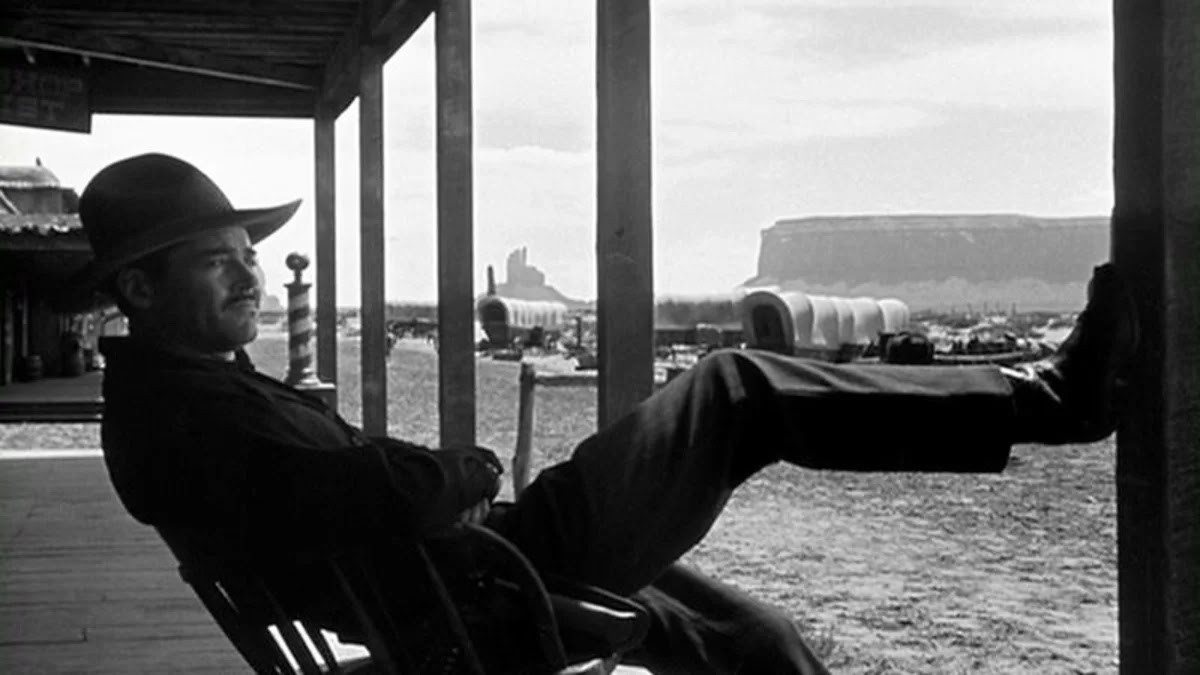
Henry Fonda is here to enforce justice in My Darling Clementine

Director: John Ford

Cast: Henry Fonda (Wyatt Earp), Linda Darnell (Chihuahua), Victor Mature (“Doc” Holliday), Cathy Downs (Clementine Carter), Walter Brennan (Newman Haynes Clanton), Tim Holt (Virgil Earp), Ward Bond (Morgan Earp), Don Garner (James Earp), Grant Withers (Ike Claton), John Ireland (Billy Clanton), Alan Mowbray (Granville Thorndyke), Roy Roberts (Mayor), Jane Darwell (Kate Nelson)

In John Ford’s The Man Who Shot Liberty Valance, a journalist says “When legend becomes fact, print the legend”. It could almost be a commentary on My Darling Clementine, a lusciously romantic retelling of the story of Wyatt Earp and his Gunfight at the OK Corrall between the Earps and local cowboy gang the Clantons. John Ford’s film is a perfect slice of Americana, in which the West is seen at its glorious best, and almost no fact in it is true.

In 1882 retired Marshal turned ranger Wyatt Earp’s (Henry Fonda) brother James is killed outside the town of Tombstone, shortly after Earp had turned down an offer to buy his cattle from Old Man Clanton (Walter Brennan), the family patriarch. Earp suspects foul play, but decides to stay in Tombstone as its new Marshal, with his brothers Virgil (Tim Holt) and Morgan (Ward Bond) as his deputies to reinforce the law. In town he meets local gambling man “Doc” Holliday (Victor Mature) and falls for Holliday’s former girlfriend Clementine (Cathy Downs), in town searching for Doc. Will Wyatt find out who killed his brother and find contentment?

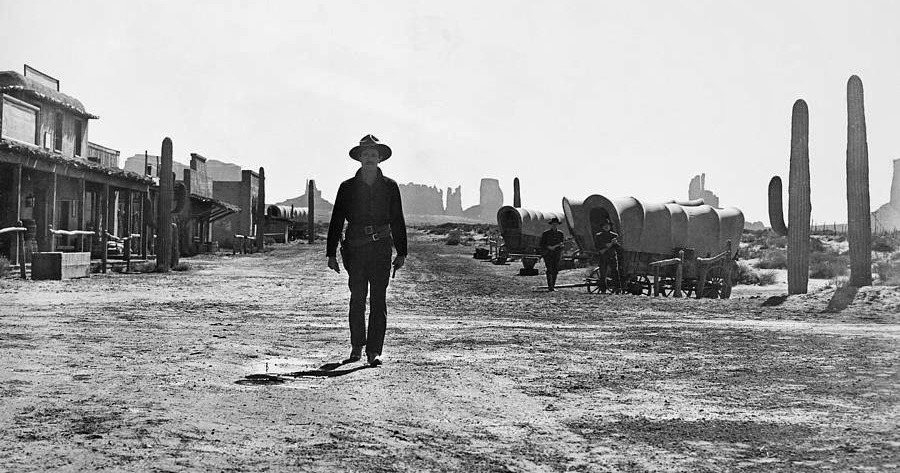
My Darling Clementine is almost entirely invented. Virtually nothing in it is true, from the year it’s set (the actual gunfight happened in 1881) to what happens in the actual gun battle. The fates of nearly all the characters have been changed (James, whose death kicks the film off, actually died in 1926) and a host of characters have been invented, not least Clementine herself. The action has been moved to Monument valley from Arizona. Its comprehensive myth-making on screen, with Earp himself changed from an unhappily married man probably “carrying on” with an Irish actress into the pillar of moral decency that is Henry Fonda. 

But does it really matter? Not really. If you run with the film has being part of Ford’s tradition of reworking the past of America into a grand origins myth for the United States, the film works perfectly. It’s directed with great visual skill by John Ford, who creates some luscious shots of Monument valley and some glorious skylines that dwarf the actors into the machinery of myth. His visual storytelling is perfect at communicating character, from the boyish leaning back on his chair from the boy scoutish Earp to carefully building the tentative, ]barrier filled relationship between Earp and Clementine. 

My Darling Clementine features a romance plot line, but it’s played in parallel with a story of feuding that leaves large numbers of the cast dead. Aside from Earp and Holliday there is virtually no overlap between the romance plot and the events leading to the gunfire. Clementine never refers to it, and you can almost imagine this as two films skilfully and gracefully cut together. Perhaps this is Ford’s intent: this is a film about community in the West, about the building and creation of a town and the shaping of relationships and friendships around it – that just happens to have as well a gang of murderers that Fonda needs to take down.
Tombstone is emerging from the Wild West – at a key moment half way through the film, Earp and Clementine dance (Earp with a surprising grace) at an outside ball to celebrate the opening of a church. It’s just one sign of civilisation arriving in the town, with theatre on the way and even Holliday’s gambling den slowly becoming something a little bit less violent. Earp himself is a reluctant but honest lawman, repeatedly asking at the start “what kind of town is this?” and seemingly deciding to stay to sort the place out as well as find out who killed his brother. 

It’s telling in any case that Earp’s reaction to his brother being killed is to pick up a badge not a gun, but then you would expect nothing less from Henry Fonda. Fonda is at his most decent, and bashful, his most just and moral, the embodiment of law and justice. Fonda pitches the performance perfectly, a shy man who knows what’s right, but has the guts to go the extra mile to get it. Fonda also gets some wonderful chemistry from his interactions with Cathy Downs’ Clementine, each scene between them dripping with longing but a sad knowledge that nothing can come of it.

There are a whole host of reasons for that, not least her past relationship with Doc. If there is a second heart to the film, it’s the uneasy semi-friendship that grows between Holliday and Earp. It’s a beautifully judged, wordlessly expressed mixture of regard, respect and suspicion, of two men who have taken very different paths in life but recognise in each other a common world view, a yearning for peace and poetry under the guns. Holliday – dying although you wouldn’t think it considering the hale and hearty look of Victor Mature – is a dangerous man but a fair one, not like the arrogant destructiveness of the Clantons. He’s even able to juggle respectful relations, not least with Linda Darnell’s showgirl. Mature gives a decent performance, hampered by his essential earnest woodenness from really exploring the depths of a TB suffering physician turned gunslinger, but able to express a basic decency and touch of poetry.

It’s a film about small moments between these characters that culminates in parallel with a gun fight that burns out of the clash between the Earps and Clantons. The Earps are of course all thoroughly decent, upright sorts while the Clantons are unclean, unshaven (first thing Wyatt does in the film is get shaved!) types, led by a bullying Walter Brennan. The gunfight is spectacular, but it’s part of one of two films, followed as it is with Earp’s sad departure from the town and the culmination of the unspoken love between him and Clementine. But isn’t that part of the myth? And with its romance, its heroic stand against injustice and its epic sweep and brilliance, My Darling Clementine is a celebration of the myth and power of the West.

The Song of Bernadette (1943)

Jennifer Jones sees visions of the Virgin Mary in the moving The Song of Bernadette

Director: Henry King

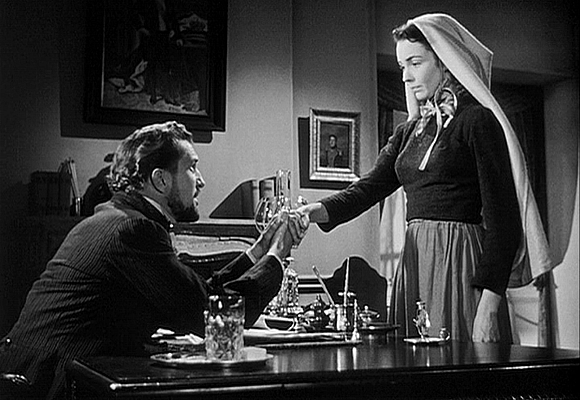
Cast: Jennifer Jones (Bernadette Soubirous), Charles Bickford (Abbé Dominique Peyramale), Williem Eythe (Antoinie Nicoleau), Gladys Cooper (Marie Theresa Vauzou), Vincent Price (Vital Dutour), Lee J. Cobb (Dr Dozous), Anne Revere (Louise Casteror Soubirious), Roman Bohnen (François Soubirous), Mary Anderson (Jeanne Abadie), Aubrey Maher (Mayor Lacade), Linda Darnell (Virgin Mary)

“For those who believe in God, no explanation is necessary. For those who do not believe, no explanation is possible.”

With these words, this worthy religious epic from the Golden Age of Hollywood kicks off its retelling of how visions of the Virgin Mary from one poorly educated peasant girl, Bernadette Soubirous, turned Lourdes from a backwater near the French-Spanish border into one of the most important Catholic pilgrimage sites in the world. It’s material that you could fairly expect to be pretty dry and sanctimonious stuff. But, surprisingly, it’s rather affecting and engaging work – and, although made with a certain workmanlike competence, carries enough touches of grace to lift it up into the second tier of the Hollywood firmament.

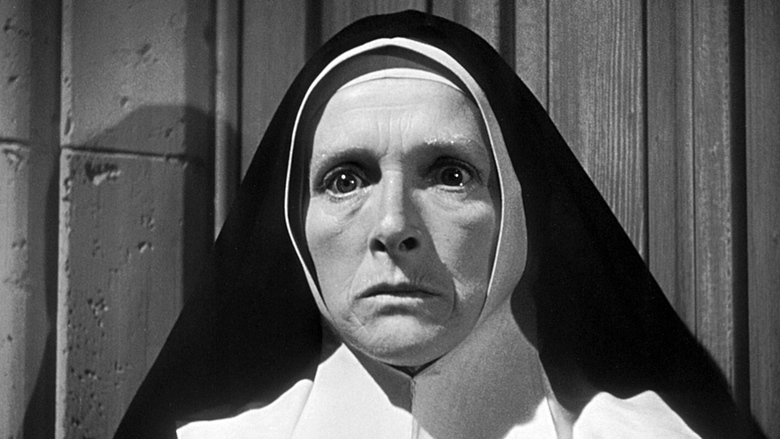
Bernadette Soubirous is played by Jennifer Jones – in one of her first screen roles, for which she became at 25 one of the youngest Best Actress Oscar winners ever. Until her visions begin, she is just an average peasant child, struggling with asthma, her parents (Anne Revere and Roman Bohnen) struggling with poverty, failing at religious school under the strict tutelage of Sister Marie Theresa (Gladys Cooper), and generally looking ahead to a life very much like any other. But visions of the Virgin Mary (played by an unbilled Linda Darnell) bring belief and devotion into her life, and she reports the content of the visions (and her discussions with the Virgin Mary) with an honest simplicity and consistency that wins many backers, not least local priest Abbé Peyramale (Charles Bickford). But the local officials of Lourdes, led by local prosecutor Vital Dutour (Vincent Price), concerned that these visions will impact plans for the town’s development and anxious about the hysteria they could encourage in the simple-minded, try their best to restore what they see as reason over the intoxication of faith.

Faith really is the word of the day in Henry King’s at-times stately, but also shrewdly worldly drama that mixes divine intervention and belief with a fair-hearing for the doubters and the arguments of reason. The miracles, when they come, are followed with several characters – not least Lee J Cobb’s coolly rational doctor – outlining the alternative explanations for why these people may suddenly feel they have been cured. Later Dutour complains wryly that it only takes a handful of cures among the thousands that come for everyone to continue to want – or need – to believe. 

But the film sides squarely with the truth of Bernadette’s visions, not least by stressing at every turn her honesty, guilelessness and principle. Questioned by various church officials – many of them terrified of being duped by a con, having been stung in the past – she sticks with an honest openness to the same version of the story over and over again. Peyramale – initially just as sceptical – is won over to belief by Bernadette’s sudden knowledge of such matters as the immaculate conception, when she seemed barely aware of what the Holy Trinity was while studying at school. 

King – a largely middle-of-the-road director, but who marshals his resources well here – clearly takes inspiration from Carl Dreyer’s films on similar topics of faith and visions in his shooting of Bernadette. Bright light and intense close-ups that study every inch of her rapture help convey the spirituality of her visions. When Bernadette leads groups to her visions – none of whom can see what she sees – light radiates around her and over her, but seems to barely touch those she is with. The cinematography by Arthur C Miller is beautiful, a brilliant use of light and darkness to skilfully sketch both the poverty of Bernadette’s background and the radiance of her visions.

The mood of the film is also helped be Jennifer Jones’ impressive performance. Bernadette is, in many ways, potentially one of the least interesting and dynamic characters in the film, but Jones pulls off the immensely difficult task of making someone stuffed with decency, innocence and honesty into an actually compelling and endearing character. A protégé of David O Selznick (whom she later married), Jones earned her place in the film with her ability to invest Bernadette with humanity, avoiding any hint of cynicism in her performance while never becoming grating either.

It contributes to a beautiful telling of the story, backed by a series of excellent supporting performances. Charles Bickford landed an Oscar nomination as the kindly, decent priest whose initial scepticism and concern that the crowd is being manipulated is washed away by growing belief. Lee J Cobb is very good as a stoutly rationalist doctor. Anne Revere (also nominated) has a protective warmth as Bernadette’s mother.

The film’s finest supporting roles though come from Vincent Price and Gladys Cooper. Price is superb as the man of science and reason who worries over the implications of fanaticism and the damage hysteria can cause, but is never simply prejudiced or Dawkinsish in his religious doubts. King’s film treats his concerns with a genuineness that makes both the character more interesting and the film more balanced. Cooper is brilliant as a Salieri-like nun, enraged with envy and jealousy that after years of devotion and suffering it is not she but Bernadette who gets the visions.

And why did Bernadette get those visions? The film is not crude enough to suggest why – Bernadette herself apologises for the trouble she has caused and her unworthiness – but it’s clear that it’s her very innocence and sincerity that makes her worthy of them. The design – and impressive score by Alfred Newman – helps to make the film feel as profound as it does, but it’s the balance that the film handles its characters with that makes it engrossing. There are no simple heroes or villains, just as there are no simple solutions. Like the film says at the start, it’s a question of faith. Those who do not wish to believe can marshal as many arguments in their favour as those who want nothing more than to trust in faith. It makes for a fine, balanced, engaging and well-made classic.

A Letter to Three Wives (1949)

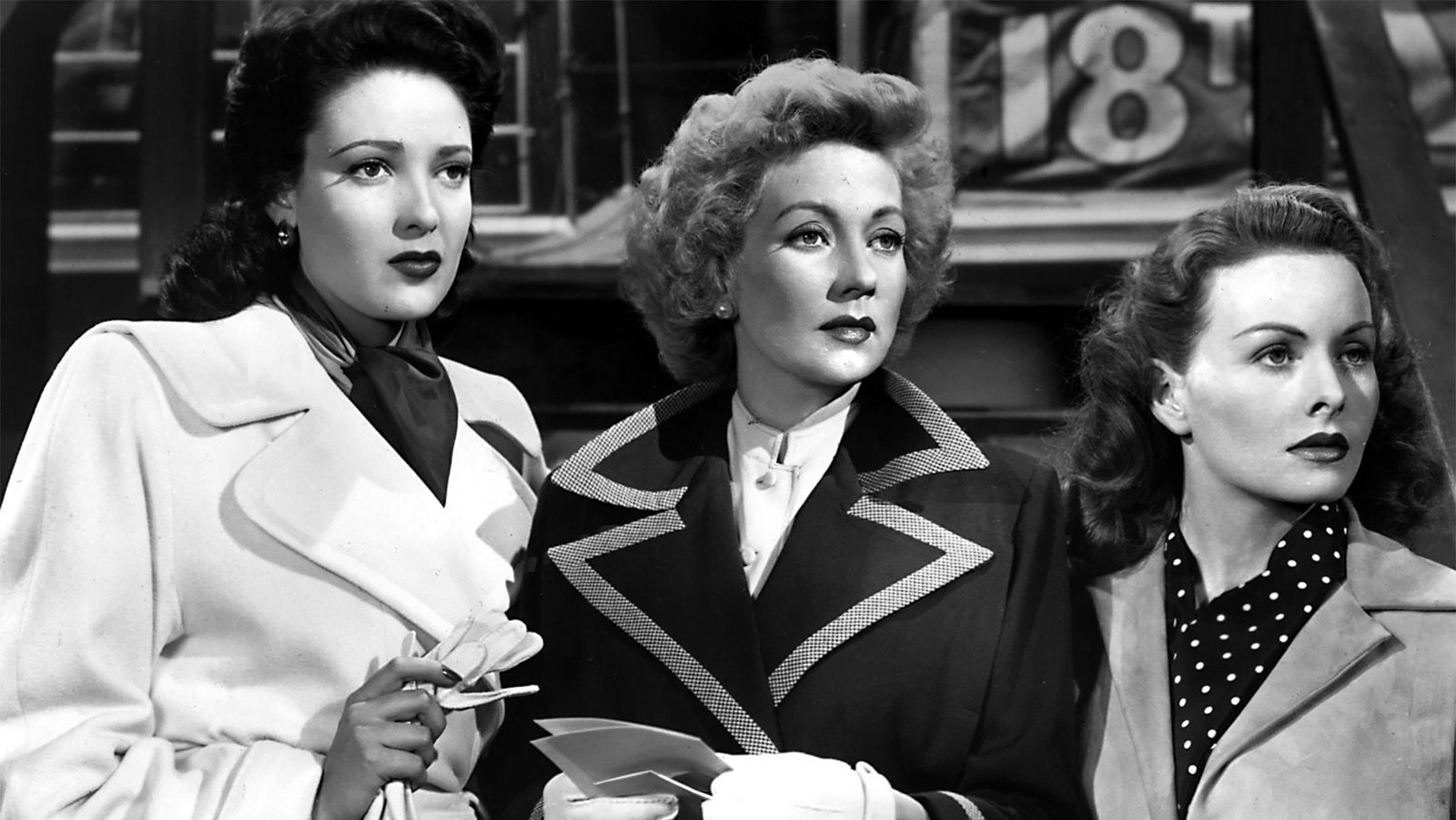
Linda Darnell, Ann Sothern and Jeanne Crain read over the eponymous Letter to Three Wives

Director: Joseph L. Mankiewicz

Cast: Jeanne Crain (Deborah Bishop), Linda Darnell (Lora Mae Hollingsway), Ann Sothern (Rita Phipps), Jeffrey Lynn (Brad Bishop), Paul Douglas (Porter Hollingsway), Kirk Douglas (George Phipps), Thelma Ritter (Sadie), Barbara Lawrence (Babe Finney), Connie Gilchrist (Ruby Finney), Florence Bates (Mrs Manleigh), Hobart Cavanaugh (Mr Manleigh), Celeste Holm (voice of Addie Ross)

It’s strange to think that, back in 1949, this slight story of three women one of whose husbands might have run off with another woman (the film’s narrator, the omnipresent Addie Ross, coolly voiced by Celeste Holm) was garlanded with multiple Oscars. It’s the sort of material you half expect would make an episode of Desperate Housewives– although of course today the whole thing would have been sorted out in a few minutes with mobile phones (A WhatsApp to Three Wives?). What makes it work so well is Mankiewicz’s dialogue, which lifts this slight melodrama of suburban couples into something that feels like it has more weight and intelligence than it really does.

Anyway, our wives are a mixed bag living in a commuter town “just outside the city”, all from middle-class or lower upper-class backgrounds. Seconds before taking some underprivileged children for a boat trip and picnic, insecure Deborah Bishop (Jeanne Crain), blowsy Lora Mae Hollingsway (Linda Darnell) and ambitious Rita Phipps (Ann Sothern) receive a goodbye letter from their “friend” Addie Ross, who announces she has left town with one of their husbands. But which one? Is it Addie’s ex-boyfriend, privileged Brad Bishop (Jeffrey Lynn), her school-yard sweetheart, academic George (Kirk Douglas), or her admirer, businessman Porter Hollingsway (Paul Douglas)? As the poster says, “While they wondered, one of them wandered”!

If that sounds to you like a rather small-scale storm in a teacup – well you’d probably be right. To be honest, it’s pretty hard to care which of these husbands might have headed into the sunset with the arch Addie Ross, since most of the characters seem at first rather smug, self-centred or tiresome. It takes time to warm up to these guys, but eventually Mankiewicz’s sparkling dialogue starts to work some magic and you invest in a clichéd little story (based, bizarrely, on a glassy magazine short story).

At one point the film was entitled A Letter to Four Wives – until studio executives decided that was one too many (bad news for Anne Baxter who had been cast as the final wife). That speaks to the episodic nature of the film. It has a clear five act structure – the set up, an act establishing the backgrounds of each of the marriages, and a final act that reveals who went where and wrapping the plot up. It’s a simple structure, and today it’s hard to see what all the fuss was about.

Mankiewicz’s framing device for his flashbacks may be a bit contrived, but he puts it together with skill. Each flashback is cleverly introduced with an intriguing device where various mechanical items near the women slowly take on a voice of their own, echoing their inner dread back to them. It sounds a bit odd – and it is at first – but it sort of works as an unsettling reflection of the unease of the central characters.

Once we get into the flashbacks themselves they are a mixed bag. The weakest by far is the first, focusing on Jeannie Crain’s Deborah Bishop. Rather plodding and dated – and forced to also introduce all the characters – it’s a shapeless section of reflection in which Deborah comes across unengaging, sulky, insecure and tiresome. Mind you that’s as nothing compared to her husband Brad, played with utter forgettability by Jeffrey Lynn, who is nothing more than a self-important idiot. Frankly, you end up thinking Deborah might be better off without him. The sequence focuses on the possibility that Brad might think Deborah is a little beneath him – compared to his old love Addie – but basically serves as a teaser for the next two flashbacks and an intro to the more interesting couples we are going to spend time with.

Our second sequence offers several comic highlights as it follows Ann Southern and Kirk Douglas (both very good) as the Phipps, middle-class intellectuals. George is an academic, Rita a writer for radio soaps, and the flashback revolves around their dinner party for Rita’s bosses, two radio-and-advert obsessed moneybags who demand the meal is interrupted so they can listen to episodes of assorted radio shows (accompanied by a long discussion of their advertising slots). Plenty of comic mileage comes out of George’s irritation at their vulgarity, but also serves to demonstrate the tensions in the Phipps marriage – George believes his wife is wasting her talent, Rita thinks her husband isn’t taking her career seriously. But underneath that is a nice little commentary on the insecurity of men returning from the war to find their wives have made professional lives of their own – and in this case, even become the main breadwinner in the household.

Our final flashback is probably the finest, around white-goods factory owner Porter Hollingsway (a bombastic Paul Douglas, with a touch of self-loathing) and his secretary turned wife Lora Mae (Linda Darnell, brassy self-confidence hiding vulnerability). Largely set in Lora Mae’s family home, a house on the wrong end of the tracks which hilariously has a train track running past its window (which at frequent occurrences leads to the whole house shaking, an action the family responds to with a casual familiarity). The drama here revolves around the couple’s feelings for each other – Porter can’t believe Lora Mae isn’t a gold digger, Lora Mae can’t believe her husband genuinely loves her for herself – but it’s told with a real sense of comic vibe laced with emotional truth. It’s the finest – and funniest – sequence and leads to a pay-off that really works.

A Letter to Three Wives maybe a little too soapy and frothy to be much more than an entertainment, but it is at least a very entertaining one. At all times this is due to Mankiewicz’s witty, sparkling and truthful dialogue that hums in every scene and gives all the actors some of the best opportunities of their career. Linda Darnell in particular is outstanding – warm, witty, fragile – but each wife has her moments, and Kirk Douglas is charm itself as George with Paul Douglas’ fragility under the surface eventually quite moving despite his bullying exterior. There is also fine support from Thelma Ritter among others. It’s a fine film, handsomely mounted and offers more than enough laugh-out-loud moments and moments of sweetness to make it really work.