Tag: Lindsay Anderson

This Sporting Life (1963)

Rachel Roberts and Richard Harris excel in brutal kitchen-sink drama This Sporting Life

Director: Lindsay Anderson

Cast: Richard Harris (Frank Machin), Rachel Roberts (Margaret Hammond), Alan Badel (Weaver), William Hartnell (“Dad” Johnson), Colin Blakely (Maurice Braithwaite), Arthur Lowe (Slomer), Vanda Godsell (Mrs Weaver), Jack Watson (Lennox), Harry Markham (Wade), George Sewell (Jeff), Leonard Rossiter (Phillips), Anne Cunningham (Judith)

The British New Wave of the early 1960s embraced working-class stories. They centred on chippy, confident, crowd-pleasing working-class young men (it was always men) from regional towns, doing blue collar work, thumbing their nose at the establishment and fighting to find their own way. This Sporting Life takes a similar route – but its central character, Frank Machin, is a furious, resentful and selfish man, who seems hellbent on destroying everything he touches. Unlike Arthur Seaton or Billy Fisher, he’s hard to like – and the film hits as hard as scrum of rugby players. 

Frank Machin (Richard Harris) is a miner turned professional rugby player – not that he has any love for the game (“I only enjoy it if I get paid for it!” he contemptuously states). Machin is an articulate brute of a man, a pugilistic whirligig of resentments, barely expressed or understood desires, and a deep-rooted and chronic insecurity that cries out for love while pushing it away. He’s in love with his landlady, widowed mother of two young children Margaret Hammond (Rachael Roberts). They begin an affair of sorts – but it can barely survive her trauma and Machlin’s self-destructive rage.

Lindsay Anderson’s films are notable for their anger and bitter satire, so it’s no surprise he directed the least crowd-pleasing, angriest angry-young-man film of all – or that This Sporting Life killed the genre. The film is a series of hits, aimed far and wide, from the deference of the players to the owners who treat the clubs like playthings (the “amateur fair play” British attitudes to sport from the patronising owners gets a kicking), to the hypocritical judgemental attitudes of the working class. Even its romantic story features two characters so unable to engage with or understand their feelings that they only really seem able to communicate fully when raging at each other. 

Anderson’s new-wave, kitchen sink aesthetic creates a film that feels like a series of battles. From Machlin moving in local clubs to visiting the home of creepy closeted club owner Weaver (a smooth and unsettlingly cruel Alan Badel), whether rebuffing the advances of Weaver’s wife or at a Christmas party, he always seems ready for violence. The rugby matches are filmed like mud covered fights, with players piling into each other like sledgehammers. Even the “romantic” (and I use that word advisedly) scenes between Roberts and Harris feel like conflicts (they frequently tip into nerve-shreddingly raw emotional outbursts). 

Anderson’s film takes everything you expect from the Saturday Night and Sunday Morning expectations and amps up the danger, anger and tension. Machlin barrels through scenes, conversations and relationships in the same way he charges through the rugby pitch. The whole film is a sharp warning of the danger of unrestrained masculinity, pushing all softer emotions to one side. Machlin wants so desperately to be a man that everything must be a battle, at all times displaying his most manly qualities. The tragedy is that you can tell there is a far more sensitive and intriguing personality below the surface.
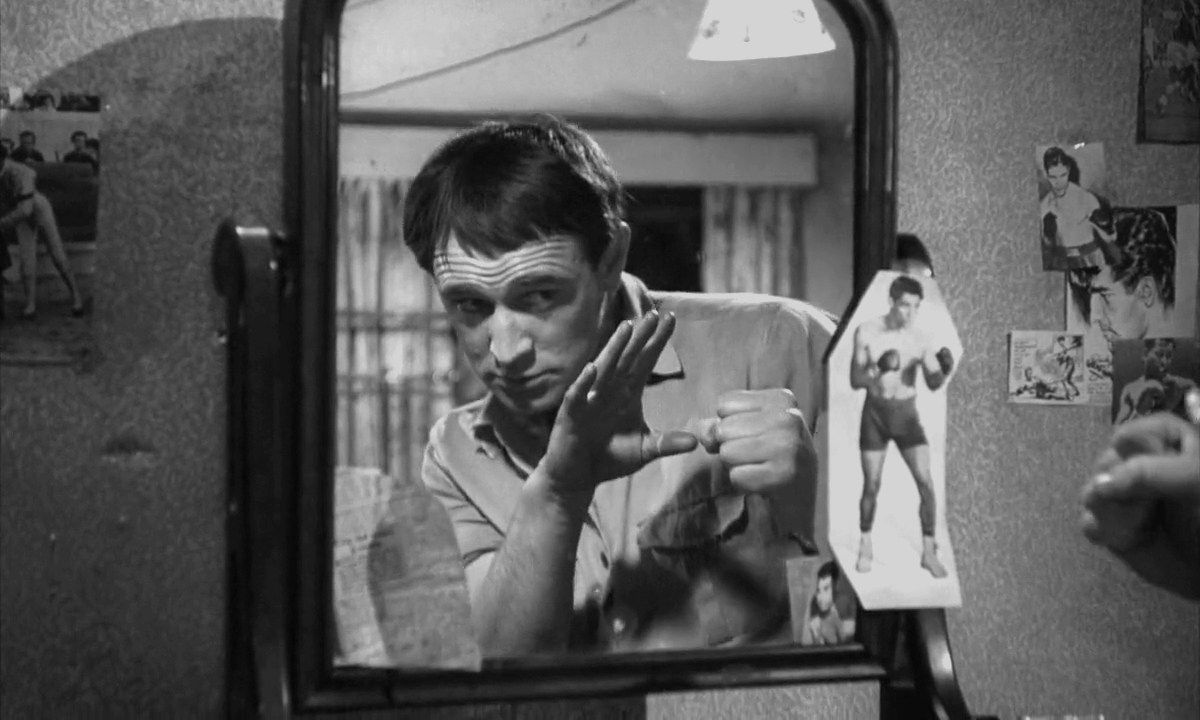
All this comes together in Richard Harris’ searing performance in the lead role. His career break – he won the Best Actor award at Cannes and was nominated for an Oscar – Harris was possibly never better. He’s a brooding force of nature in this film, utterly convincing as a man who bottles up his feelings until it is way too late. He hits out at everything, but you feel he is really running scared from the vulnerability in his own personality. With children, Machlin is tender and gentle, but with adults he is unable to express his feelings. His emotions for Margaret are based around suggestions of a need for a mother figure, sexual desire – and a desire for an answer to the emptiness he feels in himself. Harris is like an Irish Brando here, a marvellous, emotional, dangerous, brutal figure.

Rachel Roberts (also Oscar-nominated) is just as good, giving another extraordinary performance (to match the similarish role she played in Saturday Night and Sunday Morning) as Margaret. Grieving her husband, terrified of commitment, aware of her own position, as incapable in her own way of expressing her emotions and feelings as Machlin is, Margaret is as much a damaged and combative character. Roberts’ performance suggests years of disappointment and struggle behind the eyes, and she has a rawness and humane anguish in her scenes with Harris that sear the eyeballs. The scenes between these two are difficult to watch but engrossing.

The film is stuffed with excellent performances. William Hartnell is heartbreakingly tragic as the closeted talent scout who spots Machlin, only to be dropped by the new star. Colin Blakely is excellent as Machlin’s more grounded and engaging teammate. Vanda Godsell is the face of female corruption as Weaver’s sexually possessive wife. Arthur Lowe (who went on to work with Anderson several times) is very good as a stuffy but shrewd board member. All of this is beautifully filmed in black and white, with an urgency mixed with flashes of impressionistic grimness.

Anderson’s film, though, is primarily a working-class tragedy, about a man unable (until far too late) to really understand what he wants. Why is this? Because of failings in himself, but also failings in his upbringing, where qualities of self-understanding and expression are not encouraged, where pressure is placed on men to be men, where class and stuffy attitudes look to stamp out any real sense of self-knowledge. It’s an angry young man film that is truly, really angry. No wonder it flopped at the box office. But no wonder it lasts in many ways better than other films from this genre. It feels like a film that wants to say something, that has an urgent message. And it has at two extraordinary performances.

If… (1968)

Malcolm McDowell as contemptuous bitter student Mick Travis in counter-culture classic If…

Director: Lindsay Anderson

Cast: Malcolm McDowell (Mick Travis), Richard Warwick (Wallace), David Wood (Johnny), Christine Noonan (The Girl), Robert Swann (Rowntree), Peter Jeffrey (Headmaster), Arthur Lowe (Mr Kemp), Mona Washbourne (Matron), Ben Aris (John Thomas), Robin Askwith (Keating), Robin Davis (Machin), Rupert Webster (Bobby Phillips), Geoffrey Chater (Chaplain), Anthony Nicholls (General Denson), Graham Crowden (History Master)

Lindsay Anderson’s If…emerged in the late 1960s, at a time of furious counter-culture reaction to the establishment. Only a few months before its release, Paris had been torn by student riots against everything from the government to class discrimination, which had sparked over a month of protests and strikes that consumed every part of society. If… was released in the midst of the aftermath to this event – and managed to capture the mood of Europe with an astonishing prescience.

In an unnamed English public school, “College House” is run by the senior prefects (“Whips”) who impose a harsh discipline upon the rest of the students. The head of house (Arthur Lowe) is an easily manipulated weakling, the school headmaster (Peter Jeffrey) is a well-meaning but distant figure, most of the staff are either bizarre, creepy, disinterested or all three. Mick Travis (Malcolm McDowell) and his friends Wallace (Richard Warwick) and Johnny (David Wood) are three persecuted lower sixth formers, who (particularly Mick) have a burning resentment for the structures and traditions for the school: a resentment that slowly builds towards outright rebellion.

Lindsay Anderson’s background was Cheltenham College followed by Oxford. Only someone so thoroughly grounded in the background of private education as that could surely have produced a public school film as furious as this one. The entire film is like a kick in the teeth. Anderson understands the cruel traditions and oppressive rules of public schools completely, and the entire film is awash with moments like this that govern school life. There is not a single, solitary moment where there appear to be any positives at all in the life at the school, or any educational benefits (the school is proudly focused on turning out “gentlemen”). 

Anderson shoots all this with a careful eye for the surreal and flights of fancy. Much has been made about the black and white sequences that pepper the film. The natural light in the chapel caused the colour stock to be over-exposed, forcing Anderson to shoot the scenes there in black and white. However, Anderson loved the effect, and filled the film with scenes shot in monochrome to unsettle the audience and make them question the nature of what they are seeing. And that’s something you need to do with If…, as the film walks a fine tightrope between what is real and what is imagination.

While the film starts off grounded in a reality of cruelty and traditions, as it progresses it develops into something unusual and perverse. An extended sequence where Travis and Johnny skip school and head into town, steal a motorbike, drive to a country café and Travis seduces a Girl (Christine Noonan) becomes ever-more hyper real. Is the Girl even real? The speed of her seduction certainly seems to owe more to the boys’ adolescent fantasies of attractive women than any reality. In fact, the use of Noonan’s character (as sex object) is both a dated moment and an expression of the boys’ immaturity and fantastical longings.

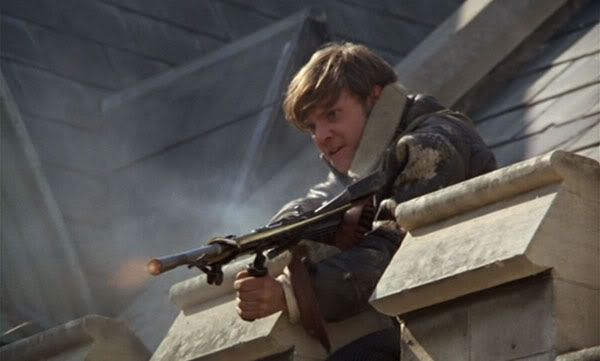
The film is building of course towards the final act of rebellion: a firearms-laden shoot-out after the rebel boys discover a secret cache of automatic weapons on campus (this is in itself unlikely) and then proceed to machine gun visiting dignitaries and their oppressors from the roof of the school, who in turn return fire with their own machine guns. How much of this is real and how much is a flight of fancy from the students and from the film makers? It’s unclear – there is no consistency in the filming of this sequence. When does reality in the film start to cross over to fantasy? There are plenty of moments where this could be happening.

It comes down to the title of the film. If – is this Kiplingesque title suggesting the possibility of such things happening, or such things coming to pass in certain situations, rather than an actual reality? Anderson’s fury at the ghastliness of the class system in this country, and the institutions that promote it (the army, politicians and the church get the same short shrift) suggest a fantasy of bringing the whole system down in a violent outburst. It’s a fantasy, initially grounded in reality, that suggests a poetic realism with lashings of the surreal (most famously the reveal of the schools bullying and vile chaplain as living in a large drawer of a desk in the Headmaster’s office).

The film’s fury and counter-culture joy has the perfect lead actor in Malcolm McDowell, whose simmering, edgy anger as an actor, and chippy rage with a sneering sense of defiance, are perfect for Travis. I’m not sure if McDowell ever topped this first performance, one where he burns through every frame and brilliantly seems to embody every single cog in the system that wanted to thumb its nose at the boss (to mix some metaphors). Anderson and McDowell are clearly working in perfect sync in this film (they collaborated three more times on spiritual sequels). It’s a beautiful performance of simmering resentment and fury at the hypocrisy around him.

The film’s exploration of the injustice of the school doesn’t feel outdated at all. The brutality of fagging and caning plays is like a darkly twisted version of Tom Brown’s Schooldays. Robert Swann is particularly good as leading Whip Rowntree, a hypocritical patrician, and memorable sequences capture the eccentric inadequacy of the teaching, the drilling of school rules into new students (brainwashing them into continuing the pattern in the future) and the arbitrary cruelty of the Whips. Peter Jeffrey’s liberal but distant and ineffective Headmaster is a perfect Thomas Arnold parody, a man with grand ideas but no knowledge of the actual school he is running, who claims to understand the boys but knows nothing about them.

However, interestingly, it’s the rebellion itself that seems rather dated today. In the 1960s, it was easier to whole-heartedly invest our sympathies in the counter-culture rebellion of Mick and his friends – but it’s harder today, with our climate of school shootings in America (there was one the day before I watched this film), to root for our heroes carrying out an indiscriminate shooting, for all the vileness of the institutions Travis is taking on. Of course this sequence is shot with a surreal eye (and I’m not sure any of it is meant to be an expression of something that is literally true, just spiritually true), but it’s a little uncomfortable today.

But at the time, this gut punch of a picture by Anderson wouldn’t have been troubled by these doubts. It’s a brilliantly directed film, that burns with a genuine fury against the institutions it is addressing. There is virtually nothing sentimental or kind about the film – it’s entirely about kicking against the tracks. Nothing in the school is redeemable or decent, everything is corrupt and twisted. It’s a sneering, burning, angry shout of a movie that manages to avoid preaching to the audience and instead presents its hellish vision of class in this country with a witty grace. If… is a film that perfectly captures the mood of the time and understands the “small world” culture of public schools like few others: it’s an essential classic.

Chariots of Fire (1981)


Celebrations abound in triumphant running flick Chariots of Fire

Director: Hugh Hudson

Cast: Ben Cross (Harold Abrahams), Ian Charleson (Eric Liddell), Nicholas Farrell (Aubrey Montague), Nigel Havers (Lord Andrew Linsley), Ian Holm (Sam Mussabini), John Gielgud (Master of Trinity), Lindsay Anderson (Master of Caius), Cheryl Campbell (Jennie Liddell), Alice Krige (Sybil Gordon), Struan Rodger (Sandy McGrath), Nigel Davenpot (Lord Birkenhead), Patrick Magee (Lord Carogan), David Yelland (Prince of Wales), Peter Egan (Duke of Sutherland), Daniel Gerroll (Henry Stallard), Dennis Christopher (Charley Paddock), Brad Davis (Jackson Scholz)

Dun-da-da-da da-da dun-da-da-Da-Da DA. Hum that theme tune and you know straight away what film it is: you can’t resist the temptation to mime out running (in slow motion of course), arms swinging gracefully from side-to-side. There aren’t many more movies with more iconic, instantly recognisable themes than Chariots of Fire

If there is one thing everyone remembers, it’s the young athletes running along the beaches of St. Andrews, spray flying up from their bare feet. Nicholas Farrell sprinting with upper-class determination. Nigel Havers wiping spray from his face with glee. Ian Charleson full of serene joy. Ben Cross with fixed, rigid focus. The opening of Chariots is a master-class in quickly established character, tone, mood and era. The cross-fade from the funeral oration from an ageing Nigel Havers into this slow-motion, halcyon-days reflection tells you we are in the land of memory – and sets right up for the feel-good triumph the film becomes.

The film follows the key athletes of the British 1924 Olympics team. Harold Abrahams (Ben Cross) is a second-generation Jewish grammar-school boy who runs to prove he belongs and can excel. Eric Liddell (Ian Charleson) is a Presbyterian Scot, who runs to celebrate God and whose religion prevents him running in a vital Sunday qualifying heat. Both characters are, in their own ways, outsiders – and their underdog status makes them perfect to root for in this extremely well-made crowd pleaser.

Chariots is often seen as a slightly undeserving Oscar-winner. But that’s to overlook the panache it’s made with and how emotionally uplifting and engaging it is. Hugh Hudson had never directed a film before this one. His background was in commercials and he brings many of the strengths of that background to Chariots. The film is wonderfully assembled, a perfect combination of montage, cross-cutting, longer tracking shots and cross-fading. 

That opening scene tells you a lot with its swift economy. But he handles others just as well: Abrahams’ 100m winning race is played first in real time, then again, cross-cut with Abrahams’ reaction to victory. The first moment is one of triumph, but the immediate repeat allows an opportunity for the viewer to understand the mixed feelings that achieving everything you aimed for can bring. Abrahams’ slightly shocked, underpowered reaction gives the slow-motion repeat of the race a hazy, post-match analysis feel – as if Abrahams is still running the race in his mind. As if he knows that his whole life was building to that one moment, and now he needs to find a new focus.

Hudson’s mastery of moments like this is impressive. Sequences are fabulously assembled. The famous “one minute” dash around the Trinity court (actually Eton) is brilliant, and a great example of how the film sells tent-pole moments. It also masters quieter character moments. One of its stand-out moments simply allows Abrahams’ coach Mussabini (a scene-stealing Ian Holm) to react to Abrahams win (a victory he has not seen due to being banned from the stadium) by quietly rising to attention, then sitting on his bed, gleefully punching through his hat and quietly whispering “my son”. Other scenes – such as those where Abrahams confronts quiet anti-Semitism from Cambridge scholars (nice bitchy cameos from John Gielgud and famed director Lindsay Anderson), or Liddell is quietly pressured into running on Sunday – simmer with good acting and restrained direction.

It’s these scenes that really make the film work. Ben Cross is superb as a chippy, frustrated Abrahams who feels he must justify his place in England’s oppressive class system. He’s constantly glowering, tense and uncertain – but Cross mixes this with a boyish charm, a gentleness (most notably in his shy romance with an unrecognisable Alice Krige) – and a warmth and genuineness that he shows with friends. Nicholas Farrell’s boyish Aubrey Montague (a love-struck best friend if ever I saw one!) helps a lot here – if someone as obviously nice as him likes Abrahams, then gosh darn it we should as well.

Ian Charleson is equally impressive as the devout, charming but coolly determined Eric Liddell who has decided his course in life and nothing is going to shake him from it. The film has a refreshingly considerate view of Liddell’s Christianity – and, furthermore, praises him for sticking to his devout principles. Charleson wrote many of his speeches himself, and he brings a charming honesty to his character. How can you not love this guy? He’s the perfect ambassador for the Church.

The film tackles plenty of clashes for Liddell which sizzle in a quiet way. Cheryl Campbell is very good as his partly proud, partly concerned sister, worried that his missionary work is being sacrificed for his running. His confrontation with the Olympic committee over his crucial decision not to run – is there any other film where not working on a Sunday is the dramatic centre piece? – is nicely underplayed. It’s clear that they (including a very good Nigel Davenport as an understanding Chair) want him to run, and it’s equally clear Liddell is determined he won’t.

It’s the moments like this that make the film so triumphantly feel-good. Both Abrahams and Liddell are at heart immensely likeable, the upper classes and elites who frown at them in their way rather boo-able. The running scenes are great (despite the sweetly dated lack of grace!), the film really capturing the exhilarating energy of pushing yourself to the limit. Watching Abrahams training under the expert eyes of Mussabini (worth repeating again that Holm is the heart of this film, as the fatherly, wise trainer struggling against prejudice against both Italians and professionalism), or Liddell winning from behind after being pushed over in a race are simply hugely uplifting.

Strangely the one thing that does seem a little odd today is the Vangelis score. Yes the Chariots march is outstanding – but the 80s electronic beat to the rest of the score now sounds very dated. Yes it is interesting to overlay (then) modern music over a period piece – but nothing dates quicker than music (except perhaps haircuts) and that is the case here. It sounds odd and jarring with the action at times – but then that main theme is so brilliant (but also the most classical of Vangelis’ compositions) that it still sort of works.

The sad thing is that Chariots didn’t lead to great new things for most involved. When he won the Oscar for best original screenplay, Colin Welland famously cried “the British are coming!”. Sadly he wasn’t really right. Within four years two flop films had all but ended Hudson’s career. Producer David Puttnam took over Columbia Pictures, only to be dismissed within a year after disastrous results. Many of the stars of the film never got the breaks this film promised (Charleson died tragically young – the first major star in England to openly acknowledge his cause of death as AIDS). Even the star Americans introduced to play the yank athletes (Brad Davis and Dennis Christopher) never had a hit film again. As David Thomson put it, within ten years of all the major players only Ian Holm “had any professional credibility left”.

But Chariots is still a bit of lightening caught in a bottle. A strange idea to spin an entire film out of an event lasting less than 10 seconds, but which married up so well with universal themes of class and struggle. It knows exactly what it is, and exactly what it is doing. It really worked then and it really works now. It’s not pretending to be high art, or to really make profound statements – just to entertain. And it really does. Fetch your running shoes and start that Vangelis theme!