Tag: Luis Buñuel

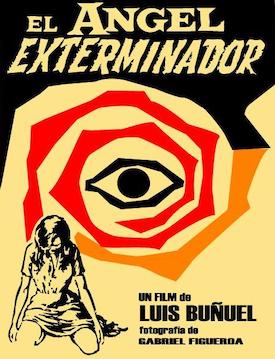
The Exterminating Angel (1962)

The Exterminating Angel (1962)

Buñuel’s unique party-gone-wrong is a fascinating mix of comedy, surrealism and satire

Director: Luis Buñuel

Cast: Silvia Pinal (Leticia, “The Valkyrie”), Jacqueline Andere (Alicia de Roc), José Baviera (Leandro Gomez), Augusto Benedico (Dr. Carlos Conde), Enrique Rambal (Edmundo Nóbile), Luis Beristáin (Cristián Ugalde), Antonio Bravo (Sergio Russell), Claudio Brook (Julio), César del Campo (Colonel Alvaro Aranda), Rosa Elena Durgel (Silvia), Lucy Gallardo (Lucía de Nóbile), Enrique García Álvarez (Alberto Roc)

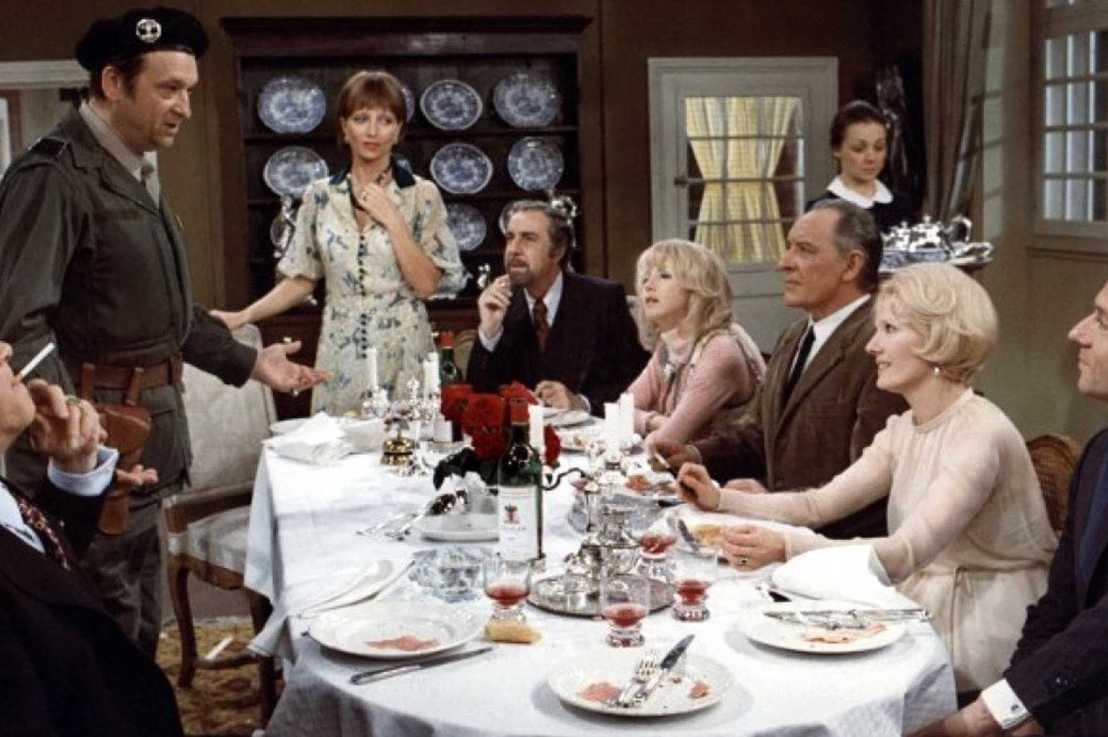
Imagine a party so good, you couldn’t bear to leave. Sounds great, right? Now imagine a party that wasn’t even that good, but you couldn’t leave anyway. A dinner party with the hoi polloi that locks you into a seemingly never-ending parade of days (or weeks) where you and everyone else were physically incapable of stepping over the threshold of the room you’re in. All of you forced to live in a tiny space, on top of each other, none of you having a clue why you can’t leave or why this is all happening. Imagine that, and you’ve got Buñuel’s The Exterminating Angel, a surrealist-tinged, open-ended mystery of a film that presents its situation and leaves you to make of it what you will.

Returning to Mexico after comprehensively incinerating his nascent re-alignment with Spanish cinema with Viridiana (a film made in Catholic Fascist Spain that mocked both the fascists and the Church), Buñuel creates a haunting elliptical masterpiece by harnessing an idea so compelling it’s been recycled, reframed and reexplored by countless films after.  It’s an idea that has soaked into horror, of being trapped by some unknown force in a single place, unable to break free. It’s also sparked satire with its depiction of the thin veil of smug self-satisfaction over the bourgeoisie that collapses under the strain of covering primitive, violent instincts.

The Exterminating Angel tips us off from the start that we won’t be settling down to watch any old dinner party. As the guests assemble, the staff at the grand town house are practically falling over themselves to flee, as if subconsciously aware there is something wrong in the house. Buñuel throws the viewer off from the start by deliberately repeating scenes – a repetition so on-the-nose, that when watching I actually doubted myself about whether I had just seen what I thought I saw. We see the guests arrive – and make a forlorn call for their coats to be taken – twice in quick succession. It’s so blatant, even Buñuel’s editor gave him a panicked phone call about the ‘error’ just before the film’s opening!

Later the micro-repetitions of scenes, interactions and lines will pile up (it’s a film that rewards constant reviewing) making the whole set-up even more disconcerting. Two characters introduce themselves to each other three times, each time with a different emotional mood (from friendly to outright hostile). The same dinner toast will be greeted with rapture then complete indifference. Two couples will echo the same conversation. Oblique points about freemasonry and current affairs will be made over and over. Is Buñuel suggesting the whole whirligig of the social situation is just a slightly pointless merry-go-round where the same old bullshit happens over-and-over again and essentially means nothing? Sure, the characters notice they are literally trapped in the same room, but really aren’t they just metaphorically trapped in the same old rooms all the time?

Nevertheless, as the dinner party winds down, everyone is far too polite (or far too concerned with appearances) to openly say they feel like its physically impossible for them to cross the threshold and leave. Instead, the hosts quietly grumble that no-one seems to know when to go as the clock ticks into the wee small hours and the middle-class types here settle down in armchairs, on sofas or even on the floor to sleep. Come the next morning, polite embarrassment prevents anyone from saying exactly why they are still here. In fact, everyone promptly makes politely meaningless excuses about why they aren’t quite ready to leave yet: they’ve not had breakfast, nanny will look after their children, they don’t need to be anywhere quite yet.

In fact, I’m not sure anyone openly says they ever feel trapped. It’s like social faux pas everyone is horrified of pointing out. Not a surprise really as everyone here is from the height of professional society: doctors, conductors, army officers, businessmen, society grande dames. None of them wants to stand out like some panicked rube thrown by odd sensations. Instead, everyone slowly settles down into working around this bizarre situation no one wants to talk about. A cupboard is tacitly turned into a toilet. The food is carefully rationed. A water pipe is tapped into so everyone can drink. Sleeping areas are claimed. No one tries to solve the problem, because even acknowledging the problem feels like a cheeky liberty.

It leads into an increasingly fascinating blend of horror, dark satire and surrealist black comedy that Buñuel skilfully builds. A few shots show us the threshold of the room from the next room (a lush ballroom), and there are cuts to a crowd of rubber-neckers outside the house) who also cant enter. But otherwise, it’s all in this one room and as time – and the guests lose all track of that – drags on, the bonds of society both loosen under the polite instincts. Tempers fray, but there remains a formality even as the ravenous guests rip apart (off camera) and cook a sheep that wanders into the room. Some guests take advantage of the proximity to indulge in voyeuristic perversions, but when arguments erupt they are resolved with a Victorian duel mind-set. Only towards the end, as the world really fragments, does the danger of real violence (a suggested lynching of those judged responsible) flare up.

Buñuel would criticise himself later for not going far enough (if you want an idea of relatively tame he later thought it was, he argued cannibalism was one of the things he should have explored). But the fact that much of the behaviour remains grounded, recognisably stuck in a rut of upper-class restraint makes the film more effective. (Or as restrained as a party, where the cancelled ’entertainment’ at the original dinner was an unspecified event involving a tame-ish bear and three sheep, can be). Somehow, if the guests had regressed into the most animalistic behaviour possible, the film might have lost some of its enigmatic quality. As it happens, the fact the guests can never quite escape the trappings of their social rules makes it even more unsettling. It means that threats – such as the ferocity behind the ‘I’ll kill you’ response to a joke about someone being pushed out of the room – carries even more of a shock.

Buñuel throws in the odd surrealistic touch – after all he always claimed a dream sequence was in there when he had run out of ideas. We get two, one revolving about a nightmare of a disembodied hand moving freely around the house (it must be some sort of joke from Buñuel that the hand itself is the least convincing rubbery affair you can imagine) and later a sequence of disconnected images superimposed over a cloud filled sky. The film’s conclusion suggests a deadly, ever-expanding loop, based around the fact the characters suffer but learn nothing from it.

You can argue that The Discreet Charms of the Bourgeoisie, by allowing more physical freedom to its characters, allowed even more surreal, fascinating and intriguing exploration of the repressions, lies and hypocrisies of bourgeoisie life. But The Exterminating Angel has a claustrophobic horror to it, and the pressure cooker bubbling just below the surface of these trapped characters exposes class tensions in superbly unnerving ways. It makes for an expertly executed, shrewdly vicious social satire that lifts a lid on the many petty behaviours that govern so much of our lives. And it’s a mark of genius that you cannot imagine anyone other than Buñuel making it.

Viridiana (1961)

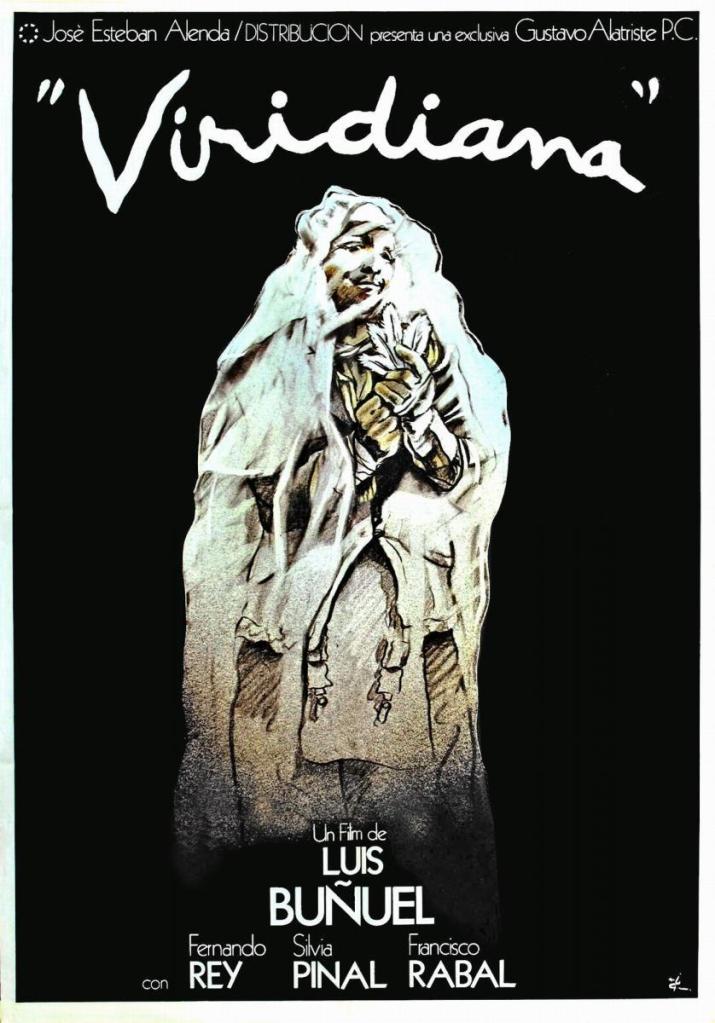
Viridiana (1961)

Luis Buñuel’s brilliant, multi-layered satire is a superb, darkly hilarious, masterful film

Director: Luis Buñuel

Cast: Silvia Pinal (Viridiana), Francisco Rabal (Jorge), Fernando Rey (Don Jaime), Margarita Lozano (Ramona), Victoria Zinny (Lucia), Teresita Rabal (Rita), José Calvo (Don Amalio), José Manuel Martín (“El Cojo”), Luis Heredia (“El Poca”), Joaquín Roa (Don Zequiel), Lola Gaos (Enedina), Juan García Tiendra (“El Leproso”)

In the 1960s, Luis Buñuel was invited back Spain after years of creative exile to spearhead a new wave of Spanish filmmaking. He produced a film that not only bit the right-wing hand that fed it, it snapped it clean off and chewed it up. Viridiana must have been the last thing the authorities had in mind. Gloriously exposing the guilt and vanity of the upper classes and charity, it was lambasted by the Catholic church for blasphemy and showed an organised world teetering on the brink of chaos, with the powerful either perverts or playboys, the poor singularly ungrateful for the paternalistic patronage they receive and our lead character a hopelessly naïve former nun. Not surprisingly it was instantly banned and Buñuel never made a film in Spain again.

Viridiana (Silvia Pinal) is our naïve nun, called to her uncle Don Jaime’s (Fernando Rey) home for one last visit before her confirmation. Don Jaime though has plans: Viridiana has an extraordinary resemblance to his late wife and Don Jaime intends to first get her to cos-play his wife and then marry him. Or failing that, to drug her and rape her. Guilt stops him from the rape – but doesn’t stop him from claiming he did it, a lie he instantly (fatally) regrets but which leads her to abandon her dreams of becoming a nun. In the aftermath, Viridiana and her cousin (Jaime’s bastard son) Jorge (Francisco Rabal) divide the estate, with Viridiana aiming to continue her religious ideals through excessively generous charity with quietly resentful local paupers, who she has a vision of turning into a religious commune. It does not turn out well.

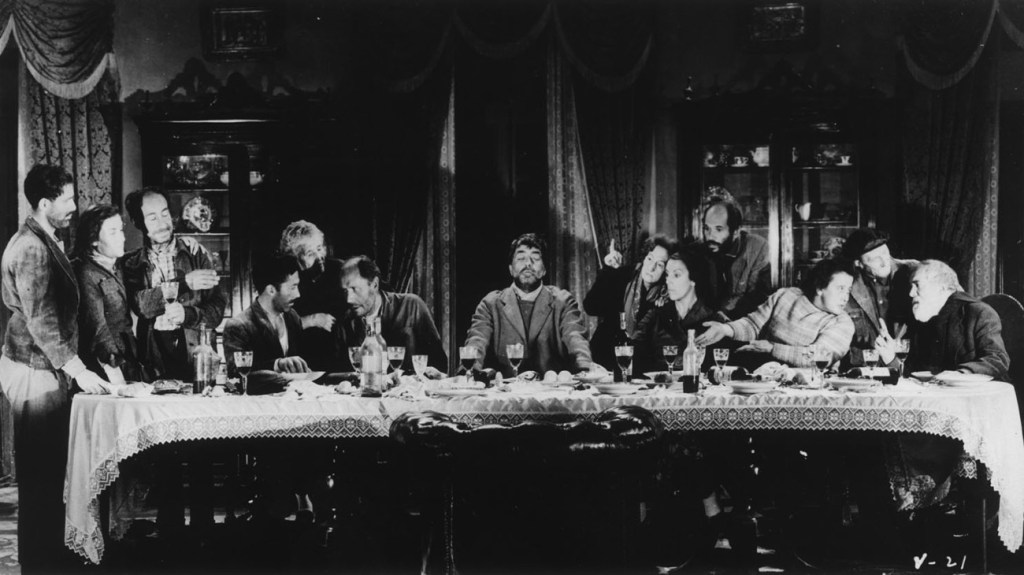
Viridiana benches much of the surrealism of Buñuel’s most famous work, but it loses none of his acute social satire and ability to inject the absurd with sharp dark humour. It makes Viridiana a startingly complex work, brilliantly assembled by an artist where every frame has a different idea, all of which comes together into a darkly entertaining whole. Its not hard to see why the strictly Catholic Fascist Spain found the film so outrageous, with its mocking of religious imagery (from the crucifix that becomes a flick knife to the famous scene of the paupers forming a drunken, pose-perfect, tableau of Da Vinci’s The Last Supper), it’s acknowledgement of a host of fetishes and perversions among the upper-classes (orgies, feet, hinted necrophilia, incest) and the utter ineffectiveness of any system, no matter how charitable, to control the human spirit, with the poor frequently resentful under their veneer of deferential gratitude.

Viridiana splits neatly into two acts, both revolving around a complex relationship with guilt and how it guides our actions. Don Jaime (a superb performance of corrupted grandeur from Fernando Rey) is a lonely man, plagued with guilt and regret over his wife’s death, locking himself away in a time-locked country pile like a perverted Miss Havisham. In private he fetishistically admires her clothes (which he blasphemously keeps like holy relics) and admires his feet in her shoes. He’s fascinated by Viridiana’s resemblance to his late wife and fantasises that she might be persuaded to renounce the cloth to live as his wife.

With the convenience of his servant Ramana – an equally lonely, repressed soul tenderly played with a burgeoning sexual desire by Margarita Lozano – he guilt-trips Viridiana into dressing for one night in his wife’s bridal clothes, drugs her drink and takes her to bed. He even arranges the sleeping Viridiana into the exact pose his wife had when she was before him, adding hints of necrophilia to an already disgusting assault. Shame stops him from committing the deed and guilt then corrupts both of them. Don Jaime at his selfish lie, Viridiana at her indirect role in her uncle’s death and the forced abandonment of her vocation.

Inheriting her uncle’s home, alongside playboy cousin Jorge (Jaime’s bastard son, who he has barely met), Viridiana redirects this guilt into a commune for the poor and needy, where charity, work and faith sit side-by-side. Her efforts to essentially introduce a benign feudal church-system contrasts with Jorge’s modernising efforts, introducing electricity and other mod-cons. Buñuel demonstrates the discomfort of these two worlds with a beautifully assembled scene where Viridiana’s leads a group pray intercut with a series of shots of acts of manual labour (hammers smashing walls, cement splatted on bricks etc.), making he prayer meeting (which we know the attendees think is a pile of bunkum) seem even more outdated and ineffective.

Viridiana isn’t cruel about these characters though – it looks at them as real people, with faults and virtues, some good some bad. It’s also remarkably clear-eyed about charity. There is something performative about Viridiana’s efforts, as well as a clear sense it is as much for her (subconsciously – she’s too naïve for cynicism) as it is the welfare of the beneficiaries. Those beneficiaries are a brilliant series of pen portraits of people who take offered charity, but resent the paternalistic attitudes that come with it. The working classes are not passively grateful for religious charity – but they are smart enough to take a meal ticket. No wonder the church was furious: Viridiana ruthlessly exposes the lip-service the downtrodden give religious charity, while refusing to reshape their lives and views according to instruction.

The peasants remain earthy, irreverent and full of their own pleasures and prejudices. Despite Viridiana’s best efforts they abuse a (possibly leperous) beggar, tying a cowbell to him so they can hear him coming. When left alone in the grand house, they do what many of us might well do in their place: like teenagers resentful at their parents, they throw a drunken party and trash the place. Viridiana’s ‘dinner-party’ scene is Buñuel’s masterclass in riotous joy that slowly turns darker and more dangerous. Mockery leads to over-indulgence, anger and eventually violence. Viridiana will discover to her cost her attempts at kindness has done nothing to change their basic characters and it is as likely for someone to be downtrodden and deeply unpleasant as it is for them to be decent.

Charity in Viridiana doesn’t really change the world. It can improve lives, but not the system. And using it to shape people into what you want them to be is doomed to failure. The peasants are (mostly) not bad people, they just don’t feel want to reshape themselves into pious substitute nuns for Viridiana as a pay-off for room and board. Jorge is distressed to see a working dog tied to a cart and forced to run alongside it. He impulsively buys the dog – which to its original owner is not a pet but a working animal that must own its keep. Jorge clearly feels good about saving this dog: but seconds after he walks away with it, Buñuel pans across to another identical dog running behind a cart. Who was this charity for? The dog or for Jorge? The peasants of Viridiana? And did this one act change anything? And for some charity is entirely self serving: Viridiana visits Don Jaime solely out of thanks for his charity in paying for her time in the convent – surely an act only carried out for Jamie’s own perverted reasons.

None of this is what the Church or Spanish state wanted to hear. A downtrodden class that isn’t grateful to its leaders for lifting them up, but resents them for their patronising strictures. Lords of the manor, one of whom is a lonely pervert, the second a libidinous playboy who sleeps with multiple women. A deeply religious woman, who is completely naïve and fails utterly. And an ending – an ending Buñuel was ordered to change from the script and in doing so made even more suggestive and blasphemous – that implies the household will settle into a sexual menage.

It’s brilliantly, pointedly not what he was asked for – and stunning condemnation of the flaws in an entire system, caught in a brilliant parable. It’s superbly directed by Buñuel, by now a master of camerawork and editing with a beautifully judged performance by Silvia Pinal who makes Viridiana someone we deeply admire even as every decision she makes seems doomed for disaster. It’s a fiercely challenging, involving and complex work and infinitely rewarding for reviewing and patient consideration – no wonder Spanish critics later named it the greatest Spanish film ever made.

The Discreet Charm of the Bourgeoisie (1972)

The Discreet Charm of the Bourgeoisie (1972)

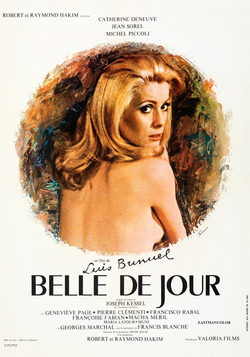
Dinner dates never happen in Buñuel’s playfully witty, absurdist satire

Director: Luis Buñuel

Cast: Fernando Rey (Rafael Acosta), Paul Frankeur (François Thévenot), Delphine Seyrig (Simone Thévenot), Bulle Ogier (Florence Thévenot), Stéphane Audran (Alice Sénéchal), Jean-Pierre Cassel (Henri Sénéchal), Julien Bertheau (Monsignor Dufour), Milena Vukotic (Inès), Claude Piéplu (The Colonel), Maria Gabriella Maione (Terrorist), Muni (Peasant), Michel Piccoli (Interior Minister), Pierre Maguelon (Brigadier Sanglant), François Maistre (Commissaire Delecluze)

Six very bourgeoisie Parisian friends try to have dinner; but circumstances keep getting in the way. Circumstances that become increasingly bizarre, surreal and absurdist and half of which may or may not be dreams (or even dreams within dreams). This is the jumping off point for Buñuel’s engagingly light and witty, but also profound, intriguing and defying interpretation. The Discreet Charms of the Bourgeoisie. In the hands of a dogmatic artist, it would be heavy-handed trash: in Buñuel’s it maintains a playfulness making it entertainingly (if at times infuriatingly) mystifyingly unreadable.

Those six friends are a shallow, self-obsessed bunch who talk the snobby talk of class and culture, but their knowledge is skin-deep and their lifestyle funded by cocaine smuggling. That cocaine is trafficked into Paris in the diplomatic bag of Ambassador Rafel Acosta (Fernando Rey), representative of the (fictional) Latin American Republic of Miranda. It’s sold by his friends, François Thévenot (Paul Frankeur) and Henri Sénéchal (Jean-Pierre Cassel), and its these three – along with their wives Alice Sénéchal (Stéphane Audran) and Simeone Thévenot (Delphine Seyrig) and Simone’s sister Florence (Bulle Ogier) – who keep trying to have dinner.

Those dinners are constantly interrupted by a series of increasingly outlandish events, that the guests accept with the sort of blasé insouciance this sort of people pride themselves on. Things escalate on successive nights from Henri forgetting he has invited their guests to dinner, to a dead landlord of a country inn, the Sénéchals slipping out to the garden to have sex, a Bishop (Julien Bertheau) who longs to be a gardener, a café that runs out of tea and coffee, an army division on military manoeuvres, their arrest by the police… That’s not mentioning the onslaught of dreams as the characters imagine yet more meals interrupted by murder, terrorism and even their dining room turning into a stage in front of an audience where they don’t know their lines.

If that sounds pretentious… I suppose that’s fair. But the point is that Buñuel never hectors or overplays his hand. Instead, the film is an absurdist light comedy, a whimsical road-to-nowhere (like the country road we frequently see the six characters walking down in cutaways) that, in its structure, aims to expose the shallowness and hypocrisy of an entire class. Our ‘heroes’ are overwhelmingly concerned, time and again, with their own basest needs – mostly food and sex – and are more than happen to call in a chauffeur so they can mock him for not knowing how to drink a cocktail correctly (doesn’t stop him enjoying the cocktail way more than any of them do). They encapsulate a whole class, concerned only with tucking in and making sure everyone can see they are unshaken by events, no matter how outlandish they seem.

Into this mix, Buñuel throws an astonishing and inventive selection of dreams that increasingly dominate the second half of the film. (And in fact, makes you wonder after a while whether everything we’ve seen in the film is some sort of crazy, unlikely fever dream). Buñuel used to joke he slipped in dreams when he needed to expand a films runtime, but it’s wonderful here how often the dreams comment subtly on the characters and their perceptions of each other: and how little they seem to learn or be aware of the implications of this.

The most surreal dream of all is Henri’s fantasy of entering a house – a house with walls painted with false perspective images of other rooms – where the group encounter rubber food and then a curtain sweeps aside to find an expectant audience watching them. Despite the prompts for their lines, the characters flee in sweaty nervous panic. Do they realise the meaning of this exposure of their sense of unbelonging? You can be sure they don’t.

In fact, in a stroke of daring by Buñuel, they are so remote from understanding this that Henri is in fact having a dream inside François’ dream: as if François can only vicariously confront his fear of unbelonging by dreaming about another man dreaming about it. That worry of mockery and isolation in society is then continued in François’ dream, as he dreams of Henri waking from a dream and arriving at a party at a Colonel’s house where the mockery and ignorance of Rafael’s home country becomes so overbearing, Rafael shoots the Colonel dead. As if, again, François can only imagine being pushed to extremes vicariously.

Perhaps he’s simply jealous of Rafael, who is blatantly conducting an affair with his wife. Rafael’s a man of class, obsessed with greed and lust. He’s also a sneaky coward and a creepy opportunist, not above trying to seduce a female terrorist who tries to kill him (and then having her shipped off by his security when she turns him down). Doesn’t make him different from anyone else: the Thévenots are arrogant upper-classes scorning those below them, Florence a shallow, selfish drunk, the Sénéchals full of hedonistic entitlement.

Buñuel’s film gently deconstructs the code and hypocrisies of this society – with its unspoken rules, strange hierarchies and lusts – not with lectures but with the tools of farcical theatre. The film repeatedly feels like a left-field Cowardian drawing room comedy, mixed with Moliere farce. A cheating wife is interrupted by the sudden arrival of her husband, a Bishop borrows the clothes of a gardener so no one believes he is a priest, sudden entrances and exits constantly interrupt scenes. This is all told with a light, revealing wit: with subtle playing and controlled, skilful direction, we learn about these characters depth (or lack of them) while enjoying the frequently bizarre circumstances.

It doesn’t just touch them either. When the characters are arrested, they are released on the orders of the Interior Minister for reasons that we are don’t hear three times because of traffic noise. Outside noise jumps in at several key points to undermine key information and interrupt events – the characters indifference to this as constant as their general ambivalent uncaring coolness to everything else. It’s also funny.

There are also darker dreams, told by soldiers and police officers, haunted by mauled bodies and murderous consequences. A soldier tells a dream of a ghostly encounter of his dead mother, urging him to avenge the death of his parents (its left unclear if this is a false memory or a dream). A policeman sees a vision of his dead body releasing his prisoners – after an interrogation of a young man that sees a piano transformed into an electric chair.

Not to mention a world where suave class and violence sit side by side. Rafael’s readiness to use guns – shooting a wind-up toy of a terrorist from across the street, his apartment littered with hidden firearms – is matched by the Bishop who mixes forgiveness and revenge for the man who killed his father. Much of this taking place in the classiest and most well-observed of environments.

There are excellent peformances across the board, but this is a triumph from Buñuel. It’s a film that defies easy interpretation and understanding, that wraps its insight up in intriguing, unreadable and bizarre dreams and events which strike a magical balance between both possible and impossible. It explores a whole class and its hypocrisies, but does so in a series of light, even playful, scenes which feel more like light-comedy. It’s the work of an inventive master working with the medium in a unique and unrepeatable way, who can be both surrealist enigma and master of farce. You could watch it multiple times, drawing different shades and interpretations every time.