Tag: Lynn Redgrave

Shine (1996)

Shine (1996)

Middle-brow and safe biography that takes easy choices and makes reassuring points

Director: Scott Hicks

Cast: Geoffrey Rush (David Helfgott), Armin Mueller-Stahl (Peter Helfgott), Noah Taylor (Young David Helfgott), Lynn Redgrave (Gillian), Googie Withers (Katherine Susannah Prichard), John Gielgud (Sir Cecil Parkes), Sonia Todd (Sylvia), Nicholas Bell (Mr Rosen), Alex Rafalowicz (Child David Helfgott)

A hugely talented pianist, David Helfgott (played by Noah Taylor then Geoffrey Rush) trained at the Royal College of Music in the late 1960s but developed schizoaffective disorder, a condition that stalled any music career. What happened next is debated, but according to Shine years of mental institutes and sheltered housing eventually led to rediscovery and a life turned round by marriage to Gillian (Lynn Redgrave). This provided a happy home to Helfgott, who had grown up under the domineering hand of his father Peter (Armin Mueller-Stahl), a Polish-Australian who had narrowly escaped the Holocaust and disowned his son after he travelled, against his wishes, to Britain.

Shine repackages Helfgott’s life into a crowd-pleasing triumph-against-adversity biopic which plays fast and loose with facts. Shine makes no mention of Helfgott’s first marriage, it’s portrayal of his father as a misguided tyrant has been disputed by other members of Helfgott’s family and the level of estrangement Helfgott had from his family (his brother claimed David continued to live with the Helfgott family after his return) has been strongly disputed. Shine smooths off all rough edges and emphasises dramatic potential in others to create its stereotypical heart-warming tale.

What it also does is turn Helfgott’s life into a middle-of-the-road biopic, a highly convention film full of expected arcs (struggle, triumph, collapse, triumphant return) and directed with a middlebrow assurance by Hicks. It’s a film that flatters to deceive, offering only cursory insight into its subject and ends with a sentimental scene in which we are all-but-invited to join the characters in a standing ovation for a Helfgott comeback performance (which the film doesn’t even show us).

Shine has almost no interest in Helfgott’s illness, what bought it on, how it developed or what he and those around him did to help him function in society (his marriage to Gillian gets barely ten minutes of the film’s runtime). It has very little interest or insight into music – other than Rachmaninov being ‘very hard to play’ and some guff about finding the heart behind the notes which sounds full of import because anything said by John Gielgud sounds important. It takes a fascinatingly conflicted character like Peter Helfgott and bends over backwards to make him as two dimensional as possible, with only a brief throw-away line that leans into how quite possibly his views on the importance of family might just have been affected by the slaughter of the rest of his in the Holocaust. Everything is designed to make us feel that standing ovation is earned.

The film gets a much better performance than it deserves from Armin Mueller-Stahl as Peter Helfgott. Here is an actor with more compassion and insight into his role than either the film or the director has. On the surface everything Peter does is appalling; controlling what his son plays, demanding he wins competitions, blocking opportunities for progress, beating him in a rage twice and throwing him out of the house. But Mueller-Stahl plays the fragility and vulnerability under Peter exquisitely. This is a man so terrified about losing his family that he goes to extraordinarily damaging lengths to hold it together. So much so he destroys it.

And you understand that in every moment of Mueller-Stahl’s sensitive and immaculately judged performance. He looks at his son with tenderness and adoring love. His eyes dance with fear at the prospect of David going out alone into a world he thinks is dangerous. Its fear that leads him to react with violence – the terror of weakness pours from Mueller-Stahl. It’s a rich, layered, superb performance which seems almost smuggled into a film that does it’s very best to present Peter Helfgott as a controlling, destructive bully who (it believes) was the root cause of David’s illness.

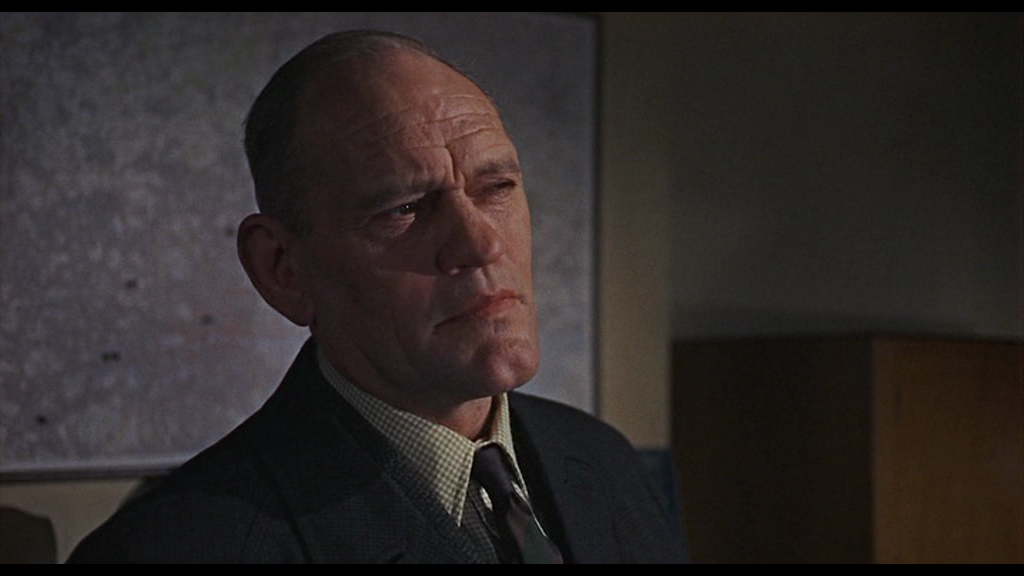
The drama of the film – most of its first hour – revolves around the clash between this domineering father and the young Helfgott, played by Noah Taylor. It tells a very familiar story: the quiet, but talented son and the monster behind him, but does it solidly enough. Quiet, mumbling and shy – but with subtle traces of condition we know will seize him later in life, Taylor is marvellous. The training sequence at the Royal Academy, again familiarly reassuring for its pupil-mentor set-up, also allows a lovely showcase for an-almost-swansong role for Gielgud, sparkling, wry and charming.

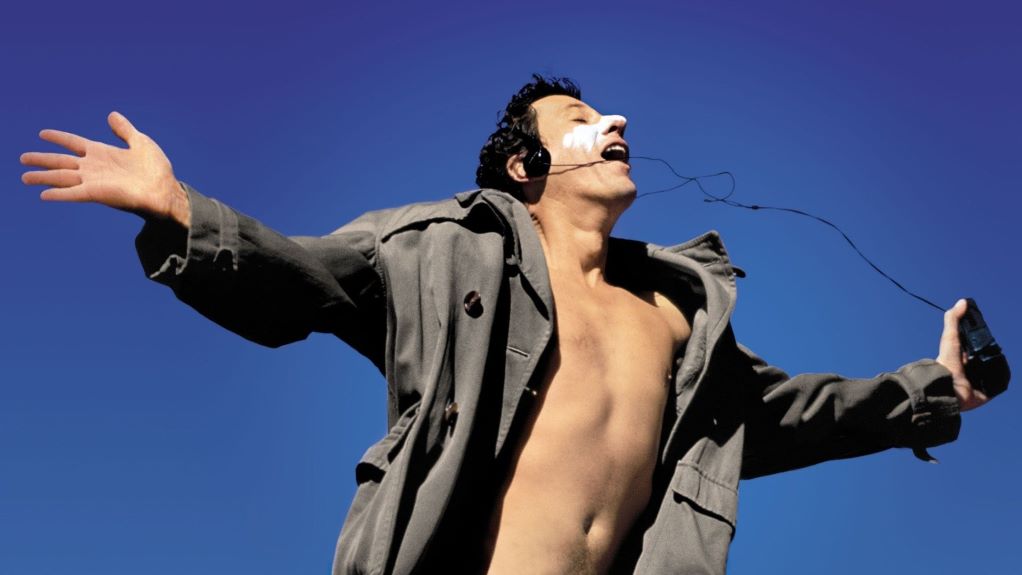
It’s strange than that the Best Actor awards were poured onto Geoffrey Rush who only appears in two scenes before taking over the role at the 67-minute mark (of a 100-minute film). Rush, then unknown internationally, gives the sort of grand performance beloved of awards ceremonies. I admire Rush enormously: but Shine is all technique and no insight. Rush twitches, talks at a thousand miles a minute and plays the piano like a natural. Never once is he given the opportunity to really get inside what motivates Helfgott. He doesn’t even get the main dramatic meat of the film (he shares one brief scene with Mueller-Stahl). It’s ironically like a note-perfect but professionally smooth piano recital: the sort of role you feel Rush could actually have done standing on his head.

Shine even fudges moments of stand-up-and-cheer. Helfgott has been told he cannot play a piano because it affects his nerves. We frequently see him starring wistfully at a piano. The film opens with a rain-soaked Helfgott barging into a closed café hoping to be allowed to use the piano. The film is clearly building towards the moment when Helfgott plays the piano in that café, wowing the clientele with his virtuosity after a clumsy initial test playing of a few keys. We should have been wondering: does he still have it after all these years? We’re not because Hicks has thrown away Helfgott’s first playing of the piano in years five minutes early by having him hammer the keys with brilliance in a piano in his hostel (the instrument subsequently locked by his annoyed host). Why not have the piano locked from the start, sitting in his room, present but out of reach? Wouldn’t that have made it even more triumphant when Helfgott played like a master in that café one evening?

It’s cack-handed moments like that exposes the weakness in Shine, a film that flatters to deceive, offering only the most conventional and safe perspectives on a life. It boils things down to goodies and baddies and simplifies mental problems into being solved by just a little love and affection.  It’s a film that wants us to applaud Helfgott – and, by extension, to feel better about ourselves. But Shine offers very little in the way of insight or understanding and boils all its events down into easily digestible narrative homilies. It’s middle-brow filmmaking of the middlest kind.

Georgy Girl (1966)

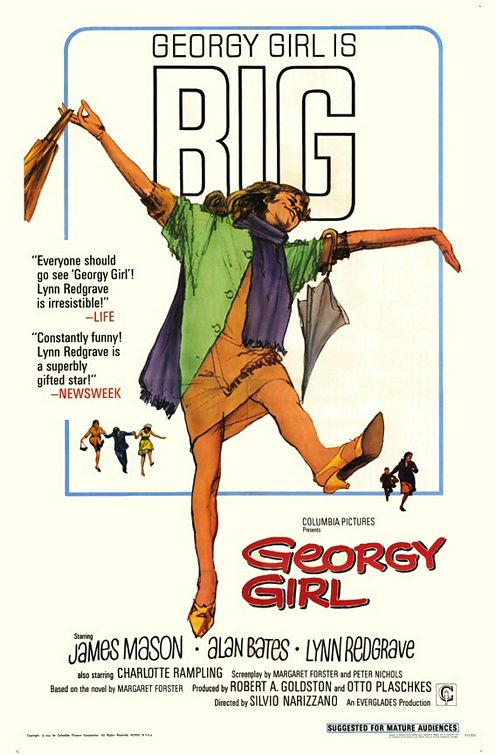
Lynn Redgrave excels as permanent odd-girl out in Georgy Girl

Director: Silvio Narizzano

Cast: Lynn Redgrave (Georgy Parkin), James Mason (James Leamington), Alan Bates (Jos Jones), Charlotte Rampling (Meredith), Bill Owen (Ted Parkin), Clare Kelly (Doris Parkin), Rachel Kempson (Ellen Leamington), Denise Coffey (Peg), Dandy Nichols (Hospital Nurse)

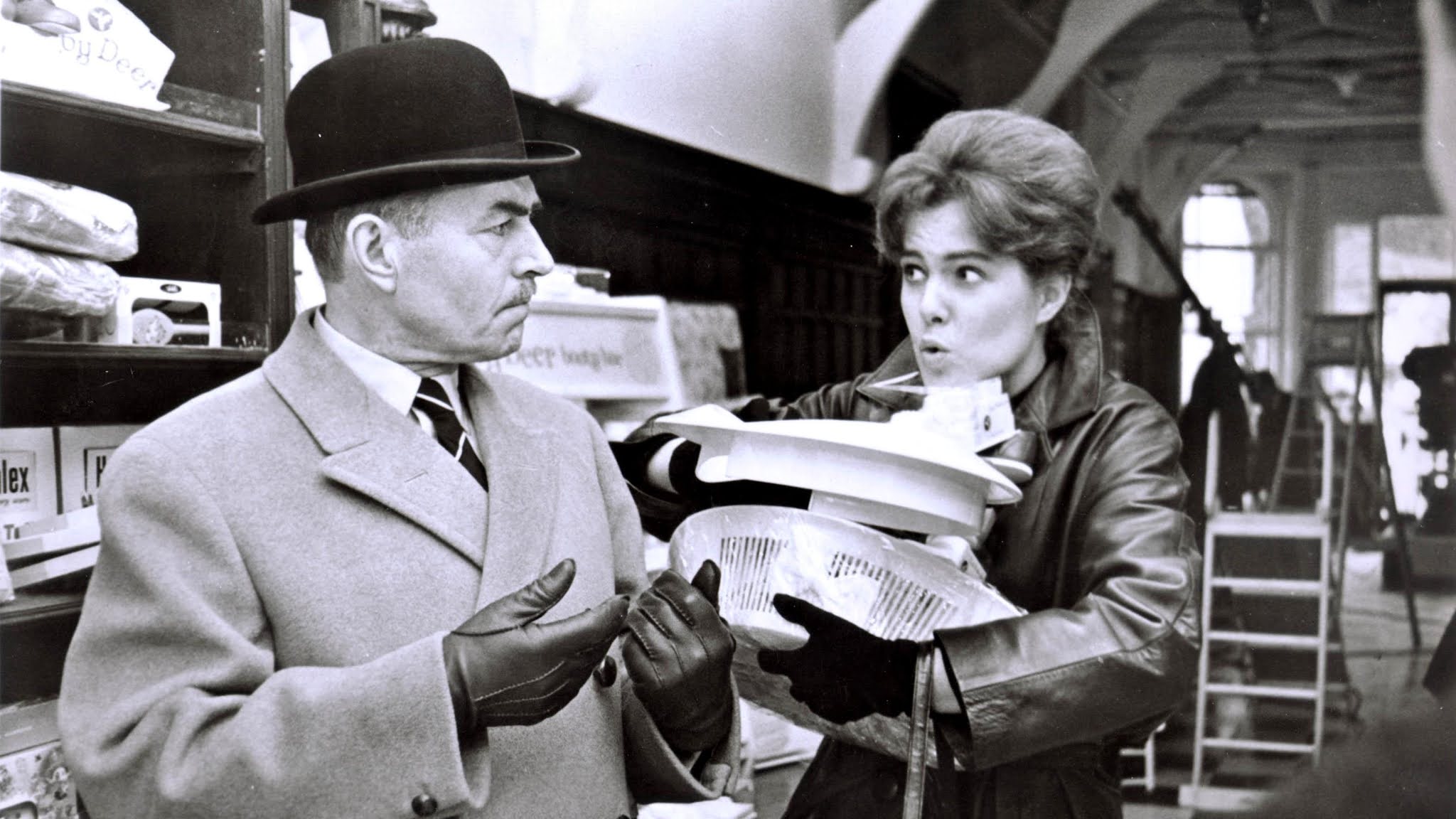
Made at the height of the Swinging Sixties – when London was the coolest city in the world – Georgy Girl is, in some respects, a time capsule. It was seen at the time as almost impossibly naughty and subversive, with open talk of abortions and affairs, mothers who feel their lives have been changed for the worse by having babies and young people struggling to accept their responsibilities. Now of course, it all looks rather tame. But there remains a charm to the film – helped above all by its performances – that still manages to make it a winning film, despite some of its attitudes raising entirely different questions today than its makers intended.

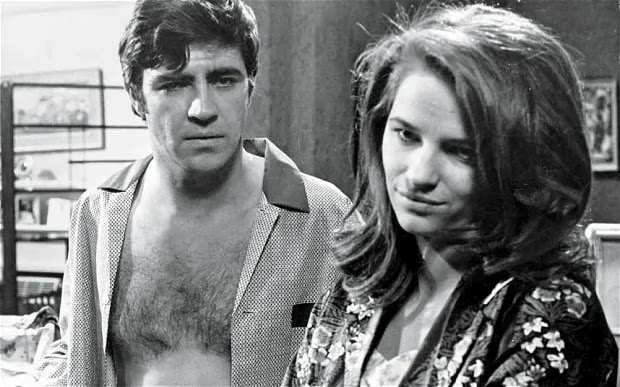
Georgy (Lynn Redgrave) is the plain-looking (and doesn’t the film keep reminding us of this!) daughter of the devoted butler (Bill Owen) to millionaire James Leamington (James Mason). Leamington has supported Georgy while she grows up – even letting her use his house for her children’s performance classes – but now his interest in her is changing. With his wife dying, James offers her the chance to become his mistress (with an actual contract). Georgy turns it down – not least because of her growing interest in Jos (Alan Bates), the fun-loving boyfriend of her flatmate Meredith (Charlotte Rampling), a drop-dead gorgeous violinist who treats him and everyone else with disdain. When Meredith falls pregnant with Jos’ baby, the two of them marry – but Meredith wants nothing to do with the child, a contrast to Georgy who has always dreamed of family.

It’s actually a film of cold, hard realities. Beware any film which gives you a conventional happy ending – the hero chasing a woman down a street crying out that he loves her – around the half way mark. All the characters are presented with choices, and are forced to either compromise or run away. It’s telling that the characters who most fit the mood of the era invariably run away, while those with a more traditional outlook stick it out. You could argue that far from being a celebration of the 60s, Georgy Girl is a fierce critique.

At the time, Georgy was seen as something of a free spirit. Perhaps this was because of her unconventional looks or her playful imagination when working with the children in her performance class. Maybe it was the opening sequence, which sees her getting a fashionable haircut, only to instantly wash it out in a sink. Or could it be because she treats her father’s wishes for her to listen to her elders and betters with disdain? (Let’s skirt over the fact her father seems to be effectively pimping her to his employer.) The way she makes a scene at Leamington’s birthday party by performing a raunchy cabaret number? Most of all though it may well have been due to the catchy (and instantly recognisable) Seekers song that plays over the opening and closing of the movie and serves as her calling card.

Interestingly though, watching it now, there is something incredibly conservative about Georgy – and quite possibly about the film itself. While she lives in the heart of the buzzing metropolis, Georgy’s dreams seem to come from another age: to become a mother, in a comfortable domestic setting. It’s hardly a feminist rallying cry. Georgy is so keen for this, she is perfectly willing to step (almost literally) into the shoes of Meredith, inheriting her husband, child and home. The film also misses no opportunity to remind the viewers Georgy is plain, dumpy and sexually inexperienced. Redgrave has been dressed to look like a sort of Teutonic housekeeper. The film doesn’t seem to quite know where to land between praising Georgy and slightly encouraging us, to chuckle at her.

Georgy isn’t in fact the swinging 60s icon in the film. That unquestionably is Charlotte Rampling as Meredith. Looking absolutely stunning, dressed by Mary Quant, Meredith is everything we expect from the era: confident, outgoing, ambitious, sexually liberated. But Meredith is also a stone-cold, ruthless, heartless bitch. Superbly played by Rampling, she treats Georgy as a servant, Jos as a mix between comfort blanket and vibrator, and decides to get married and have the child (rather than abort it as she has two others of Jos’ children – without telling him) because she’s bored. Once the poor child is born, the idea of sacrificing anything from her life is anathema to Meredith who promptly disappears over the horizon.

Georgy Girl is actually a film with much more mixed – even satiric – views of women and its era. The sort of liberation Meredith enjoys goes hand-in-hand with a selfish shirking of responsibility and using her beauty as a justification to treat everyone she meets as supplicants. Georgy is stuck in the middle, a woman in an era of growing freedoms but whose aims remain solidly in the Victorian era. The men are an equally mixed bag. Today we would certainly call what Leamington has been doing grooming. Jos has a happy-go-lucky 60s charm to him, but is flighty, unreliable, selfish and disappears with a smile the second the going gets tough. For all the film is sort of remembered for its joie-de-vive, it’s actually a searing look at the era with mixed feelings about its characters.

The fact we really end up caring for Georgy is due to Lynn Redgrave’s wonderful performance. A second choice for her sister Vanessa, the role typecast Redgrave in Hollywood’s minds as sort of dumpy loser (especially after her Oscar nomination). But she brings the role a real magnetism. Georgy is doomed to play second fiddle in people’s lives (and perhaps even her own). Perhaps the most 60s thing about her though is her determination to get what she wants – whether that is avoiding an affair with her father’s employer, or securing a good life for Meredith’s baby.

The rest of the cast are equally strong. Bates brings the best of his impish charm to the part (even if at times he tries too hard), as well as a metrosexual edge to Jos as someone very comfortable with joking around and being a bit camp. James Mason (who took a massive pay cut for the role, a decision which paid off with an Oscar nomination) is superb as fragile but creepy Leamington, a man who believes he is genuinely in love and is also excited at the prospect of replacing his bed-ridden wife (played by Redgrave’s actual mother Rachel Kempson, adding a nice Oedipal touch) with a younger model. Bill Owen mixes both a hilarious servility with assertions that his daughter “owes” Leamington something for all he’s done for her.

Georgy Girl works well because it is – and remains – funny as well as being dramatic and thought provoking. It might not be a feminist tract – and the character most likely to be seen as a feminist in the thing is its least sympathetic by far – and it might well affectionately scorn a woman who doesn’t look like a conventional man’s idea of attractive, and give her a traditional outlook behind a playful exterior – but it’s an energetic and rather charming film that does make you care. Separating it from the era it’s set in, might well do it a world of good.

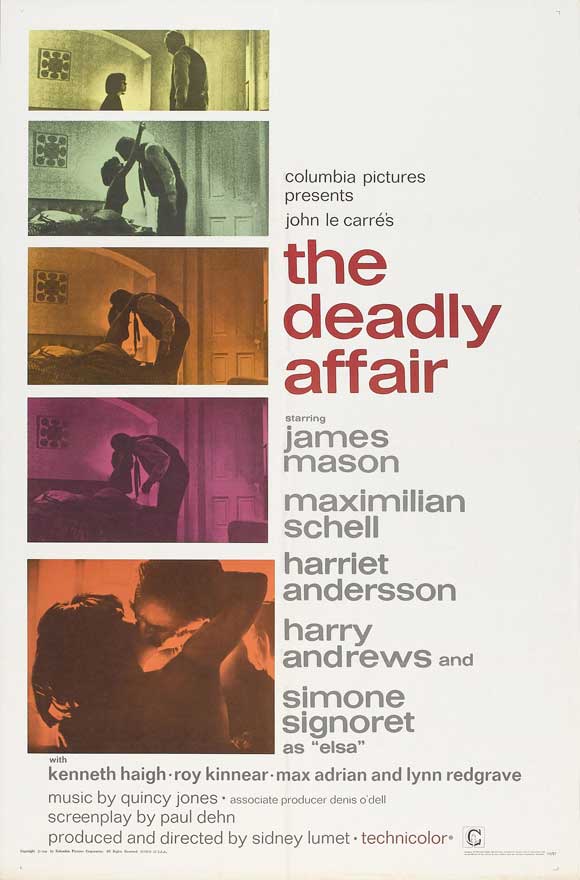
The Deadly Affair (1966)


James Mason deals with marital and professional deception and betrayal in spy thriller The Deadly Affair (in every meaning of the word!)

Director: Sidney Lumet

Cast: James Mason (Charles Dobbs), Maximilian Schell (Dieter Frey), Harriet Andersson (Ann Dobbs), Harry Andrews (Inspector Mendel), Simeone Signoret (Elsa Fennan), Kenneth Haigh (Bill Appleby), Roy Kinnear (Adam Scarr), Max Adrian (Adviser), Lynn Redgrave (Virgin), Robert Flemyng (Samuel Fennan), Corin Redgrave (David)

The Deadly Affair is a faithful adaptation of John Le Carré’s first novel, Call for the Dead, that first introduced to both Le Carré’s distinctive vision of espionage (a world where spying is a dirty, depressing business, miles away from Bond), and also his principal recurring hero George Smiley – although Smiley here is renamed Charles Dobbs (Paramount held the rights to several recurring Le Carré characters as it was making The Spy Who Came in From the Cold). The Deadly Affair often gets forgotten in the list of Le Carré films, which is unfair – this is a fine, gripping, character-led thriller.

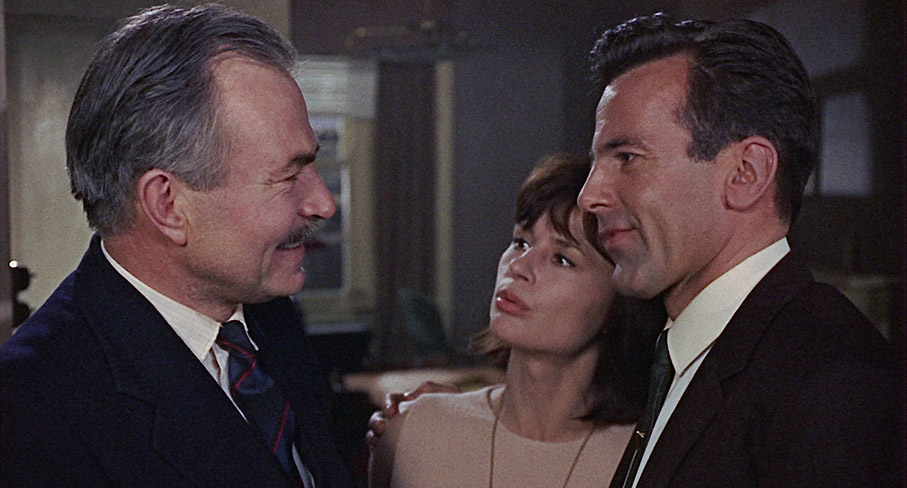
Charles Dobbs (James Mason), a senior case officer in British intelligence, meets with Samuel Fennan (Robert Flemyng): a civil servant in the Ministry of Defence, who has been anonymously accused of being a Russian agent. Dobbs all but agrees to clear Fennan in a friendly meeting – only for Fennan to go home and commit suicide. Dobbs investigates, but quickly finds that the facts – and the story of Fennan’s wife Elsa (Simone Signoret) – don’t seem to tie up. Working with retired police inspector Mendel (Harry Andrews), Dobbs investigates further – against the wishes of his superiors. This also helps to distract Dobbs from his disastrous home life with his serially unfaithful wife Ann (Harriet Andersson) and her growing closeness to his old war friend Dieter Frey (Maximilian Schell).

The Deadly Affairhas an old-school, unflashy, Hollywood professionalism to it, very smoothly directed by Sidney Lumet. Lumet and photographer Frederick A. Young slightly exposed each shot of the film to give the colours a drained, murky quality, which works extraordinarily well for the grimy Le Carré feeling. Lumet uses a series of careful POV and shot-reverse-shots to involve the audience neatly in the action – we are nearly always seeing events from someone’s perspective, and this helps us empathise with the characters and action. He also uses London locations expertly – everywhere is carefully chosen and shot for maximum impact, creating a world of dingy backstreets that perfectly matches the feeling of the story.

It also helps that Lumet changes very little from what was already an excellent source novel. It’s an intricate “whodunnit” puzzle, twisty and challenging enough to keep the audience guessing. What the film does really well is introduce Dobbs’ wife Ann as a central character in the storyline, and to make marital betrayal and deception a complementary subplot, alongside Dobbs’ involvement in the world of professional bluff and counter-bluff: during the day he practises the very same deception that pains him so much at home. (Le Carré would effectively lift some of the ideas of this film adaptation and reproduce them in later books, most especially Tinker, Tailor, Solider, Spy.)

This marital disharmony becomes a key theme in the movie – two people who are totally reliant on each other but can’t seem to stop hurting each other. Ann is in many ways the hellish wife – serially unfaithful and largely unrepentant – but Dobbs is equally difficult, unnervingly patient and silently (but never vocally or perhaps even consciously) judgemental. They have a complex arrangement, but also a clear understanding of each other, and their conversations sound like careful, familiar routines. Like a scab, Dobbs keeps picking at this wound of his wife’s infidelity – early in the film he returns home after a late call out to find his wife naked in bed. She rises to greet him provocatively, and they kiss, but Dobbs seemingly can’t let go of his own sense of impotence. Later Ann demands Dobbs expresses some rage and jealousy – as if looking for him to show some sort of feeling.

It’s a neat sub-plot for a film that focuses on a series of major personal and professional betrayals – I counted no fewer than five over the course of the film but there are probably more depending on how you define it – and which shows how spying can become wrapped up in personal affairs. Despite Dobbs’ apparent pride at treating his work with a determined coolness, everything is so very personal in this film. Characters react often with emotions rather than cool rational thinking – with the exception of one character who uses the emotions of others very rationally to manipulate them. Even the final confrontation of the film has a sad loss of emotional control at the centre of it – and leads to actions bitterly regretted by the survivors.


James Mason is very good as Dobbs, buttoned-up but slightly run-down, a man who presents a face of calm control and wisdom to the world, but at home is an insecure, deeply pained, impotent mess. Determined and principled in the world of espionage, he is hopelessly in love with his wife, to the extent of practically allowing her free rein to do as she wishes. Despite being in nearly every scene, it’s also a very generous performance, quiet and unshowy, that often cedes the scene to his partners. Harriet Andersson (though clearly dubbed) manages to make Ann someone who feels sympathetic and understandable – even though she is a colossal pain.

Lumet also gets some wonderful performances from the rest of the cast, not least from Harry Andrews who I think steals the movie as a narcoleptic Inspector Mendel, obsessed with facts and possessed of a dry professionalism. The film also gives a gift of a role to Simeone Signoret, a woman with a troubled past and indeterminate motives, bubbling with guilt and resentment. She is given no less than three tour-de-force scenes (one played almost in complete silence) and plays each brilliantly. There are neat cameos as well from Max Adrian (as a campy popinjay running Dobbs’ department) and Lynn Redgrave as an eager stagehand for an amateur theatre company with some vital evidence. 

The film’s conclusion revolves around two masterfully done sequences: one during a performance of Edward II (by the real Royal Shakespeare Company – spot several familiar actors on stage), the second an emotional confrontation at a dock that erupts into violence. It’s a wonderful dwelling on betrayal and its impacts. It also works an absolute treat as a low-key counterpart to Bond at his Swinging Sixties height, while still packing a jazzy score from Quincy Jones (which at first seems completely incongruous but actually helps to establish the mood really well). Directed with professional assurance with a host of fine performances – it’s a little bit of an overlooked gem.