Tag: M. Emmett Walsh

Ordinary People (1980)


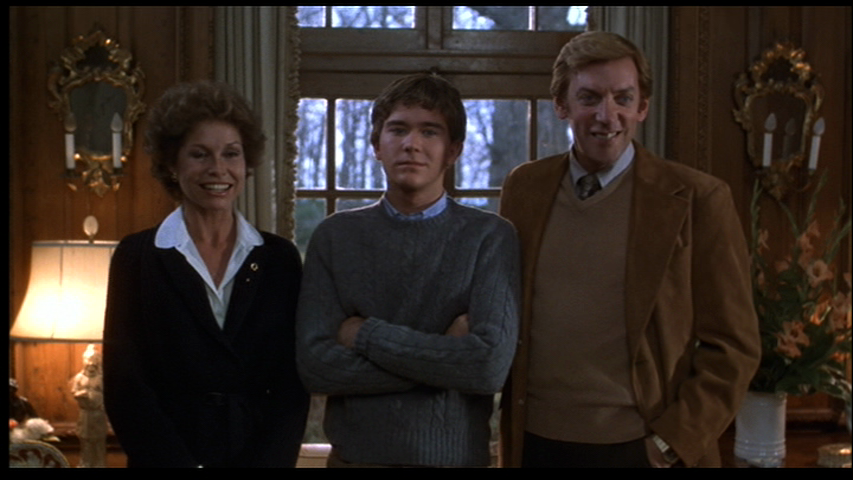
Mary Taylor Moore, Timothy Hutton and Donald Sutherland pose for an awkward picture in family troubles drama Ordinary People

Director: Robert Redford

Cast: Donald Sutherland (Calvin Jarrett), Mary Taylor Moore (Beth Jarrett), Timothy Hutton (Conrad Jarrett), Judd Hirsch (Dr Tyrone Berger), Elizabeth McGovern (Jeannine Pratt), M. Emmet Walsh (Coash Salan), Dinah Manoff (Karen Aldrich), Fredric Lehne (Joe Lazenby), James B Sikking (Roy Hanley)
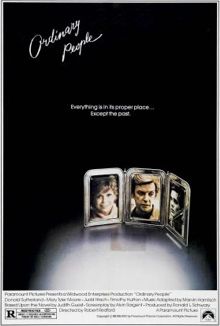
In 1980, Robert Redford became the first big Hollywood stars to parlay acting success into producing and directing small scale, independent films that otherwise might never have been made. Ordinary People was the first of these – with Redford focusing on staying behind the camera – and it was a big success. It even won four Oscars – best picture, screenplay, supporting actor for Timothy Hutton (despite the fact Hutton is really the lead) and best director for Redford himself (beating out David Lynch for The Elephant Man and Martin Scorsese for Raging Bull). It was a great story for 1980 – the matinee idol turned artist. But is Ordinary People that great a film?

The film covers the emotional collapse of a wealthy middle-class American family after the eldest son Bucky is killed in a boating accident. Younger son Conrad (Timothy Hutton) has had trouble coming to terms with the accident, which he survived, and has only just left an institution after a suicide attempt. His father Calvin (Donald Sutherland) is desperate to try and relate to his son again, while his mother Beth (Mary Taylor Moore) remains emotionally distant attempting to put the accident behind them. Conrad starts seeing psychiatrist Dr Berger (Judd Hirsch), to adjust – but the after effects of Bucky’s death continue to tear the family apart.

Nobody really talks about Ordinary People any more do they? Out of all the 1980s Best Picture winners it’s perhaps the most easy to overlook (except maybe for Terms of Endearment). Why is this? Well truth be told it’s just a pretty ordinary picture. There really isn’t much to it. The story it tells of a wealthy family (only a millionaire like Redford could consider these loaded people ordinary) suffering emotional trauma and psychiatry finding the answer has been told so many times before, and since, that there isn’t anything particularly unique or interesting about it. 

In fact Ordinary People is exactly the sort of small-scale, quiet, middle-brow independent film that awards ceremonies slather over and a few years later (never mind over 30!) people struggle to see what the fuss was about. Redford directs the film with a quiet professionalism – the sort of competent craftsmanship and skill with actors that dozens of other directors could have done just as well. His Oscar for best director is especially galling when you consider the artistry and imagination of Scorsese’s direction of Raging Bull, or the unbearable sadness and tragedy Lynch gave The Elephant Man. It’s the sort of direction a non-famous director wouldn’t even have been nominated for.

This film uses shot-reverse-shot like it’s going out of fashion, most of the scenes are conversations across tables that are weighted down so heavily with meaning you start to lose interest in them. The score uses Pachelbel’s music in such an overwhelming style, it makes that sound as anodyne as much of the rest of the movie. Maybe it’s just because this is such well-trodden ground, but the revelations towards the end of the movie are so blindingly obvious you wonder why it takes so long to get to them (the son blames himself, the mother blames the son and doesn’t love him as much as the dead son, the father wants the two to kiss and make-up). 

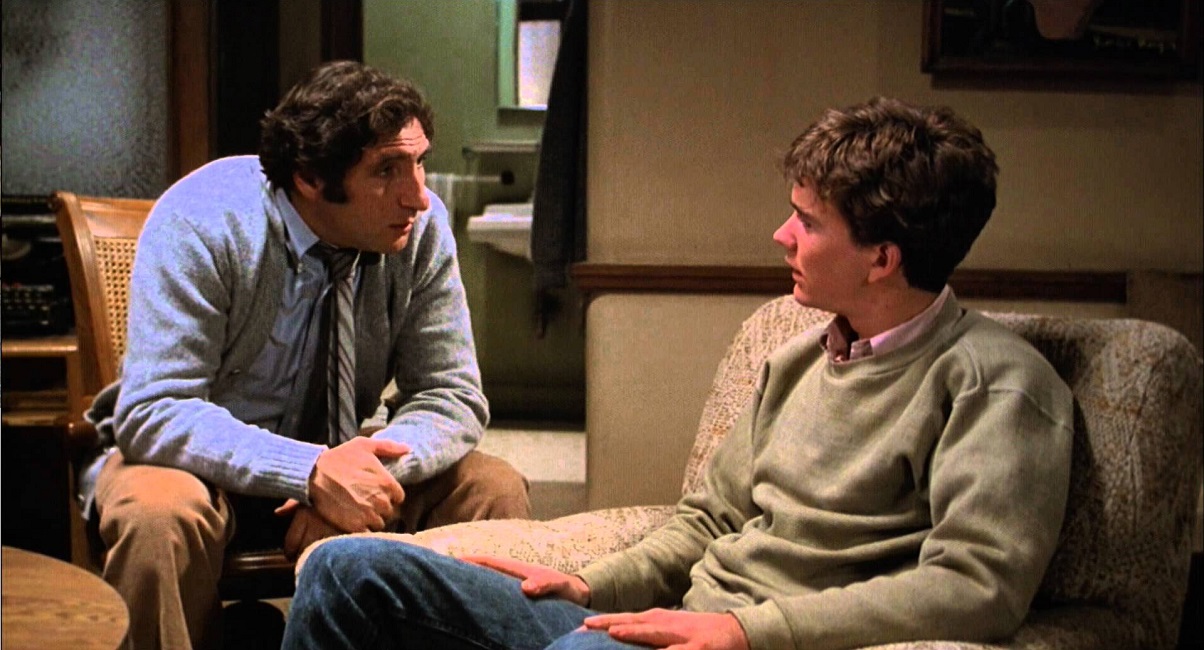
This rotates around a series of psychiatrist scenes which at least have the feeling of actual sessions, even if Judd Hirsch (good as he is here) basically plays the sort of revelation inspiring psychiatrist that only appears in movies. The film has a touching faith in the power of analysis being able to solve all problems, and spends so long luxuriating in scenes like this it virtually forgets to put actual living, breathing characters in the middle of them. With the possible exception of the father, none of these characters feel particularly real – they are just mouthpieces for the plot.

Not that it’s badly acted at all. Timothy Hutton made his film debut here and he brings a real fire and passion to the role, as well as a moving emotional vulnerability and anger directed only at himself. The supporting actor Oscar feels a bit of a cheat, as he’s clearly the lead, but he’s very good here as Conrad, struggling to express himself, bottling up his feelings and lashing out at those around him. It’s a part that feels drawn together from bits and pieces of plot requirement, but Hutton plays it to the hilt – it just doesn’t feel like a really real person, more a collection of sad traits.
Mary Taylor Moore is in a similar situation as a mother so cold and distant from her son, so repressed and controlling her distance starts damaging the entire family. She’s unable to process what has happened so almost wants to pretend nothing has (and blames her son for not doing that same), that it again feels like something from a psychiatric case-study rather than real person. Moore gained particular attention at the time as she was best known for comedy (much like Judd Hirsch, famous for the sitcom Taxi) – so the performance at the time might have looked stronger than it actually was.

The best performance might well come from Donald Sutherland in the least flashy role as the father trying to puzzle out what is going on – and trying to work out his own feelings. It’s the only character that feels less like a construct and more a genuine person, whose answers aren’t easily worked out by a bit of psychology study. Sutherland is low-key, tender, gentle and carries all his emotion on the inside – it’s a subtle and excellent performance, overlooked way too much. 

Redford essentially directed an actor’s film here (it’s all about the big moments of acting) so it’s not a surprise that it seized the attention of the Academy (largely made-up of actors) but really it’s not that far away from a well-made “movie of the week”,  with its obvious beats and not particularly surprising revelations. Perhaps it’s the point that the family’s problems seem a lot more apparent to the viewer than they do to the characters – and there is some interesting development of perceptions, not least from Sutherland’s father who starts to come to profound realisations about his wife and son. 

But Ordinary Peopleis an uninspiring and even rather tame drama, that today looks even more low-key and insubstantial. While it tries to break free from the confines of “social drama” it actually wants to tie everything up with a neat bow psychologically – and despite the fact it has an ending that suggests not everything is perfect, it really concludes with a safe full stop. There is a reason why it’s surely one of the best pictures which has been most forgotten about.
Blade Runner (1982)


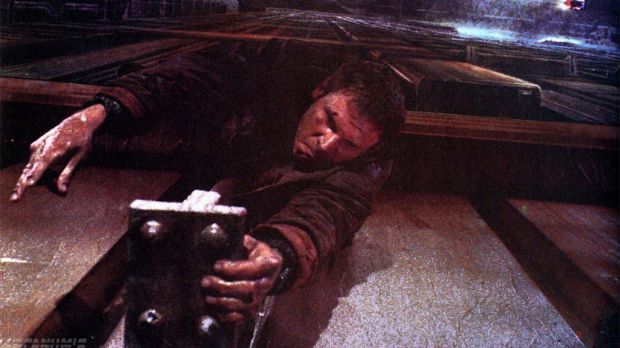
Harrison Ford hangs on for dear life in Blade Runner

Director: Ridley Scott

Cast: Harrison Ford (Rick Deckard), Rutger Hauer (Roy Batty), Sean Young (Rachael), Edward James Olmos (Gaff), M. Emmet Walsh (Harry Bryant), Daryl Hannah (Pris Stratton), William Sanderson (JF Sebastian), Brion James (Leon Kowalski), Joe Turkel (Dr Eldon Tyrell), Joanna Cassidy (Zhora Salome)

Everyone knows Blade Runner surely? And everyone has a viewpoint on its central mysteries. Why for a film largely ignored on release? Because as well as being tight and engaging, this is a rich thematic film, crammed with mystery and enigma. And there are few things more engaging than a film that succeeds in being as open to interpretation as possible.

In 2019 a dystopian, polluted Los Angeles is a launch pad for the wealthy to head out into the new colonies in the stars. Off-world, the unpleasant tasks are carried out by artificial humans known as replicants. Replicants are banned from returning to Earth – but a group of five led by soldier Roy Batty (Rutger Hauer) have come to Earth looking to extend their pre-programmed limited lifespans (no more than five years). On Earth, Rick Deckard (Harrison Ford) is reinstated as a Blade Runner, an agent whose job is to ‘retire’ (i.e. kill) replicants on Earth. Deckard is reluctant, having an increasing distaste for his work, but begins to hunt and eliminate the replicants.

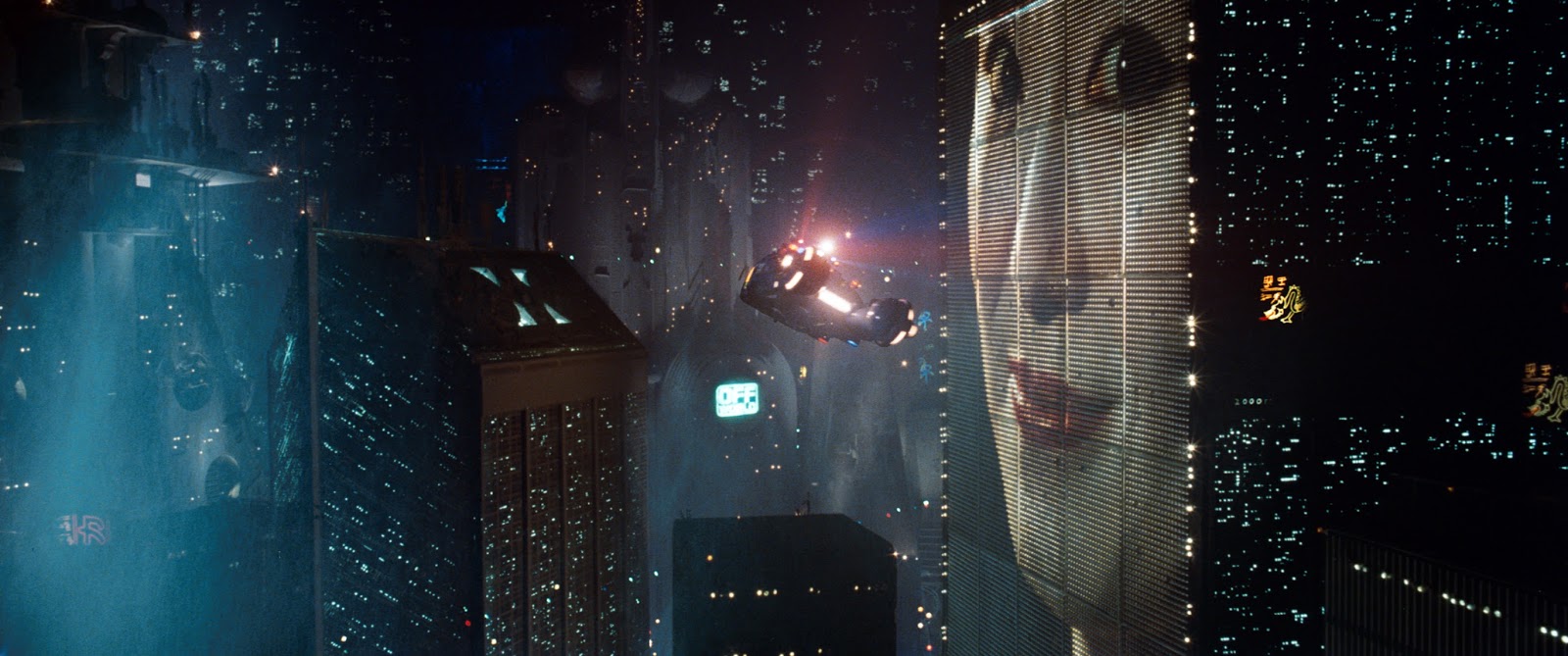
Blade Runner may be one of the most influential science fiction films ever made. Its look and style influenced virtually every other dystopian future you’ve seen in any other film since. Tall, run-down buildings. Overbearing corporate advertising. Flashing neon lights. Terrible weather. Everything dark all the time. Poverty and degeneracy on every corner. You’ve seen it in every dystopian future since. Visually, the film is a landmark, a testament to Ridley Scott’s graphic artistry.

But that wouldn’t be enough for Blade Runner to last the course. When released it was perhaps too elliptical and hard to categorise – equal parts dystopian thriller, noir detective story, sci-fi morality tale, dark romance – for audiences to really understand. Certainly the studio didn’t. After disastrous test screenings, it was re-cut. So began a fable of slice and dice that made Blade Runner perhaps second only to Brazil in the annals of re-versioned films.

The release included an overtly “happy ending” (bizarre images of our heroes driving into a blissful countryside, totally at odds with the rest of the film) and a disengaged voiceover from Harrison Ford that eradicated all the film’s subtlety. This was the only version for 10 years until a “Director’s cut” was released. This removed these elements, retooled scenes and introduced the famous “unicorn dream” sequence (of which more later). Fifteen years after that, Scott finally found the time to work on a “Final cut” which presented the film as Scott had intended it – with all its mysteries and questions intact. Has there been any other film with so many different “official” versions?

Anyway, was it worth the struggle? Certainly. While you could argue it is predominantly a triumph of style, Scott laces the film with a sense of mystery and profundity that makes it a rich and rewarding viewing experience. It’s a trim detective thriller that also questions the nature of humanity. It is a perfectly formed elliptical mystery, an archetypal cult film that engrosses the viewers to such an extent that 30 years later there is still a healthy debate about what the film means.

Humanity is =the key issue. The human characters are functional, cold, distant and unengaging. The hunt for the replicants (who are basically slaves) is brutally and unremorsefully executed. The replicants have been designed to learn and grow but cruelly had their lives capped to stop them taking advantage of this. Their world is polluted, tawdry, soulless and lost.

Meanwhile, the replicants exhibit far more (whisper it) humanity than the aloof human characters, ]despite the fact we are repeatedly reminded they cannot feel empathy. Clearly this is not completely true. And, the film argues, if an artificial human can display loyalty, fear, love, anger and pain, what actually is the difference between that and a “real” person. If a replicant can only be identified after dozens of questions in a test, can they really be that different from a human being?

Questions about this coalesce around Deckard. If the film has remained such a part of cultural discussions, it’s partly because of the fun of theorising about his true nature. Is he a replicant? Scott’s insertion of Deckard’s unicorn dream (implying the origami unicorn left by Gaff at the film’s end shows Gaff knows Deckard’s dream, meaning the dream is an implant in an artificial mind) very much suggests so. There is a case to be made either way, both of which work.

Deckard’s ruthless replicant hunt is deliberately juxtaposed with their own warm feelings. Deckard grows in humanity and reluctance as the film progresses – is this him becoming more human, or is it is humanity emerging? His coldness and reserved hostility contrast with the vibrancy of Batty, Pris and the replicants. In many ways, he fits in as the quintessential human in this world – a vague discomfort with what he is doing, but no real hesitation about continuing. Thematically, it makes more sense if Deckard is human – that he represents dehumanisation (and gradually realising it) while the replicants become more human.

However, clues are sprinkled throughout that Deckard is not what he appears. His distance from other characters. The treatment he receives from his co-workers. The photographs that fill his apartment (replicants enjoy photos as it gives them a sense of a past). His bond with Rachael. His relentlessness – and the fact that he is clearly considered expendable by the police. Then there is the rich irony: the best way of hunting down replicants is to create a hunter replicant. Either way, it’s a debate and conversation that sustains the film – and allows multiple interpretations of every scene.

It’s a debate that feeds into the main theme of the film: humanity, free will and our God complex. Batty, the dying replicant searching for new life, confronts his maker – a distant, arrogant man with no interest in his creation. And kills him. But Batty feels more human than any other character. He shows more affection, frustration, anger and grief than anyone else. His last words (the famous “tears in rain” speech) had such cultural impact because it has such poetic joy and depth to it. They are lines enthused with a desire to live, a romantic vitality. It’s the most poetic moment in the film and it comes from someone who isn’t “real”. What more sign do we need that the replicants are human? If we can create poetry in a machine, does it stop being a machine?

Empathy is the quality the replicants are judged on – but as we see replicants dispatched with little sense of regret, and then witness Batty and Leon’s grief for their fallen comrades, or Pris’ ease with man-child Sebastian, the lack of empathy from humans is all the more clear. Deckard is a fascinating character as he falls between two stools – either a human who has buried empathy, or a replicant discovering empathy. Strange and disjointed as the relationship between Deckard and Rachel is (and there is an uncomfortable moment where Deckard gets too physically forceful) it fits into this – are these two artificial people discovering the ability to bond? Or is it an emotionally stunted human finding himself drawn towards someone who feels more real than the other humans?

What makes the film work is that it doesn’t hammer home, these issues. It allows us to make our own minds up. It frames the action within a noirish detective thriller, laced with mood and awesome visuals. It’s sharply and sparingly written, with real intelligence. For all its discussions about humanity, it does feel at times a cold film – but it’s so rich in suggestion and implication that it doesn’t really matter. Yes you could argue the implication and playful suggestion imply more depth than actually exists, – but the film gets away with it, because it works so well.

Rutger Hauer gives easily the finest performance as Batty (he allegedly wrote the famous speech on the day). Batty is the most vibrant and dominant force in the film, who goes on the most engaging emotional arc. For me the dark secret of the film is Harrison Ford is slightly miscast– he’s aiming for moody, Bogartish disillusionment, but he comes across more disengaged (he’s strikingly better in Blade Runner 2049). I think Ford struggled with the character – it’s a role better suited to a John Hurt or James Caan, rather than Ford’s more conventional (if world-weary) magnetism – he’s not a natural fit for a bitter cynic. Olmos, Cassidy, Walsh, Sanderson and James give strong support.

Blade Runner is a visual triumph and a rich experience. Its story is compelling, but the real richness is the thematic layers under its skin. Scott created a film open to interpretation, and that’s what really grabbed the imagination. It marries mystery with curiosity and avoids pretension, becoming intriguing and engrossing. Scott has rarely made a film with such intense ideas and poignant confusion before. You could argue the final cut leans too far one way in the central mystery, but there is more than enough eerie richness under that – helped by Vangelis’ unsettlingly grand score – to keep people viewing and talking about it for another 30 years.