Tag: Mackenzie Davis

Terminator: Dark Fate (2019)

Terminator: Dark Fate (2019)

Even re-uniting Hamilton and Arnie couldn’t save this from an (undeserved) Dark Fate

Director: Tim Miller

Cast: Linda Hamilton (Sarah Connor), Arnold Schwarzenegger (Carl), Mackenzie Davis (Grace), Natalia Reyes (Dani Ramos), Gabriel Luna (Rev-9), Diego Boneta (Diego Ramos), Tristan Ulloa (Felipe Gandal)
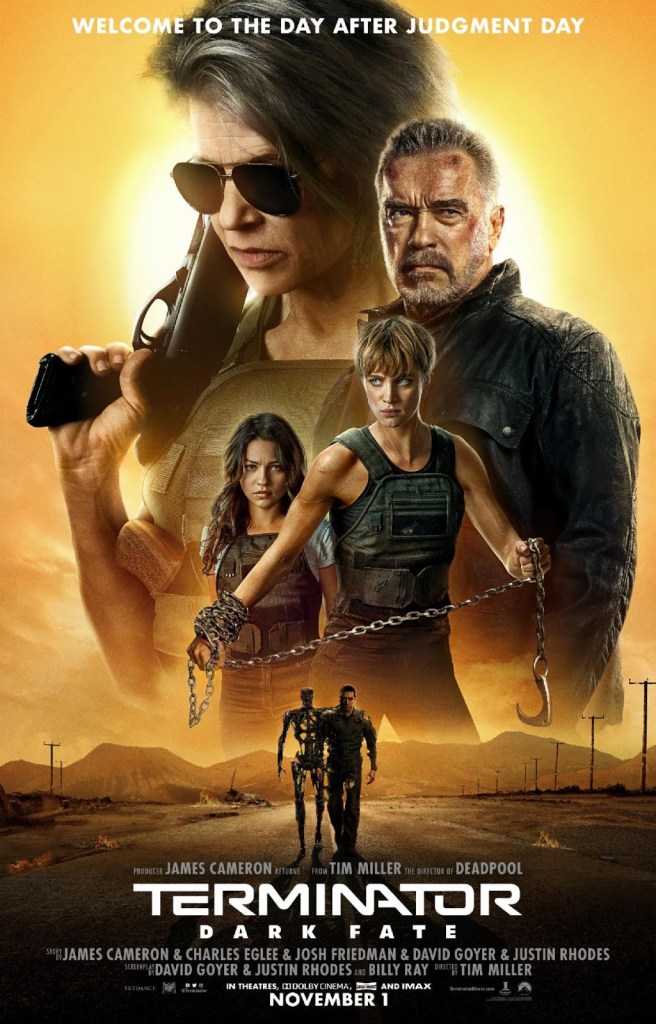
It should have been a hit. The third attempt in the last ten years to restart the Terminator franchise, after no less than two cancelled planned trilogies, this one bought back James Cameron in a producing and story capacity, pulled in Linda Hamilton to return as Sarah Connor for the first time in nearly thirty years and finally seemed to be the “true” Terminator 3. But it bombed anyway, worse than either Salvation or Genysis and finally put paid (probably) once and all for the franchise. How did it come to this?

In 1998 a T-800 Terminator (Arnold Schwarzenegger) – one of a number sent back in time by Skynet before erased from history by our heroes in Terminator 2 – finally succeeds in killing John Connor (a CGI recreation of Edward Furlong from T2), leaving Sarah Connor (Linda Hamilton) distraught. Twenty-two years later and a new artificial intelligence from the future, Legion, has sent back a Terminator (Gabriel Luna) to wipe out a pivotal future figure for the human resistance Dani Ramos (Natalia Reyes), with the resistance once again sending back its own champion Grace (Mackenzie Davis), an artificially enhanced human. The inevitable combat between man and machine is on again, with Grace and Dani joining forces with Sarah Connor, as well as other unexpected allies.

That paragraph probably gives you a sense of what’s good and what’s bad about the film. Starting with a twist that seems to finally try and send the franchise off in a new direction – the eradication of John Connor, the person every film has been about protecting – is a brave decision. The confirmation that eternal enemy Skynet has indeed been erased from history finally changes the enemy. Arnie’s T-800 is confirmed as literally the last in existence – a killer sent from a future that now no longer exists. It looks like we are set for something entirely different.

And then of course we aren’t. Because it seems man’s reach will inevitably exceed his grasp, just as would-be Terminator film producers will always overreach themselves. Even with Skynet gone, there must always be some artificial intelligence super-computer that destroys the future, there must always be some sort of special one who must be protected at all costs, always a hero sent from the future who knows more than they can say and always an Arnie Terminator on hand for good or bad. Just as Genysis tried to re-set the table, but only reminded us what a small world is, this film tries to shake up the pieces but then replaces most of them with like-for-like and throws us into a film that has effectively exactly the same structure as the first two films.

So, after that opening scene twist, we get the arrival and meet up of the two future warriors, a scrap at an everyday setting for her hero, a series of shocked reveals about the future, some gonzo chases (this one does at least up the anti – literally – by setting one of them in a plane), a lull in proceedings while our on-the-run heroes work out whether they can trust each other, then a final smackdown in a factory where self-sacrifice is all the rage. For a film that tries to do something new, it is remarkably conservative and shows that for all the time-travel inspired gymnastics of the universe it operates in, the series is strictly tied to a set number of rules and plot mechanics.

But it’s all really confidently told. That’s almost the tragedy. This is a pretty good film. Easily the third best Terminator film made. I actually pretty enjoyed it. It has a simple narrative drive to it, an old-fashioned world where the characters throw each other about and punch each other really hard into things rather than engage in balletic, choreographed fight scenes. Tim Miller directs the whole thing with a pace and drive and if Cameron feels like he may have only really been happy to attach his name to the whole thing in return for a few story ideas and a paycheque, at least it can boast it has his definite seal of approval.

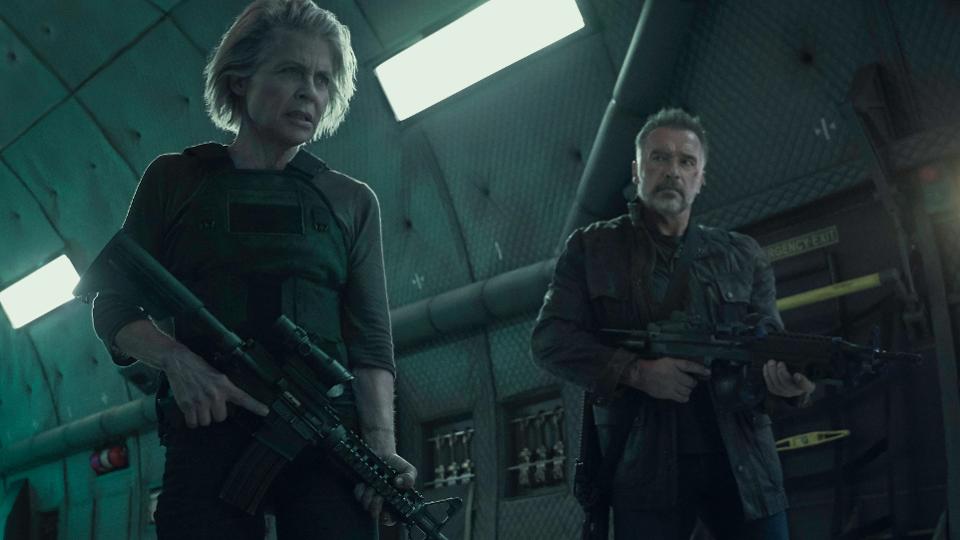
The acting is also pretty good. Linda Hamilton is a welcome return, getting some fascinating beats of intense drive mixed with deep grief. It’s a great to see an action film like this front-and-centre female characters so much. It’s a shame that this is such a franchise with such a masculine reputation, as this realignment has probably not had the impact it could have had in bringing new people in. Mackenzie Davis is impressive as Grace, Natalie Reyes growing in confidence and strength as the new messiah. Even Arnie gets to do something very different with his T-800 characterisation (after 22 years of living as human, the robot has changed beyond all recognition from the remorseless killer), not least seeing him successfully terminate a target for the first time in the franchise. 

It’s just a shame that this energetic re-telling of an old story probably suffered above all from franchise exhaustion. After reboots and restarts from Salvation to Genysis have seen their plotlines, developments and future sequels sent to the scrap heap (certainly the last two) it really seems a case that once bitten, twice bitten makes us not just shy, but running scared. At the end of the day any interest and affection the franchise had from the first two films has been burned up beyond all recognition – and this film, in the end, doesn’t reinvent the wheel enough to encourage you to come back and see what’s different. It’s a shame that this sprightly entertaining film has been terminated not by its future, but by its weary, error-strewn, past.
Blade Runner 2049 (2017)


Ryan Gosling does a man’s job filling some difficult shoes in Blade Runner 2049

Director:  Denis Villeneuve

Cast: Ryan Gosling (Officer K), Harrison Ford (Rick Deckard), Ana da Armas (Joi), Sylvia Hoeks (Luv), Robin Wright (Lt. Joshi), Mackenzie Davis (Mariette), Carla Juri (Dr Ana Stelline), Lennie James (Mr Cotton), Dave Bautista (Sapper Morton), Jared Leto (Niander Wallace), Barkhad Abdi (Doc Badger), Edward James Olmos (Gaff), Sean Young (Rachael)

SPOILERS: It’s pretty much impossible to discuss Blade Runner 2049 without revealing some of the workings of the plot. Since the film makers have gone out of the way to say “don’t reveal any of the plot” I thought it fair to say I’ll discuss some things fairly freely here. So you’ve been warned!

Making a sequel is a risky business at the best of times. Then imagine making a sequel to a film that is not just a cultural and artistic landmark film but one people genuinely love. The possibility of creating a massive disappointment? Pretty big. You need some guts to take that on – like announcing you are making Gone with the Wind: Blown Away or Casablanca: Everyone Back to Rick’s. That’s the sort of challenge for the makers of the long-awaited Blade Runner sequel. Could they make something that both complemented and expanded on the original?

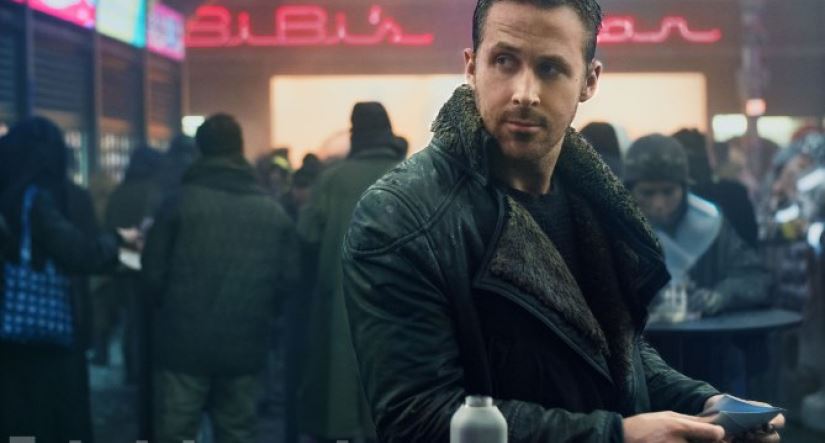
The year is 2049 (of course!). K (Ryan Gosling) is a Blade Runner with the task of hunting down long-lived Nexus-8 replicants – the twist being (and its revealed in the opening minutes of the film!) that K himself is a replicant, a more obedient Nexus-9 model. After “retiring” aged replicant farmer Sapper Morton (a career best Dave Bautista), K locates the buried remains of a female replicant who died after an emergency caesarean section. Terrified that replicants may be developing the ability to reproduce, K’s superiors order him to “retire” the child and all who know of it. As K investigates, his loyalties become ever more divided – while sinister corporate genius Niander Wallace (Jared Leto) and his Nexus-9 hit-woman Luv (Sylvia Hoeks) have their own plans for the replicant child.

So the big question is, does Blade Runner 2049 succeed? The answer is a firm and reassuring yes. The big issue is, does the existence of this film affect (or even ruin) the previous film? Blade Runner 2049 not only complements the original, it builds on and expands its themes, and poses far more questions than answers. In some ways it’s even more profound and searching than the original – arguably it engages with ideas and concepts even more overtly (and richly). If your concern going into this film was it would end any discussion about whether Deckard is a replicant or not, then have no fears – the question remains as open as ever (and works either way for this story).

Even more than the original, this film tackles what it means to be human and how we define humanity by the ability to express emotions and empathy. It comes at this from a different stand-point from Blade Runner by removing any doubt about our hero’s nature. What is more, he is a replicant deliberately designed to be more obedient than earlier models. A cool, minimalist actor with a mastery of small expressions, Ryan Gosling is almost perfectly cast as the quiet K, developing deep yearnings to be more than what he is. The entire film revolves around this question of how capable K is not only of forming emotions, but of making his own choices.

The ability to live freely and choose is at the heart of the conundrums for all our characters. To what extent are they able to do this? K goes about his work of dispatching fellow replicants with a quiet reluctance, but does his duty nevertheless. But he is a character yearning to be “more” – and what, in many ways, is more human than that? The film taps into this expertly with K’s belief that maybe he himself is replicant child. The film’s mantra is about choosing what we live and what we die for and, regardless of who or what we are, being able to do this is what makes us “more”.

In a film stuffed to the gills with replicants and other artificial characters, we are constantly asked to address and question how far each of them goes towards achieving “humanity”. Just as with Blade Runner, the only two definitely human characters (Niander Wallace and Lt Joshi) are strangely distant, hard to read or even cruel authoritarian figures, making a damn bad case for real humans.

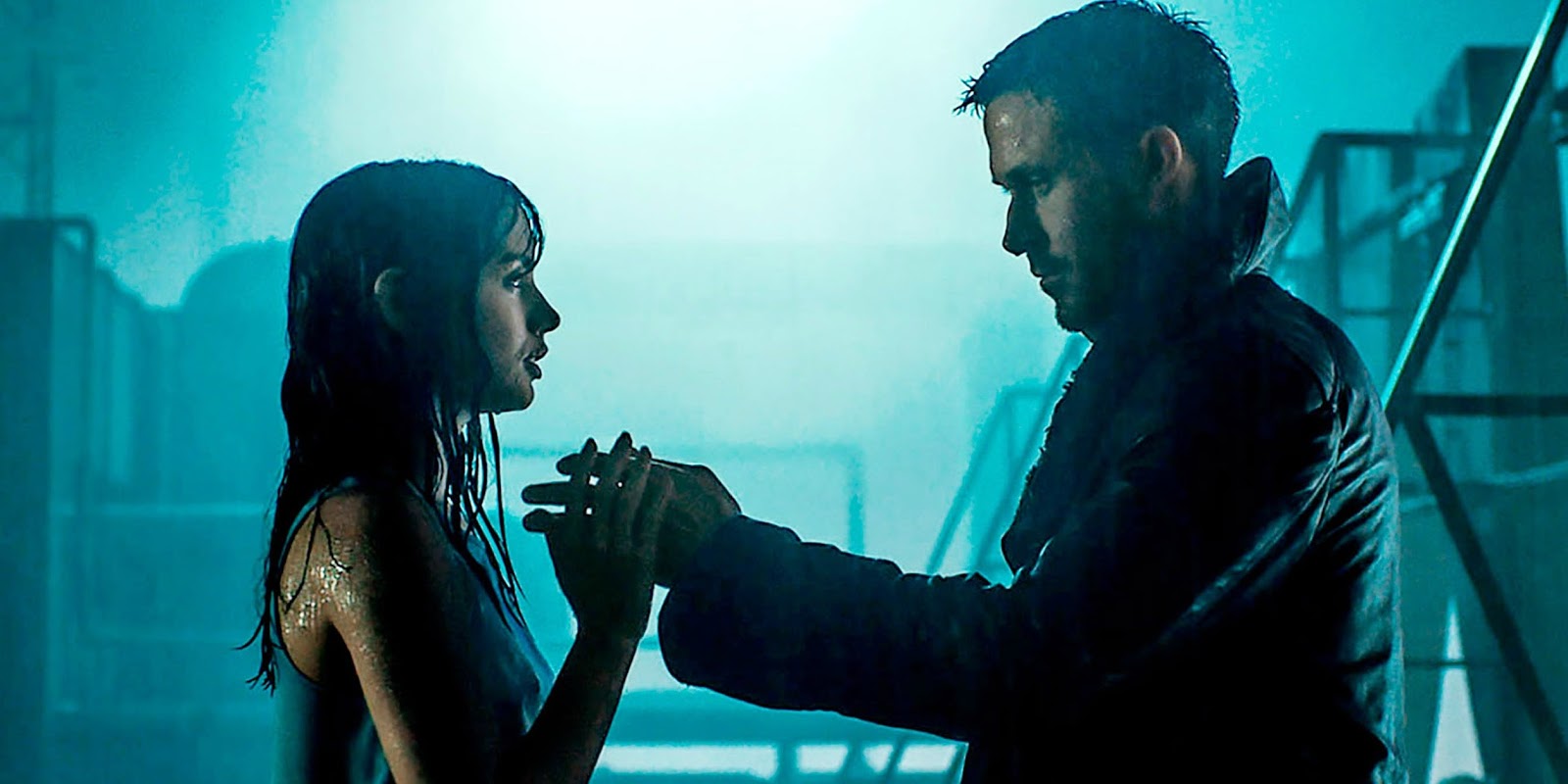
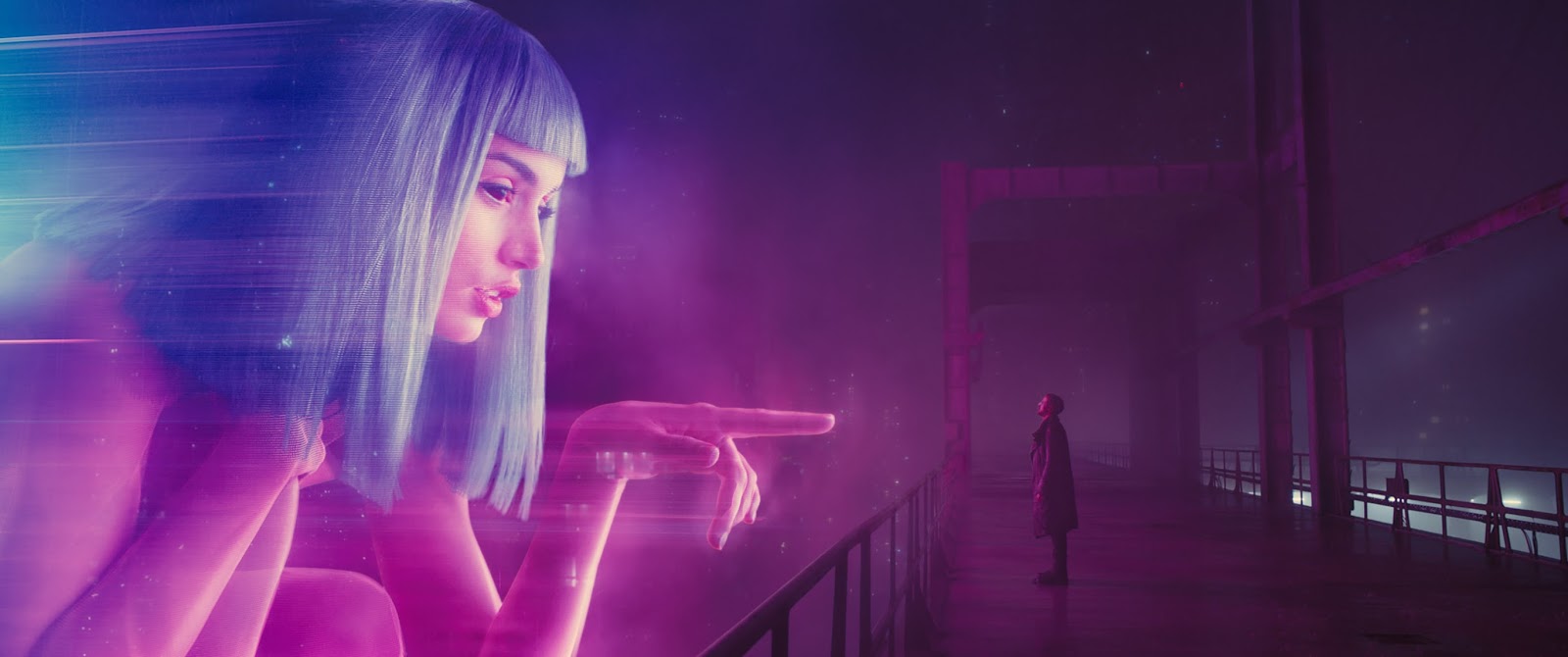
Joi (brilliantly played by Ana de Armas), K’s girlfriend, is a warm, caring, loving woman – but she’s also a hologram, designed to be the perfect companion. K and she go to great lengths to protect and care for each other over the film – and her final fate is a deeply moving moment. But Joi is a computer programme – and a late sequence in the film where K interacts sadly with a looming holographic advert of another Joi that repeats many of her phrases in a disconnected style casts a sad light on all their previous interactions. Every time Joi said anything with love or affection to K, was this just a computer reflecting back what her owner wanted to hear?

It’s not a great surprise to say K does eventually learn to make his own choices and to decide his own fate. In many ways this is a fable of growing up – K accepting his limitations while forging his own destiny – but it makes a contrast with other replicants. While the older models form their own resistance, K’s counterpart Luv (an imposing Sylvia Huks) can’t or won’t break free of following Wallace’s commands. There are more than a few hints Luv is not always happy with the duties she is asked to perform (at one point she weeps quietly as a replicant is dispatched). But at others, she’s clearly striving as much as K to be “special” – she triumphantly repeats a mantra to herself about being the best, like a daughter trying to impress her father.

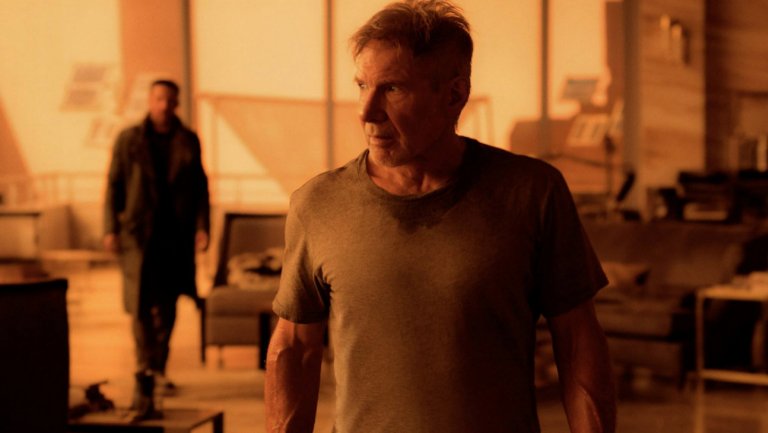
These new characters offer such diverse and exciting story-telling opportunities, you almost don’t notice that Deckard doesn’t appear in the film until nearly the third act. Harrison Ford may have been slightly uncomfortable in the original – but he fully understands the more assured, confident Deckard in this film, who has made his peace with leaving the world behind. Ford gives this new Deckard an almost Han Solo-ish shoot-first swagger, but mixes it with a world-weary sadness. I’d go so far as to say he’s actually better in this film than the first one.

Which is a further testament to the strength of this film. All the themes and ideas of the original are used as bouncing-off points for further exploration. This never feels like a retread, reboot or remake – it feels like a rich and rewarding piece of intelligent sci-fi by itself. I actually feel it could be watched independently of the first film, and still have plenty to offer. It’s not interesting in tying the first film up in a bow – instead it serves as a stimulus for future discussion. You could imagine a sequel to this film sustaining enough interest for 35 years.

Technically of course the film is an absolute marvel. Roger Deakins’ photography is gorgeous, capturing every element of this dystopian nightmare world in a series of brilliant images, in turns drained, bleached and sun kissed. Every frame is artfully composed for maximum impact. The production design is similarly magnificent, Dennis Gassner’s work melding the world of the original, with its steam-punk look, with a mix of technological developments. The score by Hans Zimmer and Benjamin Wallfisch is similarly perfect, giving the film a brooding intensity.

But most of this artistry comes back to the film-making mastery of Denis Villeneuve, a director so gifted I think he may be more interesting than Ridley Scott. His control of the pace of the film is brilliant – despite being very long, it never drags – and he shoots every scene with a careful, intellectually engaged brilliance. He is able – possibly even more than the original – to mix emotion and elliptical theorising, and to draw a raft of brilliant performances from an outstanding cast. More than anything else, he treats the audience with respect, giving them a measured and thoughtful film that trusts we have patience. Villeneuve tops Arrival here, and does so with confident aplomb.

Blade Runner 2049 is a film that demands to be seen more than once. It’s a patient and intensely thoughtful piece of science fiction, that asks profound questions about humanity and the characters in it. I don’t really feel from one viewing I’ve got a grip on it – in fact the more I think about it, the more its haunting, elegiac quality starts cramming into my head. You need to be patient and go with it – you need to be in the right mindset for this slowburn concept film. But, get in that mindset and this film is constantly rewarding. If you want to criticise something, I will acknowledge that many of the female characters are a little more clichéd (most are prostitutes or similar) – but this world where many women seem to be in subservient roles to men is in many ways an extension of the world created in the original film (and now an expression of the dystopian future).

However this is a great film. A really great piece of adult science-fiction. I’ll go out on a limb and suggest it is better than the original film.