Tag: Mahershala Ali

Jurassic World: Rebirth (2025)

Jurassic World: Rebirth (2025)

Back-to-basics monster mash that feels like a reheated remix of several elements from the previous films

Director: Gareth Edwards

Cast: Scarlett Johansson (Zora Bennett), Mahershala Ali (Duncan Kincaid), Jonathan Bailey (Dr. Henry Loomis), Rupert Friend (Martin Krebs), Manuel Garcia-Rulfo (Reuben Delgado), Luna Blaise (Teresa Delgado), David Iacono (Xavier Dobbs), Audrina Miranda (Isabella Delgado), Ed Skrein (Bobby Atwater), Bechir Sylvain (LeClerc), Philippine Velge (Nina)

Those InGen scientists never know when to stop. The latest Jurassic film reveals yet another tropical island awash with prehistoric beasties. This one was also home to a Frankenstein-factory, where terrible genetic abominations were created, cross-bred dinosaurs with extra wow-factor (like flying velociraptors). But of course, almost twenty years later, they roam free, causing trouble for a team of mercenaries. Led by Zora (Scarlett Johansson) and Duncan (Mahershala Ali), they are working for Big Phama Baddie Martin (Rupert Friend) and friendly palaeontologist Dr Henry Loomis (Jonathan Bailey) to capture blood samples from the three largest dinosaurs ever to unlock a cure for heart disease (and millions of dollars). Things don’t go to plan when they end up stranded on an island, with a young shipwrecked family in tow.

It’s called Jurassic World: Rebirth but it could be Jurassic World: Reheated. Gareth Edwards film is shot with nerdy charm and crammed with lots of 90s-child fan-bait images of “Objects are closer than they appear” mirrors and “When Dinosaurs ruled the Earth” banners. But it’s also a blatant reheat of many elements of the first three films, often presented in a strikingly similar way. Like the little-loved, low-key and formulaic Jurassic Park 3, a team of mercs is stranded on an island with a family in tow. Perilous journeys take them into the nests of pterodactyls and down river against a gigantic dinosaur opponent. Throw in many other recognisable beats and scenes and you’ve got a film that will be feel more enjoyable and diverting, the less familiar you are with the preceding seven films.

In fact, much as I have a childish glee for dinosaurs still, Jurassic World: Rebirth makes me feel actually we might have gone as far as we can go. Even if the last two films were not complete successes, at least their vision of dinosaurs emerging to become everyday creatures we might encounter anywhere felt different. Rebirth shuts that down in the opening credit crawl, stating dinosaurs could only survive long-term in the tropics. Once again, they reside live on deserted islands miles from rescue. To hammer (multiple) points home, it opens with Friend’s phama boss whining because a dying brachiosaurus is blocking his four-by-four in the New York traffic.

It’s so we can get the familiar set-up, with a rag-tag mix of unlikely heroes thrown together to survive while shrieking and running in the jungle. There is precious little to surprise you in Rebirth, not least the fate of the characters. Every single Jurassic film has thrown children-in-peril into the mix and Rebirth literally can’t imagine setting itself up without the same, so introduces the Delgado’s, a divorced Dad with two daughters the oldest of whom brings with her waster boyfriend who has “redemption in waiting” written all over him. Just as we’ve seen now countless times before, no matter how terrified and dangerous things get, these kids have tooth-proof plot armour. Not a T-rex by the river or a flying velociraptor (in an almost neat restage of the kitchen scene from the first film) stand a change of laying a claw on them.

In fact, the rest of the cast feels the same. There is a weary paint-by-numbers inevitability about who will bite it and when. The second Ed Skrein’s arrogant merc turns up, you know he’s toast – just as Rupert Friends’ cowardly, profit-focussed exec might as well put himself in a dino lunch box and save us all time (though first he has to prove to the viewer, how shitty he is). The team is made up of three big name actors and a parade of red shirts who look and feel like red shirts from the second their under-developed mouths spew out their formulaic dialogue. A thick coating of plot armour is strapped onto the backs of nearly every other character, and not once in the film did I either (a) really fear for the lead characters or (b) think that any of them would turn out to be anything other than saints (I briefly thought Henry almost sharing a name with Halloween’s mad scientist might be a subtle reveal… it isn’t).
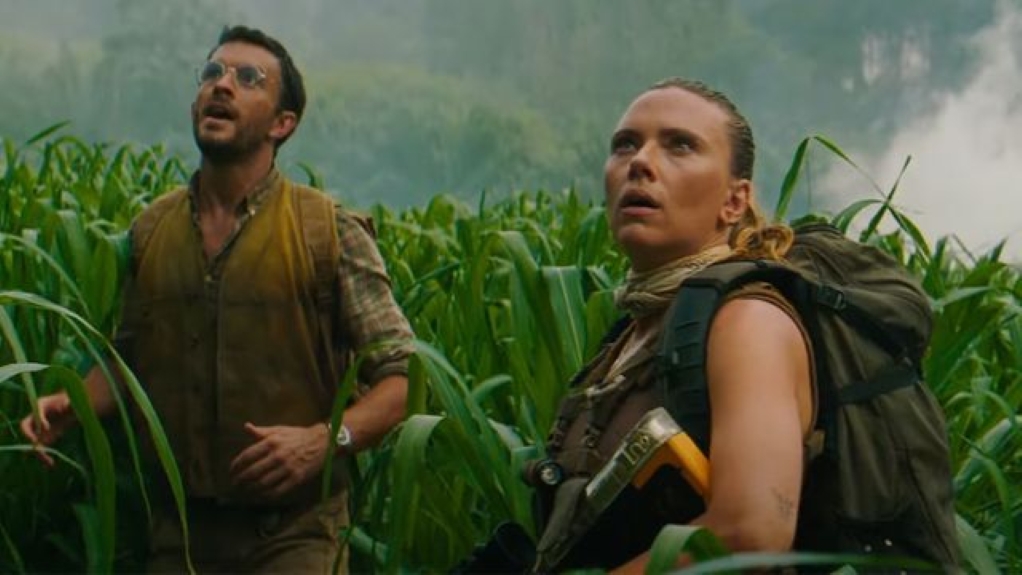
In fact, this lot are the nicest parade of mercs you’ll ever beat and both Johansson and Ali carry with them the sort of character-developing past trauma that is such basic scriptwriting 101 you almost feel sorry for the actors working with it. (To wit: Ali is a grieving father, Johansson is dealing with the loss of a boyfriend on a past op – if you can’t work out where those motivations might take you, you need to see more movies). These mercs are decent, hard-working, honourable guys about a million miles from what you think real merc, who shoot guns at people for money, might be like. They’re more like charming humanitarians.

The most interesting stuff in Rebirth are the moments that feel new. A prologue, set 17-years before, showing how all hell broke loose on the lab is well-done (even if its a lift from Edward’s past Godzilla film), both in its mounting dread and its almost satiric ‘no security system works in the movies’ resolution of a discarded snickers wrapper short-circuiting a billion-dollar system keeping the abominations secure. The abominations are also interesting: a flapping, vicious velociraptor feels new (it even proves its chops by devouring a normal velociraptor) while the D-Rex hybrid (a sort of grotesque mix of a T-Rex and the creature from Alien) is artfully shot by Edwards in a series of slow half-reveals before we see its real horror.

It’s a shame there isn’t more of that. Because otherwise, Rebirth passes the time but it’s a film for people who vaguely remembered the original films rather than someone who has watched them more than once. For anyone who has, there is nothing either new or surprising here, nothing that does anything remotely different, no character who doesn’t feel like they’ve been plucked and retooled from one of the earlier films. It’s a back-to-basics approach (staffed, to be fair, with some good actors) that gives you exactly what you expect all the time. That might be fine at times, but it’s hard not to wish for a little bit more. It is at least, though, twice as good as the woeful fanbait that was Dominion.

The Curious Case of Benjamin Button (2008)

The Curious Case of Benjamin Button (2008)

Ageing, romance and sentiment in Fincher’s handsome shaggy dog story

Director: David Fincher

Cast: Brad Pitt (Benjamin Button), Cate Blanchett (Daisy Fuller), Taraji P Henson (Queenie), Julia Ormond (Caroline Button), Jason Flemyng (Thomas Button), Elias Koteas (Monsieur Gateau), Tilda Swinton (Elizabeth Abbott), Mahershala Ali (Tizzy Weathers), Jared Harris (Captain Mike Clark)

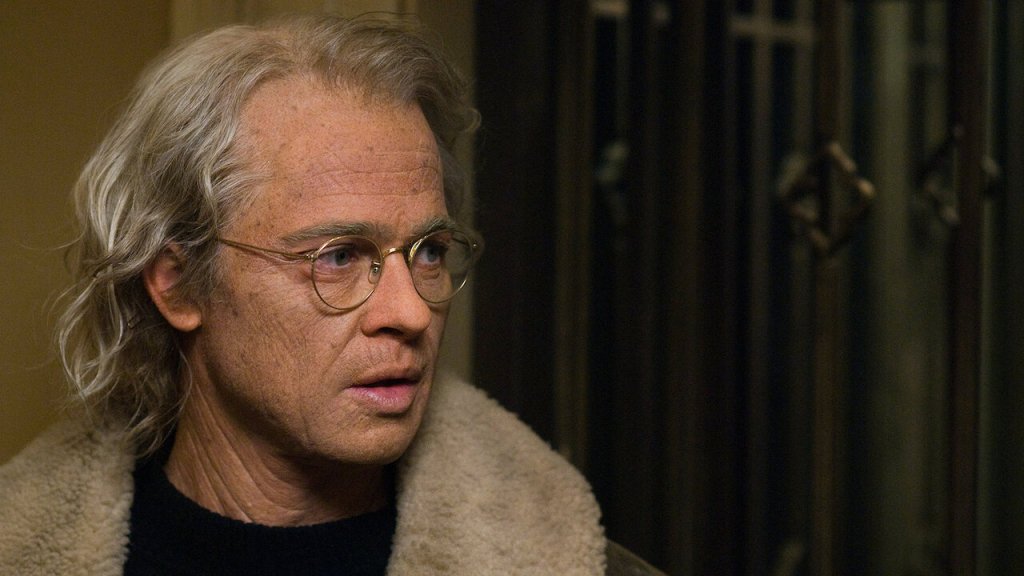
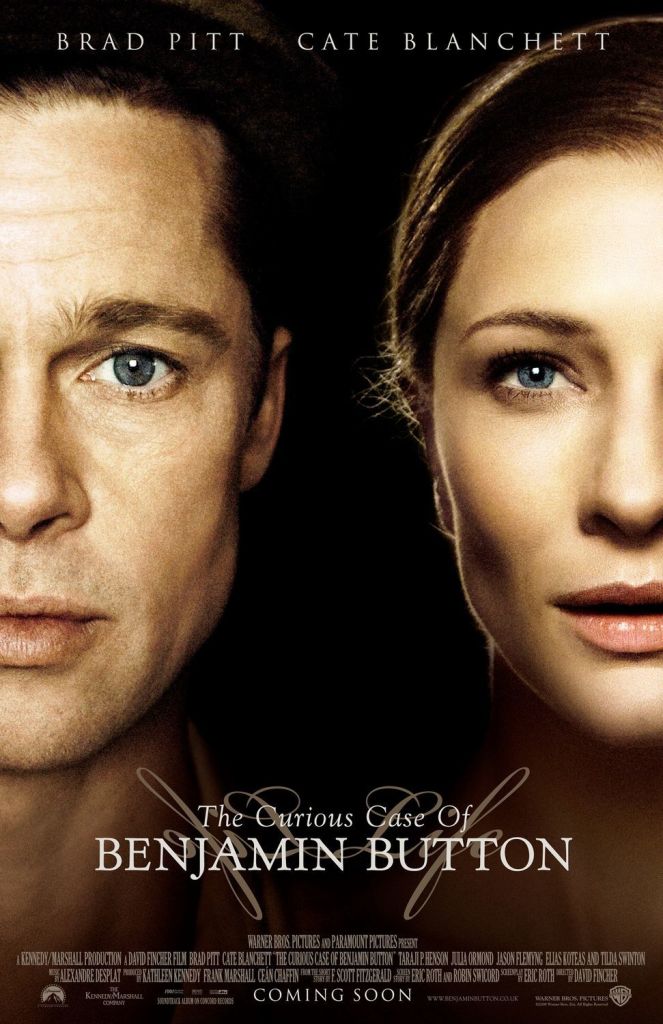
As the eleventh hour of the eleventh day of the eleventh month of 1918 strikes, a baby boy is born. A baby boy unlike any other, with the appearance and illnesses of a very old man. Discarded by his horrified father (Jason Flemyng), the boy is adopted by Queenie (Taraji P Henson), caretaker of a nursing home. There it becomes clear he is growing backwards: the older he gets, the younger he appears. Young Benjamin will eventually grow into Brad Pitt and spend his life watching those around him grow ever older as he grows ever younger. Most joyful, and painful, of all being his childhood friend Daisy (Cate Blanchett), the woman he will love his whole life.

Fincher’s film is a strange beast. A huge technical triumph, that uses cutting edge special effects and astonishing make-up to age – in both directions – Brad Pitt and Cate Blanchett throughout the course of the film (both taken from extreme old age to face-lifted youth), it’s also a whimsical shaggy dog story with elements of a fairy tale that does very little with its astonishing concept other than pepper the script with easily digestible homilies about the purity of the simple life, as if screenwriter Eric Roth was still gorging on the same box of chocolates from which he plucked Forrest Gump.

TCCoBB has a lot going for it: you can see why it was coated with technical Oscars. The ageing and deageing special effects are skilfully and even subtly done, the recreation of a host of periods – from the 1910s to the 1990s and beyond – flawlessly detailed. Claudio Miranda’s photography uses a host of film stocks – from sepia, to scratchy home movie footage style, to luscious technicolour beauty – to reflect time and era constantly. The assemblage of the film has been invested with huge care and attention and, despite its great length, Fincher cuts together (with Kirk Baxter and Angus Wall) an episodic film that manages to keep its momentum and drive going.

Also, it’s a far less vomit-inducing spectacle than the manipulative stylings that coat Forrest Gump. This is in part to Brad Pitt’s restrained and contemplative performance in the lead role: Pitt underplays with surprising effectiveness, capturing Benjamin’s “come what may” attitude and eagerness to go with the flow of the opportunities life offers him. He delivers the narration with an authority just the right side of portentous (for all his rather flat, uninteresting voice) and skilfully manages to invest his body with a physicality quite contrary to his physical appearance (his old body moves with a young man’s casualness, while his younger form carries a slightly world-weary hesitancy).

Benjamin’s mantra becomes one of living your life just as suits you best, not as others expect you to and never worrying about leaving it too late to take chances or make changes. Or at least something like that. To be honest, the weakest part by far of TCCoBB is the lightness and breeziness of its thematic impact. I’ve seen this film three times and, other than a slightly charming shaggy dog story, I’m not quite sure what point it is trying to make – other than straining for a star-cross’d romantic sadness.

This feels like a missed opportunity because there is so much that could be explored here. The film is a nearly unique opportunity to explore how much age – either physical or mental – defines us. A chance to see how our perceptions of a person are shaped as much by what they look like or how they sound, as by who they are. What sort of different perspective on humanity might Benjamin have? How might those around him evaluate, their own lives as they see this him getting younger?

Questions such as these are not touched, the film settling for Benjamin’s whimsical, first-do-no-harm philosophy crossed with a sort of saintly non-interference. The closest it gets to dealing with this is in Benjamin’s friendship and later relationship with Daisy. Old/young Benjamin is told off by Daisy’s grandmother for being a dirty old man, when they first met as children (or old man in his case). Later their lives will drift together and apart, until they form a relationship when both are “the same age” physically. But the film shirks really exploring the implications of this – and outright flees the idea of Benjamin as an increasingly younger man in a romantic relationship with an increasingly older Daisy.

Instead, it settles all too often for easy lessons, comforting parables and charming little vignettes. Benjamin grows up cared for by his adopted mother Queenie (an engaging, if straight forward, performance by Taraji P Henson) – but in the sort of 1920s New Orleans where a racial epithet is never even whispered. He travels the world with Jared Harris’ (rather good) salty sea-dog, falling in love briefly with Tilda Swinton’s lonely champion swimmer turned society wife. He reconnects happily with his father (after all it’s much easier to live a life of free choice if you are the heir to a massive button factory empire). Idyllic 1960s love hits Daisy and Benjamin – a brief shot of a cruise missile taking off is the only reference to those troubled times we see.

It’s all very easy, romantically toned, sweet and easily digestible. Even writing it down highlights how these are charming, eccentrically tinged, vignettes. All events and experiences come together with a vague “lessons learned” impact, as old Benjamin regresses into a teenager, a child and then an infant. But it could have been so much more. A real study of what makes us human, a real look at how events and perspectives define us. It isn’t. Heck, other than watching Pitt travel handsomely around the world on a motorbike in a late montage, we don’t really get much of a sense of how being young/old may impact him.

Which isn’t to say it’s not enjoyable. It all proceeds with a great deal of charm and love, much of which has clearly been invested in every inch of its making. The acting from (and chemistry between) Pitt and Blanchett is very effective. But it feels like a slightly missed opportunity, a film that settles for being a warm, reassuring cuddle when it could have sat you down and helped you understand your life. For all its slight air of importance, it’s a crowd-pleasing, if slightly sentimental, film.

Moonlight (2016)

Mahershala Ali is a mentor with mixed impact in Barry Jenkins tender Moonlight

Director: Barry Jenkins

Cast: Trevante Rhodes (Adult Chiron/”Black”), Ashton Saunders (Teenage Chiron), Alex Hibbert (Young Chiron/”Little”), André Holland (Adult Kevin), Jharrel Jerome (Teenage Kevin), Jaden Piner (Young Kevin), Naomie Harris (Paula), Mahershala Ali (Juan), Janelle Monáe (Teresa), Patrick Decile (Terrel)

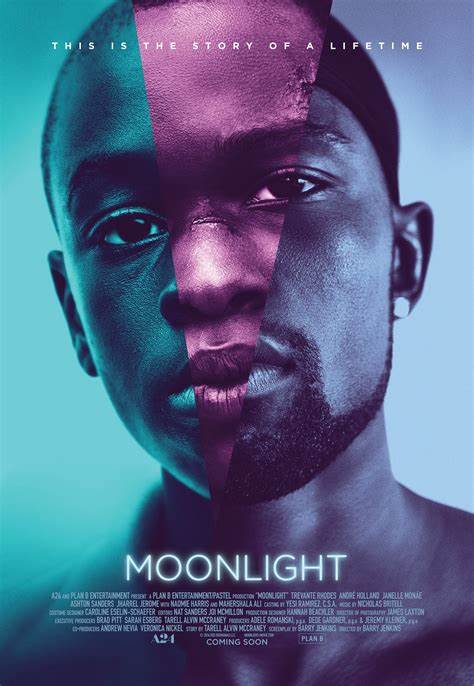
What makes us the people we are? So many things in our environment, personalities and influences can shape the people we are. Imagine, though, how much we might end up twisting and manipulating ourselves, if some of the core parts of what made us who we are, ran against the expectations of our community. It’s the fascinating, poetic heart of Moonlight, Barry Jenkins’ astonishingly tender Oscar-winner, which shows a side of the Black American experience that so rarely makes it to the screen.

In three acts, we see the life of Chiron, from a young child, to a confused teenager to a muscular, adult drug dealer. Played by a different actor at each age, each self-contained half-an-hour-or-so act sees him struggle with understanding who he is, and deal with the impact that different people have on shaping the man he is, from his mother Paula (Naomi Harris), a woman embracing a destructive drug addiction, to his mentor as a young boy, the thoughtful drug dealer Juan (Mahershala Ali) and his caring girlfriend Teresa (Janelle Monáe). Perhaps the core influence however is childhood friend Kevin, the love of Chiron’s life. Because Chiron is struggling with the fact he is gay, in a community where macho masculinity is all important.

Jenkins’ thoughtful and beautifully made film is a wonderful coming-of-age story, that explores deeply emotional territory with sensitivity and care. Jenkins invests the entire story with a beautiful sense of poetry and an echoing, longing sense of sadness. The entire film is constructed of paths not taken, of lost opportunities and painful misunderstandings. It asks profound questions around the people who inspire us, the impact our parents can have, the damaging impact of trying to conform with the world, and the struggle we can take to understand ourselves.

Because the main theme that runs through each act is Chiron’s struggle to come to terms with his homosexuality. As a young boy it’s something he’s beginning to be aware of – and the distance it brings, knowing he’s different from his fellow kids. It’s there in the cruel treatment he receives from his mother. As a young boy, there is the potential that his life could go another way – something that his mentor figure, drug dealer Juan, detects (perhaps, the film subtly implies, because it echoes lost opportunities and ignored feelings in Juan’s own life).

The middle act shows how these chances can be truly lost, how our teenage experiences can shake us. Because Chiron is different in a way that will never gain true acceptance in such a macho environment, where Chiron has it enforced to him time and time again that his sexuality is a weakness, something that dirties him and makes him less than others. Jenkins’ film offers a beautiful view of how a teenager can be made to feel ashamed of themselves and the person they are – to the extent that his reaction after his first sexual experience with his childhood friend Kevin is to apologise. Chiron hasn’t been given the emotional confidence or language to be comfortable with who he is – Juan is the only person who has ever told him that there is nothing wrong with being gay. Chiron instead has to cope with isolation, guilt and shame – emotions that Jenkins’ beautifully structured middle-chapters show, push him more and more towards anger and rage.

It’s perhaps not surprising that Chiron as a young adult has turned himself as much as possible into what his community believes “a man should be”. It’s striking how similar he looks to Juan – from his dress and jewelry, to his muscular manner and his profession. The skinny boy of the first two chapters has become a muscle-bound, intimidating young man. What hasn’t changed is his emotional distance, his isolation. In fact, what has been magnified is his desire to be loved, to feel a connection. A connection that he arguably hasn’t felt for over a decade.

The film can speak to anyone who has had problems fitting in, who feels different from others. Jenkins fits it beautifully into a community he was familiar with, a Black community (there isn’t a single white person anywhere in the film) that values qualities of masculinity and aggression that run counter to Chiron’s own personality, but which he is forced to conform with. This is such a compromised community that the person who understands Chiron most – the drug dealer Juan – is also a big part of the problem, supplying the drugs that are affecting his mother’s life and a leading part of the violent, macho world Chiron lives in.

This mentor relationship is the beating heart of the much of the film – helped by Mahershala Ali’s wonderfully judged (Oscar-winning) performance as Juan. Juan is a man of contrasts, thoughtful and tender, understanding of the internal struggles of a young man (has he dealt with them himself), but also moving in a violent and destructive world, a leading part of the criminal community that dominates Chiron’s world. He offers enough of a lost opportunity for Chiron to have reshaped his life – while also propping up the world that will crush him.

Juan is certainly a big part of destroying Chiron’s mother Paula. Naomi Harris is superbly damaged, raw and uncontrolled as an addict we see disintegrate over the first two chapters until she settles into the fragile older woman plagued with guilt in the final act. This is a mother who offers no love and support to her son, who denigrates him for his differences and builds a world around him that has no love or understanding in it. Her collapse is as much a criticism of the horrors and compromises of this community as it is a terrible warning story.

Jenkins’ film looks phenomenal, with a style that marries poetry and realism. It can feature young boys playing in the park with aggressive naturalness, underscored with Mozart. There is a beautiful running theme of water, cropping up at key moments of Chiron’s life: from the swimming lesson Juan gives him, to the cold water he cleans his face in after a teenage beating, to the adult Chiron largely drinking only water (perhaps to make sure he never slips and reveals too much of himself). It’s a gentle touch – reflected as well in the cool blues that frequently cover the screen, like the wash of water.

The actors portraying Chiron and Kevin are wonderful. The final act revolves around a beautifully played scene between Trevante Rhodes and André Holland as their adult versions, a low-key, but deeply emotional, conversation that sees them carefully skirt round a host of emotions that can never be expressed, partly as neither character as the emotional hinterland to use them.

Jenkin’s film won a deserved Oscar as Best Picture. It deserves it for showing us two worlds we see so little in film: both the working-class Black community, but also the life of a young gay man in modern America. It’s wonderfully judged, low-key, personal and with a slight story carries great emotional force. It gives you far more to think about and consider than you might at first expect, and makes for an eye-opening and deeply involving film.

Green Book (2018)

Viggo Mortensen and Mahershala Ali are Driving Dr Shirley in Green Book

Director: Peter Farrelly

Cast: Viggo Mortensen (Frank “Tony Lip” Vallelonga), Mahershala Ali (Don Shirley), Linda Cardellini (Dolores Vallelonga), Dimitar Marinov (Oleg), Mike Hatton (George), Iqbal Theba (Amit), Sebastian Maniscalco (Johnny Venere)

So here we are with a film that might as well be called Driving Dr Shirley. A gentle, ambling, Sunday-afternoon piece of film-making with a rudimentary message, a simplistic world-view and two very good performances at its heart doing all the lifting. Twenty years ago this would have swept the Oscars. As it is it had to settle for just three, including Best Picture, an award that already feels like a triumph of comfortable mediocrity, especially considering Spike Lee’s striking BlacKkKlansman takes such a profound and challenging view of the same issues.

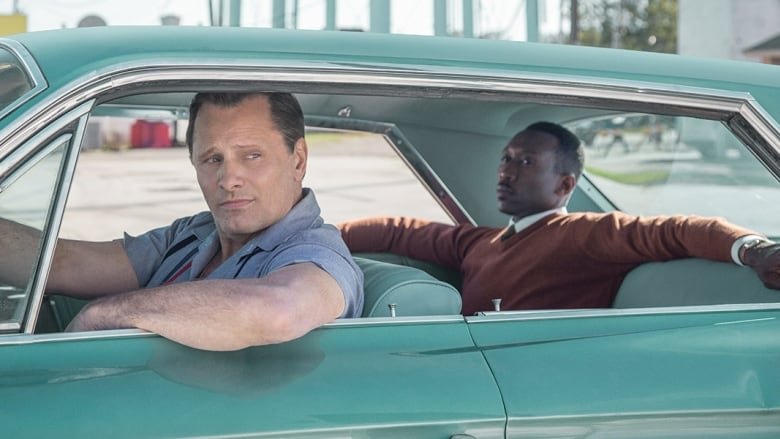
Set in 1962, Green Book follows the “true-life” (heavily disputed by Shirley’s family) friendship between virtuoso classical pianist Don Shirley (Mahershala Ali) and the Italian American Copocabana bouncer Frank “Tony Lip” Vallelonga (Viggo Mortensen) he hires to be his driver for a tour around the deeply racist Deep South states. Can two such different people, over the course of a road trip, find they have more in common they think? You betcha.

Green Book is practically the definition of unchallenging viewing. It tells a lovely, gentle story about two lovely people who, while dealing with the problems of racism in 1960s America, basically have a lovely time bar a few scraps. The film coasts through with a Edward Hopperish nostalgia-tinged views of 60s America peppered with a dash of racist unpleasantness from the people they meet along the way. All this is told with an anecdotal casualness – you can totally tell that the film was inspired by Tony Lip’s son wanting to turn his Dad’s old stories into a film.

And he creates a film where Tony Lip is the hero, and the world of the racist South only truly comes into focus through this white man witnessing the prejudice his black friend must endure (with dignity). While it’s good to have an anti-racist film – however much this film largely focuses on the genteel, country club racism of the upper classes and never dares to go anywhere near the lynch mobs and murders of the Deep South – this is a film that never dives deep with anything and in the end wraps up the instinctive racism and suspicion of Tony’s family in a neat bow and a family dinner with the whole cast. To this film, progress is the name of the game and racism a problem that we are well on the way to solving (again the contrast between this and Spike Lee’s work is really, really striking).

Since the whole film is told from the perspective of Tony – and since the film makers never bothered to consult with Shirley’s family at all, basing all their research on only one side of the story – we never get a real feeling of knowing exactly how Don Shirley might have felt about the attitudes he dealt with, or the reasons behind why he chose to undertake a tour of the Deep South to deal with them, or what he hoped to gain from it. In what should be his own story, he’s a supporting character.

Worse than this, it’s Don who largely seems to need to learn lessons. A dignifed, rarified, dandyish, upper-middle-class near-snob, it’s Don who the film suggest doesn’t understand black culture. It falls to Tony to teach him about everything from black culture: Don’s never heard of Aretha Franklin or Little Richard, never eaten fried chicken, and is deeply uncomfortable around any other black person he meets (unlike Tony’s easy rapport with his fellow drivers, all black). There is a fascinating film to be made here about a man who was at multiple different junctions of minorities – an upper-class black man out of touch with his fellows, a gay man in 1960s America, a black man in the Deep South – but the film doesn’t want to tell that story. I’m also going to leave it out there that only very short shrift is given to black culture (defined by 3-4 things) or Don’s argument that not all black people ipso-facto should like the same things.

Tony on the other hand doesn’t really need to learn anything. An opening scene has him uncomfortably throwing away two glasses used by black-handymen working in his home. But this is literally the last racist action or thought he has in the film – and seems like something that comes completely out of left field. He has no objection to working for Shirley, gets on fine with black people, reacts with increasing anger to racially tinged threats and insults etc. I can understand a son writing a script about his father not wanting to show anything unsympathetic, but the glass scene clumsily sets up an obstacle in Tony’s character that never needs to be overcome.

Instead Tony’s real problems with Shirley are based around class. He thinks he’s a snob. As soon as Shirley lightens up a bit, Tony treats him fine. He even happily accepts his homosexuality and playfully accepts some tutoring to improve his gentility. Tony is an overwhelming force for good who rarely says or does anything remotely unsympathetic.

Farrelly’s film is simple and forgettable in the extreme, but it’s enjoyable enough and passes the time. This is largely because of the two leads. Mortensen’s performance skirts around parody but has such larger than life joie de vivre you hardly mind. He’s very funny and also rather endearing and utterly convincing. Ali mixes in some genuine emotion and loneliness in amongst the more obvious class-based imperiousness. It’s enough that you wish we had got to see that slightly more interesting story under the surface. Green Book is utterly unchallenging and totally gentle. Nothing wrong with that, but it will fade from your memory as soon as the credits roll. Except with its bizarre Best Picture win it’s now a permanent piece of film history.

Hidden Figures (2016)


Octavia Spencer, Taraji P. Henson and Janelle Monáe are trying to make their way in a white man’s world

Director: Theodore Melfi

Cast: Taraji P. Henson (Katherine Goble), Octavia Spencer (Dorothy Vaughan), Janelle Monáe (Mary Jackson), Kevin Costner (Al Harrison), Kirsten Dunst (Vivian Mitchell), Jim Parsons (Paul Stafford), Glen Powell (John Glenn), Mahershala Ali (Colonel Jim Johnson)

The Space Race has a certain mysticism in American culture, epitomising a time of hope, where humanity literally touched the stars. And yet, amidst all this hope and aspiration, a whole section of America’s own population was being oppressed by racial segregation and prejudice. Hidden Figures brings these two aspects together by telling the stories of some of the black women who struggled against adversity to help send a man to the moon.

Hidden Figures is the sort of film Hollywood does very well: a warm, unfussy crowd-pleaser pushing all the expected emotional buttons, presenting an inspiring “based on true events” story . The film focuses on three black women pioneers at NASA. Katherine Goble (Taraji P. Henson) is a mathematical genius and widowed mother, promoted to work as a figures checker – and struggles to gain acceptance and equality with her fellow workers. Dorothy Vaughan (Octavia Spencer) is the team leader in all but name (and pay) of a group of black female checkers, who decides to make herself invaluable as a computer expert. Mary Jackson (Janelle Monáe) works as an assistant to the engineering team, but struggles to gain the formal qualifications she needs to progress.

Truth be told, it isn’t anything special – it knows how to serve up its moments in an affecting way, but it’s filmed with a workmanlike flatness. Its structure and events are predictable – the standard arc of adversity, struggle, acceptance and triumph. But it’s still affecting for all that, and well made. It becomes a decent feel-good movie, and manages to never succumb to overt seriousness or heavy handed self-importance: it keeps the tone pretty light.

It’s a film about racial and sexual discrimination, but it avoids introducing an actual villain. The real opponent is “the way things are” – no single white character is particularly racist or unpleasant, just used to the system being what it is and, feeling only the benefits of it, feel no obligation to change it. It’s not just the white characters either – even Ali’s Colonel Johnson struggles to believe Katherine works at NASA as a mathematician, and this everyday sexism is as much a barrier to the women as race.

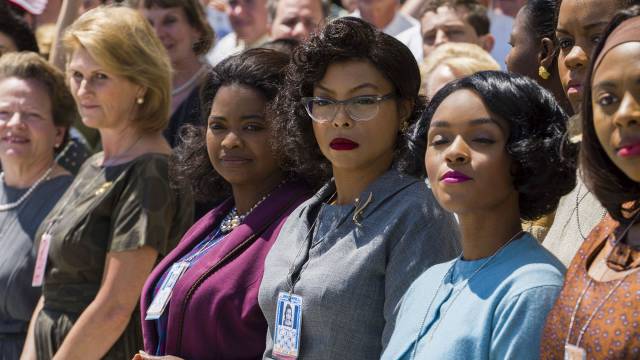
Melfi astutely picks a handful of key moments to showcase discrimination: from little moments like Goble being handed a bin to empty when she arrives on her first day, to the careful hierarchical games played as Dorothy addresses Kirstin Dunst’s supervisor as “Miss Mitchell”, while always being called “Dorothy” in return. This sits alongside more overt moments: Hidden Figures probably has a claim to fame as being the only film to feature a toilet trip as its dramatic highlight – Gobley having to run over 15 minutes across the campus to use the “Coloured Women’s” bathroom, a situation only resolved by the intervention of her grizzled boss (an effective Kevin Costner). The design also works well to help visually make the woman stand out as different in the sea of white NASA men around them.

Spot the odd one out in NASA

If the characters do fall into a standard pattern (the quiet professional one, the motherly one, the firebrand), the acting is still extremely good. Henson is terrific as the quiet anchor of the film – it’s particularly admirable as the role largely isn’t showy or flashy. But she brings a quiet, assured professionalism, making Goble a woman who knuckles down and gets on with it, whose quiet assurance wins eventual respect. The love story between her and Ali’s Colonel Johnson is also very sweet. Spencer is very good as Vaughan, particularly the way she suggests resentment just below the surface of her motherly exterior. Monáe has the least interesting role, but her bolshiness serves as a nice contrast to the other leads.

The tricky thing when a film purports to be a piece of history, is when you find out much of what you watched didn’t actually happen. The racial segregation we see so prevalent in NASA just wasn’t quite the case in real life. The obstacles and barriers placed before our heroines largely didn’t happen. Even segregated bathrooms (a key motif in the film) were not an issue at NASA. Many of the events we see didn’t happen – or not like this – and the vast majority of the supporting characters are composite inventions. After investing in the struggles of the three characters, it’s easy to feel that the revelation that it was (almost) all made-up has cheapened the impact of the story.

However, what is true is: even if NASA wasn’t as bad as this, most of the rest of America was. So even if this film makes working in NASA look a lot worse in the 1960s than it in fact was, it does feel very true if taken as a general impression of what life in America was like back then for black Americans. So although the film has to brush up and embellish things that actually happened, it does feel very true to the general experience of being both black and a woman in the 1960s. All of which is a way of giving the film a bit of a pass for its inaccuracy. It might be gilding the lily of the struggles these women had in NASA, but it is certainly a real impression of what black women experienced in America at the time – in fact the reality was almost certainly worse.

Hidden Figures is a charming enough film, even though it’s a pretty predictable and unsurprising one. It pushes all the Hollywood buttons you would expect with confidence, and while its story arcs don’t deviate much from the “inspiring movie” template, they do work very well. Its historical accuracy is ropey, but it does feel like it gives a very good sense of the attitudes of the time – capturing both the almost atmosphere of hope in 1960s America, and also the everyday horrors of segregation and racial oppression. It also has some terrific performances. It may be a safe, crowd-pleaser of a film – but it does please the crowds well.