Tag: Mark Addy

The Lost King (2022)

The Lost King (2022)

Bizarre, grudge-settling comedy-drama that celebrates amateurism and hates experts

Director: Stephen Frears

Cast: Sally Hawkins (Philippa Langley), Steve Coogan (John Langley), Harry Lloyd (Richard III), Mark Addy (Richard Buckley), Lee Ingleby (Richard Taylor), James Fleet (John Ashdown-Hill), Bruce Fummey (Hamish), Amanda Abbington (Shelia Lock)

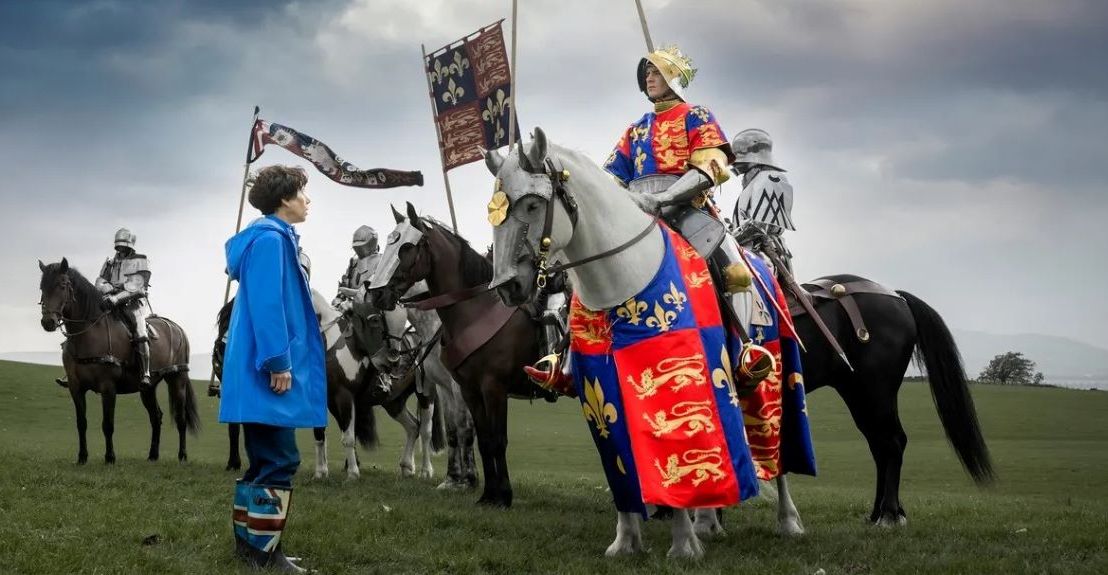
In 2012 the world’s media descended on Leicester after the body of King Richard III was discovered in priory turned car park. Richard III had long had passionate supporters – Ricardians – who rejected the idea that the man Shakespeare turned into Britain’s most hated monarch was anything of the sort. It was one of those fans, Philippa Langley (Sally Hawkins), who researched for 20 years to find evidence for where he was buried and became the public face of the search through ratings-winning television documentaries and writing a best-selling book.

All of this is rejigged in a silly, sentimental, bizarre film that repositions Langley as an inspired amateur butting heads with the self-promoting professionals of Leicester University. I suppose there is something ironic in a film which insists someone had their reputation sullied in the name of drama, itself sullies peoples names in the name of drama. (Richard Taylor, the deputy registrar of Leicester, here portrayed as a sexist, elitest self-promoter who mocks the disabled, has openly declared his intention to sue). The Lost King wants to be an affectionate Ealingesque comedy of the triumph of the little guy. It’s actually got an uncomfortable feeling of grudges being settled and a stench of Brexity anti-intellectualism.

Fascinatingly the anti-intellectualism even extends to Langley herself. Remember that 20 years of research? All deleted in this film. Here Langley is a working mum, suffering from ME (the film draws vague parallels between this and Richard’s scoliosis) who one day stumbles into a performance of Richard III and basically falls in love with the dead king. She pops down to a second-hand bookshop, buys eight books on Richard and in a few months is digging up the car park. It’s as if the idea she spent time in archives, triple checking sources, studying maps etc. would somehow have been “cheating” – that we could only root for her if she was an amateur, “one of us” who makes her (always correct) decisions purely on gut instinct.

But it fits with a film that portrays Leicester University as a sort of scheming club of middle-managers and moustachio-curling villains. No one from the university can so much as draw breath without disparaging “that woman” as an obsessive weirdo. They batter everyone with their expertise, arrogantly dismiss any ideas they don’t have themselves and stand around growling so Langley can puncture their pretention with her common-sense wisdom. Case in point: she suggests they overlay a modern map of Leicester over a medieval map to check locations. First they object, then look at her like she’s split the atom. Of course, they are right to object: medieval maps are hand-drawn approximations often more based on aesthetics than accuracy. But that doesn’t matter to the film, which of course immediately shows the two maps lining up in microscopic detail. If only 500 years’ worth of scholars could have thought of that, eh?

Embodied by Lee Ingleby’s Richard Taylor as a number-crunching obstructive bureaucrat who does everything he can to steal the credit (honestly, if you are going to take this kind of pop at a regular person at least change his name), Leicester University are unilaterally baddies. All this score-settling seems to have come from Langley’s resentment at not being invited to speak at a couple of press conferences. No matter that TV documentaries and books made her name synonymous with Richard III to anyone who really cares (even the film can’t pretend it’s telling “an untold true story”). This is a film with an axe to grind – so much so that the eventual discovery of Richard becomes secondary to this mud-slinging as Langley rebukes Taylor publicly (inevitably shaming him into silence) for equating disability with wickedness and cutting her out of meetings.

What’s particularly odd about The Lost King is that the film ends up painting Langley as exactly the kind of un-credible crank its villains (villainously) see her as. Having removed all her rigorous research, it replaces it with Having A Feeling. This is communicated visually with Langley communing regularly with a vision of Richard III, personified by the actor from the play she saw. Langley chats to this vision with the breathless excitement of a giddy teenager, and he helps her discover reams of facts, not least a bizarre moment of ecstasy when she spots an “R” in the car park and just knows Richard is under there.

Harry Lloyd is all adrift in this bizarre part and its main impact is to raise unfortunate giggles and make Langley look exactly like the sort of person you wouldn’t invest tens of thousands of pounds in. Mind you, Langley here is way more competent than any other Ricardian society member, all of whom are portrayed as cranks and pub bores, talking as if they only discovered famous primary sources this week, and utterly unable to even tie their own shoelaces until Langley sails in and discovers the king’s body in about ten minutes.

Hawkins plays a part firmly in her wheel-house, as an eccentric but determined woman in love with a ghost, while co-scriptwriter Steve Coogan generously writes himself a “stop reading Holinshed and look after the kids” role as her supportive ex-husband. Langley, like other characters, bends and changes according to the needs of the scene but is always the hero. When the script needs her to be a determined leader, she won’t take no for an answer. When it needs her to be oppressed by those nasty Leicester professionals, she won’t say boo to a goose. (Similarly, Mark Addy’s archaeologist yo-yos between dismissive of Langley to affectionately supportive almost scene-to-scene.)

The Lost King wants to be a triumphal little-guy film, but actually it has an unpleasant air to it. It feels like a massive grudge being publicly settled. It belittles and ignores expertise, patience and research in favour of gut instinct and amateurism. It bizarrely paints its lead character as a mixture of oddball weirdo, genius and saintly crusader. It’s also neither dramatic nor funny (except accidentally). It’s a bad film.

The Time Machine (2002)

Guy Pearce wastes his time in The Time Machine

Director: Simon Wells (Gore Verbinski)

Cast: Guy Pearce (Dr Alexander Hartdegen), Samantha Mumba (Mara), Orlando Jones (Vox 114), Mark Addy (David Philby), Jeremy Irons (Über-Morlock), Sienna Guillory (Emma), Phyllida Law (Mrs Watchit)

Every so often during this hysterical travesty of poor film-making, it’s worth remembering that it was was directed by HG Wells great-Grandson. If that’s not a reason for HG Wells to invent a time machine and travel into the future, in order to give his descendant a slap, I don’t know what is.

Anyway, with a plot vaguely reminiscent of some elements of the original novel, but just as inspired by a strange mixture of Hollywood blockbusters and Colin-Baker-era Doctor Who, The Time Machine stars Guy Pearce as Dr Alexander Hartdegen. In New York in 1899, Hartdegen is exactly the sort of naïve, floppy haired, genius eccentric so beloved of Hollywood movies, fascinated by time. When his fiancée Emma (Sienna Guillory) is killed in a mugging gone-wrong, obsession to prevent this leads him to invent a time machine – but he finds himself unable to prevent Emma’s death. Travelling forward into the future to find out why he eventually finds himself 800,000 years in the future where the Earth is occupied by the peace-loving Eloi and their brutal hunters, the subterranean Morlocks.

It’s hard to know where to begin with this film, but let’s try. It’s very poorly written. The dialogue clunks to the ground in a way reminiscent of the lumps of the moon that fall to the Earth in the future Hartdegen sees. There is scarcely any logic in the events we see, from the mechanisms of time travel to computers lasting hundreds of thousands of years with no identifiable power source. Characters tend to do things because the plot needs them to do it, rather than for any actual logical reason. Character development occurs with a randomness: Hartdegen starts the film as a buck toothed, shaggy haired “eccentric” and ends it as a ripped, action-hero haired heartthrob. No idea how that progression is meant to work, but you certainly won’t find the answer in the script.

It’s also poorly directed. Wells, working for the first (and only) time with live action actors has no idea at all about how to set a film’s tone or pace. The tone veers wildly from lowbrow comedy to highblown tension from tragedy to farce. Scenes that are meant to pluck the heartstrings will bring out tears of laughter. The actual comic bits will only bring out groans. Action scenes late in the film are shot with a ham-fisted bluntness that reduces them to laughable, cheesy crapness. Bright lights and wide angles frequently make a film that cost over $100 million to make, look like one that cost a tenth of that. I will cut Simon Wells some slack, as he had to stand down from the production, meaning it’s final moments were put together by Hollywood Hack Gore Verbinski, who probably just wanted to be out of there as soon as possible.

Also the whole design is so stupid. It’s a sort of steam-punk cool, but with no logic applied. The time machine never moves from its fixed geographical point, so it’s just as well no one tried to build a house on it or that the moon collapse didn’t drop a pile of moon rock on top of it. The time machine itself is a wonky contraption, full of spinning metal things and odd surfaces but of course Hartgeden doesn’t even consider installing a seat belt or any head protection. The Morlock design is equally bad, bright lighting making them look more like the bastard spawn of the Orcs from Lord of the Rings and Oscar the Grouch from Seasame Street.

At the middle of it all you have the sort of bizarre cast that could only have been assembled by some sort committee asking first “who’s cool?” and second “who needs money?”. Cool is surely the only reason Samantha Mumba (yes that Samantha Mumba) ended up in this film, as a sexy Elio lady who might just make Hartgeden forget all about that fiancée he’s spent four years obsessing about. At the other end, in one of his finest performance of cash-grabbing ham, we have Jeremy Irons. I have to admire his pluck, going through a laborious (Oscar-nominated!) make-up job (albino with a brain growing down his back), but the sort of sub-Scar speechifying the Über-Morlock delivers at the film’s climax (not to mention a bizarrely wonky final fight scene) is the work of a man already mentally spending the money on restoring his new castle in Ireland.

At the centre, Guy Pearce. I think at this time Pearce was going through some sort of career crisis. He’s handsome enough to play rugged, leading-man, action heroes like the type Hartgeden becomes. But in his heart, he’s more at home playing weirdos, outsiders and oddball (witness the happiness with which he embraces the buck-toothed oddness of early Hartgeden). So God knows what he made of this, but you can sort of tell he thinks the whole thing is crap, but doesn’t know what to do other than play it with a straight-jawed commitment (he’d soon learn, as Irons has, to meet crap with ham). Copper-bottomed crap at that, the sort of crap that would normally have you running for the hills. So Pearce sort of gets his head down and just gets through it and clearly hopes to still have a career when he comes out the other side. Which I suppose is more than Samantha Mumba managed.

Events sort of happen at this film, which seems to have some sort of confused message about moving on (“Your fiancée is dead? Man up and get over it!”) and wants us to live a life of individualism even while Hartgeden sets about giving the poor Eloi the sort of post-Victorian education that eventually led to their ancestors cracking the moon in half and wrecking the world. It’s the sort of film that ends things (literally) with a bang, Hartgeden creating some sort of time bomb out of his time machine and then running super-fast away (fortunately much faster than the allegedly super-fast Morlocks. Also the shockwave decides to stop once it’s killed all the Morlocks meaning Hartgeden is only guilty of mass genocide rather than wiping out the world). 

It’s all so far away from HG Wells cautionary tale of scientific progress gone awry that you wonder if his grandson even read his book. Did HG envision one day that a film would be made where a Morlock does a head turn double take, like some sort of Seasame Street reject, a few seconds before he blows up? That Jeremy Irons would pale up to play a character who might as well be called Gruber-Morlock? That Sienna Guillory would be saved from a mugger only to be hilariously killed off camera by a horse? That the future would be the singer of Gotta Tell Ya repopulating the planet with a bored Australian actor? If HG did make that time machine, we better tell him 2002 is a year to miss.

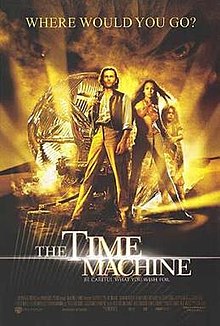
“Where would you go?” The poster asks. “To another film” replied the cinema audience.

The Full Monty (1997)

Steelworkers from Sheffield have no options but to turn their hand to stripping, in British phenomenon The Full Monty

Director: Peter Cattaneo

Cast: Robert Carlyle (Gaz), Mark Addy (Dave), Tom Wilkinson (Gerald), Lesley Sharp (Jean), Emily Woof (Mandy), William Snape (Nathan), Steve Huisan (Lomper), Paul Barber (Horse), Hugo Speer (Guy)

In the summer of 1997, Britain was a depressed place. The country was in the middle of an intense mourning for the death of Princess Diana. Perhaps that’s why a film all about overcoming despair and to turn it into heart-warming triumph suddenly gripped the whole nation and emerged from nowhere to become the most successful British film of all time. No one expected a film about Sheffield strippers to do that.

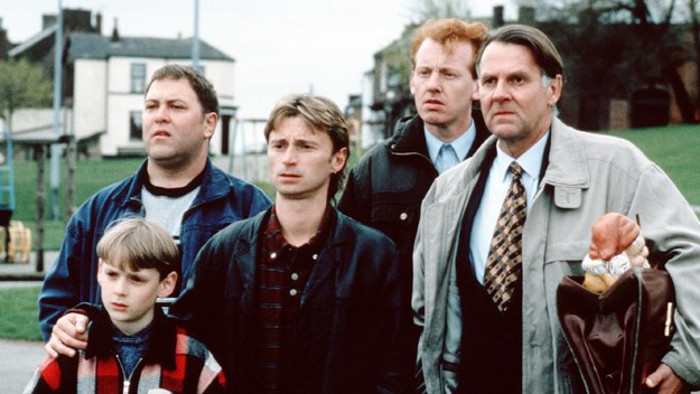
The economy has dropped out of the Sheffield steel market, and hundreds of people are out of work and desperate. Gaz (Robert Carlyle), a genial waster, needs £700 to pay his child maintenance and not lose access to his son Nathan (William Snape). Dave (Mark Addy) has serious self-image problems, his disgust at his own weight is leading him to push away Jean (Lesley Sharp), the wife he can’t believe loves him. Gerald (Tom Wilkinson), their ex-foreman, is so ashamed of losing his job he hasn’t told his wife that he’s been unemployed for six months and is facing financial ruin. Together with three other men with no other options, they decide one way to get money quick is to follow the example of the sell-out male-strippers at the local working club – with the unique selling point that they will go “the full monty”.

It’s been nearly a decade since I saw The Full Monty. Over-exposure made it an easy film to feel a bit sniffy and dismissive about, like it was a happy accident that the film came from nowhere to achieve staggering success. But that’s hugely unfair. Watching it back now, it’s amazing how much it’s a comedic film grounded in a sense of desperation and pain, and then how brilliantly it uses this to create empathy for its characters, and how wonderfully this helps you to share their joy and triumph when they are finally taking control of their own destinies.

The Full Monty emerged from a troubled production history. It was hugely difficult to find funding for the film. It took years to get the filming sorted, and casting was difficult – in a parallel universe Nicholas Lyndhurst and Russ Abbott played the lead roles. Robert Carlyle has described the making of the film as being totally chaotic (he further claimed he was convinced the film was “pish” and heading for disaster). The first cut was met with such negativity from the distributors that it nearly ended up direct-to-video, until the producers begged for one more shot at editing the film. But then it emerged as one of the most widely loved UK films of the 1990s, eventually being nominated for four Oscars (Picture, Director, Screenplay and a win for Best Score). That’s what I call a turnaround!

It’s also strangely fitting for the film itself. The opening footage showing a prosperous and bustling Sheffield in the 1960s is a perfect set-up for the Sheffield of the 1990s with unemployment rampant, and our characters confined to endless days of drifting around the city and failing to gain any benefits from a workshop at the unemployment office. Every frame of Cattaneo’s well shot film stresses the relative bleakness of the environment, the run-down world the characters inhabit, and that sense that all promise is missing from the future of this city.

In the middle of this, the film doesn’t shy away from looking at – with plenty of jokes – plenty of themes which are hardly your default expectations for a comedy movie. We’ve got depression, self-loathing, body-image, fathers’ rights and suicide: if that’s not a comic gold on paper I don’t know what is!  However, what is so perfect about the film is how well it judges the tone when dealing with these themes. Simon Beaufoy’s script is warm, humane and above all immensely empathetic. Never – not once – are any of these characters the butt of the humour. While we may see the dark comedy that can occur, we never laugh at the characters.

The script gets a perfect balance between all this desperation and pain and well-worked, down-to-earth, honest and affecting humour. It’s also genuinely funny, with several stand-out gags. As an interesting side note, perhaps the film’s most famous comic moment – the boys standing in the dole queue, involuntarily practicing their routine when Hot Stuff starts playing in the radio – nearly didn’t make the film, as the producers felt it was unrealistic. Just as well they left it in, as it perfectly captures the mood of the movie.

On top of which, the film taps into the human bonds that can grow in adversity. One of the film’s principal delights is seeing this odd bunch slowly begin to come together like a family. We see them confide in each other, listen to each other’s problems, accept each other for what they are. It’s a film about the triumph of the human spirit and the rewards that can come from opening your heart to other people when all seems lost.

It further helps that Simon Beaufoy’s script draws such terrific performances from the actors. Carlyle (for all his doubts about the film) plays Gaz with a perfect, low-key, commitment and empathy. Carlyle in many ways makes the film work as well as it does because he plays the truth of each scene and is willing to be the film’s loadstone. He plays every moment truthfully and is as effective showing Gaz’s chancer wasterness as he is at allowing the real pain and fear Gaz feels at the prospect of losing his son.

The film also changed the careers of Addy and Wilkinson, turning the two into character actor superstars. Addy is fabulous as the self-loathing Dave: having had problems myself with being concerned about my own image, seeing the psychological damage Dave inflicts on himself through his own inadequacies is very moving, and perfectly played by Addy – who also brings a great deal of comic mastery to the film. Wilkinson is perhaps the pick of the bunch as the seemingly proud and haughty Gerald, who hides intense fragility and pain under the surface. He has a truly affecting breakdown scene after a job interview gone wrong – and the reaction acting to this from Carlyle and Addy is also by the way marvellous. It’s a terrific (BAFTA winning) performance.

And then you hit the final stripping scene – and all that empathy the film has been building pays off, because the triumphal dance and strip down is hugely heart-warming. After seeing the men go through such difficulty and despair it’s really affecting and joyful to see them finally take control of their own destinies. How could you not be wrapped up in it? How could a whole nation not take the whole thing to their hearts? Put out of your mind all those thoughts that this can’t be that good, or that we were all mistaken in 1997: this is genuinely very good, thought-provoking and hilarious stuff.

Robin Hood (2010)

Russell Crowe takes aim as Robin Hood

Director: Ridley Scott

Cast: Russell Crowe (Robin Longstride), Cate Blanchett (Marian Locksley), William Hurt (William Marshal), Mark Strong (Sir Godfrey), Mark Addy (Friar Tuck), Oscar Isaac (Prince John), Danny Huston (King Richard), Eileen Atkins (Eleanor of Aquitaine), Max von Sydow (Sir Walter Locksley), Kevin Durand (Little John), Scott Grimes (Will Scarlet), Alan Doyle (Allan A’Dale), Matthew Macfadyen (Sheriff of Nottingham), Lea Seydoux (Isabella), Douglas Hodge (Sir Robert Locksley)

When this film was developed, it was a CSI style medieval romp called Nottingham. Russell Crowe was cast as the film’s hero – an ahead-of-his-time Sheriff of Nottingham, busting crimes in Olde England and dealing with rogue thief (with good press) Robin Hood. Yes that really was the original idea. Mind you, it would at least have been more original than what we ended up with after Scott and Crowe had a bit of a rethink.

So here we are: Robin Hood: Origins (as it might as well have been called). Russell Crowe is Robin Longstride, on his way back from the crusades as an archer in the army of King Richard (Danny Huston) army. When Richard is killed at a siege in France (it was one last siege before home – what are the odds!), the messengers carrying the news back to France are ambushed and killed by wicked Sir Godfrey (Mark Strong). Robin finds the bodies and assumes the identity of Sir Robert Locksley, travelling to England to tell Prince John (Oscar Isaac) the news of his succession – then returning to Nottingham with his friends, where Robert’s father Sir Walter (Max von Sydow) asks him to continue pretending to be Robin for dull tax reasons – and soon feelings develop between Robin and Sir Robert’s widow Marian (Cate Blanchett). But John is intent on farming the land for taxes, and Sir Godfrey is in cahoots with the French to conquer England.

Robin Hood is a semi-decent, watchable enough retread of a story so totally and utterly familiar that even the things it rejigs end up feeling familiar. In fact, to be honest you sit watching it and wondering why on earth anyone really wanted to make it. Scott brings nothing original and different to it, and the film looks like a less visually interesting retread of Kingdom of Heaven. Plot wise it’s empty. What’s the point of it all? It slowly shows us all the pieces of the Robin Hood myth coming together, so best guess is that it was intended to be the first of a series (there seems to have been no interest or demand for a sequel of any sort). 

And then we’ve got Russell Crowe. Leaving aside everything else, Crowe looks about 10 years too old for the part. He delivers some sort of regional accent that meanders from Ireland to Yorkshire in its broadness, a laughable stumble around the country. Crowe does his slightly intense, sub-Gladiator mumbles and stares at the camera and attempts to suggest a deep rooted nobility, but actually comes across a bit more like a snoozing actor awaiting a pay-cheque.

Cate Blanchett does her best, lending her prestige to the whole thing in an attempt to make it land with some dignity (she of course does the opening and closing narration, which struggles to add some sort of grandeur to the whole flimsy thing). She’s saddled with a Maid Marian who is granted various “action” moments, but still has to be saved by Robin and face possible rape from a leering Frenchman (at least she saves herself from that one). 

It also doesn’t help either actor that their romance plays out in the dull middle third of the film, where the plot grinds to a halt as we deal with Sir Walter (Max von Sydow almost literally acting blindfolded) using Robin as some sort of tax dodge scheme. The film is overloaded with characters, all of whom are separated at this point and struggling manfully to make their disconnected plotlines interesting: so we get John dealing with the pressures of office, Sir Godfrey scheming and looting, William Marshal trying to find a middle ground, Robin and Marian falling in love – it’s a mess. On top of this a get a ludicrous reworking of the Magna Carta as some Medieval version of the Communist Manifesto (it’s written by Robin’s executed dad no less, giving him a bizarre “painful backstory” to overcome). None of these plots really come together, and so little time is spent with each of them that they all end up getting quite boring.

The film culminates in a totally ridiculous battle scene on a beach, as Sir Godfrey’s French allies arrive on the shores of medieval England in some sort Saving Private Ryan landing craft. The tactics of this landing and the battle that ensues are complete nonsense. Every single character rocks up at this battle, which should feel like all the plot threads coming together but instead feels like poor script-writing. When Marian turns up, disguised as a man (how very Eowyn), leading a group of warrior children (I’m not joking) who feel yanked from the pages of Lord of the Flies, it’s just the crowning turd on this nonsense.

And all this fuss to defeat Sir Godfrey? Why cast Mark Strong and give him such a nothing part? Sir Godfrey is a deeply unintimidating villain. Everything he does goes wrong. He is bested in combat no less than three times in the film (once by a flipping blind man!). His motivations are never even slightly touched upon. He has less than one scene with John, the man who he is supposed to be manipulating. He runs away at the drop of a hat and Robin gets the drop on him twice on the film. He’s neither interesting, scary or feels like a challenging adversary or worthy opponent.

But then nothing in this film is particularly interesting. The set-up of the merry men around Robin (they seem more like an ageing band of mates on tour by the way than folk looking to rob from the rich and give to the poor) is painfully similar to dozens of other film, particularly in the Little-John-and-Robin-fight-then-become-brothers routine. Crikey even Prince of Thieves shook up the formula by making Will Scarlet Robin’s brother. Scott is going through the motions, like it was one he was committed to so needed to see through to the end despite having long-since lost interest. It’s not a terrible movie really, just a really, really, really average one with a completely miscast lead and nothing you haven’t seen before.