
 |
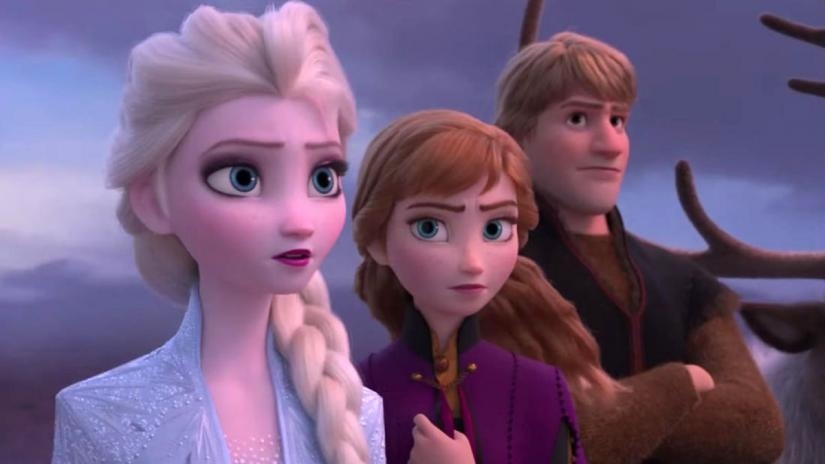
The gang are all back together in Frozen 2 |
Director: Jennifer Lee, Chris Buck
Cast: Kristen Bell (Anna), Idina Menzel (Elsa), Josh Gad (Olaf), Jonathan Groff (Kristoff), Sterling K Brown (Mattias), Evan Rachel Wood (Iduna), Alfred Molina (Agnarr), Martha Plimpton (Yelena), Jason Ritter (Ryder), Ciaran Hinds (Pabbie), Jeremy Sisto (King Runead), Rachel Matthews (Honeymaren)
 Frozen was a phenomenon, a film that seemed to come out of nowhere and seized the imagination (and the passions) of audiences. Why did it work so well? It’s got a great bunch of characters, a focus on sibling affection that is very easy to relate to (and very different from most romance-based Disney films), a well-rounded bunch of characters (so easy to relate to, they inspired a number of fan in-jokes in a way that only characters in films you really care about can) and of course that song. Frozen II works very hard to double down as much as possible on the things that worked, and to give you the chance to spend more time with these characters. If it fails to match the magic of the first film, it still makes for an entertaining trip to the cinema.
Elsa (Idina Menzel) and Anna (Kristen Bell) are now living together in the kingdom of Arendelle, and all is peace and contentment. Until one day a siren call that Elsa keeps hearing from across the water occurs at the same time as a series of elemental events in the kingdom, each harnessing earth, fire, air and water. The sisters quickly work out that this must be connected in some way with the stories their parents told them of the Enchanted Forest, a magical land near to Arendelle that disappeared after a mysterious feud between the two kingdoms. Accompanied by living snowman Olaf (Josh Gad), Anna’s boyfriend Kristoff (Jonathan Groff) and his reindeer Sven, the sisters head off to find the cause of the disturbances, solve the mystery of the enchanted forest and save Arendelle. Phew!
Frozen 2 is engaging, fun and has some very good jokes. Its main problem is a plot that feels both sprawling and epic and also muddled and confusing. As the film hits its final act, you may well feel more than a little confused about why events are unfolding like this, what the motivations of certain characters are, why some things happen to characters etc. What the film seems to lack is a compelling unfolding of the plot, and a clear structure of how these events link together to form the overall arc.
As such, we seem to head to several locations and constantly encounter a series of magical creatures, but never really get a firm grasp of how they link together. The film has a series of flashbacks and expands the backstory of the series, but then never really pulls together clearly how the events of the past shaped the present. The moment where this is explained feels rushed and murky, and seems to revolve around a sort of “anti-magic” attitude from a key character in the past that has no context with the rest of the film and never feels really clear.
The plot may not be the strongest, but where the film really does work is in its sense of humour and its fun script, and the engaging riffs Lee and Buck make on the previous film. Fan humour from the first film – not least the close relationship between Kristoff and Sven – is doubled down on in this film with a series of knowing sight gags. Olaf – far more engaging here than in the first film – has a series of excellent fan gags, peaking in a hilarious showpiece moment where he essentially acts out the entire plot of Frozen for the people of the Enchanted forest (all of whom respond like the fans). It’s a hilarious show piece, and a real sign of the film’s strengths, which are often when it is riffing on the first film.
The film also carries across the other things that worked from the first film. The close relationship between the two sisters is central to most of the film’s development (although it also means that Anna seems to have to protest her devotion in virtually every scene). The sense of outsider and isolation in Elsa is also explored further, with her confusion over being happy where she is but still yearning for something more. The film also threads in a charming B-plot of Kristoff’s attempts to propose to Anna, which provides both charm and several moments of comic gold.
The film does struggle to find a replacement song for Let It Go, although Into the Unknown comes close, another inspiring, story-packed, ballad for Idina Menzel to bring to inspired life again. The song also plays well with the several fans who have seen Elsa become a gay icon, with most of the lyrics leaning on the idea of heading out from the safety of knowing where you are to finding your true self in the “unknown”, answering the siren call of your own desires. Also of course, it’s a belting song which you can enjoy on its own merits!


 Movie Musings