Tag: Martin Scorsese

Raging Bull (1980)

Robert De Niro takes to the ring in Scorsese’s marvellous Raging Bull

Director: Martin Scorsese

Cast: Robert De Niro (Jake LaMotta), Joe Pesci (Joey LaMotta), Cathy Moriarty (Vickie LaMotta), Nicholas Colasanto (Tommy Como), Theresa Saldana (Lenora LaMotta), Frank Vincent (Salvy Batts), Lori Anne Flax (Irma LaMotta)

On the surface, Raging Bull seems an unusual topic for Scorsese. A sports biopic? For this, the least sports-engaged director in Hollywood? Even in Scorsese’s most masculine works, sports are always noticeable for their absence. But Raging Bull is a masterpiece, a film whose legacy has seen it named as the greatest film of the 1980s, showcasing possibly Robert De Niro’s most famous performance. A brilliant combination of art, searing personal drama and boxing, Raging Bull may not always be the easiest watch in the world, but it’s a scintillating piece of cinema.

Opening in 1964, we see the overweight, ageing Jake LaMotta (Robert DeNiro) preparing for a comic stand-up routine. From there, the film flashes back to the younger Jake in the ring, with the film following LaMotta’s boxing career. However, the real drama is in his out-of-the-ring relationships, with his brother and manager Joey (Joe Pesci) and his second, younger, wife Vickie (Cathy Moriarty). LaMotta inside the ring is a bull, a man who can take unbelievable levels of punishment. Outside the ring though he is a fragile, paranoid, self-loathing man with a sharp self-destructive streak, whose envy and jealousy systematically destroys every relationship he touches.

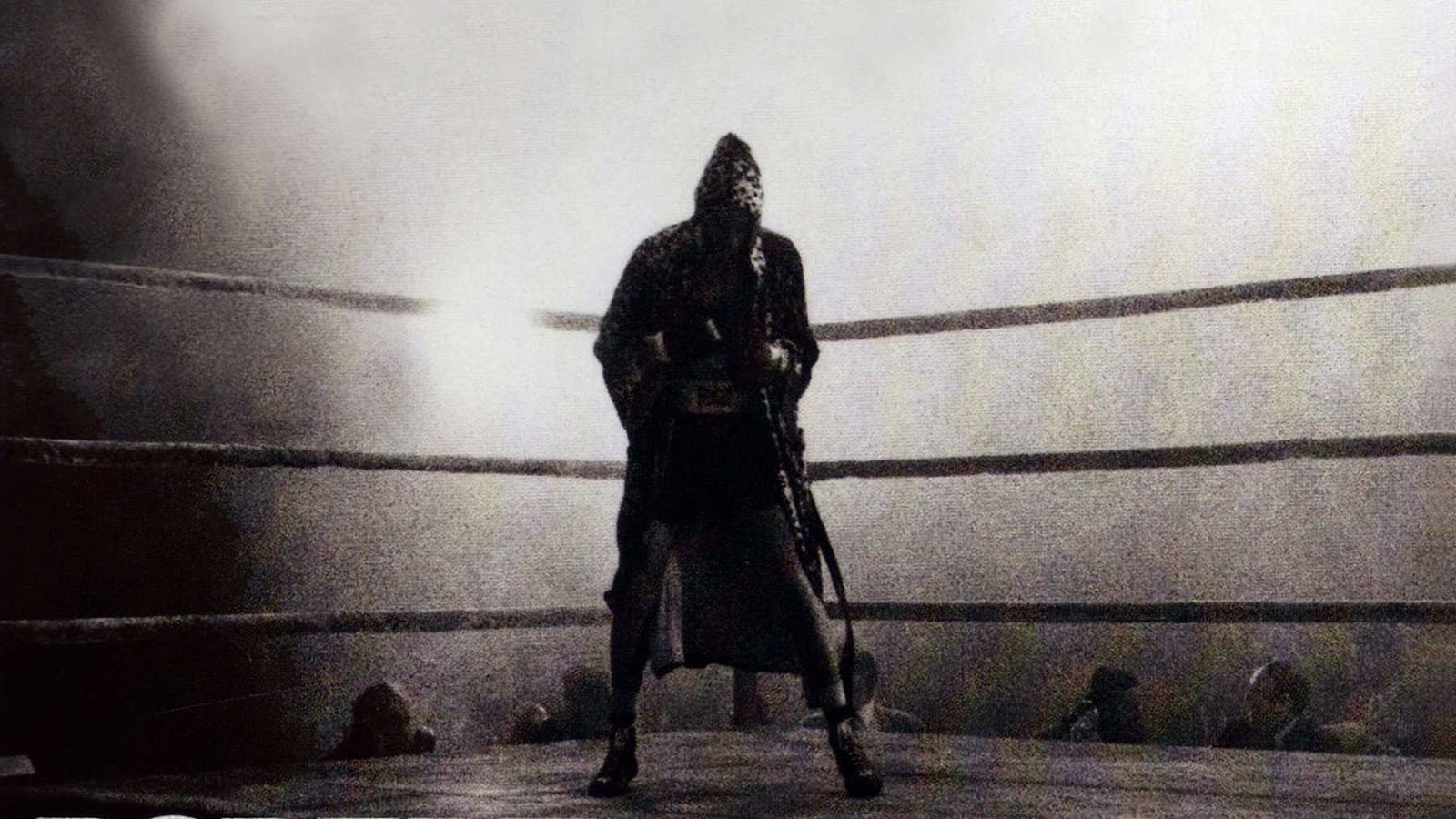
Watching the film, its clear Scorsese knows very little about boxing but fortunately he knows everything about filmmaking. Raging Bull is a marvel, a superbly made and directed marvel. Scorsese’s triumphant decision was to shoot the film in black-and-white (some truly beautiful work from Michael Chapman). This gives the film both the classic, gorgeous feel of a 1940s Hollywood movie, but also allows the boxing matches themselves to take on an almost impressionistic artistry, with powerfully emotive monochrome images. The photography also creates a stark, documentary like sense of reality for the many scenes of domestic disharmony and violence, while later shots brilliantly allow LaMotta (lost in self-loathing and disgust) to almost disappear into the inky darkness of the frame. Raging Bull would be half the film it is, if it was in full colour.

Recovering from a cocaine addiction that nearly killed him, Scorsese was intimately familiar with self-destruction – and its perhaps this that drew him towards LaMotta’s jealousy, possibly the film’s major theme. LaMotta is a self-loathing individual, who sees little value in himself, who treats pummellings in the ring like just punishments and believes everyone is betraying him. It’s one of the finest films about the green-eyed monster ever made. Obsessed with his younger wife – whom LaMotta first encounters at age 15 and whom he marries as soon as she is legal – LaMotta also earnestly believes she is sleeping with every man around. It’s clear that these paranoid fantasies stem from his own disgust at himself, LaMotta’s own conviction that there is nothing of value in him.

It’s this jealousy that really destroys LaMotta, his trigger-happy temper seeing him able to switch on an instant from a calm – but monomaniacal – insistence that he just wants to know the truth about his wife, to indiscriminate violence. LaMotta is an impulsive, excessive creature who does everything to a huge degree, from doubting his wife, to shovelling food into his guts. Scorsese’s camerawork – particularly it’s La Dolce Vitaish love of Cathy Moriarty – reflects LaMotta’s internal dysfunction. It worships Moriarty in the same way LaMotta does, but also reflects his obsessive possessiveness.  

All of this is further captured in Robert De Niro’s iconic performance. De Niro won the Oscar for this stunning tour de force. Raging Bull became almost as famous for De Niro’s all-consuming preparation: he trained for months to achieve the physique and skill of a professional boxer (he even entered some professional bouts, winning two out of three). He then went completely the other way, the entire film going on a four month hiatus while De Niro went on an eating tour around Italy to pile on the pounds for the ageing, overweight LaMotta. At the time it seemed like no other actor had gone to such levels.

This focus on De Niro’s preparation sometimes obscures in the mind the genius of the actual performance, as if we have almost been blinded by the training and technique behind it. De Niro’s energy, his fury, his intelligent understanding of the fractured mind of the paranoid brilliantly brings LaMotta to life. So intense is the actor’s understanding of the disgust that lies at the heart of LaMotta’s personality that, even at his worst, the man is never completely unsympathetic. De Niro rages through scenes of jealous outbursts and violence, but he also has a childish gentleness of the man unable to understand the world around him, twice in the film collapsing into bursts of affecting tears. The older LaMotta is perhaps wiser, but just as inarticulate in emotions as his younger version and as unable to fix the damage. It’s a masterful performance, a physical and emotional tour-de-force.

De Niro also worked closely on the choreography of the boxing scenes, which allowed Scorsese the freedom to shoot these with an imagination and brilliance that had never been seen before. Each fight has its own unique feel, with Scorsese understanding that this sport is a neat parallel for how LaMotta sees life, a series of brutal clashes with pride and self-regard on the line. Scorsese’s fights are elemental clashes – the soundtrack frequently uses slowed sounds to create an animalistic roar.

The camera is frequently thrown into the ring with the pugilist – and LaMotta here is really more of a pugilist than a boxer, there is very little sense of tactics – with low angles and tight camerawork. Scorsese puts the camera – and the viewer – into the ring, making us part of the fights. Every punch and blow carries impact, and this is perhaps the most blood drenched boxing film in history, with the darkened liquid covering the faces of the fighters and dripping from the ropes of the ring. The fights reflect LaMotta’s mood, with one late fight seeming like an almost medieval battle, mist rolling in and the fighters flying at each other with a reckless abandon. There is nothing romantic about boxing here, it’s a grimy reality of violence with a purpose and brute strength, endurance challenges that only the strongest can emerge from.
LaMotta’s confidence and mastery of the ring is contrasted throughout with his lack of nous and understanding in the real world, and his ability to destroy everything he touches. Joe Pesci excels as his supportive brother who realises far too late the uncontrollable anger at the heart of this fighter, while Cathy Moriarty is also excellent as a young woman whose only real mistake is to want to live some part of her own life. Scorsese charts LaMotta’s destruction of both of these relationships, culminating in the washed up boxer pounding the walls of a jail cell weeping and screaming “Why! Why! Why!”, hatred for his self-destruction dripping from every pore.

Raging Bull looks unlike any other boxing film, instead like a perfectly formed art piece, its soundtrack full of classical tunes and its photography adjusting between the beauty of neo-realism and the cold realities of documentary film making. It’s superb, a masterful film, a work of art and also a profound understanding of the destructive impact of jealousy and self-loathing. Showcasing career defining work from De Niro, it’s no wonder this is still hailed as the greatest film of the 1980s and one of the greatest of all time.
Taxi Driver (1976)

Robert De Niro embodies dangerous loners everywhere in Taxi Driver

Director: Martin Scorsese

Cast: Robert De Niro (Travis Bickle), Jodie Foster (Iris), Cybill Shepherd (Betsy), Albert Brooks (Tom), Harvey Keitel (Sport/Matthew), Leonard Harris (Charles Palantine), Peter Boyle (Wizard), Harry Northup (Doughboy), Steven Prince (Easy Andy), Martin Scorsese (Passenger)

A grungy taxi ploughs through the neon-lit back alleys of New York, the glow of stop signs and tail lights washing the car in a hellish red glare. Inside that taxi, the interior monologue of its driver tips ever closer towards paranoia and fantasy. It’s no surprise that something is going to give. Martin Scorsese’s influential Taxi Driver is the definitive exploration of fractured psyches, the key text in film for exploring how isolation, loneliness and an inability to connect with people can tip someone into being a danger to others.

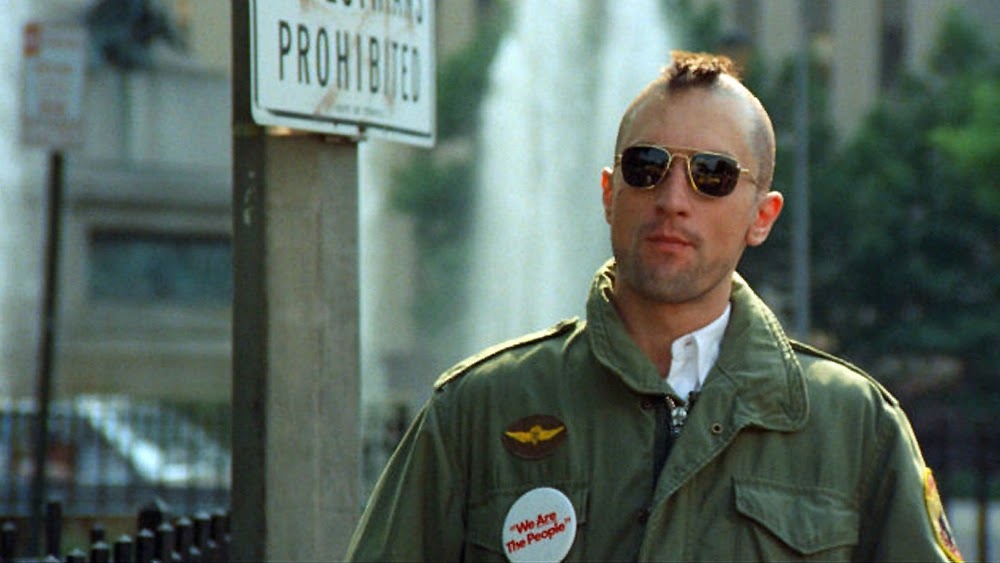
Travis Bickle (Robert De Niro) is our taxi driver, an honourably discharged Vietnam vet who can’t sleep so works the night shifts. He’s seemingly quiet, shy, self-contained but this hides a desperation to connect with the world, a horror at what he sees around him that he can’t understand, a paranoid disgust at the crime and dirt he feels infect the street and a desire to be someone or do something. His failure to understand to or relate to the world on any level will eventually lead to a gradual collapse as Bickle determines that he must lash out at something, must attack something, to make himself a place in the world.

Taxi Driver is such a brilliant analysis of disaffection and confusion at the world, such an insightful understanding of how feeling separate and locked out from events around them can make a person feel they must act to make their mark, that it profoundly influenced the motivations of Ronald Reagan’s would-be-assassin John Hinckley Jnr in 1981. The film was even screened for the jury as part of Hinckley’s (successful) defence that he acted due to insanity (Hinckley claimed he was trying to impress Jodie Foster). Tragic as that is, it speaks something to the power of the film and its acute understanding (but not excuse) for lonely, fractured, potentially violent souls like Hinckley.

Scorsese’s direction is pitch-perfect. The film uses a series of tightly held shots – and some go on for a very long time, staring at trivial events (such as the shot of an empty corridor while we hear Bickle being rejected on the phone by his stalking target Betsy) – or stately intercutting between actors that brilliantly serve to establish both Bickle’s isolation and his lack of connection. This is intermixed with tighter editing that captures Bickle’s undirected fury and paranoia towards the real world, presented as he drives as a concussive collection of sounds and images that seem to hammer down on the taxi, combined with Bernard Herrmann’s superb classically tense score, lyrical but haunting. 

Every scene Scorsese constructs is designed to show Bickle’s isolation, his weakness and continual succumbing to fantasy and false perspectives. His internal monologue has a monotone fluency to it, but talking to people he’s tongue tied, clumsy or prone to tip into the rantings of a crazy man. Slow motion camera tracks show Bickle moving through crowds like an alien, unable to comprehend or understand what he is seeing, later prowling the frame like a misguided hunter. New York is a hellish underworld – although you are certain we are seeing it largely as Bickle sees it, every scene filtered through his disturbed POV (Michael Chapman’s photography by the way is faultless). 

It works so well because De Niro himself is so restrained, and at first feels rather sweet, even handsome, like someone who you want to look after or feel sorry for – a million miles from the mohawked gun totter he will become by the film’s end. He’s quiet, shy and desperate for friends. He can manage bursts of seeming like a compelling person – his fooling of Cybil Shepherd’s Betsy into a date is a tribute to his ability in short bursts to appear charmingly eccentric. The date of course flounders on his inability to understand human norms (buys her a record she says she has, takes her to a porn film, points out he has a taxi when she tries to get into one to leave), and his response to it is of course to get angry and make a scene, to blame the other person for his own failings.

De Niro immersed himself in the dark psyche of this man, and never loses touch of the gentleness and vulnerability that underpin his violent actions. Bickle talks the talk often of a crazy person, but by his own lights he’s a well-meaning man. It’s just that his well-meaning actions involve multiple murders, and it’s only by a twist of fate that he guns down a house full of pimps and gangsters rather than putting a bullet through a Presidential candidate.

And that’s the scary thing about the film: Bickle is strangely sympathetic, for all his obvious psychosis. Who hasn’t felt alone and lost in the world? Who hasn’t felt scared by events around them or dangers unknown? Who hasn’t wondered “why don’t people like me”? We just deal with it a lot better than Bickle and his messianic sense of mission that he develops.

Bickle channels what human emotions he can muster or understand into ciphers he barely knows. These people become totems, or stalking targets, who he becomes persuaded must be “saved”. With Cybil Shepherd’s Betsy, the delusion is clear: here is a confident, career woman, independent and smart, for whom Bickle can feel an attraction but clearly no understanding at all beyond her being an object he cannot have. The awkwardness and later stunningly poor judgement and reactions he shows when around her mark him immediately as a weirdo and danger to others.

But the film’s smarts – and it has a terrific script by Paul Schrader, whose understanding of dark psyches was never better captured than here – is that these fixations have a totally different impact when targeted on a child prostitute. Suddenly, Bickle’s unwanted attentions have the air of righteousness, even though intellectually he makes no distinction between either Betsy or Jodie Foster’s Iris (a performance of staggering emotional maturity from an actress barely 12 at the time). For all Iris is clearly a victim of society and abuse (in a way Betsy isn’t), for Bickle she’s pretty much the same, someone he must ‘rescue’ – and from her pimp Sport (a disturbingly fey and incestuous turn from Harvey Keitel).

So Bickle takes up the guns, and eventually does what we all wish we could do sometimes. Because who hasn’t stood in front of the mirror and dreamed about saying “you talkin’ to me” to our enemies – the difference being most of us don’t fantasise about blowing them away, let alone actually go on to do it. De Niro’s brilliance is the chilling emptiness behind the exterior, the way he captures universal fears and doubts but shows us a character who has no personality of his own but only collects titbits from those around him (like his would-be murderous passenger – played by Scorsese himself – who eagerly talks about how he wishes he could murder his cheating wife).

So the violence comes – and it is horrific – as Bickle shoots up a lowlife prostitute den with sickening graphicness (nothing this violent had really been seen before). But it’s only fate that has turned him away from his real target, Senator Palatine (George Lucas must have had this film in the back of his mind when naming his Evil Emperor!), reverting to his secondary target and killing a group of people far more acceptable to Joe Public to be wasted.

Scorsese’s genius final epilogue asks us questions about truth but also perceptions. The camera takes on a “God’s view” POV overhead shot as Bickle’s slaughter ends (and De Niro’s jerky, terminator like physicality here is stupendous), tracking back through the house. Is this his soul leaving a dying body? But then we flash forward and there is Bickle in the taxi again, hailed as a hero by society for rescuing the girl – the same society that would have condemned him as psychopath if he had taken his first target. He even gets a sympathetic conversation with Betsy.

But he hasn’t changed. And the world hasn’t changed. And Bickle may be a hero now but the same dark impulses still ride within him – and they will, the film suggests, lead him to kill again. Scorsese’s film is a masterpiece of alienation and disaffection, a brilliant analysis of what makes a killer kill – and how vagaries of fate can see us miss the signs – with a wonderful script and a superb performance from De Niro, a landmark turn that manages to tap into such existential fears we all have on our place in the world that we completely miss we are starting to relate to a psychopath. Dark and brilliant, a landmark.

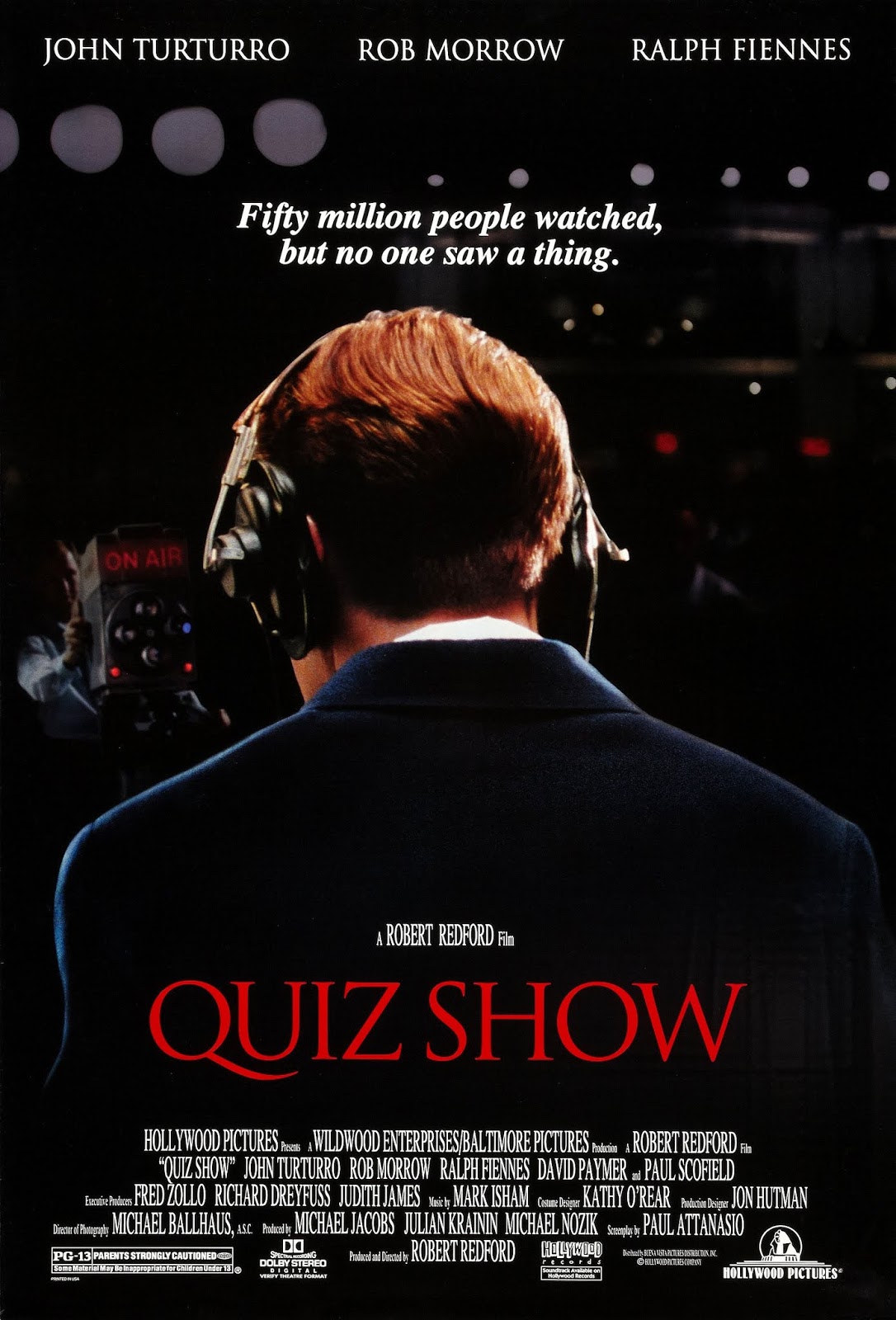
Quiz Show (1994)

Ralph Fiennes excels as the man who as the answers he shouldn’t have in Quiz Show

Director: Robert Redford

Cast: John Turturro (Herb Stempel), Rob Morrow (Richard Goodwin), Ralph Fiennes (Charles Van Doren), David Paymer (Dan Enright), Paul Scofield (Mark Van Doren), Hank Azaria (Albert Freedman), Christopher McDonald (Jack Barry), Elizabeth Wilson (Dorothy Van Doren), Mira Sorvino (Sandra Goodwin), Allan Rich (Robert Kintner), George Martin (Chairman Oren Harris), Paul Guilfoyle (Lishman), Martin Scorsese (Martin Rittenhome), Barry Levinson (Dave Garroway)

Imagine, if you can, a time when we trusted everything we saw on television. When whole nations crowded around to watch a show, and would run home to make sure they didn’t miss it. When the people appearing on the box in the corner were like members of the family invited into our home. In our cynical age of streaming and distrust, such ideas are impossible to imagine. Now we doubt anything we are shown on the box – and the first brick in that wall fell into place with the rigged quiz show scandals on American television in the 1950s.

Twenty-One is the biggest hit on NBC, with reigning champion Herb Stempel (John Turturro) correctly answering every question that comes his way. But the show’s sponsor, Geritol, is worried: Stempel’s ratings are at a plateau, and they feel the show needs a new champion. So producers Dan Enright (David Paymer) and Albert Freedman (Hank Azaria) look to recruit the sort of face of Twenty-One the sponsors want – and find him in clean-cut, Ivy league, charming Columbia League instructor (or “Professor” as they insist on calling him – and Van Doren’s move from reminding him he hasn’t qualified for that title, to happily accepting it is telling in itself) Charles Van Doren (Ralph Fiennes). 

They offer Van Doren the chance to win the show by telling him the answers in advance, while offering Stempel a career in television if he will agree to throw the next edition of the programme. Both men are plagued with indecision, but Stempel throws the game and Van Doren provides the correct answer to his final question – the exact same question he had been asked at his audition. Van Doren, seduced by the fame, quickly agrees to be given the answers in advance of the show, but the unreliable Stemple is dropped by NBC and instigates Grand Jury proceedings. The records are sealed but this piques the interest of Congressional lawyer Richard Goodwin (Rob Morrow), who begins to see the potential to “put television on trial” – while being deeply conflicted by his growing friendship with Van Doren, keen to be seen as co-operating with any investigation.

Quiz Show remains Redford’s finest directorial achievement by far, a rich, fascinating, beautifully made film with a profoundly rewarding and engrossing reflection on fame, television and the media in 20th-century America. Told at a gentle but compelling pace, probably the strongest weapon in its arsenal is a fantastically literate, well-constructed, dryly amusing and affecting script by Paul Attanasio. Scenes are beautifully assembled, crammed with well observed character beats and wonderfully quotable lines. It’s a script that would stand up extraordinarily well as a play itself, and Redford allows it plenty of room to breathe in his assured, unshowy and perfectly judged direction.

This is a film that analyses exactly how truth and entertainment are supposed to be inter-related. The rigging of quiz shows – and it was systematic across a range of shows on all channels – was a detailed lie to the American people. But, the film asks, what was the real harm of this? What are these quiz shows for? Tests of intellectual attainment or pieces of entertainment for the masses? As Scorsese’s Geritol executive says, people weren’t watching the questions, they were watching the money. 

And money is where the villainy lies in this film. For a film rich in period detail, Redford makes clear that there is a definite sense of class that underlies all the action. Decisions are made on the show based on selling things – advertising hours and Geritol products. And there are people in this show – the heads of corporations like NBC – who are making millions out of peddling rigged entertainment shows to the people. And when the chips come crashing down, it’s not these executives who are in the firing lines; it’s the little people who were the face of the enterprise – the contestants themselves – who pay the price.

It’s the exact opposite of what Goodwin wishes to achieve when he starts his investigation. He wants to add some moral force, some legislative control, to what you can and cannot present as fact and fiction on television. What he fails to understand – and what the film does – is that deep down people don’t want this. They want the excitement and the thrills – and at the end of the day wouldn’t care less if they never found out everything presented to them was carefully scripted. This lasts today: do we care that comedy sketches are not improvised but carefully scripted? Do we care if game show contestants are carefully pre-selected? Again, as Scorsese’s sponsor representative states, all any investigation will accomplish is TV shows figuring out other ways to get the high ratings: and simpler questions and less erudite competitors will be the way to go.

Because it’s all the glamour and excitement and drama we like to watch, not displays of intellectual accomplishment. It’s something the film understands – and something that comes across very clearly in Ralph Fiennes’ exquisitely well-judged performance as Charles van Doren. A genuinely intelligent, decent man, Fiennes’ performance works so well because he makes clear that under the WASPish, patrician decency of van Doren is a fundamental shallowness, a laziness and hunger for the quick buck and easy success. Constantly, Fiennes’ confident grin and easy manner hide his unease and guilt at his conduct. But he clearly can’t help himself, a Faust wrapped up in his pact.

After all what would his father – the famous poet and academic Mark van Doren, played with a beautiful ease, grace, intelligence and iron-clad honesty by Paul Scofield, a sublime actor at the top of his game – think of this all if he found out? The scenes between the two men – one the proud, loving but quietly demanding father, the other the successful, shallow, quietly desperate son – are the film’s strongest moments, consumed with the tension of the unspoken. We can see the pressure of familial expectations reflected elsewhere in Herb Stempel’s wife’s disappointment at finding that Stempel himself was a coached as much as van Doren.

John Turturro goes larger as Stempel, a bitter and frustrated man addicted to the attention and glamour TV has bought him which he has always felt has been denied him. Stempel’s desire for fame, his assumption of a persona in the public eye which is part studied, part eagerness to please his audience, gets to the heart of TV’s power. It’s the box in every room, and it can turn the ordinary into the extraordinary. It’s a box with the potential to weave magic – and it’s the tricks behind the magic that are difficult to see. For all we know the magician doesn’t saw the assistant in half (as Hank Azaria’s crude producer puts it), it makes it hard to enjoy the trick when you know it is one.

It’s ideas like this that the film gets to  so cleverly, and which turns the American quiz show into an intelligent metaphor for the corrupted ambition of America itself. The dream is to get to the top, and this was a way of offering a short cut for it – and all to help big business sell its products and make money. This is the subversive truth at the heart of Quiz Show, but it’s easy to forget as we, like the American people, have the obvious villains of the ordinary contestants be crucified by the media, rather than those who really profited. Redford’s film is smart enough to constantly remind us of this, to humanise the contestants and to show the darker elements underneath. Quiz Show is a great film.

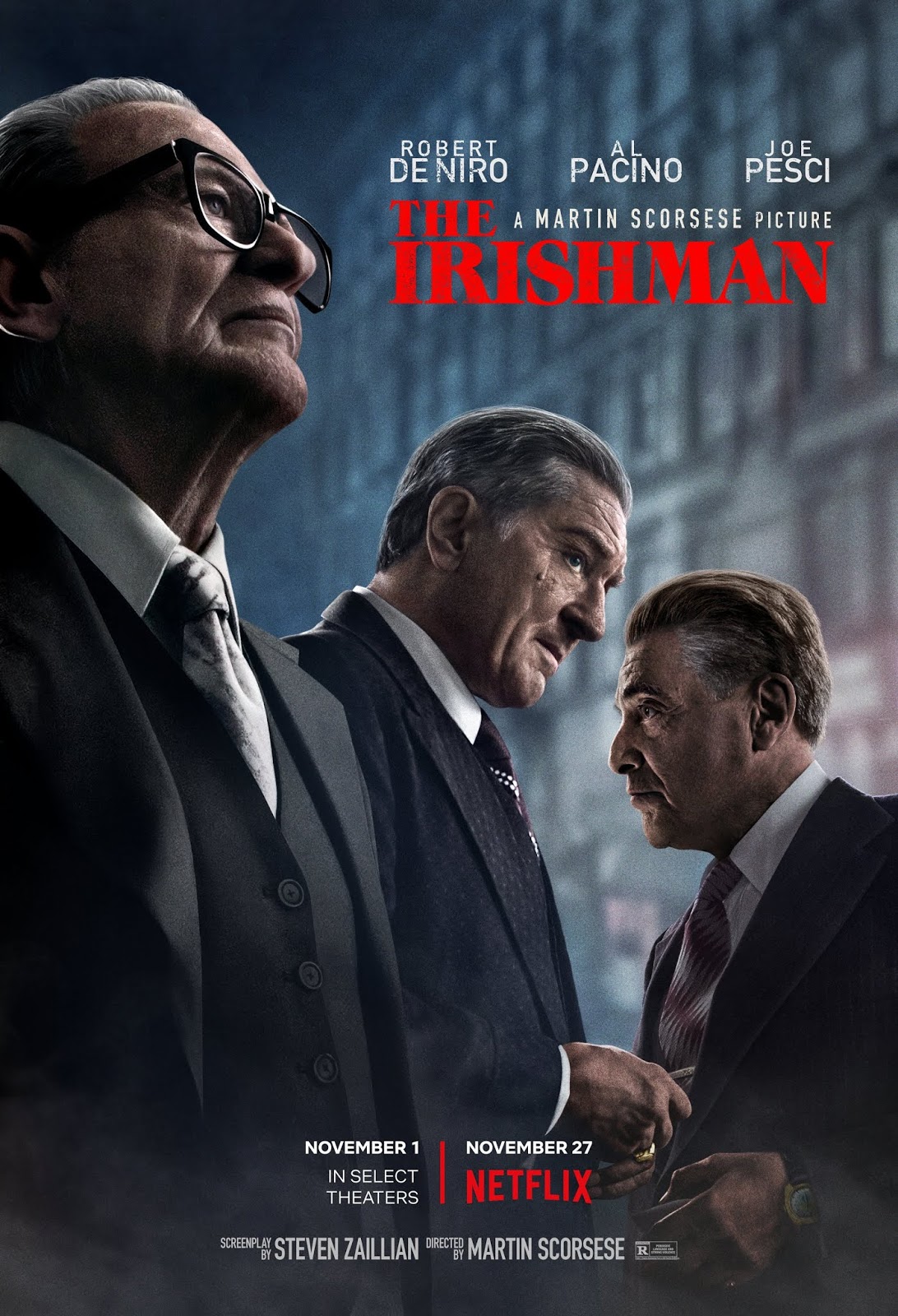
The Irishman (2019)

De Niro and Pacino under digital facelifts bring to life Scorsese’s meditative The Irishman

Director: Martin Scorsese

Cast: Robert De Niro (Frank Sheeran), Al Pacino (Jimmy Hoffa), Joe Pesci (Russell Bufalino), Ray Romano (Bill Bufalino), Bobby Cannavale (Felix “Skinny Razor” DiTullio), Anna Paquin (Peggy Sheeran), Stephen Graham (Anthony “Tony Pro” Provenzano), Stephanie Kurtzuba (Irene Sheeran), Jesse Plemons (Chuckie O’Brien), Harvey Keitel (Angelo Bruno)

Scorsese had wanted to make this film for almost 20 years but it took the mega bucks of Netflix (to the tune of over $150 million) to finally bring it to life. With complete creative control, we get Scorsese’s epic as he saw it, an over three-and-a-half hour long sad meditation on the life of the gangster. For the first time in almost 25 years, Scorsese is reunited with his muse Robert De Niro – appearing here under various digital facelifts to tell the story of Frank Sheeran, an Irish member of the Mafia, and his relationship with infamous Teamster union leader Jimmy Hoffa (Al Pacino). Was the film worth the effort to make it?

I first saw The Irishman in the cinema. I now feel that was a mistake. This is a film that needs to be soaked in like a warm bath. Like reading an involving novel, it needs to savoured and consumed at your own pace. In the cinema in one take – with no intermission – its runtime is punishing. It’s the worst form of criticism but in one take, the film can overstay its welcome. In fact it can become a little boring.

Re-watching the film a year later at home – where I could break it up into three chunks as (I feel) so many people have, it becomes a richer and more engrossing viewing experience. Because this is a totally different beast to Scorsese’s previous gangster movies, a quiet mood piece, contemplative, sad, a genuinely tragedy-tinged, doom-laden reflection on the emptiness and costly violence of the gangster life, and the empty shells it leaves of the people in it. And at its centre, a man so dehumanised by war, by obeying orders, so lacking of personality, so incapable of emotion it seems, that he ends the film as a blank, lonely, abandoned slate. It’s a real, and deliberate, counter-point to his electric gangster films of the past, from Mean Streets via Goodfellas to Casino and the cartoonish The Departed. Here the price of doing business is your soul – and when that final bullet comes (as it inevitably will) you have nothing to show for it.

It makes for a late Scorsese epic – nearly a TV mini-series – slow-paced, wintery and a perfect counterpoint to Goodfellas. There crime is ruthless but you can see it’s also fun. Here it’s hardwork, unrewarding and inevitably leads to a bloody demise. Time settles on the shoulders of its leads like deadweights and their is a weary sadness as they trudge from one feud to another, each of which can only be resolved by putting another body in the ground. And everyone knows that the next feud might well mean it’s their body that will end up six feet under.

Frank Sheeran is a drained automaton, a human being possibly in name only, who takes on violent acts without question, who can kill without remorse. This is the very picture of a second-tier career criminal, a man who takes orders and carries out missions. De Niro brilliantly creates an sociopathic monster, a man almost devoid of his own personality, with little to him but a taciturn killer. Sheeran is a tough character to relate to or understand – but that’s because he’s not really a character at all. Interestingly he doesn’t have the sort of flaws that undermine other Scorsese gangsters, like Henry Hill. His flaw is in fact his entire existence. His sociopathic acceptance of violence, his thoughtless carrying out of killing, his inability to relate to human beings. It’s what leaves him alone, unloved and isolated in a care-home. This is a man who can barely muster much emotion about killing his best friend, whose quiet, placid nature perhaps only hides his lack of capability of even experiencing emotion.

The Teamster union politics content of the film is often dense and hard-to-follow. At times it tips into being not that interesting. So it’s tough that it takes up almost two hours of the film’s run-time. It’s a sign of the films overindulgence. At the end of the day I’m not sure it adds much to your overall impression of the film. But reviewing the film perhaps that’s the point. The very shallowness and even pettiness of this feuding – not to mention the naked, unromantic greed – over how to distribute union pension money, explodes the myth of any romance to this crime. These are blue-collar conmen, using violence as a way to conclude a board meeting.

As Jimmy Hoffa, Al Pacino is the best he’s been in literally decades – the film uses his “hoo hah” shoutiness to great effect, but Pacino also makes Hoffa an unexpectedly vulnerable and lost figure amongst all the politics, a showman who overestimates his importance and invulnerability. The entire film is shaped (we discover) around a series of flashbacks from Sheeran on a road trip on what turns out to be the final days of Hoffa’s life (the film includes a solution to Hoffa’s famous disappearance). De Niro and Pacino spark beautifully off each other as a bond forms between them – the films lingering on their growing friendship (and at times strangely homoerotic intimacy) one of its strongest elements, as well as carefully demonstrating how disloyalty is a crucial survival skill in this world.

The film strongest elements are the doom-laden nihilism of the gangster life. Told by Scorsese deliberately without flash and excitement, with a score so sparse that long stretches of the film echo with silence, there seems to be no fun at all in the gangster world, instead a series of mundane men sitting in small restaurants, talking about admin and punching the clock. Many of the gangster characters are introduced with on-screen captions that detail the dates and natures of their violent deaths. It’s the exact opposite of what you might expect from a Scorsese film. It’s a director showing the dark flipside of his previous films, of the way the gangster life is a dwindle through a dull life marked with moments of danger, where death is a sudden violent explosion that ends a life too soon.

And it leaves families in a mess. Anna Paquin speaks very few words as Sheeran’s adult daughter, but only because her silent disapproval and disgust at her father’s life becomes the haunting of Sheeran’s whole life. His daughter’s silent disgust is a recurrent theme (even from childhood, she is repulsed by his capacity for violence and his heartlessness). Sheeran’s attempt to break through her silent disapproval, to get her to acknowledge him in some way becomes a large part of the sad coda of Sheeran’s life. It’s all part of Scorsese’s message: what is the point of a life like this that brings wealth and power, but also leaves you broken, lonely and despised by everyone around you?

And you can’t argue with the skill with which this quiet, meditative, grim and slow exploration of the gangster world is put together by Scorsese – or the artistry that every moment of the film has, or the control of the director. It’s beautifully shot and edited. It’s pace is at times glacial, but this is resolved by watching at your own pace on Netflix. It’s not a film to be binged (ironically Scorsese has made a television novel that he wants you to watch in one go) but instead one to be savoured and considered. That’s where it’s strengths are.

There are also excellent performances. Joe Pesci, lured from retirement, is outstanding. He’s a revelation as a sort of cool, calm, grandfatherly fixer a million miles from the lunatics he played in Casino or Goodfellas. Pesci quietly dominates several scenes, using stillness and quiet like a vicious badger who knows he only needs to swat once to remove his foes. This is a performance of beautifully judged grace and stability, a calm reflectiveness that carries a vicious coldness at its heart. Russell may prefer a peaceful solution – but he will order your death without thinking twice. Also excellent is Stephen Graham as the sort of dangerously impulsive bully Pesci played to such great effect in those earlier movies.

And those famous digital facelifts? Well they are fine technically. You ignore them after a while. But no matter of digital trickery can make De Niro move with the gait, physicality or certainty of a man more than 30 years younger than he is. As we watch De Niro (supposedly a killer in his prime) shamble forward, or gingerly give a rude grocer a kicking, you can’t forget that he’s really a much older man. To be honest the film would have been just as good – maybe better – with actors the correct age filling in for the younger roles. Watching it again, I’m never convinced that I am watching a De Niro the age he was in Mean Streets or even Goodfellas. To be honest, at times the facelifts don’t look a lot more convincing than hair dye and a little tape to stretch the skin back.

In fact the digital facelift at times is almost a metaphor for the film: it’s a film where age and time are a constant presence. Knowing the lead actors are old men, trying to look young kind of sits with that. These are not dynamic, triumphant young men. But then they never were. These are men who feel the burdens of the world on their shoulders every day. Who at the end of their lives will have nothing to show for it over than a satisfaction that they managed to live slightly longer than they expected. Whose friends and family will hate them and who find they sold their souls and gained nothing but dust in exchange. Long, slow, sometimes trying – but on a second rewatch, also compelling, thought-provoking, heartfelt, insightful and inspiring.

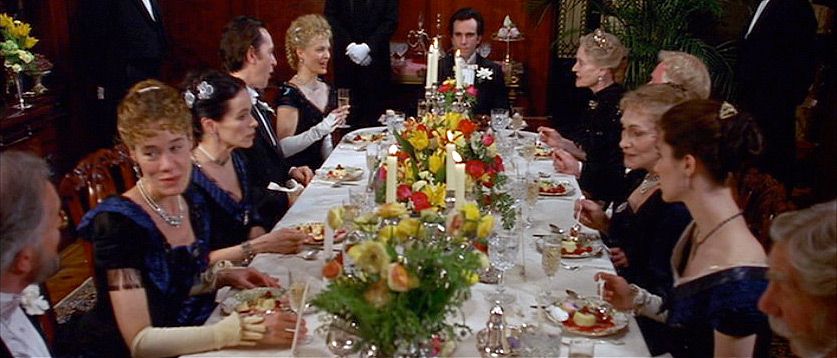
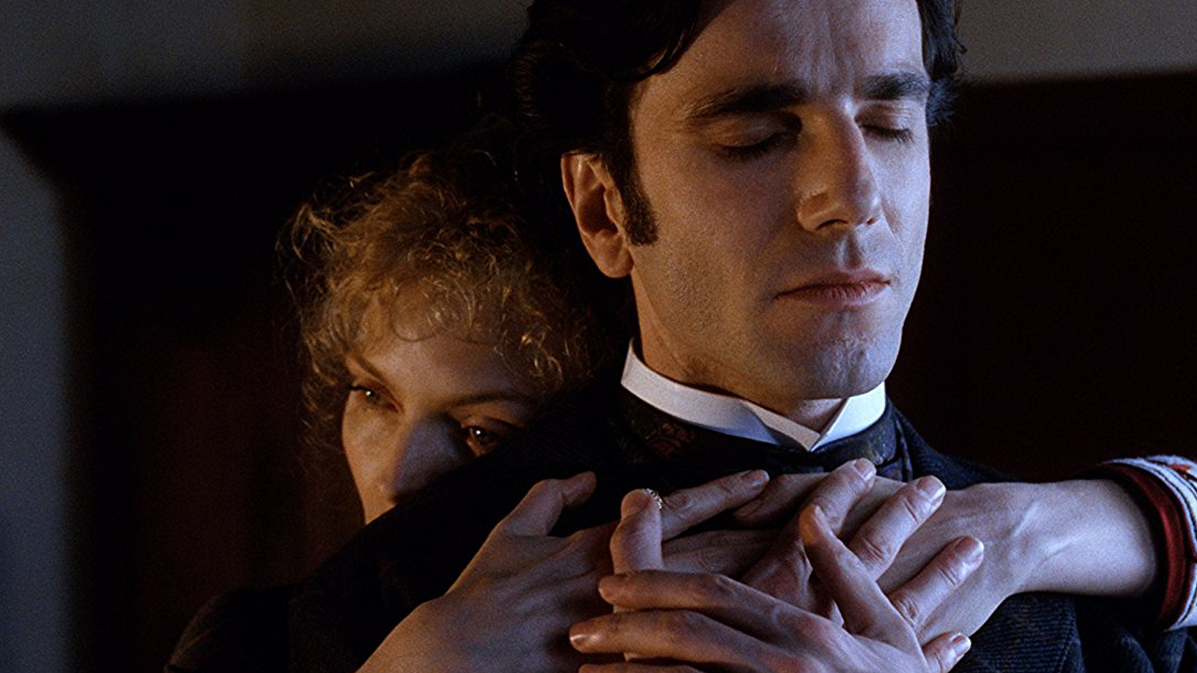
The Age of Innocence (1993)

Daniel Day-Lewis and Michelle Pfeiffer have a love that cannot survive the morals of society in The Age of Innocence

Director: Martin Scorsese

Cast: Daniel Day-Lewis (Newland Archer), Michelle Pfeiffer (Countess Ellen Olenska), Winona Ryder (May Welland), Miriam Margolyes (Mrs Mingott), Geraldine Chaplin (Mrs Welland), Michael Gough (Henry van der Luyden), Richard E. Grant (Larry Lefferts), Mary Beth Hurt (Regina Beaufort), Robert Sean Leonard (Ted Archer), Norman Lloyd (Mr Letterblair), Alec McCowen (Sillerton Jackson), Sian Phillips (Mrs Archer), Jonathan Pryce (Rivière), Alexis Smith (Louisa van der Luyden), Stuart Wilson (Julius Beaufort), Joanne Woodward (Narrator), Carolyn Farina (Janey Archer)

In 1870’s New York, Newland Archer (Daniel Day-Lewis), is a fastidious connoisseur of the arts, part of the super-rich elite of New York society. He’s engaged to be married to young May Welland (Winona Ryder), but finds his world view and values turned upside down when he meets May’s cousin, the Countess Ellen Olenska (Michelle Pfeiffer). Ellen is a scandalous figure, a woman separated from her philandering European husband, trying to make her way in New York society. Newland and Ellen are irresistibly drawn together, but do they have a chance to be together in the oppressive society of the New York upper classes?

That’s one question. The one more people were asking was: how would Scorsese follow up Goodfellas? Probably very few people would have bet on an adaptation of Edith Wharton’s The Age of Innocence. In fact, in 1993, there was more than a little annoyance among some viewers at the idea of the master of gangster movies, the guy who directed Raging Bull and Taxi Driver, turning his hand to the realm of Merchant Ivory. The film bombed at the box office – but did it deserve that reaction? Was Scorsese a director out-of-place?

Well the reaction is slightly unfair, because The Age of Innocence is a marvellously filmed, exact, brilliantly constructed piece of film-making, that so lays on the opulence and wealth of New York society that it turns everything in the film into feeling like a gilded cage. That’s a cage carefully controlled and monitored by the inmates, with their strict, inflexible rules about every single social interaction, unbreakable rules of decorum and etiquette covering everything, with any deviation from these rules met with instant expulsion. Put it like that, and this doesn’t sound a million miles away from the gangster families Scorsese is more associated with.

Inspired by the films of Powell and Pressburger in its intricate construction, and flashes of artifice in filming and editing, as well as its rich colour palette, with touches of everyone from Visconte, Ophüls, Truffaut to name but a few, this is a film-maker’s love letter to cinematic classics. A beautiful sequence of Newland watching Ellen from behind and a distance on a jetty, yearning for her to turn around before a boat passes a lighthouse, using that landmark as the point when he will stop looking and accept something is not to be. The scene is bathed in a Jack Cardiff-ish red, with the objects in the light given a sharp definition in contrast to the colours. It’s a beautiful image, and one of several that run through the film. Inspired by paintings of the era, Scorsese also layers in Viscontish scenes of opulence, with The Leopard very much in mind as every detail of the vast wealth, and huge accumulation of objects in every room of these people’s houses, seems to crush and entrap the people in them. The rooms themselves become metaphors of the oppressive, rule-bound society the characters are trapped in, like the people have been designed to fit into the rooms rather than vice versa. The one exception is Ellen’s rooms, which have a sense of personality to them.

This marvellous construction – with its beautiful photography, inspiring design and costumes – contains a storyline of frustrated love, a love triangle between three people where the man has to make a choice between what he wants and what is expected of him. Newland Archer clearly loves Ellen in a way he can never love May – indeed, he is dismissively cruel in his thoughts towards May, who he clearly considers nothing more than an extension of the mindless gilded objects of beauty around him, a woman he sees as lacking an imagination or daring. In Ellen, he sees far more opportunities for a world of change, of difference, or being something he does not expect. She is far more of a free-spirit, a more bohemian figure, confident in herself and something far more modern than May, who is very much a product of her time and place.

The film, carefully demonstrates the growing unease and unsettlement of Archer as he begins to feel things he has never done before, to start to react and aim for a style of living he would never previously consider. All his life before now is a careful studying and collection of moments, or savouring experiences in the way that a collector would place them in a glass box. From seeing only the moments of plays he wishes to see, to carefully collecting shipments of books from London and reading the choice moments, Archer is a coldly controlling figure who believes he guides and directs his own life. Ellen not only demonstrates to him that in many ways he is as conventional as anyone else, but also that there are other options in his life. Archer struggles to build the emotional language that he needs in order to express these feelings bubbling in him – key moments indeed seem reminiscent of the operas that this New York society spends so much time watching, and it is only late in the film in little, genuine moments of affection can he find something real.

Scorsese’s film artfully and carefully shows this developing affection between the two, a love that the two of them speak of surprisingly early, but fail to find a genuine way of expressing it. The film captures the attempt by New York society at the time to be more British than the British, and the hidebound restrictions this brings. Scorsese uses cinematic tricks to show Archer’s striving to escape. Spotlights zero in on Archer and Ellen in the middle of society, as if to drain out all other moments. Letters from his respective love interests are delivered with the actors addressing the camera, as if speaking to Archer direct. Flashes of screen colour cover key cuts, as if all this colour was just on the edges of his life but he is unable to access them. He is a man who feels himself trapped and committed to one form of life, but who still feels the longing for another.

The Age of Innocence is a beautifully made film, but there is a coldness to it. Perhaps this is why it doesn’t quite capture the heart in the way of other films. So much as Scorsese captured the cold and restrictive world of this society, that it seems to permeate the film and make the whole thing somehow colder and more restrictive. There is such artistry and effort in the film-making, that the film seems a coldly detailed piece of art. Perhaps this is why the use of narration – beautifully spoken by Joanne Woodward – becomes overbearing here in the way it doesn’t in other Scorsese films. It’s another distance from the entire experience, as if the film is keeping the audience at arm’s length as much as society is. 

Daniel Day-Lewis’ performance is expertly assembled, a masterful, brilliantly observed, intricately detailed masterclass in micro-expression, of layered frustrations and repression. But it’s such a marvellously constructed, detailed and well observed performance that it feels a masterful piece of art to be admired rather than loved. For all the film centres Archer in the story, he is a hard man to care for or invest in. Pfeiffer gives a wonderful performance as the far freer, intelligent and daring Ellen – but there is a slight lack of spark between them, for all the brilliance of both actors the feeling of an overpowering, obsessive love just doesn’t quite come out of the picture.

This coldness of the construction, carries through every frame. It is perhaps an easier film to admire than love, for all its brilliant construction. It is perhaps too successful in establishing the sharp rules of its society, and does not invest enough time in looking at the raw passions that bubble under the surface of its characters. It never quite explores the inner life of its characters, and they remain slightly distant objects from us. To be fair, this works very well in some cases: Winona Ryder as May carefully plays her hand throughout the film, so that it is a shock in the final scenes where she reveals depths of determination, strength of character and manipulation that far dwarf anything Archer is capable of. Where he is a man with a wistful longing for what he wants, but lacks the will to take it, she knows what she wants and is determined to take it.

The film uses its mostly British cast very well, their understanding of period and these sort of society rules crucial to its success. Margolyes, Wilson and McCowen in particular are very impressive as very different types of society bigwigs. Scorsese’s film contains many other things to admire, but it’s such a wonderfully made piece of film-making, so overburdened with intelligent interpretation of the novel that it fails to make a real emotional connection with the viewer. You will respect and enjoy scenes from it, but perhaps find its running time as overbearing as the characters find the society they are in, and eventually find yourself needing to come up for air.

Goodfellas (1990)

Pesci, Liotta and De Niro embrace the life of crime in Scorsese’s masterpiece Goodfellas

Director: Martin Scorsese

Cast: Ray Liotta (Henry Hill), Robert DeNiro (Jimmy Conway), Joe Pesci (Tommy DeVito), Lorraine Bracco (Karen Hill), Paul Sorvino (Paulie Cicero), Frank Sivero (Frankie Carbone), Frank Vincent (Billy Batts), Tony Darrow (Sonny Bunz), Mike Starr (Frenchy), Chuck Low (Morrie Kessler), Frank DiLeo (Tuddy Cicero), Samuel L. Jackson (“Stacks” Edwards), Catherine Scorsese (Tommy’s mother), Michael Imperioli (Spider), Debi Mazar (Sandy)

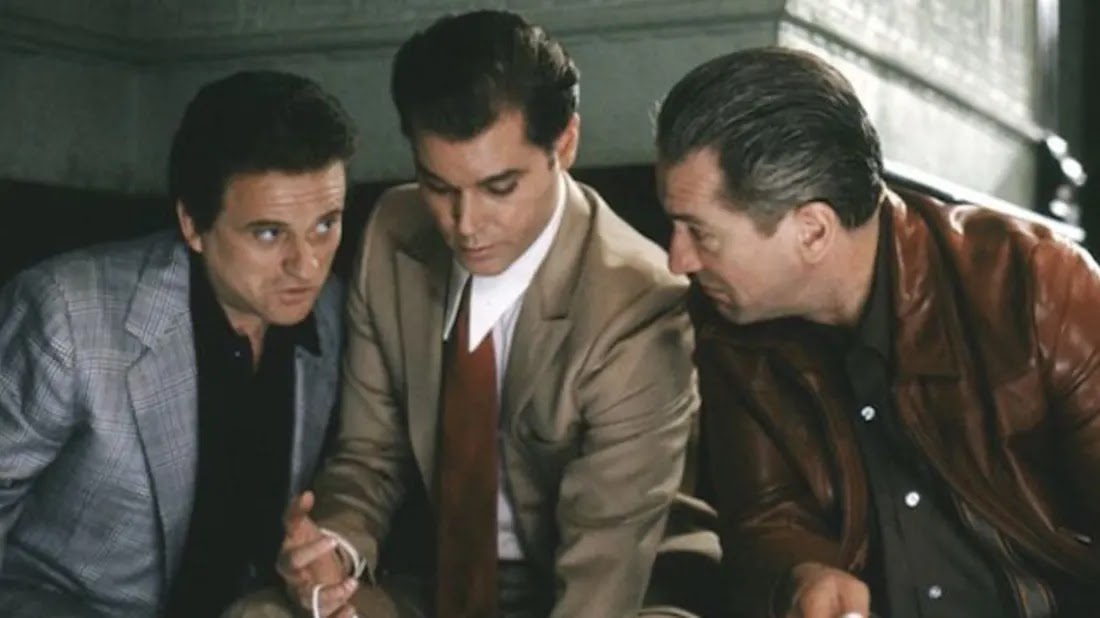
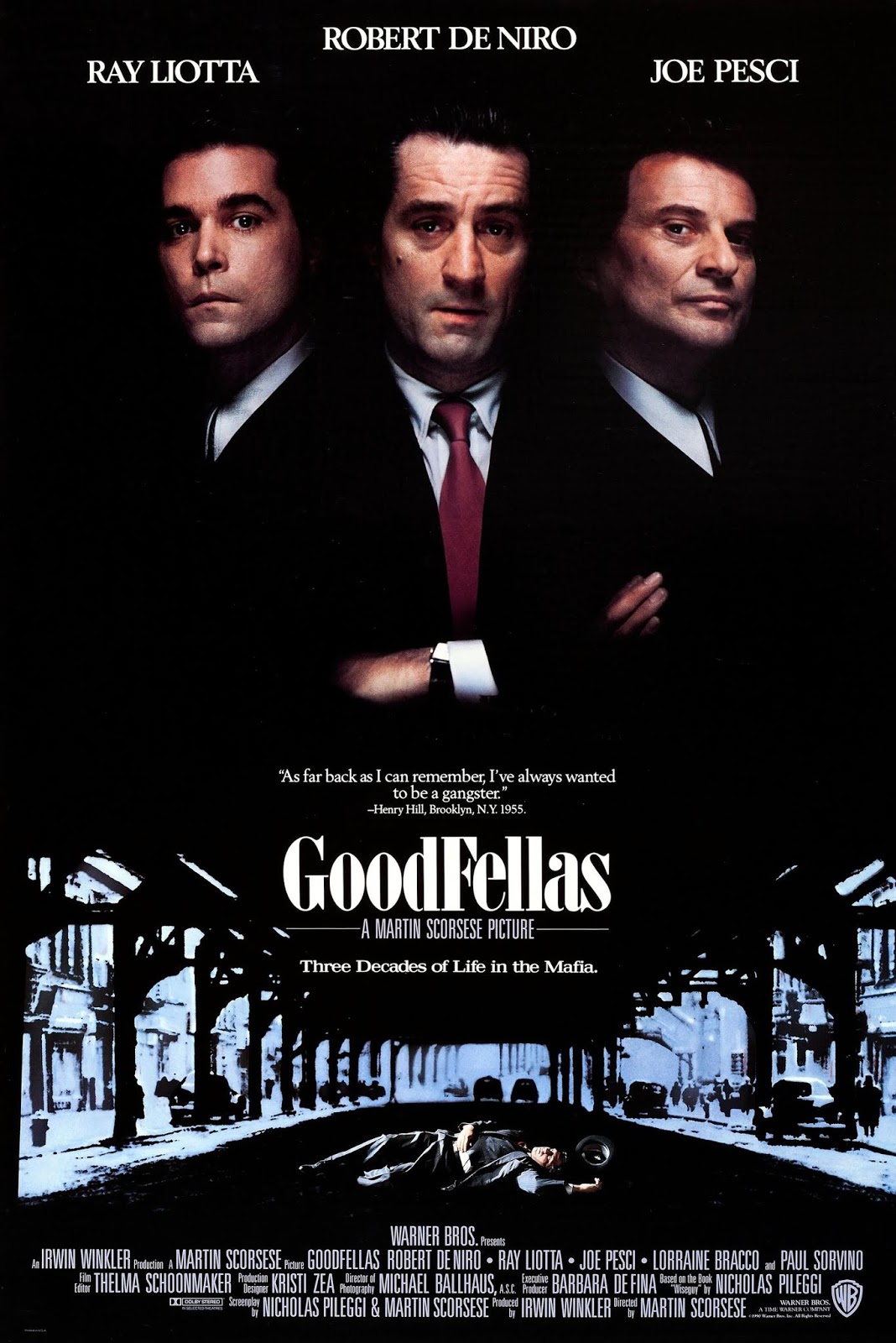
If there is one film loved more than any other in Martin Scorsese’s filmography, it’s probably Goodfellas. It’s a seismic high-point, not just in its genre – the greatest gangster film ever made since The Godfather Part II – but in film-making, it’s influence and legacy seeming to hung over everything ever since, not least the next-great gangster epic The Sopranos (with which it shares a whopping 27 actors, most notably Lorraine Bracco, Michael Imperoli, Frank Vincent and Tony Sirico). But, on top of all that, Goodfellas works so well because it is a masterpiece of both style and substance, a superbly inventive film that uses all the tricks of cinema to tell a fascinating and brilliantly paced morality tale.

“As far back as I can remember I always wanted to be a gangster”. So says Henry Hill (Ray Liotta), our Irish-Italian guide (and those heritage distinctions are very important in this world) who joins the wrong crowd as a teenager in the 1960s and winds up a strung-out, cocaine-addicted wreck in the 1980s caught by the cops and turned for states evidence, fleeing to an obscure life in witness protection with his long-suffering wife and sometime-accomplice Karen (Lorraine Bracco). Along the way though, Hill loves the glamour and greed of the gangster life, it’s excitements and boys-club rules, guided by his mentor the terrifyingly ruthless Irish-Italian Jimmy “the Gent” Conway (Robert DeNiro), psychopathic fellow gangster Tommy DeVito (Joe Pesci) and menacingly quiet capo Paulie Cicero (Paul Sorvino – never better). 

Scorsese’s film is an electric celebration of movie making, partly why it’s so beloved of film buffs. Scorsese marshals all the weapons in his considerable arsenal as filmmaker. We get jump cuts. We get freeze frames (each marking a significant moment in Hill’s life). We get sharp editing. We get unreliable narration. We get dizzyingly brilliant long-shots and tracking shots (none more so famous than Henry and Karen’s arriving at a club – from travelling from the back door, through the kitchen and into the best table at the club all in one wonderful shot). We get Scorsese’s brilliant use of music, his perfectly placed camera, his brilliance in knowing when to hold his shots, his mastery of lighting (an early hit is so bathed in red it feels like digging a grave in hell). This film was the master at his ultimate height, inspired by everything from the New Wave to old-school 1930s gangster films.

He was also perfect for the material, as no one perhaps understood this world better than Scorsese: and that’s the seductive good and the terrifying bad. Back to that shot of Karen and Henry arriving at the club. The whole sequence – the deference with which Henry is treated, his cool comfort with power, the exclusiveness and special treatment of the whole thing – that smacks of the sort of ultimate party we can only dream of. For most of the first half of the film, Scorsese totally understands why this life is so appealing and exciting. Sure there is violence. There’s danger. But there’s also comradeship. There’s doing anything you want all the time (so long as you stick within the clubs rules). There’s being treated by a God by those around you. Who wouldn’t enjoy that? Is there any wonder Henry saw this as he was growing up and, more than anything, wanted a part of it? In voice-over Karen makes it clear, all this violence and power and being asked to hide guns by your boyfriend is sexy. Who cares about the implications, give me a slice of that pie.

Without understanding this glamour, the film could never show the dark depths of the underbelly of gangsterism. Strangely, perhaps because this is a blue-collar film (the highest gangster we see, Paulie, is still only a few steps away from the street), it’s easier for viewers to give these guys a pass for their behaviour (in a way no one did with Scorsese’s spiritual sequel, his white-collar crime movie The Wolf of Wall Street). Don’t be fooled. Scorsese hints at it with the opening prologue, with Henry, Jimmy and Tommy pulling over a car to brutally finish off (with a spade, knife and gun) a body of a yet-to-be-revealed victim in the back of a car. These ain’t good guys, and for all Henry is shocked by the capacity of violence from the other two he does nothing to stop it.

Because violence is what powers this film, it can happen anytime, it can happen to anyone and your killers always come to you smiling as friends. The gangster code preaches all the time about never betraying your friends, never ratting. But these guys stab each other in the back all the time. There is no honour among thieves. Every hit comes seconds after friendly enquiries and laughs. When Jimmy masterminds a brilliant heist, so paranoid and distrusting is he of those he did the crime with that he has them all killed (a masterful cut montage). Later in the film, strung out on cocaine and terrified of the law Henry treats every meeting like it’s the entrée to him being killed. Even Karen isn’t safe – witness the brilliantly oblique scene late in the film when Jimmy offers her some coats ‘they’re just round the corner’ – is it a hit? Are the coats real? Who knows…

Loyalty is only extended at best to one or two figures. Jimmy (Robert DeNiro in imperious form, terrifyingly cold and also generously ceding the best moments to his co-stars) seems to have a never-ending patience for the psychopathic, instinctive violence of his best friend Tommy. Played with a petrifying Oscar-winning flourish by Joe Pesci, Tommy is like a murderous Rumpelstiltskin, a brutal killer and wired murderer who can explode at any moment. Witness the famous “Funny how?” scene – it plays superbly off Tommy’s unpredictability, his hair-trigger possibility to either laugh with you or shoot you. Much of the film’s problems for our ‘heroes’ – not less that body in the boot of the car – stems from Tommy’s capacity for thoughtless violence. 

Scorsese directs these scenes with such unbearable tension, that any romance of the early sequences of the young Henry Hill disappears. How could you even begin to imagine spending time in a room with these violent, soulless men who kill each other at the drop of a hat? Despite all this, never for one moment until the very end does Henry even consider leaving this world behind. Like so many of the characters in The Sopranos the addiction of this world of power is just way, way too much and if that means a short life then, hell, so be it. Even at the end on witness protection, Henry’s punishment is that he is forced to live a normal life like a no-body (or rather like the rest of us) while balancing the guilt of betraying the people he left behind. Loyalty is a complex thing, but always one-sided in the Gangster world.

As Hill Ray Liotta gives the finest performance of his career. Henry is part wide-eyed naïve dreamer unaware that his dream is a nightmare, and loving every minute of it. Liotta’s Hill is an addict to everything he touches – danger, violence, infidelity and most damagingly of all the mountains of cocaine he is consuming by the 1980s. Compared to the other gangsters, he’s a decent guy – but only in the sense he hesitates (slightly) in the face of murder. He’s selfish, greedy, strangely likeable oddly sympathetic but you feel he gets everything he deserves. Just as good is Lorraine Bracco as his wife Karen, too aroused and infatuated with the bonuses the crime life brings her to listen to her conscience. 

Scorsese’s film is a masterpiece that completely understands that the gangster life is, at the end of the day, a series of boys who never grew up who espouse concepts like duty, honour and faith but live lives of greed, petty murder, vengeance and savagery. Sure walking on the dark side can be fun, can be exciting and can bring you some immediate bonuses. But it also leaves your soul as cold as Jimmy’s or as blackly non-existent as Tommy, the sort of guy who can pour affection on his mother while shrugging off her worries about what that terrible smell is in the boot of his car. These guys are having fun for half the film, until they aren’t, but don’t get seduced by the fun of it. Scorsese knows only too well that they’re going where the film started: a red light washed grave in the middle of nowhere.

Hugo (2011)


Martin Scorsese’s Hugo: a kids film in name only

Director: Martin Scorsese

Cast: Asa Butterfield (Hugo Cabret), Chloë Grace Moretz (Isabelle), Ben Kingsley (Papa Georges), Sacha Baron Cohen (Inspector Gustave Dasté), Ray Winstone (Claude Cabret), Emily Mortimer (Lisette), Jude Law (Mr Cabret), Helen McCrory (Mama Jeanne), Michael Stuhlbarg (René Tabard), Christopher Lee (Monsieur Labisse), Frances de la Tour (Madame Emilie), Richard Griffiths (Monsieur Frick)

Martin Scorsese isn’t exactly the first name you think of when your mind turns to directors of children’s films. So perhaps it makes sense that, in Hugo, he directed a children’s film aimed at virtually anyone except children. A huge box-office flop, Hugo was garlanded with awards and critics’ acclaim – but I’d be amazed if you find any child with a DVD of it. It’s a film made by a passionate lover of cinema, aimed at lovers of cinema, which just happens to have a child at the centre of it. 

Hugo Cabret (Asa Butterfield) is an orphan, living in the Paris train station fixing the clocks, and attempting to fix a curious automaton which his late father (Jude Law) had taken from the Paris museum to repair. After being caught by Monsieur Georges (Ben Kingsley) stealing parts from his toy shop in the station, Hugo must earn back his confiscated notebook on the workings of the automaton. Hugo starts a friendship with Georges’ god-daughter Isabelle (Chloë Grace Moretz), and together they begin to investigate the mysterious past of Papa Georges – and his connection with the early days of cinema.

Any understanding of what makes a good film for children is missing here. It’s not exciting, it’s not engrossing, it’s not particularly fun, it doesn’t place the child (really) at the heart, and most importantly it doesn’t have a story children can relate to. The characters spend a lot of time talking about the glorious adventure they’re on – but none of the excitement translates to the screen. Instead the action creeps forward uncertainly, with the motivations of Hugo himself unclear. There are half hearted attempts to aim at a universal fear children can relate to – losing your parents and searching for new ones – but the film doesn’t run with it. 

Its real interest is the power of the movies. So Hugo’s story gets lost halfway through the film, as Scorsese focuses in on the redemption of famed cinema auteur and pioneer Georges Méliès. The children’s adventure is nothing more than visiting a library to find out who Méliès was – after that, they are effectively superfluous to the story. Details about Hugo’s relationship with his father, or with his distant uncle, are completely dropped – and the automaton that seemed like it held the key to Hugo’s purpose, becomes a MacGuffin. It’s a film about a giant of cinema, made by a giant of cinema.

So let’s put aside the marketing of this film as children’s film. The only element of the film that feels remotely like it is part of some sort of kids’ flick is Sacha Baron Cohen’s slapstick, funny-accented railway inspector – and as such Cohen’s hammy mugging sticks out like a tiresome sore thumb. The rest of the film is what you would expect from a cinema enthusiast making a film about the movies – a glorious, loving recreation of old silent movies and the methods of making them, shot and told with a sprinkling of movie magic. 

The film looks wonderful. The cinematography is gorgeous, the production design astounding. It’s beautifully made and has a light and enchanting score. Scorsese goes all out to homage the shots and set-ups of old silent movies. In fact the film only really comes to life in its second half, where flashbacks show the methods Méliès used to make his films. The recreation of scenes from these old classics is brilliantly done – and Scorsese’s designers delight in filling the screen with the sort of colour that you couldn’t find in the original. The photography also goes out of its way to give these scenes the sort of colour tinted look that the hand-painted prints of old movies had. Even the editing is designed as much as possible to replicate these old films.

Truly, these sequences are delightful – and Scorsese’s joy in making them is evident in the camerawork, and the emotional force he gives to Méliès’ story (helped as well by Ben Kingsley’s sensitive underplaying as the depressed genius). It’s just a shame that he couldn’t get as engaged with the first part of the film. Hugo’s story is largely dramatically inert – in fact the whole plotline around Hugo feels like a hook on which to hang the second half of the film. As if Scorsese couldn’t make the second part of the film without making the first. 

That’s why this film doesn’t work for children, but works better for film-loving adults. The ins and outs of Hugo’s early story just aren’t that interesting – and we aren’t given any real reason to relate to Hugo or to feel any empathy for his journey (whatever that might be). In fact the film stretches this plot line long past any actual content – already I’m struggling to remember exactly what happened in the first hour of the film. This is no comment on the performances of Butterfield or Moritz, who are both very good (even if Moritz is saddled with sub-Hermione Grainger character traits). While it always looks great, it never really finds the heart to get us engaged with Hugo.

So Hugo is a film for cinema-fanatics. Scorsese directs with great invention – but it’s all too clear where his heart is: and that’s why the film failed so spectacularly as a kids’ film. Compare this to Toy Story 3say, and it’s clear which one most children are going to want to watch. However, if you want to see Scorsese make a charming film about his passions, one that is overlong but looks gorgeous, that playfully recreates the silent cinema era, even while its narrative is basically pretty dramatically inert, you’ll love it. There are moments in this film to treasure – it’s just not really for kids. Just because Scorsese made a film without someone’s head in a vice or zipped into a bodybag, doesn’t suddenly mean he’s going to find a new audience.

Silence (2016)


Andrew Garfield struggles with questions of faith in Martin Scorsese’s Silence

Director: Martin Scorsese

Cast: Andrew Garfield (Father Sebastião Rodrigues), Adam Driver (Father Francisco Garupe), Shinya Tsukamoto (Mokichi), Liam Neeson (Father Cristóvão Ferreira), Tadanobu Asano (The Interpreter), Ciarán Hinds (Father Alessandro Valignano), Issey Ogata (Inoue Masashige), Yoshi Oida (Ichizo), Yōsuke Kubozuka (Kichijuri), Nana Komatsu (Monica/Haru), Ryo Kase (João/Chokichi)

Martin Scorsese is well known as the director of the finest gangster and crime films ever made. But interestingly, he also has quite the sideline in searching religious epics – and in fact many of his films, not least Mean Streets and The Departed, dwell on feelings of Catholic duty and guilt, questions of doubt and faith. Silence, a book published in 1971, zeroes in on these questions by placing priests in impossible situations and seeing how their faith is tested.

In the 1630s, Japan begins a campaign of persecution against Christian converts. Jesuit priest Father Ferreira (Liam Neeson) witnesses his flock undergoing torture for their faith. Word reaches the Catholic church that Ferreira has committed apostasy. A few years later, Fathers Rodrigues (Andrew Garfield) and Garupe (Adam Driver) volunteer to head to Japan to continue the mission of spreading the world, and to find out the truth about Ferreira, who had been their mentor. In Japan, they find a dangerous and violent world where Christians face gruelling persecution. Both men find their faith tested – and God’s silence deafening.

Silence is a film that received a slightly sniffy review on release – but what were people expecting? This is a quiet, meditative, beautifully made film that raises profound questions around faith, identity and Christianity – and is brave enough to let people develop their own answers. It’s a slow-paced, thoughtful and (for such a dynamic film-maker) very calmly filmed work, that feels like it carries a great deal of personal investment – Scorsese’s interests in the effort and struggle required by faith, and about how few clear-cut answers there are in our understanding of religion.

On those terms, I found myself both engrossed by it – much more than I was anticipating. Scorsese combines astounding visuals and use of sound (and silence) to create a hypnotic film. The mists of Japan have rarely looked so beautiful, and the film’s astounding cinematography uses it to maximum effect to create a series of stunning images. One marvellous shot of a crucified man removed from his cross and carried to his funeral pyre is very moving in its simplicity and echoes Caravaggio’s Deposition from the Cross. At other times, silence is skilfully introduced, just as moments of seeming quiet are never truly silent. It’s a marvellously made film.

Within this beautiful framework, Scorsese explores ideas of faith and apostasy. How does faith work? How much is our communication with God private and how much does it need to be made public? Would you renounce your calling to save others – even if it meant turning your back on God? How much of all this is God listening into? How much is the act of conversion a selfish one, spreading your own glory? How many sacrifices are worth the celebration of faith – and what is the ultimate aim and reward of martyrdom? How can we even define martyrdom – and does it always revolve around death, or a can it be a private death of the spirit? 

These are fascinating ideas, and the film presents a series of viewpoints on each of these, while never offering a definitive answer. While this is a film about men who question their faith, it is not a film asking the viewer to question theirs. If you hold faith, different solutions and answers will present themselves, and your own personal beliefs will guide what you feel is right and what is not. Some people you may find unforgiveable – others you may find foolish or even conceited in their faith, while others will find the same men brave and principled.

Scorsese directs all this with an astonishing sense of control and quiet reflection, letting the film breathe and never allowing melodrama to overwhelm reflection, or the character story. The film is unflinching in watching the matter-of-fact drowning, crucifiying and other killings of Christians, but it never feels like its making cheap points, strange as it is to see such visual beauty given to horror. It’s asking us how much of this we could sit and watch without agreeing to abandon something we believe passionately in as the ultimate truth.

Andrew Garfield performs with a passionate earnestness and absolute commitment. In many ways, as the reactive centre of the film, he has the least interesting part (and therefore fewer opportunities to shine than the rest of the cast) but he is very good in a difficult internalised role, and makes us invest in every step of Rodrigues’ tortured journey of increasing doubts and fears. 

Driver has a flashier part, but does very well as a priest who wears his heart on his sleeve – and voices doubts, but also flashes of anger. He provides a lot of the initial energy, and demonstrates again what an intelligent and instinctive actor he is. Neeson as the fallen priest is able to invert his own reputation for mentors, while leaving the question open of how much his placidity and co-operation with the authorities is brain-washing or hiding far different feelings.

Scorsese recruits some of the cream of Japanese acting, and they deliver uniformly strong performances. Shinya Tsukamoto is excellent as Rodrigues’ mirror image, a man quick to denounce to save his own skin, but carries a kernel of faith at his centre. Tadanobo Asano is wonderfully controlling as Rodrigues’ interpreter, while Issey Ogata is outstanding as the leading prosecutor of the Japanese government, a man who seems a harmless, wizened old man, but whose eyes (and chamelonic body) are able to rearrange itself swiftly into looks of contempt and loathing.

Silence is a serenely made film, one that really wants to speak to those with Christian faith. Like the works of Carl Dreyer, it engages intelligently with themes around faith. I’d be fascinated to see what those who hold a stronger faith than mine make of it. But I thought this posed a series of compelling, and searching, questions about the unknowability of God – of his silence, but that silence not necessarily being indifference. It charts how hope can be found from despair – and how sacrifices we sometimes make for the greater good can also lead to new ways we can understand ourselves. It’s a very mature, brave and compelling piece of film making.