Tag: May Whitty

Gaslight (1944)

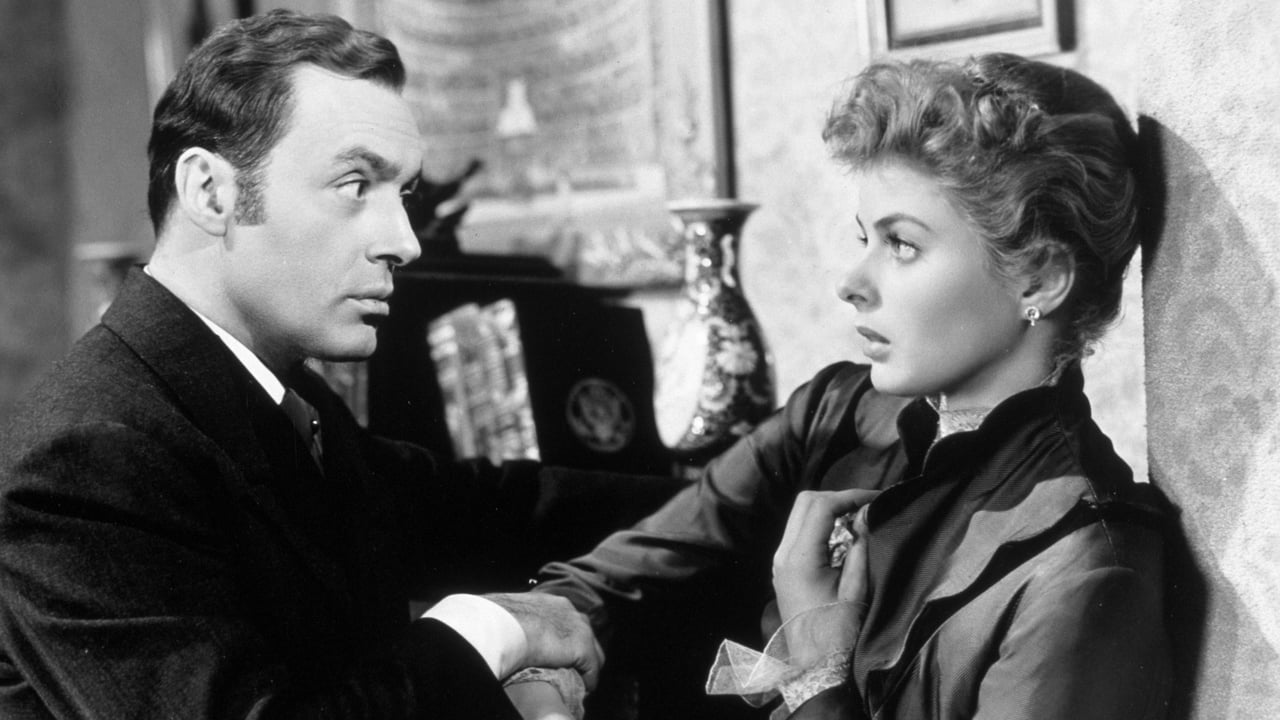
Charles Boyer and Ingrid Bergman excel in Cukor’s cinematic staging of Gaslight

Director: George Cukor

Cast: Charles Boyer (Gregory Anton), Ingrid Bergman (Paula Alquist Anton), Joseph Cotton (Brian Cameron), May Whitty (Miss Bessie Thwaites), Angela Lansbury (Nancy Oliver), Barbara Everest (Elizabeth Tompkins), Emil Rameau (Maestro Guardi), Edmund Breon (General Huddleston), Halliwell Hobbes (Mr Mufflin), Heather Thatcher (Lady Mildred Dalroy), Lawrence Grossmith (Lord Freddie Dalroy)

Spoilers: Spoilers here in for Gaslight both film and play

Paula Alquist (Ingrid Bergman) has terrible memories of finding her aunt, a world-famous opera singer, murdered in their home on Thornton Square when Paula was just fourteen. Years later she falls in love with, and marries, the charming Gregory Anton (Charles Boyer) who suggests she returns to London and her old home. To save his wife’s nerves, Gregory has all her aunt’s property moved into the attic. But then Alice starts to lose items, Gregory tells her she moves things and has no memory of it and at night she sees the gaslight dim and hears strange creaks in the attic. Is she slowly going mad as her husband insists? Or is she – and this is where the word comes from – being gaslit into thinking so by a husband who isn’t as nice as he seems?

Adapted from Patrick Hamilton’s play, George Cukor’s bring a sumptuous version of the iconic story of a decent wife manipulated by a bad husband to the screen (MGM allegedly tried to destroy all copies of a British version from 1940 so this could be the ‘only’ adaptation). While the original play is a claustrophobic one-set affair, using minimal characters and taking part in a narrow window of time, the film expands and deepens the stories timeframe and uses a host of locations to build-up Paula’s isolation and mounting insecurity. It’s a subtle and extremely well-handled costume-noir thriller, that holds it cards close to the chest and is powered by excellent performances.

It also makes several genuine improvements to the original play. There, the villainous husband is trying to drive the wife mad so he is no longer constrained by her presence while he searches the house he has purchased for missing jewels. It’s not clear why the villain has saddled himself with a wife (when his life would be much easier if he was a single man). The film improves this immeasurably by making marriage to the wife an essential prerequisite to the villain gaining entry to the house. This one change unknots many problems with the original play and also raises the stakes considerably, by increasing the personal connection to events from the wife.

Giving a traumatic backstory to the re-named Paula (all the names are changed from the play), also gives Ingrid Bergman far richer material in her Oscar-winning role. Bergman’s Paula is already nervous and vulnerable from the start, and her desperate need for love and security draws her inevitably towards a man who, even before we work out he’s a wrong ‘un, offers her a sort of fatherly reassurance. Bergman’s heartfelt performance also contains a streak of independence and determination: she struggles painfully with knowing she isn’t insane, even while being told she might be. The film also gives her a greater sense of agency, and Paula’s final act payback works as well as it does, because Bergman has made her gentleness so under-stated earlier, that her sudden iron and fury are even more striking.

Opposite her is an equally fine performance from Charles Boyer. Boyer inverts his charm and suaveness into a ruthless opportunist, devoid of morals, who takes a sociopathic delight in his own cleverness, even as he semi-regretfully mentally tortures and manipulates his wife. He’s never less than charming – making it all the more unsurprising that Paula places as much faith in him as he does – but the little marks of danger and control are there throughout. Cukor uses a wonderful shot early on of Paula disembarking from a train, at which point a hand enters frame and grasps her arm – it’s revealed as Anton, but a brilliant indicator of his threat and controlling nature. Truth is, Gregory is insane, and Boyer subtly suggests this throughout: there is another lovely shot from Cukor late on where studio lights are reflected in Boyer’s eyes giving him an insanely intense gaze.

It all revolves around finding those diamonds. If there is one area that film is slightly weaker is that it doesn’t actually dedicate much time to that dimming gaslight or those creaking floorboards at night. It feels like a beat that should be hit more regularly (a montage would have helped no end), a more constant presence would have helped make it a more convincing continual dread for Paula.

But its counter-balanced by the expansion of the film to multiple locations where Gregory manipulates Paula to disgrace herself in public. From a lost broach in the Tower of London to an evening soiree where she is made to appear as if she has stolen a watch, it all helps to tip Paula more and more into believing she is losing her mind. Again, Cukor keeps the focus within all this finery very much on our two leads, reproducing for us as much as possible the growing claustrophobic fear that is consuming Paula that was as at the heart of the stage production.

The moments away from this are slightly less strong. Joseph Cotton has a thankless role (with an awkward mid-Atlantic accent) as a police inspector, who smells a rat or two. The ‘investigation’ moments around this are often heavy handed, and labour under the sort of exposition that the scenes between Gregory and Paula skilfully avoid. Basically, Inspector Cameron barely has a personality, meaning he never really develops beyond being just a plot device.

Conversely, a character who takes on a great deal more presence is Angela Lansbury’s star-making turn as a sultry, defiantly sexual maid, parachuted into the house for goodness-only-knows what reason (!) by Gregory, who takes every opportunity to undermine her mistress. It’s a brilliantly pointed little performance from Lansbury, full of sass and smirk (it got her an Oscar nomination in her first movie) that adds even more to the feeling of Paula being a stranger in her home.

Gaslight is all smartly directed with Cukor, brilliant as always with actors, adding more visual flair than he often does with his fog-filled London and noir-tinged Edwardian home. With strong performances and many changes that materially improve the original material, it’s a fine adaptation.

Mrs Miniver (1942)

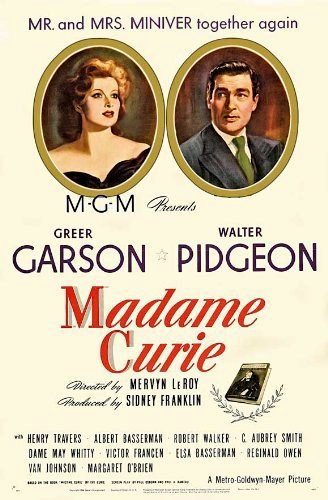
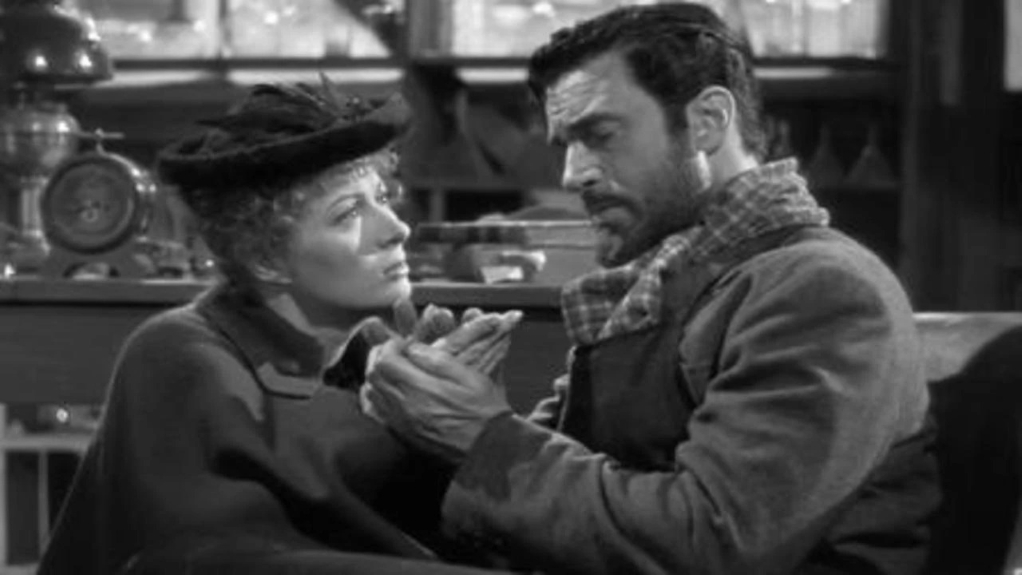
Greer Garson and Walter Pidgeon hold the homefront together in Mrs Miniver

Director: William Wyler

Cast: Greer Garson (Kay Miniver), Walter Pidgeon (Clem Miniver), Teresa Wright (Carol Beldon), Dame May Whitty (Lady Beldon), Reginald Owen (Foley), Henry Travers (Mr Ballard), Richard Ney (Vin Miniver), Henry Wilcoxon (Vicar), Christopher Severen (Toby Miniver), Brenda Forbes (Gladys), Clare Sanders (Judy Miniver), Helmut Dantine (German pilot)

Mrs Miniver was made when history was in flux: conceived at the height of the Blitz, shot and then parts re-shot either side of Pearl Harbor and released in 1942 after America had entered the war. A patriotic flag-waver, designed to build American sympathy for a Britain standing alone, it was a huge hit, won Best Picture and had a profound impact on Allied morale (Churchill called it more help to the War effort than a flotilla of battleships). It still carries an inspiring, cockle-warming charm and a hefty emotional punch, made even more affecting by the stoic determination (rather than hand-wringing emotion) every setback is met with.

In a small village just outside London, lives the Miniver family. Kay Miniver (Greer Garson) cares for her family in a large country house. She has three children with architect husband Clem (Walter Pidgeon). Their life is contented – and then war breaks out. Oldest son Vin (Richard Ney) joins the RAF – after falling in love with Carol (Teresa Wright), niece of the local grandee Lady Beldon (May Whitty). Clem joins the ships travelling to Dunkirk. Kay holds the domestic fort, protecting her family from air raids, facing down a German pilot and helping shepherd her small village through the trauma of air raids to something approaching a normal life.

Mrs Miniver is all about that stoic, British stiff-upper-lip attitude, of doing your duty uncomplainingly and quietly. As they said “Britain Can Take It”, and the film is a celebration of the nobility of perseverance. It’s designed to inspire and it does: it’s melodrama played with a low-key reserve, which is genuine and heart-felt. There is a reason Goebbels (and he would know) called this a “refined powerful propagandistic [tool]” – it makes you completely emphasise and relate to its characters. We share their moments of joy just as much as the profound tragedy of their losses.

And there is a lot of loss in Mrs Miniver – way more than you might expect, with the film’s final act throwing at least two painful gut punches you don’t expect. Tragedy touches all of us and war carries away the innocent and undeserving with as much eagerness as it does the militaristic. There seems to be no reason or justice to it – but instead the difficult acceptance of fate and the necessity of being part of a struggle larger than ourselves.

In a powerful speech that concludes the film, the vicar stands in the bombed-out ruins of his local church. It mirrors a scene near the beginning, as he regretfully but with quiet reserve announces the outbreak of war. Now he gives a rousing speech that this is war of all the people, against the tyranny that threatens us, where the dead our mourned but not forgotten. It’s a powerful speech (brilliantly delivered by Henry Wilcoxon), of the painful necessity of duty at the time of war that still stirs (it was distributed nationally by Roosevelt’s insistence).

The stoic, good-natured, supportive community, who protect each other and desperately try to maintain hope and nobility when death could strike at any time, contrasts firmly with the only German we see. A wounded pilot who gains entrance to Kay’s home at gunpoint. Kay calmly disarms him, feeds him and tends to his wounds (after all he is the same age as Vin) – he responds with a vicious speech of violent hate, bragging at the deaths the Luftwaffe have inflicted on Europe. It’s the only time her reserve really breaks, as she slaps him – and even for a moment seems to consider dispatching him. Her delayed shock is clear later when she casually smokes one of Clem’s cigarettes – a mixture of restrained shock, relief, horror and confusion across her face. It’s the closest direct danger comes – and the closest she comes to openly expressing rage and anger at the hand the world has dealt her.

The film revolves around Greer Garson’s (Oscar-winning) performance. Though it’s easy to see Kay as a sort of saint, that’s underestimating the huge burden Garson had: she effectively embodies an entire Homefront of scared people doing their duty. It’s a performance of stiff-upper-lipped warmth, her desperation, fear and protective nature clear in every beat. You can see it in her mix of distracted fear and pride when Vin announces he has joined the RAF, and the front of “everything will be alright” she puts on for the children during an air raid that tears her house apart.

Of course, that disaster is met with a “I always wanted to redo that dining room” fortitude by her husband, Clem. Pidgeon and Garson forged a partnership that would run through several movies here, and spark off each other wonderfully. Pidgeon gives a solid grounding to Garson, while she helps find warmth and humanity in an otherwise distant actor (Pidgeon lacks Peck’s – who he resembles in many ways – ability to convey warmth under reserved dignity). Pidgeon’s stirring sense of duty excels, not least during the Dunkirk sequence.

That sequence is very well executed, a small series of boats gradually growing in size until they fill the Thames. When duty calls, people respond with gusto and pride. Alongside this, normal life continues as much as possible: not even the war will stop the flower show. This remains a heart-warming centre piece – pinched for an episode of Downton Abbey – as Lady Beldon overrules the sycophantic judges and gives the prize to the deserving winner, local station manager Mr Ballard (Henry Travers, sweet but receiving a generous Oscar nomination).

The acting is pretty much spot on. Teresa Wright (Oscar winning) is endearingly genuine and vibrant as Vin’s wife to be (and Lady Beldon’s niece) Carol. May Whitty, channelling those grande-old-dames-with-hearts-of-gold, gets every beat right, from comedy to tragedy, Wilcoxon is marvellous. It’s all so heartfelt and earnest you can overlook the fact most of the (largely American and Canadian) cast go for cod-Brit accents or cliched working class vowels – just as you do the fact that neither the towns or countryside in the film looks particularly British (an opening sequence in London looks plain wrong in every sense).

And you can’t fail be stirred by its celebration of quiet determination and unshowy self-sacrifice. You can certainly argue that it’s not a work of art, like other films nominated that year for Best Picture. But, none of them would have (or continue to have) the emotional impact this has. Sure, it feeds off an American nostalgia for English-country-village life – but it does so with a noble cause. Well-acted, very well directed, it still inspires and continues to provoke pride today.

The Lady Vanishes (1938)

lady vanishes
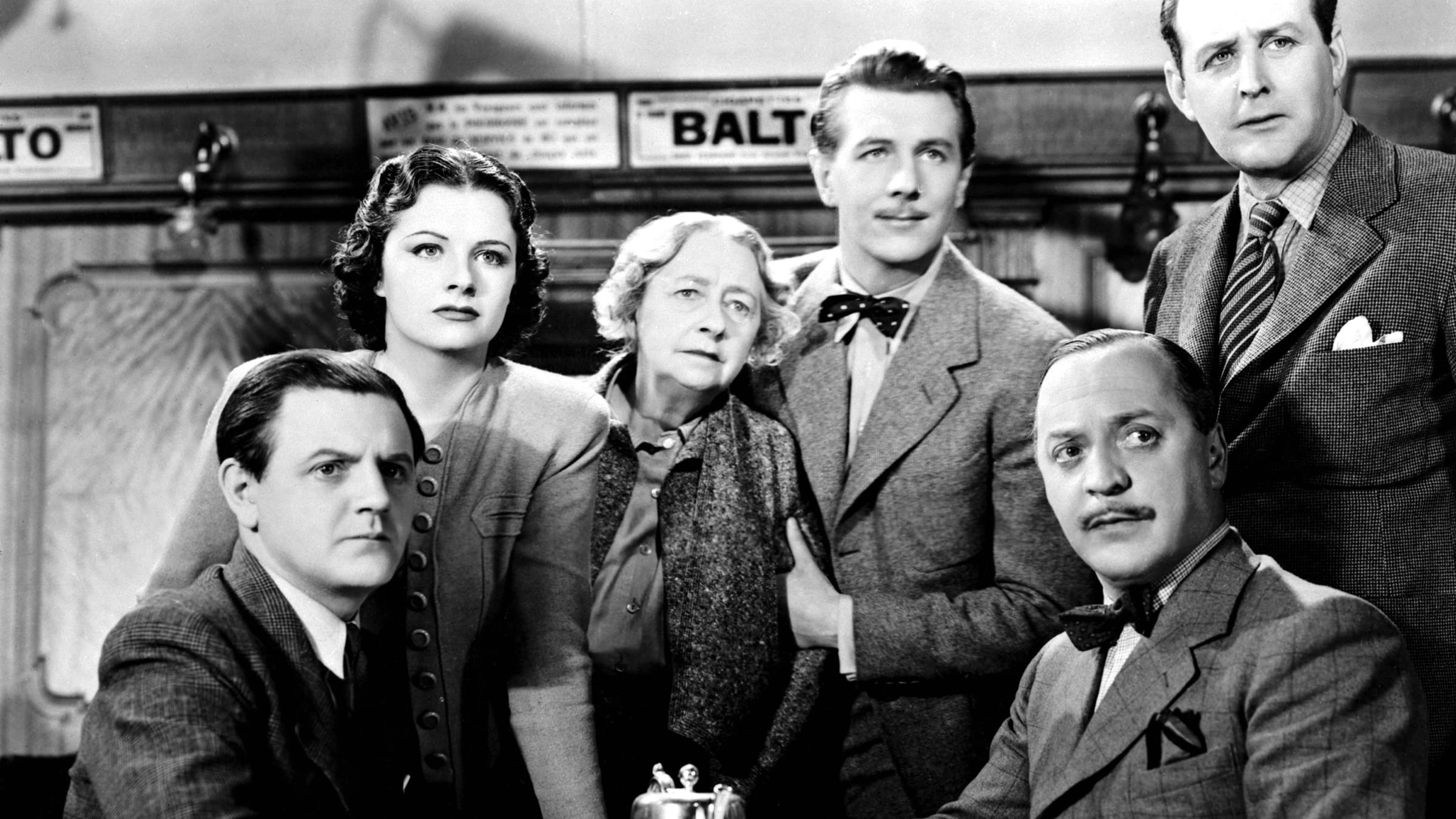
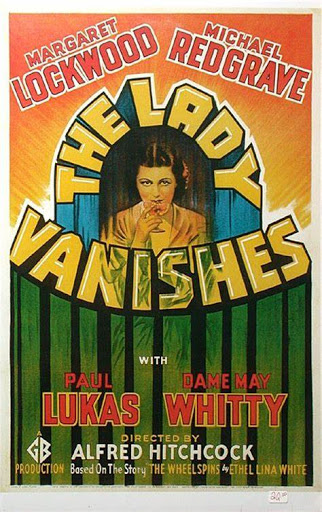
May Whitty is searched for by Margaret Lockwood and Michael Redgrave in The Lady Vanishes

Director: Alfred Hitchcock

Cast: Margaret Lockwood (Iris Henderson), Michael Redgrave (Gilbert Redman), Paul Lukas (Dr Hartz), May Whitty (Miss Froy), Cecil Parker (Mr Todhunter), Linden Travers (“Mrs” Tothunter), Naunton Wayne (Caldicott), Basil Radford (Charters), Mary Clare (Baroness), Catherine Lacey (Nun), Googie Withers (Blanche), Sally Stewart (Julie)

In his conversations with Hitchcock, Francois Truffaut declared every time he tried to study The Lady Vanishes, all its tricks and mechanics, he always ended up too wrapped up in the plot to notice them. It’s about as fitting a tribute as a film can get, that it got one of the world’s ultimate film buffs just sit down and enjoy the ride. The Lady Vanishes is Hitchcock’s penultimate British film and it might well be one of the most enjoyable and entertaining films he ever made.

It’s late 1930s in Europe and a group of mostly British travellers have got stuck waiting for a train in the fictional country of Bandrika (but it’s clearly Germany). Iris Henderson (Margaret Lockwood) is on her way back home to (perhaps somewhat reluctantly) get married, exasperated by the loud noise made in the room above through the night by folk music expert Gilbert (Michael Redgrave). Charters (Basil Radford) and Caldicott (Naunton Wayne) are cricket obsessives, desperate to get home for the big test match. Mr Todhunter (Cecil Parker) is a lawyer, keen not to draw attention to the fact Mrs Todhunter (Linden Travers) isn’t actually his wife. When the train finally leaves the station the next day, Iris is hit on the head by a plant plot (was it pushed?) that very nearly hits governess Miss Froy (May Whitty). Miss Froy takes care of Iris on the train – but when Iris wakes after a rest, she finds Miss Froy has disappeared and – furthermore – everyone denies she ever existed in the first place. While a Bandrikan psychiatrist Dr Hartz (Paul Lukas) claims she may be suffering from concussion, only Gilbert believes her story. Will they be able to prove Miss Froy is real and rescue her from whatever peril she has found herself in?

Hitchcock’s The Lady Vanishes shouldn’t really work – not least since it takes nearly 20 minutes before we get any indication that we are watching anything other than a romantic comedy. But perhaps that’s also why it works, because those first 20 minutes are beautifully scripted, with some cracking dialogue and some skilfully drawn character work that invests us in these people long before any danger arises. It also serves as a brilliant counterpoint to the nearly non-stop tension and action that comes in the final hour of the film – who could have believed that all that light hearted banter in a guest house could end in a ruthless shoot out in the woods?

It all seems to change pace on a classic Hitchcock touch – a folk singer is suddenly, violently, strangled by an unseen assailant (why? I’ve no idea. The film doesn’t think you’ll care about the logic gap, and you don’t). But a large part of the film’s success stems from Hitchcock’s collaboration with Sidney Gilliat and Frank Launder on script-writing duties. Gilliat and Launder made a number of changes to the original novel, adding a greater espionage element. Even more importantly, they overhauled several of the characters, not least changing the Gilbert character from an engineer into a charming (if eccentric) folk music expert with a deadpan wit. Even more successfully, they introduced the hilarious ultra-British Charters and Caldicott, classic eccentric grown-up public schoolboys with a fascination with cricket (the combo was so popular Naunton and Wayne played versions of these characters another eleven times).

The script’s wit, playfulness and scintillating dialogue is what drives most of the film’s energy – and certainly what helps to make it as entertaining as it is. In particular, the dialogue exchanges between Lockwood and Redgrave hum with the sort of love-them-hate-them banter that wouldn’t seem out of place in a screwball comedy (“You’re the most contemptible person I’ve met in all my life!” “Confidentially I think you’re a bit of a stinker as well”), and the two actors shine in roles that start with classic feuding but subtly and beautifully come together as a romantic couple by the film’s end. Lockwood has pluck, guts and determination, a mix of socialite and head girl determination. Redgrave is superb as Gilbert, showing the sort of matinee idol wit and charm – not to mention an unconventional romantic sex appeal – that he very rarely got to exhibit again (sadly he didn’t get on with Hitchcock, and never worked with him again).

The film is full of wit and invention, but mixes it with a properly engrossing mystery. Every character has very clear reasons for denying the existence of Miss Froy (May Whitty is superb as a seemingly dotty old woman, hiding cunning and an unexpected capacity for action). We know that of course Iris is right – but even so, it’s hard not to begin to suspect that maybe the oily Dr Hartz (Paul Lukas whose professional smoothness neatly tips into cruelty) is right and she is suffering from concussion. The unravelling of this mystery is half Agatha Christie (vital clues pop up here and there), half famous five adventure – but the nearly “real time” playing out of the mystery injects huge amounts of tension and excitement, particularly as the villains start to be revealed.

The film also serves, interestingly, as a plea for British invention in European affairs in the era of appeasement. The train is stuffed nearly exclusively by Brits, most of whom are quite content at first to let things drift and not rock the boat. However, when the chips are finally down and its time to make a stand, the majority of the characters knuckle down and get their hands dirty to fight for justice. Even Charters and Caldicott take up arms (with a typical British reserve) to protect their fellow passengers, while Gilbert has already shown himself capable of being a man of action (as well as a pretty neat impressionist and physical comedian) when called upon. It’s telling that Cecil Parker’s Mr Todhunter is the nearest thing we see to an appeaser on the train (with a fear-and-hope-tinged expectation that everyone is playing by his own antiquated rules), and he’s the only one who angrily questions taking a stand.

It’s not surprising from Hitchcock, who made an even more passionate plea for intervention a few years later with Foreign Correspondent. Neither is it a surprise how superbly the film is made. Hitchcock is at the top of his game here, shooting the train brilliantly (the set was tiny, not that you could tell from the number of angles Hitch finds here). His mastery of the pace and tone of the film is spot on: the second half never lets up, and you never for one minute lose the film’s wit, even while the stakes become more bigger and bigger. The film has possibly the most winning romantic pairing in all of Hitch’s movies, helped hugely by the natural and winning playing of Redgrave and Lockwood. It so successfully builds up the possibility of Iris being mistaken, that it makes the audience start to question what they’ve seen.

It’s a superbly directed film, but above all it’s supremely entertaining in a way few other films can hope to be. Its re-watch value – from hearing the jokes again, to spotting the early clues – means it will be rewarding audiences for decades to come.

Suspicion (1941)

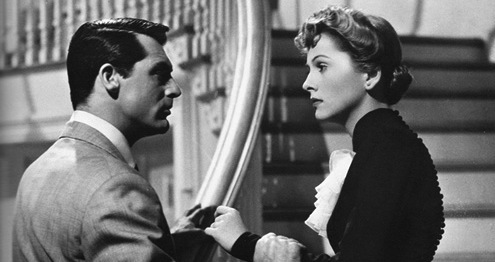
Is Cary Grant plotting to murder Joan Fontaine? Oh the Suspicion.

Director: Alfred Hitchcock

Cast: Cary Grant (Johnnie Aysgarth), Joan Fontaine (Lina Aysgarth), Nigel Bruce (Gordon Cochrane ‘Beaky’ Thwaite), Cedric Hardwicke (General McLaidlow), May Whitty (Martha McLaidlow), Isabel Jeans (Helen Newsham), Heather Angel (Ethel), Auriol Lee (Isabel Sedbusk), Leo G Carroll (Captain George Malbeck)

What do you do when you suddenly start to believe you might be living in a murder mystery? When you begin to think that the person you are married to might just be planning to dispatch you as well? That’s the big suspicion that haunts the mind of Lina Aysgarth (Joan Fontaine), a shy and meek heiress who has been charmed into marrying waster Johnnie Aysgarth (Cary Grant), a lazy spendthrift and playboy. After they elope together, she quickly finds out that Johnnie has no work ethic or talent at all other than spending money. As real estate deals fall through, and Johnnie steals money from his employer to cover his debts, Lina starts to worry that her life insurance is looking more and more tempting to Johnnie.

Suspicion is a decent, middle-of-the-road Hitchcock thriller, which deals with familiar themes of doubt, dread and (of course) suspicion, but with Hitchcock very much in second gear. He’s not helped by the neutering of the source material. The original novel is very much a story of a woman who works out that her husband is definitely trying to kill her. The producers here, however, couldn’t abide the idea that CARY GRANT could be plotting to kill his wife. So the story is rejigged at the end to turn Lina into a silly, paranoid woman and Johnnie into, well yes a playboy, but also one who has been treated badly because of the suspicion thrown at him. This may have flown in 1941, but it’s impossibly sexist today. Plus it means the whole film basically builds towards – well – nothing.

Hitchcock throws in the odd decent flourish – most famously the carefully lit glass of milk that Johnnie carries up the stairs near the film’s end, which may or may not be poisoned. But far too often the story seems to be taking place in a fairytale England, of horses riding to hounds, country villages, Agatha Christie style authors dispensing accidental poisoning advice, and careful class structures. For all the odd moments of danger, the film is safe, contained and as unthreatening as it can get. But the rest is Hitch on autopilot, which feels at time as a remix of the director’s earlier Oscar winning film Rebecca.

That mood carries across to Joan Fontaine as well in the lead role. Fresh off working with Hitchcock on Rebecca, Fontaine essentially recreates the same role again here as the timid, shy, would-be dutiful wife who wants to see the best in a husband who in fact seems dangerous and unknowable. Fontaine won the Oscar for this film – but it feels as much like a compensation award for her previous defeat for Rebecca as it does for Suspicion. Really she does very little here that lifts the film, or stretches her as a performer from her previous role. It’s a retread, and while it’s a trick she does well, it’s a trick she has done before.

A far more challenging performance comes from Cary Grant, who uses the role as a clever meta-commentary on his own persona. Johnnie has all the charm and engaging bonhomie of Grant himself, but all subtly twisted with a selfish superficiality and wastrel greed. Grant walks a very fine line of a man who could be plotting to murder his wife or could just be a greedy chancer – and walks it very well indeed. You always see that Johnnie is bad news, while also understanding why Lina finds him so engaging. It’s a terrifically skilled performance, a lovely riff on Grant’s own screen persona, that shows he’s a far better actor than people often give him credit for – and you feel he is only too willing to embrace the chance to play a weak-willed, opportunistic murderer with little conscience (except of course it turns out he isn’t a murderer). 

It’s a shame that nothing else in the film really rises to the occasion in the same way (although Nigel Bruce gives a very good performance as the gentle, ageing playboy Beaky). The film itself never really seems to be heading anywhere – it even takes a good two-thirds of its runtime before Lina begins to wake up to the fact that Johnnie is far from being the sort of husband women should dream of. It’s a bit slow, a bit too safe, and it largely lacks the element of danger. For the final few scenes, logic seems to evacuate the film as all the clues and hints we’ve had building towards us are shown to be – nothing more than red herrings and the inferences of a silly woman. Because, after all, CARY GRANT can’t be a murderer can he? No matter what he wants.