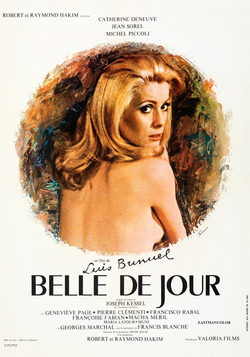
Tag: Michel Piccoli

Le Mépris (1963)

Le Mépris (1963)

Godard’s film mixes virtuoso film-making with what feels a hard contempt for audience and characte

Director: Jean-Luc Godard

Cast: Brigitte Bardot (Camille Javal), Michel Piccoli (as Paul Javal), Jack Palance (Jeremiah Prokosch), Giorgia Moll (Francesca Vanini), Fritz Lang (Himself), Jean-Luc Godard (Lang’s assistant director), Linda Veras (Siren)

The title translates as Contempt and, to be honest, it’s hard not to feel a bit of the contempt when watching. Of all the Great Directors, the one I find the hardest to like is Godard. When you settle down to watch Godard, it’s hard not to escape the feeling you are steeling yourself to be looked down on. Godard wants you to know he’s watched more, read more and thought more than you about everything. Godard is playing out his fantasy of being a Hollywood director and a Great Artiste and wants you to know it. In fact, the further you move away from his debut À Bout de Souffle, the more his films become (for me) overly pleased-with-themselves statements rather than actual films.

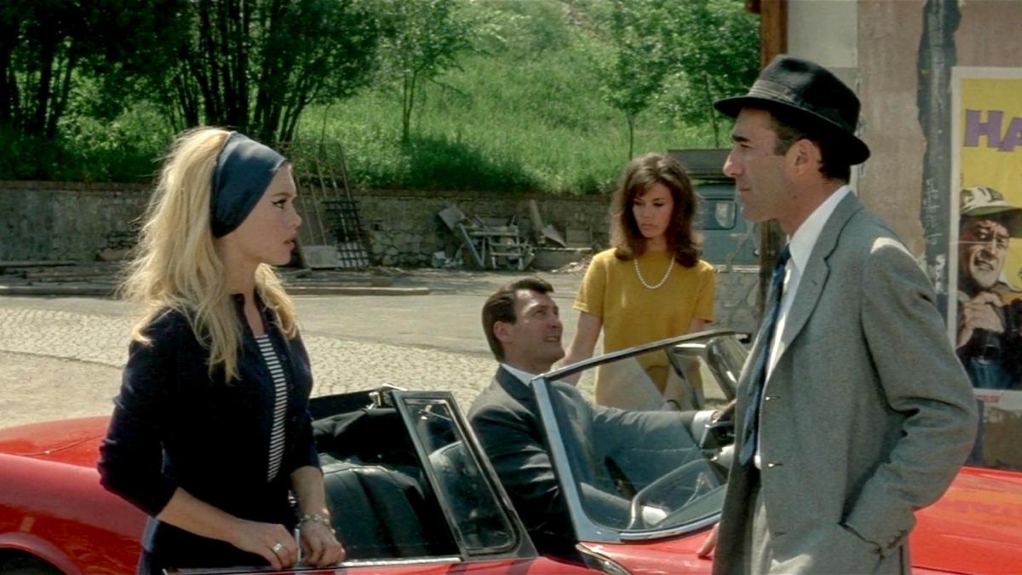
Paul Javal (Michel Piccoli) is a writer, who wishes he could be producing great novels or plays, but is actually banging out crapola dialogue to fill American producer Jeremiah Prokosch’s (Jack Palance) Odyssey-opus, a film its director (Fritz Lang, one of Godard’s idols, playing himself) is trying to turn into art rather than the cheap sword-and-sandals epic Prokosch wants. But by taking the shilling, Paul earns the contempt of his glamourous wife Camille (Brigitte Bardot), who sleepwalks her way into an affair with Prokosch. Things come to head (as such) at Prokosch’s villa on Capri.

It was shot with a larger budget and a more controlling producer than any previous (or subsequent Godard film). God alone knows what they made of this – one suspects them reacting rather like Palance’s tantrum-filled producer when he inspects the arty dailies of statues and coastlines Lang has shot (“You lied to me Fritz!”). On some level Le Mépris is Godard playing a joke on his money men. The want a steamy relationship film, with plenty of Bardot on display? Have a slow series of elliptical conversations, a languid (but wonderfully filmed) argument scene in which Piccoli takes both a bath and a crap, and here are some deliberately functional shots of Bardot’s naked back on the bed while she and Piccoli intone empty dialogue. For a film that involves extra-marital sex, groping, a gun and a fatal car crash it’s deliberately unsensational – as if Godard was showing the money men he could ram anything they demanded into the film and still make it feels like a ticking-off.

To be honest, there’s also in Le Mépris a bit of Godard’s contempt for himself for selling out, as if he realised part way through he’d made a terrible mistake by taking the money and wanted everyone to know it. You can see it in the film’s visuals, that turn the demanded cinemascope wideness (which Godard loathed) into a series of pan-and-scan shots and tight close-ups that wipe-out the impact of the grand visuals. Godard may appear in the film himself, but is real substitute is his hero Lang, here a visionary polygot (the only person who can speak the full hodgepodge of languages the characters communicate in), who gives voice to Godard’s most closely held views about cinema and the only person completely assured and comfortable with what he is doing.

Not that there isn’t an awful lot to admire in Godard’s work here. As fits a director steeped in a love of film, Le Mépris drips with homages to cinema technique. Godard speaks the credits – Welles in Magnificent Amberson’s style – over an opening shot which is itself of an opening shot filming a crew filming the opening tracking shot of Le Mépris. There are touches of Ford, Hawks and Lang in the stylistic love of Godard’s heroes. Paul dresses like a mix of Sam Spade and Dean Martin and loves chatter about old movies (he’s very excited about the prospect of catching an old Hawks film). The tattered film studio is lined with film posters (including those depicting Godard’s former wife Anna Karina). We see the intricate procedures of film-making and post-production and Bardot even reads books about cinema in her downtime.

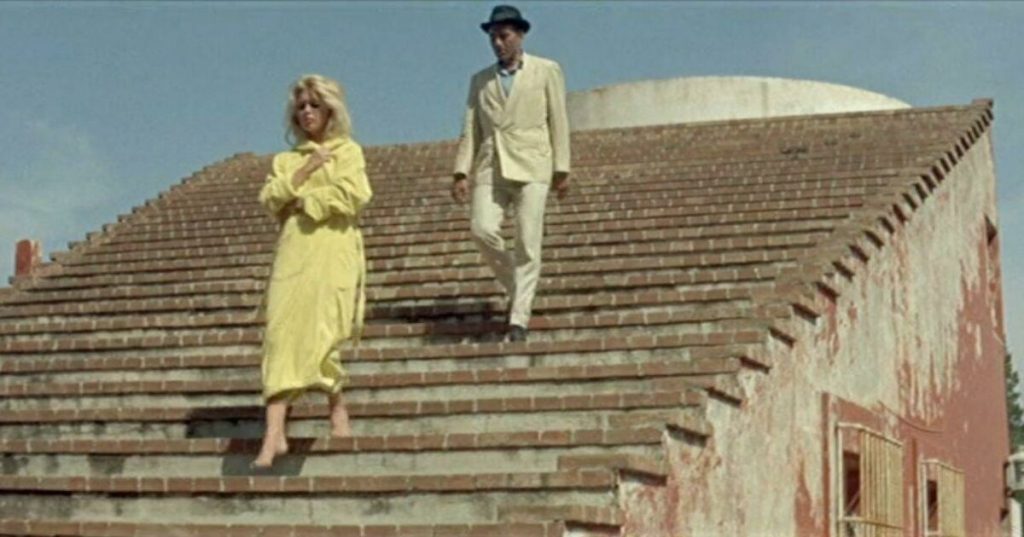
There is some astonishing film-making – Godard may be self-important, but he can shoot a film with grace. The tracking shots through the seemingly abandoned Cinecittà studios in Italy are beautifully done, as is the intriguing framework of the unique Capri villa and its striking staircase. The film’s highlight (and finest sequence by far, as well as its most human) is its middle act, a virtuoso choreographed sequence in the Javal’s under construction apartment (including French doors without glass, bathrooms without doors and intermittent furniture). The camera moves, brilliantly at a distance, to constantly frame these two characters interspersed between doorways, or kept apart by walls in the centre of the frame, barely ever managing to ever be in the frame together, the disjointed visual language perfect for communicating a conversation where they are never on the same page. It’s a superb way of filming partly an argument, partly a drifting out of love, partly a fumbling attempt to find common ground. There is a real emotional reality to this scene, something that isn’t present anywhere else in the film.

Even there though, it works because of its distance. Le Mépris is a strikingly distant film, Godard presenting a deliberately cold, hostile film that lacks any real warmth, empathy, wit or lightness, like he’s challenging us to swallow down this filmic medicine of cinematic inspiration and beautiful framing. Le Mépris also seems to despise its characters. Palance’s film producer (and this is a deeply uncomfortable performance from Palance, who constantly looks like he’s woken up suddenly and doesn’t know where he is) is a boorish philistine and an idiot. Piccoli’s writer is a shallow, preening  lightweight who wants to be a Godard but is a hack with pretensions.

Interestingly the most intriguing character in it is Bardot – but she remains elliptical, perhaps because part of Godard can only see her as some sort of trophy or status symbol, something Paul fails to ‘deserve’ because he can’t maintain his principles. Her motivations remain a mystery and one wonders if there is much place for them in Godard’s masculine view of the world, where women are either secretaries or muses. Camille herself seems to see herself as sort of property, suspecting her husband of pimping her to a producer but then seemingly embracing that in any case (despite her contempt for Prokosch). There is an air in Le Mépris that Godard can’t really imagine either Bardot or Giorgia Moll’s Francesca (a striking presence, who has the best running joke with her rudimentary translations of Javal’s dialogue for Prokosch) as collaborators or equals to either the brutish producer or the tortured men, but people who can only be defined by their attitudes towards them.

Above all, Le Mépris wants you to know your place when watching it. To admire it, but also to know that you wishes for something more dramatic or humane are shallow, base desires. That really you should be seeking out the sort of arty stuff Fritz Lang is shooting on the island, not the page-turning nonsense the executives wanted. It’s an attitude that pours out of the film, and after a while its one that makes you want to spend your time elsewhere. Godard may be a clever guy, but he can be very poor company.

Atlantic City (1981)

Atlantic City (1981)

A never-was romances a dreamer in Malle’s low-key film, full of neat observations

Director: Louis Malle

Cast: Burt Lancaster (Lou), Susan Sarandon (Sally), Kate Reid (Grace), Michel Piccoli (Joseph), Hollis McLaren (Chrissie), Robert Joy (Dave), Al Waxman (Alfie), Moses Znaimer (Felix)

Lou trundles around Atlantic City taking a few cents for bets and wanting anyone who listens to know that back in the glory days of the Boardwalk Empire he was a big shot. Bugsy Siegel roomed with him in the slammer. Meyer Lansky asked his opinions on the latest scores. When he killed someone, he dove into the sea to wash the exhilaration from his body. Not his fault the glory days are gone, and his life has crumbled as much as the worn out city around him. He’s still a player.

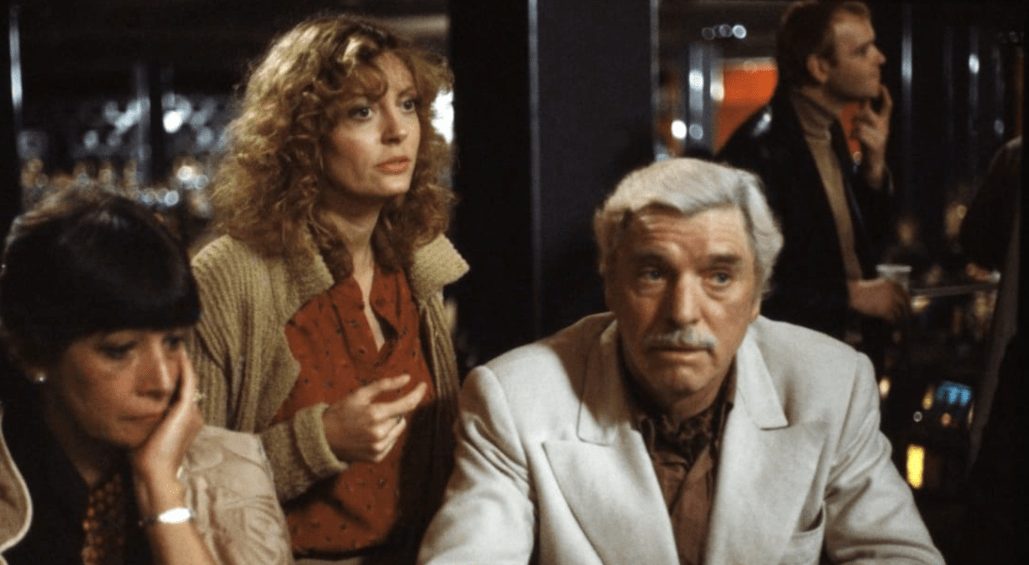
Only of course he’s not. Played in a fine autumnal performance by Burt Lancaster, Lou has the front of an ageing star, but is a dyed-in-the-wool loser. He trades on a past that never happened, full of tall stories that only the dimmest and most impressionable would consider believing. He’s essentially a kept servant of Grace (Kate Reid), a former local beauty queen (third place) and spends his nights spying on his neighbour Sally (Susan Sarandon), while she washes away the stench of the hotel fish counter she works in.

When the chance comes to spin a fantasy that means Lou could actually impress and seduce this women, he jumps at it. That chance is Dave (Robert Joy), Sally’s pathetic dweeb of an ex-husband who believes Lou is the perfect to peddle his stolen cocaine around town. Dave winds up dead, Lou pockets the money, impresses the naïve but determined Sally (training to be a croupier) and very firmly considers letting her take the rap when the cocaine’s owners turn up looking for the money.

Both Lou and Sally are dreamers – or fantasists – at the opposite end of life’s scale. Lou dreams big about a past that never was. Sally is dreaming of an impossible future – one of French class, Monaco high-rollers and earning a future as a flash croupier. Really, we know both of their dreams are fantasies. After all it should be clear only losers wind up in Atlantic City. The casinos are dumps and even the criminals are pathetic, easily out-matched by Philadelphia hoods. Louis Malle’s film captures this perfectly in a crumpling city that looks like mouldy leftovers.

Malle’s film is a marvellously structured, low-key but highly effective character study, very well acted and shot with an intelligent, detailed eye. It’s a showcase for Malle’s subtle but intelligent camera work and composition. As Lou serves Grace early in the film, he is kept constantly in the centre of the frame, the camera jerking up and down to match his movements as he fetches and carries for the bed-bound Grace. Dave is frequently shot from above, looking even more pathetic and irrelevant with every shot. This is framing that speaks volume for status and character. The camera fluidly shifts across large spaces – the boardwalk, a casino – to show different interactions in different plains, characters either unaware of each other or using events elsewhere to escape notice.

Grimy and fabulously capturing the collapsing grandeur of a city fallen on very hard times, the setting is the perfect metaphor for the disaster of the character’s lives. None more so than Lou. You can argue Malle’s film may be too sympathetic to Lou – and, indeed, contemporary reviews discussed Lancaster’s inherent dignity mistaking it for the character. Lancaster however is smarter. Lou is a pathetic, sad figure. Look how he delights in puffing himself up as a big shot for the feeble Dave. Watch the childish excitement he takes in the notoriety he collects late in the film. Lancaster perfectly understands the desperate need to dress the part, longing to be something you are not: the grand, well-dressed sugar daddy who solves problems for his moll by unwrapping the elastic band from a roll of dollar bills.

Lancaster never allows this fantasy to be mistaken for reality. When danger comes, Lou almost always freezes or looks to keep himself safe. When he spins his stories of daring or classy confidence, Lancaster shows us a Lou who is replicating behaviours he has seen elsewhere. After completing his first cocaine deal, he has to wash his face in fear in a bathroom – then instantly condescends to an old friend who has been reduced to toilet attendant.

Sally is fooled for a while. But then we know she has a weakness for glamour. After all we’ve seen her indulge the pervy whims of casino trainer Joseph, a lecherous Michel Piccoli. In a clever performance by Sarandon, Sally is naïve enough to be sucked in but guileful enough to just about keep afloat. She tends to trust anyone who oozes confidence. She’s a little star-struck by the idea of Lou perving at her across the window (as if happy that she’s sexy enough to win the attentions of this seemingly classy old guy). But, turned, Sarandon makes clear she’s righteously furious when cheated and far more adept at confidence-tricksterism than the increasingly hapless Lou.

Because when crime comes Lou is out of his depth. But what would you expect from a man who is a live-in cook, dog-walker and sometime-stud for Grace, entombed in her kitsch-nightmare room. Kate Reid is very good as this clear-eyed bully who needs but also despises Lou, who knows all about what an unreliable and cowardly fellow he is deep-down but jealously guards his attentions.

Malle’s film plays out like a sort of noir short story, an adept study of its characters more focused on their damage and flaws than on the crimes at its nominal heart. This is about fantasy and the lies we tell ourselves. Just like Atlantic City kids itself it’s still a gambling mecca, so Lou and Sally believe they still have chances in life. It makes for an intriguing, engrossing film as they lie to themselves and each other, denying the truth until it hits them squarely and unavoidably in their face.

Atlantic City muses on familiar themes, but does so with freshness and intelligence. Perhaps Malle is a little too sympathetic to its characters (Lou in particular), but he is very clear-eyed about the Dennis Potterish fantasy world they are clinging onto and the shabby decline and disrepair that clutters their existence. It makes for a very fine, well-made and fascinating little film, full of sharp observations and wonderfully played beats.

The Discreet Charm of the Bourgeoisie (1972)

The Discreet Charm of the Bourgeoisie (1972)

Dinner dates never happen in Buñuel’s playfully witty, absurdist satire

Director: Luis Buñuel

Cast: Fernando Rey (Rafael Acosta), Paul Frankeur (François Thévenot), Delphine Seyrig (Simone Thévenot), Bulle Ogier (Florence Thévenot), Stéphane Audran (Alice Sénéchal), Jean-Pierre Cassel (Henri Sénéchal), Julien Bertheau (Monsignor Dufour), Milena Vukotic (Inès), Claude Piéplu (The Colonel), Maria Gabriella Maione (Terrorist), Muni (Peasant), Michel Piccoli (Interior Minister), Pierre Maguelon (Brigadier Sanglant), François Maistre (Commissaire Delecluze)

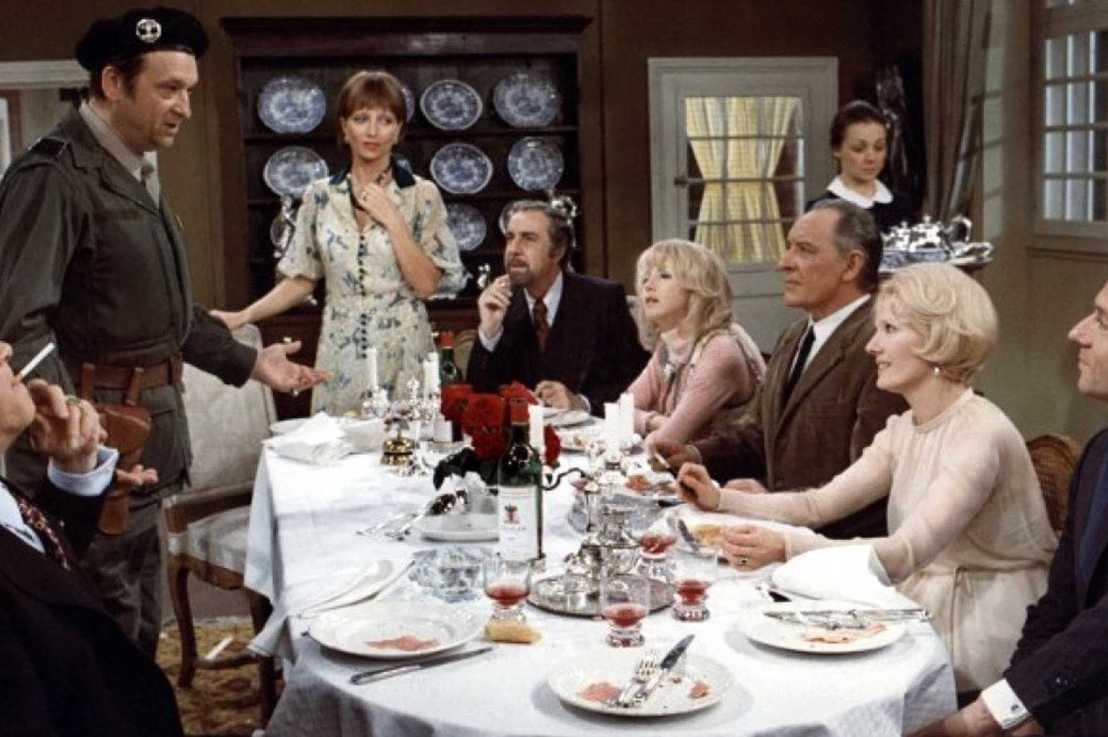
Six very bourgeoisie Parisian friends try to have dinner; but circumstances keep getting in the way. Circumstances that become increasingly bizarre, surreal and absurdist and half of which may or may not be dreams (or even dreams within dreams). This is the jumping off point for Buñuel’s engagingly light and witty, but also profound, intriguing and defying interpretation. The Discreet Charms of the Bourgeoisie. In the hands of a dogmatic artist, it would be heavy-handed trash: in Buñuel’s it maintains a playfulness making it entertainingly (if at times infuriatingly) mystifyingly unreadable.

Those six friends are a shallow, self-obsessed bunch who talk the snobby talk of class and culture, but their knowledge is skin-deep and their lifestyle funded by cocaine smuggling. That cocaine is trafficked into Paris in the diplomatic bag of Ambassador Rafel Acosta (Fernando Rey), representative of the (fictional) Latin American Republic of Miranda. It’s sold by his friends, François Thévenot (Paul Frankeur) and Henri Sénéchal (Jean-Pierre Cassel), and its these three – along with their wives Alice Sénéchal (Stéphane Audran) and Simeone Thévenot (Delphine Seyrig) and Simone’s sister Florence (Bulle Ogier) – who keep trying to have dinner.

Those dinners are constantly interrupted by a series of increasingly outlandish events, that the guests accept with the sort of blasé insouciance this sort of people pride themselves on. Things escalate on successive nights from Henri forgetting he has invited their guests to dinner, to a dead landlord of a country inn, the Sénéchals slipping out to the garden to have sex, a Bishop (Julien Bertheau) who longs to be a gardener, a café that runs out of tea and coffee, an army division on military manoeuvres, their arrest by the police… That’s not mentioning the onslaught of dreams as the characters imagine yet more meals interrupted by murder, terrorism and even their dining room turning into a stage in front of an audience where they don’t know their lines.

If that sounds pretentious… I suppose that’s fair. But the point is that Buñuel never hectors or overplays his hand. Instead, the film is an absurdist light comedy, a whimsical road-to-nowhere (like the country road we frequently see the six characters walking down in cutaways) that, in its structure, aims to expose the shallowness and hypocrisy of an entire class. Our ‘heroes’ are overwhelmingly concerned, time and again, with their own basest needs – mostly food and sex – and are more than happen to call in a chauffeur so they can mock him for not knowing how to drink a cocktail correctly (doesn’t stop him enjoying the cocktail way more than any of them do). They encapsulate a whole class, concerned only with tucking in and making sure everyone can see they are unshaken by events, no matter how outlandish they seem.

Into this mix, Buñuel throws an astonishing and inventive selection of dreams that increasingly dominate the second half of the film. (And in fact, makes you wonder after a while whether everything we’ve seen in the film is some sort of crazy, unlikely fever dream). Buñuel used to joke he slipped in dreams when he needed to expand a films runtime, but it’s wonderful here how often the dreams comment subtly on the characters and their perceptions of each other: and how little they seem to learn or be aware of the implications of this.

The most surreal dream of all is Henri’s fantasy of entering a house – a house with walls painted with false perspective images of other rooms – where the group encounter rubber food and then a curtain sweeps aside to find an expectant audience watching them. Despite the prompts for their lines, the characters flee in sweaty nervous panic. Do they realise the meaning of this exposure of their sense of unbelonging? You can be sure they don’t.

In fact, in a stroke of daring by Buñuel, they are so remote from understanding this that Henri is in fact having a dream inside François’ dream: as if François can only vicariously confront his fear of unbelonging by dreaming about another man dreaming about it. That worry of mockery and isolation in society is then continued in François’ dream, as he dreams of Henri waking from a dream and arriving at a party at a Colonel’s house where the mockery and ignorance of Rafael’s home country becomes so overbearing, Rafael shoots the Colonel dead. As if, again, François can only imagine being pushed to extremes vicariously.

Perhaps he’s simply jealous of Rafael, who is blatantly conducting an affair with his wife. Rafael’s a man of class, obsessed with greed and lust. He’s also a sneaky coward and a creepy opportunist, not above trying to seduce a female terrorist who tries to kill him (and then having her shipped off by his security when she turns him down). Doesn’t make him different from anyone else: the Thévenots are arrogant upper-classes scorning those below them, Florence a shallow, selfish drunk, the Sénéchals full of hedonistic entitlement.

Buñuel’s film gently deconstructs the code and hypocrisies of this society – with its unspoken rules, strange hierarchies and lusts – not with lectures but with the tools of farcical theatre. The film repeatedly feels like a left-field Cowardian drawing room comedy, mixed with Moliere farce. A cheating wife is interrupted by the sudden arrival of her husband, a Bishop borrows the clothes of a gardener so no one believes he is a priest, sudden entrances and exits constantly interrupt scenes. This is all told with a light, revealing wit: with subtle playing and controlled, skilful direction, we learn about these characters depth (or lack of them) while enjoying the frequently bizarre circumstances.

It doesn’t just touch them either. When the characters are arrested, they are released on the orders of the Interior Minister for reasons that we are don’t hear three times because of traffic noise. Outside noise jumps in at several key points to undermine key information and interrupt events – the characters indifference to this as constant as their general ambivalent uncaring coolness to everything else. It’s also funny.

There are also darker dreams, told by soldiers and police officers, haunted by mauled bodies and murderous consequences. A soldier tells a dream of a ghostly encounter of his dead mother, urging him to avenge the death of his parents (its left unclear if this is a false memory or a dream). A policeman sees a vision of his dead body releasing his prisoners – after an interrogation of a young man that sees a piano transformed into an electric chair.

Not to mention a world where suave class and violence sit side by side. Rafael’s readiness to use guns – shooting a wind-up toy of a terrorist from across the street, his apartment littered with hidden firearms – is matched by the Bishop who mixes forgiveness and revenge for the man who killed his father. Much of this taking place in the classiest and most well-observed of environments.

There are excellent peformances across the board, but this is a triumph from Buñuel. It’s a film that defies easy interpretation and understanding, that wraps its insight up in intriguing, unreadable and bizarre dreams and events which strike a magical balance between both possible and impossible. It explores a whole class and its hypocrisies, but does so in a series of light, even playful, scenes which feel more like light-comedy. It’s the work of an inventive master working with the medium in a unique and unrepeatable way, who can be both surrealist enigma and master of farce. You could watch it multiple times, drawing different shades and interpretations every time.